
Visiting Greece During Easter: How the Holiday Changes Your Trip
Updated: August 2026
Visiting Greece during Orthodox Easter can produce one of the most memorable trips of the year, but it is a mistake to treat Easter week as an ordinary spring holiday with a few religious celebrations added to the schedule.
For Greeks, Easter is deeply connected with family, church, food and homecoming. The practical result for an international traveler is that the country develops a different rhythm as Holy Week progresses. Domestic travel intensifies, churches become central to evening life, restaurants may work differently around the principal Easter celebrations, and destinations that seemed relatively quiet earlier in spring can suddenly become much busier with Greek visitors returning home or taking advantage of the holiday.
None of this makes Easter an inconvenient time to travel. Quite the opposite: for travelers who appreciate cultural experiences that are genuinely part of contemporary Greek life rather than organized primarily for visitors, Easter can add a dimension that an ordinary sightseeing week cannot reproduce.
The important thing is to plan with Easter rather than around it.
If you construct a rigid itinerary and expect every day to behave normally, the holiday can feel disruptive. If you understand what changes from Good Friday through Easter Monday and deliberately leave room to participate, the same changes can become some of the strongest memories of the journey.
First, Make Sure You Have the Right Easter
This sounds obvious until it causes an actual planning mistake.
Greek Orthodox Easter does not always fall on the same Sunday as Easter celebrated by Western Christian churches. Some years the dates coincide; other years they differ.
International travelers sometimes book a trip believing they will experience Greek Easter because their home calendar shows Easter weekend, only to discover that Orthodox Easter falls on another date.
For travel planning, therefore, never rely on the generic word “Easter” when checking your itinerary.
Confirm the Greek Orthodox Easter date for the specific year of travel, then identify where Good Friday, Holy Saturday, Easter Sunday and Easter Monday fall within your route.
Those four dates matter more operationally than simply knowing that your vacation overlaps with “Easter week.”
Easter Does Not Affect Every Day of Holy Week Equally
One of the most useful ways to plan the trip is to stop thinking of Easter as a single holiday.
The atmosphere develops.
Early Holy Week can still support a relatively conventional sightseeing schedule, although religious activity becomes increasingly visible. By Good Friday, the public character of Easter becomes much more pronounced. Holy Saturday builds toward the late-night Resurrection service, while Easter Sunday becomes strongly associated with family gatherings, meals and celebration.
Easter Monday then has its own holiday rhythm before ordinary schedules progressively return.
This progression matters because a traveler spending Tuesday through Thursday touring archaeological sites is dealing with a different environment from someone trying to execute a tightly scheduled multi-transfer itinerary over Saturday and Sunday.
Rather than asking, “Will things be closed during Easter?”, ask:
“What am I trying to do on each specific Easter day?”
That produces a much more useful answer.
Good Friday Is a Day to Experience, Not Merely Work Around
Good Friday introduces one of the most atmospheric public elements of Greek Easter.
In communities across the country, evening processions associated with the Epitaphios bring worshippers into streets and squares. The exact character varies considerably according to location, but even travelers who are not religious can find the experience moving because it belongs to the community rather than being staged as a visitor attraction.
From an itinerary perspective, Good Friday evening deserves space.
Scheduling a long-distance arrival, complicated transfer and formal dinner at the same time can mean being physically present in Greece while missing the event occurring outside the hotel.
A better plan often completes major sightseeing earlier, leaves sufficient time to return to the accommodation and allows the evening to unfold locally.
You do not need to understand every element of Orthodox liturgy to appreciate what is happening.
You do need enough unscheduled time to notice it.
Holy Saturday Has Two Completely Different Halves
Holy Saturday can initially feel like another spring travel day.
That changes as evening approaches.
The late-night Resurrection service is one of the defining experiences of Greek Easter, with people gathering at churches before midnight, traditionally carrying candles and waiting for the announcement of the Resurrection.
For travelers interested in experiencing it, the day should not be scheduled as though midnight is irrelevant.
An early morning departure, full sightseeing program, long road journey and late-night service can technically coexist, but the result may be exhaustion rather than cultural immersion.
A more thoughtful Holy Saturday uses the daytime selectively and protects the evening.
The traveler can still explore.
The difference is that the itinerary recognizes that the day's emotional center occurs very late.
You Do Not Need to Be Orthodox to Attend a Resurrection Service
Visitors are generally able to observe or attend Easter services, provided they behave respectfully and remember that they are entering a place of worship rather than attending a performance.
That distinction should shape everything from clothing to photography.
Stand where you are not obstructing local worshippers, follow the atmosphere rather than trying to position yourself for the perfect image, and be particularly cautious about photographing people during prayer.
If you are unsure what to do, quiet observation is entirely sufficient.
Many travelers find the midnight gathering memorable precisely because participation does not require them to turn the experience into a checklist of rituals.
From a planning perspective, choosing a church within reasonable walking or transfer distance of the hotel is often more sensible than crossing an entire city to reach the most famous possible location.
Authenticity does not depend on crowd size.
Easter Sunday Is the Wrong Day for an Aggressive Sightseeing Schedule
Easter Sunday is where cultural understanding and itinerary design need to meet.
For many Greek families, this is a major day for gathering and eating together. The atmosphere can be wonderfully celebratory, but travelers should not assume that every restaurant, attraction and service will behave as it would on an ordinary Sunday.
The most successful Easter Sunday plans are often intentionally simple.
A prearranged Easter meal can become the main event. A walk, local exploration or relaxed afternoon can surround it. If a specific attraction is essential, its holiday operation should be checked rather than assumed.
This can initially feel like sacrificing a sightseeing day.
In reality, travelers have simply exchanged conventional sightseeing for something they could only experience during this particular period.
If your itinerary requires every day to deliver several major attractions, Easter Sunday will probably feel inconvenient.
If you allow the holiday itself to become the experience, the calculation changes completely.
The Most Important Easter Reservation May Be Lunch
On an ordinary travel day, deciding where to eat can remain spontaneous.
Easter Sunday deserves more caution.
Restaurants offering Easter meals can become busy, while some establishments may not operate normally. In destinations with strong domestic holiday demand, assuming that an attractive table will simply appear at the preferred time is unnecessary risk.
This is especially relevant for groups and families, where finding several seats together is harder than accommodating a couple.
The practical solution is not to over-plan every meal during Holy Week.
It is to identify the one or two meals whose timing matters culturally or operationally and secure those where appropriate.
Easter Sunday lunch is an obvious candidate.
The rest of the week can remain considerably more flexible.
Domestic Travel Changes the Transport Picture
International visitors sometimes evaluate Easter only through foreign tourist numbers.
That misses one of the defining characteristics of the period: Greeks travel too.
People return to family homes, travel from Athens to islands or mainland communities, and create demand patterns that can be very different from a normal spring week.
This matters for ferries, domestic flights, intercity transportation and road traffic.
A route that appears straightforward because April or early May is outside the international summer peak can still encounter substantial Easter demand.
For travelers building Greek Easter holiday itineraries, important internal transport should therefore be organized earlier than it might be for an ordinary spring journey.
Waiting because “it isn't summer yet” misunderstands who is traveling.
The Ferry Question Is About Demand as Much as Schedule
Easter can be an appealing time to experience an island, but ferry planning deserves particular attention.
First, travelers need to confirm that the required route operates appropriately for their dates, because spring schedules do not necessarily resemble high-summer frequency.
Second, Easter creates domestic passenger demand on certain routes as Greeks travel away from or back toward major cities.
The combination means that a ferry should not be treated as an interchangeable service that can always be selected at the last moment.
There is also a directional element to consider.
Demand leaving Athens before Easter and returning after the holiday can behave differently from the opposite direction.
A well-designed route considers not only where people are traveling, but when the wider population is likely to be moving the same way.
Athens at Easter Is Not Simply “Athens With Closures”
Athens remains one of the easiest places for an international traveler to understand Easter because the city combines major sightseeing infrastructure with neighborhood life, churches and excellent onward transportation.
The mistake is reducing the experience to an opening-hours problem.
Yes, travelers should verify holiday schedules for important attractions. However, the more interesting change occurs in the city's rhythm.
As people leave Athens for family destinations, certain periods can feel different from an ordinary city break. Churches and neighborhood gatherings become more visible, while Easter-specific dining and religious traditions create another layer over the archaeological city visitors came to see.
For someone interested primarily in Athens' monuments, Easter requires schedule awareness.
For someone interested in contemporary Greece as well as ancient Greece, the holiday adds context rather than merely inconvenience.
An Island Easter Can Feel More Intimate — but Islands Are Not Interchangeable
There is a romantic tendency to talk about “Easter on a Greek island” as though every island produces the same experience.
They do not.
Large islands, internationally famous destinations and small communities can have very different populations, traditions, tourism infrastructure and levels of domestic Easter travel.
A traveler choosing an island specifically for Easter should therefore think about the kind of experience they want.
Do they want a destination with enough tourism infrastructure to make logistics relatively straightforward?
Are they comfortable with a quieter island where the experience is more local but fewer seasonal businesses may be operating?
Is Easter itself the reason for visiting, or does the island still need to support several conventional vacation activities?
Those questions are more useful than searching for one universal “best Greek island for Easter.”
Corfu Is Famous for Easter, Which Changes the Planning Equation
Some Greek destinations are particularly associated with Easter traditions, and Corfu is among the most prominent.
That reputation creates both appeal and practical consequences.
Travelers who specifically want to experience Easter there are not the only people with that idea. Strong demand can affect accommodation availability and transportation, which means a culturally significant period can also become a commercially busy one.
This is an important lesson for Easter travel generally.
The most culturally famous Easter destination is not necessarily the easiest or least expensive place to experience the holiday.
A smaller town or less internationally celebrated destination may provide a deeply memorable experience with a very different logistical profile.
The choice should reflect whether your priority is witnessing a famous tradition or experiencing Greek Easter naturally within the broader trip.
Mainland Greece Can Be an Excellent Easter Choice
Island imagery dominates international marketing of Greece, yet Easter can be a particularly interesting period for mainland travel.
Towns and villages where family connections remain strong can become lively as people return for the holiday, while spring landscapes add another dimension to road-based journeys.
Mainland routes also avoid the temptation to make every Easter planning question about ferries.
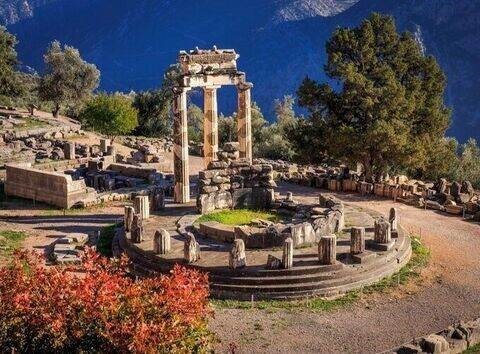
A traveler combining Athens with destinations such as Delphi, Meteora or the Peloponnese can build a culturally rich journey in which Easter becomes one part of a broader historical and regional experience.
The main operational concern remains timing.
Long road transfers around peak domestic movement should be planned with realistic margins rather than estimated according to ordinary traffic conditions.
Do Not Confuse “Open” With “Operating Normally”
This distinction is particularly important during holiday travel.
A restaurant may be open but using a special menu.
A sightseeing attraction may operate but with holiday hours.
Public transportation may function but on a different schedule.
A local business may open for part of the day rather than following its usual timetable.
Travelers often search online for a binary answer—open or closed—when the useful question is how the service will operate on that particular date.
This is why Easter itineraries should identify essential components.
If visiting one archaeological site is central to the trip, verify it. If a particular ferry is essential, confirm it. If Easter lunch matters, arrange it.
There is no need to research the operating hours of every café the traveler might theoretically visit.
Easter Week Rewards a Different Type of Scheduling
An ordinary sightseeing itinerary is often constructed around attractions.
An Easter itinerary works better when constructed around fixed cultural moments.
| Easter Period | What Should Anchor the Day? | What Should Stay Flexible? |
|---|---|---|
| Early Holy Week | Normal sightseeing priorities | Evening dining and neighborhood time |
| Good Friday | Local evening atmosphere/procession | Late sightseeing commitments |
| Holy Saturday | Midnight Resurrection experience | Overloaded afternoon program |
| Easter Sunday | Easter meal and local celebration | Major attraction checklist |
| Easter Monday | Planned transport or relaxed continuation | Assumptions about normal schedules |
This is intentionally not a generic “what happens each day” calendar.
Its purpose is to show where the traveler should place the fixed point of the itinerary.
Once that anchor is established, the remaining hours can be organized around it.
Easter Can Improve a Greece Trip for Travelers Who Dislike Performative Tourism
Some travel experiences exist largely because visitors are present.
Greek Easter is not one of them.
The processions, church services, family travel and Sunday gatherings would happen whether international travelers were watching or not.
For certain travelers, this is precisely what makes the period compelling.
They are temporarily observing Greece operating according to its own cultural calendar rather than a tourism timetable.
That does require humility.
Restaurants may not organize themselves around foreign visitor convenience. Transport can be busy because locals are using it. A church service will not be shortened because travelers have dinner reservations.
The reward is a stronger sense of place.
Travelers who appreciate that exchange may find Easter more meaningful than an easier but culturally more neutral week.
Easter May Be the Wrong Period for Some Travelers
Not every distinctive cultural period is automatically a good fit.
A traveler with only four days in Greece who wants to complete a tightly scheduled list of archaeological sites may prefer dates with fewer holiday variables.
Someone whose entire priority is resort-style beach travel may find another part of the season more aligned with the intended holiday.
Likewise, travelers who become frustrated when opening hours change or transport demand increases may not enjoy planning around Easter.
There is nothing wrong with that.
The purpose of good travel advice is not to declare unusual periods universally superior.
It is to match the period with the traveler.
Greek Easter works especially well for people who value culture, food, local atmosphere and the possibility that the most memorable experience of the day was never a ticketed attraction.
Do Not Schedule Every Easter Tradition
Once travelers discover how culturally rich Greek Easter can be, another problem appears: they try to experience everything.
Good Friday procession.
Several churches.
Midnight service.
Special meal.
Multiple regional customs.
Perhaps a famous celebration in another town requiring transportation.
The holiday then becomes another checklist.
A better approach is to choose the traditions that naturally fit the destination where you are already staying.
If you are in Athens, experience Easter as it unfolds in Athens. If you are on an island, allow that community to define the holiday. If your route places you in a mainland town, do not assume you need to travel elsewhere for a more “authentic” version.
Authenticity is often damaged by chasing it.
Easter Sunday Should Usually Contain Fewer Kilometers
One of the simplest operational improvements is to avoid making Easter Sunday a major relocation day unless the route genuinely requires it.
Traveling from one region to another can be possible, but it places transport logistics directly against the most culturally distinctive day of the holiday.
Staying in one destination allows travelers to experience the morning, meal and local atmosphere without watching the clock for the next check-in.
If a transfer is unavoidable, organize it deliberately rather than assuming ordinary Sunday conditions.
Within private Greece journeys over Orthodox Easter, this can be particularly valuable because transport and guiding can be arranged around the holiday rhythm instead of forcing the holiday to fit a standard touring template.
Families Can Find Easter Especially Rewarding
Families often appreciate Greek Easter because many of its most memorable elements are social and visual rather than dependent on long explanations.
Candles, evening gatherings, decorated churches, food and public celebration can engage children differently from another museum or archaeological site.
However, families also need more logistical margin.
Late-night Holy Saturday activities may require a slower Easter Sunday morning. Restaurant reservations become more important for larger parties, while transport with children and luggage during periods of stronger domestic demand benefits from advance organization.
The best family itinerary does not attempt to maintain the same daily pace while adding Easter on top.
It removes something.
That space allows the holiday to enter the trip naturally.
Easter Works Particularly Well in a Longer Greece Journey
If the entire trip lasts only a few days, Easter can dominate the schedule.
On a longer journey, it can become a distinctive chapter.
A traveler might spend the days before Easter exploring Athens or the mainland, remain in one well-chosen location through the principal holiday period, and continue toward the islands afterward as the tourism season progresses.
This structure allows the traveler to experience Easter without requiring every part of the vacation to operate under holiday conditions.
For Greece cultural tours combining Athens and the islands, this can produce a particularly satisfying contrast: ancient sites and contemporary religious culture first, followed by a more conventional island rhythm afterward.
The important principle is not the exact route.
It is giving Easter enough space to be experienced without forcing it to control the entire holiday.
The Best Easter Itinerary Leaves One Evening Unexplained
Travel itineraries are usually designed to remove uncertainty.
Easter benefits from leaving a little.
You may discover that a nearby church is preparing for a procession. Your hotel may recommend a local gathering. A restaurant owner may explain what is happening in the neighborhood. A street you walked through that morning may feel entirely different after dark.
These are difficult experiences to schedule six months in advance.
They are also precisely the experiences that can make traveling during Easter worthwhile.
Protecting one evening from formal reservations does not mean traveling without a plan.
It means recognizing that during a major cultural celebration, the destination itself may produce a better plan than the one written before arrival.
Is Easter a Good Time to Visit Greece?
Yes, for the right traveler, Greek Orthodox Easter can be an exceptional time to visit Greece.
It is particularly rewarding if you are interested in contemporary Greek culture, food, religious tradition and community life alongside the country's historical attractions.
However, the trip needs to acknowledge the holiday operationally.
Confirm the correct Orthodox Easter dates, protect Good Friday evening and Holy Saturday night if you want to experience the major traditions, organize important transportation early, reserve Easter meals where appropriate, verify essential attraction schedules and avoid building an itinerary that depends on every service behaving like an ordinary spring week.
Most importantly, do not treat Easter as an obstacle inserted into your Greece vacation.
If you choose these dates deliberately, Easter should be one of the reasons for the vacation.
That shift in perspective changes everything.
Frequently Asked Questions About Traveling in Greece During Easter
1. How do I know whether my trip overlaps with Greek Easter?
Check the Greek Orthodox Easter date for the specific year rather than relying on the Western Easter calendar. Then mark Good Friday through Easter Monday individually, because each day has a different cultural rhythm and potential impact on your itinerary.
2. Will I miss important sightseeing if I visit Greece over Easter?
Not necessarily, although essential archaeological sites and museums should be checked for their specific holiday schedules. The larger consideration is whether you are willing to exchange some conventional sightseeing time for Easter experiences that are available only during this period.
3. Is Good Friday evening worth keeping free?
Yes, particularly if experiencing Greek culture is important to you. Local Epitaphios processions can provide one of Holy Week's most atmospheric experiences, so scheduling a long transfer or rigid evening program may unnecessarily remove an important part of visiting during Easter.
4. What should I wear if I attend an Orthodox Easter service?
Choose respectful clothing suitable for entering a functioning church rather than treating the service as a tourist event. Exact expectations can vary by location, but modest dress, discreet behavior and sensitivity around photography are more important than attempting to imitate local worshippers.
5. Do I need to stay until midnight on Holy Saturday?
No, although the midnight Resurrection is a central part of the Easter experience. Travelers who want to attend should deliberately protect the evening and avoid exhausting daytime schedules, particularly if they are traveling with children or prefer earlier nights.
6. Should Easter Sunday lunch be booked before arriving in Greece?
It is sensible when the meal matters to your plans, particularly for families and larger groups. Easter Sunday is an important gathering day, and relying entirely on spontaneous restaurant availability can create unnecessary difficulty in destinations experiencing strong holiday demand.
7. Are ferries particularly busy before Greek Easter?
They can experience strong domestic demand as Greeks travel to islands and family destinations before the holiday. Travelers should not assume spring automatically means low passenger numbers and should secure important Easter-period transportation once the itinerary is sufficiently confirmed.
8. Is Athens too quiet during Easter because residents leave the city?
Some Athenians travel for the holiday, which can change the city's rhythm, but Athens remains a substantial city rather than becoming empty. For visitors, the different atmosphere can actually add interest when sightseeing is combined with local Easter experiences.
9. Is Corfu the best place in Greece to experience Easter?
Corfu is particularly famous for its Easter celebrations, but “best” depends on what you want. Its reputation can also create stronger demand. Travelers seeking a quieter community experience may find another island or mainland town equally meaningful in a different way.
10. Should I avoid changing hotels on Easter Sunday?
When possible, remaining in one place can create a more relaxed and culturally rewarding day, although transfers are certainly possible when necessary. Avoiding unnecessary relocation allows Easter meals and local celebrations to become the focus instead of transport logistics.
11. Can non-religious travelers enjoy Greek Orthodox Easter?
Absolutely. Travelers can appreciate processions, food traditions, community gatherings and the changing atmosphere without participating religiously. Respectful observation is enough, and the period can provide valuable insight into contemporary Greek culture beyond the country's archaeological heritage.
12. What is the biggest planning mistake visitors make during Greek Easter?
Treating Easter as an ordinary spring week and checking holiday details only after booking everything. The better approach is to identify the key Easter dates first, then build important transfers, meals and sightseeing around the cultural rhythm of those specific days.

A travel professional specializing in tailor-made travel planning, guest experience management, and multi-destination tourism operations.
With over 23 years of experience in the travel industry, he designs and manages private and cultural tours for international travelers across Türkiye, Greece, Egypt, Jordan, Morocco, and other destinations.
He has strong expertise in both online and face-to-face guest communication, sales processes, and end-to-end travel operations.
Working closely with hotels, travel agencies, and local partners, he ensures smooth coordination and high-quality travel experiences at every stage of the journey.
His focus is on delivering personalized, reliable, and seamless travel experiences for international guests worldwide.