Sea of Galilee: How to Experience the Biblical Landscape
Updated: August 2026
The Sea of Galilee is one of the easiest places in Israel to misunderstand through itinerary planning.
A typical day can quickly become a list: Capernaum, Tabgha, Mount of Beatitudes, Tiberias, perhaps another church or viewpoint, then back into the vehicle before the guide begins explaining the next biblical event.
The locations are important, but the list misses what makes the region distinctive.
The Sea of Galilee is not one archaeological site or one sacred building. It is a geographical setting that connects several episodes associated with the ministry of Jesus, while the lake itself remains visible between many of the places visitors come to see.
That continuity changes the experience.
Instead of arriving at isolated religious sites, travelers begin to understand how villages, shorelines, hills and movement around the lake form part of one broader landscape.
This is why the strongest Galilee visits are not necessarily the ones with the greatest number of stops.
They are the ones where the geography helps the biblical story become easier to imagine.
The Lake Is the Thread That Holds the Day Together
The Sea of Galilee is relatively compact compared with many regional touring areas, yet the lake creates a strong sense of orientation.
You repeatedly see water.
Sites appear in relationship to the shoreline, nearby hills and settlements rather than as completely independent destinations. This makes it easier to understand why fishing, boats, shoreline teaching and movement between communities appear so often in New Testament narratives associated with the region.
For travelers who have spent several days inside Jerusalem, this shift can be significant.
Jerusalem is dense.
Its sacred places sit within an urban environment where history, religion and politics overlap within remarkably small distances.
The Sea of Galilee feels more open.
The landscape itself becomes part of the interpretation.
That difference is one reason the two regions complement each other so well in a Christian heritage journey.
Capernaum Is Where the Region Begins to Feel Human
Capernaum is one of the most important places around the Sea of Galilee because it connects biblical narrative with an identifiable ancient settlement.
For many Christian travelers, the name is familiar from references to Jesus teaching and performing miracles in the area.
The archaeological setting adds another layer.
Rather than standing only inside a later commemorative church, visitors can encounter remains associated with an ancient village and a synagogue tradition that helps anchor the location in real human settlement.
This is where guiding becomes particularly valuable.
The objective should not be to recite every biblical passage associated with Capernaum. A better approach is to help travelers imagine scale.
How large was the settlement?
How would people have moved between homes, shoreline and communal spaces?
What did “village life” mean in this environment?
Once those questions become concrete, the biblical narrative feels less detached from geography.
The House of Peter Tradition Changes the Scale Again
One of Capernaum’s most significant Christian traditions concerns the location associated with the house of Peter.
The site has layers of archaeological and devotional history, and visitors often approach it with strong religious expectations.
What makes it interesting is how domestic scale enters the story.
Large churches and major pilgrimage complexes can make Christian heritage feel monumental. A tradition connected with a house reminds visitors that much of the early gospel narrative unfolded in ordinary spaces among families, fishermen and village communities.
This creates a useful contrast with Jerusalem.
There, sacred geography often feels monumental and politically charged.
At Capernaum, the story becomes smaller and more intimate.
That contrast is one of the reasons the Galilee region can be emotionally powerful even without the architectural grandeur found elsewhere.
Tabgha Works Best When You Understand Why It Is Nearby
Tabgha is associated with important Christian traditions, including the multiplication of loaves and fishes and another tradition connected with the appearance of Jesus after the Resurrection.
Travelers sometimes experience these sites as separate stops because they are presented through different churches.
The stronger interpretation connects them geographically.
The same shoreline environment that appears repeatedly in the gospel narratives helps explain why several traditions cluster within the wider region.
This is where the lake matters again.
Without geography, Tabgha becomes another church.
With geography, it becomes another piece of the same landscape story.
The mosaics associated with the Church of the Multiplication also provide one of the region’s most recognizable visual symbols, yet the artistic detail becomes more meaningful when it is understood within the wider tradition rather than treated only as a photograph.
The Mount of Beatitudes Changes the Viewpoint, Literally and Theologically
The Mount of Beatitudes occupies a different physical relationship with the Sea of Galilee.
Instead of being directly focused on shoreline activity, the site introduces elevation and landscape.
For Christian visitors, the location is associated by tradition with the Sermon on the Mount and the Beatitudes. The gardens, church and views over the surrounding region create a quieter atmosphere than some more densely visited archaeological sites.
This is one of those places where rushing weakens the experience.
If the itinerary allocates exactly enough time to enter, photograph the church and leave, the visit becomes visually pleasant but emotionally thin.
A few extra minutes to sit, read, pray or simply look over the landscape can produce more value than adding another minor stop later.
The site rewards stillness.
That is a useful difference from Capernaum, where the village context encourages more active archaeological interpretation.
The Sea of Galilee Region Is Stronger When Sites Are Sequenced by Meaning
This is where itinerary design becomes more than logistics.
The order of sites can create a narrative.
A traveler might begin with a landscape-oriented viewpoint, then move toward places associated with teaching, village life and shoreline traditions. Another itinerary may begin with Capernaum to establish the settlement context before moving outward toward broader religious interpretation.
Both can work.
What matters is that the day should feel connected.
A sequence built entirely around parking convenience may be efficient but emotionally fragmented.
A sequence built entirely around biblical chronology may become impractical if it ignores geography.
The best plan uses both.
This is exactly where Private Sea of Galilee Tours can outperform rigid group programs: the route can be adjusted according to the traveler’s religious interest, pace and energy rather than forcing every visitor through the same sequence.
Tiberias Is Important Even When It Is Not the Spiritual Center of the Day
Tiberias sits on the western shore of the Sea of Galilee and often functions as a practical base for travelers exploring the region.
Its role is different from Capernaum, Tabgha or the Mount of Beatitudes.
Those places carry particularly strong Christian associations.
Tiberias contributes accommodation, restaurants, lake access and a contemporary urban presence, while also carrying its own important Jewish historical and religious significance.
For Christian pilgrims, Tiberias may function primarily as the place where the day begins and ends.
That does not make it unimportant.
A good regional itinerary needs a practical center.
Travelers staying in Tiberias can experience the lake before or after formal touring, which helps prevent the Sea of Galilee from becoming something seen only through bus windows between pilgrimage sites.
A Boat Ride Can Help, but It Should Not Become Theatre
Boat experiences on the Sea of Galilee are popular because they give travelers a different relationship with the landscape.
From the water, shorelines and hills become easier to understand spatially. The lake stops being a background element and becomes the center of the region.
For Christian groups, boat experiences can also become moments of prayer, reflection or communal worship.
That can be meaningful when it matches the group’s intentions.
The experience becomes weaker when it is forced into a theatrical performance because tourists expect something “biblical.”
The lake does not need costumes or exaggerated storytelling to be significant.
Sometimes the strongest interpretation is simply being on the water and understanding how central it was to movement, work and daily life.
This Region Rewards Travelers Who Know a Little Before They Arrive
The Sea of Galilee is one of those destinations where a small amount of pre-trip context improves the day considerably.
You do not need to memorize chapters and verses.
It helps, however, to recognize the broad associations:
Capernaum with Jesus’ ministry and village life.
Tabgha with traditions surrounding the multiplication of loaves and fishes and post-Resurrection appearances.
The Mount of Beatitudes with the Sermon on the Mount tradition.
The lake itself with fishing, storms, boats and movement between communities.
With that framework, travelers arrive already understanding why the region matters.
The guide can then build depth rather than starting from zero at every stop.
Christian Pilgrims and General Cultural Travelers Should Not Receive the Same Day
A pilgrim may want prayer time, scripture readings and slower moments at selected churches.
A traveler interested primarily in history may want more archaeological explanation and less devotional time.
A family may need shorter visits and stronger storytelling.
A photographer may care about light, viewpoints and time beside the lake.
These are not small differences.
They should influence the route.
| Traveler focus | What should shape the day | What can be reduced |
|---|---|---|
| Christian pilgrimage | Prayer, scripture context, reflective time | Excessive stop count |
| Biblical history | Archaeology, geography, settlement context | Long devotional pauses |
| Family travel | Stories, visual sites, lake experience | Repetitive church interiors |
| Photography | Landscape, shoreline, changing viewpoints | Dense chronological explanation |
| First-time cultural traveler | Core sites plus regional context | Minor secondary stops |
| Repeat visitor | Lesser-known places and slower exploration | Standard highlights-only circuit |
| Group pilgrimage | Shared spiritual experiences | Too much individual free-form wandering |
| Independent traveler | Flexible lake-centered route | Overly formal tour structure |
This is not a ranking table.
It is a reminder that the region should be shaped by purpose rather than copied from one standard pilgrimage itinerary.
The Region Can Become Exhausting If Every Church Is Treated as Essential
Christian heritage itineraries sometimes develop a strange fear of omission.
If one church is skipped, the trip may feel incomplete.
The result can be six or seven religious sites in one day, each receiving just enough time for a guide explanation, several photographs and movement toward the next parking area.
By late afternoon, visitors may still be physically present while emotionally detached.
The Sea of Galilee does not benefit from that style.
Choose the core sites that matter most to the group.
Allow those sites enough time.
Then protect some part of the day for the landscape itself.
A visit beside the water, a relaxed lunch or a quiet viewpoint may add more spiritual and cultural value than another minor church squeezed into the final hour.
Lunch Should Break the Narrative on Purpose
This may sound like a small operational point, but it matters.
A full Christian touring day can contain a great deal of information: scripture, archaeology, church history, geography and personal emotion.
Lunch provides a necessary interruption.
It allows travelers to stop processing.
It also reconnects the journey with contemporary Galilee through food, restaurants and ordinary life rather than remaining entirely inside biblical time.
A strong Galilee Christian Heritage Journey should therefore avoid treating lunch as a rushed logistical necessity.
The day becomes easier to absorb when religious interpretation has natural pauses.
The Sea of Galilee Is Not the Place for a Late Start If You Want Several Sites
Because sites are distributed around the region rather than concentrated inside one walkable historic district, time can disappear surprisingly quickly.
Parking, transfers, walking between entrances and actual visits all accumulate.
Starting too late can force the final sites into a rushed sequence, particularly when individual religious locations have their own operating schedules.
This does not mean every traveler needs an early-morning departure.
It means the day should be built backward from what genuinely matters.
If Capernaum and the Mount of Beatitudes are priorities, protect them first.
Secondary stops can remain flexible.
The itinerary should not allow a long breakfast to accidentally determine which pilgrimage site is rushed at 16:30.
Weather Affects the Experience More Than It Affects the Story
The biblical associations remain the same throughout the year, but the physical experience of touring around the lake changes with weather.
Heat can make exposed walking more demanding during warmer periods, while rain or cooler conditions can affect outdoor time and lake-based activities.
Travelers should therefore check actual conditions for their dates and dress accordingly.
The key point is not turning this blog into another seasonal guide.
Weather matters because much of the regional experience involves outdoor movement between sites.
A church interior may be comfortable.
The path to the next viewpoint may not be.
Practical comfort influences how much attention travelers still have by the end of the day.
The Sea of Galilee and Nazareth Create a Natural Narrative, but Not a Single Experience
Nazareth and the Sea of Galilee are often combined because the Christian narrative connects them naturally.
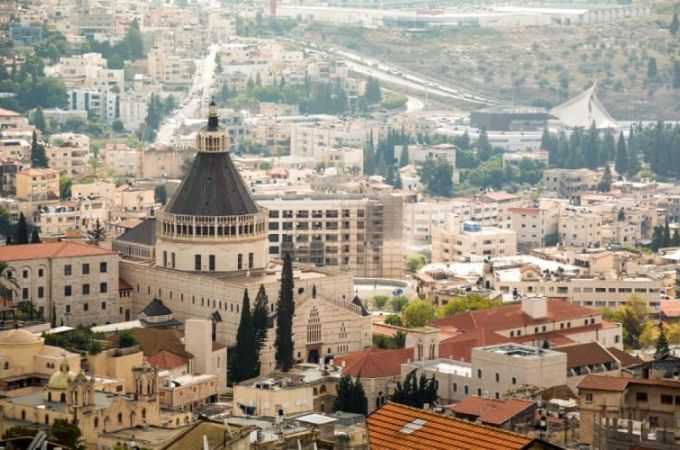
Nazareth is strongly associated with the early life of Jesus.
The Sea of Galilee region is strongly associated with his ministry.
That creates a meaningful progression for Christian travelers.
Operationally, however, trying to experience Nazareth deeply and then complete every major Galilee site in the same day can become too ambitious.
This is where Nazareth and Sea of Galilee Tours need discipline.
If the trip allocates only one day, prioritize.
If Christian heritage is central to the entire journey, two days may provide a much better experience by giving Nazareth and the lake region separate space.
The story may be connected.
The touring pace does not need to be compressed.
Capernaum Should Not Become the “Main Attraction” Competition
Travelers often ask which Galilee site is most important.
For some, Capernaum may clearly stand out because of its archaeological context and gospel associations.
For others, the Mount of Beatitudes may carry greater spiritual meaning.
Another visitor may find the lake itself more moving than any single church.
The question does not need a universal answer.
The Sea of Galilee works precisely because meaning is distributed across the landscape.
Trying to rank every site weakens that relationship.
A pilgrimage route is not a competition between sacred places.
It is a sequence through which travelers understand a larger narrative.
A Full Day and Two Days Reveal Different Regions
One full day can cover the principal Christian sites when the route is well organized.
Two days allow the area to change character.
The first can concentrate on major biblical locations.
The second can include slower lake time, Tiberias, additional sites or a broader regional experience without forcing every stop into one continuous program.
The difference is not only quantity.
With two days, travelers stop experiencing the Sea of Galilee as a touring corridor and begin experiencing it as a region.
This becomes particularly valuable for repeat visitors, serious pilgrims and travelers who prefer depth over headline coverage.
The Most Powerful Moment May Happen Between the Famous Sites
This is something itineraries struggle to describe.
You may remember standing beside the lake while the guide explains a biblical passage.
You may remember the silence inside a church.
You may remember looking from the Mount of Beatitudes toward the water.
Or you may remember something much less structured: the road curving beside the lake, fishermen in the distance, a lunch conversation or the sudden realization that several stories you knew separately all belong to the same geography.
Those moments are why the Sea of Galilee should not be treated like a museum with multiple buildings.
The landscape connects the stories.
Travelers need enough time to notice that connection.
What Makes a Sea of Galilee Day Feel Complete?
Not seeing everything.
A complete day should leave you with a sense of how the lake, villages, churches and biblical traditions relate to one another.
Capernaum should feel like a settlement rather than just a stop.
Tabgha should feel connected to the shoreline rather than isolated inside a church.
The Mount of Beatitudes should provide perspective rather than another photograph.
Tiberias should remind you that the lake remains part of contemporary life.
If all of that happens, you have understood the region.
Another two minor sites will not necessarily improve the experience.
Questions That Belong Specifically to the Sea of Galilee
Why are so many Christian sites concentrated around the lake?
The New Testament associates much of Jesus’ ministry with communities and landscapes around the Sea of Galilee. Villages, shoreline activity, fishing and movement across the lake therefore appear repeatedly in Christian tradition and shape the modern pilgrimage geography.
Is Capernaum mainly important because of archaeology or religion?
Both matter. Christian tradition strongly associates Capernaum with Jesus’ ministry, while archaeological remains help visitors understand the settlement as a real village environment rather than an abstract biblical location, making the religious narrative easier to place geographically.
Does a boat ride add real value to a Christian visit?
It can, especially when the group values landscape, reflection or worship. Being on the lake provides a physical perspective that shore-based touring cannot reproduce, although the experience should complement the region rather than become a staged tourist performance.
Why do Catholic and other Christian groups sometimes prioritize different Galilee sites?
Different traditions, devotional practices and pilgrimage objectives influence how groups allocate time. The biblical landscape is shared, but individual churches, prayer moments and theological emphasis can carry different importance depending on the travelers and their religious background.
Is the Mount of Beatitudes mostly a viewpoint?
No. The landscape is a major part of the experience, but Christian tradition associates the site with the Sermon on the Mount. Many visitors therefore value it as a place for prayer, scripture reading and reflection rather than simply panoramic photography.
Can I understand the Sea of Galilee without a guide?
Yes, particularly if you already know the biblical context, but guiding can connect archaeology, scripture and geography in a way that makes separate locations feel like one regional narrative rather than unrelated churches and historical remains.
Why is Tiberias often used as a base instead of one of the biblical villages?
Tiberias offers practical accommodation, dining and transport advantages while remaining directly on the lake. It also has important Jewish historical significance of its own, making it more than simply a hotel base even when Christian sites dominate the itinerary.
Is one day enough if Christianity is the main reason for my Israel trip?
One well-planned day can cover core Galilee sites, but serious pilgrims often benefit from more time because prayer, reflection and scripture-based visits are difficult to combine meaningfully when too many locations are compressed into a single schedule.
Should families visit every major church around the lake?
Usually not. Families often gain more from a smaller number of well-explained sites, time beside the lake and engaging stories than from entering several churches that begin to feel similar to younger travelers by late afternoon.
Why does the landscape matter so much here compared with Nazareth?
Nazareth is primarily an urban religious destination, while many Sea of Galilee traditions are connected directly with boats, fishing, hills, shoreline movement and villages. The physical landscape therefore helps explain the biblical narrative in a particularly immediate way.
Can Nazareth and the Sea of Galilee be done comfortably in one day?
They can be combined in a highlights-focused program, although depth is reduced. Travelers who want substantial prayer time, detailed interpretation or a slower experience should consider giving Nazareth and the Galilee separate portions of the itinerary.
What should I remember after leaving the Sea of Galilee?
Remember the relationships rather than the stop count. Capernaum, Tabgha, the Mount of Beatitudes and the lake become most meaningful when they are understood as parts of one landscape associated with daily life, ministry and movement.

A travel professional specializing in tailor-made travel planning, guest experience management, and multi-destination tourism operations.
With over 23 years of experience in the travel industry, he designs and manages private and cultural tours for international travelers across Türkiye, Greece, Egypt, Jordan, Morocco, and other destinations.
He has strong expertise in both online and face-to-face guest communication, sales processes, and end-to-end travel operations.
Working closely with hotels, travel agencies, and local partners, he ensures smooth coordination and high-quality travel experiences at every stage of the journey.
His focus is on delivering personalized, reliable, and seamless travel experiences for international guests worldwide.