Jerusalem: How to Understand the City on Your First Visit
Updated: August 2026
Jerusalem can make an intelligent traveler feel completely unprepared within fifteen minutes.
You may enter the Old City knowing the names of the Western Wall, Church of the Holy Sepulchre and Via Dolorosa, yet suddenly discover that physical proximity does not make their histories simple. Religious traditions overlap. Archaeological periods sit above one another. Streets used by residents and shopkeepers also carry enormous meaning for pilgrims who have traveled across the world to stand there.
This is why Jerusalem should not be approached as a collection of famous sites.
The city becomes easier to understand when you think of it as several maps occupying the same space.
There is the Jewish sacred map, centered on places connected with the ancient Temples and centuries of religious memory.
There is the Christian map, shaped by traditions surrounding the final days, crucifixion and resurrection of Jesus.
There is the Muslim sacred geography of Al-Aqsa Mosque and the Dome of the Rock within Haram al-Sharif.
Then there are archaeological maps, Ottoman streets, Roman remains, modern neighborhoods and the everyday city where people work, study, eat and raise families.
A strong first visit does not try to flatten those maps into one story.
It learns how to move between them.
Begin With Geography Before You Begin With History
Jerusalem contains far too much history to absorb chronologically during a short visit.
Trying to begin thousands of years ago and memorize every political period until the present usually leaves travelers with an impressive number of dates and very little sense of the city.
Geography provides a better starting point.
Understand where the Old City sits.
Notice its gates, major quarters and the relationship between the Old City and places such as the Mount of Olives. Once those physical relationships become familiar, historical information has somewhere to attach itself.
This is particularly useful because the Old City is compact enough that major sacred places can be surprisingly close together.
A short walk may take you from a Christian pilgrimage route into streets associated with another community, while a rooftop view can reveal religious buildings belonging to several traditions within the same visual frame.
The map begins explaining why Jerusalem has accumulated so much meaning.
The Four Quarters Help With Orientation, but Reality Is More Complicated
Visitors commonly learn that the Old City contains Jewish, Christian, Muslim and Armenian quarters.
This is useful for orientation.
It should not be interpreted as four sealed districts with completely separate histories.
Religious sites, residential areas, businesses and historical layers cross the neat mental boundaries visitors often imagine before arrival. The quarters also differ greatly in atmosphere, visitor movement and the role tourism plays within them.
The Christian Quarter naturally attracts pilgrims moving toward the Church of the Holy Sepulchre.
The Jewish Quarter contains major archaeological areas and routes toward the Western Wall.
The Muslim Quarter includes extensive residential and commercial life alongside sites carrying enormous Islamic and Christian significance.
The Armenian Quarter has its own community history and religious identity.
Use the quarters as a navigation tool.
Do not use them as a substitute for understanding Jerusalem's complexity.
The Western Wall Is Easier to Understand When You Pause Before Approaching It
The Western Wall is one of the most significant sites in Jewish religious life and a place where visitors can observe prayer, personal devotion and communal religious practice.
It can also become visually overwhelming because the plaza opens suddenly after walking through narrower Old City streets.
Before moving directly toward the wall, take a moment to understand the setting.
This is an active worship space, not simply an ancient monument.
Visitors should follow current access procedures and respectful dress expectations, while photography and behavior should respond to the religious environment rather than treating worshippers as part of the scenery.
For travelers unfamiliar with Jewish traditions, a guide can explain why the site matters without requiring deep prior knowledge of biblical or rabbinic history.
That context changes the visit from “famous wall in Jerusalem” into something much more substantial.
Haram al-Sharif / Temple Mount Requires Sensitivity Before Curiosity
Few places illustrate Jerusalem's overlapping sacred geography more clearly than the elevated compound known to Muslims as Haram al-Sharif and to Jews as the Temple Mount.
For Muslims, the area contains Al-Aqsa Mosque and the Dome of the Rock and holds profound religious significance.
For Jews, the location is associated with the ancient Temples and occupies an extraordinary place in religious history and memory.
This makes the site important and sensitive at the same time.
Visitor access conditions, permitted areas and operating arrangements can change, so travelers should verify current procedures shortly before visiting rather than relying on old itineraries or travel articles.
This is also a place where good guiding matters because the same physical location carries different meanings within different religious traditions.
The objective should not be deciding which narrative is “the right one.”
Travelers gain more by understanding why the site matters so deeply to several communities.
The Church of the Holy Sepulchre Is Not Supposed to Feel Simple
Travelers accustomed to large European cathedrals sometimes expect the Church of the Holy Sepulchre to provide one coherent architectural experience.
Instead, the church can feel dense, dark, crowded and layered.
That character is part of its history.
Christian tradition associates the site with the crucifixion, burial and resurrection of Jesus, making it one of Christianity's most important pilgrimage destinations. Over centuries, different Christian communities have developed their presence within the church, creating a religious environment that reflects complicated histories of worship, custodianship and tradition.
The building rewards patience.
Rather than moving immediately toward the most famous sacred points, allow time to understand how different spaces connect and why various Christian traditions are visible inside the same church.
For believers, the experience may be devotional.
For cultural travelers, the church remains extraordinary because architecture, ritual and historical continuity are inseparable.
The Via Dolorosa Changes According to Who Is Walking It
The Via Dolorosa is traditionally associated with the route of Jesus toward crucifixion and is marked through the Stations of the Cross.
For Christian pilgrims, walking the route can be a deeply devotional experience.
For other travelers, the same streets may appear as active commercial lanes filled with shops, residents, visitors and ordinary movement.
Both realities exist simultaneously.
This is one of Jerusalem's defining characteristics.
Sacred geography is not always separated from everyday urban life.
The pilgrim may be praying while a delivery cart moves past.
A shopkeeper may be opening a business beside a location carrying enormous religious significance for visitors.
Trying to remove this ordinary activity from the experience would misunderstand the Old City.
Jerusalem's sacred spaces have often survived precisely because people continued living around them.
The Mount of Olives Provides the View Jerusalem Needs
Inside the Old City, historical density can become disorienting.
The Mount of Olives provides distance.
From elevated viewpoints, the walls, domes and general shape of the Old City become easier to understand, allowing travelers to connect places previously experienced as separate stops.
For Christian visitors, the Mount of Olives also contains significant traditions associated with the life of Jesus, including locations connected with prayer and the final period before his arrest.
Jewish history and burial traditions add another layer to the landscape.
The important point is that the Mount of Olives should not be reduced to a panorama.
The view is useful because it reconnects sacred geography.
After several hours inside narrow Old City streets, seeing Jerusalem from outside can reorganize the mental map completely.
Jerusalem Works Better When Archaeology Is Used Selectively
The temptation to explain every archaeological period is particularly strong in Jerusalem because evidence from many eras exists within a relatively small area.
Too much archaeology can become as confusing as too little.
For a first visit, interpretation should prioritize places where archaeology answers a useful question.
What did Jerusalem look like during a particular historical period?
How did the city expand?
Where did people enter, worship or live?
How did later construction reuse earlier spaces?
Once archaeological information begins answering those questions, it provides structure.
When it becomes an uninterrupted sequence of dates, wall phases and dynasties, attention declines rapidly.
Private Jerusalem History Tours should therefore adjust archaeological depth according to the travelers rather than assuming more detail always produces more value.
Do Not Make Every Sacred Site Compete for Emotional Importance
A Jerusalem itinerary can become exhausting when each location is presented as the most important place of the day.
The Western Wall carries profound significance.
So does the Church of the Holy Sepulchre within Christianity.
So does Haram al-Sharif within Islam.
Christian visitors may have a powerful response to Gethsemane or the Mount of Olives, while Jewish visitors may connect more deeply with places associated with Jewish history and religious memory.
Travelers do not need to rank these reactions.
Jerusalem works better when each sacred site is allowed its own context rather than becoming part of a competition for importance.
This approach also creates more respectful guiding.
Different communities understand Jerusalem through different sacred relationships.
A good city tour should make those relationships visible.
Leave the Old City Before You Think You Have Finished Jerusalem
One of the most common first-time mistakes is spending almost every available hour inside the Old City.
The Old City deserves substantial attention, but Jerusalem did not stop developing at its walls.
Modern streets, markets, museums, restaurants, residential districts and contemporary cultural life show another city that cannot be understood through pilgrimage sites alone.
Mahane Yehuda Market, for example, can provide a dramatically different urban rhythm from sacred-site touring. Depending on when you visit, the market can feel commercial, culinary, social and intensely contemporary.
Museums provide another route into Jerusalem's history and identity, while modern neighborhoods show architectural and social developments that belong to much later periods than the famous Old City.
A complete first impression requires at least some time beyond the gates.
Yad Vashem Should Not Be Treated as Another Stop Between Attractions
Yad Vashem, the World Holocaust Remembrance Center, belongs in a different emotional category from ordinary sightseeing.
Travelers should not schedule it as a quick museum visit inserted between lunch and another attraction simply because the route makes it geographically possible.
The subject matter requires attention.
People also respond differently.
Some visitors want substantial time afterward before continuing with another program, while others prefer to process the experience privately.
This should influence scheduling.
If Yad Vashem is important to your trip, give it enough space that the visit is not controlled by the next appointment.
Operationally, this may mean placing lighter activities afterward or leaving part of the day flexible.
Not every itinerary hour needs the same emotional intensity.
Jerusalem Has Several Different Kinds of Time
The most useful way to plan the city is not by counting attractions but by recognizing that different Jerusalem experiences consume attention differently.
| Type of Jerusalem time | What happens during it | Why it needs protection |
|---|---|---|
| Sacred time | Prayer, worship, reflection | Cannot always be rushed according to a tour clock |
| Historical time | Guiding and archaeological interpretation | Requires concentration rather than maximum site count |
| Walking time | Old City lanes, gates and transitions | The movement itself reveals urban relationships |
| Contemporary time | Markets, neighborhoods, restaurants | Prevents Jerusalem from becoming only an ancient city |
| Unplanned time | Returning somewhere, sitting, observing | Allows personal interests to emerge after arrival |
| Processing time | After emotionally significant visits | Important after sites such as Yad Vashem or deeply personal pilgrimage experiences |
This is not a day-by-day itinerary.
It is a warning against treating every hour in Jerusalem as interchangeable.
A First Guided Morning Can Save an Entire Trip From Confusion
Jerusalem is one of the destinations where I would strongly consider professional guiding early rather than waiting until the final day.
A good first introduction creates a framework.
You understand gates, quarters, major sacred sites and basic historical relationships. Once that framework exists, independent walking becomes much easier because new information can be placed inside a mental map.
The reverse sequence can work, but first-time visitors often spend considerable independent time simply understanding where they are.
Guiding should not eliminate wandering.
It should make wandering more rewarding.
After an informed first day, the Old City feels less like an extraordinary maze and more like a place whose structure you are beginning to recognize.
Shabbat Changes Rhythm More Than It Changes Jerusalem's Value
Travelers should account for Shabbat when designing a Jerusalem stay because transportation patterns, businesses and activity can differ from ordinary weekdays in parts of the city.
At the same time, the impact is not uniform across every neighborhood or community.
Jerusalem contains populations with different religious practices and daily rhythms, so broad statements such as “everything closes” are rarely useful planning advice.
The stronger approach is to identify what you specifically intend to do and confirm the relevant arrangements for those dates.
Shabbat can also become part of understanding Jewish life in Jerusalem rather than simply a logistical inconvenience.
The city changes rhythm because religious practice is part of contemporary life.
Visitors who understand that generally adapt more easily.
Fridays, Sundays and Religious Holidays Need Context Rather Than Fear
Jerusalem operates through several religious calendars at once.
Friday carries particular importance in Muslim religious life.
Shabbat shapes Jewish practice from Friday evening into Saturday.
Sunday has importance for Christian worship.
Major religious holidays can create additional changes in access, crowds, ceremonies and transportation.
This does not mean travelers should avoid Jerusalem on religiously significant days.
Sometimes these days provide the most meaningful cultural context.
They simply require more careful planning.
A religious service may affect church access.
A sacred area may have altered visitor procedures.
Local transportation or business hours may differ.
Rigid itineraries struggle with this.
Customized Jerusalem Cultural Journeys should retain enough flexibility to respond.
Two Full Days and Three Full Days Produce Different Understandings
With two full days, first-time travelers can gain a strong introduction by concentrating on the Old City, major sacred sites and selected experiences outside the walls.
Three days changes something more important than attraction count.
There is room to return.
Perhaps you revisit the Church of the Holy Sepulchre at a quieter time, explore more of the contemporary city, allocate proper time to Yad Vashem or spend an evening without a structured program.
That return visit is often where Jerusalem begins feeling personal.
The first day is dominated by recognition: “I know this name.”
Later, the city becomes more specific: “I understand why this place relates to that one.”
The extra day buys comprehension rather than simply more sights.
Jerusalem Should Be Walked, but Not Heroically
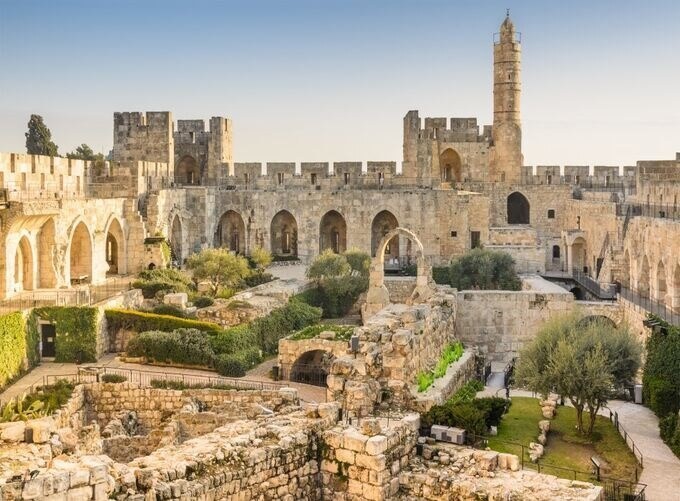
Walking is essential to experiencing the Old City because streets, gates, transitions and changes in atmosphere are part of the destination.
That does not mean every transfer across Jerusalem should happen on foot.
Stone surfaces, slopes, steps, crowds and warm weather can accumulate into substantial fatigue. Travelers with mobility concerns should plan access carefully rather than assuming the compact appearance of the Old City guarantees an easy walking day.
Footwear matters.
So do breaks.
A well-designed Jerusalem Sacred Sites Tour should preserve enough physical energy that the final important location of the day receives the same attention as the first.
Exhaustion is not evidence of cultural depth.
Allow One Evening to Remain Unclaimed
Jerusalem changes once formal sightseeing ends.
Restaurants fill, neighborhoods develop different rhythms and the Old City can feel completely different depending on the hour and location.
Rather than booking every evening with another activity, leave one open.
Perhaps you return to a viewpoint.
Perhaps dinner lasts longer than expected.
Perhaps a guide mentioned somewhere during the day that you now want to explore independently.
Perhaps nothing happens at all and you simply sit with everything you have seen.
For a city carrying this much history and religious meaning, unstructured time is unusually valuable.
The itinerary should occasionally stop talking.
A Jerusalem Visit Succeeds When the City Becomes More Complicated, Not Less
Travelers sometimes arrive hoping a good guide will explain Jerusalem so clearly that every historical and religious question feels resolved.
That is not a realistic objective.
A strong visit should provide orientation without pretending simplicity.
You should understand why the Western Wall matters without assuming Jewish history can be reduced to one location.
You should understand Christian traditions surrounding the Holy Sepulchre without imagining Christianity has only one voice.
You should understand the Islamic significance of Haram al-Sharif without treating it as merely another stop beside Christian and Jewish sites.
You should notice archaeological evidence without believing archaeology removes every historical uncertainty.
If Jerusalem feels more understandable and more complex at the same time, the visit has probably worked.
Jerusalem Questions First-Time Visitors Rarely Know to Ask
Why does the Old City feel larger than it actually is?
The physical area is relatively compact, but dense historical associations, religious sites, crowds, narrow streets and constant changes between quarters make the experience psychologically much larger. Travelers process far more information per kilometer than during an ordinary city walk.
Should my first Jerusalem experience begin inside or outside the Old City?
Either can work, but beginning with a broad geographical introduction before detailed sacred-site touring often helps. A viewpoint or guided orientation can establish spatial relationships that make later Old City walking considerably easier to understand.
Why are several Christian denominations present inside the Holy Sepulchre?
The church has developed through centuries of Christian pilgrimage, worship and custodial arrangements involving several communities. Their presence reflects Jerusalem's complicated Christian history rather than one unified institutional tradition occupying the entire site.
Can I visit sacred sites if I am not religious?
Yes, when visitor access is permitted. Jerusalem's religious sites also carry enormous historical, architectural and cultural importance. Non-religious travelers should still approach active worship spaces with the same respect expected from pilgrims and follow current local procedures.
Why do access arrangements around major sacred sites sometimes change?
Jerusalem's principal religious locations are active sacred spaces as well as major visitor destinations, and operational conditions can be affected by worship, religious holidays, security considerations or special events. Current arrangements should therefore be checked close to the visit.
Is the Old City easier to explore independently after a guided tour?
For many first-time visitors, yes. Once the gates, quarters and major landmarks become familiar, independent wandering usually feels less disorienting and more rewarding because travelers can recognize how streets and sacred areas relate to one another.
Why shouldn't I schedule Yad Vashem immediately before another major attraction?
The subject matter can be emotionally demanding, and visitors vary in how much time they need afterward. Leaving some flexibility respects the experience and prevents the visit from becoming simply another timed stop in a crowded sightseeing schedule.
Do I need to understand Israeli politics before visiting Jerusalem?
You do not need specialist political knowledge to benefit from the city, but awareness that Jerusalem carries profound religious, historical and contemporary importance for different communities helps prevent oversimplification. Good interpretation should provide context without turning every visit into political debate.
Why are rooftops useful for understanding the Old City?
Elevated views reveal how closely religious buildings, quarters and streets sit beside one another. After walking through narrow lanes where orientation is difficult, seeing the urban fabric from above can reconnect places that previously seemed completely separate.
Can Jerusalem become repetitive if I visit too many religious sites?
Yes, especially when churches, archaeological areas and sacred locations are scheduled continuously without breaks. Alternating religious heritage with markets, meals, contemporary neighborhoods or unstructured walking helps preserve attention and makes individual sacred sites more distinctive.
What should I prioritize if Jerusalem has personal religious meaning for me?
Protect the places connected most strongly with your faith rather than assuming a general sightseeing program will automatically provide enough time there. Prayer, worship or reflection often requires a different pace from ordinary guided visits and should be planned accordingly.
What should I hope to understand before leaving Jerusalem?
You should leave with a clearer mental map of how sacred sites, communities and historical layers occupy the same city. Remembering every date matters far less than understanding why different people can stand in Jerusalem and experience profoundly different meanings.

A travel professional specializing in tailor-made travel planning, guest experience management, and multi-destination tourism operations.
With over 23 years of experience in the travel industry, he designs and manages private and cultural tours for international travelers across Türkiye, Greece, Egypt, Jordan, Morocco, and other destinations.
He has strong expertise in both online and face-to-face guest communication, sales processes, and end-to-end travel operations.
Working closely with hotels, travel agencies, and local partners, he ensures smooth coordination and high-quality travel experiences at every stage of the journey.
His focus is on delivering personalized, reliable, and seamless travel experiences for international guests worldwide.