Israel in 7 Days: A Better One-Week Itinerary
Updated: August 2026
One Week Is Long Enough to Travel Well, but Short Enough to Punish Bad Editing
Seven days in Israel can produce an excellent first journey because the country allows travelers to experience remarkably different environments within a relatively compact geographical area. Jerusalem, Tel Aviv, the Dead Sea and selected northern destinations can all belong to a one-week trip when the route has a clear hierarchy.
The problem begins when every famous place becomes essential.
A first draft often contains Jerusalem, Tel Aviv, Nazareth, Sea of Galilee, Haifa, Caesarea, Masada, Dead Sea, Negev and perhaps Eilat. The distances may look manageable individually, which encourages travelers to believe that efficiency will solve everything.
Efficiency cannot create additional nights.
A week contains only so many hotel mornings, full sightseeing days and evenings when travelers are not packing for another departure. Every additional region therefore reduces the amount of usable attention available somewhere else.
A strong seven-day itinerary is not the route containing the greatest number of names.
It is the route where each change of place creates enough new experience to justify the time it removes from somewhere else.
The First Night Determines More Than Travelers Expect
Seven nights on a booking confirmation do not necessarily produce seven sightseeing days.
If an international flight reaches Israel in the evening, the first night may provide little more than airport arrival, transfer, dinner and sleep. If the departure flight leaves early on the eighth day, the final morning may belong almost entirely to airport logistics.
The practical itinerary could therefore contain six full days rather than seven.
That difference matters enormously when a route has already been designed to its maximum capacity.
Before allocating destinations, write down the actual arrival time and the time you need to begin the final airport transfer. Only then should you start distributing hotel nights.
This prevents the common situation where “Day 1 Jerusalem” turns out to mean arriving at the hotel at 20:30.
Jerusalem Should Usually Receive the Largest Share of a First Week
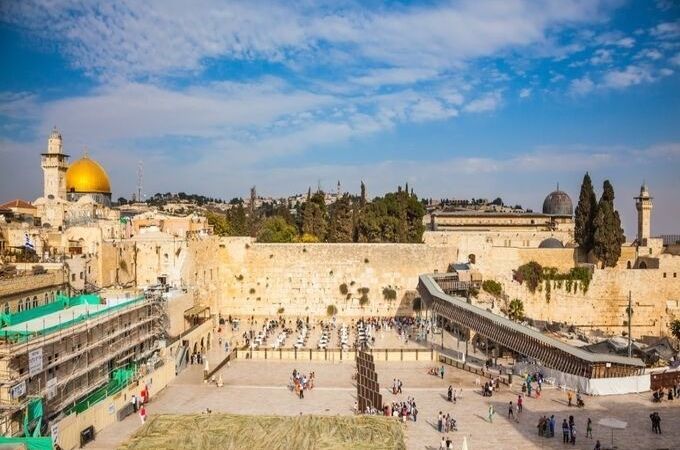
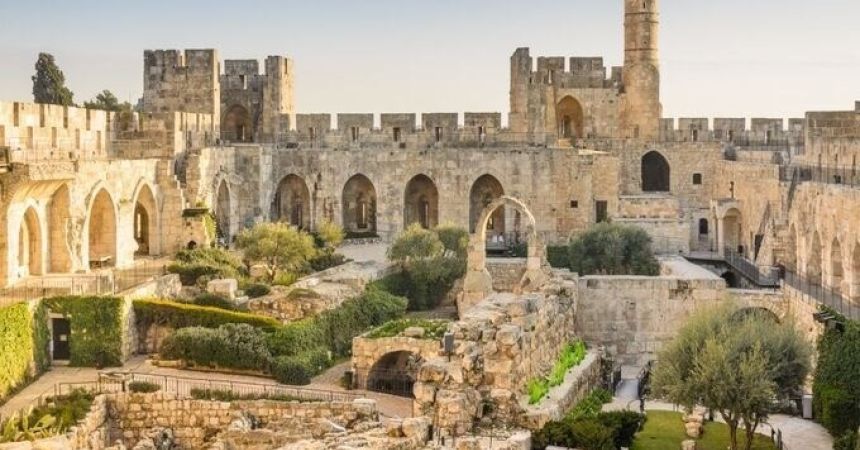
For most first-time cultural travelers, Jerusalem deserves more than a brief highlights day because the city combines several of the journey’s major themes in one place: Jewish, Christian and Muslim sacred geography, archaeology, historical layers and contemporary life.
Two nights can work when the wider trip has another very strong priority, although the actual sightseeing window may be surprisingly narrow depending on arrival and departure.
Three nights often creates a much stronger foundation.
Now there is enough time for a substantial Old City experience without requiring every important sacred location to be visited at maximum speed, while at least part of modern Jerusalem or another major experience can remain possible.
The point is not that every traveler must spend three nights there.
It is that shortening Jerusalem should buy something genuinely important elsewhere.
If the recovered night merely allows another quick city stop, the trade is usually weak.
Tel Aviv Needs Less Formal Touring but Still Needs Real Time
Tel Aviv presents almost the opposite planning challenge.
Travelers sometimes give it too little time because the city contains fewer of the internationally famous historical monuments that dominate Jerusalem, while others allocate several days simply because the Mediterranean lifestyle sounds relaxing.
In a seven-day cultural itinerary, Tel Aviv works well when it provides contrast.
Jaffa brings historical depth, while neighborhoods, food, architecture, markets and the coastline reveal contemporary Israel in ways the heritage-heavy portions of the trip cannot.
A single overnight can provide a useful introduction if arrival and departure timing cooperate, although two nights allow the city to function much more naturally because travelers can experience both daytime and evening without rushing onward.
The relevant question is not whether Tel Aviv deserves as many monuments as Jerusalem.
It deserves time for a different reason.
The Dead Sea Fits a Week Better Than a Desert Resort Circuit
The Dead Sea is one of the easiest major experiences to incorporate into a first week because it can be combined geographically with Masada and the Judean Desert without necessarily requiring a separate multi-night regional segment.
That makes it extremely attractive from an itinerary-design perspective.
A morning at Masada followed by a properly paced Dead Sea experience creates a day that shifts from historical interpretation to something physical and natural, producing contrast without requiring another distant region.
An overnight at the Dead Sea becomes more appropriate when resort time itself matters.
For a traveler primarily interested in experiencing the float and landscape, continuing afterward may preserve another precious night for Jerusalem or northern Israel.
This is exactly the kind of decision that defines a seven-day itinerary: not whether a destination is worth visiting, but which version of the destination the week can afford.
Northern Israel Is Where the One-Week Route Usually Splits
Once Jerusalem, Tel Aviv and a Dead Sea experience are included, the remaining question is whether northern Israel belongs in the first week.
For Christian travelers, the answer may be an emphatic yes.
Nazareth and the Sea of Galilee can be central rather than secondary, especially when Capernaum, Tabgha, Mount of Beatitudes and biblical landscapes are major reasons for traveling.
For a general cultural traveler, northern Israel competes more directly with deeper time in Jerusalem, additional Tel Aviv time or another experience elsewhere.
The north therefore should not be treated as one obligatory national highlight.
Its value depends heavily on the journey’s purpose.
This creates two genuinely different seven-day models rather than one “perfect” itinerary.
Route A: The First-Time Cultural Week
For travelers interested in a broad first impression rather than a pilgrimage-focused journey, I would generally prioritize Jerusalem + Dead Sea/Masada + Tel Aviv, with the possibility of one carefully chosen additional experience if flight times permit.
A practical flow could look like this:
Jerusalem — 3 nights
Use the city as the historical and religious anchor, allowing enough time for major sacred sites and broader context rather than attempting to visit every location.
Masada & Dead Sea — regional touring day
This can operate from Jerusalem or function as a transition according to the wider route, avoiding another hotel unless resort time is personally important.
Tel Aviv — 2 nights
Use Jaffa, neighborhoods, food and Mediterranean life to create a completely different urban chapter.
Remaining night / usable day — flexible according to flights and interests
This is where customization matters. Another night in Jerusalem may be more valuable than adding another city, while certain flight schedules could naturally shift the balance toward Tel Aviv.
The apparent simplicity is the strength of this route.
It leaves enough margin for the places included to feel different rather than compressed.
Route B: The Christian Heritage Week
A traveler whose main purpose is biblical and Christian heritage should use the same seven days differently.
Here, northern Israel becomes fundamental.
A more suitable structure could include:
Jerusalem — 3 nights
Major Christian sites alongside broader sacred and historical context.
Nazareth / Sea of Galilee — 2 nights in the northern region
Use the time to connect Nazareth with Capernaum, Tabgha, Mount of Beatitudes and the lake landscape without forcing every site into one exhausting day.
Masada & Dead Sea — 1 regional day or selected component
Include according to priorities rather than automatically giving equal weight to secular sightseeing.
Final overnight according to flight routing
Tel Aviv can provide a contemporary contrast and practical final base, but it does not need to consume the same time it would in a general cultural itinerary.
This is where Israel Christian Pilgrimage Tours should differ structurally from ordinary Israel packages rather than merely inserting more churches into the same route.
Seven Days Cannot Support Every Change of Travel Genre
One reason overpacked itineraries become tiring is that every new destination requires travelers to change mental mode.
Jerusalem asks for historical and religious concentration.
The Galilee asks travelers to understand a regional biblical landscape.
Tel Aviv asks them to relax into contemporary city life.
Masada introduces archaeology and desert geography.
The Dead Sea provides a physical natural experience.
Eilat would then change the journey again toward Red Sea leisure, while the Negev adds deeper desert landscape travel.
Each change can be wonderful.
Too many changes in one week prevent any of them from settling.
This is why I would normally resist adding both a substantial northern section and a meaningful far-southern section to the same first seven days.
The map may permit it.
The traveler’s attention usually benefits from choosing.
Eilat Is Usually the First Major Destination I Would Remove
This is not because Eilat is less worthwhile than other places.
Its location changes the equation.
Traveling to the southern tip of Israel makes excellent sense when snorkeling, diving, Red Sea relaxation or a southern leisure component is one of the main reasons for traveling. In that case, something else should be reduced to create genuine time there.
Adding Eilat as a single rushed overnight to an already full first week rarely achieves much.
The journey south consumes time, while the traveler receives too little Red Sea experience to justify the movement.
A seven-day itinerary becomes stronger when it accepts that Eilat may belong to another version of the trip rather than squeezing it into this one.
Caesarea and Haifa Should Not Automatically Become an Extra Northern Day
Coastal northern destinations are another temptation because they can be geographically linked.
Caesarea provides archaeological interest, while Haifa offers a very different contemporary hillside city experience.
Both are worthwhile.
Neither needs to appear solely because the traveler is already moving north.
If the Christian heritage route is the priority, Nazareth and the Galilee deserve protection before additional coastal stops are inserted. If archaeology is particularly important, Caesarea may earn the time while something else is reduced.
Good route design does not ask, “What else is nearby?”
It asks, “Does the nearby place improve the story we are already traveling for?”
One-Night Hotels Need to Justify the Packing
One-night stays are occasionally excellent solutions.
They become problematic when used repeatedly to increase destination count.
In a seven-day journey, three consecutive one-night hotels mean travelers spend several mornings packing and several afternoons becoming familiar with new accommodations. The distances may be efficient, yet the trip can still feel fragmented.
A one-night stay should therefore have one of three strong reasons: geography requires it, the destination itself deserves the experience, or it significantly improves the following day.
If none applies, consider whether returning to the same hotel or giving another destination a second night creates a better trip.
This question becomes especially important on Customized Israel One-Week Tours, where there is no reason to inherit hotel changes simply because a standard package traditionally uses them.
Use Nights as Anchors, Not as Destination Trophies
This table evaluates nights according to the pressure they remove from the itinerary, rather than ranking destinations.
| Night allocation | What it protects | What happens if shortened too far |
|---|---|---|
| Third Jerusalem night | Sacred-site depth and broader city context | Jerusalem becomes a rapid highlights tour |
| Second Tel Aviv night | Evening life + Jaffa/modern-city balance | City risks becoming an arrival/departure stop |
| Second northern night | Galilee regional continuity | Nazareth and lake sites become one rushed day |
| Dead Sea overnight | Resort and recovery time | Usually unnecessary if only floating is desired |
| Eilat second/third night | Actual Red Sea experience | Southern journey becomes poor value |
| Flexible final night | Flight reliability and itinerary breathing room | Final day can become operationally stressful |
The important lesson is that an extra night should solve a problem, not merely increase the number beside a destination name.
Guided Days Should Not All Be Full Days
A week of eight-hour guided sightseeing sounds efficient until the fourth consecutive morning.
Historical and religious interpretation requires attention, and the quality of that attention declines when every day is filled to the same intensity.
Jerusalem may justify a substantial guided program.
A Dead Sea afternoon needs less interpretation.
Tel Aviv can benefit from a focused Jaffa or architectural introduction followed by independent time.
A Galilee pilgrimage day may require guiding throughout because geography and biblical context need to remain connected.
The strongest Private Israel Week Tours therefore vary guiding intensity rather than assuming one service pattern should cover the whole country.
The itinerary becomes more human when the days are allowed to feel different.

Lunch Is Where Overpacked Seven-Day Tours Quietly Collapse
An itinerary can appear perfectly timed because lunch is listed as one line between two visits.
Travelers rarely eat as quickly as spreadsheets imagine.
People need bathrooms, coffee, conversation and occasionally an extra fifteen minutes because the restaurant is enjoyable. Once lunch expands, every later attraction begins losing time.
This does not mean lunch should dominate the day.
It means the schedule needs enough margin that an ordinary meal does not create a crisis.
In a seven-day tour, there is little value in preserving one additional minor attraction by making every meal feel rushed.
Food is part of traveling through Israel, particularly in Tel Aviv, Jerusalem and northern communities where different culinary traditions provide contemporary context after historically intensive mornings.
Arrival Day Should Be Easy to Fail Gracefully
The best arrival-day plan is one that remains worthwhile if the aircraft is late.
A major timed site, complicated regional transfer or non-refundable experience scheduled immediately after an international flight creates unnecessary vulnerability.
A neighborhood walk, relaxed dinner, hotel check-in and perhaps an easy nearby experience can usually absorb delay far more comfortably.
This matters disproportionately in a seven-day itinerary because planners may feel pressure to use every available hour.
Do not steal reliability from the whole week to gain two speculative hours on arrival day.
The Final Day Should Not Contain Something You Would Regret Missing
The same principle applies at departure.
If international flight timing controls the second half of the day, avoid placing a highly important experience immediately before the airport transfer.
Traffic, airport procedures and unexpected delays are normal operational variables.
The final day works better when the most emotionally important destinations have already been experienced and whatever remains can be adjusted if necessary.
That is especially useful for travelers ending in Tel Aviv, where an easy morning, neighborhood time or meal can create a pleasant conclusion without making the flight compete with a major historical site.
Seven Days With Children Needs Fewer “Musts”
Families often discover that a destination list designed by adults contains far more non-negotiable experiences than children require.
A seven-day family route should therefore preserve contrast rather than maximizing history.
Jerusalem may remain essential, but several consecutive religious or archaeological visits can be broken by food, open space, a pool, market time or another more physical experience. The Dead Sea can become particularly memorable because children engage with it directly rather than through interpretation.
Hotel changes deserve extra skepticism because packing a family consumes more energy than moving two adults.
The best family week often looks slightly less ambitious than the couple’s version and feels substantially better while traveling.
A Seven-Day Itinerary Should Have One Deliberately Light Period
This does not need to be a full free day.
A late afternoon without guiding, a relaxed Tel Aviv evening or a slower period after the Dead Sea can be enough.
The purpose is to give the journey space to absorb itself.
Travelers may want to revisit a neighborhood, shop, have a longer dinner or simply stop processing information for several hours.
A seven-day trip is short, but short does not mean every hour needs to be assigned.
The easiest way to make one week feel longer is occasionally to stop measuring it.
The Best Version of Seven Days Depends on What You Refuse to Sacrifice
If Jerusalem is non-negotiable, protect Jerusalem first.
If Christian heritage defines the trip, protect the Galilee and Nazareth before adding optional coastal stops.
If contemporary culture matters equally with history, Tel Aviv needs enough time to become more than the final hotel.
If the Red Sea is a major personal dream, redesign the entire week around the south rather than inserting Eilat after everything else.
That is how Customized Seven-Day Israel Journeys should be built.
Customization begins with what the traveler refuses to lose.
The route emerges from those priorities rather than from a standard sequence of cities.
Seven Days Works When the Itinerary Stops Trying to Look Complete
A successful first week may leave Haifa unseen.
Another may skip Eilat.
A Christian itinerary may devote little time to Tel Aviv, while a contemporary cultural journey may barely touch the Galilee.
None of these trips is incomplete.
They are edited.
That distinction matters because travelers often assume a good first trip should function as a national summary.
Israel contains too much religious, historical, archaeological, urban and natural variation for seven days to summarize convincingly.
What one week can do extremely well is create a coherent first chapter.
Choose its subject, protect its strongest places and allow the remainder of the country to remain worth returning for.
Seven-Day Questions That Depend on the Actual Route
Should I sleep in Jerusalem on the first night after a late flight?
It can work when the transfer remains comfortable and Jerusalem is the first major destination, although a very late arrival may justify simplifying the first night according to airport logistics. The decision should protect the following morning rather than merely reduce hotel changes.
Can I see Jerusalem properly with only two nights?
Two nights can provide a strong introduction when arrival and departure times are favorable, but the usable sightseeing window can become narrow. Travelers with substantial religious or historical interests usually benefit from protecting a third night somewhere in the route.
Is it better to visit the Dead Sea from Jerusalem or sleep there?
A day visit works well when floating and regional sightseeing are the main goals. An overnight becomes more valuable when resort facilities, spa time or genuine recovery matter enough to justify using one of only seven nights.
Should Christian travelers sacrifice Tel Aviv time for Galilee?
Often yes when Christian heritage is the trip’s dominant purpose. Tel Aviv can still provide valuable contemporary contrast, but Nazareth and the Sea of Galilee deserve enough time to avoid becoming compressed pilgrimage stops.
Can Caesarea fit while traveling between Tel Aviv and the north?
Geographically it can, making it an attractive route stop for travelers genuinely interested in archaeology. The question is whether the visit reduces time at higher-priority northern destinations; proximity alone should not make the decision.
Is two nights in Tel Aviv excessive on a one-week trip?
Not for travelers interested in Jaffa, food, neighborhoods and contemporary urban culture. Two nights become excessive only when Tel Aviv is primarily being used as a logistical base and the traveler’s strongest interests lie elsewhere.
Should I include a completely free day during only seven days?
Usually a full free day is unnecessary unless relaxation is a major priority, but protecting one unscheduled half-day or evening can improve the week considerably without sacrificing an important destination.
How many different hotels feel comfortable in one week?
There is no universal maximum, although repeated one-night stays deserve scrutiny. Two or three well-chosen bases can often provide a smoother journey than moving nearly every day, especially for families or travelers with substantial luggage.
Can the Negev replace the Dead Sea in a first-week itinerary?
They provide different experiences. The Negev is valuable for desert landscapes and geology, while the Dead Sea offers a highly distinctive physical experience that can be incorporated more compactly. Choose according to interest rather than treating one as a substitute.
What should I remove first if my seven-day plan feels rushed?
Remove the lowest-priority geographical detour, not necessarily the smallest attraction. Eliminating one remote destination can recover transfer time, hotel changes and parts of several days, producing more improvement than deleting a few individual sightseeing stops.
Should every hotel stay include at least two nights?
No. A strategically useful one-night stay can improve route flow, particularly in regional travel. The problem arises when several appear consecutively and each destination becomes primarily somewhere travelers arrive and leave.
How do I know if my one-week itinerary is finally balanced?
Look at the sequence rather than the destination count. If major places receive real usable time, hotel changes have clear reasons, the final days are not dependent on perfect timing and at least one lighter period remains, the route is probably close to ready.

A travel professional specializing in tailor-made travel planning, guest experience management, and multi-destination tourism operations.
With over 23 years of experience in the travel industry, he designs and manages private and cultural tours for international travelers across Türkiye, Greece, Egypt, Jordan, Morocco, and other destinations.
He has strong expertise in both online and face-to-face guest communication, sales processes, and end-to-end travel operations.
Working closely with hotels, travel agencies, and local partners, he ensures smooth coordination and high-quality travel experiences at every stage of the journey.
His focus is on delivering personalized, reliable, and seamless travel experiences for international guests worldwide.