Jerusalem Weather in February: Build a Plan That Can Bend
The Most Useful Backup Plan Is Usually Already in Your Itinerary
There is a tendency to prepare a separate “rainy-day Jerusalem” list before a winter trip. In practice, that can create more planning than necessary.
If your itinerary already includes museums, religious interiors, archaeological spaces, meals and outdoor walking, you probably have enough variety. The useful question is not what completely different activities could replace the original day, but whether two experiences already on the schedule could exchange positions without creating logistical problems.
That approach preserves the trip you actually wanted.
Protect the Experience, Not the Original Hour
Imagine that you planned a substantial outdoor section for late morning, but the latest forecast now places the most unsettled weather around that period.
If the activity has no fixed reservation and moving it later requires little disruption, changing the order makes sense. However, if rearranging it means cancelling a guide, rushing another important visit or crossing Jerusalem unnecessarily, maintaining the original sequence may still be preferable unless conditions make that impractical.
February flexibility works best when it improves the quality of the experience, rather than merely producing an itinerary that looks perfectly synchronized with a weather app.
A Three-Level Decision Is Enough
You do not need to interpret every percentage or forecast model. For ordinary sightseeing, a much simpler decision framework usually works.
| Conditions Expected | Itinerary Response |
|---|---|
| Mostly usable | Keep the original plan |
| Mixed / changing | Preserve fixed visits; move flexible outdoor sections only when useful |
| Clearly unsuitable | Prioritize appropriate indoor experiences and reassess exposed plans |
The simplicity is intentional. February's value lies in creating an itinerary that can absorb changing conditions, not turning travelers into amateur meteorologists.
One Difficult Morning Shouldn't Consume Tomorrow
Another consequence of winter weather is the temptation to push everything postponed today into the following day.
That can create a domino effect.
Tomorrow's carefully paced itinerary suddenly contains yesterday's missed walk, an additional viewpoint and the original schedule, producing a day that is technically possible but considerably less enjoyable.
Before transferring something forward, ask whether it genuinely needs to be recovered. Some experiences are essential to you; others were optional from the beginning.
A flexible itinerary should be capable of letting something go as well as moving it.
Weather Delays Can Become Useful Pauses
If conditions encourage you to remain indoors longer than planned, that time does not automatically become lost sightseeing.
An extended lunch, additional time inside a place that interests you or an unhurried coffee can provide a natural pause in what might otherwise have been a demanding heritage itinerary. When conditions improve, you return outside without feeling that you spent the previous hour merely waiting for the rain to stop.
This is an important human distinction. Nobody enjoys feeling trapped inside because of weather, but choosing to spend longer somewhere worthwhile feels entirely different.
Footwear Is Where February Flexibility Becomes Practical
A flexible schedule is not particularly helpful if every change in conditions makes walking uncomfortable.
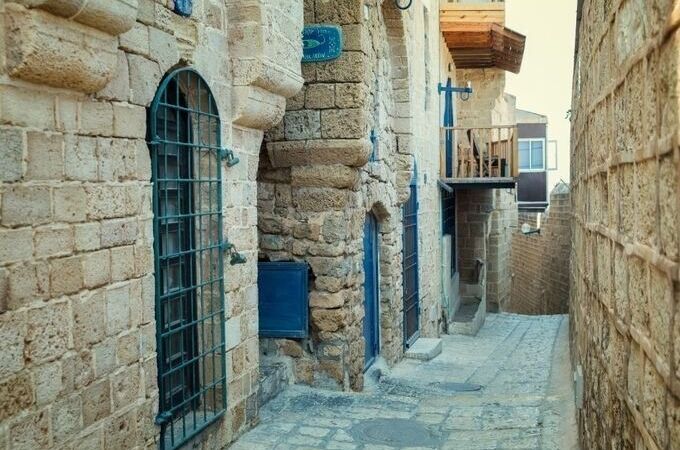
Jerusalem's historic areas involve stone paving, steps, slopes and uneven surfaces, so footwear suitable for the forecast matters more than elaborate winter accessories. When wet conditions are expected, grip and reasonable weather resistance become particularly useful.
This should remain practical rather than dramatic. You do not need expedition footwear for ordinary urban sightseeing; you need shoes in which you are comfortable spending several hours exploring a historic city under the conditions actually forecast.
The Morning Forecast Should Eventually Leave Your Hand
February encourages checking the weather more frequently than a stable summer month, but there is a point where repeated checking stops adding value.
Once you understand the day's likely pattern, have suitable clothing and know which activities can move, put the phone away. If conditions change visibly, respond to what is actually happening rather than refreshing the forecast every fifteen minutes.
The itinerary was designed to bend precisely so that you would not need to micromanage it.
A Successful February Day May Look Different From the Plan
Perhaps the Old City walk happens after lunch instead of before it. A museum receives ninety minutes rather than sixty because rain lasts longer than expected. Another outdoor stop moves to tomorrow, while something you considered minor becomes unexpectedly memorable.
None of this means the weather ruined the day.
A successful winter itinerary should be judged by the quality of what you experienced rather than how faithfully it reproduced the schedule created before departure.
That is the difference between a plan and a script.
February needs the first, not the second.
12 Questions About Jerusalem in February
1. What is the weather like in Jerusalem in February?
February remains part of Jerusalem's winter season, so visitors can encounter cool conditions, rain, cloud, brighter intervals and changing weather patterns. Because conditions may evolve during a visit, short-range forecasts are particularly useful for organizing weather-sensitive sightseeing.
2. Does it rain in Jerusalem in February?
Rain is possible and can sometimes arrive as part of broader winter weather systems rather than isolated showers. Individual dates vary considerably, however, so historical averages should provide seasonal context rather than being treated as a prediction for your trip.
3. Is Jerusalem cold in February?
February can feel cold, especially during unsettled weather, evenings and periods with limited sunshine. Conditions vary, and walking can change perceived comfort considerably, making adaptable layers more useful than assuming one clothing combination will work throughout every day.
4. Can it snow in Jerusalem in February?
Snow is possible when suitable winter atmospheric conditions develop, but it is not a routine feature that travelers should expect during every February visit. If unusually cold weather is forecast, check current local information close to your travel dates.
5. What should I wear in Jerusalem in February?
Choose adaptable winter clothing suited to the current forecast, together with comfortable footwear for extended sightseeing. When rain is expected, appropriate outer protection becomes useful, particularly because historic areas can involve stone surfaces, steps and substantial walking.
6. Should I prepare a separate rainy-day itinerary?
Usually not. A better approach is to identify which activities in your existing itinerary are fixed and which can move. Museums, interiors and meals can provide natural flexibility without replacing the Jerusalem experiences you originally wanted.
7. How far ahead should I trust the February forecast?
Longer-range forecasts are useful for identifying general patterns, while exact timing becomes more valuable closer to the day. Avoid reorganizing important reservations several days ahead solely because rain currently appears during a particular hour.
8. Should I cancel outdoor sightseeing when rain is forecast?
Not automatically. Consider expected intensity, duration, current conditions and whether the activity can easily move. Shorter or intermittent wet periods may require only minor adjustments, while more significant weather can justify changing exposed outdoor plans.
9. Are Jerusalem's stone streets slippery when wet?
Some stone surfaces, steps and slopes can become more slippery when wet, so appropriate footwear and ordinary caution are sensible. Conditions differ by location, and there is no need to avoid historic areas solely because rain has occurred.
10. What happens if several days show rain?
Avoid assuming that several rain symbols mean uninterrupted precipitation throughout the entire period. Examine updated forecasts for timing and intensity, preserve fixed commitments where practical and use better weather intervals for outdoor experiences that genuinely benefit from them.
11. Is February the best time to visit Jerusalem?
That comparison belongs to the Best Time to Visit Jerusalem page. February's exclusive role is explaining how to build an itinerary resilient enough to accommodate evolving winter weather without repeatedly dismantling the experiences you came to Jerusalem to have.
12. How is February different from January in Jerusalem?
January focuses on the thermal contrast between winter daylight and colder conditions after sunset. February deliberately changes both structure and intent, examining itinerary resilience when winter weather evolves across hours or consecutive days and forecasts require selective rather than constant replanning.

A travel professional specializing in tailor-made travel planning, guest experience management, and multi-destination tourism operations.
With over 23 years of experience in the travel industry, he designs and manages private and cultural tours for international travelers across Türkiye, Greece, Egypt, Jordan, Morocco, and other destinations.
He has strong expertise in both online and face-to-face guest communication, sales processes, and end-to-end travel operations.
Working closely with hotels, travel agencies, and local partners, he ensures smooth coordination and high-quality travel experiences at every stage of the journey.
His focus is on delivering personalized, reliable, and seamless travel experiences for international guests worldwide.