Jerusalem January Weather Travel Overview Guide
Updated: August 2026
January in Jerusalem can catch travelers out for a surprisingly simple reason: the afternoon they experience and the evening they imagined do not always seem to belong to the same day.
Spend a sunny winter afternoon walking through the Old City and conditions may feel far more manageable than the word winter suggested before you arrived. You have been moving, the sun is reaching the pale stone around you, and perhaps the heavier layer packed that morning has already found its way into your bag.
A few hours later, that decision can look premature.
Once daylight fades, Jerusalem loses one of the things that was making the afternoon feel comfortable. The city sits high in the Judean Hills, well inland from the Mediterranean coast, and January evenings can remind you very quickly that this is not a low-lying coastal winter destination.
For travelers, that day-to-evening contrast is more useful than another page filled with monthly averages.
January Makes More Sense When You Plan Two Jerusalems
Most people create a day's itinerary geographically.
Old City first, perhaps another neighborhood afterward, dinner somewhere convenient and then an evening walk if everyone still has energy.
In January, it can be equally useful to think thermally.
There is the Jerusalem you experience while daylight, movement and occasional winter sunshine are working in your favor. Then there is the Jerusalem you encounter later, when you are walking more slowly, sitting over dinner, waiting outside or simply spending time without the warmth of direct sun.
The temperature has not necessarily collapsed dramatically. Your relationship with it has changed.
That is the organizing principle behind this January guide.
The Winter Sun Can Make You Underestimate the Evening
Jerusalem's stone architecture interacts beautifully with low winter light, particularly when sunshine reaches walls, courtyards and narrow streets. More importantly for comfort, direct sunlight can make an afternoon feel considerably more inviting than a traveller expected from checking the morning temperature.
This creates what might be called the January confidence problem.
You begin the day dressed for winter. By early afternoon, walking has warmed you and sunshine feels pleasant, so the outer layer comes off. After several comfortable hours, you unconsciously recalibrate your expectations and assume the evening will simply be a slightly cooler continuation of the afternoon.
It may not feel that way once the sun disappears.
A Jerusalem winter itinerary therefore benefits from clothing that can disappear into a day bag without disappearing entirely from the day.
What Changes at Sunset Isn't Just the Number
Consider the same traveler under four different circumstances:
| Moment | What Is Helping You | What Can Change the Experience |
|---|---|---|
| Sunny afternoon walk | Movement + direct sun | Shade can already feel cooler |
| Late afternoon sightseeing | Continued movement | Sun becomes less effective |
| Evening street walk | Movement only | No direct solar warmth |
| Outdoor dinner or waiting | Very little body movement | Cool air becomes more noticeable |
This is a thermal-behavior table, rather than a monthly climate chart.
The distinction matters because average high and low temperatures cannot tell you whether you will spend an hour walking briskly at 2 p.m. or forty minutes sitting outside after dark. Those are entirely different travel experiences.
The Old City Creates Its Own Winter Rhythm
Jerusalem's Old City makes January especially interesting because the experience constantly alternates between exposure and shelter.
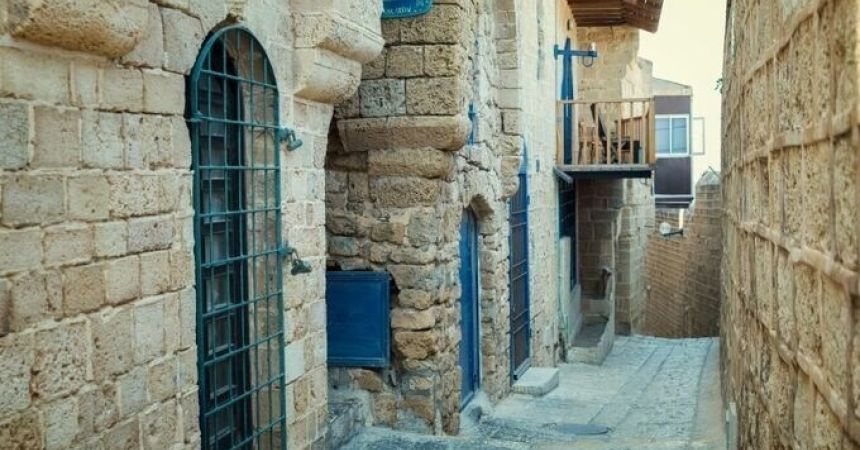
You move through a narrow lane where buildings reduce direct sunlight, emerge into a more open area, enter an interior, climb steps, stop to look at something, then begin walking again. Each transition changes your activity level and exposure even though the official weather remains the same.
This is one reason January clothing needs flexibility rather than bulk.
A heavy coat that feels wonderful while standing outside after sunset may become inconvenient during a long uphill walk or when moving repeatedly between interiors and outdoor spaces. Several adaptable layers allow the day to change without forcing you to choose between carrying excessive winter clothing and being uncomfortable later.
Don't Dress for the Warmest Fifteen Minutes
A pleasant January afternoon can create a misleading packing lesson.
Travelers sometimes return from sightseeing saying, “I didn't need half the winter clothes I brought.”
Perhaps they did not need them at 2 p.m.
The more useful question is whether they needed them at 7 p.m.
When planning an Israel heritage circuit, clothing should accommodate the complete day rather than the most comfortable moment within it. This becomes particularly relevant when the itinerary moves between Jerusalem and destinations at different elevations or with different climatic characteristics.
What feels unnecessary during one stop may earn its place several hours later.
Shade Deserves More Attention Than the Weather Icon
A bright sun symbol creates an immediate expectation of warmth.
January shade can tell another story.
In streets or courtyards receiving limited direct sun, conditions may feel noticeably cooler than in an open sunny location. This is not a separate microclimate requiring complicated planning; it is simply another reason why the day's headline temperature cannot fully describe your comfort.
If your sightseeing involves long periods inside shaded Old City streets, the layer you removed in an open square may become useful again surprisingly quickly.
That repeated adjustment is normal.
Rain Is Part of January, but It Doesn't Own This Article
January falls within Jerusalem's wetter part of the year, so rain can certainly affect a visit. Current forecasts should be checked, suitable rain protection used when necessary, and more unsettled conditions treated sensibly.
However, rainfall is deliberately not January's semantic ownership within this cluster.
November will later examine rain interruptions and the way a heritage-heavy itinerary can remain coherent when outdoor and indoor experiences need to exchange places. January has a narrower question: why can a winter day that feels perfectly manageable in daylight become substantially colder in character after sunset?
Keeping that boundary prevents twelve Jerusalem weather articles from slowly becoming twelve versions of the same winter advice.
January Doesn't Require a Short Sightseeing Day
The response to cooler evenings should not automatically be returning to the hotel at sunset.
Jerusalem after dark is part of the experience, and a Jerusalem private journey can continue comfortably into the evening when clothing matches the conditions.
The practical change is small. If you know that dinner, an evening walk or another activity will keep you outside, keep the appropriate layer accessible rather than leaving it behind because the afternoon happened to be sunny.
This is a much better solution than allowing the temperature to shorten the itinerary unnecessarily.
A 4 PM Decision Can Improve the Entire Evening
There is one useful January habit that requires almost no planning.
Before the late afternoon turns into evening, think about what comes next.
If you have returned near the hotel, perhaps you collect another layer before dinner. If you are staying out continuously, make sure what you need is already in your bag. If the forecast has changed, check the evening temperature, wind and precipitation before committing to a long outdoor plan.
The objective is not to monitor weather throughout the day.
It is to avoid discovering at dinner that the jacket you really want is hanging in a hotel room across Jerusalem.
January's Jerusalem Is Defined by Contrast
There will be rainy January days, cloudy ones and periods when winter feels unmistakably wintery from breakfast onward. There may also be bright afternoons when visitors wonder why they packed so cautiously.
Monthly weather cannot promise either experience.
What January can teach reliably is how to interpret the contrast when it appears. Jerusalem's elevation, inland position, winter sunlight and changing activity levels mean daytime comfort should not automatically become your expectation for the evening.
The best preparation is therefore remarkably uncomplicated: dress flexibly enough to enjoy both versions of the city.
Because in January, the Jerusalem you leave after lunch may not feel quite like the Jerusalem you walk through after dinner.

A travel professional specializing in tailor-made travel planning, guest experience management, and multi-destination tourism operations.
With over 23 years of experience in the travel industry, he designs and manages private and cultural tours for international travelers across Türkiye, Greece, Egypt, Jordan, Morocco, and other destinations.
He has strong expertise in both online and face-to-face guest communication, sales processes, and end-to-end travel operations.
Working closely with hotels, travel agencies, and local partners, he ensures smooth coordination and high-quality travel experiences at every stage of the journey.
His focus is on delivering personalized, reliable, and seamless travel experiences for international guests worldwide.