Jerusalem Weather in May: Watch the Landscape Change
Updated: August 2026
There is a point in Jerusalem's spring when the change of season becomes visible before it feels fully like summer.
May often occupies that territory.
The city may still carry traces of its greener spring appearance, particularly earlier in the transition, while increasing dryness and stronger sunshine gradually alter the surrounding landscape. Stone becomes visually dominant again, exposed ground takes on warmer tones, and the relationship between vegetation and Jerusalem's built environment begins to look different from the wetter months.
For travelers, this matters because weather is not experienced only as temperature.
Sometimes you see the season changing before you consciously feel it.
May Is Not Simply April Plus a Few Degrees
That would be the easiest article to write and the least useful.
April's Jerusalem story was about time: increasing daylight creating more breathing room for outdoor heritage sightseeing.
May changes the subject from time to surface.
Look beyond the temperature and the seasonal progression becomes visible in vegetation, ground conditions, sunlight and the increasingly dry appearance of the wider landscape. The exact timing varies from year to year because rainfall patterns and temperatures do not follow an identical schedule.
That variability is part of the experience.
A Jerusalem May adventure near the beginning of the month may retain a noticeably different spring character from one close to June.
Jerusalem's Colour Palette Begins to Shift
Visitors often arrive with a fixed visual image of Jerusalem: pale limestone, narrow historic streets, religious monuments and dry hills.
That image is incomplete.
Winter rain and spring growth can introduce far more green into Jerusalem and its surroundings than some first-time visitors expect. As the wetter period retreats and the landscape dries, those seasonal greens gradually lose their dominance.
May can place you somewhere inside that visual handover.
There is no exact date when “green Jerusalem” becomes “dry Jerusalem.” Different plants respond at different speeds, local conditions vary, and one year's rainfall can leave a different legacy from another's.
The useful expectation is simply that the landscape is moving.
Stronger Sun Changes More Than Temperature
May sunshine deserves attention for a reason that is easy to miss.
You can feel perfectly comfortable in the air and still accumulate substantial sun exposure while spending hours outdoors. This is especially relevant in Jerusalem because sightseeing frequently involves long periods walking through open archaeological areas, courtyards, viewpoints and historic streets.
The absence of extreme heat does not make sun protection irrelevant.
This distinction gives May its own place in the cluster.
June will examine how Jerusalem's dry summer heat interacts with shade and perceived comfort. May comes earlier, when travelers may underestimate solar exposure precisely because the air itself can still feel manageable.
The Comfortable-Day Trap
Imagine a beautifully clear May morning.
You leave the hotel without feeling particularly warm, spend several hours exploring and barely think about the weather. There is no oppressive humidity and no obvious reason to shorten the walk.
By afternoon, however, your skin has been receiving sunlight for much longer than your perception of temperature suggested.
That is May's trap.
Comfort and solar exposure are not the same measurement.
May's “Feels Fine” Checklist
| What You Notice | What It Doesn't Automatically Tell You |
|---|---|
| Air feels comfortable | UV exposure is low |
| Light breeze | Sun protection is unnecessary |
| You are not sweating heavily | You have had little sun exposure |
| Morning feels mild | Afternoon sun will remain equally gentle |
| Landscape still looks springlike | Summer-style sun awareness can wait |
| Clouds appear occasionally | Prolonged outdoor exposure no longer matters |
This is a perception-versus-exposure table, deliberately different from April's daylight-value framework and the temperature-led tables used elsewhere.
The Landscape Can Change During Your Trip
On a longer stay, particularly around a warm and dry period, you may notice subtle changes in vegetation and ground conditions between arrival and departure.
Most travelers will not experience some dramatic transformation over four days, of course. Seasonal change works more gradually than that.
Yet May is one of those months when the direction of travel becomes obvious.
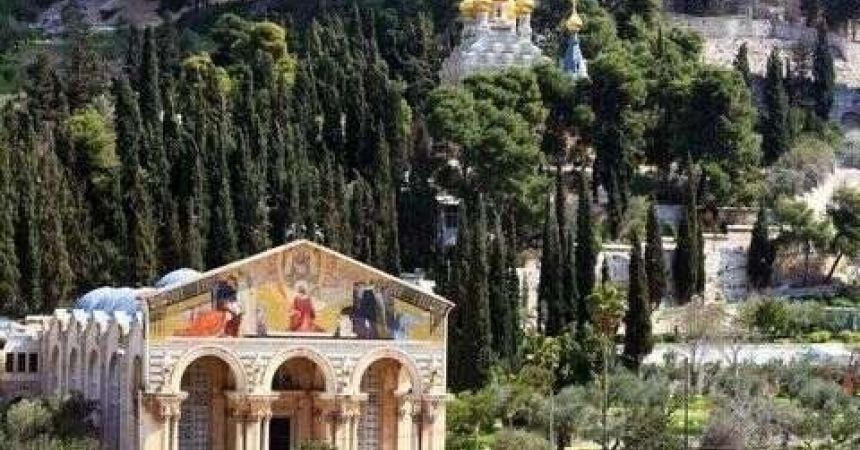
For photography, this can create an interesting mixture. Green vegetation may still frame pale stone in some places, while more exposed areas already carry the drier visual character associated with the approaching summer.
An Israel biblical heritage tour passing through several landscapes can make those differences even more noticeable.
Jerusalem should not be used as a weather proxy for the entire country, however. Elevation, geography and local conditions matter, which is precisely why the broader regional comparison belongs to Israel Weather in May rather than this page.
May Photography Isn't About “Perfect Weather”
Photography advice becomes generic very quickly: shoot early, shoot late, avoid harsh midday light.
Jerusalem deserves something more specific.
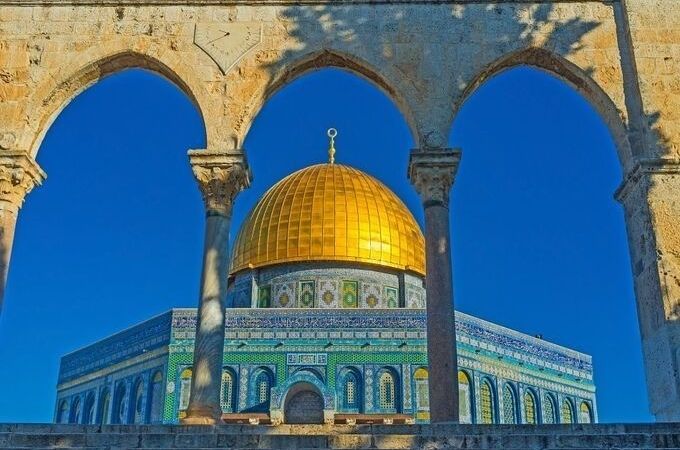
May's interest lies in the relationship between increasingly strong light, pale Jerusalem stone and a landscape that may still retain traces of spring colour. The contrast can be visually striking, particularly when vegetation interrupts the otherwise warm, mineral character of the city.
Rather than chasing a prescribed photographic hour, pay attention to surfaces.
Where is the stone reflecting light strongly? Where is vegetation adding contrast? Where are shadows revealing architectural depth instead of hiding it?
The weather becomes visible through texture.
Sun Protection Should Start Before Summer
Travelers sometimes organize sun protection according to month names.
June, July, August: summer, therefore sunscreen and a hat.
April and May: spring, therefore perhaps less important.
The sun does not follow that packing logic.
If your day involves substantial outdoor exposure, use appropriate protection according to actual UV conditions and personal needs. A hat, suitable clothing, sunscreen and regular hydration can make sense well before the hottest part of the year.
The important distinction is that May does not require summer heat before summer-style sun awareness becomes useful.
Drying Does Not Mean Rain Becomes Impossible
The seasonal direction is toward drier conditions, but May should not be described with absolutes.
Late-season rainfall or unsettled weather can still occur, and individual years differ. If precipitation appears in the forecast for your dates, respond to the forecast rather than an article telling you May “should” be dry.
This protects the blog from becoming another monthly climate summary.
We are interested in the transition toward dryness, not pretending the transition has already finished.
Don't Rush May Into June
The semantic boundary between these months matters.
May asks:
“Why does Jerusalem begin looking and feeling closer to summer before peak summer conditions have arrived?”
June will ask something different:
“How does Jerusalem's dry heat behave, and why can shade provide such meaningful relief?”
July will move again, examining the way stone and paved environments retain heat.
Each month advances the story rather than rewriting the previous chapter with higher temperatures.
May Is a Visual Threshold
You may remember your May visit for pleasantly manageable walking conditions. Another traveler may remember stronger warmth. Someone visiting after an unusual weather period may encounter conditions that do not resemble either experience.
That variability is normal.
What gives May its distinct Jerusalem identity is not one temperature range. It is the visible movement away from the wetter growing season: increasing dryness, stronger sunshine and the gradual reappearance of the city's more familiar warm-toned landscape.
On a Jerusalem and Dead Sea journey, those seasonal contrasts can become even more apparent as geography changes beyond the city.
May therefore does not need to decide whether spring has ended.
It asks you to notice what the landscape is already telling you:
summer is approaching before Jerusalem has fully become a summer city.
May Is the Month to Stop Judging Sun by Heat
One of the easiest mistakes in May is using physical discomfort as the signal that it is time to think about sun exposure.
If you are not especially hot, you may feel that conditions are gentle. A breeze can reinforce that impression, while a comfortable morning encourages a longer outdoor walk than you might attempt in midsummer. None of those sensations reliably measures how much ultraviolet radiation you are receiving.
Jerusalem sightseeing can keep visitors outdoors for hours without them consciously deciding to “spend a day in the sun.” You are simply walking from one historical place to another, stopping in open courtyards, listening to a guide or standing at a viewpoint.
By lunchtime, those small periods have accumulated into substantial exposure.
May's practical lesson is therefore to think about sun protection before discomfort reminds you.
Green Jerusalem Has No Guaranteed Closing Date
Travelers interested in seeing the landscape before summer dryness becomes dominant sometimes want a precise answer: how green will Jerusalem still be in May?
There isn't one.
The appearance of vegetation depends partly on the preceding winter and spring. Rainfall timing, temperatures and local exposure influence how long different areas retain their greener character. Early and late May can also look noticeably different, although even that progression should not be turned into a rigid rule.
This uncertainty is more useful than pretending every May follows the same visual calendar.
If landscape colour matters particularly to your trip, arrive expecting a transition rather than a guaranteed appearance.
Stone Begins Taking Back the Picture
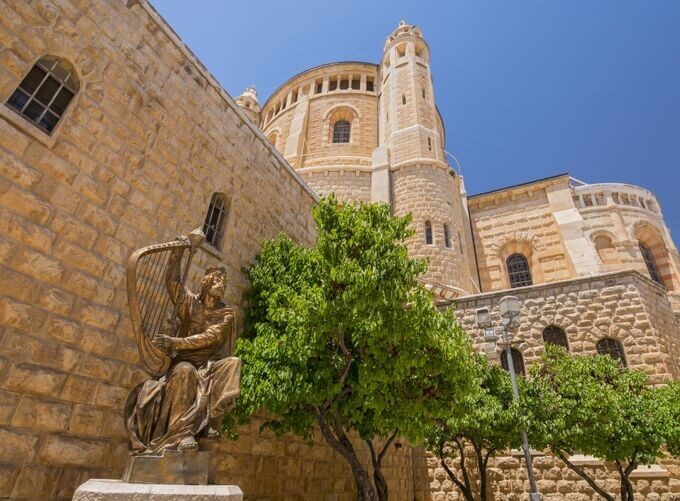
As vegetation becomes less dominant, Jerusalem's limestone architecture increasingly controls the visual palette.
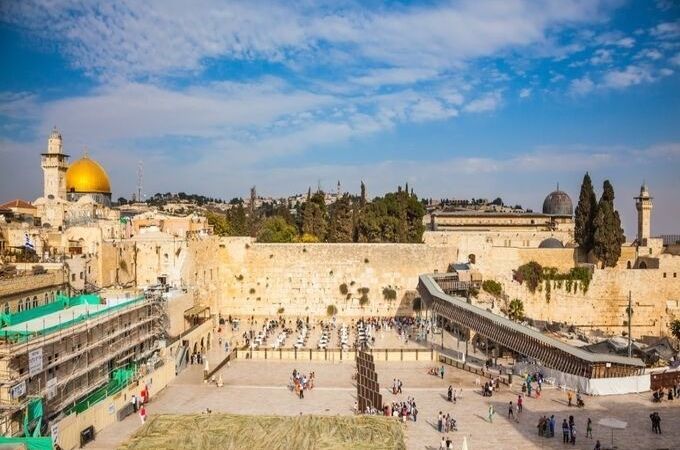
That shift changes photographs in subtle ways. Pale walls, paving and archaeological surfaces can appear brighter under stronger sunshine, while remaining vegetation provides increasingly distinct pockets of contrast.
You do not need to be a photographer to notice this. The city simply begins looking different.
A visitor who last saw Jerusalem during a wetter winter period could return in May and recognize every building while feeling that the wider setting has changed considerably.
Weather has altered the background without moving a single stone.
Your May Day Bag Should Solve Exposure, Not Seasons
May packing becomes unnecessarily complicated when travelers try to decide whether they are packing for spring or summer.
Forget the label.
Instead, think about what you will actually spend several hours doing.
For a substantial outdoor sightseeing day, the useful items are those that help with prolonged sun exposure, changing temperatures and ordinary walking comfort. If the forecast suggests rain or cooler conditions, respond accordingly rather than assuming seasonal progression makes them impossible.
What Earns Space in a May Day Bag?
| Item or Choice | Why It Earns Its Place |
|---|---|
| Sun protection | Exposure can accumulate before heat feels demanding |
| Water | Long heritage walks make regular hydration easy to overlook |
| Light adjustable layer | Useful when conditions vary rather than as “spring clothing” |
| Comfortable footwear | Jerusalem's surfaces matter regardless of temperature |
| Hat or personal sun cover | Useful during extended open-air sightseeing |
| Forecast-based rain protection | Worth carrying when actual conditions justify it |
This is a day-bag utility table, not a generic packing checklist. The distinction is important: an item earns its place because of what you plan to do, rather than because somebody declared it essential for everyone visiting Jerusalem in May.
Shade Is Useful, but June Owns That Story
By May, choosing the shaded side of an open space or taking a break away from direct sunshine can already make sightseeing more comfortable.
We deliberately stop there.
June will examine shade much more deeply because its exclusive semantic territory concerns Jerusalem's dry summer heat and why moving out of direct sun can create such meaningful relief.
If May attempted to explain the same mechanism in detail, the two pages would begin competing.
Here, shade is merely part of sensible sun management during a month when travelers can underestimate exposure because conditions may still feel pleasantly springlike.
May Doesn't Need to Become a “Best Month” Argument
A pleasant May day naturally invites conclusions.
The temperature feels manageable, the sky looks good, the city is enjoyable on foot and somebody inevitably says, “This must be the perfect time to come.”
Perhaps it is perfect for that traveler on that particular day.
Turning the observation into a universal recommendation would create a different search intent entirely. Travelers comparing May against April, October or another season need a dedicated Best Time to Visit Jerusalem guide where their priorities can be evaluated properly.
May's article has already done something more specific: it has explained why increasingly summer-like sunlight and a drying landscape can arrive before the air feels like peak summer.
That is enough.
What to Notice Rather Than What to Measure
By the end of a May day, try remembering something other than the temperature.
Notice whether the surrounding hills still carried substantial green. Look at the contrast between vegetation and Jerusalem stone. Think about how long you remained outdoors before becoming conscious of the sun, or how differently an archaeological area looked under strong afternoon light compared with earlier in the day.
Those observations tell the story of May better than another list of climate averages.
This is a month experienced through gradual change.
You do not necessarily watch the season turn.
You notice that it has already moved.
12 May-Specific Questions Travelers Actually Ask
1. Will Jerusalem still look green when I visit in May?
Possibly, particularly where spring vegetation remains, but there is no guaranteed May landscape. The preceding rainy season, temperatures, local exposure and your exact travel dates all influence how much greenery remains before the city's drier summer appearance becomes dominant.
2. Does Jerusalem already look dry by late May?
Some areas may appear noticeably drier as May progresses, but the timing varies between years and locations. Rather than expecting a fixed late-May appearance, think of the month as a visual transition from spring growth toward Jerusalem's warmer, drier seasonal palette.
3. Can I get sunburned even if May doesn't feel very hot?
Yes. Perceived heat and ultraviolet exposure are different things, so comfortable air temperatures do not eliminate the need for appropriate sun protection during prolonged outdoor sightseeing. Check current UV information and protect yourself according to your exposure and individual needs.
4. Is May sunshine strong enough to affect a full sightseeing day?
It can be significant, particularly when several hours are spent walking through open historic areas, archaeological sites and viewpoints. Because conditions may remain comfortable, travelers sometimes accumulate more exposure than they realize before feeling physically hot.
5. Should I pack for spring or summer in Jerusalem in May?
Pack for the forecast and your planned activities rather than choosing a seasonal label. Lightweight clothing may dominate under warmer conditions, while an adaptable layer can remain useful when temperatures vary. Add rain protection only when the actual outlook warrants it.
6. Does Jerusalem's stone make May feel brighter?
Pale limestone and exposed paved surfaces can reflect strong sunlight, contributing to the bright visual character of the city. The effect becomes particularly noticeable as vegetation dries and warm-toned stone occupies a larger share of the surrounding landscape.
7. Are archaeological sites more exposed to the sun in May?
Many archaeological and heritage areas contain substantial open-air sections, although the degree of shade varies considerably by location. When planning a long visit, consider how much continuous outdoor exposure it involves rather than judging comfort from air temperature alone.
8. Is early May greener than late May in Jerusalem?
It can be, because seasonal drying generally progresses as summer approaches, but there is no guaranteed week-by-week schedule. Rainfall during the preceding months and actual May conditions can shift how quickly different vegetation loses its spring appearance.
9. Should photographers expect green landscapes in Jerusalem in May?
Treat remaining greenery as a possibility rather than a photographic guarantee. May's interest lies precisely in the transition: pale Jerusalem stone, stronger sunlight and areas of lingering vegetation can coexist, producing a visual character that varies with location and year.
10. Do I need to carry more water in Jerusalem during May?
Regular hydration becomes increasingly relevant during extended outdoor sightseeing, especially as sunshine strengthens and days involve substantial walking. Individual requirements differ, so carry enough for your plans and take opportunities to refill rather than waiting until you feel noticeably thirsty.
11. Why does May need its own Jerusalem weather page?
May occupies a specific visual and practical threshold: spring vegetation is retreating while solar exposure becomes increasingly important, even before travelers necessarily experience the persistent dry-heat character associated with Jerusalem's established summer months.
12. What makes May different from April in Jerusalem?
April's exclusive focus is the expansion of usable daylight and the breathing room it creates for outdoor heritage sightseeing. May leaves daylight planning behind and follows a different transition: Jerusalem's landscape drying while increasingly strong sunshine becomes relevant before peak summer heat arrives.

A travel professional specializing in tailor-made travel planning, guest experience management, and multi-destination tourism operations.
With over 23 years of experience in the travel industry, he designs and manages private and cultural tours for international travelers across Türkiye, Greece, Egypt, Jordan, Morocco, and other destinations.
He has strong expertise in both online and face-to-face guest communication, sales processes, and end-to-end travel operations.
Working closely with hotels, travel agencies, and local partners, he ensures smooth coordination and high-quality travel experiences at every stage of the journey.
His focus is on delivering personalized, reliable, and seamless travel experiences for international guests worldwide.