
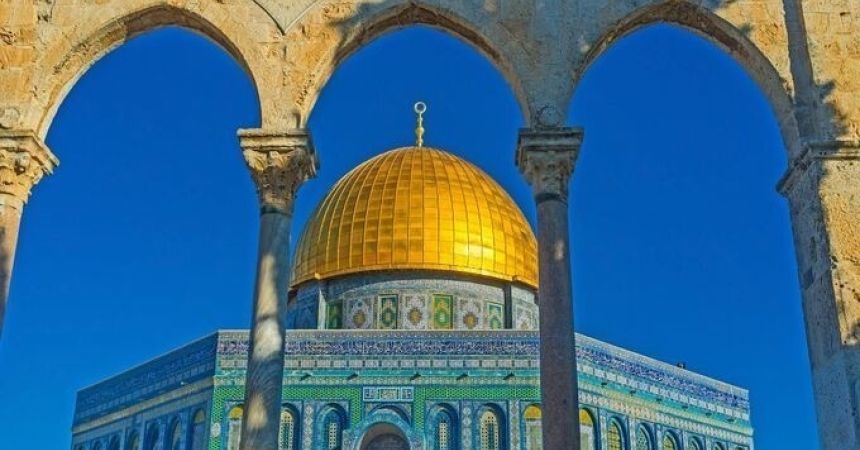
Jerusalem Weather in April: A Day With More Room in It
Updated: August 2026
Some weather changes are obvious the moment you walk outside.
Others quietly change what is possible.
April belongs largely to the second category. Jerusalem has moved farther beyond winter, daylight occupies more of the day, and outdoor sightseeing can begin to feel less constrained by the rhythms that shaped the colder months.
That does not mean every April day will be warm, dry or perfectly suited to a long itinerary. Spring weather still deserves a forecast, and variations remain entirely possible.
What changes is the amount of usable day a traveler can potentially work with.
For a city where so much history is encountered on foot, that matters.
Stop Counting Attractions and Start Counting Good Hours
A common Jerusalem itinerary looks efficient on paper because the attractions fit mathematically into the available time.
The Old City from 9:00 until noon. Lunch. Another visit. A neighborhood walk. Perhaps a viewpoint. Dinner.
Yet hours are not interchangeable.
Some experiences benefit enormously from daylight. Others work perfectly well indoors. Certain places deserve time to wander rather than a forty-minute slot between reservations, while an outdoor walk becomes less satisfying if you spend half of it checking whether you are already late for the next stop.
April provides an opportunity to think about the day differently.
A Jerusalem spring heritage trip does not need more attractions simply because more daylight is available.
It can give the existing ones more room.
Daylight Is Travel Currency in a Heritage City
Jerusalem is unusually dependent on visual context.
Stonework, courtyards, archaeological remains, city walls, streets and views are not simply objects you arrive at and inspect. They relate to the spaces around them, and natural light contributes to how easily those relationships can be understood.
More daylight therefore has practical value beyond photography.
It allows an outdoor section to run slightly longer without immediately competing with darkness. It can make a later neighborhood walk realistic after a substantial afternoon visit. Most importantly, it reduces the pressure to compress the heritage experience into the middle of the day.
April gives you more margin.
That margin is often more valuable than another attraction.
The April Question: What Deserves Daylight Most?
Rather than organizing activities only by opening hours, consider their dependence on natural light.
| Experience | Value of Daylight | Why |
|---|---|---|
| Historic street wandering | High | Context and architectural detail matter |
| Panoramic viewpoint | High | Landscape needs visibility and light |
| Outdoor archaeological area | High | Spatial relationships are easier to read |
| Museum interior | Lower | Natural daylight is less central |
| Long lunch | Low | Can occupy less valuable outdoor time |
| Religious interior | Variable | Access and purpose matter more than daylight |
| Neighborhood exploration | High | Wandering benefits from visual context |
This is a daylight-value table, not a weather-comfort chart.
Its purpose is to help travelers allocate a finite spring resource rather than prescribe an hour-by-hour itinerary.
Don't Spend the Entire Morning Indoors by Accident
This happens more easily than expected.
A museum or interior visit scheduled for first thing becomes longer because it is interesting. Lunch follows nearby because it is convenient. By the time you begin the outdoor section you were most excited about, a large portion of the day's useful natural light has already passed.
There is nothing inherently wrong with that order.
The problem occurs when the sequence happened by accident rather than preference.
If one outdoor experience is particularly important to you, April's expanded daylight makes it easier to give that experience generous space while shifting an indoor activity toward a portion of the day when natural light matters less.
An Israel ancient cities tour becomes better when time allocation reflects the character of each experience rather than treating every hour equally.
More Daylight Is Not Permission to Create a Marathon
This is where April itineraries can go wrong.
Winter encourages selectivity. Spring encourages ambition.
Suddenly there appears to be enough daylight for everything: the Old City, several major sites, an extended walk, a viewpoint, a market, another neighborhood and perhaps one last outdoor stop before dinner.
Technically, some travelers could complete that list.
The question is whether they would still care about the final three places.
Jerusalem rewards attention. Historic environments become surprisingly tiring when every street contains something worth looking at and every visit comes with another layer of context.
The purpose of April's longer usable day is not to fill every new hour.
It is to remove pressure from the hours you already intended to use.
April Light Changes While You Are Using It
Natural light is not a binary condition that switches from “day” to “night.”
Morning, midday and later afternoon produce different visual experiences, particularly around Jerusalem's pale stone architecture. Direction, cloud and the position of the sun alter shadows and surface texture throughout the day.
Travelers interested in photography may naturally pay closer attention to those changes, but they matter even without a camera.
A street that appears flat under stronger overhead light can feel completely different later when shadows begin giving architectural details greater depth.
This does not mean every location needs to be scheduled for “perfect light.”
That would turn a holiday into a production schedule.
It simply means daylight has quality as well as quantity.
April Weather Still Gets a Vote
Longer daylight is useful only when conditions make outdoor sightseeing appropriate.
Rain, wind, cooler spells or other changing spring conditions can still affect plans, so the actual forecast remains more important than a seasonal assumption.
This is where March and April separate clearly.
March asked whether you could trust the arrival of spring at all.
April assumes nothing about a particular day's temperature but moves the planning question forward:
When conditions are suitable, how should you use the larger daylight window?
That is a completely different traveler problem.
Lunch Can Become a Strategic Pause Without Feeling Strategic
There is a pleasant way to use April's additional daylight without turning the day into an optimization exercise.
Take a proper lunch.
In winter, a long midday break can feel as though it consumes a significant portion of limited daylight. As spring advances, the psychological pressure changes because meaningful outdoor time remains available afterward.
That can improve the rhythm of an entire Jerusalem cultural escape.
Instead of rushing through lunch to protect sightseeing hours, you can allow the middle of the day to breathe and still return outside with useful daylight remaining.
The benefit is not merely climatic.
It is emotional.
The itinerary begins feeling less like a race.
The Extra Hour Should Belong Somewhere
If April effectively gives your itinerary more comfortable daylight flexibility than winter, decide where you actually want that benefit to go.
Perhaps it becomes a slower Old City walk.
Perhaps you sit longer at a viewpoint instead of taking the photograph and leaving.
Maybe you explore a neighborhood without a fixed route, or simply allow an important archaeological visit to take as long as your curiosity requires.
There is no universal correct answer.
The important thing is not to let the additional space disappear into three minor attractions that were never particularly important to you.
April's Luxury Is Not Warmth. It Is Breathing Room.
A generic weather page might summarize April as spring, quote average temperatures and declare it pleasant for sightseeing.
That leaves most of the useful story untold.
For Jerusalem, April's distinctive travel value lies in the expanding relationship between daylight and outdoor heritage time. When conditions cooperate, the city becomes easier to experience without compressing every meaningful outdoor visit into a narrow part of the day.
That is why April does not need to compete with March's seasonal uncertainty, May's strengthening sun or a Best Time to Visit Jerusalem article.
Its question is much more specific:
When the day gives you more room, what will you choose not to rush?
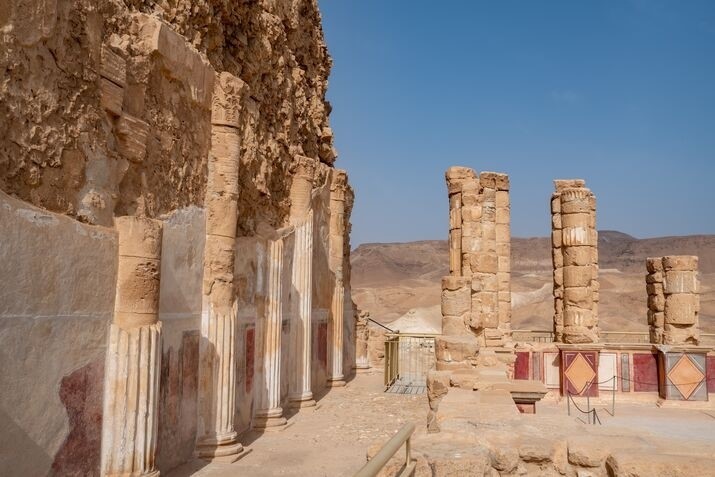
More Daylight Changes What “Running Late” Means
One of April's quieter advantages appears when a visit takes longer than expected.
Perhaps a historical site deserves another half-hour because the guide has opened up a subject you had never considered, or you stop somewhere in the Old City simply because the atmosphere is worth enjoying. During a short winter day, that delay can create immediate pressure elsewhere.
April provides more tolerance.
You still need to respect opening hours and fixed reservations, but an itinerary does not necessarily begin collapsing because one worthwhile experience exceeded its scheduled slot. That breathing room can make sightseeing feel considerably more natural.
Save Some Daylight for Wandering
Jerusalem contains places you deliberately visit and spaces you understand only by moving between them.
That distinction matters.
If every usable daylight hour is assigned to a named attraction, the streets connecting those places become little more than corridors. Yet some of Jerusalem's character emerges precisely during those unscheduled sections: noticing architectural details, stopping in a courtyard, following a street slightly farther than intended or simply understanding how different parts of the city connect.
April's additional usable daylight is particularly valuable here because it can create time that does not need a formal purpose.
Build Around One “Unhurried” Experience
Rather than adding another attraction to an April itinerary, choose one experience that is allowed to take longer.
It might be a substantial Old City walk, an archaeological visit, a neighborhood exploration or an outdoor historical area where understanding the setting matters as much as reaching individual landmarks.
Giving one experience permission to expand can change the character of the whole day. You stop checking the time every fifteen minutes because the schedule already accepts that curiosity may interfere with efficiency.
That is a far better use of spring daylight than treating every additional hour as empty inventory.
Not Every Outdoor Hour Has Equal Value
The longer day creates choice, but weather and light still influence which parts of it are most useful.
Rather than prescribing exact times, consider the relationship between the activity and the environment.
| If Your Priority Is... | Protect This Quality | Avoid This Mistake |
|---|---|---|
| Architectural detail | Useful natural light | Rushing between buildings |
| Panoramic context | Visibility | Scheduling solely by temperature |
| Archaeological exploration | Enough uninterrupted time | Squeezing it between reservations |
| Street wandering | Flexibility | Giving every minute a destination |
| Photography | Changing light | Assuming midday is always best |
| Outdoor atmosphere | Time to linger | Treating pauses as wasted time |
This is an experience-value table, deliberately different from Part 1's daylight-value classification. It asks what quality needs protecting once you have decided to spend part of the day outdoors.
April Can Make a Long Lunch Easier to Enjoy
Travelers sometimes feel guilty about spending ninety minutes over lunch in a city with as much to see as Jerusalem.
In April, that guilt is particularly unnecessary.
When daylight extends farther into the day, lunch does not automatically consume the final useful outdoor hours. If weather remains suitable, there can still be meaningful time afterward for walking and sightseeing.
The result can be a much better rhythm: a substantial morning, a genuine break and an afternoon that does not feel like the leftovers of the day.
This is not about optimizing lunch around sunlight.
It is about allowing the itinerary to behave like a holiday.
Check Sunset for the Right Reason
Knowing sunset time is useful in April, but not because every outdoor experience needs to finish beforehand.
Instead, it gives context to the amount of natural light available and helps when a particular experience depends on seeing the wider setting clearly.
Opening hours remain a separate issue and should always be checked directly for the places you intend to visit. Daylight does not guarantee access, just as an attraction remaining open does not guarantee that its outdoor setting will look the same after dark.
Those are different planning questions.
Weather Can Still Rewrite the Day
April's longer daylight should never become a promise of perfect outdoor conditions.
If rain or stronger winds affect your dates, use the actual forecast rather than forcing the itinerary to behave according to an article about typical April travel. Likewise, an unusually warm day may change how much continuous walking you enjoy.
The advantage of a larger daylight window is that it provides options.
It does not create an obligation to use every one of them.
Leave Something for Tomorrow
Perhaps the strongest sign of a well-designed Jerusalem itinerary is the ability to stop.
If you have several days in the city, there is little value in exhausting today's daylight simply because it exists. An experience that naturally belongs tomorrow does not become more valuable because you managed to squeeze it into this afternoon.
April can encourage travelers to do more.
Used well, it allows them to do less hurriedly.
That distinction is the entire point of the month.
12 Questions About Jerusalem in April
1. What is the weather like in Jerusalem in April?
April falls within Jerusalem's spring transition and can provide increasingly useful conditions for outdoor sightseeing, although individual days still vary. Travelers should check current temperature, rain and wind forecasts rather than assuming the entire month will deliver consistently mild weather.
2. Is Jerusalem warm in April?
April can bring pleasantly mild or warm daytime periods, particularly in sunshine, although cooler conditions remain possible. Jerusalem's elevation also means travelers should avoid treating spring conditions there as identical to those in lower-elevation parts of Israel.
3. Does it rain in Jerusalem in April?
Rain can still occur in April, although the seasonal pattern is moving away from winter. The practical question is whether precipitation is expected during your specific visit, so short-range forecasts provide better planning guidance than monthly averages alone.
4. What should I wear in Jerusalem in April?
Adaptable spring clothing generally makes sense because mornings, sunny afternoons, shade and evenings can feel different. Check the actual forecast before departure and include appropriate rain protection when needed rather than packing for every theoretical April condition.
5. Are the days longer in Jerusalem in April?
Yes, daylight has increased substantially compared with the shorter winter period. For travelers, this creates more flexibility around outdoor heritage visits, neighborhood exploration and walking without requiring every daylight-dependent experience to be compressed into the middle of the day.
6. Is April suitable for walking around the Old City?
Conditions can be very suitable for walking when the day's weather cooperates. Comfortable footwear remains important because sightseeing involves substantial walking, stone surfaces, steps and uneven areas, regardless of whether temperatures themselves feel pleasant.
7. Should I start sightseeing very early in April?
Not solely because of the weather. Opening hours, personal preferences and the day's forecast matter more. April's advantage is that increased daylight can reduce pressure to force every outdoor experience into an unusually early schedule.
8. Can I plan outdoor sightseeing for late afternoon?
Often yes when conditions, access and opening hours permit. Later daylight creates additional flexibility, although specific attractions should always be checked individually and weather-sensitive plans should remain responsive to the forecast for that particular day.
9. Is April good for photography in Jerusalem?
Changing spring light can create interesting conditions for architecture, streets and broader city views. Rather than chasing one supposedly perfect photography hour, observe how light interacts with Jerusalem stone and use the conditions available during your actual visit.
10. How much sightseeing should I plan in one April day?
There is no ideal number of attractions. April's additional usable daylight is better treated as breathing room than permission to overload the schedule. Allow important heritage experiences enough time and preserve some space for walking, meals and unexpected discoveries.
11. Is April the best time to visit Jerusalem?
That comparison belongs to the dedicated Best Time to Visit Jerusalem content. April's exclusive role is explaining how increased spring daylight expands the usable outdoor heritage day and allows visitors to reduce unnecessary time pressure while exploring the city.
12. How is April different from March in Jerusalem?
March focuses on false starts in the winter-to-spring transition and the danger of assuming one warm spell means cooler weather has finished. April moves away from seasonal uncertainty and examines how expanding daylight can create more breathing room for Jerusalem's outdoor heritage sightseeing when conditions are suitable.

A travel professional specializing in tailor-made travel planning, guest experience management, and multi-destination tourism operations.
With over 23 years of experience in the travel industry, he designs and manages private and cultural tours for international travelers across Türkiye, Greece, Egypt, Jordan, Morocco, and other destinations.
He has strong expertise in both online and face-to-face guest communication, sales processes, and end-to-end travel operations.
Working closely with hotels, travel agencies, and local partners, he ensures smooth coordination and high-quality travel experiences at every stage of the journey.
His focus is on delivering personalized, reliable, and seamless travel experiences for international guests worldwide.
