Masada, Israel: Plan the Visit Before You Climb
Updated: August 2026
Masada has an unusual ability to make travelers think about the end of the visit before they have even started it.
You arrive below an isolated plateau beside the Judean Desert, look upward and immediately have decisions to make. Are you walking up or taking the cable car? Is the temperature suitable for the plan you had in mind? How long do you want on the summit? Are you continuing to the Dead Sea afterward, and have you allowed enough energy for both experiences?
These are not minor logistical details surrounding the “real” attraction.
They shape the attraction.
Masada's history is inseparable from its geography, and its geography is impossible to ignore once you stand beneath it. The fortress occupies an elevated plateau overlooking a severe desert landscape, which helped make the site defensible in antiquity and continues to determine how modern travelers experience it.
A successful Masada visit therefore starts before you see the first archaeological remains.
It begins with the decisions you make at the bottom.
The First Decision Is Not What to See, but When to Arrive
Timing matters at many archaeological sites, although at Masada it can change the physical character of the visit.
The Judean Desert environment means heat and sun exposure need to be taken seriously, particularly during warmer periods. A schedule that seems reasonable when designed in an air-conditioned hotel can feel entirely different once you are standing outside beneath strong sun.
Earlier visits are therefore attractive for practical reasons as well as atmosphere.
They can provide cooler conditions and leave the remainder of the day available for another regional experience. However, “earlier” should not automatically be translated into “sunrise,” because sunrise Masada has become almost a separate travel concept with its own logistical requirements.
For many visitors, a sensible morning visit provides everything they want without requiring an extremely early start.
The right arrival time depends on season, access plans, fitness, where you slept the previous night and what follows Masada.
Those variables matter more than reproducing somebody else's Instagram morning.
Sunrise at Masada Is Beautiful, but It Is Not a Requirement
Sunrise has become so strongly associated with Masada that first-time visitors sometimes worry they are settling for an inferior experience if they arrive later.
They are not.
Watching light spread across the Judean Desert from the plateau can certainly be memorable, particularly for travelers who enjoy early starts, landscape photography and the atmosphere of reaching the summit before the main daytime rhythm begins.
But sunrise carries a cost.
It can mean waking very early, organizing transportation in darkness and potentially walking before daylight depending on the chosen access and current operating arrangements. For travelers coming from farther away, the logistics can overwhelm the benefit.
There is also a broader itinerary question.
If waking before dawn leaves you exhausted for the Dead Sea, an afternoon transfer or the next day's sightseeing, then the sunrise has not occurred in isolation. It has changed the rest of the trip.
Choose sunrise because you genuinely want sunrise.
Do not choose it because you believe Masada is historically more meaningful before breakfast.
The Snake Path Changes the Meaning of Reaching the Top
Walking the Snake Path and taking the cable car produce two different relationships with Masada.
The walking route makes the plateau's elevation physically obvious. The climb requires effort, and that effort can sharpen your awareness of why the location was formidable in antiquity. Reaching the summit after ascending on foot feels different from arriving by cable car because your body has participated in the geography.
That does not make hiking the “correct” way to visit.
Conditions matter enormously.
Heat, fitness, age, mobility, hydration and the rest of the day's program should all influence the decision. A traveler capable of walking comfortably in mild conditions may sensibly choose the cable car on a very hot day.
There is no historical prize for becoming exhausted.
Anyone planning to hike should verify current trail access and conditions shortly before the visit, because closures or restrictions can occur and desert conditions should never be treated casually.
Taking the Cable Car Does Not Make the Visit Less Authentic
Travel sometimes develops strange hierarchies around effort.
Walking must be better than riding. Sunrise must be better than morning. Independent must be better than guided.
Masada is a useful place to reject that thinking.
The cable car allows travelers to reach the plateau efficiently and preserve their energy for exploring the archaeological site itself. For many visitors, particularly those with limited mobility, children, time constraints or concerns about heat, this can be the better decision.
You still experience the elevation.
You still see the Judean Desert spreading below.
You still walk through the remains and confront the relationship between fortress and landscape.
What changes is how much physical effort is required to reach them.
If hiking is personally meaningful, hike.
If it is not, there is no need to manufacture hardship in order to validate the visit.
Once You Reach the Plateau, Stop Looking Only at the View
The panorama is powerful enough to dominate the first few minutes.
That is understandable.
The Dead Sea region and Judean Desert extend below, and the sheer isolation of the plateau becomes much easier to understand from above than through photographs.
Eventually, however, turn around.
Masada is not simply a viewpoint with ruins attached.
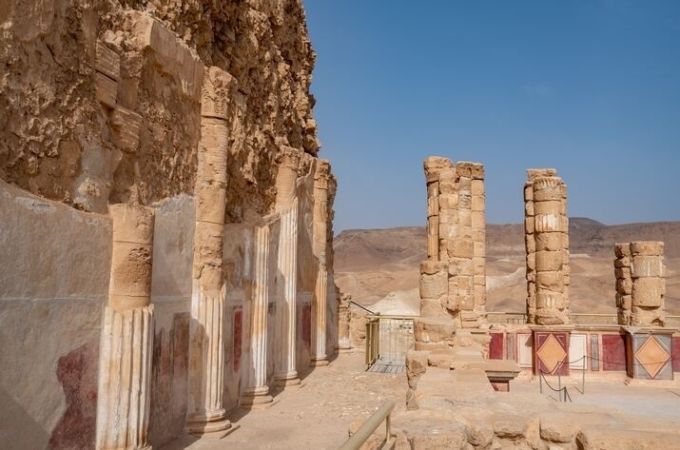
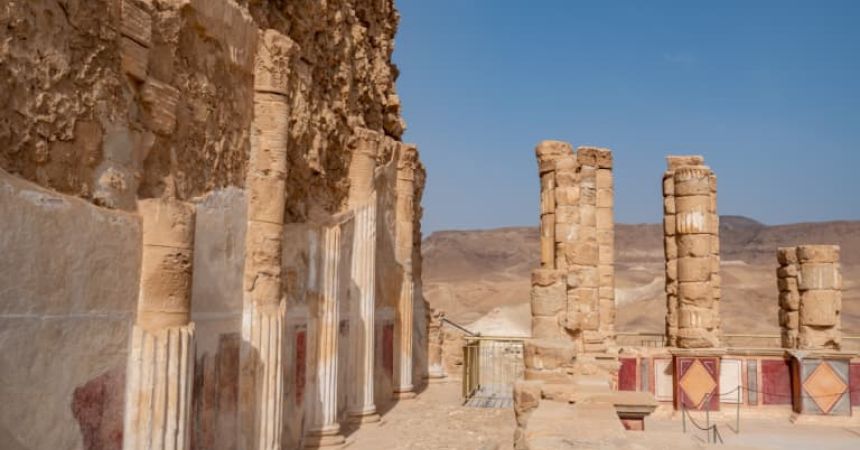
Herod the Great developed the site extensively, and the remains reveal how an apparently inhospitable mountain could support sophisticated architecture and defensive planning. Palace complexes, storage areas, water infrastructure, defensive walls and other archaeological remains begin answering the practical question that the landscape creates:
How could people live here?
That question is more useful than memorizing a list of structures.
Follow it through the site and the archaeology starts connecting naturally.
Herod's Palace Makes More Sense When You Notice the Improbability
Herod's building projects repeatedly demonstrate ambition, but Masada adds an almost theatrical geographical challenge.
Constructing elaborate spaces on this plateau required more than architectural taste. Materials, labor, water and supplies had to be managed in an environment that does not appear naturally suited to luxurious occupation.
The palace remains are therefore interesting not simply because Herod used them.
Their setting tells you something about power.
Architecture here communicated control over a landscape that seemed resistant to comfortable settlement.
When exploring the remains, try to imagine the logistical system behind the visible walls. How did water reach the site? Where were supplies stored? How did architecture respond to the terrain?
Those questions make the ruins more legible and keep the visit grounded in the physical realities of Masada rather than reducing Herod to another name in a chronology.
Water Is One of Masada's Most Important Stories
Visitors surrounded by desert understandably wonder how a substantial population could survive on the plateau.
The answer leads toward one of the site's most impressive practical achievements: water management.
Cisterns and systems designed to capture and store water were essential to sustaining life in an environment where dependable access could not be taken for granted.
This is exactly the kind of archaeological detail that can be overlooked when the visit is organized entirely around dramatic history.
Yet understanding water changes how you see Masada.
The fortress was not defensible merely because it was difficult to reach. Occupants also needed the resources to remain there.
Military geography without water would have been of limited use.
When traveling with a knowledgeable guide, this is the sort of operational history worth emphasizing because it connects engineering, environment and survival in a way that remains immediately understandable two thousand years later.
The Roman Siege Is Easier to Understand From Above
Masada's most famous historical chapter concerns the Jewish rebels who occupied the fortress and the Roman siege that eventually ended their resistance.
From the summit, parts of the surrounding landscape help make the military problem visible.
The Romans were not attacking a conventional city gate on level ground. They faced a highly elevated position whose geography strongly favored the defenders. The surviving evidence associated with the siege, including the famous ramp and traces of Roman military positions in the surrounding area, helps visitors understand the scale of the operation.
This is one reason Masada works particularly well as landscape archaeology.
You are not simply looking at an object excavated from the past.
You are standing inside the terrain where strategy mattered.
The desert becomes part of the historical evidence.
The Final Story of Masada Deserves More Care Than Tourism Usually Gives It
Masada is often summarized through a dramatic account of the siege's final moments, when the defenders are traditionally described as choosing death rather than capture.
The story is powerful and deeply embedded in Masada's modern cultural meaning.
It also deserves careful presentation.
Much of the detailed narrative comes through the ancient historian Josephus, and the relationship between literary account, archaeological evidence and later interpretation should not be flattened into an unquestioned dramatic script.
A responsible guide can explain what the historical sources describe while also acknowledging where interpretation becomes more complex.
This does not weaken the experience.
It improves it.
History becomes more interesting when travelers understand how we know what we think we know.
Masada does not need exaggerated certainty to be compelling.
The site, siege landscape and archaeological remains already provide more than enough.
Masada's Modern Meaning Is Part of the Visit Too
Ancient sites often acquire significance long after the historical events that made them famous.
Masada is a particularly strong example.
The fortress became an important symbol within modern Israeli culture, associated with ideas of resistance, memory and national identity. Its modern symbolic life influenced how generations encountered the ancient story.
Travelers benefit from understanding this layer because it explains why Masada occupies such a prominent place in Israel's cultural imagination.
However, ancient history and modern symbolism should not be collapsed into one narrative.
The events of the Roman period belong to one historical context.
The ways later generations interpreted and used that history belong to another.
Recognizing both layers gives visitors a richer understanding of why the site matters today without asking archaeology to serve as a simple national slogan.
Masada Is One of Those Places Where a Guide Can Change What You Notice
A traveler can visit Masada independently and have a rewarding experience.
The landscape is powerful, and many of the major archaeological areas can be explored without someone continuously explaining them.
Guiding becomes particularly valuable when you want relationships rather than isolated facts.
A guide can connect Herodian architecture with water management, the plateau with defensive strategy, Roman remains with the siege and archaeological evidence with the written historical narrative.
That integration is the real advantage.
On Private Masada History Tours, the best guiding should also adjust the level of detail. An archaeology enthusiast may want substantially more explanation than a family visiting with teenagers, while travelers interested in Jewish history may approach the site through different questions from someone primarily interested in Roman military engineering.
The same ruins do not require the same conversation.
Your Ascent Choice Should Follow the Day You Actually Have
Instead of another attractions table, the useful comparison at Masada is between the ways a visitor can structure the physical experience.
| Your situation | More sensible approach | Why |
|---|---|---|
| You specifically want the climb | Snake Path when conditions permit | The ascent becomes part of experiencing the geography |
| Very hot conditions | Cable car generally makes more sense | Conserves energy and reduces unnecessary heat exposure |
| Limited mobility | Cable car | Keeps the archaeological plateau accessible |
| Traveling with young children | Usually cable car | More predictable and manageable for a family day |
| Sunrise is a personal priority | Early-access plan | Requires advance logistical preparation |
| Dead Sea activities follow | Avoid exhausting yourself unnecessarily | The day continues after Masada |
| Archaeology is the main interest | Preserve summit time and energy | Getting up is less important than exploring once there |
| Hiking is central to your travel style | Build the morning around the ascent | Do not squeeze the walk into an already crowded schedule |
There is no prestige column.
That is deliberate.
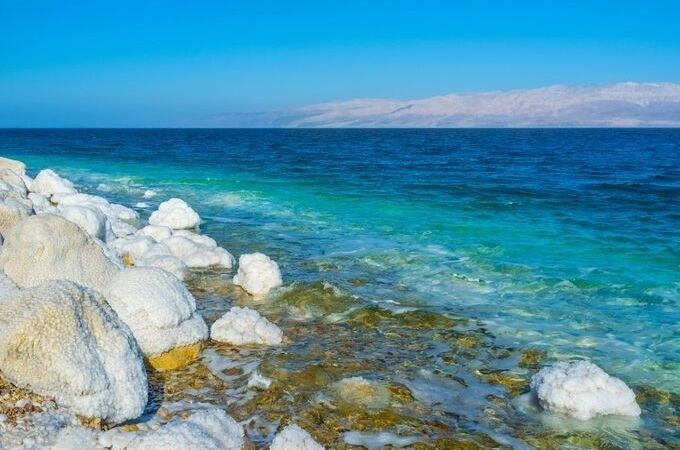
The Dead Sea Changes How I Would Schedule Masada
Masada and the Dead Sea are natural geographical partners, which is why they frequently appear on the same touring day.
The order matters.
Masada usually requires more concentration, more walking and potentially greater physical effort. The Dead Sea experience can provide a completely different rhythm afterward, making the progression from archaeology to water feel natural.
That does not mean every traveler should follow exactly the same schedule.
Season, accommodation, access conditions and personal interests may change the sequence.
What matters is not treating both destinations as interchangeable stops of equal physical demand.
If Masada comes first, protect enough energy to enjoy the summit without spending the entire visit worrying about the next appointment.
If the Dead Sea experience is particularly important, protect enough time afterward so it does not become a rushed photograph and twenty-minute float.
Do Not Turn Masada and the Dead Sea Into a Race
Combining destinations efficiently is useful.
Compressing them until neither is properly experienced is not.
A poor combined day can involve an early departure, rushed summit visit, hurried lunch, short Dead Sea stop and constant awareness of the return journey.
A good combined day understands that Masada and the Dead Sea contribute very different things.
One asks for historical attention and engagement with the landscape.
The other introduces a natural experience that deserves its own pace.
Masada and Dead Sea Excursions should therefore be designed around usable time rather than the maximum number of named stops that fit between hotel departure and return.
This is particularly important when additional sites are proposed.
Every extra stop has a cost.
The question is whether it adds more value than the time it removes from the places that motivated the journey.
Summer Changes the Rules More Than the Itinerary Description Suggests
“Visit Masada” looks identical on an itinerary in different seasons.
On the ground, it is not identical.
Desert heat can fundamentally change how much walking feels comfortable and whether an exposed ascent is sensible. Visitors should take hydration, sun protection and current conditions seriously, especially when planning physical activity.
The solution is not necessarily removing Masada.
It is changing the day around the environment.
Earlier timing, cable-car access and more realistic expectations can preserve the historical experience without turning it into a test of endurance.
This is operational planning at its most basic: the itinerary should respond to the destination as it actually exists, not to the neat sentence printed in the travel document.
What to Carry Up Is Less Complicated Than People Make It
Masada does not require expedition equipment for an ordinary visit, but the desert environment rewards sensible preparation.
Water is fundamental. Sun protection and suitable footwear matter, particularly if walking substantial distances or using hiking access. Clothing should match the season and planned level of physical activity rather than being selected purely for photographs.
Travelers hiking should prepare differently from those taking the cable car.
The most important principle is avoiding the assumption that a popular tourist attraction is therefore environmentally effortless.
Infrastructure makes Masada accessible.
It does not remove the desert.
Families Should Tell the Story Differently
Children rarely need the full chronological version of Masada.
They often respond better to practical questions.
How did people get water up here?
Why was this mountain difficult for an army to attack?
Where did food come from?
How did the Romans reach the fortress?
What would it have felt like to live on this plateau?
These questions turn archaeology into a problem-solving exercise rather than a lecture.
They also allow adults to engage with the same history at a different level.
A family visit can therefore be genuinely substantial without requiring children to stand beside every ruin while listening to another five-minute explanation.
Good interpretation changes with the audience.
The history does not have to become simpler.
The storytelling becomes smarter.
Leave Enough Time at the Top to Stop Being Efficient
There is a point during a Masada visit when you should stop optimizing.
You have seen the major remains. You understand the basic historical framework. The guide has explained the siege landscape.
Find a moment to look outward.
The Judean Desert's scale is part of why Masada has remained so visually and emotionally powerful. If every minute on the plateau is consumed by moving toward the next archaeological feature, the visitor can miss the environment that made those features significant in the first place.
This does not require an hour of contemplation.
It requires refusing to treat every pause as wasted time.
A well-designed Judean Desert Heritage Journey should understand that distinction.
Masada Works Best When History, Landscape and Logistics Agree
Masada can be approached as a hike, an archaeological site, a story of Roman siege warfare, a place associated with Jewish memory or one of the great viewpoints over the Judean Desert.
It is all of these at once.
The quality of the visit depends on bringing them together.
Arrive at a time suited to the season. Choose the ascent according to your body and interests rather than travel mythology. Once on the plateau, look beyond the famous final story and notice how water, storage, architecture and geography made occupation possible.
Then use the surrounding landscape to understand why the Roman siege was such a formidable undertaking.
If the Dead Sea follows, leave enough energy and time for the character of the day to change completely.
Masada does not reward the traveler who suffers the most, wakes the earliest or checks the greatest number of archaeological structures.
It rewards the traveler who understands why this mountain mattered.
Questions That Become Important Specifically at Masada
Do I need to arrive for sunrise to experience Masada properly?
No. Sunrise can be memorable for scenery and atmosphere, but it is not necessary for understanding the archaeological site. A well-timed morning visit can provide an excellent experience while fitting much more comfortably into many Israel itineraries.
How difficult is the Snake Path compared with simply visiting the summit?
The Snake Path adds a genuine physical component that the cable car removes. Difficulty depends on fitness, temperature and conditions, so travelers should evaluate the climb as a hike rather than assuming it is merely the entrance route to the ruins.
Can I walk up and take the cable car down?
This can be an attractive combination when current access arrangements permit, particularly for travelers who want the satisfaction of ascending on foot without adding another demanding descent. Current trail and cable-car operations should be verified before relying on the plan.
What happens if it is extremely hot on the day of my visit?
Adjust the plan rather than forcing the original schedule. Earlier timing, cable-car access and reduced exposed walking may be appropriate, while current site or trail restrictions should always be respected when environmental conditions affect visitor safety.
Why are the water systems worth paying attention to?
They answer one of Masada's most practical historical questions: how people could survive on an isolated desert plateau. Water collection and storage demonstrate that defensibility depended not only on steep cliffs but also on sophisticated resource management.
Can you actually see evidence of the Roman siege from Masada?
The surrounding siege landscape helps visitors understand Roman military operations, including features associated with the assault and encampment. Seeing their relationship with the plateau makes the enormous challenge of attacking Masada much easier to comprehend than reading about it elsewhere.
How certain is the famous story about Masada's final defenders?
The traditional narrative relies significantly on the account of Josephus, while archaeological evidence contributes additional information that historians interpret carefully. A good visit distinguishes between what the ancient written source describes and what archaeology can independently establish.
Should children hike the Snake Path?
That decision should depend on age, fitness, temperature, hiking experience and current conditions rather than simply whether children are technically allowed to walk it. Families can experience Masada very successfully using the cable car and concentrating on the summit.
Is it better to float in the Dead Sea before or after Masada?
Many itineraries place Masada first because it involves greater historical concentration and physical activity, followed by the contrasting Dead Sea experience. However, accommodation location, season and operating conditions can make another sequence more practical on a specific day.
How much historical knowledge should I have before arriving?
Very little is required. Understanding that Masada developed significantly under Herod and later became associated with Jewish resistance during the Roman period provides a useful starting framework; the physical site can then supply much of the remaining context.
Is Masada mainly important because of the mass-suicide story?
No. That narrative strongly influences Masada's fame, but concentrating exclusively on it overlooks Herodian architecture, water engineering, desert survival, Roman siege strategy, archaeology and the site's later role in modern Israeli cultural memory.
What should I look at before leaving the summit?
Take one final look at the surrounding terrain rather than only the ruins. The cliffs, desert and wider siege landscape connect Masada's architecture with the geographical conditions that made the fortress strategically formidable and historically distinctive.

A travel professional specializing in tailor-made travel planning, guest experience management, and multi-destination tourism operations.
With over 23 years of experience in the travel industry, he designs and manages private and cultural tours for international travelers across Türkiye, Greece, Egypt, Jordan, Morocco, and other destinations.
He has strong expertise in both online and face-to-face guest communication, sales processes, and end-to-end travel operations.
Working closely with hotels, travel agencies, and local partners, he ensures smooth coordination and high-quality travel experiences at every stage of the journey.
His focus is on delivering personalized, reliable, and seamless travel experiences for international guests worldwide.