Your Eighth Day in Jordan Should Fix Something, Not Add Something
Updated: August 2026
Eight days in Jordan sounds only marginally different from seven, yet that single additional day can change the quality of the journey far more than travelers expect.
The obvious temptation is to look at a one-week itinerary and search for another destination to add. Dana enters the conversation. Aqaba suddenly seems possible. Ajloun may return to a northern Jordan day, or a second night appears somewhere that previously received only one. Before long, the eighth day has disappeared into another hotel change and several more hours on the road.
That is usually the least interesting way to use it.
A good seven-day Jordan itinerary can already connect Amman, northern archaeology, Petra, Wadi Rum and the Dead Sea without feeling incomplete. The eighth day therefore does not need to prove its value by placing another name on the route. Its real value is that it can repair whichever part of the first seven days would otherwise feel compressed.
For one traveler, that means returning to Petra instead of leaving after a single visit. For another, it means giving Amman enough time to become a city rather than an airport gateway. Someone who has spent several days immersed in history may want Aqaba precisely because the additional day no longer needs to contain archaeology. An experienced hiker may use it entirely differently and redirect the itinerary toward Dana.
So before deciding where Day Eight goes, ask a more useful question:
Which part of my seven-day journey would I most regret having rushed?
The answer will usually tell you where the additional day belongs.
If Petra Is the Reason You Booked Jordan, Stop Looking for Another Destination
A substantial one-day Petra visit can be excellent, but Petra is one of the few places in Jordan where an extra day materially changes the relationship between traveler and destination.
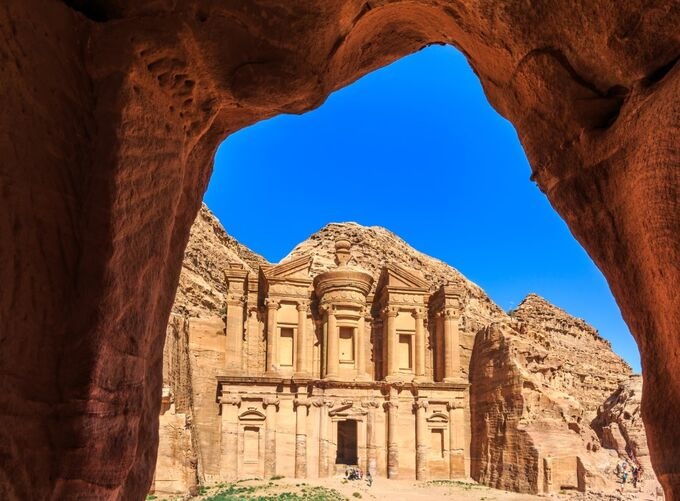
On the first visit, attention naturally concentrates around the Siq, Treasury, main archaeological route and perhaps the Monastery. Even with good pacing, there is an underlying sense that the day has a beginning, a route and an eventual exit.
A second visit feels different because the urgency has disappeared.
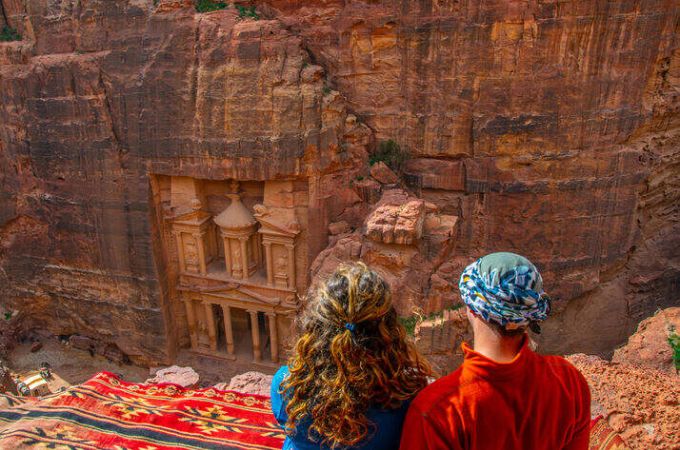
You already know how the Siq unfolds. The Treasury no longer carries the pressure of a first encounter. You can spend longer with sections that attracted your attention unexpectedly, explore another permitted route where appropriate, photograph rather than simply document, or give the archaeological landscape more time without constantly comparing it with everything still ahead.
This is particularly valuable for travelers who enjoy walking, photography or ancient history, because Petra's scale rewards depth more than repetition.
In this version of the eight-day journey, Day Eight has not added another destination at all.
It has converted Petra from a highlight into a place you actually spent time in.
For archaeology-focused travelers considering an organized version of this slower approach, Jordan Eight-Day Tours can naturally support that commercial decision while the blog remains focused on deciding whether Petra deserves the extra time.
If Petra Already Felt Complete, Look at the Day Before and After It
Sometimes the problem is not Petra itself.
It is everything surrounding it.
A one-week itinerary may include a long southbound journey immediately before Petra and an early move toward Wadi Rum the following morning. On paper, Petra received a full day. In practice, the traveler arrived tired, had little evening margin and left as soon as breakfast finished.
The eighth day can improve Petra without actually becoming a second Petra sightseeing day.
Arrive in Wadi Musa earlier.
Allow the previous road journey to contain fewer stops.
Give the evening before Petra enough room for dinner and proper rest.
Leave later the following morning so that the Petra day does not feel bracketed between transportation deadlines.
This is one of the least glamorous uses of an additional day and one of the most intelligent.
Travel duration is not valuable only when it creates more sightseeing. Sometimes the extra time improves the places already included by removing pressure around them.
That kind of improvement will never make a tour brochure look dramatically longer, but travelers notice it almost immediately.
If You Loved Wadi Rum, the Extra Day Should Not Automatically Mean a Second Camp Night
Wadi Rum is another destination where the first instinct is to extend.
One night provides afternoon desert touring, sunset, evening and morning, which gives first-time visitors a substantially more complete experience than a brief daytime stop. A second night can be excellent for travelers who want longer desert exploration, hiking, photography or simply a much slower relationship with the landscape.
For most first-time visitors, however, the second Wadi Rum night needs a clear reason.
If the first overnight already gave you the desert atmosphere you wanted, another full day may provide less additional value than placing the eighth day somewhere with a completely different character.
This is the principle that should govern the entire eight-day itinerary: extra time should increase contrast or depth, not merely duration.
The traveler who is obsessed with desert landscapes may happily stay longer. The traveler who enjoyed Wadi Rum but now wants water, contemporary city life or another historical period should let the route evolve.
Eight days gives you that freedom.
If You Have Been Moving Every Day, Do Not Add Dana Simply Because You Finally Can
Dana becomes mathematically possible once the itinerary extends beyond a week, which can make it tempting to add automatically.
That would be a mistake for travelers who do not genuinely enjoy hiking or nature-focused travel.
Dana's value does not come from providing another sightseeing stop between Petra and northern Jordan. It works when travelers are willing to devote meaningful time to walking through a natural landscape, accepting that much of the day may contain no famous monument, no dramatic architectural reveal and no obvious checklist of attractions.
For hikers, that can be exactly what the journey needs.
For travelers whose days have already involved extensive walking in Jerash and Petra, the thought of another physically active day may produce less enthusiasm.
The eighth day should therefore not be allocated according to what is newly possible.
It should be allocated according to what has been missing.
If your first seven days contain very little nature beyond desert scenery and you actively enjoy hiking, Dana becomes a strong candidate. If you have been dreaming about a hotel pool since Day Four, the answer is probably somewhere else.
Aqaba Becomes Much More Convincing When You Finally Have Two Nights to Give It
Aqaba is one of the biggest winners when a Jordan itinerary grows from seven to eight days.
The reason is not simply that another destination fits.
It is that the additional time can change Aqaba from a rushed overnight into a genuine coastal stay.
One night on the Red Sea often produces too much hotel transition relative to actual relaxation: afternoon arrival, a quick swim, dinner, breakfast and departure. Two nights create a full uninterrupted day in the middle, and that middle day is where the destination begins functioning properly.
A traveler can snorkel, dive, use the resort facilities or decide not to organize anything at all without feeling that valuable Jordan time is being wasted.
That last option matters.
After Amman, Jerash, road travel, Petra and Wadi Rum, a day with no significant historical content can provide exactly the contrast the trip needs.
Aqaba therefore becomes particularly attractive for couples, families, divers and travelers who enjoy ending cultural journeys more gently than they began them.
If that sounds like you, Day Eight may belong beside the Red Sea rather than beside another archaeological site.
The Dead Sea Benefits From the Eighth Day in a Completely Different Way
The Dead Sea usually enters a one-week itinerary as a short experience or one-night relaxation stop.
An extra day can make that stay more generous, but whether it deserves the time depends on how much you value resort environments.
A traveler who wants spa treatments, an unhurried afternoon, pool time and a slow morning can easily justify additional hours. Someone whose primary interest is experiencing the distinctive buoyancy of the water may find that a shorter stay already delivered what they wanted.
The important difference between Aqaba and the Dead Sea should remain clear.
Aqaba can become a genuine coastal component involving conventional swimming, snorkeling, diving and marine activities.
The Dead Sea provides a unique but more concentrated experience whose longer stays derive much of their value from the hotel or resort environment.
With only eight days, you rarely need to expand both.
Choose the one whose style of relaxation best suits you rather than dividing the extra day between two partly relaxed experiences and accidentally creating more road movement.
Amman Quietly Competes Very Well for Day Eight
Amman is often the destination travelers underestimate before the trip and reconsider after arrival.
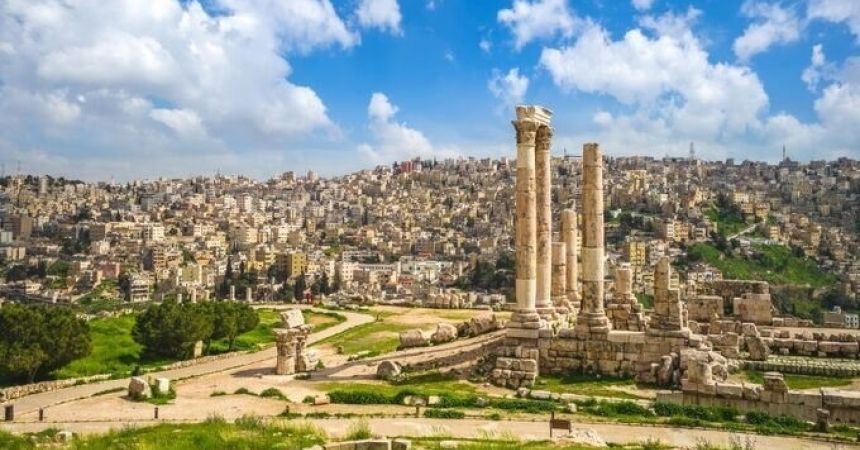
A classic highlights route can give the capital enough time for the Citadel, Roman Theatre and a limited introduction to city life, but it rarely allows Amman to behave like a city rather than a sightseeing stop.
The extra day changes that.
Instead of leaving after the principal historical landmarks, travelers can explore different neighborhoods, spend more time with contemporary Jordan, visit a museum according to personal interests, eat without arranging the meal around a departure, or simply let the city occupy a full day without needing to justify itself through ancient ruins.
This option is particularly valuable when the rest of the itinerary is heavily historical.
Jordan can otherwise become unintentionally frozen in time, with the traveler moving from Roman archaeology to Byzantine mosaics, Crusader fortifications, Nabataean monuments and desert landscapes while spending relatively little time inside the modern society connecting them.
Amman corrects that imbalance.
For travelers who enjoy cities, food and contemporary culture, the eighth day can be more revealing here than at another famous attraction.
Northern Jordan Can Use the Extra Day Without Becoming Another Jerash Visit
Travelers who enjoy northern Jordan may want to use the eighth day to reduce the pressure on the Jerash portion of the trip rather than returning to Petra or heading toward the coast.
This does not mean spending another full day at Jerash.
It may mean allowing the north to contain more than one historical period and landscape, with Ajloun becoming feasible without forcing Jerash into an artificially short visit.
This is where the extra day improves the relationship between destinations.
Jerash retains enough time for its Roman cityscape, while Ajloun introduces a medieval fortress and greener northern landscape without turning the entire excursion into a race back to Amman.
For a history-focused traveler, this can be more valuable than beach time.
For someone indifferent to castles, it adds very little.
Again, the eighth day is not deciding which destination is objectively best.
It is exposing the traveler's preferences more clearly than a seven-day highlights route needed to.
The Extra Day Can Also Remove a Hotel Change Entirely
One of the most underrated uses of Day Eight is not adding another night in another place.
It is redistributing accommodation so that the route feels less fragmented.
Perhaps you stay two consecutive nights in Wadi Musa instead of arriving late and leaving immediately after Petra. Maybe Amman receives two nights at one end rather than being split awkwardly around other destinations. A Red Sea stay becomes two nights instead of one, eliminating the strange experience of unpacking only to repack twelve hours later.
Hotel transitions consume time without announcing themselves as sightseeing.
Packing, checking out, loading luggage, driving, checking in and reorganizing belongings may each seem trivial, but repeated across a short journey they create an underlying sense of constant movement.
Eight days gives enough space to remove one of those transitions.
For travelers who value comfort over maximum geographical coverage, that may be the smartest improvement available.
Day Eight Is Especially Valuable for Families Because It Creates Recovery Without Calling It Recovery
Family itineraries often become dense because adults worry that children will become bored unless every day contains an obvious activity.
In practice, the opposite problem is frequently more serious.
Children may enjoy Petra, Wadi Rum and the Dead Sea enormously while still needing a less structured day somewhere in the middle or near the end. Constant hotel changes, early starts and historical explanations accumulate even when every individual activity was successful.
Aqaba can absorb the eighth day particularly well for families because swimming and resort time require much less organization than another cultural excursion. Amman can also work if the family enjoys food, city exploration and a slower urban day.
The important point is that the additional day allows parents to stop making every hour productive.
Children do not generally judge holidays by the percentage of the UNESCO list completed.
Parents occasionally do.
Eight days creates enough room to correct that.
Couples Can Use Day Eight to Split Interests Without Splitting the Trip
Another advantage appears when two travelers want different things from Jordan.
One person may love archaeological interpretation while the other has reached the point where another temple explanation produces diminishing returns. One may want to dive in Aqaba while their partner has no interest in going underwater. A serious photographer might happily spend another morning in Petra while their companion would prefer coffee and a slower start.
Seven tightly scheduled days can force both travelers onto the same rhythm.
An eighth day provides enough slack to allow interests to diverge briefly.
This does not require spending the entire day separately.
One partner could arrange a morning dive while the other uses the resort. A photographer could begin early while the other joins later. Amman can support independent exploration unusually well compared with remote archaeological destinations.
This flexibility becomes particularly relevant in Jordan Luxury Tours, where the value of a higher-end private journey should come partly from allowing the itinerary to adapt rather than simply upgrading hotels and vehicles.
The Eighth Day Is Not Automatically Better at the End
Adding the extra day after everything else seems natural because calendars encourage us to think sequentially.
It may be more valuable in the middle.
A slow day after Petra can improve Wadi Rum.
An additional night before Petra can improve the archaeological visit.
A more generous Amman beginning can allow travelers to recover from international flights before long road journeys.
An extra Wadi Musa night can remove pressure from both the day before and after Petra simultaneously.
This is why an eight-day itinerary should not be built by taking the seven-day version and inserting “Day 8” somewhere near departure.
Spread the benefit.
The eighth day can create more value when its hours are distributed across arrival times, departure times and additional hotel nights than when they are consumed by one new destination.
If Your Flights Are Poor, Day Eight May Already Be Spent
This sounds disappointing, but it is worth recognizing early.
Suppose your international arrival is late on the first evening and the departure flight leaves early on the final morning. An “eight-day Jordan trip” may contain fewer usable sightseeing hours than a seven-day trip with excellent flight timing.
In that situation, the extra calendar date may already be doing useful work by absorbing airport logistics.
Do not respond by compressing the middle of the itinerary simply because the website says eight days.
Count actual usable mornings and afternoons before deciding that an extra destination must fit.
This becomes even more important when connecting Jordan with another country, where regional flight times can consume portions of the first or last day.
The itinerary should reflect the trip you physically have rather than the number in its title.
How to Decide Where Your Extra Day Belongs
Instead of using a destination ranking, use a regret test.
Imagine returning home and realizing you had one more day available.
Would you regret not having gone deeper into Petra?
Would you wish you had allowed Wadi Rum another substantial experience?
Would you realize you barely understood Amman?
Would you have preferred a full Red Sea day instead of continuing immediately after the desert?
Would the lack of hiking make the journey feel incomplete?
Or would you simply wish you had spent less time packing and driving?
The strongest emotional answer is usually more useful than another list of Jordan attractions.
The eighth day exists to address that regret before it happens.
Why Eight Days Can Feel More Than One Day Longer Than Seven
The mathematical difference is 24 hours.
The travel difference can be considerably larger because additional time reduces pressure elsewhere.
A second Wadi Musa night can improve two separate days. A full Aqaba day transforms two short hotel nights into a genuine coastal experience. Extra Amman time can remove the need to squeeze the capital between flights. A slower road day can make arrival in Petra more comfortable while also allowing an en-route stop to receive proper attention.
This is why Jordan Small-Group Tours operating around a longer duration should not simply advertise another included attraction as the benefit of the eighth day.
The more meaningful improvement is often the reduction in competition between existing experiences.
The itinerary becomes less brittle.
When lunch runs longer, nothing collapses. When Petra deserves another twenty minutes, the next destination is not immediately threatened. When travelers are tired, a slow morning no longer feels like a planning failure.
That flexibility is often what people believe they are buying when they say they want more time.

A travel professional specializing in tailor-made travel planning, guest experience management, and multi-destination tourism operations.
With over 23 years of experience in the travel industry, he designs and manages private and cultural tours for international travelers across Türkiye, Greece, Egypt, Jordan, Morocco, and other destinations.
He has strong expertise in both online and face-to-face guest communication, sales processes, and end-to-end travel operations.
Working closely with hotels, travel agencies, and local partners, he ensures smooth coordination and high-quality travel experiences at every stage of the journey.
His focus is on delivering personalized, reliable, and seamless travel experiences for international guests worldwide.