Jordan Currency: Using Dinars from Amman to Wadi Rum
Author: Kenan Ungur
Article Date: 02.08.2024
Reading Time: 12 min

Jordan Currency: Using Dinars from Amman to Wadi Rum

Updated: August 2026

Jordan is a country where money planning makes more sense when you look at your route rather than your wallet.

A traveler arriving in Amman may find cards convenient for many ordinary expenses and wonder whether carrying much local cash is necessary. Two days later, the same traveler may be driving south toward Petra, spending a full day around the archaeological site and then continuing into Wadi Rum, where the practical environment is very different from a capital-city hotel.

The currency has not changed. Your surroundings have.

Jordan uses the Jordanian dinar (JOD), commonly written as JD in everyday contexts. The Central Bank of Jordan is responsible for issuing Jordanian currency, and the dinar is divided into 100 qirsh, or 1,000 fils. Central Bank of Jordan

For visitors, however, the important question is not simply what the currency is. It is when during the journey you should make sure you have reliable access to it.

The Jordanian Dinar Is Your Financial Reference Point

Jordan's tourism industry is international, and travelers may occasionally encounter services discussed or quoted in US dollars or another foreign currency. That should not obscure the basic rule: everyday local spending belongs in Jordanian dinars.

Thinking in JOD also makes transactions easier to understand.

If something is priced locally in dinars, paying attention to that original price is more useful than mentally converting every small transaction into dollars, euros or pounds. Your home-currency equivalent is helpful for understanding overall value, but the JOD amount tells you what is actually being charged locally.

There is another distinctive feature worth understanding. The Central Bank of Jordan maintains an exchange-rate framework in which the dinar is pegged to the US dollar. Central Bank monetary policy

For tourists, this does not mean ordinary purchases should be treated as dollar transactions. It simply explains why USD/JOD behaves differently from currencies whose exchange values fluctuate freely against one another.

Do Your Money Planning Before You Leave Amman

This is probably the most useful Jordan-specific habit.

Amman is where many international trips begin. It is also the point where you are most likely to have straightforward access to urban banking and payment infrastructure before heading south.

Rather than thinking:

“I can always deal with money later,”

look at tomorrow's route.

If you are leaving Amman for Petra, you already know that the day will probably include a road journey, stops and arrival in a destination where sightseeing—not finding banking services—is the priority.

That makes Amman a logical place to check:

  • whether your cards are working,
  • whether you have JOD cash,
  • whether you have useful denominations,
  • whether your backup payment method is separate from your main wallet.

Travelers taking Jordan heritage tours often move quickly between very different settings, so preparing before departure is much easier than solving a payment problem halfway through the route.

Petra Is Not the Place to Discover You Have No Dinars

Petra deserves almost all of your attention once you arrive.

A full visit can involve hours on foot, starting through the Siq and continuing well beyond the Treasury depending on how deeply you explore the site. Currency management should ideally have been dealt with before the sightseeing day begins.

This does not mean Petra operates without card payments or that travelers need to carry large quantities of cash. The point is logistical:

A major sightseeing day is a poor time to make basic financial preparation part of the itinerary.

If your accommodation and major services are already arranged, a reasonable JOD reserve is primarily about flexibility for incidental spending.

That is different from calculating the cost of visiting Petra, which belongs to another content cluster entirely.

Wadi Rum Changes the Question

Wadi Rum is where Jordan's currency planning becomes particularly distinctive.

You are no longer simply moving from one city to another. The landscape, accommodation style and activities can involve desert camps, 4x4 excursions and services operating in a very different physical environment from Amman.

The sensible question becomes:

What needs to be financially settled before I enter the desert environment?

This is more useful than debating whether Jordan as a whole is “cash-friendly” or “card-friendly.”

Before continuing into Wadi Rum, know what your camp arrangement includes and what has already been prepaid. If optional activities or additional services are being considered, understand their payment arrangements before assuming your normal city routine will apply.

For guests traveling on Petra and Wadi Rum tours, this is one of the easiest ways to remove unnecessary friction: clarify major inclusions first, then carry enough JOD for the smaller expenses that remain.

Four Stops, Four Different Payment Priorities

A classic Jordan journey illustrates why one national rule is inadequate.

Stage of journey What matters most
Amman Establish card access and obtain JOD
Petra Start sightseeing already financially prepared
Wadi Rum Confirm camp/activity payment arrangements beforehand
Dead Sea Return to a more hotel-centered payment environment

Notice that the table does not say “cards accepted” or “cash only.”

Those statements are too absolute to be genuinely useful.

The important distinction is how much inconvenience a payment problem would create in each environment. In central Amman, solving one may be relatively straightforward. During a desert stay, it can be considerably more disruptive.

Do You Need US Dollars Because the Dinar Is Pegged to the Dollar?

No.

This is an easy point to misunderstand.

The Jordanian dinar's exchange-rate relationship with the US dollar is a matter of monetary policy. It does not turn the US dollar into Jordan's domestic currency.

You may encounter tourism arrangements quoted in USD, especially when dealing with international operators. In those cases, follow the currency stated in your confirmed booking.

For normal local spending, JOD remains the reference.

A traveler arriving with euros, pounds or another major currency should likewise distinguish between money that can be exchanged and the currency used for everyday local transactions.
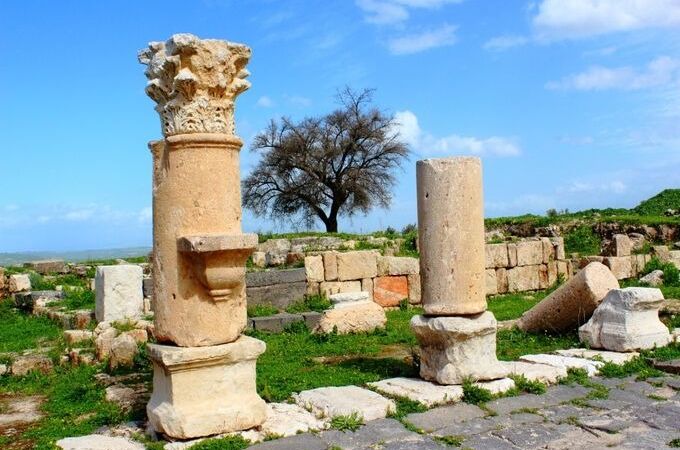
Madaba: A Historic Gem for Travel Enthusiasts

ATMs Are Most Useful When They Fit the Route

Travelers often discuss ATMs as though the only question is whether they exist.

For Jordan, location and timing are more important.

If you have an opportunity to access cash conveniently in Amman and know you will spend the next several days moving south, waiting until your JOD supply is almost exhausted adds no benefit.

Equally, there is no reason to withdraw a very large amount merely because you are leaving the capital.

Think in stages:

Amman → Petra

Check cash.

Petra → Wadi Rum

Check again.

Wadi Rum → Dead Sea/Amman

Reassess what you still need.

This route-based method helps avoid both extremes: carrying too much cash and repeatedly searching for it.

Why a Backup Card Matters More on a Road Journey

A second card is useful on almost any international holiday, but its value increases when your itinerary is linear.

If your main card develops a problem in Amman, you are still at the beginning of the journey. If the same problem occurs after several hours of road travel and you have no alternative payment method, it becomes much more inconvenient.

Store the backup separately.

The same principle applies to cash. You do not need to divide every dinar into elaborate secret locations, but keeping every card and all your money in one wallet creates a single point of failure.

Jordan's classic touring route makes simple redundancy worthwhile.

Do Not Confuse Currency Planning With Trip Cost

One reason old travel articles become bloated is that they try to answer every money-related question on the same URL.

We will not do that here.

Whether Jordan is expensive, what hotels cost, how much to budget per day and how much a complete tour costs are travel-budget questions.

Currency planning answers something different:

How do I maintain usable access to Jordanian dinars throughout the route?

Keeping those intents separate is better for travelers as well as search architecture. Someone researching the price of a Jordan holiday does not need 500 words about ATM timing, while someone already booked and leaving next week may find exactly that information useful.

Check What Is Already Included Before Carrying More Cash

Organized Jordan journeys often include substantial portions of the trip in advance: accommodation, transfers, guiding and some meals or activities depending on the package.

That changes the purpose of the money in your wallet.

If the major components are prepaid, you do not need to carry cash as though you were independently purchasing the entire itinerary each day. Your JOD requirement becomes more focused on personal and incidental expenses.

This is particularly relevant on Jordan desert discovery trips, where the amount of cash you actually need can depend far more on what your confirmed arrangements already include than on a generic daily-cash recommendation found online.

Read your itinerary first. Then decide what financial flexibility you need.

The Dead Sea Is a Useful Point to Reassess

By the time many travelers reach the Dead Sea, the most logistically unusual stages of the classic Jordan route are behind them.

This is a good moment to look at your remaining JOD.

If the journey is almost finished, there is little reason to make a large new withdrawal unless you know you need it. If you are returning to Amman for another night, your payment environment becomes urban again.

This stage-by-stage approach prevents the common problem of arriving at the airport with far more local currency than intended.

You do not need to engineer a zero balance. You simply want to avoid accumulating cash without a reason.

The Jordan Rule: Prepare for the Next Landscape

Money management in Jordan becomes easy when you stop looking for a single nationwide rule.

Amman, Petra, Wadi Rum and the Dead Sea are connected within one classic journey, but they do not create identical payment situations.

Use the capital to establish your financial setup. Reach Petra with your basic cash needs already handled. Clarify desert-camp and optional-service arrangements before Wadi Rum. Reassess your remaining dinars as you return toward the Dead Sea or Amman.

The Jordanian dinar stays the same throughout.

What changes is how inconvenient it would be to discover that you are not prepared.

That is why the best Jordan currency strategy is not “cash” or “card.”

It is planning one stage ahead.

Frequently Asked Questions About Currency in Jordan

1. What does JOD mean when I see a Jordanian price?

JOD is the international currency code for the Jordanian dinar. Within Jordan you may also see prices expressed using JD. Both refer to the country's official currency, which is the most useful reference for understanding normal local prices during your journey.

2. Why is the Jordanian dinar divided into both qirsh and fils?

One Jordanian dinar equals 100 qirsh or 1,000 fils. Travelers do not need to memorize the monetary system before arriving, but recognizing these terms can help when encountering local prices, coins or conversations involving amounts smaller than one dinar.

3. Is the Jordanian dinar fixed to the US dollar?

Jordan maintains a fixed exchange-rate relationship between the dinar and US dollar as part of its monetary policy. For travelers, this helps explain the JOD/USD relationship but does not mean ordinary spending in Jordan should be treated as dollar-based.

4. Should I arrange Jordanian dinars before leaving Amman for Petra?

It is sensible to check your cash position before departure. Petra sightseeing days are better spent exploring than solving basic money logistics, so having access to appropriate JOD and confirming that your cards work before leaving Amman can make the journey smoother.

5. Do I need to carry a large amount of cash into Petra?

There is no reason to carry excessive cash solely because you are visiting Petra. Your needs depend on what is prepaid and your personal spending plans. The useful goal is simply to arrive with enough local-currency flexibility for the day's incidental transactions.

6. What should I check financially before staying in Wadi Rum?

Confirm what your desert-camp booking includes and how any optional activities or additional services would be settled. Doing this before entering Wadi Rum is more useful than assuming that every payment will work exactly as it did in an Amman hotel.

7. Can I use US dollars instead of Jordanian dinars?

Some tourism services may quote or accept dollars, but JOD remains Jordan's official local currency. Where a confirmed service is priced in USD, follow those terms; for normal local transactions, thinking and paying in dinars is generally clearer.

8. Is it better to withdraw all my Jordan cash in Amman?

Not necessarily. Amman is a convenient place to establish your cash reserve, but withdrawing much more than you expect to need creates unnecessary exposure. Consider the route ahead and replenish local currency when practical rather than carrying the entire trip's spending money.

9. Why should I check my cash before driving from Petra to Wadi Rum?

The next stage moves into a different travel environment where dealing with banking should not become part of the experience. Checking your JOD, card access and confirmed camp arrangements before departure lets you focus on Wadi Rum rather than payment logistics.

10. Will I need the same amount of cash at the Dead Sea as in Wadi Rum?

Not necessarily. The Dead Sea portion of many itineraries is more hotel-centered, while Wadi Rum may involve desert accommodation and activities. Your payment needs therefore depend on the stage of the journey and what has already been included or prepaid.

11. What should I do if Jordan is only one country in a longer trip?

Avoid accumulating more JOD than you reasonably expect to use before departure. As the Jordan portion ends, reduce unnecessary withdrawals and use remaining dinars naturally. Your next destination may use a completely different currency and payment environment.

12. What is the most useful money habit on a Jordan road trip?

Check your payment setup before each major route transition. Rather than waiting until cash runs low, look ahead to tomorrow's destination, make sure you have suitable JOD and card access, and resolve financial logistics while they are still convenient.

Kenan Ungur
Author

A travel professional specializing in tailor-made travel planning, guest experience management, and multi-destination tourism operations.

With over 23 years of experience in the travel industry, he designs and manages private and cultural tours for international travelers across Türkiye, Greece, Egypt, Jordan, Morocco, and other destinations.

He has strong expertise in both online and face-to-face guest communication, sales processes, and end-to-end travel operations.

Working closely with hotels, travel agencies, and local partners, he ensures smooth coordination and high-quality travel experiences at every stage of the journey.

His focus is on delivering personalized, reliable, and seamless travel experiences for international guests worldwide.
Join The Newsletter

To receive our best monthly deals

Magnificent Travel Logo

Magnificent Travel
Usually responds the same day

Magnificent Travel
Welcome to the Magnificent Travel

How may i help you?
Today
+905324935198
X