9 Days in Jordan: A Slower First-Time Itinerary
Updated: August 2026
Nine days in Jordan creates an opportunity that many itineraries immediately waste.
The extra time appears, somebody opens a map, and the response is almost automatic: add another destination.
Dana becomes possible. Aqaba enters the conversation. Ajloun is restored to the northern route, a second castle appears on the King's Highway, and perhaps another archaeological site is inserted because nine days sounds long enough to justify greater coverage. Before long, the itinerary contains more places than the seven-day version and feels almost exactly as rushed.
There is another way to use nine days, and for many travelers it produces a better first journey.
Instead of widening Jordan, deepen it.
Allow Amman to become somewhere you actually spent time rather than somewhere you repeatedly slept. Reach Petra before the evening has already disappeared. Let the archaeological day run according to interest rather than a fixed departure. Give Wadi Rum enough space that the overnight does not begin and end with luggage handling. Place the Dead Sea where it functions as recovery rather than another timed stop, and remove the idea that every road journey needs to be decorated with several attractions.
Nine days is particularly good for this because it is long enough to reduce pressure without becoming a slow-travel itinerary in the specialist sense. You can still experience the major first-time highlights, but the trip no longer needs every day to perform at maximum capacity.
The difference may be difficult to see on an itinerary summary.
It is much easier to feel once you are traveling.
Nine Days Gives You Something More Valuable Than Another Attraction: Margin
Travel planning tends to treat unused time suspiciously.
Thirty unscheduled minutes become a coffee stop. A free afternoon becomes a museum. A relaxed morning becomes an opportunity to add a nearby historical site.
This happens because itinerary value is easy to demonstrate through inclusions and much harder to demonstrate through margin.
Yet margin is what allows a journey to survive normal human behavior.
People take longer at places they enjoy. Traffic does not always behave predictably. Lunch can last ninety minutes without anybody doing anything wrong. Someone may wake tired after several early starts, and a photographer may discover that a location deserves substantially more time than expected.
On a tightly compressed trip, each of these perfectly ordinary events creates consequences elsewhere.
Nine days allows some of them simply to happen.
That changes the psychological tone of the holiday because travelers stop feeling that enjoying the current place is threatening the next one.
The First Improvement Should Usually Happen in Amman, Not on the Map
A longer Jordan itinerary gives the capital a chance to stop behaving like an airport service area.
This does not require allocating three days to Amman or creating an urban itinerary that competes with Petra and Wadi Rum. What changes at nine days is that you can give the city real, unhurried time without feeling that every hour spent there was stolen from somewhere more famous.
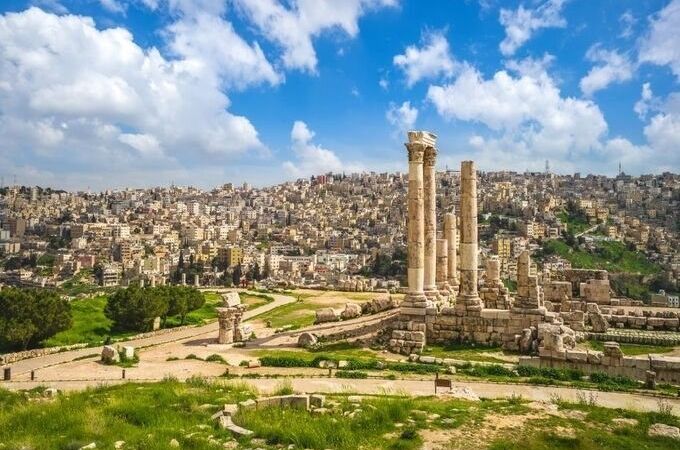
That time can include the Citadel and Roman Theatre, but it should not end there. Downtown streets, food, contemporary neighborhoods, cafés and the simple experience of moving through a modern Middle Eastern capital provide a kind of context that archaeological sites cannot.
This is especially useful at the beginning of the journey.
Travelers who immediately leave Amman for ancient sites can spend much of the trip seeing Jordan through historical interpretation. Beginning with contemporary city life gives everything that follows a different frame.
Nine days also makes the first night after an international flight less anxious. If arrival is late, the itinerary can absorb sleep without acting as though the trip has already lost ground.
That is an underrated benefit.
Northern Jordan Becomes Better When Jerash Is No Longer Carrying the Entire Day
Jerash remains one of the strongest reasons to spend meaningful time north of Amman, particularly for travelers interested in Roman history and urban archaeology.
With nine days, however, it does not necessarily need to be visited under the usual combination-day pressure.
You can allow Jerash the time it naturally deserves and still consider whether Ajloun adds enough contrast through medieval history and northern landscapes. The important change is not merely that both can fit; it is that one does not need to be shortened drastically for the other.
This creates a better northern Jordan day because the historical periods remain distinct.
Jerash can be understood as an ancient city rather than a collection of monumental ruins, while Ajloun, if included, becomes a deliberately chosen second experience rather than the stop everybody rushes through because lunch took longer than planned.
Travelers with little interest in castles should not add Ajloun simply because nine days makes it possible. In that case, the extra time can return to Amman, create a slower lunch or simply allow the day to end earlier.
Nine days provides options without requiring you to use all of them.
The Journey South No Longer Needs to Be a Competitive Event
One of the biggest beneficiaries of a longer itinerary is the route toward Petra.
Short trips often transform this journey into a negotiation among Madaba, Mount Nebo, the Dead Sea, Kerak, the King's Highway and the desire to reach Wadi Musa before dinner. Every stop has a legitimate argument, which is precisely why the day becomes overloaded.
With nine days, you can make the road south more selective.
Perhaps Madaba and Mount Nebo receive proper attention because religious history matters to you, while Kerak disappears. Another traveler might take a more scenic route and give the castle enough time to justify the stop. Someone who has little interest in either could travel more directly and arrive in Petra early enough to enjoy the evening without immediately checking tomorrow's alarm.
What makes this better is not that the road contains more.
It is that the chosen stops no longer need to apologize for consuming time.
For travelers considering a commercially organized Jordan Grand Tour, this is one of the areas where experienced route planning matters most, because the difference between a long travel day and an enjoyable travel day is often the number of things somebody was willing to remove.
Arriving in Petra Before You Are Tired Changes the Entire Visit
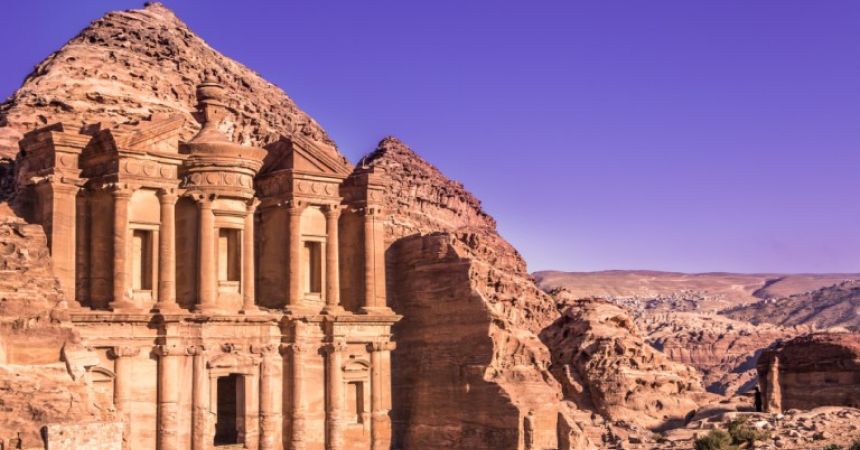
Petra's physical demands are frequently discussed in relation to the sightseeing day itself, although the previous evening deserves equal attention.
A traveler who arrives in Wadi Musa after a twelve-hour program involving several stops, a long lunch and substantial road travel begins Petra with yesterday still present in the body.
A traveler who reaches the hotel earlier, has time to settle in, eats without rushing and sleeps properly begins the same archaeological site with a very different level of energy.
Nine days allows that difference to become intentional.
You do not need to maximize the southbound travel day simply because the road contains worthwhile places. Protecting Petra may mean arriving earlier and accepting that one historical stop remains unseen.
This is one of the clearest examples of how a slower itinerary can provide more value while containing fewer inclusions.
Petra receives not only time.
It receives a better traveler.
A Second Petra Experience Becomes Possible Without Becoming Obligatory
Nine days can comfortably support additional Petra time for travelers whose interests justify it, although this should not become a default rule.
The benefit of returning is not merely visiting more monuments. Once the first day's orientation has been completed, the second experience can become much more personal.
Photographers may revisit familiar areas under different light. Strong walkers might select another permitted route. Archaeology enthusiasts can give more attention to sections that felt secondary during the first visit. Travelers who simply dislike rushing may use the additional time to reduce the physical intensity of Day One rather than increasing the total distance covered.
Other visitors will feel entirely satisfied after one full day.
That is equally valid.
The question at nine days is no longer whether a second Petra period can fit.
It is whether Petra deserves the additional time more than the experience competing for it.
This is where personal interests begin controlling the itinerary in a meaningful way.
Wadi Rum Benefits More From a Relaxed Arrival Than From a Longer Checklist
The Petra-to-Wadi Rum transition is geographically straightforward enough that itineraries often attempt to exploit it aggressively.
Leave Petra. Drive south. Begin the desert program immediately. Catch sunset. Dinner. Sleep. Wake early. Continue.
Everything works.
The traveler also spends another day moving according to a sequence that leaves very little room for anything to take longer.
Nine days lets Wadi Rum start differently.
You can arrive without treating sunset as an emergency. The desert excursion can contain stops that last long enough to enjoy the surroundings, while reaching camp does not feel like another timed arrival. The evening then becomes an actual change of pace rather than the final activity on an already crowded day.
The overnight experience is strongest when the desert has enough time to replace the structure that came before it.
Wadi Rum does not need another attraction added to justify that time.
The absence of urgency is part of what you traveled there for.
The Morning After Wadi Rum Does Not Need to Begin at Maximum Speed
Sunrise can be beautiful in the desert, particularly for travelers who enjoy photography and early mornings, but it should not automatically create another dawn alarm after several days of structured sightseeing.
Nine days allows travelers to decide.
Some may wake early, experience the changing light and begin the day energetically. Others may prefer a slower breakfast and leave the desert later, especially if the following destination does not require a fixed arrival.
This kind of flexibility is one of the reasons Jordan Private Holidays can work particularly well at this duration. Private travel should allow preferences such as sleeping later, spending longer over breakfast or changing a departure time to influence the trip in ways that matter.
If the schedule remains completely rigid despite the additional day, the itinerary has not actually become slower.
It has merely become longer.
Aqaba Is Finally Possible Without Being Compulsory
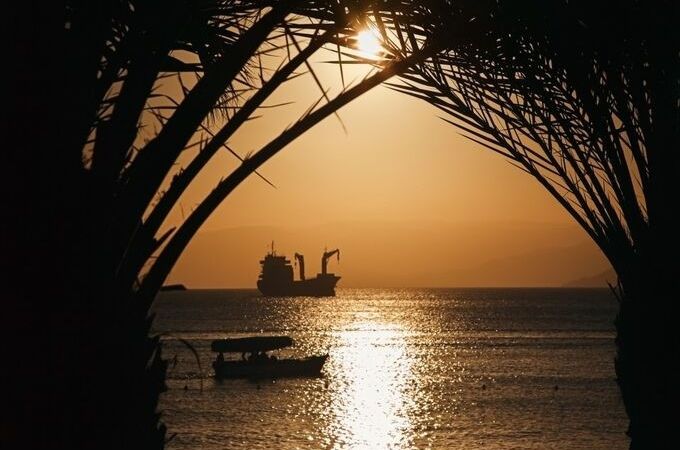
Nine days is where Aqaba begins making serious sense for a wider range of first-time travelers because two coastal nights can often be included without dismantling the core historical route.
That does not mean Aqaba should automatically appear.
The Red Sea is most valuable when travelers genuinely want a coastal interval, whether for swimming, snorkeling, diving or resort relaxation. A person who becomes restless after several hours at the beach may receive more value from deeper Amman time, a second Petra experience or another northern Jordan component.
For couples and families, however, Aqaba can create an exceptionally useful pause.
The first night absorbs arrival from Wadi Rum. The following day is completely free from hotel transitions, and the second night allows the coastal experience to finish naturally rather than being interrupted by check-out after breakfast.
This is a fundamentally different Aqaba stay from the one-night version commonly squeezed into shorter itineraries.
At nine days, the coast can finally behave like the coast.
The Dead Sea Should Not Become Another Resort Stay Simply Because Aqaba Fits
This is where longer itineraries can accidentally create duplication.
Aqaba and the Dead Sea offer completely different water experiences, but if both are treated primarily as resort stays, the itinerary may allocate several nights to relaxation while reducing cultural depth elsewhere.
That may be exactly what some travelers want.
For most first-time cultural journeys, however, it is worth deciding which destination should carry the greater relaxation role.
If Aqaba receives two nights, the Dead Sea might work particularly well as a substantial stop or one-night experience positioned naturally within the route. If the Red Sea is omitted, the Dead Sea can absorb more of the slower portion of the trip.
The decision should follow traveler preference rather than a belief that Jordan requires both water destinations at identical depth.
One experience is defined by the Red Sea.
The other exists because the water behaves unlike almost anywhere else.
Neither needs to imitate the other.
Nine Days Is Long Enough for a Day to Contain Only One Major Thing
This may be the clearest difference from shorter itineraries.
Petra can be the only important commitment of the day.
Aqaba can have a day where snorkeling in the morning is followed by absolutely nothing scheduled after lunch.
Jerash can occupy the central part of a northern day without requiring another archaeological site afterward.
A Dead Sea afternoon can simply remain a Dead Sea afternoon.
This matters because travelers often arrive home from culturally dense journeys remembering that every destination was excellent while also remembering almost no moment when they were not going somewhere.
Nine days allows both.
You can have a trip rich enough for Jordan's history and landscapes to feel substantial while leaving enough open space for the journey to remain a holiday.
The additional time begins paying for itself here.
What “Slow” Should Mean on a Nine-Day Jordan Trip
Slow travel can sound as though travelers need to spend three nights in every city, avoid major attractions or replace all transportation with long overland journeys.
That is not what nine days requires.
Within this context, slowing down means something more practical:
| Instead of This | Nine Days Allows This |
|---|---|
| Late arrival in Petra after numerous road stops | Earlier arrival and a rested archaeological day |
| Jerash compressed to preserve Ajloun | Meaningful Jerash time with Ajloun only if wanted |
| Wadi Rum entered under sunset pressure | A more flexible desert arrival |
| One-night Aqaba hotel change | Two nights with a genuine coastal day |
| Dead Sea squeezed before another transfer | Enough time to float, shower and relax properly |
| Amman used almost entirely for sleeping | Actual city time |
| Every meal arranged around sightseeing | Some meals allowed to determine their own pace |
| Constant checkout and repacking | Fewer unnecessary one-night transitions |
This is the table that matters for nine days.
It does not tell you where to go.
It shows what the additional time should change.
One Unplanned Afternoon Is Not an Empty Day
The idea of deliberately leaving an afternoon open can make itinerary-conscious travelers uncomfortable.
What if there is something important nearby that could have been visited?
There almost certainly is.
Jordan contains more worthwhile experiences than nine days can accommodate, which means the existence of another attraction is not a compelling reason to use the time.
An unplanned afternoon can become a longer lunch in Amman, additional time at a site that unexpectedly interests you, a hotel break after Petra, a swim in Aqaba or nothing more structured than coffee and a walk.
This is particularly valuable midway through the trip because it creates a pressure-release point.
If earlier days ran perfectly, enjoy the freedom.
If something was delayed, the margin can absorb part of the change without damaging the rest of the itinerary.
Unscheduled time is not missing content.
It is infrastructure.
Fewer Hotel Changes Become a Realistic Goal
A nine-day journey does not need nine different beds.
The route naturally requires some movement because Amman, Petra and Wadi Rum cannot sensibly be experienced from one base without excessive driving. Yet a longer itinerary makes two-night stays easier to use strategically.
Two nights in Amman can create a real city base.
Two nights around Petra can protect the archaeological day.
Two nights in Aqaba, if included, finally make the coastal stop worthwhile.
Wadi Rum remains a distinct overnight experience rather than an attempt to reduce hotel changes at all costs.
The goal is not minimizing accommodation transitions mathematically.
It is removing the ones that provide little return.
Every unnecessary one-night stay eliminated gives travelers a morning without packing and an evening without reorganizing a suitcase.
Across nine days, those mornings and evenings begin to matter.
This Duration Works Particularly Well for Travelers Who Dislike Being Rushed
Some travelers want to see as much as possible and genuinely enjoy full schedules.
Others become irritated when every visit has a departure time hanging over it.
Nine days is an excellent duration for the second group because the classic Jordan route can remain intact without requiring constant acceleration.
Guides can explain more when questions arise. Lunch can occasionally take longer. Hotel arrival can occur before everybody is exhausted, and a photographer can wait for people to move out of the frame without immediately threatening the next attraction.
For those travelers, Jordan Cultural Packages should be evaluated according to pacing as carefully as they are evaluated according to hotel category and included visits.
A luxurious vehicle does not make an overloaded day less overloaded.
Comfort begins with time.
Nine Days Is Also Where You Can Stop Treating Every Traveler in the Group as Identical
A longer private journey can accommodate differences more easily.
One traveler may want a museum in Amman while another prefers cafés and neighborhoods. A couple might divide for part of an Aqaba day because one dives and the other does not. In Petra, different walking ambitions may become manageable without forcing everyone to complete the most demanding route.
Families can benefit similarly.
Children may need a slower afternoon after an active morning, while adults still want some independent time. Multigenerational groups can select different levels of walking without the entire itinerary collapsing around the variation.
Nine days creates enough margin for these differences to become part of the journey rather than problems requiring immediate compromise.
This is where personalization becomes more meaningful than choosing between two hotel options.
What I Would Resist Adding Even With Nine Days
I would still resist the idea that nine days automatically justifies Amman, Jerash, Ajloun, Madaba, Mount Nebo, the Dead Sea, Kerak, Dana, Petra, Wadi Rum and Aqaba at meaningful depth.
They may fit on paper.
The resulting trip would probably spend too much time managing transitions between worthwhile places.
Dana in particular should be added only when hiking is a genuine priority because its strongest experience requires time rather than a scenic stop. Kerak deserves a meaningful castle visit if medieval history interests you, but its presence should influence the road day rather than simply decorate it. Aqaba needs enough time to become more than a night beside the sea.
Nine days makes Jordan generous.
It does not make time infinite.
A Good Nine-Day Trip Should Feel Different by the Fourth Morning
This is an interesting test.
If Day 1, Day 2, Day 3 and Day 4 all begin with early checkout, luggage loading and immediate transfer toward another major attraction, the itinerary is still operating like a short highlights trip.
By nine days, the rhythm should have changed somewhere.
Perhaps the third morning begins in the same Amman hotel as the second. Maybe Petra has a protected day between two nights in Wadi Musa. A Wadi Rum overnight could lead naturally into a slower coastal arrival, while the Dead Sea might appear later as a genuine decompression point.
The trip should contain at least a few mornings where you know where your suitcase is staying that night.
That is a remarkably effective measure of whether the additional days have actually improved the journey.
Nine Days Is Not About Seeing More Jordan; It Is About Experiencing More of the Jordan You Chose
A nine-day itinerary can absolutely include more destinations than a one-week trip.
Sometimes it should.
The important difference is that the additional places need to contribute something absent from the route rather than simply increasing geographical coverage.
Aqaba contributes the Red Sea.
Dana contributes substantial nature and hiking.
Ajloun introduces a different historical period and northern landscape.
A second Petra period contributes depth.
Additional Amman time contributes contemporary Jordan.
Those are genuine reasons.
“Because we had an extra day” is not.
The strongest nine-day journey will probably still leave several important places unseen, which is entirely appropriate. Jordan deserves better than being reduced to a completion exercise.
The extra time should allow you to remember more about fewer moments, arrive at major destinations with enough energy to care about them, and occasionally look at the clock without discovering that it controls what happens next.
That is what a slower itinerary actually buys.
12 Questions Travelers Ask Once They Decide Not to Rush Nine Days
1. Is nine days too long if Petra and Wadi Rum are my main interests?
Not at all, provided the remaining time is used according to interests rather than filled automatically. Additional days can improve arrival and departure pacing, add meaningful Amman time, allow a coastal stay or deepen Petra without requiring the itinerary to become geographically broader.
2. Should I spend three nights in Amman during a nine-day trip?
Three nights can work if they create two meaningful city or northern Jordan days rather than simply functioning as repeated accommodation between excursions. Count what you will actually do from Amman and whether staying there reduces hotel changes or creates unnecessary return driving.
3. Can nine days include both Aqaba and the Dead Sea comfortably?
Yes, particularly when Aqaba receives enough time for a real coastal stay and the Dead Sea remains proportionate to your interest. Avoid expanding both into long resort stays unless relaxation is intentionally a major component of the overall holiday.
4. Is this enough time for two separate visits to Petra?
Yes, and travelers interested in archaeology, hiking or photography may find the second visit extremely valuable. It is not necessary for everyone, however, so compare the additional Petra time against experiences such as Aqaba, Dana, northern Jordan or a slower overall route.
5. Should I use one of the nine days for a completely free day?
You can, especially if you prefer flexible travel, although a full free day is not mandatory. Even a deliberately open afternoon or late morning can provide much of the benefit by absorbing fatigue and allowing spontaneous decisions without removing an entire sightseeing day.
6. Would Dana fit better into nine days than Aqaba?
That depends entirely on whether hiking or coastal relaxation has greater value to you. Dana should receive meaningful walking time, while Aqaba becomes strongest with at least two nights when the goal is a genuine Red Sea interval rather than a brief overnight.
7. Is nine days a good duration for travelers over 65?
It can be particularly comfortable because the additional time allows walking-heavy days to be separated more intelligently and reduces pressure to move hotels constantly. Actual mobility and fitness matter more than age, so Petra routes, hiking and hotel access should still be adapted individually.
8. Should every transfer day include sightseeing because I have more time?
No. One of the benefits of nine days is being able to let some transfers remain transportation. A direct journey that creates an early hotel arrival can occasionally provide more value than another day filled with roadside stops, particularly before physically demanding sightseeing.
9. Can I spend two nights at the Dead Sea without making the itinerary too resort-heavy?
You can when resort relaxation is important enough to justify it, particularly if Aqaba is omitted. If another two-night coastal or resort stay is already included, compare whether both are giving the journey distinct experiences or simply duplicating downtime.
10. Is a private tour more valuable over nine days than over a shorter Jordan trip?
It can be because flexibility compounds across the journey. Adjusting departure times, visit durations and meal pacing becomes more useful when the itinerary contains enough margin for those decisions to influence the trip without immediately affecting every subsequent day.
11. How do I prevent a nine-day itinerary from becoming a ten-day route squeezed into less time?
Set a maximum number of major geographical transitions before selecting individual attractions. Once the core route feels comfortable, add depth within those destinations rather than continuing to expand outward simply because another place appears theoretically reachable.
12. What should a nine-day Jordan trip feel like that a seven-day trip cannot?
It should contain noticeably less negotiation with the clock. Major destinations can receive better arrival and departure timing, at least one experience can become deeper rather than broader, and there should be enough margin that an unexpectedly good lunch or longer site visit does not immediately damage the day.

A travel professional specializing in tailor-made travel planning, guest experience management, and multi-destination tourism operations.
With over 23 years of experience in the travel industry, he designs and manages private and cultural tours for international travelers across Türkiye, Greece, Egypt, Jordan, Morocco, and other destinations.
He has strong expertise in both online and face-to-face guest communication, sales processes, and end-to-end travel operations.
Working closely with hotels, travel agencies, and local partners, he ensures smooth coordination and high-quality travel experiences at every stage of the journey.
His focus is on delivering personalized, reliable, and seamless travel experiences for international guests worldwide.