Summer in Jordan: How to Travel Well in the Heat
Updated: August 2026
Summer in Jordan has a reputation that can make travelers unnecessarily nervous. Mention a June, July or August journey and the conversation quickly turns to heat, often followed by the assumption that an ambitious Jordan trip should either be postponed or reduced to a much simpler version.
The heat certainly matters, particularly when the itinerary includes long periods outdoors, but it does not affect every destination or every hour in the same way. Walking through Petra under strong afternoon sun is very different from spending that same part of the day over lunch in Amman, while Wadi Rum changes noticeably as the sun moves lower and the desert begins losing the intensity of midday.
For travelers whose vacation dates are determined by school holidays, work schedules or a wider Middle East journey, the useful question is therefore not whether another season might be cooler. If you are visiting Jordan in summer, you need advice for the trip you are actually taking.
The biggest adjustment is surprisingly simple: summer changes the value of different hours far more than it changes the map of Jordan.
You can still travel between Amman, Petra, Wadi Rum, the Dead Sea and Aqaba. What deserves reconsideration is when you tackle the most demanding experiences, how much outdoor activity you place into one day and whether the itinerary gives you somewhere comfortable to be when the sun is doing its best to discourage another hour of walking.
In Summer, 8:00 AM and 2:00 PM Are Not Equally Valuable Hours
Travel itineraries often treat time as though every hour has approximately the same value. Two hours of sightseeing in the morning and two hours after lunch appear identical when written into a schedule.
During a Jordanian summer, they may feel completely different.
The cooler part of the morning is valuable because it allows you to complete outdoor sightseeing before stronger heat begins influencing how quickly you walk, how often you stop and how much attention you are still giving to what the guide is explaining.
This creates a different way of thinking about itinerary efficiency.
A leisurely breakfast followed by a late departure may be perfectly reasonable on an urban day, yet it can waste some of the most comfortable outdoor hours before a physically demanding visit. Conversely, forcing every day to begin extremely early simply because it is summer can leave travelers exhausted halfway through the holiday.
The sensible approach is to spend early starts where they buy you something meaningful.
Petra deserves those hours more than a relaxed morning in Amman.
Do Not Spend Petra's Best Morning Hours at the Breakfast Buffet
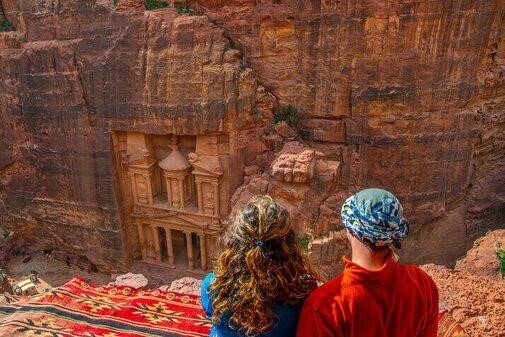
Few places reveal the importance of summer timing as clearly as Petra.
The issue is not simply the temperature shown on a weather forecast. Petra is an extensive archaeological landscape where the experience can involve considerable walking, exposed areas and, depending on what you choose to explore, substantial changes in elevation.
That makes the first part of the day disproportionately valuable.
An earlier arrival can allow you to enjoy significant portions of the site before the strongest heat becomes part of every decision, whereas beginning late and trying to compensate by walking faster rather defeats the purpose of visiting somewhere that rewards observation.
This does not mean racing through breakfast at dawn every morning of your holiday.
It means recognizing that the relaxed hotel breakfast you can enjoy almost anywhere should not routinely consume the most useful hour of your most physically demanding sightseeing day.
Once inside Petra, summer is also a poor time to become obsessed with completing everything because somebody's itinerary described a particular route as “full day.” Decide which parts matter most, monitor how everyone is handling the conditions and preserve enough energy for the return journey.
Petra is not improved by turning the final hours into an endurance test.
Midday Does Not Need to Be Productive
Many travelers feel uncomfortable with the idea of doing very little during the middle of a vacation day, particularly after paying for international flights, hotels and touring.
This can lead to some strange summer decisions.
People spend the most demanding hours pushing through outdoor attractions because returning to a hotel feels like wasting valuable travel time, even though they are walking more slowly, stopping more frequently and enjoying considerably less of what they came to see.
A summer itinerary works better when midday is treated as a legitimate part of the day's design.
Lunch can take longer. A hotel break can be useful. An indoor visit may fit naturally into the warmer portion of the day, particularly in Amman. On some days, simply having nowhere important to be for a couple of hours may improve everything scheduled afterward.
You are not losing time because you stopped sightseeing at the least comfortable moment.
You are redistributing energy toward the hours when you can use it properly.
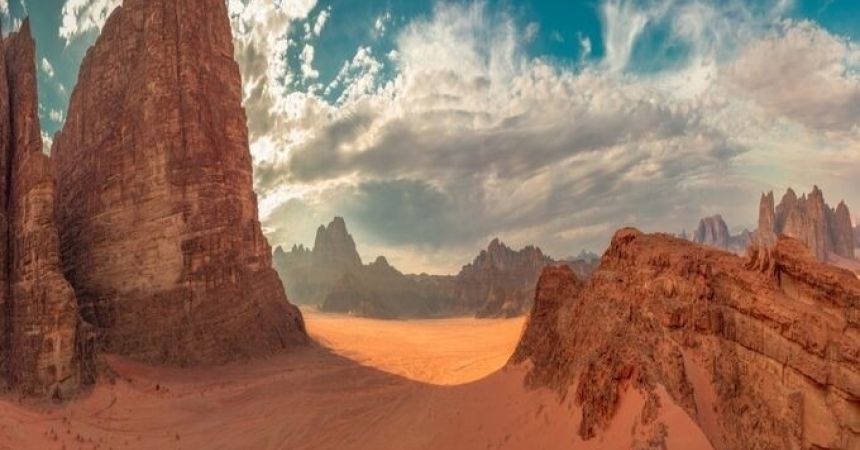
Wadi Rum Has More Than One Summer Personality
Wadi Rum demonstrates why talking about “the temperature in Jordan” can be misleading.
A desert experience changes dramatically with light and time of day. Strong daytime sun emphasizes the exposed nature of the landscape, while later hours can transform both the appearance of the sandstone and the physical comfort of being outdoors.
For summer travelers, this makes scheduling especially important.
A desert visit does not necessarily become more meaningful because the longest possible excursion has been squeezed into the hottest part of the day. Depending on the arrangement, a better experience may come from structuring activities around the more comfortable portions of the afternoon and evening while allowing less demanding time during peak heat.
An overnight introduces another consideration that travelers sometimes overlook when packing entirely for daytime temperatures.
Desert conditions after sunset do not feel identical to midday conditions, and the appropriate clothing depends on the actual travel period and current forecast. Light layers can therefore remain useful even when your suitcase was packed for a hot-weather holiday.
Travelers looking at Jordan Summer Tours should pay attention to the timing of the Wadi Rum experience, not merely whether the desert appears somewhere in the itinerary.
Two programs can include the same destination while giving you very different summer days.
The Dead Sea Is Water, but That Does Not Make It Cool
There is an understandable psychological assumption that a destination centered around water will automatically provide relief from summer heat.
The Dead Sea deserves more careful expectations.
The surrounding area can be extremely warm during summer, and the distinctive water is not equivalent to jumping into a cool swimming pool after a hot sightseeing day. The experience also requires sensible precautions because of the water's unusually high salinity.
For summer travelers, accommodation facilities can become particularly valuable here. Access to shade, freshwater showers, an air-conditioned room and a swimming pool can make the Dead Sea stop work as a genuine change of pace rather than simply another outdoor activity performed under strong sun.
Timing again matters.
You do not need to prove that you visited the Dead Sea by remaining in the water for an unnecessarily long period during the hottest part of the afternoon.
The unusual floating sensation is the experience.
Duration is not the achievement.
Amman Lets You Negotiate With Summer More Easily
Summer feels different in a city because the day can be divided between outdoor and indoor environments more naturally.
Amman still requires sensible heat planning, particularly when walking through exposed historical areas, yet restaurants, museums, cafés, hotels and transportation provide opportunities to interrupt outdoor time without abandoning the day.
This flexibility makes Amman useful when balancing a summer itinerary.
Instead of approaching the city as a checklist that must be completed continuously from morning until late afternoon, outdoor visits can be positioned around more comfortable periods while meals or indoor experiences occupy warmer hours.
Even ordinary decisions become more significant.
A centrally located restaurant can remove an unnecessary walk. A well-positioned hotel can make returning for a break realistic rather than theoretical. Starting a historical visit earlier may allow the afternoon to unfold much more casually.
Summer does not require transforming Amman into an indoor destination.
It simply rewards travelers who stop pretending that walking under midday sun and sitting over lunch are interchangeable uses of the same hour.
Aqaba Is Not Automatically an All-Day Beach Destination in Summer
Aqaba introduces another version of summer because the Red Sea changes what travelers expect from the day.
Swimming, snorkeling, diving, pools and resort facilities can make a coastal stay feel much less demanding than archaeological sightseeing, although strong sun and high temperatures still deserve respect.
This is where shade becomes part of the itinerary rather than an incidental convenience.
A morning water activity followed by a slower midday period can make considerably more sense than assuming that every daylight hour should be spent on the beach. Travelers staying at a resort may find themselves naturally adopting this rhythm without thinking of it as itinerary planning at all.
Aqaba can therefore be particularly effective toward the end of an active summer journey when travelers genuinely want coastal time.
It should not, however, be added automatically because somebody declared that every summer trip requires a beach.
If your interests lie elsewhere, Jordan does not become incomplete because you did not finish beside the Red Sea.
Summer Makes the Vehicle Part of the Travel Experience
During milder weather, travelers may evaluate transportation mainly according to vehicle size, journey time and comfort.
Summer adds another question:
How effective is the air-conditioning?
This sounds mundane beside Petra and Wadi Rum, yet transportation occupies a meaningful portion of many Jordan itineraries. A comfortable, properly air-conditioned vehicle allows road journeys to become recovery periods between outdoor visits rather than another source of physical fatigue.
Private transportation can add another summer advantage because the timing of stops can respond more easily to the travelers.
If somebody needs water, a bathroom break or simply a few minutes away from the heat, flexibility has practical value. The ability to adjust a departure slightly after a demanding morning can matter more than the appearance of the vehicle itself.
This is one reason Private Summer Trips in Jordan can suit travelers who know they are less tolerant of high temperatures.
The real upgrade is not necessarily exclusivity.
It is control over the rhythm of the day.
Hotel Location Becomes More Important When Nobody Wants the Extra Walk
A hotel described as “only ten minutes away” can sound perfectly convenient when you are comparing properties from home.
After a long summer sightseeing day, that extra walk may become surprisingly unpopular.
Location therefore deserves more weight during hot-weather travel, particularly in places where you expect to leave the hotel independently for dinner, shopping or an evening walk.
This does not mean every summer traveler needs the most centrally located hotel available.
It means distance should be measured in actual behavior rather than kilometers.
Will you realistically walk there after spending several hours at Petra? Will the family go out for dinner if it requires another twenty-minute walk? Does the hotel offer easy access to the places you intend to use during free time?
A slightly simpler hotel in a practical location can occasionally produce a better summer experience than a more luxurious property that creates extra transportation every time you want to leave.
A Swimming Pool Is Valuable Only When the Schedule Lets You Reach It
Summer makes hotel pools look particularly persuasive on booking pages.
Before paying extra for one, inspect the itinerary.
If the day begins early, covers substantial sightseeing and finishes around dinner, the pool may have very little practical value. If you have a free afternoon at the Dead Sea, Aqaba or another hotel where you genuinely expect to spend time, the calculation changes completely.
This is a useful principle beyond swimming pools.
Summer hotel upgrades should focus on facilities you will actually use.
Strong air-conditioning, practical room arrangements, location, comfortable common areas and easy dining can sometimes improve a hot-weather journey more consistently than amenities that appear impressive but remain inaccessible during touring hours.
Ask what you will be doing at the hotel before deciding how much the hotel should cost.
Summer Clothing Is About Sun and Culture as Well as Temperature
Packing for a hot country can produce an instinctive response: take the smallest and lightest clothing possible.
Jordan requires a little more thought.
Lightweight and breathable clothing is useful, but sun exposure and local cultural context also matter. Loose garments that cover more skin can sometimes feel more comfortable during long outdoor periods than minimal clothing that leaves shoulders and legs exposed to strong sun.
A hat and appropriate sun protection become particularly useful during archaeological and desert days, while comfortable footwear matters because heat does not reduce the amount of walking required at major sites.
Travelers should also avoid assuming that every indoor environment will feel warm simply because it is summer outside. Strong air-conditioning can make a light layer useful during transportation, restaurants or hotels, while desert evenings may feel different from the middle of the day.
Summer packing works best when it prepares you for transitions rather than one temperature.
What You Carry During the Day Matters More Than What Is Back at the Hotel
The perfectly packed suitcase is not particularly useful when it is fifty kilometers away.
For summer touring, the day bag deserves more attention.
Water should be readily available, particularly on longer outdoor visits, while sun protection, essential medication and anything needed between scheduled stops should remain accessible. A small number of useful items generally works better than carrying a heavy bag filled with every conceivable emergency.
Families may naturally need more, although even then it helps to distinguish between what might theoretically be useful and what the children routinely need during a long day.
The goal is to prevent minor discomfort from accumulating.
Heat often becomes exhausting through a series of small problems: you waited too long to drink, forgot the hat in the vehicle, skipped a break because the group was moving, then discovered that lunch was later than expected.
None sounds dramatic individually.
Together they can change the afternoon.
Hydration Should Happen Before You Feel Particularly Thirsty
Travelers often respond to heat once they become uncomfortable.
Summer sightseeing works better when hydration is routine rather than reactive.
Carry water, drink regularly and pay attention to how your body responds to heat, especially during walking-intensive days. People who are not accustomed to hot, dry conditions may underestimate how much fluid they are losing because perspiration can feel less obvious than expected.
Alcohol the previous evening, insufficient sleep and a rushed morning can also make the following day's heat feel considerably more demanding.
Travelers with medical conditions or specific hydration requirements should follow appropriate professional advice rather than relying on generic travel recommendations.
The broader travel lesson is simpler: do not wait until halfway through an exposed archaeological site to begin taking the temperature seriously.
June, July and August Should Not Be Treated as One Identical Day Repeated for Three Months
“Jordan in summer” is useful shorthand, but actual conditions vary according to month, destination, elevation and individual weather patterns.
Early summer can feel different from the heart of July or August, while Amman, Petra, the Dead Sea, Wadi Rum and Aqaba should not be expected to produce identical conditions merely because they appear within the same national border.
This is why rigid temperature promises are not particularly helpful in a travel-planning article.
Historical climate patterns can help you understand what kind of season you are entering, but current forecasts become much more useful as the journey approaches.
Check them destination by destination.
A forecast for Amman should not become your packing forecast for every night and sightseeing day elsewhere in Jordan.
The country is compact enough to tour conveniently.
It is not climatically uniform enough to stop checking where you are going.
Summer Travelers Should Stop Counting Attractions Per Day
One of the easiest ways to overload a summer itinerary is measuring its quality by the number of places visited.
Three attractions must be better value than two.
Four must therefore be even better.
This logic ignores what heat does to concentration and energy.
A major archaeological site visited properly in the morning, followed by a relaxed lunch and a lighter afternoon, may produce a far richer day than racing through several outdoor stops simply because the vehicle can technically reach them all before sunset.
This does not mean summer itineraries should become empty.
It means the measurement changes from how many places fit? to how many experiences can I still enjoy properly?
That distinction is particularly important on longer journeys because overloading the first three days can affect the next four.
Summer fatigue accumulates.
An itinerary should recognize that before the traveler has to.
Families Traveling During School Holidays Need a Different Margin
Summer is precisely when many families are able to travel, so telling parents that another season would be easier is not especially useful.
Instead, the itinerary needs to acknowledge that children may experience heat differently from adults and may be less willing to push through discomfort for the sake of completing a sightseeing schedule.
Early outdoor visits can help, but repeated early mornings create their own problem if children are not sleeping enough. Hotel pools become more valuable when the schedule genuinely leaves time to use them, while private transportation can provide flexibility around rest stops and changing energy levels.
Parents should also be willing to shorten an outdoor visit without treating the decision as wasted money.
A child who has already spent several memorable hours at Petra has experienced Petra.
The family does not earn a certificate for reaching the point where everyone stops enjoying it.
Older Travelers Should Plan Around Recovery, Not Assumptions About Age
Age alone does not determine whether somebody will handle Jordanian summer conditions comfortably.
Fitness, heat tolerance, medication, mobility and previous experience in hot climates can matter considerably more.
The useful planning question is how quickly you normally recover after prolonged outdoor activity.
If a long morning of walking usually leaves you tired, do not schedule another demanding visit immediately afterward simply because the itinerary says the driving distance makes it possible. If you know heat affects you strongly, prioritize early starts for the experiences you value most and allow the rest of the day to remain flexible.
Travelers with health concerns should seek appropriate medical advice before undertaking strenuous activity in hot conditions.
Summer planning is not about proving resilience.
The point is to return home remembering Jordan rather than remembering how hard you worked to get through Jordan.
The Best Lunch Stop May Be the One With the Best Air-Conditioning
Food naturally matters during travel, but summer occasionally changes what constitutes an excellent lunch.
After several hours outdoors, travelers may appreciate a comfortable, shaded or air-conditioned restaurant and enough time to sit down more than they appreciate adding another “must-try” dining experience that requires a detour.
Lunch can function as the day's reset point.
This is particularly useful when afternoon sightseeing remains on the schedule. A rushed meal followed immediately by another exposed outdoor visit gives the body very little opportunity to recover from the morning.
Summer also makes heavy meals a personal consideration. Some travelers happily eat substantial lunches in hot weather, while others feel better eating more lightly and saving a larger meal for the evening.
There is no travel award for eating according to somebody else's schedule.
Sunrise and Sunset Become Part of the Planning, Not Just the Photography
Travelers naturally associate sunrise and sunset with photographs, particularly in desert landscapes.
During summer, those hours also affect physical comfort.
Later afternoon and evening can restore interest in being outside after the midday period has slowed the itinerary, while earlier mornings provide an opportunity to experience places before heat becomes dominant.
This can create a satisfying two-part day: purposeful sightseeing in the morning, a slower middle period and another enjoyable experience toward evening.
The rhythm may initially feel unusual to travelers accustomed to touring continuously from breakfast until late afternoon.
After several days, it often makes intuitive sense.
The hottest hours no longer feel like an obstacle that must be defeated.
They simply occupy a different role in the day.
Summer Can Make a Customized Itinerary More Valuable
A fixed itinerary has one major weakness during hot weather: it assumes the traveler will respond to conditions exactly as predicted.
Real people are less consistent.
One traveler may find the heat manageable and want to continue. Another may be surprised by how quickly a long outdoor visit becomes tiring. A family may decide that the hotel pool is worth sacrificing an optional afternoon stop, while another group may prefer to continue sightseeing and relax later.
A customized trip can accommodate these differences more naturally when the services themselves allow flexibility.
Travelers considering Customized Jordan Holiday Packages should therefore ask more than whether destinations can be added or removed. The more useful question for summer is how much the daily pace can respond to actual conditions once the journey has begun.
Customization is most valuable when reality differs from the itinerary document.
Summer gives reality plenty of opportunities to do exactly that.
Summer in Jordan Is Better When You Stop Fighting the Season
Jordan does not need to be removed from your travel plans simply because your available dates fall in June, July or August.
It does need to be approached differently.
Use the cooler morning hours for the places where walking and sun exposure matter most, allow midday to become slower when necessary, choose transportation and accommodation with heat in mind, carry what you genuinely need during the day and resist the temptation to judge itinerary value by the number of attractions completed before dinner.
Most importantly, pay attention to how you are actually feeling rather than how the itinerary says you should be feeling.
A summer trip becomes unnecessarily difficult when every day is designed as though temperature has no influence on pace.
Once the schedule begins working with the season instead of against it, the experience changes considerably.
You are still visiting Jordan.
You are simply using its summer hours more intelligently.
12 Questions That Matter When Your Jordan Dates Are Already in Summer
1. I can only travel in July. Should I shorten my Jordan trip because of the heat?
Not automatically. Reducing the number of days can actually force the remaining itinerary to become more intensive, which may be counterproductive in hot weather. It is often more useful to preserve the trip length while reducing unnecessary midday activity and improving the sequence of demanding outdoor visits.
2. Is it worth waking up very early for Petra during summer?
An earlier start can be particularly valuable because Petra involves substantial outdoor walking and the conditions later in the day may feel considerably more demanding. You do not need every morning of the holiday to begin early, which makes it sensible to save your earliest starts for places where they genuinely improve the experience.
3. Should I plan to return to the hotel every afternoon?
No fixed rule is necessary. In Amman, you may comfortably alternate outdoor sightseeing with indoor visits or a long lunch without returning to the hotel, whereas another day may benefit enormously from a proper afternoon break. Build the possibility into the schedule rather than making it compulsory.
4. Is the Dead Sea refreshing during July and August?
Travelers should not approach the Dead Sea as though it were simply a cool swimming stop because summer conditions in the area can be very hot. The distinctive floating experience remains worthwhile, while access to shade, freshwater showers, pools and air-conditioned facilities can make the wider visit much more comfortable.
5. Should I book a hotel with a swimming pool everywhere in Jordan?
Only when your itinerary gives you realistic time to use it. A pool can be extremely welcome during a free afternoon or resort stay, yet it provides little value at a hotel where you arrive near dinner and leave early the following morning. Schedule first, facilities second.
6. Will Wadi Rum still feel hot after sunset?
Conditions can change considerably once direct sun disappears, although the exact temperature varies with the date and weather. Check the forecast shortly before travel and keep an adaptable light layer available rather than assuming that clothing comfortable at midday will necessarily feel identical throughout the desert evening.
7. Is a private vehicle more useful in Jordan during summer?
For some travelers, yes, because reliable air-conditioning and greater flexibility around departure times and stops can become especially valuable in hot conditions. The main advantage is not simply traveling privately; it is having greater control over how the day responds to your comfort and energy.
8. How do I know when I have planned too much outdoor sightseeing?
Look at exposure and physical effort rather than attraction count alone. Several relatively short outdoor visits can still create a demanding day when they occur consecutively during strong heat, while one substantial morning experience followed by a lighter afternoon may feel considerably more comfortable.
9. Can children comfortably visit Jordan during the summer school holidays?
Many families travel during this period, although children's heat tolerance, walking ability and normal routines should influence the pace. Protect the more comfortable hours for major outdoor experiences, provide regular access to water and shade, and avoid turning completion of the original schedule into the measure of a successful day.
10. Do I need a jacket if I am traveling to Jordan in August?
Packing entirely around daytime heat can be limiting because air-conditioned interiors and some evening environments may feel different from exposed midday conditions. A lightweight layer takes little space and can provide useful flexibility, although actual destination forecasts should guide final packing decisions.
11. Should I avoid long lunches because I need to maximize sightseeing time?
During summer, a comfortable lunch can be one of the most productive pauses in the itinerary because it allows you to spend part of the warmer period indoors while recovering for later activities. Maximizing sightseeing hours and maximizing enjoyment are not always the same objective.
12. What should I change first if the heat feels stronger than I expected?
Change the pace before changing the entire itinerary. Move demanding outdoor activities toward earlier hours where possible, extend breaks, reduce optional stops and protect the experiences you care about most. A flexible summer trip can absorb these adjustments without requiring you to abandon the destinations that brought you to Jordan.

A travel professional specializing in tailor-made travel planning, guest experience management, and multi-destination tourism operations.
With over 23 years of experience in the travel industry, he designs and manages private and cultural tours for international travelers across Türkiye, Greece, Egypt, Jordan, Morocco, and other destinations.
He has strong expertise in both online and face-to-face guest communication, sales processes, and end-to-end travel operations.
Working closely with hotels, travel agencies, and local partners, he ensures smooth coordination and high-quality travel experiences at every stage of the journey.
His focus is on delivering personalized, reliable, and seamless travel experiences for international guests worldwide.