Jordan in August: A Journey Built on Contrasts
Last Updated: August 9, 2026
August is not the month to pretend Jordan has forgotten it is summer.
The season is firmly established, the sun has considerable authority over the middle of the day, and destinations at lower elevations can feel markedly hotter than Amman or other highland areas. Anyone hoping to reproduce a cool-season itinerary hour for hour will spend too much of the trip negotiating with the weather.
There is a better approach.
Build the journey around contrast.
Follow an active archaeological morning with an easier afternoon. Let Amman's elevation provide a different beginning from the Dead Sea. Give Petra one of your strongest days, then allow Wadi Rum to shift the experience from walking to landscape. If Aqaba is included, let the Red Sea genuinely change the holiday rather than becoming one more pin on the map.
August works when the itinerary stops demanding the same kind of energy every day.
The Best August Routes Have Temperature Changes Built In
Jordan is compact enough for several major destinations to fit into one journey, yet geographically varied enough that they do not share identical summer conditions.
That becomes especially useful in August.
| Experience | Better Setting | Why It Helps |
|---|---|---|
| City culture | Amman | Elevation and indoor/outdoor variety |
| Major archaeology | Petra | Worth protecting prime hours |
| Desert scenery | Wadi Rum | Vehicle exploration reduces exertion |
| Low-effort break | Dead Sea | Water and resort facilities |
| Marine holiday | Aqaba | Red Sea changes the travel style |
The point is not simply that some places are warmer than others.
It is that each destination asks something different from your body.
An itinerary becomes more comfortable when those demands alternate.
Amman Is Where August Can Start Gently
Landing in Jordan and driving immediately towards Petra is tempting when holiday time is limited.
August gives you a reason not to rush.
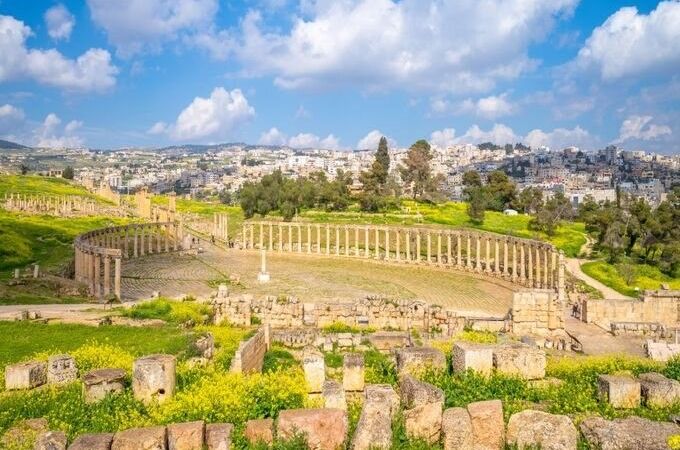
Amman can provide a softer introduction because the capital combines archaeological sites with museums, food, neighbourhoods and indoor spaces. You can begin outside when conditions are comfortable, disappear into a long lunch without feeling that sightseeing has stopped, then return to city life later.
There is also value in understanding Jordan before reaching its most famous monuments.
Amman is messy in places, hilly, busy and very much alive. That makes it an important counterpoint to the archaeological landscapes that dominate many itineraries.
Travellers wanting more context before heading south can include Jordan city breaks, allowing the capital to become part of the holiday rather than the place where the international flight happened to land.
August Petra Is About Protecting Curiosity
Heat affects more than physical energy.
It affects attention.
When you become tired, you stop looking properly.
The carved details that fascinated you during the first hour begin receiving shorter glances. Another flight of steps feels less like an invitation and more like a negotiation. Eventually, the archaeological city can become something you are trying to finish.
That is what an August Petra plan should prevent.
Begin with the places you care about most and allow enough time that breaks do not feel like delays. If the Monastery matters, preserve energy for it. If Nabataean history interests you more than elevated viewpoints, spend your effort accordingly.
Travellers who want greater archaeological depth can consider Petra heritage trips, but the objective should remain understanding the site rather than accumulating kilometres.
Petra is too interesting to experience while thinking mainly about the exit.
Wadi Rum Offers the Opposite Kind of Scale
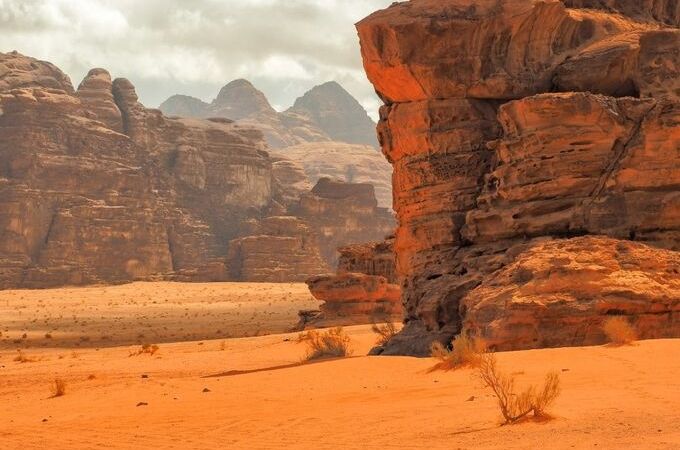
Petra draws your attention towards details: façades, tombs, carved stone, steps and ancient engineering.
Wadi Rum does the opposite.
It makes you look farther.
This contrast is particularly useful in August because much of the desert can be explored by 4x4 rather than continuous walking. You still experience heat and should plan accordingly, but the physical structure of the day can become less demanding after Petra.
Late afternoon matters enormously.
As shadows return, sandstone formations gain definition and the landscape begins moving towards the period that many visitors remember most clearly: sunset.
Travellers interested in giving the desert more space can explore Jordan desert escapes, particularly when an overnight camp allows the experience to continue after the main daytime excursion.
Wadi Rum does not need constant activity to remain interesting.
Its scale does most of the work.
Dead Sea and Aqaba Solve Different Summer Problems
In August, it becomes especially important not to treat the Dead Sea and Aqaba as interchangeable water destinations.
The Dead Sea is naturally suited to a shorter pause within a cultural circuit. Aqaba can become an entire leisure chapter.
| Dead Sea | Aqaba | |
| Main Appeal | Floating and relaxation | Red Sea activities |
| Ideal Role | Recovery stop | Coastal extension |
| Typical Pace | Very slow | Slow or activity-based |
| Works Well After | Petra / northern touring | Wadi Rum |
| Worth Several Nights? | Depending on trip style | Yes, if sea matters |
If you want an unusual landscape, resort facilities and very little physical effort, Dead Sea relaxation fits naturally into the route.
If diving, snorkelling or several days beside the Red Sea genuinely appeal, Aqaba coastal holidays deserve more than a token overnight.
The mistake is adding both automatically.
August itineraries improve when water has a purpose.
Alternate Demanding Days With Easy Ones
This is perhaps the simplest August planning principle and one of the most useful.
Do not build:
Jerash.
Petra.
Long hike.
Wadi Rum walk.
Another archaeological site.
All consecutively.
The individual activities may be possible, but the accumulated fatigue can flatten the second half of the journey.
Instead, change gears.
An archaeological morning in Amman or Jerash can be followed by a lighter afternoon. Petra can receive one substantial day, followed by a more vehicle-based Wadi Rum experience. Several active cultural days can lead naturally towards the Dead Sea or Aqaba.
This creates a holiday with rhythm rather than a sightseeing marathon.
A Shorter August Trip Can Be the Better Trip
Longer holidays are not automatically better if the extra nights exist only to accommodate additional transfers.
For a first visit, a focused route can sometimes outperform an ambitious one.
A focused 7-night idea
| Night | Destination | Purpose |
| 1–2 | Amman | Culture and adjustment |
| 3–4 | Petra | Archaeological priority |
| 5 | Wadi Rum | Desert and overnight camp |
| 6–7 | Dead Sea | Slow finish |
A traveller particularly interested in the Red Sea could replace the Dead Sea portion with Aqaba or extend the trip rather than forcing both into the same week.
Those wanting a broader programme can consider Jordan private journeys, where pacing can be adjusted according to interests, ages and comfort rather than following a fixed sightseeing template.
August is a poor month for itinerary ego.
More destinations do not make the map more impressive once you are actually sitting in the vehicle between them.
August Works Through Contrast, Not Compromise
It would be easy to describe August as a month when travellers must make concessions because of summer.
That misses what the season can do well.
Amman feels different from the Dead Sea. Petra asks for concentrated effort while Wadi Rum can reduce the amount of continuous walking. Aqaba can turn an archaeological journey into a culture-and-sea holiday almost overnight.
Those differences create the itinerary.
Instead of asking how to squeeze the maximum amount of sightseeing into each day, ask what tomorrow should feel like after today.
If today is Petra, perhaps tomorrow should not involve another demanding archaeological site.
If several days have focused on culture, perhaps the Red Sea deserves space.
If Wadi Rum is the landscape you have dreamed about most, stay overnight instead of rushing through it on the way somewhere else.
August does not reward stubbornness.
It rewards contrast.
Build the route that way and summer stops feeling like something the itinerary has to overcome.
It simply becomes the season in which the journey takes place.
Your Energy Matters More Than the Average Temperature
Two people can stand in exactly the same August weather and describe it very differently.
One traveller may happily spend several hours walking through Petra before considering lunch. Another may enjoy the first two hours immensely and find everything afterwards increasingly tiring. Children bring their own rhythm, while travellers accustomed to hiking in warm climates may have very different expectations from someone arriving from a cool northern summer.
This is why temperature charts can only take August planning so far.
The better question is personal:
How much energy does your group realistically want to spend on sightseeing each day?
Once you answer that, Jordan becomes much easier to design.
Couples Have More Freedom to Change Their Minds
Couples and two-person trips often have one major advantage in August: decisions can happen quickly.
If both travellers feel energetic after reaching the Treasury, continuing deeper into Petra is straightforward. If the day feels warmer than expected, plans can change without negotiating the preferences of a larger group.
Use that flexibility.
Do not decide months in advance that you absolutely must complete three Petra trails because they fit on a map. Choose one or two priorities and let the rest of the visit develop according to conditions and energy.
The same applies in Wadi Rum. A couple may prefer a longer desert excursion or decide that an afternoon around camp followed by sunset sounds considerably better.
Summer flexibility is valuable precisely because you do not need to use it until you arrive.
Families Need Variety More Than Ambition
Children rarely care that an itinerary was designed to maximise the number of UNESCO sites visited before dinner.
They care whether the day remains interesting.
August family trips therefore benefit from changing the type of experience frequently. Several consecutive archaeological days can become repetitive even before summer conditions enter the equation.
Petra already provides history, walking and adventure in one enormous setting. There is little reason to follow it immediately with another physically demanding day simply because adults want to “make the most” of the trip.
Wadi Rum can provide the change.
Vehicles, desert scenery and camp life feel completely different from archaeological touring. A Dead Sea or Aqaba stay changes the rhythm again by bringing water into the itinerary.
For families, contrast is not merely about physical comfort.
It keeps curiosity alive.
Multi-Generational Trips Should Not Have One Walking Speed
Jordan is a popular destination for families travelling across generations, and Petra exposes the weakness of one-size-fits-all itineraries very quickly.
A fit grandparent may happily outwalk everyone.
A younger traveller may struggle with heat.
Age alone tells you surprisingly little.
What matters is mobility, fitness, personal comfort and how strongly each person wants to complete a particular route.
If some group members want a demanding Petra extension while others prefer the main archaeological area, consider whether the programme can accommodate different levels rather than requiring everyone to follow the longest option.
The holiday is shared.
Every kilometre does not have to be.
Active Travellers Have a Different August Problem
Experienced hikers and highly active travellers may look at standard summer advice and think it sounds unnecessarily cautious.
Their challenge is different.
Fitness can create overconfidence.
Being capable of walking long distances does not mean every long walk adds value to the itinerary. An active traveller may complete an ambitious Petra route and still discover that doing so reduced enthusiasm for Wadi Rum the following day.
Physical ability and itinerary quality are not the same thing.
If hiking matters, choose where to spend that energy deliberately. Petra may deserve the major walking day, or a specialised route elsewhere may matter more.
The strongest active itinerary has peaks and recovery periods rather than trying to maintain maximum effort throughout the trip.
First-Time Visitors Carry Another Kind of Fatigue
Physical tiredness is only part of travel fatigue.
There is also information.
Amman introduces history, food and contemporary culture. Jerash adds an enormous Roman city. Petra brings Nabataean history on a completely different scale. Guides explain dates, architecture, trade routes, religions and political changes.
Eventually, even fascinating information can become difficult to absorb.
August makes this particularly relevant because physical and mental fatigue can arrive together.
Wadi Rum works beautifully after archaeology partly because the experience requires a different kind of attention. You do not need to remember which century a sandstone formation belongs to.
You can simply look at it.
That change is restorative.
Compare the Same Route for Different Travellers
A standard itinerary does not need entirely different destinations for every traveller type.
Often, the better solution is changing intensity.
| Traveller | Petra | Wadi Rum | Recovery |
|---|---|---|---|
| Couple | Flexible longer route | 4x4 + selected walks | Optional |
| Family | Shorter focused route | Interactive desert day | High value |
| Older active travellers | Pace by mobility, not age | Vehicle-led exploration | Useful |
| Hikers | Major walking priority | Add activity selectively | Essential |
| Multi-generation group | Consider split route options | Shared lower-impact day | Very useful |
This is more useful than declaring one itinerary universally ideal.
The destinations can stay the same.
The effort changes.
Don't Spend Tomorrow's Energy Today
This is the simplest way to think about August.
At 3:00 p.m. in Petra, you may technically have enough energy for another climb.
But what happens tomorrow?
If tomorrow is mostly a road transfer followed by relaxation, perhaps the additional route makes sense. If tomorrow contains an active Wadi Rum programme, using every remaining reserve today may be a poor trade.
Think of energy as part of the itinerary budget.
You would not spend the entire financial budget on the first hotel simply because you could.
Do not spend the physical one that way either.
The Best August Pace Is Personal
There is no correct number of sightseeing hours.
There is no universally appropriate Petra route, and age does not automatically determine who should walk farther. Even previous experience in hot climates does not guarantee how a particular day will feel.
August itineraries become better when they contain permission to adjust.
Walk farther when everyone is enjoying it.
Stop when interest turns into endurance.
Allow one person to choose a shorter route without making them feel they have missed the “real” experience, and recognise that a slower afternoon can protect tomorrow's enthusiasm.
Jordan gives every traveller the same landscapes.
It does not require everyone to experience them at the same speed.
One Extra Night Can Change the Whole Trip
Suppose the flights are booked, the main route is clear and then you realise you have one additional night.
Where should it go?
The automatic response is often to add another destination. Jordan makes that tempting because distances between major highlights can appear manageable on a map.
In August, resist that instinct.
An additional night usually creates more value when it makes an existing destination better rather than making the itinerary longer.
The right choice depends on what is currently missing: cultural context, archaeological time, desert atmosphere, physical recovery or genuine holiday downtime.
Add It to Amman for Context
An extra Amman night is rarely the most glamorous choice when you are planning from home.
Petra has the Treasury.
Wadi Rum has the desert.
Aqaba has the Red Sea.
Amman has traffic.
Yet another night in the capital can improve the beginning of an August itinerary considerably. It allows arrival day to remain an arrival day rather than becoming a race to start sightseeing, and it gives you enough time to see both historical and contemporary sides of the city.
There is also practical value in adjusting to Jordan before the more physically demanding portion begins.
Choose Amman if your itinerary currently treats the capital as little more than an airport.
Add It to Petra for Depth
If the existing itinerary contains only one Petra night and a compressed visit, this may be the easiest decision.
Give Petra more time.
An additional night does not mean you must spend another full day completing trails. Its value is freedom.
You can arrive without immediately checking the clock, sleep near the site, begin properly the next morning and avoid scheduling a long road journey immediately after several hours of walking.
For travellers deeply interested in archaeology, a second period inside Petra may also make sense.
The important benefit is not quantity.
It is removing urgency from the most important cultural experience of the journey.
Add It to Wadi Rum for Atmosphere
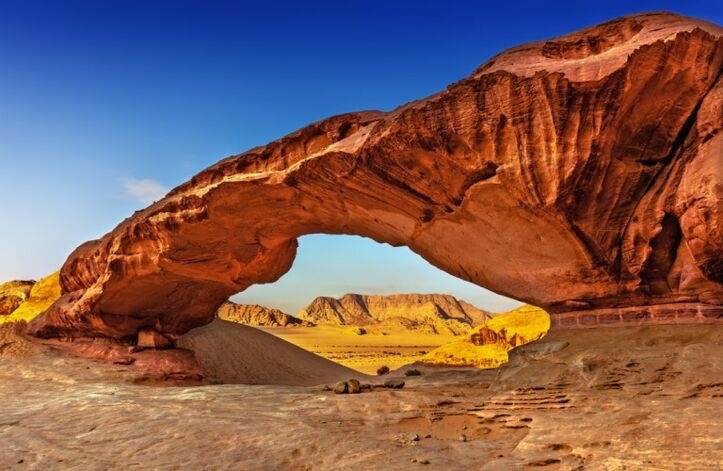
One Wadi Rum night provides sunset, dinner, the desert after dark and the possibility of an early morning experience.
Two nights do something different.
They remove the feeling that the camp exists only between arrival and departure.
This is particularly appealing to travellers who value landscape, photography or simply slower travel. Instead of fitting a desert excursion around check-in and check-out, the middle day can develop naturally.
August makes that slower rhythm useful because there is no pressure to turn the middle of the day into continuous activity.
Wadi Rum is one of the rare destinations where doing less can make the place feel larger.
Add It to the Dead Sea for Recovery
A second Dead Sea night is not for everyone.
If you become restless after several hours beside a pool, use the extra night elsewhere.
But after an active itinerary, additional recovery time can be more valuable than another archaeological stop.
The first night often disappears partly into arrival. You reach the hotel, settle in, perhaps experience the water, have dinner and sleep.
With another night, the following day belongs completely to the destination.
No packing.
No transfer.
No pressure to turn relaxation into an activity.
That difference can be substantial near the end of an August journey.
Add It to Aqaba for an Actual Sea Holiday
Aqaba benefits from extra nights more than almost any destination on the route because marine activities require time.
One night gives you a hotel beside the Red Sea.
Three nights begin giving you a Red Sea holiday.
If diving or snorkelling is important, additional time provides flexibility and allows the coastal portion to develop its own rhythm. Even travellers interested mainly in swimming and resort time benefit because the long journey through Jordan finally changes pace.
Aqaba should not be measured by the number of conventional sights you can visit.
Its value lies in changing what you do with the day.
Where Does the Extra Night Have the Highest Value?
There is no universal winner, but the decision becomes easier when you identify what the itinerary currently lacks.
| Add the Night To | Best When You Want... | Skip It When... |
|---|---|---|
| Amman | Culture and easier arrival | Capital already has 2–3 nights |
| Petra | Archaeological depth | Your Petra schedule is already generous |
| Wadi Rum | Landscape and slow travel | Desert is a secondary interest |
| Dead Sea | Recovery | You prefer active days |
| Aqaba | Red Sea holiday | The trip is mainly cultural |
Notice what is missing from the table.
“Another city.”
That is deliberate.
Extra Time Should Reduce Pressure
The best additional night usually removes something unpleasant from the itinerary.
It removes the need to rush Petra.
It removes the need to leave Wadi Rum immediately after breakfast.
It removes a transfer after a demanding day.
It removes the feeling that Aqaba was hardly worth reaching because you are already packing again.
This is a better measure of value than simply asking which destination has the longest attraction list.
Travel time should create space.
August Makes Slow Travel Easier to Justify
During mild spring weather, travellers often feel they should take advantage of every hour outdoors.
August changes that psychology.
An extra afternoon around a Wadi Rum camp does not feel wasted. A second Dead Sea night can make sense after several active days, and arriving in Petra early enough to do absolutely nothing until dinner may be the reason the following morning works so well.
This is not lowering expectations because of summer.
It is recognising that a good holiday contains different speeds.
Add Depth Before You Add Distance
If one extra night becomes available, look at the existing route before opening the map.
Which destination feels rushed?
Where does a major experience begin immediately after a transfer?
Which morning currently requires you to pack luggage before starting something you have travelled thousands of kilometres to see?
Fix that first.
August itineraries rarely need another pin.
They usually need more breathing room around the pins already there.
August vs July vs September: Where Does It Fit?
August sits in an interesting position within Jordan's weather calendar.
July has already established the summer pattern, so August travellers are not arriving during a seasonal transition. September, by contrast, begins moving towards a different phase as summer gradually loosens its grip.
That makes August the month when accepting the season matters most.
You are not waiting for spring conditions, nor planning around the possibility that autumn may arrive early. The itinerary should simply be designed as a summer journey from the beginning.
| July | August | September | |
|---|---|---|---|
| Seasonal Identity | Established summer | Deep summer | Summer-to-autumn transition |
| Trip Strategy | Redesign the daily schedule | Build strong contrasts | Gradually expand outdoor time |
| Petra | Prioritise key routes | Protect energy carefully | Increasing flexibility |
| Wadi Rum | Split-day experience | Desert + camp contrast | Longer outdoor potential |
| Dead Sea | Resort-led stop | Strong recovery role | Gradually broader use |
| Aqaba | Culture + sea option | Dedicated Red Sea time | Warm coastal extension |
| Best For | Structured summer trips | Travellers comfortable with heat | Those wanting seasonal change |
September should not automatically be interpreted as cool autumn weather, particularly early in the month. Conditions vary by year and destination, and current forecasts remain more useful than assumptions based solely on the calendar.
Frequently Asked Questions About Jordan in August
1. Is August a good month to visit Jordan?
Yes, particularly for travellers who accept that the itinerary needs a genuine summer structure. August works best when active archaeological days alternate with lower-effort experiences, Wadi Rum is paced around the desert, and the Dead Sea or Aqaba provides deliberate contrast.
2. Is Jordan extremely hot in August?
Jordan is firmly in summer during August, but conditions differ significantly between destinations because of elevation and geography. Amman does not experience the season exactly like the Dead Sea or Aqaba. Check destination-specific forecasts before travelling rather than relying on one national temperature figure.
3. Can I comfortably visit Petra in August?
Many travellers visit Petra during August, but comfort depends on heat tolerance, fitness, route choice and actual weather conditions. Beginning earlier, taking meaningful breaks and prioritising the sections you genuinely want to explore can make the visit considerably more manageable.
4. Should I spend one or two days in Petra in August?
Travellers with a strong interest in archaeology may benefit from additional time because it removes pressure to cover too much in one visit. For others, one well-planned day can be sufficient. The decision should reflect interests and walking ability rather than a universal rule.
5. Is Wadi Rum worth staying overnight in August?
Yes, particularly because an overnight stay allows you to experience the desert beyond the stronger daytime conditions. Late-afternoon light, sunset, dinner and the night atmosphere add a different dimension. Check the cooling arrangements and facilities of your selected camp before booking.
6. Is the Dead Sea too hot in August?
The Dead Sea's very low elevation means August can be particularly hot. It therefore works better as a water, resort and relaxation destination than as a base for extensive daytime outdoor activity. Individual heat tolerance and current conditions should guide how you use the stay.
7. Should I choose the Dead Sea or Aqaba in August?
Choose according to purpose. The Dead Sea is generally easier to integrate as a short recovery stop within a cultural route. Aqaba makes more sense when swimming, diving, snorkelling or several days of Red Sea relaxation are genuinely part of the holiday.
8. What should I pack for Jordan in August?
Pack lightweight, breathable clothing, reliable walking shoes, a hat and strong sun protection. Clothing should remain appropriate for local cultural settings and religious sites. A light layer can also be useful in strongly air-conditioned vehicles, restaurants and hotels.
9. Is August suitable for older travellers?
Yes, but age alone should not determine the itinerary. Mobility, fitness, heat tolerance and personal interests matter more. Comfortable transport, shorter walking options, recovery periods and avoiding consecutive demanding days can make Jordan enjoyable for travellers across a wide age range.
10. Is August suitable for a family trip to Jordan?
It can be, particularly when the itinerary mixes different types of experiences. Petra can provide a focused cultural day, Wadi Rum introduces desert adventure, and the Dead Sea or Aqaba can add water and downtime. Avoid building every day around long outdoor sightseeing.
11. How many days should I spend in Jordan in August?
Around seven to ten days can work well for many first-time itineraries, although the ideal duration depends on the destinations included. Adding Aqaba, multiple Petra days or a longer Wadi Rum stay generally requires more time if the journey is to remain comfortable.
12. Is August or September better for visiting Jordan?
August suits travellers comfortable with established summer conditions and willing to build the trip around contrasting activity levels. September begins a gradual seasonal transition, although it can remain hot. Travellers prioritising longer outdoor exploration may prefer later conditions, depending on actual weather.

A travel professional specializing in tailor-made travel planning, guest experience management, and multi-destination tourism operations.
With over 23 years of experience in the travel industry, he designs and manages private and cultural tours for international travelers across Türkiye, Greece, Egypt, Jordan, Morocco, and other destinations.
He has strong expertise in both online and face-to-face guest communication, sales processes, and end-to-end travel operations.
Working closely with hotels, travel agencies, and local partners, he ensures smooth coordination and high-quality travel experiences at every stage of the journey.
His focus is on delivering personalized, reliable, and seamless travel experiences for international guests worldwide.