Petra in August Is Won in the First Few Hours
Author: Kenan Ungur
Article Date: 16.09.2024
Reading Time: 14 min

Petra in August Is Won in the First Few Hours

Updated: August 2026

Arriving early at Petra in August is useful advice.

It is also incomplete advice.

You can enter the archaeological site early and still spend the most valuable part of the morning inefficiently, lingering in relatively manageable areas before attempting the day's most exposed walking after the sun has become much more influential.

The real August advantage is therefore not simply being inside Petra early.

It is knowing what to do with those first hours.

August typically brings hot, dry and strongly sunny summer conditions, making prolonged outdoor activity increasingly demanding as the day develops. Petra complicates that picture because the site is not one uniform environment: the Siq, open archaeological areas, steps, exposed routes and shaded sections interact with the changing position of the sun differently.

A well-designed August visit responds to that progression.

The itinerary has an order for a reason.

Early Entry Is a Resource You Can Spend

Think of the first part of the morning as something valuable but temporary.

The temperature will not remain where it was when you entered. The sun will move, exposed areas will become more demanding, and your own energy will gradually decline after several hours of walking.

This means early hours should usually be spent on experiences that benefit most from them.

If you intend to include a more exposed or physically substantial section, allowing that priority to consume the more favorable part of the day may make considerably more sense than saving it until after several easier stops.

For travelers on an August Petra morning, sequence matters because not every hour has equal physical value.

The Treasury Can Accidentally Consume Your Best Time

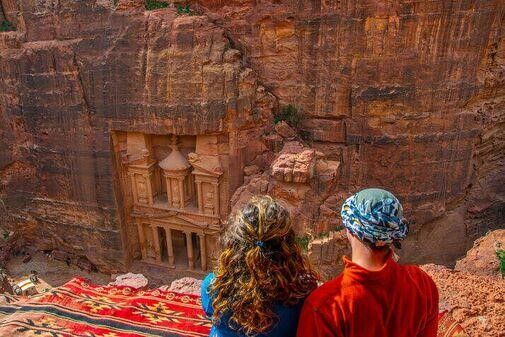
The first view of Al-Khazna deserves attention.

After walking through the Siq and seeing the Treasury emerge between sandstone walls, nobody should feel obliged to glance at it for three minutes simply because an itinerary says to keep moving.

The problem begins when an early arrival turns into a very long photography session before a demanding route that was supposedly the reason for starting early.

Forty minutes becomes an hour. The light changes. More visitors arrive. Eventually you continue, but the environmental advantage you created by waking early has partly disappeared.

August requires a little discipline here.

Enjoy the Treasury properly, but remember that Petra continues beyond the photograph.

Put the Most Weather-Sensitive Part of Your Plan First

Not every archaeological experience responds equally to the progression of a summer day.

A relatively straightforward stop along the main corridor may remain manageable later, whereas an exposed ascent or substantial walking extension can become considerably more demanding.

This creates a useful August hierarchy.

Experience Timing Sensitivity August Logic
Exposed substantial walk High Consider using earlier hours
Major ascent High Avoid automatically leaving it until later
Open archaeological area Medium–high Earlier can improve comfort
Detailed monument stop Medium Can often absorb more flexible time
Shaded pause Low Useful as conditions become demanding
Lunch/rest Low Can occupy less favorable outdoor hours

This is not July's effort table.

July asked whether a demanding route was worth its physical cost. August assumes you have selected your priorities and asks where they belong in the day's sequence.

Don't Use the Coolest Hour on the Easiest Task

This sounds obvious until you watch how sightseeing days actually develop.

People arrive early, take photographs, browse, wait for other group members, discuss the route and spend time on activities that could have happened later with almost no difference in comfort.

By the time they begin the section that genuinely benefits from the earlier conditions, much of the advantage has gone.

A summer Petra itinerary becomes more efficient when the first hours are protected from unnecessary delay.

That does not mean rushing.

It means distinguishing between experiences that deserve time and delays that merely consume it.

The Route Should Become Gentler as the Day Becomes Harder

August works particularly well when the itinerary has a descending physical curve.

The earlier part can contain the more ambitious movement, assuming conditions, fitness and access support it. As the day progresses, the route can gradually become less physically demanding, allowing longer monument stops, archaeological interpretation and appropriate shaded rests to replace major new exertion.

That creates a natural rhythm.

You begin with movement.

You finish with attention.

This is considerably more comfortable than designing the opposite sequence, where the morning is leisurely and the most demanding objective begins after several hours outdoors.

Early Does Not Mean Fast

There is an important difference.

Starting early creates time and potentially more favorable walking conditions. It should not create pressure to move aggressively through Petra before the day becomes hot.

Walking too quickly wastes part of the advantage because physical exertion itself generates heat and fatigue.

Use the morning to move steadily, not frantically.

The purpose of an early start is to make demanding sections more manageable, not to transform Petra into a race against the sun.

Decide the Morning Priority Before Entering the Siq

Route indecision costs more in August than it appears to.

If your group reaches the Treasury and only then begins discussing whether to undertake a substantial extension, valuable time can disappear while everyone considers options.

Make the broad decision beforehand.

You do not need a minute-by-minute itinerary, and plans should always remain flexible according to actual conditions. However, knowing which archaeological objective receives priority allows the early part of the day to develop naturally.

For an early-start Petra journey, preparation means deciding what matters most before Petra begins distracting you with everything else.

And Petra is exceptionally good at distracting you.

A Long Lunch Can Be Strategically Useful

During some months, a lengthy lunch might feel like it interrupts archaeological momentum.

August can reverse that logic.

If you have already completed the most physically demanding portion of your plan, a substantial break can occupy part of the day when continuous exposed walking has become less appealing. It gives your body time to recover while allowing the later visit to restart at a gentler intensity.

Lunch therefore becomes more than food.

It becomes a transition between active Petra and slower Petra.

The second half does not need to imitate the first.

The Afternoon Can Be About Looking More and Walking Less

There is a tendency to evaluate Petra by distance.

August provides a good reason to resist it.

Once the more ambitious walking has been completed, later hours can become increasingly observational. Spend longer with architecture you passed quickly earlier, listen to historical explanation, photograph details or allow a shaded stop to last without worrying that you should immediately be somewhere else.

For travelers taking an August Petra experience, this change of rhythm can preserve both energy and interest.

The site does not become less meaningful because your walking speed decreases.

Often the opposite happens.

August Owns the Order of the Day

July focused on the physical price of exposed effort, asking whether stairs, climbs and difficult extensions justified what they demanded under summer conditions.

August moves the decision earlier.

You have already chosen what matters.

Now you must decide when it happens.

September will eventually reopen a different conversation as longer-range walking begins becoming more comfortable again.

August remains firmly inside summer and owns the itinerary sequence:

use the first hours for the parts of Petra that benefit most from them, allow the route to become progressively gentler as the day develops, and do not waste an early start merely congratulating yourself for arriving early.

In Petra during August, the clock matters.

But the order in which you use it matters more.

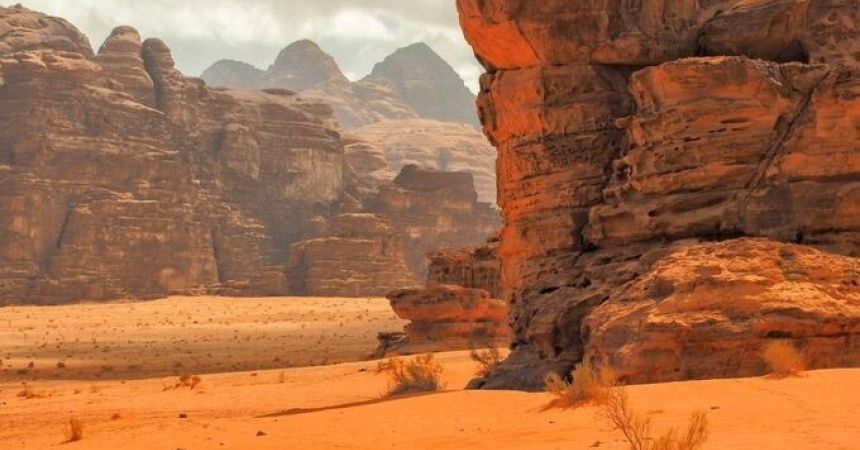
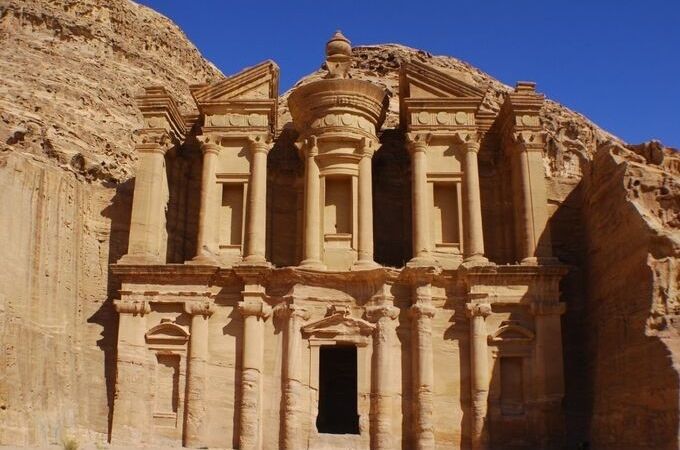
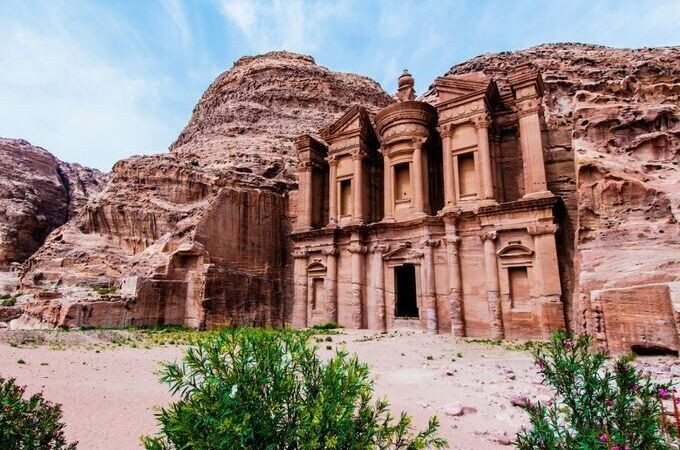
Petra’s breathtaking monuments perfectly preserved in Jordan’s desert terrain

The Afternoon Should Feel Like a Different Petra

If the morning has done its job, the afternoon should not require you to reproduce the same level of physical effort.

This is where August becomes particularly interesting from an itinerary perspective. Instead of seeing the hotter portion of the day as inferior sightseeing time, give it a different purpose. You have already used the earlier hours for the sections where exposure and exertion mattered most; now the archaeological experience can become slower, more selective and less dependent on distance.

A monument you might have given ten minutes in the morning can deserve half an hour later. A shaded rest can become an opportunity to understand how different parts of Petra connect rather than simply a place to recover before another march across the site.

The pace changes, but the quality does not have to decline.

Don't Save a Difficult Decision for When You're Already Tired

If your August plan includes a major extension, decide relatively early whether it genuinely belongs in the day.

Waiting until several hours have passed can create an awkward situation: you still want to complete the original itinerary, yet the conditions under which you imagined doing it no longer exist.

This is different from July's question of whether your body can justify the physical cost of a climb. August is about avoiding poor sequencing in the first place.

When a demanding section matters, position it deliberately. When it does not matter enough to deserve the favorable hours, that may tell you something about its real priority.

Let the Day Narrow Naturally

A useful August itinerary often begins with more possibilities than it finishes with.

That is not bad planning.

As conditions change and you learn how your body is responding, optional elements can quietly disappear. The archaeological areas that remain receive more attention, while the day becomes geographically smaller and experientially deeper.

This narrowing effect is particularly useful because Petra constantly encourages expansion. Another monument, another route and another viewpoint always seem to be waiting somewhere ahead.

August gives you permission to stop adding.

The Best Break Comes Between Two Different Speeds

A well-positioned substantial rest can separate the active morning from the slower later visit.

Rather than stopping only when exhaustion forces the decision, use the break to deliberately reset the itinerary. Eat, drink, recover properly and reconsider what still deserves attention.

Afterward, do not automatically resume at the same intensity.

Earlier in the Day After the Main Break
Purposeful forward movement More selective movement
Priority exposed section Less demanding archaeological areas
Major climb if planned Avoid adding climbs automatically
Longer walking commitments Shorter commitments
Route-driven sightseeing Detail-driven sightseeing
Energy expenditure Energy preservation

The table reflects August's exclusive day-sequencing logic: the second half intentionally performs a different job from the first.

Water Planning Should Follow the Sequence Too

Hydration remains important throughout the summer, but August planning improves when water is considered before the physically demanding portion rather than after it.

Make sure you are properly prepared before beginning a substantial early route, then continue drinking consistently through the rest of the day. A cooler-feeling morning can sometimes reduce the urgency people associate with hydration even though they are already undertaking significant physical activity.

Later, when the itinerary slows, hydration remains relevant because several hours of exposure are already behind you.

The point is continuity.

You should not reach the afternoon attempting to repair decisions neglected during the morning.

Don't Confuse an Early Start With a Guaranteed Easy Day

Starting early improves the structure of an August visit; it does not remove summer from Petra.

The day can still become physically demanding, routes remain substantial, and individual responses to heat differ considerably. Current weather, official access information, fitness and personal comfort should continue influencing decisions throughout the visit.

This distinction prevents “start early” from becoming another simplistic travel rule.

An early entrance creates an advantage.

What you do afterward determines whether you keep it.

Leave the Final Hours Flexible

The later part of an August Petra day benefits from having fewer commitments.

If you remain energetic and comfortable, you can continue exploring accessible areas at an appropriate pace. If the day has demanded more than expected, you can begin the return without feeling that an essential part of the itinerary has failed.

Flexibility becomes particularly valuable because your own condition is easier to judge after several hours inside Petra than it was before entering.

A good August itinerary therefore becomes increasingly open-ended as the day progresses.

The most important decisions were made early.

The later hours are allowed to respond.

12 Questions About Petra in August

1. What is the weather like in Petra in August?

August typically brings hot, dry and strongly sunny summer conditions. For visitors, the practical issue is not simply the daytime temperature but how conditions change the usefulness of different hours, particularly when the itinerary includes exposed walking or substantial physical effort.

2. Is Petra too hot in August?

Conditions can be demanding, but individual experiences vary according to weather, fitness, heat tolerance and route choice. Rather than deciding from a monthly temperature alone, build the day so that the most physically sensitive parts of your itinerary receive the more favorable earlier hours.

3. What time should I visit Petra in August?

An early start can be particularly useful because it creates more flexibility before stronger daytime heat develops. Check current opening information locally, then use the early period deliberately rather than spending the entire advantage on activities that could comfortably happen later.

4. What should I do first after entering Petra?

After experiencing the Siq and Treasury, prioritize the part of your itinerary that benefits most from earlier conditions. If you have planned a substantial exposed route or climb, consider its timing before committing the morning to lengthy lower-effort stops.

5. Should I rush through the Treasury in August?

No. The Treasury deserves proper attention, particularly on a first visit. The objective is simply to avoid allowing photography, waiting or indecision to consume so much of the morning that a weather-sensitive priority is unintentionally pushed into a more demanding part of the day.

6. What should I wear in Petra in August?

Choose lightweight, breathable clothing suitable for extended outdoor activity, together with supportive walking footwear and practical sun protection. Your clothing should remain comfortable during movement rather than being selected solely according to how hot the air feels while standing still.

7. How should I organize lunch in August?

A substantial break can work particularly well after the more active portion of the itinerary, allowing your body to recover before a slower afternoon. The exact timing should respond to your route and condition rather than following a rigid universal schedule.

8. Should I do Petra's hardest walk first?

If a demanding route is genuinely one of your priorities, placing it earlier can make sense when current conditions and official access allow. However, route difficulty, fitness and safety still matter; early timing does not automatically make every challenging trail appropriate.

9. What should I do during the hotter afternoon?

Allow the itinerary to become less physically ambitious. Spend longer with archaeological details, use appropriate shaded pauses, take a meaningful rest and avoid adding substantial exposed routes merely because they appeared on the original sightseeing list.

10. How much water should I carry in August?

Water needs vary according to temperature, individual physiology, route length and exertion. Plan hydration before beginning demanding sections, drink regularly throughout the visit and confirm legitimate supply options locally when your intended route extends significantly through the site.

11. Is an early start enough to make August easy?

No. It creates a useful scheduling advantage but does not eliminate heat, distance or physical effort. The benefit comes from using the earlier hours intelligently and allowing the itinerary to become progressively gentler rather than maintaining the same intensity all day.

12. What makes August different from July in Petra?

July focuses on the physical cost of exposed effort, particularly how heat amplifies the demands of stairs, climbs and elevation. August owns route sequencing: deciding which experiences deserve the earlier hours and deliberately allowing Petra to become slower and less physically demanding as the summer day develops.

Kenan Ungur
Author

A travel professional specializing in tailor-made travel planning, guest experience management, and multi-destination tourism operations.

With over 23 years of experience in the travel industry, he designs and manages private and cultural tours for international travelers across Türkiye, Greece, Egypt, Jordan, Morocco, and other destinations.

He has strong expertise in both online and face-to-face guest communication, sales processes, and end-to-end travel operations.

Working closely with hotels, travel agencies, and local partners, he ensures smooth coordination and high-quality travel experiences at every stage of the journey.

His focus is on delivering personalized, reliable, and seamless travel experiences for international guests worldwide.

Join The Newsletter

To receive our best monthly deals

Magnificent Travel Logo

Magnificent Travel
Usually responds the same day

Magnificent Travel
Welcome to the Magnificent Travel

How may i help you?
Today
+905324935198
X