Petra in July Makes the Same Staircase Feel Steeper
Author: Kenan Ungur
Article Date: 16.09.2024
Reading Time: 14 min

Petra in July Makes the Same Staircase Feel Steeper

Updated: August 2026

A staircase does not gain extra steps because you visit Petra in July.

Yet halfway up an exposed ascent, with bright sandstone around you and very little protection from the sun, it can certainly feel as though it has.

That difference explains July better than a temperature chart ever could.

Petra is already a physically active archaeological site, where walking distances, uneven surfaces, steps and elevation changes are part of the experience. During July's hot, dry summer conditions, those same features demand more from the body, particularly when a route combines climbing with prolonged exposure.

This is why July should not be reduced to the familiar advice of drinking water and wearing sunscreen. Both matter, naturally, but they do not answer the more useful question.

How does heat change the physical price of a route inside Petra?

Flat Distance and Vertical Distance Stop Being Equal

Two routes can cover similar distances and feel completely different in July.

A relatively level section allows you to settle into a steady walking rhythm. Add repeated steps or a sustained climb and the body begins producing considerably more heat precisely when the environment is already making cooling more difficult.

That combination matters.

Visitors sometimes look at the remaining distance on a map and assume that a route is manageable because it does not appear particularly long. What the map may communicate less effectively is how much vertical effort lies inside that distance.

For travelers on a July Petra adventure, elevation deserves to be treated as part of the weather calculation rather than merely part of the geography.

The Sandstone Landscape Offers Little Illusion of Coolness

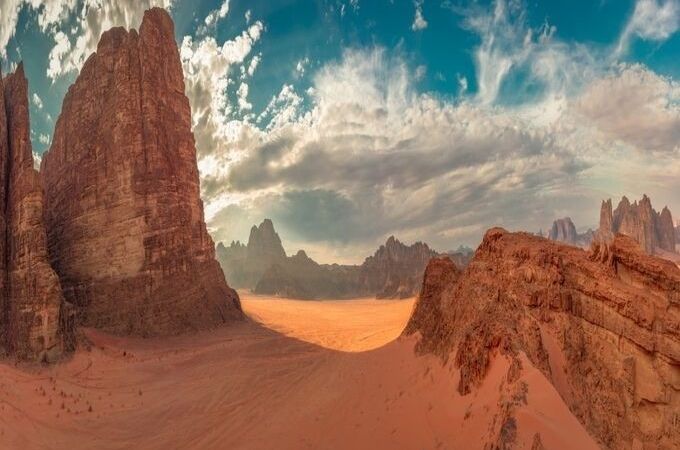
Petra's sandstone is visually magnificent under strong summer light, but open areas can feel intensely exposed.

The surrounding rock, bright ground and limited shade along certain sections create an environment where you remain acutely aware of the sun. Even when the actual air temperature is lower than you expected from the word “summer,” direct exposure combined with physical movement can make the experience feel substantially more demanding.

This is why comparisons based only on temperature can be misleading.

Thirty minutes sitting in shade and thirty minutes climbing exposed steps do not belong in the same comfort category, even though the weather station reports exactly the same number.

July weather becomes meaningful only when attached to what your body is doing inside it.

Don't Judge a Climb While You Are Resting

A demanding route often looks most achievable at precisely the wrong moment.

You have stopped somewhere comfortable, had water, perhaps eaten something, and feel restored. From that position, another ascent seems entirely reasonable.

Before committing, consider what happens after the first ten minutes of climbing rather than how you feel while stationary.

How exposed is the route?

How much elevation does it gain?

How long have you already been inside Petra?

How much walking remains afterward?

A summer Petra walking experience improves dramatically when major effort is judged according to its total cost rather than the enthusiasm you feel at the beginning.

July Has an Effort Multiplier

A simple way to think about the month is to separate the ingredients that make a route demanding.

Route Feature On Its Own Combined in July
Long distance Gradual fatigue Heat increases cumulative effort
Continuous steps Higher physical demand Body heat rises more quickly
Direct exposure Increased sun load Recovery becomes more important
Elevation gain Greater cardiovascular effort Can feel disproportionately demanding
Limited shade Fewer natural pauses Rest needs more deliberate timing
Late-route climb Fatigue already present Often costs more than expected

This table belongs specifically to July because it measures effort multiplication, not May's accumulated exposure or June's distance efficiency.

A Climb Has Two Directions

Visitors naturally think about the difficulty of going up.

July requires equal respect for coming down.

Descending may demand less cardiovascular effort, but tired legs, uneven steps and sustained concentration can make it physically taxing in a different way. The complete route also continues after the descent, because reaching the bottom rarely means reaching the exit.

Before starting a substantial climb, mentally attach the entire sequence:

approach + ascent + time at the destination + descent + remaining Petra route + eventual return.

That is the actual commitment.

Recovery Should Happen Before the Next Hard Section

When one demanding section finishes, there can be a strong temptation to continue immediately while momentum is high.

July often rewards the opposite choice.

If suitable shade and rest are available, allow your body to settle before adding another exposed section. Drink, stop moving for a while and assess how you actually feel once the effort has passed.

This is particularly important because enthusiasm can disguise fatigue temporarily.

A short recovery period may reveal that you are ready to continue comfortably. It may equally reveal that the ambitious second climb no longer looks like such a good idea.

Both outcomes are useful.

The Strongest Person in the Group Shouldn't Set the Pace

Group dynamics become particularly important when heat and climbing combine.

A traveler accustomed to hiking may move comfortably while someone else is already working much harder to maintain the same speed. Because people respond differently to heat and exertion, designing the pace around the fastest member can quietly make the experience unpleasant for everyone else.

A hot-weather Petra route should allow the person experiencing the greatest difficulty to influence the rhythm.

This does not mean turning every walk into a series of constant stops. It means avoiding the assumption that because one person feels fine, conditions are equally comfortable for the entire group.

July Makes Optional Mean Optional

Petra contains enough extraordinary archaeology that no single demanding extension should determine whether the visit feels successful.

This becomes particularly important during summer.

If a physically challenging route no longer feels appropriate once you reach the decision point, leave it out. The monument will not become more meaningful because you arrived exhausted, and the rest of Petra does not become less valuable because one extension remained unseen.

July is a good month for removing the phrase “we have to” from route discussions.

You have to respect official access instructions.

You have to pay attention to your physical condition.

You do not have to climb every staircase somebody described as essential.

Don't Use July to Prove Anything

Large archaeological sites sometimes produce a strange form of travel competitiveness.

How far did you walk?

Did you reach the highest viewpoint?

Did you complete the difficult route?

Those questions have very little to do with experiencing Petra well.

July exposes the weakness in checklist travel because every unnecessary physical objective carries a larger cost. The energy spent proving that you could reach somewhere may be exactly the energy you needed to remain curious during the rest of the site.

The best July decision can therefore be ambitious.

It can also be deciding that the climb is not worth what it will take from the remainder of the day.

July Owns the Cost of Effort

June was about geography: long daylight encouraging visitors to convert available hours into unnecessary distance.

July moves from the map into the body.

The defining issue becomes how summer conditions amplify physical effort when Petra's exposed terrain, stairs and elevation are added to the equation.

August will ask a different question again, focusing on how an early start and intelligent route order can restructure a hot-weather visit.

July remains centered on the climb itself.

Not whether Petra is simply “too hot,” and not whether every visitor should avoid demanding routes, but whether the archaeological reward of an exposed section is worth the physical cost for you, under the conditions you actually encounter that day.

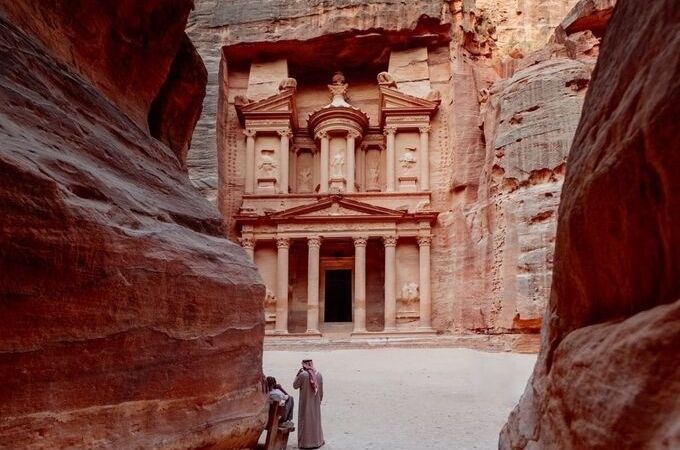
The Siq’s towering sandstone walls guiding visitors to Petra’s treasures

July Decisions Are Better Made at the Bottom of the Steps

There is a useful difference between asking, “Can I do this?” and asking, “What will doing this take away from the rest of my day?”

July makes the second question more important.

When you arrive at the beginning of a substantial ascent, consider the effort already accumulated rather than looking only at what lies ahead. If you have spent several hours walking through Petra, your body is not starting that climb from zero, even if a recent break has made you feel refreshed.

The same logic applies to the return. Reaching the objective may provide an enormous sense of satisfaction, but you still need enough physical reserve to descend safely and continue through the archaeological site afterward.

A demanding extension belongs inside the whole day, not outside it.

Recovery Is More Useful Than Speed

Hot-weather walking sometimes creates an urge to finish exposed sections as quickly as possible.

That instinct can work against you on a climb.

Moving substantially faster increases physical effort and generates additional body heat, which may make the route feel harder rather than helping you escape the exposure efficiently. A controlled pace that you can maintain comfortably is generally more useful than repeatedly walking fast, becoming exhausted and requiring longer recovery periods.

This is where Petra's archaeology can actually help regulate the rhythm. When an appropriate place to stop appears, allow yourself enough time to look around rather than treating every pause as a delay.

You are not exercising through Petra.

You are visiting it.

The Middle of a Climb Is a Poor Place to Discover You Needed More Water

Preparation becomes increasingly important when the route moves away from the easiest visitor areas.

Before committing to a demanding section, check what you are carrying and consider the complete route rather than only the ascent. Water needs vary by individual, temperature, route and duration, so there is no useful universal quantity that suits every visitor.

The principle is simpler: do not begin an exposed extension already underprepared.

If you are uncertain about legitimate services, route conditions or current access, ask locally before starting. A July climb becomes much easier to enjoy when basic logistics were settled before the terrain became demanding.

Your Body Gives Information the Map Cannot

A map can show elevation, distance and route direction.

It cannot tell you how you are responding to today's conditions.

That information comes from your own body, and July is not the month to ignore it simply because the itinerary says another monument is next. If exertion begins feeling unusually difficult, dizziness develops, you feel faint, confused, nauseated, develop a strong headache or otherwise feel significantly unwell, stop treating the situation as ordinary sightseeing fatigue and seek appropriate assistance.

There is no archaeological objective important enough to justify continuing when your physical condition is clearly deteriorating.

This is also why group members should communicate rather than silently attempting to maintain the same pace.

A July Route Needs an Effort Budget

Instead of counting only monuments, think about how many demanding sections you are combining.

If Your Day Already Included… Before Adding Another Climb…
Several hours of walking Consider accumulated fatigue
One substantial ascent Allow genuine recovery first
Long exposed sections Assess how the sun has affected you
Repeated stairs Remember the descent and return remain
Limited rest Restore energy before deciding
Noticeable physical fatigue Reduce ambition rather than negotiating with it

This is July's decision framework: the next climb should be judged against everything your body has already done.

There Is No Prize for Finishing the Original Plan

An itinerary written the night before knows nothing about how July actually feels when you arrive.

Perhaps the temperature is more demanding than expected. Perhaps your first substantial climb required considerably more energy than anticipated, or somebody in your group is simply not enjoying the physical intensity.

Change the plan.

This is not a failed itinerary; it is competent travel planning responding to real conditions.

Petra's archaeological value does not depend on reaching every distant point. Staying longer in accessible areas can produce a far more rewarding visit than completing an ambitious extension and spending the remaining hours wishing the day would end.

Save Enough Energy to Look Around on the Way Back

A physically demanding route can create tunnel vision.

You concentrate on steps, footing and reaching the destination, then repeat the process during the descent. By the time you return to the central archaeological landscape, you may discover that the day's most significant resource was not daylight or even water.

It was attention.

Preserving physical energy preserves attention too.

If you return from an extension with enough reserve to remain interested in the façades, landscape and smaller archaeological details around you, the climb has fitted successfully into the day. If everything afterward becomes merely part of the journey toward the exit, the route may have cost more than its distance suggested.

12 Questions About Petra in July

1. What is the weather like in Petra in July?

July is typically hot, dry and sunny, with prolonged outdoor exposure becoming important during a Petra visit. The practical effect depends heavily on your route because level walking, exposed stairs and sustained climbing can feel dramatically different under the same weather conditions.

2. Is Petra too hot to visit in July?

That cannot be answered universally because conditions, fitness, route choice and heat tolerance differ between visitors. Rather than treating the entire archaeological site as one temperature experience, judge how much physical effort your intended route requires under the actual forecast.

3. What should I wear in Petra in July?

Choose lightweight, breathable clothing appropriate for prolonged outdoor activity, along with comfortable supportive footwear and practical sun protection. Clothing should help you remain comfortable while walking rather than simply feeling cool during the first few minutes after leaving your accommodation.

4. How much water do I need in Petra during July?

Needs vary considerably according to individual physiology, temperature, route length and physical effort. Carry sufficient water for the route you intend to undertake, drink regularly, and consider your supply before beginning longer or more demanding extensions rather than after the climb has started.

5. Are Petra's stairs harder in July?

The number of steps does not change, but summer heat and direct exposure can increase the physical effort involved. A climb that feels straightforward under cooler conditions may therefore require a slower pace, more recovery and greater attention to your physical condition.

6. Should I avoid all climbs in Petra during July?

Not automatically. Some visitors may comfortably undertake demanding routes when conditions, preparation and fitness support them. The important point is treating climbs as optional physical commitments whose value should be weighed against exposure, accumulated fatigue and the remainder of the day.

7. Is shade available on Petra's climbing routes?

Shade varies significantly according to the route, terrain and time of day, and exposed sections should be expected on some extensions. Do not assume you will always find convenient shade exactly when you want to stop, particularly on more demanding routes.

8. Should the fastest person set the group's walking pace?

No. People respond differently to heat and exertion, so a comfortable pace for one traveler may be demanding for another. Groups should communicate openly and allow conditions and the least comfortable participant to influence the rhythm of physically demanding sections.

9. Should I walk faster to finish an exposed climb sooner?

Usually, maintaining a controlled sustainable pace is more sensible than rushing simply to reduce time in the sun. Moving too aggressively increases physical effort and body heat, potentially making the climb considerably harder and reducing the energy available afterward.

10. How do I decide whether another climb is worthwhile?

Consider your current physical condition, exposure already accumulated, water, route difficulty and how much walking remains afterward. The decision should reflect the entire day's effort rather than how energetic you happen to feel immediately after a rest.

11. What if I become unwell while walking in Petra?

Stop exerting yourself and seek appropriate assistance if you develop concerning symptoms or feel significantly unwell. Do not continue a demanding route simply to complete the itinerary, and follow local guidance or emergency procedures when help is required.

12. What makes July different from June in Petra?

June focuses on distance budgeting, particularly the temptation to convert long daylight into unnecessary kilometres and backtracking. July shifts from geography to physical effort under exposure, examining how summer conditions amplify the demands of stairs, elevation, exposed routes and repeated climbing inside Petra.

Kenan Ungur
Author

A travel professional specializing in tailor-made travel planning, guest experience management, and multi-destination tourism operations.

With over 23 years of experience in the travel industry, he designs and manages private and cultural tours for international travelers across Türkiye, Greece, Egypt, Jordan, Morocco, and other destinations.

He has strong expertise in both online and face-to-face guest communication, sales processes, and end-to-end travel operations.

Working closely with hotels, travel agencies, and local partners, he ensures smooth coordination and high-quality travel experiences at every stage of the journey.

His focus is on delivering personalized, reliable, and seamless travel experiences for international guests worldwide.

Join The Newsletter

To receive our best monthly deals

Magnificent Travel Logo

Magnificent Travel
Usually responds the same day

Magnificent Travel
Welcome to the Magnificent Travel

How may i help you?
Today
+905324935198
X