Petra in October Makes Time Feel More Valuable
Updated: August 2026
October can produce one of Petra's easiest planning mistakes.
The air feels comfortable, the route invites you onward, and there is little of midsummer's urgency pushing you to organize the archaeological day around heat. You stop at the Treasury longer than expected, linger among tombs, accept an interesting detour and perhaps allow lunch to stretch because nothing seems to be working against you.
Then you look at the time.
Suddenly, the day feels smaller.
That is October's distinctive Petra problem.
The month generally moves into milder autumn conditions after the hotter summer period, although warm days remain possible and weather varies across the month. What changes more predictably is the seasonal direction of daylight: the generous summer window is disappearing, and the amount of usable time between beginning your visit and completing a substantial route deserves greater attention.
October therefore asks a different question from every month before it.
Not how far can you walk?
But what deserves the daylight you have?
Comfortable Weather Can Make You Forget the Clock
Hot weather naturally creates structure.
You notice the hour because you are thinking about exposure, breaks, water or the physical cost of a demanding route. Comfortable conditions remove some of those reminders.
October can therefore feel wonderfully unstructured at first.
That freedom is part of its appeal, but it also means an hour can disappear remarkably easily. A long photography stop does not feel expensive. Neither does an extended conversation with a guide or a spontaneous archaeological detour.
Individually, none of them causes a problem.
Together, they can compress the later part of an October Petra visit into a sequence of decisions you would rather not make under time pressure.
Start With Priorities, Not a Timetable
The solution is not turning Petra into an hourly schedule.
Before entering, identify the two or three experiences that genuinely define the day for you. Everything else can remain flexible.
This matters because Petra has an extraordinary ability to make optional things feel essential once you see them on a map or hear another traveler recommending them.
A priority hierarchy protects you from that.
If the morning develops more slowly than expected, you already know what should remain. If you move efficiently and still have plenty of daylight, additional areas can be added naturally.
The plan bends without losing its center.
October Gives Every Detour a Price
A side route costs more than the minutes spent at its destination.
You need to reach it, explore it and reconnect with the broader archaeological journey afterward. In October, those minutes come from a daylight budget that is no longer expanding.
This does not mean avoiding detours.
Some may become the highlight of your day.
The important question is whether you would still choose that detour if you knew it meant shortening another part of Petra later.
| Time Decision | What It Can Quietly Cost | October Question |
|---|---|---|
| Long Treasury stop | Later archaeological time | Is this one of my priorities? |
| Unplanned side route | Walking plus return time | What will I remove if I add it? |
| Extended lunch | Afternoon flexibility | Do I still have enough margin? |
| Major route extension | Large block of daylight | Does it deserve priority status? |
| Repeated photo stops | Small losses that accumulate | Which photographs actually matter? |
| Late turnaround | Comfortable return margin | Am I leaving enough time to exit calmly? |
October's table is deliberately about time trade-offs, not temperature or walking difficulty.
Don't Spend the Morning Saving Time for Later
There is another trap.
Once travelers become conscious of daylight, they sometimes rush through the beginning of Petra because they want to “save time” for a major destination farther inside.
That can defeat the purpose of visiting.
The Siq and Treasury are not logistical obstacles between the entrance and your later objective. They belong to the archaeological experience, and moving through them impatiently simply transfers the problem from one part of the day to another.
For an autumn Petra journey, efficient does not mean fast.
It means giving each priority enough time while refusing to let low-value delays consume the hours around it.
Photography Needs a Hierarchy Too
Petra can make twenty minutes disappear behind a camera with almost no warning.
One photograph becomes several compositions. You wait for people to move, adjust position, take another image and then notice the light changing across the sandstone.
October does not require you to stop doing this.
It asks you to decide where photography matters most.
Choose a few places where you are willing to spend substantial time and allow other sections to remain more spontaneous. Photograph what catches your attention, then continue without trying to exhaust every possible angle.
The reward is not simply saved time.
You spend more of Petra actually looking at Petra.
Lunch Can Divide the Day—or Consume It
A proper break remains valuable during a substantial archaeological visit.
October's challenge is keeping that break proportional to what remains.
Before sitting down, make a quick assessment: how far have you travelled, which priorities remain and how much return distance will eventually be required?
A leisurely lunch may fit perfectly.
On another itinerary, the same break could remove the margin needed for the afternoon's most important extension.
The decision should emerge from the day you are actually having rather than a predetermined rule about when or how long lunch ought to be.
Know Your Latest Comfortable Turnaround Before You Need It
This is perhaps October's most useful planning habit.
If you intend to travel substantially into Petra, have a rough understanding of when you want to begin returning. Current site information, your route, walking pace and available daylight should all influence that decision.
Do not wait until the light itself begins telling you that the day is ending.
By then, the return can become something you hurry through.
A Petra autumn itinerary works better when the turnaround is proactive rather than reactive. You begin heading back with enough margin to continue observing the site instead of measuring every remaining section against the clock.
A Shorter Day Can Produce a Better Edit
There is something unexpectedly useful about having limits.
When summer offers enormous amounts of daylight, Petra can tempt you into endless addition: one more route, another viewpoint, another monument.
October encourages editing.
You become more selective about what deserves your attention and, as a result, may experience those chosen areas more deeply. Instead of trying to stretch the itinerary geographically, you concentrate the day around a smaller number of meaningful archaeological experiences.
Good travel planning often works exactly this way.
Removing something can improve everything that remains.
October Is Not About Racing Sunset
This distinction matters.
The objective is not to create anxiety around daylight or turn the visit into a countdown. Petra's opening arrangements and daylight conditions should always be checked for your actual travel date rather than assumed from a generic monthly guide.
October's lesson is simply that time has regained consequence.
You have enough flexibility for a rich archaeological day, but less reason to behave as though the hours are unlimited.
That makes prioritization valuable before urgency appears.
October Owns the Daylight Budget
September allowed Petra's archaeological areas to reconnect into a more continuous walking experience as the strictest summer choreography began easing.
October introduces a new boundary.
The walking may still feel inviting, but the day itself is becoming shorter.
June dealt with the opposite problem: abundant daylight created the illusion that every extra kilometre could fit. October asks what happens when attractive possibilities exceed the time you genuinely want to spend reaching them.
Its exclusive search intent is therefore daylight budgeting.
Choose what defines your Petra visit, understand what each substantial detour costs, protect enough time for the return and let optional experiences remain optional.
October does not require you to see Petra quickly.
It asks you to decide what is worth seeing slowly.
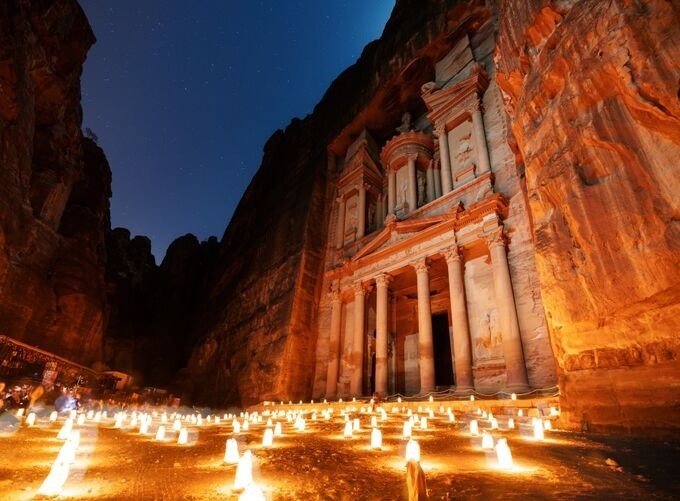
October Rewards Decisions Made Before They Become Urgent
The easiest time to remove something from a Petra itinerary is while you still have plenty of daylight.
Later, the same decision feels like a sacrifice.
This is why an October visit benefits from occasional recalibration rather than constant clock-watching. After completing an important section, consider what remains and whether the original plan still fits the day comfortably. If you have spent longer somewhere because it genuinely interested you, accept that choice rather than trying to recover every minute by accelerating through everything afterward.
That is the difference between adapting an itinerary and chasing one.
Petra does not become more complete because you hurried through the final three monuments.
Some Stops Deserve to Steal Time
Not every delay needs correcting.
Perhaps the Royal Tombs interest you considerably more than expected, or a guide's explanation of Nabataean water engineering changes the way you understand the landscape. You may find yourself standing somewhere without a famous name because the view suddenly makes Petra's enormous scale understandable.
Stay.
October's daylight budget is not designed to prevent spontaneous travel. Its purpose is to help you recognize the difference between time deliberately spent and time accidentally lost.
Forty unexpected minutes spent deeply engaged with Petra can be an excellent decision. Forty minutes spent repeatedly checking photographs or discussing where to go next is something else entirely.
Give the Afternoon Fewer Promises
Morning plans can be ambitious because the whole archaeological day still lies ahead.
The afternoon deserves more flexibility.
Rather than attaching several non-negotiable objectives to the later hours, keep one important priority and allow the remaining possibilities to depend on time. This creates space for the morning to develop naturally without turning every unexpected stop into a scheduling problem.
It also prevents the familiar late-day pattern in which visitors reach an area they wanted to see but cannot properly enjoy it because their attention has already shifted toward the return.
A monument deserves more than being reached.
It deserves enough time to register.
The Farthest Point Is Also a Time Decision
Distance and daylight become inseparable once you move substantially into Petra.
Reaching a distant objective may still be entirely realistic, but the calculation should include the time required to experience it and return comfortably. Arriving somewhere with only enough margin to photograph it quickly before immediately retracing your steps can make the achievement feel surprisingly hollow.
Before adding a major extension, think about the whole block of time it creates.
| Before Saying “Let's Go” | Ask Instead |
|---|---|
| We still have several hours | How much belongs to the return? |
| It doesn't look very far | What is the complete walking commitment? |
| We can photograph it quickly | Will we have time to experience it? |
| We can walk faster afterward | Why should the rest of Petra pay for this? |
| We don't want to miss it | Is it actually one of today's priorities? |
This is October's core trade-off: reaching somewhere is not the same as having time for it.
Don't Borrow Time From the Return
When an itinerary runs late, the return journey is often the first place travelers try to recover minutes.
They walk faster, reduce stops and mentally switch from sightseeing to exiting.
That works logistically, but it removes a genuine part of Petra.
The landscape looks different in reverse. Familiar monuments appear from new angles, and the Siq has a completely different emotional character when you are walking outward rather than anticipating your first sight of the Treasury.
Protect that time from the beginning.
If something must disappear from the itinerary, an optional extension is usually a better candidate than the quality of the entire return journey.
October Clothing Should Respect the Ends of the Day
Because this blog owns daylight rather than temperature, clothing should remain a supporting detail rather than becoming its semantic center.
October can still produce warm, sunny conditions, while mornings and later hours may feel noticeably different depending on the weather and your travel date. Lightweight layers that can be adjusted during a long archaeological visit are therefore more useful than dressing for one expected daytime temperature.
Comfortable walking shoes, water and sun protection remain important as well.
Check the actual forecast before visiting rather than treating “October weather” as a fixed condition. The month changes as it progresses, and a visit early in October does not necessarily feel identical to one near November.
Leaving Something for Another Visit Is Allowed
Petra creates powerful completion anxiety.
You have travelled a long way to reach Jordan, perhaps this is your only Petra visit, and somewhere on a map is another monument that other travelers insist you should not miss.
That pressure can make every omission feel permanent.
Yet attempting to eliminate every possible regret often creates a worse one: spending an extraordinary archaeological day constantly moving toward the next objective.
October's natural time boundary can be useful here.
When the important parts of your personal itinerary have been experienced properly, allow the day to be enough.
12 Questions About Petra in October
1. What is the weather like in Petra in October?
October generally brings milder autumn conditions after summer, although warm and sunny days remain possible, particularly earlier in the month. Conditions vary across October, so checking the forecast for your actual visit is more useful than planning around a single monthly average.
2. Is Petra hot in October?
It can still feel warm during sunny daytime hours, but October generally moves away from the strongest summer conditions. Visitors should nevertheless prepare for substantial outdoor walking and avoid assuming that the word “autumn” automatically means cool conditions throughout the day.
3. Does it rain in Petra in October?
Rain becomes more possible as the dry summer season recedes, although conditions vary considerably between individual dates and years. Check the short-range forecast and follow current site information if weather affects routes or operating arrangements during your visit.
4. What should I wear in Petra in October?
Wear comfortable walking clothing with adaptable layers, since conditions can change between morning, midday and later hours. Supportive footwear remains particularly important, while water, sunglasses and practical sun protection can still be useful during bright autumn days.
5. Are the days shorter in Petra in October?
Yes, seasonal daylight is decreasing compared with summer. Rather than treating this as a disadvantage, use it as a planning boundary: establish your priorities, understand the time required by major extensions and preserve a comfortable margin for the return.
6. Should I start Petra early in October?
Starting with enough time for your intended route is sensible, particularly when planning substantial exploration. October's defining strategy, however, is not August's early-entry sequencing; it is managing the entire available daylight window according to your genuine archaeological priorities.
7. Can I spend a full day in Petra in October?
Yes, depending on current operating arrangements, weather, fitness and your chosen route. A substantial archaeological day can be rewarding, but October makes it particularly useful to know which experiences matter most rather than continually adding optional sections.
8. Should I skip lunch to save daylight?
Generally, there is no reason to turn the visit into an endurance exercise simply to gain sightseeing minutes. A sensible break can improve the afternoon considerably; just consider its length in relation to your remaining priorities and return distance.
9. How do I choose which Petra attractions to prioritize?
Choose the experiences that genuinely define Petra for you rather than treating every recommendation as equally important. Keep optional routes secondary so they can be removed without compromising the core visit if the morning develops more slowly than expected.
10. How late should I begin my return?
There is no universal time because route, pace, daylight, operating arrangements and individual ability vary. Check current information locally and begin returning with enough margin that you can continue experiencing Petra rather than feeling forced to rush toward the exit.
11. Is October good for photography in Petra?
Petra offers extensive photographic opportunities in October, but photography can quietly consume significant portions of a shorter autumn day. Choose where you want to invest substantial photography time instead of trying to exhaust every possible composition at every monument.
12. What makes October different from September in Petra?
September focuses on walking continuity, as archaeological sections begin connecting more naturally after the stricter rhythm of summer. October owns daylight budgeting: comfortable walking can encourage lingering, but decreasing seasonal daylight makes priorities, detours, turnaround decisions and protecting enough time for the return increasingly important.

A travel professional specializing in tailor-made travel planning, guest experience management, and multi-destination tourism operations.
With over 23 years of experience in the travel industry, he designs and manages private and cultural tours for international travelers across Türkiye, Greece, Egypt, Jordan, Morocco, and other destinations.
He has strong expertise in both online and face-to-face guest communication, sales processes, and end-to-end travel operations.
Working closely with hotels, travel agencies, and local partners, he ensures smooth coordination and high-quality travel experiences at every stage of the journey.
His focus is on delivering personalized, reliable, and seamless travel experiences for international guests worldwide.