Petra in September Begins to Feel Connected Again
Updated: August 2026
There is a particular pleasure in walking through Petra without constantly negotiating with the day.
During the hotter heart of summer, route decisions naturally become more deliberate. You think about which exposed section deserves your energy, which climb belongs earlier, when a substantial break makes sense and whether another extension is worth what it will demand.
September begins loosening that structure.
It is still a warm, predominantly dry month, and strong sunshine certainly does not disappear because the calendar has changed. Earlier September can retain a distinctly summery character, while conditions later in the month may begin feeling more forgiving.
The important change is subtler than a dramatic temperature drop.
Walking begins recovering its continuity.
Instead of repeatedly dividing Petra into “do this now, save that for later, rest here, reconsider there,” you can increasingly allow one archaeological section to lead naturally into the next.
For September, that continuity is the story.
The Best September Route May Be the One You Interrupt Least
Petra makes more sense when its different areas remain connected in your mind.
The Siq leads to the Treasury, but the Treasury is not an isolated destination. Continue beyond it and monumental tombs, public spaces, temples, pathways and surrounding mountains gradually reveal an ancient city occupying a complex landscape.
When weather forces frequent strategic interruptions, that narrative can become fragmented.
September can begin restoring it.
For travelers on a September Petra exploration, there is value in choosing a coherent route and allowing it to unfold without constantly returning to the question of whether conditions require another major adjustment.
You still stop.
You still rest.
You simply stop because Petra deserves your attention rather than because every part of the itinerary has been engineered around summer conditions.
Walking Rhythm Changes How You Understand the City
There is a difference between reaching monuments and understanding the space between them.
When you move through Petra continuously, the transitional areas begin contributing to the experience. You notice how terrain changes, how one group of structures relates to another and how surprisingly large the archaeological landscape becomes once the Treasury is no longer treated as its center.
This is where September's weather becomes relevant without becoming the subject of every paragraph.
More comfortable walking does not merely improve physical comfort.
It improves spatial comprehension.
Petra starts feeling like somewhere people moved through rather than somewhere modern visitors jump between famous attractions.
September Is About Linking, Not Adding
The temptation is to use improving conditions as justification for putting more places into the itinerary.
That would turn September into another version of June.
Instead, think about linking the places already important to you more naturally.
| Summer-Style Thinking | September-Style Thinking |
|---|---|
| Which section must I do first? | Which areas naturally connect? |
| Where should I reduce exposure? | Where does the route logically continue? |
| Should I interrupt the walk now? | Is there a reason to break the rhythm? |
| Can I fit another extension? | Does this extension belong to the route? |
| How do I manage the hardest hours? | How do I preserve a coherent archaeological journey? |
| How much can I complete? | How well can I connect what I see? |
This table deliberately avoids temperatures and seasonal rankings.
September owns route continuity, not another variation of “better walking weather.”
Don't Mistake Continuity for Speed
A flowing route is not a fast route.
In fact, the opposite can be true.
When you are not constantly managing the itinerary around environmental constraints, you have more freedom to stop wherever something becomes interesting. You might spend longer examining a façade, follow a guide's explanation without checking the clock or sit somewhere appropriate because the wider landscape deserves ten uninterrupted minutes.
Then you continue.
The rhythm survives because the pause belongs to the experience.
A late-summer Petra journey should feel less like a sequence of scheduled stops and more like an archaeological walk containing moments of stillness.
September Lets the Spaces Between Monuments Matter Again
Some of Petra's most famous images remove distance.
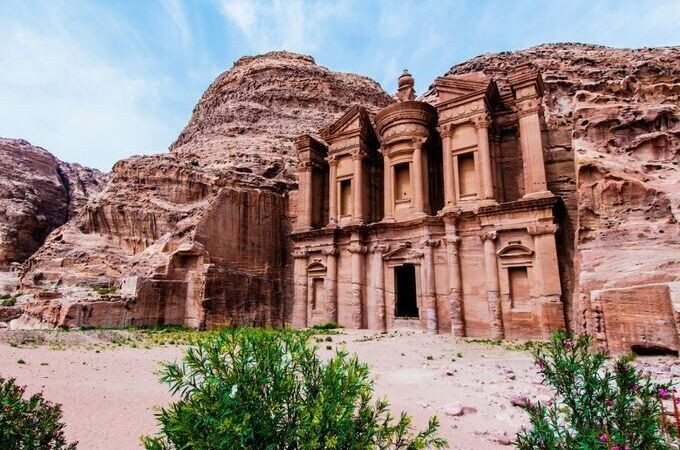
A photograph shows the Treasury. Another shows the Royal Tombs. Another presents the Monastery. Viewed separately, the archaeological site can begin resembling a portfolio of extraordinary structures.
Walking reconnects them.
The less celebrated stretches reveal the scale that photographs flatten. They show why Petra requires physical movement to understand properly and why visiting only the headline monuments creates an incomplete impression of the Nabataean city.
September's increasingly manageable walking environment can give these connecting spaces more value.
You are not merely travelling to the next attraction.
You are still inside Petra.
Let One Section Lead Naturally Into Another
Overplanning can make a Petra route strangely inefficient.
A visitor reaches an area, consults the phone, discusses three alternatives, changes direction and repeats the process at the next junction.
September offers an opportunity to simplify.
Know your major priorities before entering, understand the broad geographical logic of the site and then allow nearby archaeological areas to connect naturally where appropriate.
This is different from June's concern with avoiding unnecessary backtracking.
June treated route efficiency as a way of controlling excessive distance during very long days.
September uses continuity for another purpose: preserving the feeling of moving through one ancient city.
You Still Need Summer Habits
September is not autumn in disguise.
Sun protection, suitable walking clothing, supportive footwear and adequate water remain important, particularly earlier in the month and on warmer days. Current forecasts should guide your preparation because September conditions are not identical from one week to another.
The difference is that these precautions can increasingly support the visit from the background rather than dictate its entire structure.
For a September Petra walking day, that is an important psychological shift.
You prepare sensibly.
Then you let Petra become the main subject again.
A Longer Walk Does Not Need a Distant Prize
This is one of September's most useful ideas.
Visitors often justify a long walk because something famous waits at the end. The destination becomes the reward and everything between departure and arrival becomes effort required to earn it.
Petra deserves a different relationship with distance.
A connected walk can be worthwhile because of the archaeological sequence itself. The changing landscape, smaller remains, shifts in perspective and gradual realization of the city's scale can provide enough reason to continue.
You do not always need a spectacular final photograph to justify the kilometres.
Sometimes the route is the archaeological experience.
September Can Make the Return Feel Less Administrative
During more demanding summer conditions, the return journey can easily become the portion of Petra that visitors simply want to finish.
As walking becomes more comfortable, that changes.
You may still be tired—Petra remains physically substantial in every month—but the journey back can recover some observational value. Familiar areas appear from the opposite direction, light changes the sandstone, and features missed during the excitement of the outward journey become easier to notice.
A good September itinerary leaves enough flexibility for this.
Do not mentally end Petra at your farthest point.
The return still belongs to the route.
September Owns Continuity
August organized Petra around sequence: use earlier hours intelligently, place weather-sensitive priorities where they belong and allow the day to become gentler as summer conditions develop.
September removes some of that choreography.
Not all at once, and certainly not identically every year, but enough that continuous archaeological walking begins becoming part of the experience again.
October will need its own completely different semantic territory rather than simply claiming that conditions become cooler.
September stays focused on flow.
It is the month when Petra can increasingly be approached not as a collection of tasks distributed across the day, but as a landscape through which one place leads into another, the spaces between famous monuments regain importance, and walking itself becomes one of the ways you understand the ancient city.
September Gives Petra Back Its In-Between Moments
When walking becomes less dominated by summer strategy, small things begin returning to the foreground.
You notice the transition from a narrow passage into a broader archaeological space. You recognize that one group of tombs makes more sense when viewed in relation to what came before it. You stop somewhere that does not have a famous name simply because the surrounding landscape explains Petra better than another close-up photograph ever could.
These moments are difficult to schedule because they exist between the itinerary's headline attractions.
September gives them room.
That is one reason a connected route can become more rewarding than a longer list of destinations. You are not constantly resetting the experience each time you arrive somewhere famous; instead, the city gradually accumulates meaning as you move through it.
Don't Let the Map Break the Journey Into Pieces
Maps are essential in Petra, particularly when you are considering extensions or trying to understand how different archaeological areas relate geographically.
They can also become distracting.
Checking your position every few minutes turns a continuous walk into a sequence of navigation problems. If the broad route is straightforward and you understand where you are going, allow yourself to put the map away occasionally.
Look at the landscape instead.
Petra communicates scale exceptionally well when you physically experience the distance between places rather than watching your progress as a moving point on a screen.
A Pause Can Strengthen the Rhythm Rather Than Break It
Continuity does not mean walking without interruption.
A good September pause belongs naturally to the route. Perhaps you stop because a monument deserves closer attention, because the surrounding landscape has opened unexpectedly, or because you simply want to sit for a while before continuing.
The distinction lies in why you stopped.
During hotter summer conditions, breaks can become necessary interventions designed primarily to manage physical exposure. September increasingly allows them to become part of the archaeological experience itself.
That creates a different rhythm: walk, discover, linger, continue.
The day breathes without becoming fragmented.
Choose Extensions That Continue the Story
When considering an additional route, ask whether it feels connected to the Petra experience you are already having.
An extension selected only because it appears on a “must-see” list may force you to abandon one part of the site, travel elsewhere and then return to your previous route. Another extension may emerge naturally from where you already are and deepen the archaeological or landscape story without making the itinerary feel disjointed.
September increasingly supports the second kind of decision.
| If an Extension… | September Response |
|---|---|
| Naturally continues your route | Give it serious consideration |
| Deepens something already interesting you | Allow extra time |
| Requires substantial backtracking | Ask whether it truly matters |
| Exists mainly for a checklist photograph | Do not treat it as compulsory |
| Breaks a satisfying walking rhythm | Consider leaving it for another visit |
| Makes the wider site easier to understand | Distance may be worthwhile |
The purpose is not minimizing walking.
It is making the walking coherent.
September Can Be Surprisingly Warm
The return of walking rhythm should not be mistaken for the disappearance of summer.
September can still produce hot, sunny days, particularly earlier in the month, and conditions vary from year to year. Sun protection, water and sensible clothing therefore remain part of a responsible Petra visit.
This is important for cluster separation because September is not being presented as a universal “perfect weather” month. That kind of comparative judgment belongs on a Best Time to Visit Petra page.
Here, the weather matters only because it increasingly allows the archaeological journey to become less interrupted.
Check the actual forecast and let that specific day—not an average—determine how far this idea can be taken.
You May Discover That You Walk Farther Without Trying
There is an interesting consequence when a route develops naturally.
Distance can accumulate without feeling like the primary objective.
You are not walking farther because June's long daylight persuaded you to add more places, nor are you testing yourself against July's demanding exposed climbs. You continue because the next archaeological section belongs logically to the one you have just explored.
By the end of the day, the total distance may still be substantial.
Psychologically, however, it feels different.
The kilometres have become a by-product of curiosity.
Let the Return Complete the Route
The outward journey through Petra is powered by anticipation. You know that something new waits ahead, which naturally directs attention forward.
The return removes that pressure.
Places encountered earlier can be understood differently because you now know what lies beyond them. Spatial relationships that seemed abstract during the morning begin making sense, while the reversed direction can expose architectural and landscape details that were previously behind you.
September's more fluid walking character makes this especially valuable.
Rather than mentally switching off once you reach your farthest objective, allow the route back to become the closing part of the archaeological narrative.
12 Questions About Petra in September
1. What is the weather like in Petra in September?
September generally remains warm, dry and sunny, particularly earlier in the month, although the intensity of peak summer gradually begins easing. Conditions vary by date, making the current forecast more useful than assuming every September visit will feel identical.
2. Is Petra still hot in September?
Yes, warm and sometimes hot conditions can continue, so September should not automatically be treated as a cool-weather month. The important change is that walking can increasingly feel less dominated by the strict heat-management decisions associated with the heart of summer.
3. Does it rain in Petra in September?
Rain is generally limited during this dry part of the year, although unusual weather remains possible. Check the forecast before visiting and always follow current site guidance, particularly if unexpected conditions affect access to specific routes.
4. What should I wear in Petra in September?
Choose breathable clothing suitable for substantial walking, supportive footwear and practical sun protection. Depending on your dates and forecast, conditions can remain distinctly summery, so preparation should reflect the actual weather rather than assuming September automatically means autumn temperatures.
5. Is September suitable for longer walks in Petra?
Longer connected walks can become increasingly comfortable as the strongest summer conditions begin easing, although fitness and the actual day's weather still matter. September works particularly well when distance develops naturally through a coherent route rather than becoming an objective by itself.
6. Do I still need plenty of water in September?
Yes. Petra requires significant outdoor walking, and September can remain warm and sunny. Carry water appropriate to your intended route and drink consistently rather than reducing hydration simply because the calendar has moved beyond the hottest part of summer.
7. Should I still enter Petra very early?
An earlier start can remain useful, especially on warmer September days, but the month's exclusive strategy is not August's strict sequencing of weather-sensitive activities. September increasingly allows the archaeological route itself to determine the rhythm rather than organizing every major movement around the clock.
8. Should I plan several route extensions in September?
Only when they genuinely contribute to the experience. Improving walking comfort is not a reason to collect additional routes automatically; choose extensions that connect logically with your interests and the part of Petra you are already exploring.
9. Can I walk through Petra without taking many breaks?
You may find continuous walking more comfortable than during hotter summer conditions, but breaks remain useful during any substantial archaeological day. September's difference is that pauses can increasingly be chosen for interest, observation and natural pacing rather than primarily for heat management.
10. Why are the spaces between Petra's monuments important?
They reveal the scale and spatial organization of the ancient city, helping visitors understand that Petra is much more than isolated monumental façades. Walking between archaeological areas provides context that photographs and attraction lists often remove from the experience.
11. Is the return walk still tiring in September?
It can be, because Petra remains physically substantial regardless of season. Preserve enough energy to appreciate the journey back, particularly after longer extensions, rather than assuming improving seasonal conditions remove the effect of accumulated distance.
12. What makes September different from August in Petra?
August focuses on route sequencing, using earlier hours for weather-sensitive priorities before deliberately reducing physical intensity later in the day. September owns walking continuity: as summer pressure gradually eases, archaeological areas can increasingly connect into a more natural journey in which the route itself, including the spaces between famous monuments, becomes part of understanding Petra.

A travel professional specializing in tailor-made travel planning, guest experience management, and multi-destination tourism operations.
With over 23 years of experience in the travel industry, he designs and manages private and cultural tours for international travelers across Türkiye, Greece, Egypt, Jordan, Morocco, and other destinations.
He has strong expertise in both online and face-to-face guest communication, sales processes, and end-to-end travel operations.
Working closely with hotels, travel agencies, and local partners, he ensures smooth coordination and high-quality travel experiences at every stage of the journey.
His focus is on delivering personalized, reliable, and seamless travel experiences for international guests worldwide.