Jordan in November: Cooler Walks, Earlier Evenings
Last Updated: August 9, 2026
November changes the texture of a Jordan journey.
The difference is not simply that temperatures fall. Days become shorter, evenings begin carrying more weight, and the gap between walking comfortably under the sun and sitting outside after dark can become surprisingly noticeable.
For travellers who found the idea of summer Petra intimidating, this can be excellent news.
Long archaeological walks become easier to contemplate. Jerash can receive the time its scale deserves, and Wadi Rum begins offering a different desert experience from the one travellers encounter during the hottest months.
Yet November introduces its own decisions.
An early sunset can shorten the useful sightseeing day if you start slowly. A desert camp requires more thought about evening clothing. Rain becomes something worth checking rather than dismissing, particularly when itineraries involve valleys, canyons or weather-sensitive outdoor routes.
November does not make Jordan difficult.
It changes what deserves your attention.
November Moves the Pressure From Midday to Daylight
Summer travellers protect themselves from the middle of the day.
November travellers increasingly protect the hours they have.
This creates an almost opposite itinerary rhythm.
A leisurely 10:30 a.m. departure that might have been sensible during another season can unnecessarily compress a November archaeological day. You may feel perfectly comfortable walking at 1:00 p.m., yet the afternoon disappears faster as sunset approaches.
| Destination | November Advantage | What Needs Attention |
|---|---|---|
| Amman | Comfortable cultural touring | Cooler mornings/evenings |
| Jerash | Excellent walking conditions | Available daylight |
| Petra | Strong long-walk potential | Start time and route length |
| Wadi Rum | Comfortable daytime exploration | Colder evenings |
| Dead Sea | Warmer regional contrast | Variable conditions |
| Aqaba | Mild Red Sea extension | Different climate from highlands |
November therefore rewards travellers who start with purpose without necessarily starting painfully early.
The clock matters again.
Just for a different reason.
Petra Can Finally Become a Walking Story
Petra is always a walking destination, but the character of that walking changes through the year.
November allows many visitors to think less about heat management and more about where the route leads.
That is a meaningful improvement.
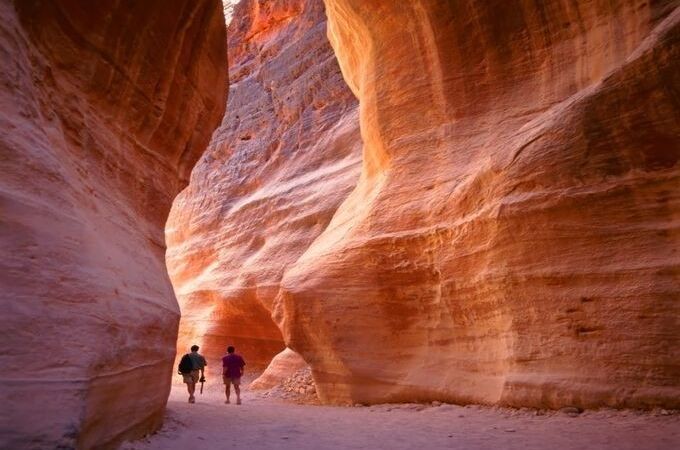
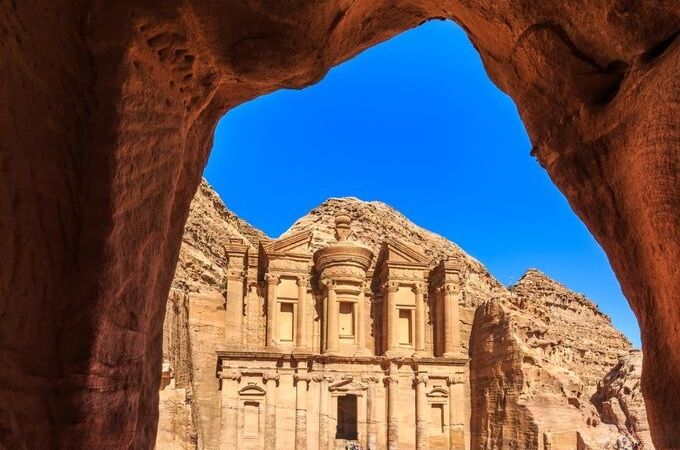
The Siq and Treasury remain the famous beginning, yet the archaeological city becomes increasingly fascinating as you move farther from the entrance. Tombs, temples, elevated routes and the Monastery can transform Petra from a famous photograph into a landscape that needs time to understand.
Travellers interested in giving the site greater depth can consider Petra archaeology holidays, particularly when two visits or a longer route better match their interests.
But November introduces a new limit.
Daylight.
Do not confuse comfortable walking conditions with unlimited time. A long route started too late can still become rushed simply because the afternoon is disappearing.
Jerash Benefits From Travellers Who Stop Rushing South
November strengthens the case for northern Jordan.
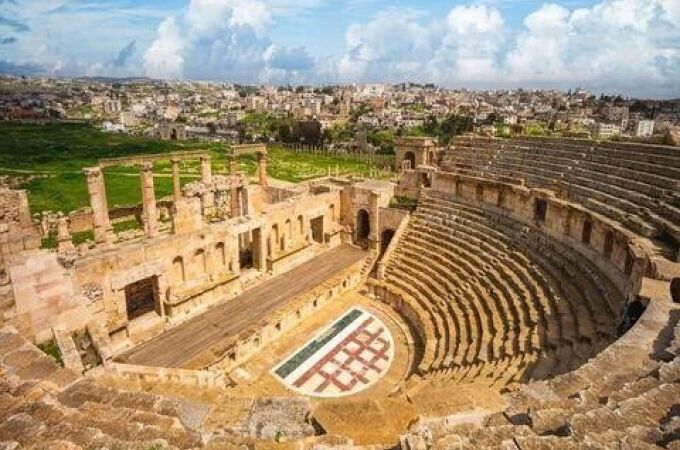
Jerash is particularly well suited to cooler walking conditions because the ancient city is large enough that a quick highlights visit barely explains what you are looking at.
The Oval Plaza makes an immediate impression, but the experience improves as you continue along the Cardo and begin understanding how the theatres, temples, streets and public spaces relate to one another.
This takes time.
Travellers wanting a broader historical journey can explore northern Jordan tours, allowing Jerash and Amman to carry more weight before the itinerary turns towards Petra.
November gives northern archaeology excellent conditions.
Do not waste them by treating everything before Petra as an introduction.
Wadi Rum Becomes Two Different Destinations in One Day
November desert travel contains one of Jordan's strongest contrasts.
During daylight, Wadi Rum may provide excellent conditions for 4x4 exploration, selected walks and longer periods outside. The landscape can feel inviting enough that travellers forget what happens once the sun drops behind the sandstone.
Then evening arrives.
The temperature can fall quickly, and the same desert where you felt perfectly comfortable in lightweight clothing can require noticeably warmer layers.
This is not a reason to avoid an overnight stay.
Quite the opposite.
Travellers considering Wadi Rum desert camps can experience a side of the landscape that summer visitors encounter differently: comfortable daytime exploration followed by a genuinely cool desert evening.
The important thing is to pack for both.
The Sunset Suddenly Has Logistics Attached to It
During summer, sunset in Wadi Rum often feels like the reward after a hot day.
In November, it can also become the moment when everyone starts looking for another layer.
This changes camp planning more than people expect.
Ask what accommodation actually provides. Understand whether your tent or room has heating if that matters to you, and bring suitable clothing for time outside after dark.
Do not assume the afternoon forecast represents the night.
A desert camp should feel atmospheric.
It should not become a contest to see who can pretend they are not cold.
The Dead Sea Can Feel Like You Changed Seasons
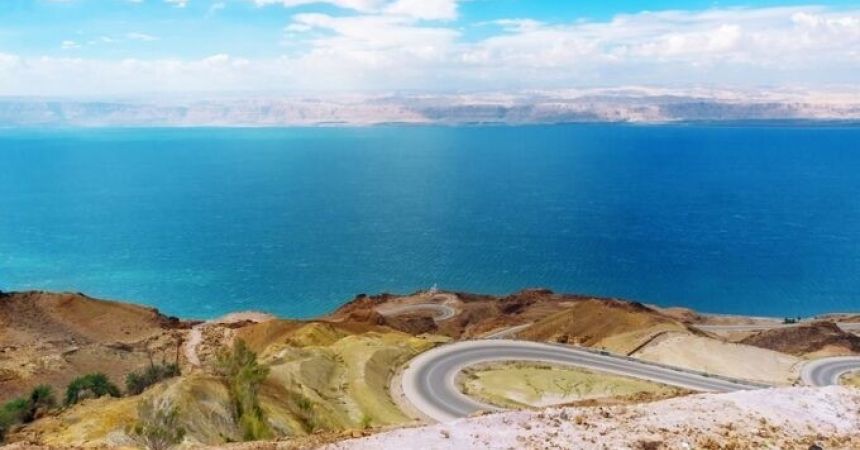
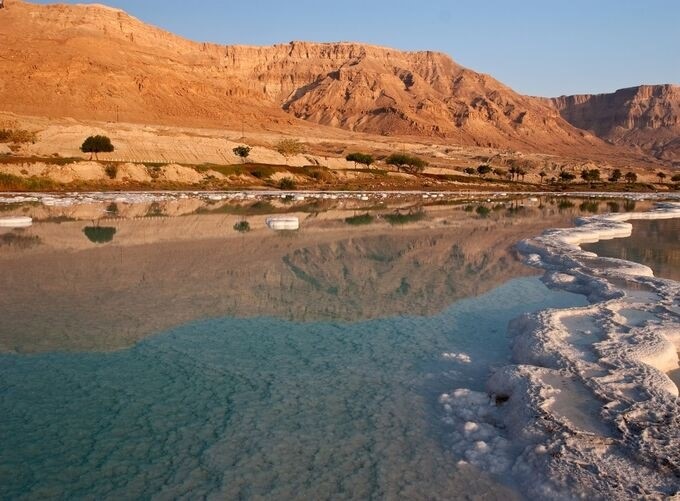
After several days around Amman, Petra or Wadi Rum, descending towards the Dead Sea can produce a welcome climatic shift.
The lower elevation often gives the destination a warmer character than Jordan's highlands, although conditions vary and November should never be treated as guaranteed swimming weather every single day.
Its role in the itinerary also changes.
In summer, the Dead Sea can provide relief from demanding sightseeing.
In November, it may provide relief from cooler evenings and consecutive walking days.
Travellers wanting that contrast can include Dead Sea spa stays, particularly towards the end of a cultural itinerary.
The experience remains slow.
The reason for slowing down changes with the season.
Aqaba Extends the Mild Side of November
Continue south and Aqaba offers another climate.
For travellers who want Jordan's archaeology without giving up the possibility of several Red Sea days, November can create an appealing combination.
The first half of the journey may involve layers in Amman, long walks through Petra and a cool Wadi Rum evening. The final portion can shift towards a milder coastal environment where swimming, diving or snorkelling may still form part of the trip depending on conditions.
Those wanting that mixed itinerary can explore Jordan Red Sea journeys, giving Aqaba enough time to become a genuine coastal chapter.
Again, geography does the work.
You do not need every destination to feel like the same season.
Rain Deserves More Than a Packing Note
November is also the point when travellers should pay more attention to rainfall.
This does not mean Jordan becomes a wet destination or that November trips should be planned around constant rain.
It means rain can have consequences beyond whether you carry a jacket.
Some valleys, canyon environments and low-lying areas can be affected by flash-flood risk when significant rain occurs, sometimes even when rainfall is happening elsewhere in the drainage system.
For weather-sensitive outdoor activities, local guidance matters.
Check forecasts.
Follow official instructions and advice from qualified local operators.
Never treat a canyon route as safe simply because the sky directly above you looks clear.
This is not an inconvenience unique to Jordan.
It is part of travelling responsibly through landscapes shaped by water as well as desert.
November Packing Needs a Layering System
The month's regional contrasts make a single heavy outfit less useful than several adaptable layers.
A typical cultural itinerary may involve:
- comfortable walking clothing for daytime archaeology;
- a light layer for changing conditions;
- something warmer for Wadi Rum evenings;
- reliable walking shoes;
- sun protection, because cooler air does not eliminate UV exposure;
- a light rain layer depending on the forecast;
- swimwear if the Dead Sea or Aqaba is included.
You may use almost all of these within forty-eight hours.
That is normal.
November Is Excellent for Travellers Who Like to Walk
This may be the month's strongest identity.
Petra can become more ambitious.
Jerash can become less rushed.
Wadi Rum can support more daytime exploration.
Amman can be experienced on foot without structuring the entire day around avoiding heat.
Travellers interested in a more active cultural route can consider Jordan walking itineraries, although route conditions and current weather should always be checked before specialised hikes.
Cooler does not mean careless.
It means more possibilities.
The Best November Itinerary Starts on Time
October gives travellers broad usable days.
November begins shortening them.
That creates a different kind of discipline.
You do not necessarily need extreme early starts, but breakfast cannot drift indefinitely when the day's plan includes several hours in Petra or a substantial archaeological excursion.
Use daylight for the experiences that need it.
Save long dinners, relaxed hotel time and slower social evenings for after sunset, when Jordan's food and hospitality become part of the journey anyway.
November is not a month for rushing.
It is a month for beginning before you need to.
Daylight Becomes Part of the Travel Budget
Most travellers think about two limited resources when planning Jordan: time and money.
November adds a third.
Daylight.
You may have enough hours in the itinerary to visit Petra, stop somewhere on the road and reach Wadi Rum on the same day, but that does not mean enough useful daylight exists to enjoy all three properly.
This is where November planning becomes less about squeezing activities into a schedule and more about deciding which experiences actually need the sun.
A museum can survive late afternoon.
A long Petra trail cannot simply borrow another two hours after dark.
Spend the Best Hours Where Walking Matters
Not every attraction deserves equal access to daylight.
Petra needs a generous allocation because distance is part of the experience. Jerash also benefits from time because understanding the ancient city requires more than moving between its headline monuments.
Road transfers are different.
Unless you deliberately choose a scenic route, part of a transfer can happen after the most valuable sightseeing hours without damaging the journey.
Wadi Rum complicates the calculation because sunset is itself part of the experience.
That creates a useful priority system:
| Experience | Daylight Priority | Why |
|---|---|---|
| Petra long route | Very High | Walking distance and archaeology |
| Jerash | High | Large open archaeological site |
| Wadi Rum | High | Landscape and sunset |
| Scenic road journey | Medium–High | Views are part of the route |
| Direct transfer | Lower | Transportation is the main purpose |
| Hotel / dinner | Very Low | Works naturally after dark |
The mistake is giving every item on the itinerary equal status simply because each occupies a line in the programme.
Petra and Wadi Rum Should Not Fight for the Same Afternoon
This is one of the easiest November scheduling mistakes.
Spend the morning in Petra.
Leave after lunch.
Drive to Wadi Rum.
Take a desert excursion.
See sunset.
Check into camp.
It sounds wonderfully efficient.
It can work if the Petra visit is intentionally short and logistics align. But if Petra is supposed to be one of the major experiences of the journey, asking it to share the same limited daylight with Wadi Rum creates unnecessary competition.
The problem is not the driving distance alone.
It is that both destinations improve when they receive your attention before dark.
A better approach may be to give Petra its own substantial day, travel towards Wadi Rum afterwards or the following morning, and let the desert receive the afternoon without watching the sun disappear from the vehicle.
Efficiency is useful.
Competition between highlights is not.
Jerash Needs More Than the Morning Leftovers
Jerash often suffers because it appears geographically convenient.
Travellers imagine seeing part of Amman first, driving north, visiting Jerash, perhaps adding another stop and returning before dinner.
November can expose the weakness in that plan.
If Jerash matters, arrive with enough daylight to explore it properly.
The site is large enough that its scale only becomes clear after you move beyond the first major structures. A rushed visit may technically cover the highlights while missing the experience of walking through an ancient urban landscape.
If the day's schedule already contains several other priorities, consider removing one rather than making all of them shorter.
November rewards editing.
Scenic Transfers Need Sun Too
There is a significant difference between a road you use and a road you experience.
A direct transfer exists mainly to move you between destinations. If part of it happens after sunset, very little may be lost.
A scenic route is different.
If you deliberately choose a journey because of landscapes, viewpoints or cultural stops, driving the most interesting section in darkness defeats the purpose.
This becomes especially important when planning slower routes towards Petra.
A scenic transfer should therefore be treated as a sightseeing day with transportation included, not transportation with as many attractions attached as possible.
Start accordingly.
And if the day becomes too crowded, remove a stop rather than turning every stop into fifteen minutes.
Wadi Rum Has a Deadline the Desert Sets for You
Petra closes according to operating arrangements.
Wadi Rum has another deadline.
The sun.
Arriving forty minutes before sunset may technically allow you to see sunset in the desert, but it does not give you much time to understand where you are.
Wadi Rum benefits from the transition towards evening.
The shadows lengthen. Rock formations gain depth. The colour of the landscape changes gradually rather than switching at one dramatic moment.
If sunset matters, arrive early enough to experience the approach to it.
The best part may happen before the photograph everyone waits for.
What Should Happen After Dark?
Quite a lot.
November itineraries become easier when you stop expecting daylight to handle everything.
Use evenings for experiences that do not require it.
A long dinner in Amman can become part of understanding Jordanian food culture. Petra evenings can remain deliberately quiet before a major walking day. Wadi Rum moves naturally from sunset towards camp, dinner and time beneath the night sky.
Hotels are not wasted time either.
An hour to shower, rest and stop processing historical information may be exactly what makes tomorrow interesting again.
Shorter days can improve the journey by forcing some activities out of the sightseeing window.
A Sample November Day Should Have One Main Job
This is a useful rule.
Ask each day what it is primarily for.
Petra day
Petra is the job. Do not build the schedule around reaching somewhere else as quickly as possible afterwards.
Jerash day
Give northern archaeology enough time, then allow the evening to belong to Amman.
Road day
Choose whether the journey is scenic or efficient. Trying to make it both can produce an unnecessarily long day.
Wadi Rum day
Arrive with enough daylight for the desert to unfold before sunset rather than treating camp as the only objective.
A day can contain secondary experiences.
It simply should not contain four primary ones.
November Rewards Travellers Who Leave Something Out
This is not a very fashionable travel recommendation.
Most itineraries sell themselves by adding.
Another castle.
Another viewpoint.
Another archaeological stop.
Another town because it happens to be somewhere along the road.
November makes subtraction more valuable.
Removing one minor stop may give Jerash another hour. Leaving Petra the following morning instead of late afternoon may protect an entire archaeological day. Taking a faster road on one occasion may allow Wadi Rum to receive the sunset properly.
You lose one line from the itinerary.
You gain time inside the places that remain.
That is a good trade.
Shorter Days Can Produce Better Memories
There is something useful about knowing the day cannot continue indefinitely.
You become selective.
Petra receives attention because there is no assumption that another three hours can always be added. Wadi Rum receives its afternoon because sunset will not negotiate. Scenic roads are chosen only when there is enough light to make them worthwhile.
The result may look slightly less ambitious on paper.
In practice, it can feel considerably richer.
November does not give you less Jordan.
It asks you to decide which parts deserve the light.
When the Forecast Changes, Change the Plan
A November forecast can look beautifully straightforward when you first check it.
Several dry days.
Comfortable daytime conditions.
Perhaps a cooler evening in Wadi Rum.
Then, a few days before one particular excursion, a rain symbol appears.
The instinct is often to ask whether the entire trip has become a problem.
Usually, that is the wrong question.
A better one is:
Which part of tomorrow's plan actually depends on the weather?
Jordan itineraries contain activities with very different levels of flexibility. A city lunch can move easily. A museum may become more attractive on an unsettled afternoon. A canyon or weather-sensitive trail requires an entirely different level of attention.
November planning works best when those distinctions are understood before the forecast changes.
Not Every Rainy Day Is a Lost Day
Rain affects an archaeological site differently from a desert camp, and both are different again from a city day.
That sounds obvious, yet fixed itineraries often treat every activity as equally difficult to rearrange.
They are not.
| Experience | Flexibility | Main Consideration |
|---|---|---|
| Amman city day | High | Indoor/outdoor activities can be mixed |
| Museum visits | Very High | Easy poor-weather alternative |
| Jerash | Medium | Open-air site and walking surfaces |
| Petra | Weather dependent | Conditions and official/local guidance |
| Wadi Rum | Weather dependent | Desert conditions and access |
| Canyon / wadi routes | Low in adverse weather | Flash-flood risk can be critical |
| Dead Sea resort time | Medium | Experience changes with conditions |
The objective is not to predict exactly what will happen.
It is to avoid building an itinerary where one change destroys three days.
Amman Is Your Most Flexible Day
Cities are useful when the weather becomes uncertain because they contain alternatives close together.
An Amman programme can move between archaeological areas, museums, restaurants, cafés and neighbourhoods without requiring the entire day to succeed outdoors.
If your itinerary contains some flexibility, this makes the capital useful as more than the first or final night.
Suppose a forecast suggests unsettled conditions on one day and better weather immediately afterwards. Depending on bookings, logistics and local advice, it may be possible to rearrange some sightseeing rather than insisting that every activity happen in its original order.
This is one reason not to schedule a trip so tightly that moving lunch by thirty minutes feels like an operational crisis.
Petra Is Not a Place to Outsmart the Weather
Petra creates a stronger emotional problem.
You have travelled to Jordan.
You may have dreamed about seeing the site for years.
Then the forecast becomes uncertain.
This is precisely when travellers should resist the urge to make their own safety judgement based on how the sky looks outside the hotel.
Petra contains narrow passages, varied terrain and areas where weather conditions can have implications beyond getting wet. If significant rain or flood risk affects access or particular routes, follow official instructions and qualified local guidance.
Do not assume a waterproof jacket solves the problem.
The question is not simply whether you mind walking in rain.
It is whether the intended route is appropriate and open under the actual conditions.
Canyons Require a Different Level of Respect
Jordan's wadis can be spectacular.
They also make generic weather advice inadequate.
Flash floods can develop rapidly, and conditions elsewhere in a catchment may matter even when the immediate location does not appear alarming.
For canyoning, hiking through narrow valleys or other weather-sensitive routes, rely on current local information and professional guidance.
If authorities or experienced local operators advise against proceeding, change the plan.
A cancelled outdoor activity is disappointing.
A risky attempt to preserve an itinerary is not adventurous.
It is simply a poor decision.
Build a Buffer Without Creating an Empty Day
“Leave a spare day” sounds wonderful when you have three weeks.
It sounds less practical on an eight-day holiday.
Fortunately, itinerary buffers do not always require an entirely blank date.
A buffer can be structural.
Two nights in Petra create more flexibility than arriving late, visiting the next morning and leaving immediately. Spending enough time in Amman gives city activities room to move. Avoiding unnecessary one-night stays reduces the number of fixed check-in and transfer points.
The more often you change hotels, the harder the itinerary becomes to rearrange.
Flexibility is partly a weather strategy.
It is also a reason to travel more slowly.
Hotel Nights Can Determine How Flexible You Really Are
This is easy to overlook.
An itinerary may look flexible because activities can theoretically move between days.
Hotels, transfers, flights and pre-booked services may disagree.
If you are due to leave Petra for Wadi Rum at a fixed time and your next accommodation is already confirmed, shifting a Petra visit by twenty-four hours may not be simple.
This does not mean you should avoid advance bookings.
Popular travel periods often make them necessary.
It means the best flexibility comes from sensible route design before travel, not from assuming everything can be rearranged once you arrive.
Fewer unnecessary hotel changes create more room.
Rain Can Improve Parts of the Journey
Not every cloud needs to be treated as an enemy.
Changing weather can produce dramatic light over Jordan's landscapes, while cooler conditions may make certain city experiences feel particularly atmospheric.
The key is separating inconvenience from risk.
A grey afternoon that changes your photography is an inconvenience.
A weather warning affecting a canyon is a safety issue.
A short shower that sends you towards a longer lunch may simply become part of the day.
Travel becomes much easier when these categories are not confused.
Don't Let the Weather App Run the Holiday
Forecast apps are useful.
They are not itinerary managers.
Checking them every hour can create unnecessary anxiety because forecasts change, regional conditions differ and a rain icon does not explain what the entire day will actually look like.
Use forecasts to prepare and make decisions.
Then use current local information when conditions genuinely matter.
Jordan's geography makes this especially important because Amman, Petra, Wadi Rum and the Dead Sea can experience very different weather during the same period.
One symbol beside the word “Jordan” tells you almost nothing.
The Best November Plan Can Bend
November rewards structure, but not rigidity.
You want enough organisation that shorter daylight hours are used well. Petra should not begin accidentally at noon, and Wadi Rum should not receive whatever daylight remains after an overfilled road journey.
At the same time, the itinerary needs enough breathing room to respond when conditions change.
That balance is the real November skill.
Plan the important days carefully.
Avoid unnecessary hotel hopping.
Know which experiences depend heavily on weather.
Then accept that occasionally the better decision will be to move, shorten or cancel something.
A flexible itinerary is not one that lacks planning.
It is one that was planned well enough to survive reality.
October vs November vs December: Where Does November Fit?
These three months can all support excellent Jordan journeys, but they should not be presented as variations of the same autumn itinerary.
October generally offers broader usable daylight and an established autumn rhythm. November moves towards cooler walking conditions while shortening the day and increasing the importance of weather flexibility. December belongs more clearly to Jordan's winter travel season, when packing and daily planning change again.
| October | November | December | |
|---|---|---|---|
| Seasonal Identity | Established autumn | Late autumn | Early winter |
| Daylight | More generous | Noticeably shorter | Short winter days |
| Petra | Long exploration days | Excellent walking potential | Winter planning required |
| Jerash | Strong archaeology month | Cooler cultural touring | Weather matters more |
| Wadi Rum | Comfortable day + camp | Cool desert evenings | Colder nights |
| Rain Awareness | Increasing | More important | Winter weather consideration |
| Packing | Flexible layers | Stronger layering | Winter-oriented layers |
| Best For | Broad outdoor itineraries | Walkers and cultural travellers | Winter-season visitors |
November's attraction becomes clearer in the middle column.
It is not simply “October but colder.”
The month changes how you allocate time, particularly when Petra, road journeys and Wadi Rum all compete for limited daylight.
Frequently Asked Questions About Jordan in November
1. Is November a good time to visit Jordan?
Yes. November can be particularly attractive for travellers who enjoy archaeology and walking in cooler conditions. Petra, Jerash and Wadi Rum remain major highlights, although shorter daylight, cooler evenings and a greater possibility of unsettled weather should be incorporated into the itinerary.
2. Is Jordan cold in November?
It depends heavily on destination, elevation and time of day. Daytime sightseeing can feel comfortable in many areas, while mornings and evenings may be considerably cooler. Wadi Rum after sunset can feel very different from the afternoon, and the Dead Sea generally provides a warmer contrast.
3. Is Petra worth visiting in November?
Absolutely. Cooler conditions can make substantial walking particularly appealing, allowing travellers to concentrate more on archaeology and route choice than summer heat. However, shorter daylight means longer Petra routes should begin with enough time rather than assuming comfortable temperatures automatically create an unlimited sightseeing day.
4. Does Petra close when it rains?
Access and route conditions depend on the actual weather situation and decisions by the relevant authorities. Significant rain can create safety concerns, including potential flash flooding. Visitors should follow current official instructions and qualified local advice rather than making independent decisions based only on visible rainfall.
5. Does it rain a lot in Jordan in November?
Jordan remains relatively dry compared with many destinations, but rainfall becomes more relevant during the cooler season. Conditions vary by region and year. Instead of planning around monthly averages alone, check destination-specific forecasts shortly before travel and remain flexible when weather-sensitive outdoor activities are involved.
6. What should I wear in Jordan in November?
Layering works particularly well. Comfortable daytime walking clothing can be combined with warmer layers for mornings and evenings, especially in Petra and Wadi Rum. A rain-resistant outer layer may also be useful depending on the forecast, while sun protection remains relevant during clear days.
7. Is Wadi Rum too cold in November?
Not necessarily, but the difference between daytime and nighttime conditions becomes more important. Daytime exploration can be very comfortable, while evenings may require substantially warmer clothing. Travellers staying overnight should check camp facilities, heating arrangements and current forecasts before departure.
8. Can I swim in the Dead Sea in November?
Swimming or floating may still be possible depending on the day's weather and personal comfort. Because of its low elevation, the Dead Sea often feels warmer than Jordan's highlands. Resort facilities can also make it an appealing slower stop after Petra and Wadi Rum.
9. Is Aqaba warm in November?
Aqaba generally maintains a milder Red Sea character compared with elevated destinations such as Amman. It can therefore work well for travellers wanting to combine cooler archaeological touring with a warmer coastal finish, although actual swimming and marine conditions should be checked for the travel dates.
10. How early should I start sightseeing in November?
You do not necessarily need extreme summer-style starts, but daylight becomes valuable. Longer Petra visits, Jerash and scenic road journeys should begin early enough that important outdoor experiences are not compressed into the final hours before sunset.
11. Is November suitable for hiking in Jordan?
It can offer excellent walking conditions, but cooler temperatures do not guarantee safe trail conditions. Rainfall and flash-flood risk can affect some wadis and canyon routes. Check current weather, route status and qualified local guidance before undertaking weather-sensitive hikes.
12. Is November or December better for Jordan?
November generally provides a late-autumn experience with cooler walking conditions and somewhat more daylight than deeper winter. December has a clearer winter identity, including colder nights and stronger seasonal packing requirements. The better choice depends primarily on preferred conditions and planned activities.
November Rewards Travellers Who Understand What Cannot Move
Some parts of an itinerary are surprisingly flexible.
Dinner can happen later.
A museum can replace an outdoor activity for a few hours.
A direct transfer can absorb part of the evening, and a relaxed hotel arrival does not need daylight at all.
Other experiences cannot negotiate.
Petra needs enough time before the day disappears.
Jerash deserves daylight if you want to understand the scale of the ancient city rather than move quickly between monuments.
Wadi Rum sunset happens when it happens.
And when weather conditions make a canyon or another exposed route unsafe, the itinerary must give way rather than the landscape.
That distinction defines November better than a temperature chart does.
The month can provide some of the most enjoyable walking conditions of the year for travellers who prefer cooler weather. Petra becomes easier to approach as a landscape rather than a challenge against the heat, while Jerash rewards visitors willing to spend several hours exploring on foot.
Wadi Rum adds another layer.
Daytime may invite longer exploration, yet the desert can feel dramatically different after sunset. That transition makes an overnight stay memorable, but only when travellers arrive prepared for the evening rather than dressed according to the afternoon.
Then there is the Dead Sea.
Descending from Jordan's higher regions can produce a striking change, giving the itinerary a warmer and deliberately slower chapter after several active days. Aqaba can extend that contrast further for travellers who want the Red Sea to become part of the journey.
November therefore does not require a less ambitious Jordan trip.
It requires a more intelligently edited one.
Give daylight to experiences that depend on it. Move logistics and slower activities towards the hours that do not. Build enough flexibility into the route that a changing forecast does not dismantle the entire holiday.
Most importantly, leave something out when the alternative is rushing three excellent experiences.
A November itinerary may contain fewer daylight hours than an October one.
Used properly, those hours can carry considerably more value.

A travel professional specializing in tailor-made travel planning, guest experience management, and multi-destination tourism operations.
With over 23 years of experience in the travel industry, he designs and manages private and cultural tours for international travelers across Türkiye, Greece, Egypt, Jordan, Morocco, and other destinations.
He has strong expertise in both online and face-to-face guest communication, sales processes, and end-to-end travel operations.
Working closely with hotels, travel agencies, and local partners, he ensures smooth coordination and high-quality travel experiences at every stage of the journey.
His focus is on delivering personalized, reliable, and seamless travel experiences for international guests worldwide.