Jordan in February: Travelling as Winter Begins to Loosen
Last Updated: August 9, 2026
February is a month that refuses to make a clean decision about the season.
Winter is still very much present in Jordan, particularly around Amman and the higher central landscapes, and travellers should not mistake a bright afternoon for proof that spring has arrived early. Rain remains possible, colder weather systems can still influence the country, and Petra can begin the day with the kind of chill that makes you grateful for every layer you packed.
Yet February does not feel exactly like January.
Daylight is gradually increasing. Southern Jordan can begin showing hints of the seasonal shift earlier than the north, and on favourable days the hours available for outdoor exploration start feeling more generous. Wadi Rum can move between cool desert mornings and surprisingly comfortable afternoons, while Aqaba and the Dead Sea continue to offer a milder counterpoint to the elevated interior.
February's value lies in this uncertainty.
It is late winter with the first signs that Jordan is beginning to turn towards spring.
February Is a Transitional Month Without Being Spring
There is a temptation to divide weather guides into neat categories.
December, January, February: winter.
March, April, May: spring.
The atmosphere has not read the tourism calendar.
February can contain genuinely wintry days and beautifully clear periods that feel considerably softer. Conditions also vary across Jordan, which means the seasonal transition may be more noticeable in one part of your itinerary than another.
| Destination | February Character | Planning Approach |
|---|---|---|
| Amman | Late winter, variable conditions | Keep indoor flexibility |
| Jerash | Cool outdoor touring | Choose clearer periods when possible |
| Petra | Excellent walking potential, weather dependent | Protect a full day |
| Wadi Rum | Cool desert with improving daytime comfort | Prepare for cold evenings |
| Dead Sea | Milder low-elevation conditions | Good slower stop |
| Aqaba | Southern warmth becomes more appealing | Useful coast extension |
The mistake would be packing as though February were already March.
The opposite mistake is assuming nothing has changed since January.
Amman Still Sets the Winter Tone
Amman remains one of the places where February reminds you that Jordan has a genuine cool season.
A clear midday can be pleasant for exploring the Citadel or moving through the city, but mornings, evenings, wind and periods of rain can change the experience quickly. A flexible city programme remains useful because Amman offers enough variety to respond to the weather without losing the day.
This is also a good month to stop treating the capital as somewhere to sleep before driving south.
Spend time understanding the city's hills and neighbourhoods. Visit archaeological remains, but leave room for modern Amman as well. Winter encourages pauses that summer travellers sometimes skip: a longer lunch, coffee somewhere warm or an indoor cultural stop when the weather outside becomes less inviting.
These are not backup activities.
They are part of travelling through Jordan in February.
Petra Gains Something Valuable: Time
February's gradual increase in daylight may not sound like a compelling reason to travel.
At Petra, it matters.
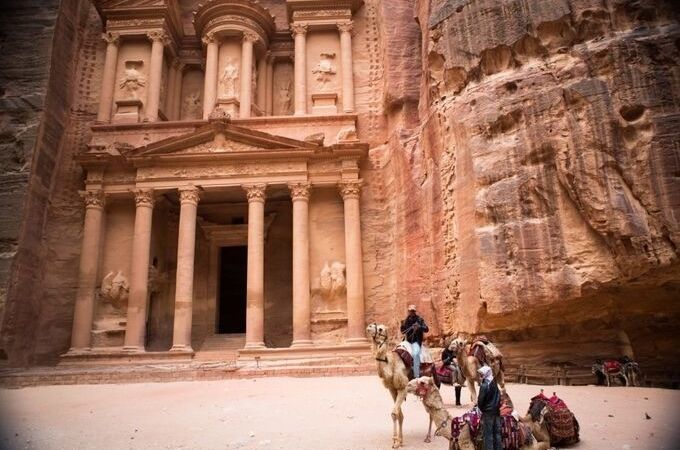
The archaeological city is enormous, and the difference between having enough time and feeling hurried often comes down to the edges of the day. As daylight gradually expands towards spring, travellers gain more freedom to explore beyond the Treasury without immediately turning the visit into an endurance exercise.
Cooler conditions can be excellent for walking when the weather is settled.
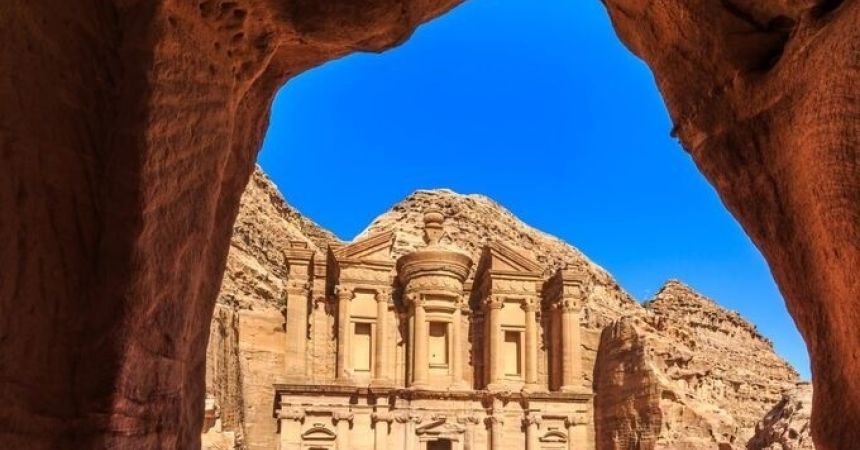
You can move through the Siq, spend time around the central archaeological area and consider longer sections of Petra according to your fitness and interests. The Monastery, in particular, deserves to be treated as a substantial addition rather than something squeezed into the final hour.
Travellers interested in giving the site greater priority can explore Petra walking tours, using February's cooler conditions for depth rather than simply trying to increase the number of attractions visited.
Wadi Rum Begins Changing Before the Desert Looks Different
Seasonal change in the desert is often subtle.
You may not arrive and immediately announce that spring is clearly approaching. Instead, you notice that certain afternoons feel easier, daylight lasts a little longer and outdoor activities can occupy more of the day without the same midwinter constraints.
Evenings remain another matter.
Wadi Rum can cool significantly after sunset, so February is not the month to abandon warm clothing because the afternoon was comfortable. An overnight camp still requires proper preparation, and travellers should check accommodation and heating arrangements rather than assuming every desert camp offers the same winter experience.
The advantage is that daytime exploration begins gaining range.
A 4x4 excursion can be combined with walking or other activities without necessarily making the day feel compressed.
Aqaba Starts Looking More Tempting
Aqaba is useful in February for a different reason than Petra.
It gives you a glimpse of where the season is heading.
Jordan's southern Red Sea coast generally offers milder conditions than Amman and the highlands, which can make several nights here appealing after a culture-heavy route. Diving, marine activities and beach time depend on actual conditions and personal comfort, but Aqaba does not need to guarantee tropical heat to justify its place.
Sometimes the contrast is enough.
After cool mornings in Amman and several days of archaeological walking, sitting beside the Red Sea with nowhere urgent to be can feel remarkably luxurious.
Don't Rush Spring
This is February's most important planning lesson.
The month is changing, but it has not finished changing.
You may encounter days that feel like an early preview of spring, followed by weather that makes it very clear winter has not left. Trying to force February into either season creates the wrong expectations.
Instead, use its flexibility.
Keep warm layers available, but plan for substantial outdoor exploration when conditions cooperate. Give Petra the time that lengthening daylight increasingly allows. Let Wadi Rum occupy more than a quick afternoon, and consider Aqaba or the Dead Sea when a milder ending fits your interests.
February is not Jordan's spring month.
That belongs to the next stage of the cluster.
February is the moment just before it—the point when winter begins loosening its grip and the journey quietly starts opening up.
Build a February Itinerary That Can Bend
There is a difference between an organised itinerary and an inflexible one.
February makes that difference obvious.
Imagine arriving in Amman with Jerash planned for tomorrow, followed by a drive south the next morning. The forecast then suggests rain during the exact hours you intended to spend walking around one of Jordan's largest outdoor archaeological sites.
A rigid itinerary has a problem.
A flexible one has alternatives.
This does not mean travelling without reservations or deciding every morning where to sleep that night. Hotels and the overall route can remain fixed while individual activities retain enough flexibility to respond to actual conditions.
In February, that small amount of movement can improve the trip considerably.
Amman Is Your Best Flexible Base
Amman works particularly well at the beginning of a late-winter itinerary because the city does not depend entirely on outdoor sightseeing.
The Citadel is far more enjoyable when visibility and conditions are favourable, so there is little reason to insist on visiting during the least appealing weather simply because it appears at 10:00 a.m. on a printed schedule.
A colder or wetter period can instead be used for museums, food experiences or slower exploration, leaving clearer conditions for viewpoints and archaeological areas.
This approach changes how you think about weather.
You are not searching desperately for something to do because the original plan failed. You are simply changing the order of experiences that were already worth having.
Jerash Deserves the Better Weather Window
Jerash is different because much of its appeal depends on being outside.
Its colonnaded streets, plazas, theatres and monumental architecture cover a substantial archaeological area. A quick visit does the site little justice, while unpleasant weather can make a long outdoor exploration far less rewarding.
If you have several days around Amman, check the forecast and give Jerash the better window when practical.
Travellers interested in Jordan ancient cities can also think beyond the idea of archaeological sites as isolated stops. Jerash and Amman reveal very different layers of Jordan's past, and allowing enough time for both creates a stronger historical introduction before the journey moves south.
February's flexibility makes that easier when the schedule is not packed too tightly.
Petra Is Harder to Move, So Protect It
Not every part of the itinerary has equal flexibility.
Petra often sits inside a fixed hotel sequence, and many travellers have only one full day available. That makes it more difficult to shift than a museum visit in Amman.
The solution is not worrying about the forecast two months in advance.
It is giving Petra enough space.
Two nights in the area are far more useful than arriving late, attempting a compressed visit the next morning and leaving immediately afterwards. With a little breathing room, you reduce the chance that every part of the journey depends on one narrow sightseeing window.
If Petra is the reason you came to Jordan, the itinerary should reflect that priority.
Wadi Rum Benefits From Options Within the Day
Wadi Rum presents another kind of flexibility.
You may not need to move the entire desert visit to another date. Instead, the type and timing of activities can respond to conditions.
A longer 4x4 exploration, a walk, time at camp and sunset viewing do not all require exactly the same weather. Local operators understand the desert far better than a forecast app viewed from another country, so their advice should influence how the day unfolds.
The important point is to avoid arriving with a minute-by-minute expectation of what Wadi Rum must look like.
Clouds do not make the desert disappear.
In fact, changing light can completely alter the landscape.
Keep One Afternoon Deliberately Light
This is one of the simplest February strategies.
Leave an afternoon with very little attached to it.
If the weather has been excellent, use the time for something spontaneous or enjoy a longer lunch. If an earlier activity had to move, you have somewhere for it to go. If everyone is tired after Petra, the empty afternoon becomes exactly what the itinerary needed.
Travel schedules often treat unused time as inefficiency.
In a transitional month, it is insurance.
Not financial insurance.
Better.
The kind that prevents one rainy morning from rearranging the entire holiday.
Flexibility Is More Useful Than Forecast Obsession
Weather forecasts become increasingly reliable as the travel date approaches, but February does not reward checking an app repeatedly weeks in advance and worrying about every rain symbol.
Plan the route intelligently first.
Then respond to the forecast when it becomes relevant.
Give outdoor archaeological sites enough time, keep some city experiences movable, avoid consecutive days that depend on perfect conditions and listen to local advice when weather affects Petra or Wadi Rum.
February's variability is not a flaw you need to eliminate.
It is simply part of travelling between winter and spring.
A good itinerary doesn't demand that the weather behave.
It knows what to do when it doesn't.
February Can Make Jordan Look Different
Weather is usually discussed as a practical problem.
Will it rain? What should I wear? Is Petra too cold? Can I stay overnight in Wadi Rum?
All sensible questions, but they overlook something February does particularly well: it changes the way Jordan looks.
Late winter light can soften landscapes that appear almost relentlessly bright during hotter months. Cloud can create depth over Wadi Rum, wet stone can deepen colours, and a clear day after unsettled weather may produce the kind of visibility that makes distant ridges suddenly seem much closer.
You do not need to be a serious photographer to notice the difference.
You only need to look up occasionally.
Petra's Colour Is Not Fixed
Petra is often called the Rose City, which creates the impression that its sandstone has one signature colour.
It does not.
The rock changes constantly according to light, shadow, weather and time of day. The Siq may appear darker and more dramatic under cloud, while brighter conditions can reveal layers of red, pink, orange and pale stone that were almost invisible an hour earlier.
February's variable skies can make those changes particularly noticeable.
Rather than becoming frustrated when the morning is not perfectly blue, pay attention to what the different light does to the landscape. Petra was never designed as a studio photograph with consistent illumination.
Its unpredictability is part of the experience.
Wadi Rum Does Not Require a Blue Sky
The classic image of Wadi Rum usually contains a flawless sky above orange desert.
Beautiful, certainly.
But cloud can be equally interesting.
Large desert landscapes benefit from depth, and changing winter skies can create shadows across cliffs and sandstone formations that disappear under harder midday light. After unsettled conditions, visibility can also be remarkable.
Travellers exploring Wadi Rum landscapes should therefore avoid judging the day entirely by whether the forecast displays a sun icon.
A desert under shifting cloud is still a desert worth seeing.
Sometimes it is more memorable precisely because it does not resemble the photograph you expected.
Winter Light Rewards Earlier Attention
February's shorter days have a disadvantage: there are fewer daylight hours than in spring.
They also make the useful light easier to notice.
Sunrise and sunset occur at more accessible times than during long summer days, which can benefit travellers interested in landscape photography without requiring a painfully early alarm or an exceptionally late evening.
In Wadi Rum, this can make the beginning and end of the day particularly rewarding. Petra offers a different challenge because surrounding rock and narrow passages control when direct light reaches specific areas.
The answer is not to chase a perfect photograph through the entire itinerary.
Enjoy the place first.
Take the photograph second.
Rain Can Change Colour Before It Changes Plans
A small amount of winter rain can deepen the appearance of stone, earth and vegetation, creating colours that are less obvious during prolonged dry periods.
Of course, significant rain is a different matter. Safety and access always come first, particularly around Petra and other terrain affected by runoff.
But not every grey sky means the sightseeing day is lost.
This distinction is important because travellers sometimes interpret anything other than clear sunshine as bad travel weather. February encourages a more flexible visual expectation.
The landscape may look different from the brochure.
Different does not necessarily mean worse.
The Dead Sea Has Its Own Winter Palette
The Dead Sea offers another kind of landscape entirely.
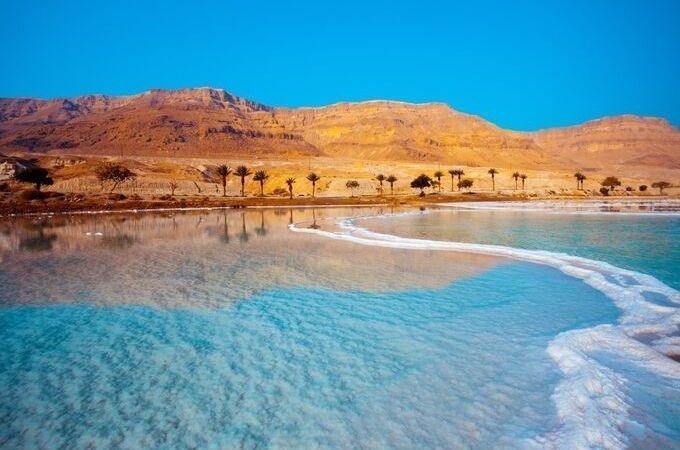
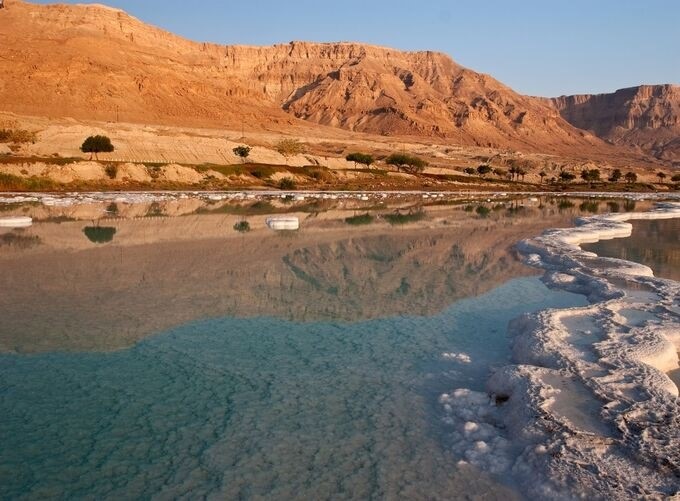
Here the visual interest comes from the relationship between water, barren slopes, distant terrain and changing atmospheric conditions. Winter skies can alter the colour of the water dramatically, while clearer periods may improve the sense of distance across the landscape.
This is another reason not to treat the Dead Sea purely as a place to float.
The experience is geographical before it is recreational.
Take time to look at where you are.
You are standing within one of the planet's most unusual landscapes, and February's variable atmosphere can make that setting feel particularly pronounced.
Don't Travel Through February Waiting for Spring
Late winter is easy to treat as an unfinished season.
Spring will bring longer days. Landscapes will begin changing. Walking conditions will develop again. The next stage of Jordan's seasonal calendar has obvious attractions.
February does not need to imitate it.
Its character comes from transition itself: unsettled skies followed by clear light, cool sandstone in the morning, dramatic desert shadows and the sense that the season is beginning to shift without having completed the process.
That atmosphere cannot be recreated in April.
Nor should it be.
Every month in this cluster needs a reason to exist beyond temperature, and February's reason is subtle but valuable.
Jordan looks different while winter is loosening.
Pay attention, and you may find that the weather you were worried about becomes part of what you remember.
Who Will Appreciate Jordan Most in February?
February works particularly well for travellers who are comfortable with a little uncertainty.
You might have a bright afternoon in Petra followed by a colder evening, or arrive in Wadi Rum beneath cloud and wake to completely different light the next morning. Amman can still feel firmly attached to winter while Aqaba suggests that the next season is already approaching.
For travellers who require consistently warm weather, February is unlikely to be Jordan's most obvious month. For those who value walking, archaeology, changing landscapes and an itinerary that can adapt to the day, however, the transition itself becomes part of the appeal.
Frequently Asked Questions About Jordan in February
1. Is February a good time to visit Jordan?
February can be rewarding for travellers interested in archaeology, walking and late-winter landscapes. Conditions remain variable, particularly in Amman and the higher regions, but daylight is gradually increasing and settled days can be excellent for exploring Petra, Jerash and Wadi Rum without summer heat.
2. Is Jordan cold in February?
Parts of Jordan can still feel distinctly wintry. Amman and Petra may experience cold mornings, evenings, wind and periods of rain, while lower and southern destinations such as the Dead Sea and Aqaba generally have milder conditions. Your route therefore matters more than one national temperature average.
3. Is Petra worth visiting in February?
Yes. Cooler conditions can be very good for the substantial walking Petra requires, particularly on settled days. February's gradually increasing daylight also helps travellers explore beyond the Treasury, although rain and changing trail conditions should always be taken seriously when planning longer routes.
4. Does it rain in Jordan in February?
Rain remains possible because February is still part of Jordan's wetter season. Rainfall varies considerably by region and year, so a wet forecast for Amman should not automatically be applied to the entire country. Check destination-specific forecasts as your travel dates approach.
5. Can Petra close because of bad weather?
Severe weather can affect access or activities when authorities consider conditions unsafe, particularly where flash-flood risk is involved. Travellers should always follow official instructions and local advice rather than attempting to continue with a fixed itinerary during adverse conditions.
6. Is Wadi Rum too cold in February?
Not necessarily. Daytime exploration can be comfortable when conditions are favourable, but temperatures often drop after sunset. Overnight visitors should bring warm clothing and confirm what heating and winter facilities their camp provides rather than assuming all desert accommodation operates identically.
7. Can I visit the Dead Sea in February?
Yes. The Dead Sea can provide a useful lower-elevation contrast with Amman and Petra. Whether swimming feels comfortable depends on the day's temperature, wind and personal preference, but resort facilities, unusual scenery and downtime can justify the stop even when swimming is not the main objective.
8. Is Aqaba suitable in February?
Aqaba can be an attractive addition because its southern Red Sea location generally provides milder conditions than Jordan's elevated interior. Swimming and marine activities depend on current weather and individual comfort, but several Aqaba nights can provide a relaxed finish after an active cultural itinerary.
9. What should I pack for Jordan in February?
Bring adaptable layers, a warm outer layer, comfortable walking shoes with good grip and some protection from rain. Sunglasses and sun protection remain useful on clear days. Pack according to Amman, Petra and Wadi Rum rather than assuming Aqaba's milder conditions represent the entire trip.
10. Is February suitable for hiking in Jordan?
Certain walks can be enjoyable in cooler February conditions, but route suitability depends on current weather, trail conditions and local advice. February should not be confused with Jordan's established spring hiking period; March and April have different seasonal characteristics that deserve separate planning.
11. Is February less crowded than spring?
February generally sits outside Jordan's better-known spring travel period, although visitor levels vary by destination and date. Lower crowd expectations should be treated as a possible advantage rather than a guarantee. Weather character and travel interests are better reasons for choosing the month.
12. Is February or March better for Jordan?
The two months offer different experiences. February retains a late-winter character with variable weather and atmospheric landscapes, while March begins Jordan's more recognisable spring transition. Travellers prioritising spring scenery and seasonal hiking should evaluate March separately rather than treating the months as interchangeable.

A travel professional specializing in tailor-made travel planning, guest experience management, and multi-destination tourism operations.
With over 23 years of experience in the travel industry, he designs and manages private and cultural tours for international travelers across Türkiye, Greece, Egypt, Jordan, Morocco, and other destinations.
He has strong expertise in both online and face-to-face guest communication, sales processes, and end-to-end travel operations.
Working closely with hotels, travel agencies, and local partners, he ensures smooth coordination and high-quality travel experiences at every stage of the journey.
His focus is on delivering personalized, reliable, and seamless travel experiences for international guests worldwide.