Jordan in October: When the Whole Day Opens Up Again
Last Updated: August 9, 2026
October changes Jordan in a way that is more useful than dramatic.
There is no sudden transformation of the landscape and no guarantee that every afternoon will feel cool. The Dead Sea can remain decidedly warm, Aqaba continues to carry a Red Sea character, and sunny days still require sensible protection.
What changes most is the amount of the day you can begin considering for exploration.
During summer, timing shapes almost every demanding outdoor experience. September gradually loosens those restrictions. October moves farther into a season when archaeology, walking and desert landscapes can once again occupy larger portions of the itinerary without every decision revolving around the strongest heat.
That sounds like a small difference.
Over ten days, it changes almost everything.
October Gives Archaeology More Room
Jordan's archaeological sites are not attractions designed for a quick indoor circuit.
Jerash spreads across a substantial ancient city. Petra is enormous. Even Amman's historical areas become more rewarding when you are willing to walk rather than move continuously by vehicle.
October allows those experiences to breathe.
You can still benefit from beginning earlier, particularly when visiting popular sites, but the reason increasingly becomes preference rather than necessity. A longer lunch no longer has to function as a strategic escape from the warmest hours, while afternoon sightseeing can regain a meaningful place in the programme.
| Destination | October Strength | Give It Time For |
|---|---|---|
| Amman | Flexible city touring | History, neighbourhoods, food |
| Jerash | Longer archaeological visits | Walking the ancient city |
| Petra | Extended exploration | Main route + selected extensions |
| Wadi Rum | Broader outdoor day | Desert drives and walking |
| Dead Sea | Warm contrast | Recovery and floating |
| Aqaba | Red Sea extension | Marine activities |
October is not simply comfortable.
It is versatile.
Jerash Stops Being an Optional Extra
On shorter summer itineraries, Jerash can create a genuine trade-off.
Do you devote another substantial outdoor day to Roman archaeology when Petra is still ahead?
October changes that calculation.
For travellers interested in history, Jerash becomes easier to justify because exploring the site no longer needs to compete as strongly with the day's most comfortable hours. You can walk through the Oval Plaza, along the Cardo and towards the theatres while allowing the ancient city to reveal its scale gradually.
That matters because Jerash is much less interesting when reduced to three photographs and a departure time.
Travellers wanting northern Jordan to receive proper attention can explore Jerash cultural routes, combining the site with a broader understanding of the country's archaeological landscape.
Petra is Jordan's headline act.
Jerash does not need to compete with it to be excellent.
Petra Becomes About Time, Not Temperature
October brings Petra closer to its ideal conceptual problem.
How much time do you want to spend there?
During the hottest part of the year, route decisions are strongly influenced by physical conditions. In October, travellers can increasingly choose according to archaeological interest and fitness instead.
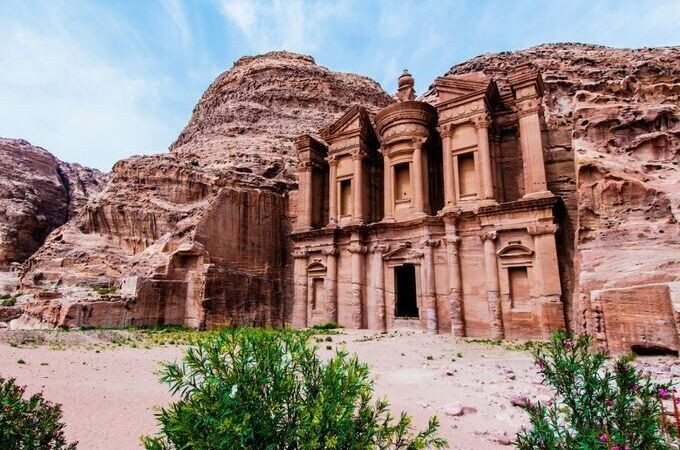
The Treasury remains the famous arrival moment, but a full Petra experience develops farther inside. The Royal Tombs, central archaeological areas, Monastery and elevated routes can turn the visit into a substantial walking day.
Do not interpret favourable autumn conditions as an instruction to do everything.
Petra has not become smaller.
Travellers seeking deeper exploration can consider Petra autumn tours, but route selection should still reflect what genuinely interests you rather than how many landmarks appear on a map.
October gives you more time.
Spend it on curiosity rather than completion.
Wadi Rum Gets Its Middle Back
Summer Wadi Rum has strong edges.
Morning matters.
Late afternoon matters.
Sunset matters enormously.
October makes the middle of the day interesting again.
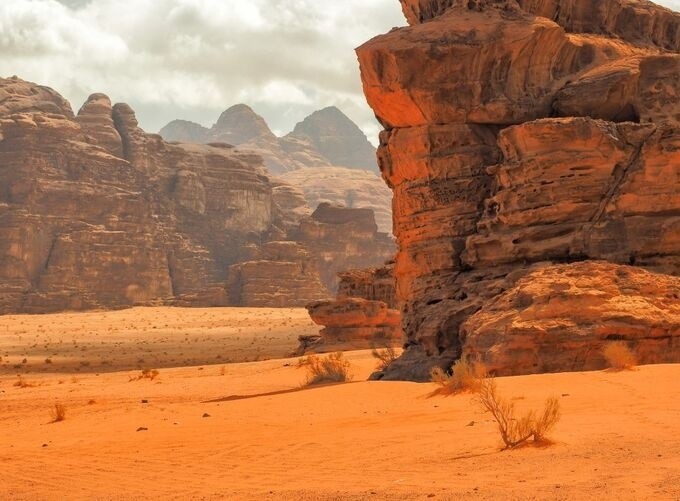
This can change the desert experience substantially because activities no longer need to cluster as tightly around the cooler periods. A 4x4 journey can expand naturally, selected walks become easier to integrate and longer stops no longer feel like something that must be carefully scheduled around the sun.
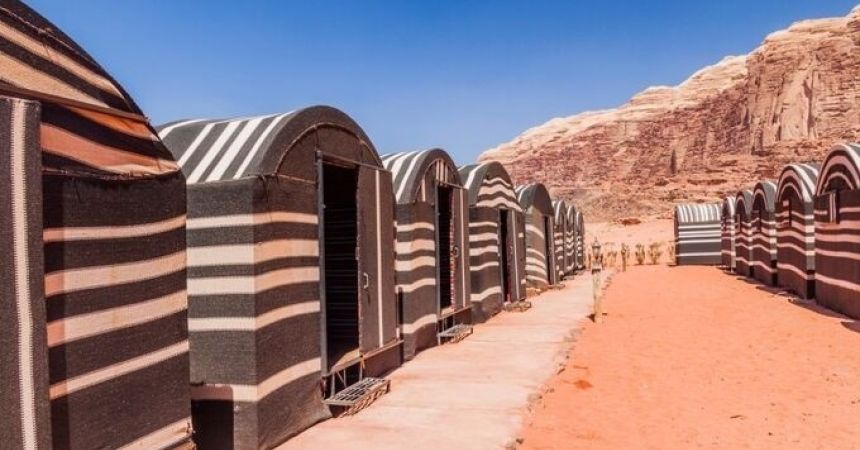
Travellers who want the desert to become more than a short excursion can consider Wadi Rum adventures, particularly when walking, camp time and vehicle exploration are combined across a full day or overnight stay.
There is still no reason to fill every hour.
The difference is that October gives you more hours worth choosing from.
A Desert Night Starts Needing Another Layer
October's daytime conditions can encourage travellers to think almost entirely about sunshine.
Then the sun disappears.
Desert environments can cool noticeably after dark, and travellers staying overnight in Wadi Rum should be prepared for the evening to feel different from the afternoon.
This is where packing becomes less obvious than it was during summer.
Light clothing may work beautifully through much of the day, but an additional layer can become useful once you are sitting outside at camp rather than walking under the sun.
Do not judge the night by how warm you felt at 2:00 p.m.
The desert changes quickly when the light goes.
The Dead Sea Becomes a Contrast, Not an Escape
In July or August, the Dead Sea naturally functions as a low-effort destination within a summer itinerary.
October gives it a different role.
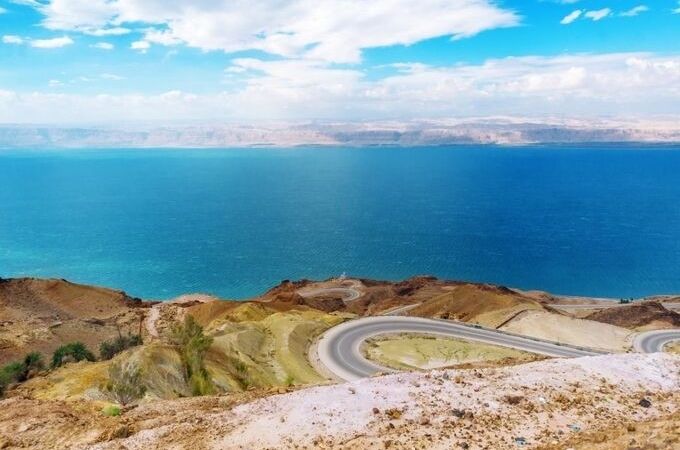
You no longer necessarily need recovery from heat-dominated sightseeing, but you may still appreciate recovery from the amount of walking autumn makes possible.
That is an important distinction.
After Jerash, Petra and perhaps a longer Wadi Rum experience, a night or two near the water can create a welcome change without feeling as though the itinerary has stopped.
Travellers interested in combining cultural touring with a slower finish can consider Dead Sea getaways, allowing the destination to provide contrast rather than another list of things to accomplish.
Sometimes autumn's greatest danger is that you realise you can walk all day.
October Makes the North Matter More
Petra and Wadi Rum dominate international images of Jordan so strongly that northern Jordan can become compressed into the beginning of an itinerary.
October is a good month to resist that.
Amman deserves time as a living capital. Jerash deserves time as an archaeological city, while additional northern landscapes and cultural experiences may appeal to travellers with longer itineraries.
This does not mean every first-time visitor needs to add another three days.
It means October makes a more balanced Jordan trip easier to build.
A ten-day itinerary no longer needs to rush south immediately after landing.
Full-Day Touring Returns, but Don't Abuse It
This is October's paradox.
The month gives you enough flexibility to create ambitious days again.
That does not mean you should.
A full Jerash visit followed by several additional stops can still become tiring. Petra remains physically demanding regardless of temperature, and Wadi Rum deserves periods when you are not being transported towards the next named rock formation.
Favourable weather can encourage overplanning just as easily as summer heat encourages caution.
The better approach is to use October's extra flexibility for depth.
Spend longer in the places already on the route.
Which October Trip Are You Building?
October supports several travel styles particularly well.
| Travel Style | October Advantage |
| Classic First Visit | Major sites fit naturally |
| Archaeology Focus | Longer outdoor exploration |
| Walking + Culture | More usable daytime hours |
| Desert Journey | Broader Wadi Rum activity window |
| Culture + Dead Sea | Active days followed by warm relaxation |
| Culture + Aqaba | Autumn touring plus Red Sea finish |
Travellers wanting a broad first journey can explore Jordan discovery trips, but the most important decision remains how much depth each destination receives.
October gives you enough good conditions to create almost any itinerary.
That makes editing more important, not less.
October's Luxury Is Usable Time
The real pleasure of Jordan in October is not that every day becomes meteorologically perfect.
Weather never signs that contract.
The advantage is that more of the day becomes available for genuine choice.
You can spend longer at Jerash because you are interested, not because you are racing through before midday. Petra can expand according to your curiosity, and Wadi Rum can become a full landscape experience rather than a schedule built mainly around sunrise and sunset.
Even the Dead Sea changes role.
Instead of providing relief from a summer itinerary, it can become the deliberate quiet chapter after several rich cultural days.
This is what separates October from September within the cluster.
September gradually returns flexibility.
October lets you use it.
The challenge is resisting the temptation to spend every additional hour on another attraction.
A better autumn itinerary does not necessarily see more Jordan.
It gives Jordan more time to be seen.
One Day or Two? October Makes This a Real Question
October creates a pleasant planning problem.
When summer conditions restrict the comfortable outdoor window, an additional day can sometimes be valuable simply because it spreads physical activity across more time. In October, the calculation changes.
You may have enough usable daylight and comfortable conditions to complete a substantial visit in one day.
So why stay for two?
Because some destinations become different when the second day is not merely overflow from the first.
Petra is the clearest example, but it is not the only one.
Amman: The Second Day Reveals the City
One day in Amman usually becomes a highlights day.
You see the Citadel, perhaps the Roman Theatre, move through downtown, eat well and leave with a reasonable introduction to Jordan's capital.
A second day changes the emphasis.
Instead of asking what you need to see, you can begin noticing how the city actually works. Neighbourhoods, cafés, galleries, markets and contemporary life receive more space, and the capital stops functioning simply as historical context before Petra.
October supports this particularly well because moving around the city becomes easier when outdoor conditions are comfortable across more of the day.
One day works if:
Your trip is short and the major archaeological route is the priority.
Two days work if:
You want to understand modern Jordan alongside its ancient sites.
Jerash: One Proper Day Is Usually Enough
Jerash deserves time.
That does not necessarily mean two days.
For most first-time visitors, one unhurried archaeological visit allows enough time to understand the site's extraordinary scale without turning Roman history into the entire northern portion of the trip.
October helps because you can explore more naturally instead of compressing the visit into a narrow weather window.
The mistake is not spending only one day.
The mistake is spending only one hour.
Walk the Cardo. Stop in the plazas. Look back at the city from different elevations and allow the architectural relationships to become clear.
Then continue.
Unless you have a specialist archaeological interest, the second full day will usually create more value somewhere else.
Petra: Two Days Can Change Everything
Petra is different.
One day gives you an extraordinary experience.
Two days can give you an understanding of why the place is extraordinary.
The first visit naturally carries pressure. You want the Siq, Treasury and major archaeological areas, and perhaps the Monastery or another significant route. Even in favourable October conditions, the distances eventually accumulate.
Return the next day and something changes.
The famous first encounter has already happened.
You can choose a different trail, spend longer around the tombs, revisit an area that interested you or simply walk without feeling that every decision removes another landmark from the schedule.
| Petra Time | What It Allows |
|---|---|
| Half Day | Very compressed highlights |
| 1 Full Day | Strong first-time experience |
| 1.5 Days | Main route + selected extension |
| 2 Full Days | Greater depth and route flexibility |
October is particularly suited to the 1.5- or two-day version because longer walking becomes easier to distribute without making the second visit feel like a recovery exercise.
Wadi Rum: The Second Day Changes the Pace
Wadi Rum is another destination where two days do not simply mean twice as much sightseeing.
One day tends to focus attention.
You arrive, explore by 4x4, stop at selected locations, watch the landscape change towards sunset and spend the evening at camp.
It can be excellent.
A second day removes urgency.
You might include a longer walk, spend more time in quieter areas, have an unhurried period around camp or simply stop expecting every hour to produce a named attraction.
That appeals particularly to photographers, hikers and travellers who enjoy landscapes more than checklists.
For someone who primarily wants to see the famous desert and experience one night at camp, a single well-designed day remains perfectly reasonable.
Dead Sea: Two Days Only If You Know Why
The Dead Sea presents the opposite problem.
An additional day is wonderfully easy to spend.
Whether you actually want to spend it is personal.
For travellers finishing an active Jordan itinerary, a full day with no hotel change, archaeological programme or long transfer can feel luxurious. Floating, resort facilities, a long lunch and very little urgency may be exactly what the trip needs.
Other travellers become restless.
By mid-afternoon they are wondering what site they could have visited instead.
Neither reaction is wrong.
One day works if:
You mainly want the floating experience and a change of pace.
Two days work if:
Relaxation is genuinely part of your holiday rather than something you tolerate between sightseeing days.
Aqaba: Don't Count Days—Count Intentions
Aqaba becomes difficult to evaluate using the same logic as Petra.
You do not need two days because there are twice as many monuments to visit.
You need them if the Red Sea matters.
A traveller planning to dive may want several days. Someone interested in snorkelling, swimming and resort time may also benefit from a longer stay because the entire purpose is to stop moving continuously.
A culture-focused visitor with limited time may skip Aqaba completely.
That can be a better decision than travelling all the way south for one hurried night simply to include the city.
Aqaba rewards commitment.
Either give the coast enough time to become a different part of the holiday or use those days somewhere you care about more.
Where Does a Second Full Day Add the Most?
For most first-time October itineraries, the hierarchy looks something like this:
| Destination | Value of Second Full Day | Main Reason |
| Petra | Very High | Different routes and deeper exploration |
| Wadi Rum | High for landscape lovers | Slower desert experience |
| Amman | High for culture-focused trips | Modern Jordan and neighbourhood life |
| Aqaba | High if Red Sea matters | Marine and leisure time |
| Dead Sea | Personal | Pure relaxation |
| Jerash | Usually Lower | One full visit generally sufficient |
This is not a ranking of which destinations are best.
It is a ranking of how much the second day changes them.
October Makes Depth Easier Than Distance
This is where favourable weather can improve itinerary design rather than simply making sightseeing more comfortable.
Suppose you have ten days.
You could use October's broader outdoor window to add another archaeological site, another town and another transfer.
Or you could give Petra a second morning, allow Wadi Rum to last beyond one sunset and spend enough time in Amman to see a city rather than a hotel lobby.
The second option may contain fewer names.
It can contain considerably more Jordan.
That is one of October's greatest strengths.
When the whole day opens up again, you no longer need to use every available hour to move somewhere new.
You can finally stay.
One Suitcase Has to Handle Several Versions of October
Packing for Jordan in October sounds easy until you look at the route.
The weather forecast may suggest warm, pleasant days, so lightweight clothing seems sufficient. Then your itinerary includes an evening in Amman, a long walking day in Petra, sunset followed by dinner outside in Wadi Rum and two nights beside the much warmer Dead Sea.
Suddenly, “pack for autumn” is not particularly useful advice.
October travellers need flexibility more than heavy clothing.
The aim is not to prepare for four seasons in one week. It is to carry a small number of pieces that can be combined differently as elevation, activity and time of day change.
Pack for the Route, Not the Month
A weather app encourages us to think destination by destination.
A suitcase has to work for all of them.
That makes layering particularly effective in October because the difference between destinations may matter almost as much as the difference between one day and the next.
| Destination | Daytime Priority | Evening Consideration | Useful Approach |
|---|---|---|---|
| Amman | Comfortable city clothing | Can feel cooler | Light extra layer |
| Jerash | Walking and sun exposure | Usually back in Amman | Breathable walking clothes |
| Petra | Movement and comfort | Temperature can fall later | Layer rather than dress heavily |
| Wadi Rum | Desert sun | Cooler after sunset | Warmer evening layer |
| Dead Sea | Warm-weather clothing | Resort environment | Swimwear + light clothing |
| Aqaba | Red Sea conditions | Generally warmer feel | Summer-oriented pieces |
You do not need six different wardrobes.
You need clothes that cooperate.
Petra Should Decide Your Footwear
October can encourage longer Petra exploration because walking conditions are often more appealing than during summer.
That makes footwear one of the most important packing decisions.
Petra is not a place where you want to discover after forty minutes that the shoes you bought for the trip look considerably better than they feel.
Wear footwear you already trust.
Comfort matters more than whether the shoe resembles specialist hiking equipment. Travellers sticking mainly to the central archaeological route may have different needs from those planning substantial trails, but grip, stability and familiarity remain valuable.
New shoes belong in your suitcase only if they stopped being new several walks ago.
The same footwear can usually serve Jerash and much of Amman's sightseeing, which means there is little reason to pack multiple bulky pairs unless your itinerary contains specialised hiking.
Wadi Rum Changes After the Sun Goes Down
The desert creates one of October's easiest packing mistakes.
You spend the afternoon outside and feel warm.
The idea of carrying another layer seems excessive.
Then sunset arrives.
Once direct sunlight disappears, the atmosphere can change surprisingly quickly, particularly when you are no longer moving. Sitting outside for dinner at camp feels different from walking around during the afternoon.
A light fleece, sweater or similar layer can therefore earn its suitcase space even if you barely use it elsewhere.
Later in the season or according to actual forecasts, something warmer may be appropriate.
Check shortly before departure.
October averages cannot tell you exactly what your particular Wadi Rum night will feel like.
The Dead Sea Can Make Your Sweater Look Ridiculous
This is the enjoyable contradiction.
A layer that felt completely justified during a desert evening may return to the suitcase when you descend towards the Dead Sea.
The low elevation creates a distinctly warmer environment, so lightweight clothing, swimwear and sun protection regain importance.
This is why packing according to the coolest destination alone does not work particularly well.
If you prepare entirely for Wadi Rum evenings, you may carry far too much clothing for the rest of the journey.
Think modularly.
One warmer layer is useful.
An entire cold-weather wardrobe probably is not.
Aqaba Keeps Summer in the Suitcase
If your October itinerary extends to Aqaba, do not pack as though autumn conditions in Amman will represent the Red Sea coast.
Aqaba can retain a much warmer character, which means summer-oriented clothing and swimwear remain useful.
Marine activities also create their own packing considerations. If you are diving or snorkelling through an operator, check what equipment is supplied rather than filling luggage with items you may not need.
Aqaba is another reason the October suitcase should contain options rather than one seasonal uniform.
You may dress for autumn during one part of the trip and feel as though you have returned to summer several days later.
Modesty and Heat Are Not Opposites
Travellers sometimes assume that dressing respectfully in Jordan requires wearing heavy clothing.
It does not.
Loose, breathable garments can provide coverage while remaining comfortable during warm days, and they often work better for strong sun than very short clothing.
This is particularly useful when the itinerary moves between archaeological sites, cities, religious locations and local communities.
You do not need to dress identically everywhere.
Having a few versatile pieces that provide greater coverage means you can adapt without returning to the hotel simply to change clothes.
A lightweight scarf can also be useful for some travellers, depending on the places visited and personal preference.
Don't Forget That October Is Still Sunny
Cooler mornings can create a false sense that sun protection has become less important.
Several hours walking through Jerash or Petra can prove otherwise.
A hat, sunglasses and sunscreen remain useful even when the air feels comfortable because comfortable temperature and weak sun are not the same thing.
This is especially easy to underestimate during a long archaeological day.
When you are no longer thinking constantly about heat, you may stay outside considerably longer.
October's improved walking conditions therefore increase the amount of time you may spend exposed to the sun.
Comfort can make you careless.
What Can Stay at Home?
October packing becomes easier when you stop preparing for every imaginable situation.
Multiple heavy jackets are unlikely to justify their luggage space for a typical itinerary unless specific forecasts indicate unusually cold conditions.
Several pairs of walking shoes are unnecessary for most travellers.
You probably do not need specialist expedition clothing simply because Wadi Rum is a desert.
And there is little benefit in packing an outfit for every single day when versatile clothing can be mixed, layered and reused.
Jordan is a journey, not a fashion logistics exercise.
Leave enough room in the suitcase that closing it does not require two people.
A Practical October Packing Formula
For a typical cultural route, think in categories rather than quantities:
- breathable clothes suitable for warm daytime sightseeing;
- one dependable pair of walking shoes;
- a light layer for Amman, Petra and changing conditions;
- a somewhat warmer option for desert evenings if forecasts justify it;
- swimwear for the Dead Sea or Aqaba;
- sun protection;
- respectful clothing suitable for cultural and religious settings.
The exact number of each item depends on trip length, laundry access and personal habits.
That is far more useful than pretending every traveller needs precisely four shirts and two pairs of trousers.
October Packing Is Really About Transitions
The smartest October suitcase does not perfectly match one destination.
It survives the transitions between them.
You can leave Amman dressed for a comfortable cultural day, walk for hours through Petra, add another layer when Wadi Rum moves from sunset into evening and then return to lightweight clothing beside the Dead Sea.
Nothing about that requires excessive luggage.
It requires recognising that Jordan's autumn is geographical as much as seasonal.
The weather changes because the days change.
It also changes because you do.
You climb, descend, move south, enter the desert and sometimes finish beside the Red Sea.
Pack for that journey rather than for the word “October,” and almost everything in the suitcase will have a reason to be there.
September vs October vs November: Which Autumn Month Fits Best?
Calling all three months “autumn” hides some important differences.
September begins as a transition from summer and can retain distinctly warm conditions, particularly in lower areas. October moves farther into the season and generally gives travellers greater freedom to build substantial outdoor days. November brings another shift, with cooler conditions becoming more relevant to both daily planning and what you pack.
| September | October | November | |
|---|---|---|---|
| Seasonal Character | Summer-to-autumn transition | Established autumn | Late autumn |
| Petra | Flexibility gradually increases | Excellent for longer exploration | Cooler walking conditions |
| Jerash | Increasingly comfortable | Strong archaeology month | Good, with more layering |
| Wadi Rum | Outdoor window expands | Excellent day + camp balance | Cooler evenings matter more |
| Dead Sea | Warm lowland contrast | Warm relaxation stop | Different from highlands |
| Packing Style | Mostly warm-weather | Versatile layers | Greater focus on cooler periods |
| Best For | Warmth + improving conditions | Broad cultural itineraries | Travellers preferring cooler touring |
October's advantage is balance.
It can support substantial archaeological days without requiring the same summer scheduling discipline, yet warmer destinations can still provide contrast later in the journey.
Frequently Asked Questions About Jordan in October
1. Is October a good time to visit Jordan?
Yes. October is particularly well suited to travellers interested in archaeology, walking and Wadi Rum because a larger portion of the day can generally become useful for outdoor exploration. The Dead Sea and Aqaba can also provide a warmer contrast within the same trip.
2. What is the weather like in Jordan in October?
Conditions vary significantly with elevation and location. Amman, Petra, Wadi Rum, the Dead Sea and Aqaba should not be treated as having one national climate. Days can be pleasantly warm in many areas, while evenings may feel noticeably cooler, particularly in desert or elevated locations.
3. Is Petra good to visit in October?
October can be an excellent month for Petra because longer periods of walking may become more comfortable than during summer. Visitors should still choose routes according to fitness and interests, since Petra remains physically demanding regardless of how pleasant the temperature feels.
4. Should I spend one or two days in Petra in October?
One full day can provide a strong first visit, while 1.5 or two days allow greater archaeological depth and route flexibility. October makes the longer option particularly attractive because additional walking can be distributed across separate visits instead of compressed into one ambitious day.
5. Is Wadi Rum cold at night in October?
Evenings can feel considerably cooler than daytime, especially once direct sunlight disappears. Conditions vary throughout the month and from year to year, so travellers staying overnight should check the forecast before departure and carry an appropriate additional layer rather than relying solely on daytime temperatures.
6. Can I swim in the Dead Sea in October?
The Dead Sea generally retains warmer conditions than Jordan's elevated regions, making it a popular addition to an October cultural itinerary. Actual weather varies, but floating and resort time can provide an enjoyable contrast after several days of archaeological sightseeing and walking.
7. Is Aqaba worth visiting in October?
Yes, especially if the Red Sea is genuinely part of your travel plans. Aqaba can extend the warm-weather element of an October trip and works particularly well for travellers interested in swimming, snorkelling, diving or several slower coastal days after Petra and Wadi Rum.
8. What should I wear in Jordan in October?
Versatile layers are generally more useful than one heavy seasonal wardrobe. Lightweight clothes can suit warmer daytime periods, while an additional layer may be useful in Amman, Petra and particularly during Wadi Rum evenings. Comfortable walking shoes remain important for archaeological sites.
9. Does it rain in Jordan during October?
Rain becomes more possible as Jordan moves farther into autumn, although conditions vary considerably by year and region. Travellers should check short-range forecasts before outdoor activities rather than assuming every October day will be dry simply because Jordan has an arid climate.
10. Is October suitable for hiking in Jordan?
It can be a very good period for walking, but trail conditions, weather and local advice should always be checked before setting out. Flash-flood risk can affect some valleys and canyon environments after rainfall, so favourable temperatures should never replace appropriate route-specific safety information.
11. Is October suitable for families visiting Jordan?
Yes. The ability to use more of the day for outdoor sightseeing can make family itineraries easier to pace. Petra routes should still reflect children's walking ability, while Wadi Rum, the Dead Sea and Aqaba can introduce useful variety after archaeology-focused days.
12. Is October or November better for Jordan?
October generally offers an established autumn balance with broad outdoor possibilities and warmer conditions in lower regions. November moves farther towards cooler late-autumn travel. The better month depends on whether you prefer warmer overall conditions or place greater value on cooler sightseeing days.

A travel professional specializing in tailor-made travel planning, guest experience management, and multi-destination tourism operations.
With over 23 years of experience in the travel industry, he designs and manages private and cultural tours for international travelers across Türkiye, Greece, Egypt, Jordan, Morocco, and other destinations.
He has strong expertise in both online and face-to-face guest communication, sales processes, and end-to-end travel operations.
Working closely with hotels, travel agencies, and local partners, he ensures smooth coordination and high-quality travel experiences at every stage of the journey.
His focus is on delivering personalized, reliable, and seamless travel experiences for international guests worldwide.