Fes, Morocco: The City That Makes You Slow Down
Updated: August 2026
Fes does not make a particularly strong effort to simplify itself for first-time visitors.
That is part of its appeal.
Walk into Fes el-Bali expecting the visual order of a modern city and the first hour can feel almost deliberately confusing. Alleys narrow without warning, one passage becomes several, workshops spill into the street, carts appear where you assumed vehicles could never fit, and an apparently insignificant doorway may lead into an elaborate courtyard that cannot be guessed from outside.
Eventually, most visitors stop trying to understand everything at once.
That is usually when Fes begins working.
Fes is one of Morocco's four historic imperial cities, but describing it simply as another stop on a Morocco itinerary misses what makes the city important. Its identity is unusually concentrated around the medina, traditional craftsmanship, religious and educational heritage, food production and forms of urban life that have developed within the old city over centuries.
For a first-time traveler, the best approach is therefore not to arrive with an enormous list of monuments to collect. Fes rewards curiosity more than efficiency, particularly when enough time is left for the streets between the famous places to become part of the experience.
If Marrakech often announces itself, Fes asks you to pay attention.
Fes Makes More Sense When You Stop Treating the Medina as a Maze
Calling Fes el-Bali a maze is understandable, but it can create the wrong expectation.
A maze exists to confuse you.
A medina exists because generations of people have lived, traded, worshipped, studied and worked there.
The difference matters.
The narrow streets are not an attraction designed for visitors, and they do not necessarily behave according to the logic of a modern street grid. Commercial areas merge into residential passages, workshops cluster around particular trades, religious buildings interrupt the urban fabric, and streets that look insignificant can function as important local connections.
Once you stop expecting every alley to explain where it is going, the medina becomes less frustrating.
You will probably still take wrong turns.
That is not necessarily a problem.
The useful skill in Fes is not memorizing every street. It is developing a rough sense of the major landmarks, knowing when navigation matters and accepting that occasionally walking in the wrong direction for five minutes is part of exploring an old city with this degree of density.
The First Morning Deserves More Attention Than the First Checklist
Many Fes itineraries begin aggressively.
Medersa. Tannery. Mosque exterior. Museum. Souk. Lunch. Another medersa.
By late afternoon, visitors have technically seen a great deal and understood surprisingly little.
A stronger first morning begins with orientation.
This is one place where a knowledgeable local guide can add considerable value, not because independent travelers are incapable of walking through Fes but because the medina contains layers that are easy to pass without recognizing what they mean.
A good introduction should help you understand how the city functions.
Why do particular trades appear together?
What distinguishes a fondouk from an ordinary building?
Why do some historic structures have relatively modest entrances before opening into extraordinary interiors?
How did religious, commercial and residential life coexist inside this urban fabric?
Once those relationships make sense, later independent wandering becomes more rewarding because the streets no longer feel like disconnected scenes.
You begin noticing patterns.
The Medina Is Not a Museum, Which Changes How You Should Behave
One of the easiest mistakes in Fes is treating everyday life as though it has been arranged for photography.
A craftsman working in a small workshop may look wonderfully atmospheric to a visitor.
To him, it is Tuesday.
A doorway may appear ancient and beautiful but still lead to somebody's home. A narrow passage that feels like a cinematic discovery may be the route residents use to carry groceries.
This does not mean travelers should become nervous about looking, photographing or engaging with people.
It means basic awareness matters.
Ask before photographing people closely. Avoid blocking narrow passages for elaborate photo sessions. Remember that religious spaces may have access restrictions. Treat working areas as working areas even when the work itself is fascinating to observe.
Fes becomes more interesting when you stop imagining that everyone inside the medina is part of the tourism experience.
They are not.
You are visiting their city.
The Tanneries Are More Interesting When You Understand the Work
The tanneries are among the most recognizable images associated with Fes, and that fame creates an odd problem: travelers can become so focused on obtaining the classic overhead photograph that the actual process becomes secondary.
It should be the other way around.
Leather production represents part of the city's long craft tradition, and observing the tannery area becomes more meaningful when you understand that the vats below are not simply colorful geometry.
The work is physical, traditional and very real.
Viewing terraces associated with leather shops are commonly used to see the tannery activity from above, and visitors should expect the commercial context that accompanies those viewpoints. You may be shown leather products afterward; looking does not obligate you to buy.
The smell is also real.
People describe it dramatically enough that first-time visitors sometimes arrive expecting a biological emergency. Individual reactions vary enormously, and the experience changes with conditions.
If someone offers you mint to hold near your nose, you will understand why within a few minutes.
Fes Is One of the Best Places in Morocco to Watch Skill Become an Object
The city's craft traditions are not limited to leather.
Metalwork, wood carving, ceramics, textiles and other artisanal practices remain deeply associated with Fes, and seeing how these objects are produced can change the way you view the finished products later in the souks.
This is particularly valuable for travelers who normally experience traditional craft only at the purchasing stage.
Watching someone shape, carve, hammer, paint or assemble something introduces time into the object.
Suddenly a bowl is not just a bowl.
You begin understanding why two apparently similar pieces may have different prices, why handmade irregularities are not necessarily flaws and why bargaining without any awareness of labor can become an oddly abstract exercise.
You do not need to buy anything to appreciate this.
In fact, spending some time observing before shopping can make later purchases much more informed.
Shopping in Fes Is Easier When You Decide What Kind of Shopper You Are
Some travelers love bargaining.
Others would rather pay double than negotiate over a lamp for twenty minutes.
Knowing which person you are helps.
If you enjoy the social element of bargaining, the souks can be entertaining as well as commercial. Take your time, ask questions and do not begin negotiating seriously for something you have no intention of buying.
If bargaining makes you uncomfortable, you are still allowed to shop.
You can compare several places, ask for prices, walk away politely and return if something genuinely interests you. Not every purchase needs to become a theatrical contest between visitor and merchant.
The strongest reason to buy something in Fes is not that you successfully reduced the price.
It is that you will still be pleased to own it after you return home.
This sounds obvious until you see how many carpets have been purchased because tea was served.
A Guided Morning and Independent Afternoon Can Work Better Than Either Extreme
Fes tends to generate an unnecessary debate between travelers who insist a guide is essential and those who consider getting lost independently part of the experience.
Both have a point.
Historical interpretation and initial orientation can be extremely valuable, particularly during a first visit. Complete independence provides something different: the ability to linger, photograph, stop for food, revisit a shop or follow a street simply because it looks interesting.
Combining the two often works beautifully.
Travelers choosing Private Fes Cultural Tours can use guided time to understand the medina's structure and heritage, then return independently to areas that caught their attention.
The guide does not need to own the entire day.
Neither does your map.
Fes Changes Noticeably When You Look Above Street Level
The medina naturally directs your eyes forward.
You are watching where you walk, noticing shop displays and trying not to collide with somebody moving in the opposite direction through a passage designed long before modern pedestrian expectations.
Look upward occasionally.
Upper floors, carved details, projecting structures and glimpses of minarets change the visual scale of the city. Rooftop terraces provide another perspective entirely, turning the dense street environment into a broad urban landscape.
This shift is useful because Fes can feel enclosed after several hours inside narrow lanes.
A rooftop lunch or tea stop does more than provide a view.
It resets your sense of geography.
From above, the medina that seemed chaotic at street level begins looking like a coherent urban organism.
You may still have absolutely no idea which alley leads back to your hotel.
But at least the confusion now looks beautiful.
Food in Fes Deserves Better Than Being Treated as a Lunch Break
A sightseeing itinerary often assigns food the role of interruption.
In Fes, that wastes an opportunity.
The city's culinary identity is part of its cultural experience, and travelers willing to explore beyond whatever restaurant happens to appear at lunchtime can encounter a broad range of Moroccan flavors, traditional dishes, sweets and market ingredients.
This does not require turning every meal into a formal gastronomic event.
Some of the most memorable moments can be extremely ordinary: bread arriving warm, a small pastry eaten while walking, olives at a market stall or a long lunch in a courtyard after several hours in the medina.
Food-focused travelers may find that Morocco Culinary and Heritage Journeys provide a natural connection between what is seen in markets and what eventually appears on the table.
The useful principle is simple.
Do not schedule lunch solely according to the nearest monument.
Occasionally schedule the monument around lunch.
Staying Inside the Medina Changes Your Relationship With Fes
Accommodation location has an unusually strong effect on the Fes experience.
Stay inside or immediately around the historic medina and the city remains present after formal sightseeing finishes. You leave the riad and are already within the environment you came to experience.
That atmosphere can be wonderful.
It can also make luggage logistics, vehicle access and finding the property on the first arrival more complicated than staying in a modern hotel district.
Traditional riads introduce another layer.
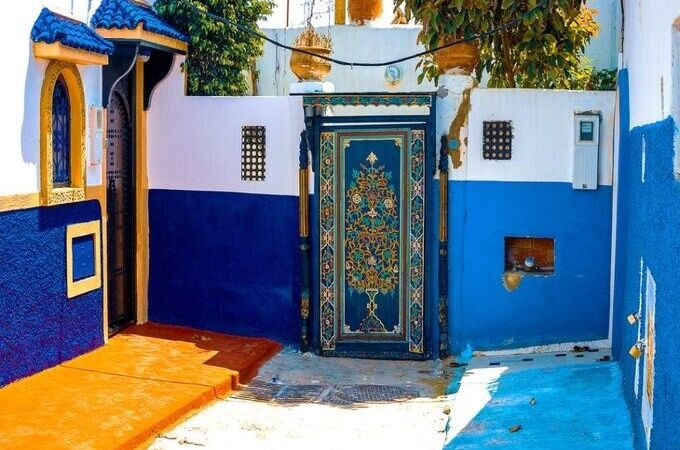
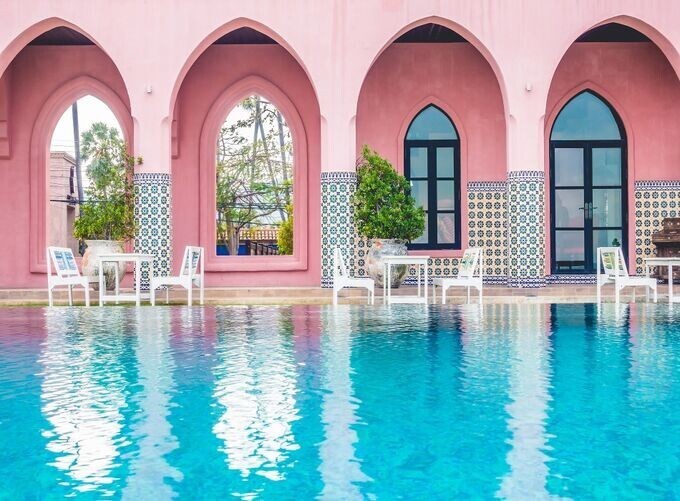
From outside, some appear almost deliberately unremarkable. Then the door opens onto tilework, carved plaster, fountains, internal courtyards and a degree of quiet that seems impossible considering what is happening a few streets away.
For many travelers, this contrast becomes one of the defining memories of Fes.
The city is particularly good at hiding its best rooms behind modest doors.
Medina Riad or Modern Hotel Is Not Really a Question of Quality
It is a question of experience.
A riad appeals to travelers who want accommodation to feel connected to the architectural character of the old city and who are comfortable with the practical peculiarities that can accompany historic buildings.
A modern hotel may offer easier vehicle access, more familiar room layouts, elevators and facilities that some travelers value more highly than atmospheric surroundings.
Neither choice demonstrates greater cultural seriousness.
Someone with mobility concerns may enjoy Fes far more from a conveniently accessible hotel than from a beautiful riad reached through stairs and narrow lanes.
Choose the accommodation that allows you to enjoy the city rather than the one you think a “real traveler” is supposed to prefer.
Fes After Sunset Becomes Smaller
During the day, the temptation is expansion.
Another souk.
Another historical building.
Another street.
Evening encourages contraction.
You return toward familiar areas, eat dinner, sit somewhere longer and allow the city to become less about coverage.
This is one reason staying overnight matters.
A day visitor experiences the medina as an activity.
An overnight visitor has a chance to experience transitions: shops beginning their day, afternoon intensity fading, dinner arriving without another attraction scheduled afterward.
Those quieter periods often create memories that never appear in an itinerary description.
Travel is strange that way.
The parts nobody sells particularly well can become the parts you remember.
Fes Rewards Travelers Who Can Tolerate Imperfection
Not every street is picturesque.
Not every interaction will become a beautiful cultural exchange.
You may get lost when you are tired rather than when getting lost feels romantic. A shopkeeper may be more persistent than you enjoy. Something may be closed. The restaurant you carefully researched may be full.
Fes is dense enough that small frustrations can accumulate if you expect the city to perform continuously.
Allow it some rough edges.
This is especially important for travelers accustomed to highly polished historic districts where tourism has created obvious routes, uniform signage and carefully managed visitor environments.
Fes can feel less controlled.
For many people, that is precisely why it remains compelling.
Fes and Marrakech Should Not Compete for the Same Job
Travelers planning Morocco often ask whether they need both.
The question assumes the cities are interchangeable because both have famous medinas, souks, traditional accommodation and substantial tourism infrastructure.
They do not feel interchangeable.
Marrakech generally presents itself more immediately to first-time visitors, with major visitor areas that have become deeply integrated into Morocco's international tourism identity. Fes often feels more inward-looking and demands more attention before its structure becomes legible.
This is not a competition over authenticity.
That word causes more problems than it solves.
The useful question is whether you want two different urban experiences within the same trip.
If you do, including both can make perfect sense without asking either city to justify the existence of the other.
Fes and Meknes Should Not Be Collapsed Into “Imperial Cities”
Their shared imperial history makes Fes and Meknes easy to package together conceptually.
For cluster purposes—and for travelers—that is too simplistic.
Fes deserves to be experienced through the density and cultural life of its own medina rather than merely as the larger member of an imperial-city pair. Meknes has its own urban character and historical story, which belongs in the dedicated Meknes content rather than being summarized here.
The same applies to nearby archaeological excursions.
They may combine geographically with Fes, but this article's job is not to transform the city into a regional itinerary hub.
Fes has enough to say for itself.
One of the Best Things You Can Do in Fes Is Return Somewhere
Travel planning encourages constant novelty.
Fes sometimes rewards repetition.
Walk through an area with a guide in the morning and return later alone. Go back to a shop after thinking about an object rather than buying immediately. Revisit a rooftop when the light changes. Eat again at the small place you liked instead of finding a new restaurant merely because the itinerary demands variety.
Returning creates familiarity surprisingly quickly.
By the second visit, the street you struggled to locate begins feeling recognizable.
That small shift—from navigating an unknown city to recognizing one corner—is deeply satisfying in Fes because the first encounter can feel so visually overwhelming.
Fes Is Particularly Strong for Travelers Interested in Cultural Detail
If your ideal city visit revolves primarily around broad boulevards, nightlife or easily accessible headline attractions, Fes may require adjustment.
Its strength lies elsewhere.
Travelers interested in architecture, craft, food traditions, historic urban environments and the texture of daily life can spend an extraordinary amount of time noticing small things.
This is why Tailor-Made Morocco Cultural Holidays can sensibly give Fes more breathing room than an itinerary designed primarily to collect Morocco's most photographed landmarks.
The city does not need constant activity to justify another night.
Sometimes the reason for staying longer is simply being able to look more slowly.
What Different Travelers Usually Notice First in Fes
| Traveler | What often becomes most rewarding | What can become frustrating | Better approach |
|---|---|---|---|
| History-focused visitor | Religious, educational and urban heritage | Moving too quickly between sites | Use interpretation early, then revisit independently |
| Photographer | Alleys, workshops, rooftops, architectural detail | Waiting for “empty” scenes | Photograph the city as lived rather than staged |
| Food traveler | Markets, traditional dishes, bread and sweets | Treating meals as schedule gaps | Protect at least one unhurried meal |
| Shopper | Leather, ceramics, textiles and craft | Buying too quickly | Observe production and compare before negotiating |
| Family | Visual variety and hands-on craft interest | Long historical explanations | Break the medina into shorter, varied experiences |
| Slow traveler | Wandering and repeated discoveries | Overscheduled touring | Leave deliberately unallocated time |
| First-time Morocco visitor | Intensity and cultural contrast | Initial sensory overload | Begin with orientation rather than a checklist |
The point of this table is not to classify travelers permanently.
It is to recognize that Fes changes according to what you pay attention to.
Fes Does Not Need to Be Easy to Be Enjoyable
Some destinations become satisfying because they remove friction.
Fes often becomes satisfying because you gradually learn how to move through the friction.
The alley that felt confusing yesterday becomes familiar. You recognize where the metalworkers begin. A doorway that meant nothing the first morning now tells you roughly where you are. You stop checking navigation every ninety seconds.
None of these are major travel achievements.
They are simply signs that the city is beginning to settle into your memory.
That is why rushing Fes can feel unsatisfying even when every famous sight has technically been visited.
The city is not only a collection of things to see.
Part of the experience is becoming slightly better at being there.
Is Fes Worth Including in a First Morocco Trip?
For travelers interested in Morocco's historic urban culture, craftsmanship, architecture and food traditions, Fes is one of the country's most rewarding destinations.
It is particularly strong when you want a city that reveals itself gradually rather than presenting its major experiences immediately.
That does not make Fes essential for every Morocco itinerary.
A short coastal holiday has a different purpose. Someone primarily interested in the Sahara and mountain landscapes may allocate time differently. Travelers who dislike dense old-city environments may prefer another balance.
But if your idea of Morocco includes walking through a historic medina, seeing traditional crafts where they are produced, eating in courtyard buildings hidden behind plain walls and gradually learning to recognize streets that initially seemed impossible to understand, Fes deserves serious time.
Do not go because an itinerary says an imperial city must be included.
Go because the particular kind of Morocco found here interests you.
Then give the city enough space to stop feeling like a maze.
12 Questions First-Time Visitors Actually Ask About Fes
1. Will I definitely get lost in Fes medina?
Probably at some point, although “lost” may simply mean temporarily unsure which lane returns to a familiar landmark. Basic orientation, offline navigation and occasional local assistance help, while travelers who dislike navigational uncertainty may find an introductory guided walk particularly useful.
2. Is hiring a guide in Fes actually worthwhile?
For first-time visitors interested in history and cultural context, a knowledgeable licensed guide can add considerable value because many important details are not self-explanatory. You can still preserve independent time afterward, which often provides a good balance between understanding the medina and wandering freely.
3. Do the Fes tanneries really smell as strong as people say?
The smell can be strong, although individual reactions and conditions vary considerably. Viewing terraces often provide mint for visitors who find it uncomfortable. Rather than concentrating solely on the smell, spend some time understanding the leather-working process that makes the tannery historically significant.
4. Do I have to buy something when visiting a tannery viewpoint?
No. Some popular viewpoints are accessed through leather businesses, so a sales conversation afterward should not be surprising, but viewing does not create an obligation to purchase. If you are genuinely interested in leather goods, take time to examine quality and price rather than buying from pressure.
5. Is staying inside Fes medina inconvenient with luggage?
It can require more planning because vehicles cannot reach every riad directly and some properties involve narrow lanes or stairs. Confirm arrival and luggage arrangements with your accommodation beforehand, particularly if you have large suitcases or mobility concerns, rather than discovering the access situation on arrival.
6. Should I choose a riad or a modern hotel in Fes?
Choose according to comfort rather than travel ideology. Riads can provide extraordinary architectural atmosphere and immediate connection with the historic city, while modern hotels may offer easier vehicle access, elevators and familiar facilities. The better property is the one that suits how you actually travel.
7. Is Fes a good city for travelers who do not enjoy shopping?
Absolutely. Although commerce is highly visible throughout the medina, craftsmanship, architecture, food, religious heritage and the urban environment provide plenty of interest without purchasing anything. Observing how objects are made can actually be more rewarding than treating every workshop encounter as a shopping opportunity.
8. Can children enjoy Fes without becoming bored by history?
Yes, particularly when the visit alternates historical explanation with visually engaging experiences such as workshops, food markets and rooftop views. Long uninterrupted lectures are rarely necessary. Families generally benefit from allowing more breaks and treating the medina as an environment to explore rather than a sequence of monuments.
9. Why do some buildings in Fes look plain from outside but elaborate inside?
Traditional architecture often prioritizes internal courtyards and private interior space rather than displaying wealth toward the street. This creates one of Fes's most memorable visual contrasts, where relatively restrained entrances can open into richly decorated spaces with tilework, carved plaster, wood and fountains.
10. Is Fes mainly interesting because it feels old?
No. Its historical environment is important, but Fes becomes more compelling when visitors recognize that parts of the medina remain places of work, commerce, worship and residence. The relationship between inherited architecture and continuing daily life is more interesting than age alone.
11. What should I buy in Fes if I want something connected to local craftsmanship?
Rather than starting with a predetermined souvenir list, look at workshops and understand which crafts genuinely interest you. Leatherwork, ceramics, metalwork, textiles and other artisanal products are widely associated with the city, but quality and workmanship should matter more than buying an object simply because it comes from Fes.
12. What is the biggest mistake first-time visitors make in Fes?
Trying to make the medina efficient. When every street becomes merely the shortest route between attractions, much of what makes Fes distinctive disappears. Allow enough flexibility to notice workshops, architecture, food and ordinary street life, while still using guidance or navigation whenever you genuinely need it.

A travel professional specializing in tailor-made travel planning, guest experience management, and multi-destination tourism operations.
With over 23 years of experience in the travel industry, he designs and manages private and cultural tours for international travelers across Türkiye, Greece, Egypt, Jordan, Morocco, and other destinations.
He has strong expertise in both online and face-to-face guest communication, sales processes, and end-to-end travel operations.
Working closely with hotels, travel agencies, and local partners, he ensures smooth coordination and high-quality travel experiences at every stage of the journey.
His focus is on delivering personalized, reliable, and seamless travel experiences for international guests worldwide.