Marrakech in July Has a Memory for Heat
- Home
- Travel Guides for Better-Planned Trips
- Morocco
- Marrakech in July Has a Memory for Heat
Marrakech in July Has a Memory for Heat
Updated: August 2026
The sun moving lower in the sky does not mean Marrakech immediately forgets the afternoon.
Spend a July day in the city and you begin noticing that different environments release the day's heat at different speeds. An exposed square that has received hours of direct sunlight may continue feeling intensely warm after the strongest solar period has passed, while a protected courtyard only a short distance away can create a noticeably different sensation. Stone, paving, walls and other built surfaces have spent the day absorbing energy, and some of that warmth continues influencing the environment long after you might expect conditions to have begun changing.
This is the part of July that a simple temperature forecast struggles to explain.
Weather data tells you about the atmosphere. A traveler experiences the atmosphere plus the city beneath it.
In Marrakech, that distinction matters.
Air Temperature Is Only Half the July Story
When people research summer weather, they naturally look for maximum temperatures. That number is useful because it provides a broad indication of the conditions they may encounter, but it cannot describe how every part of Marrakech will feel.
Imagine two locations experiencing broadly the same air temperature.
One is an open paved space that has been exposed to direct sun for several hours. The other is a protected courtyard surrounded by walls that limited direct exposure. Your weather app may treat them as essentially identical, while your body immediately recognizes that they are not.
For travelers considering a Marrakech summer journey, understanding this difference is more practical than memorizing another climate average.
The City Has Been Collecting Sunshine All Day
Urban materials interact with solar energy differently from vegetation, water or open countryside. Surfaces exposed to strong sunshine absorb heat and later release some of that stored energy back into their surroundings.
You do not need to understand urban climatology to notice the effect.
Walk across a sun-exposed paved area after hours of strong summer sunshine and warmth is not arriving only from above. The environment around you has participated in the day's heating.
This helps explain why the transition toward evening can sometimes feel more gradual than visitors expect. The sun may be lower, yet the physical city has not instantly reset itself.
Jemaa el-Fnaa Does Not Have an Off Switch
Jemaa el-Fnaa is particularly useful for understanding July because it combines broad exposure, hard surfaces and intense human activity within one enormous urban space.
A visitor looking at the clock may assume that later automatically means significantly more comfortable. In reality, the square's character changes progressively, and the thermal environment does not necessarily follow the timetable you imagined before arriving.
This does not make the square something to avoid.
Quite the opposite: later hours are fundamental to experiencing its atmosphere. The practical lesson is simply to avoid assuming that sunset equals immediate cooling.
Allow the evening to develop rather than expecting a sudden switch.
Marrakech Has Several Heat Personalities
Different urban environments can behave differently after a day of intense summer sunshine.
| Marrakech Environment | July Heat Behavior | Traveler Implication |
|---|---|---|
| Open paved square | Receives prolonged solar exposure | May remain intensely warm later than expected |
| Narrow medina street | Exposure varies with street orientation | Conditions can change quickly between lanes |
| Covered souk | Reduced direct solar input | Can feel different from nearby exposed spaces |
| Interior courtyard | Protected microenvironment | May provide a noticeable environmental shift |
| Exposed rooftop | Strong daytime solar exposure | Timing and shade become particularly important |
| Garden setting | More vegetation and less continuous paving | Can provide a different thermal experience |
The point is not to rank these places from coolest to hottest because conditions depend on exposure, wind, shade, construction and time of day. What matters is recognizing that Marrakech does not heat and cool as one uniform surface.
Why a Rooftop Can Still Feel Hot Later
Rooftops create one of Marrakech's most attractive perspectives, particularly when the city begins moving toward evening.
In July, however, an exposed rooftop may have spent much of the day receiving direct sunshine. Tables, walls and flooring can all contribute to how the environment feels when you arrive.
Shade and airflow therefore matter enormously.
A rooftop with effective shading and good ventilation can provide a very different experience from an exposed terrace where surrounding surfaces remain warm. Instead of asking whether rooftops are “good in July,” look at the individual setting and the hour you intend to use it.
That is a far more useful question.
The Medina Can Change Temperature Street by Street
One of the most interesting July experiences is moving from an exposed area into the medina.
Street width, building height, orientation, shade and airflow change repeatedly, which means the thermal experience can change over surprisingly short distances. A lane that received limited direct sunshine may feel different from another section exposed for much longer.
This creates a physical reminder of Marrakech's traditional urban form.
For visitors following a Morocco desert circuit, the contrast is especially interesting because the trip may include landscapes where exposure is broad and unobstructed. Marrakech demonstrates how dense architecture modifies the experience of the same powerful summer sun.
Courtyards Show Why Architecture Matters
Traditional courtyards deserve attention in July for a different reason from January or April.
January examined how protected architecture could feel surprisingly cool compared with sunny winter streets. April considered courtyards as part of an increasingly open-air lifestyle.
July reveals their relationship with solar exposure.
An inward-facing space protected from prolonged direct sunshine can create a completely different experience from an exposed street or rooftop. Design, shade and airflow still vary enormously between individual buildings, so this should not become a claim that every riad courtyard is naturally cool.
The broader lesson is architectural: exposure history matters.
Where the sun has been matters almost as much as where it is now.
Don't Judge the Evening at 6 p.m.
This is perhaps July's most practical planning mistake.
A traveler steps outside in the later afternoon, finds conditions still intense and concludes that the evening will offer little difference.
That judgment may simply be premature.
Urban environments need time to respond as direct solar input weakens, while conditions can continue evolving after sunset. Instead of expecting one precise hour to transform Marrakech, think of evening as a gradual transition.
A Marrakech private escape benefits from flexibility here because dinner, rooftop time and street exploration can be adjusted according to how the actual day develops rather than being locked to an imagined temperature drop.
July Is Not June With Higher Numbers
This distinction protects the cluster.
June reorganized the sightseeing schedule into two active chapters separated by a deliberately slower middle period. Its central question was how to allocate time and energy.
July examines something different: how Marrakech's physical surfaces interact with summer heat and why the city does not respond instantly when direct sunshine begins weakening.
That means we do not need another long explanation about starting early, resting after lunch and returning in the evening. June already owns that information.
July's value comes from understanding the city itself.
July Owns Marrakech's Thermal Memory
A weather forecast can tell you that Marrakech will be hot.
It cannot fully explain why crossing an exposed paved square can feel different from entering a shaded lane, why an unprotected rooftop may remain warm well into the later day, or why a courtyard can create a noticeable environmental transition despite being only metres away.
Those differences belong partly to architecture.
Marrakech absorbs the summer day unevenly, then releases it unevenly as well. Once you recognize that pattern, July becomes easier to interpret because you stop expecting the entire city to follow one temperature curve.
August will move away from urban heat mechanics entirely and focus on how accommodation quality, recovery time and carefully chosen excursions can become part of a balanced Marrakech stay during the mature summer season.
July stays firmly inside the city.
Its exclusive lesson is that Marrakech does not merely experience summer heat.
Its streets, walls, rooftops and squares remember it.

July Rewards Travelers Who Notice What the Sun Has Been Touching
Once you understand Marrakech's thermal memory, choosing where to spend time becomes more intuitive.
An open space that has absorbed direct sunshine for hours will not necessarily offer the same experience as a protected street nearby, even after the sun begins moving lower. Likewise, a rooftop's appeal depends not only on the air temperature but on how exposed its surfaces have been, whether effective shade is available and how much air moves through the space.
This does not require travelers to analyze every building before sitting down. It simply encourages a more observant approach in which you respond to the environment in front of you rather than assuming the temperature displayed on your phone describes every corner of the city equally well.
Gardens Change More Than the Scenery
Moving from Marrakech's dense built environment into a garden creates an obvious visual transition, but in July the contrast can also be physical.
Vegetation, soil, shaded paths and areas with less continuous exposed paving interact with solar energy differently from broad hard-surfaced urban spaces. The exact experience naturally depends on the garden, the time of day and current weather, yet the transition can help visitors appreciate just how strongly the surrounding environment influences perceived conditions.
This makes a garden particularly interesting within July's semantic theme. It is not merely a place to “escape the heat,” which would be too generic, but a practical demonstration of how different surfaces create different versions of the same summer weather.
Choose a Terrace by Looking Around, Not Just Up
A canopy or umbrella is useful, but shade alone does not describe the entire terrace environment.
Look at the surfaces surrounding the seating area. Consider whether the terrace has been exposed throughout the afternoon, whether walls restrict or encourage airflow, and whether the seating sits above a large expanse of sun-warmed roofing. Two shaded rooftop tables can still feel surprisingly different because their wider environments have absorbed the day differently.
This is one reason hotel and restaurant photographs provide incomplete information for July planning. They show design beautifully, but they cannot show you how that terrace will physically feel after several hours of strong summer sunshine.
Evening Comfort Arrives in Stages
Visitors sometimes imagine summer evenings as a simple before-and-after sequence: daytime is hot, sunset happens, and the city becomes comfortable.
Marrakech usually deserves a more nuanced expectation.
The decline in direct solar energy is only one part of the process because streets and buildings have accumulated warmth throughout the day. As evening develops, conditions can gradually shift, while airflow and the specific environment continue influencing how quickly that change becomes noticeable.
A later dinner may therefore create a different experience from an early-evening meal, particularly when the venue is exposed. Rather than prescribing one ideal hour, July rewards watching how the particular day develops and allowing plans to remain slightly flexible.
Thermal Memory Changes How You Read the City
By this point, the useful July distinctions become fairly clear:
| What You Notice | What It May Tell You |
|---|---|
| Hours of direct sun on paving | The surface has accumulated substantial solar energy |
| Deep shade between buildings | Direct solar exposure has been reduced |
| Exposed rooftop flooring | Surrounding surfaces may remain warm later |
| Vegetated garden areas | The environment behaves differently from continuous hard paving |
| Protected courtyard | Exposure history may differ sharply from the street |
| Strong airflow | Perceived comfort may differ despite similar air temperatures |
None of these observations replaces an actual weather forecast. They explain why the forecast and your physical experience do not always seem perfectly aligned.
The Hottest-Looking Place Is Not Always the Whole Story
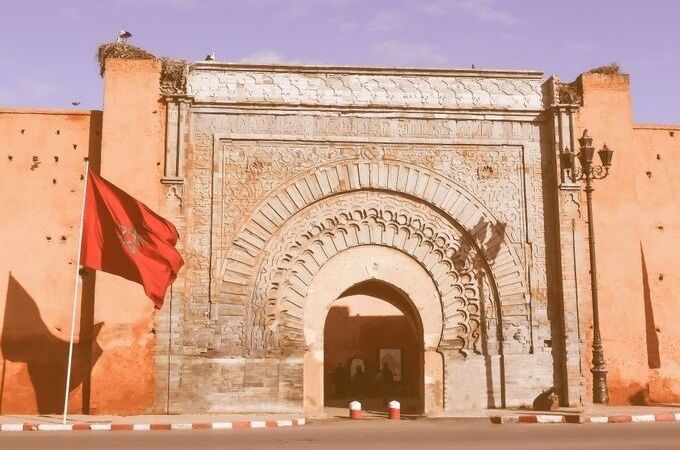
Marrakech's terracotta architecture can visually reinforce the impression of heat. Under intense summer light, walls and streets appear almost to glow, creating photographs that communicate July remarkably well.
Yet visual appearance should not become a universal judgment about every environment.
Move through a doorway, enter a protected courtyard or turn into a narrow lane and the experience may change surprisingly quickly. This variation is part of what makes Marrakech particularly interesting as a summer city: architecture constantly modifies your relationship with the broader climate.
The more closely you observe those transitions, the less useful it becomes to describe the entire destination with one adjective such as “hot.”
Don't Build July Around Chasing the Coolest Possible Spot
Weather-aware travel can become counterproductive when comfort optimization starts dominating the trip.
You came to Marrakech to experience Marrakech, not to spend the entire day moving between whichever locations appear theoretically coolest. Famous squares, monuments, streets and markets remain part of the destination even when their environments are more exposed.
The objective is awareness rather than avoidance.
Understanding how different spaces respond to summer conditions helps you decide how long to remain, when to move elsewhere and which setting might suit the next part of the day without turning climate management into the main purpose of travel.
July Makes Marrakech's Architecture More Legible
Traditional urban architecture is often appreciated visually: carved details, internal courtyards, narrow lanes, heavy walls and shaded passages all contribute to Marrakech's character.
July adds another way to understand those features.
You begin experiencing architecture not simply as something you look at but as something that mediates the climate around you. A narrow street changes exposure. A courtyard changes your relationship with the surrounding city. A covered market allows commercial life to continue beneath protection from direct sunshine.
That physical experience adds context that architectural photographs cannot provide.
12 Questions About Marrakech in July
1. What is the weather like in Marrakech in July?
July generally brings very hot, dry and strongly sunny summer conditions, although temperatures vary between individual dates and years. Within Marrakech, the experience is also influenced by how streets, walls, rooftops and paved spaces absorb and release solar heat throughout the day.
2. How hot does Marrakech get in July?
July can produce very high daytime temperatures, particularly during hotter spells, so travelers should check the forecast for their specific dates. Monthly averages provide background information, but they cannot predict the intensity of an individual heat event or particular travel day.
3. Does it rain in Marrakech in July?
July is normally part of Marrakech's very dry summer period, although unusual weather can never be ruled out completely. For most visitors, heat, strong sunshine, hydration and exposure are likely to have considerably greater practical importance than rainfall when organizing daily activities.
4. Why can Marrakech still feel hot near sunset?
Urban surfaces such as paving, walls and rooftops absorb solar energy during the day and can release stored heat gradually. Consequently, weakening sunshine does not necessarily produce an immediate change in how every part of the city feels.
5. Are narrow medina streets cooler in July?
Some narrow or shaded streets can feel noticeably different from exposed areas because they receive less direct sunshine, although orientation, airflow, crowding and surrounding materials also matter. It is therefore better to think in terms of changing microenvironments rather than guaranteed cool zones.
6. Are Marrakech rooftops too hot in July?
Conditions depend heavily on timing, shade, airflow and how exposed the terrace has been during the day. A well-shaded rooftop can feel very different from one surrounded by surfaces that have received prolonged direct sunshine.
7. Are riad courtyards comfortable in July?
They can provide a noticeably different environment from exposed streets, although individual riad design, shade and ventilation vary considerably. Traditional inward-facing architecture often reduces direct solar exposure, making the courtyard's thermal history different from that of an open square or rooftop.
8. Are Marrakech gardens useful in July?
Gardens introduce vegetation, shaded areas and different surface materials into an otherwise dense urban itinerary. Their importance in July is not simply as places to escape heat, but as environments that demonstrate how strongly surroundings can alter the experience of summer weather.
9. What should I wear in Marrakech in July?
Choose lightweight, breathable clothing appropriate for intense summer conditions while remaining respectful of local cultural context. Comfortable footwear, water and effective sun protection are important, and plans should be adjusted according to the actual forecast and personal heat tolerance.
10. Does Marrakech cool down quickly at night in July?
Do not assume that cooling will occur immediately after sunset. Built surfaces can release accumulated heat gradually, while airflow and location also affect perceived conditions, meaning different parts of Marrakech may become more comfortable at different rates as evening develops.
11. Is July the best month to visit Marrakech?
That comparison belongs to a Best Time to Visit Marrakech guide, where July can be evaluated properly against other months and different travel priorities. This page focuses exclusively on how Marrakech's built environment interacts with intense summer conditions.
12. What makes July different from June in Marrakech?
June focuses on time allocation, dividing the city day between active morning sightseeing, a deliberately slower middle and a second evening chapter. July instead examines urban thermal memory, explaining how Marrakech's walls, paving, rooftops and other surfaces store daytime heat and influence how different spaces feel later.
A travel professional specializing in tailor-made travel planning, guest experience management, and multi-destination tourism operations.
With over 23 years of experience in the travel industry, he designs and manages private and cultural tours for international travelers across Türkiye, Greece, Egypt, Jordan, Morocco, and other destinations.
He has strong expertise in both online and face-to-face guest communication, sales processes, and end-to-end travel operations.
Working closely with hotels, travel agencies, and local partners, he ensures smooth coordination and high-quality travel experiences at every stage of the journey.
His focus is on delivering personalized, reliable, and seamless travel experiences for international guests worldwide.