Morocco Weather in July: Heat, Coastal Escapes & Where to Go
Last Updated: August 9, 2026
July is not the month to take a standard Morocco itinerary from spring, move it three months forward on the calendar and expect the journey to feel the same.
By midsummer, geography has become too important for that.
Marrakech can experience serious daytime heat, the southeast and Sahara demand careful consideration, while Morocco's Atlantic coast follows a noticeably different summer rhythm. The Atlas Mountains create another alternative altogether, particularly for travellers who would rather exchange long hours of lowland sightseeing for elevation, landscapes and active days.
This does not make July a poor time to visit Morocco.
It makes July a poor time to ignore the map.
A well-designed midsummer journey can feel varied and surprisingly comfortable because Morocco contains its own climatic alternatives. The challenge is accepting that the famous first-time circuit does not need to remain unchanged throughout the year.
July Is the Month to Reverse the Usual Priorities
Many first-time itineraries place Marrakech and the Sahara at the centre, treating the coast or mountains as optional additions.
July encourages the opposite calculation.
The Atlantic and higher elevations can become the backbone of the trip, while hotter inland destinations are included more selectively and experienced at times of day when they are most rewarding.
| Region | July Role | Practical Approach |
|---|---|---|
| Marrakech | Cultural highlight, not all-day playground | Early and evening exploration |
| Fes | Important but potentially hot | Shorter, well-paced walking periods |
| Atlas Mountains | Major summer asset | Give elevation more nights |
| Sahara | Specialist priority | Consider heat tolerance carefully |
| Essaouira | Prime summer destination | Longer stay makes sense |
| Agadir | Leisure-focused summer base | Useful for resort and beach time |
| Atlantic circuit | Strong seasonal route | Let the coast carry more of the trip |
This is the fundamental July cluster: do not ask how to squeeze a spring circuit into summer; ask what a genuinely good summer circuit looks like.
Marrakech Works Better as a Concentrated Experience
Marrakech remains one of Morocco's defining destinations, and skipping it simply because July is hot may be unnecessary for many travellers.
What changes is the amount of the day you expect the city to give you.
An early morning can support meaningful medina exploration before temperatures climb, particularly if accommodation is well located and you can begin without a lengthy transfer. The afternoon then becomes deliberately slower, with lunch, shaded interiors, a hammam, pool time or a substantial break at the riad taking over from continuous sightseeing.
Later, the city returns.
Restaurants, rooftops and public spaces become more appealing as the strongest heat eases, and Marrakech after dark offers enough atmosphere that the evening should be treated as a real part of the travel day rather than what happens after sightseeing has finished.
Travellers who want this kind of seasonal flexibility can consider Morocco custom holidays, allowing sightseeing times and regional balance to reflect midsummer conditions rather than a fixed year-round programme.
July Makes a Good Riad Location Worth Paying For
During cooler weather, staying farther from the main areas you want to explore may be a minor inconvenience.
In July, it can change how easily the day works.
A conveniently located riad allows you to explore early, return during the hottest hours and head out again later without turning every break into a transport decision. A pool or shaded courtyard also gains considerably more practical value than it has during winter.
This does not mean the most expensive accommodation is automatically the best.
It means July gives location and usable daytime facilities more weight than decorative extras that you may barely use.
A room is no longer somewhere you see only after dinner.
It becomes part of the summer schedule.
Essaouira Stops Being an Add-On
July is one of the clearest months for understanding why Morocco's Atlantic coast deserves to be considered independently rather than as an optional extension from Marrakech.
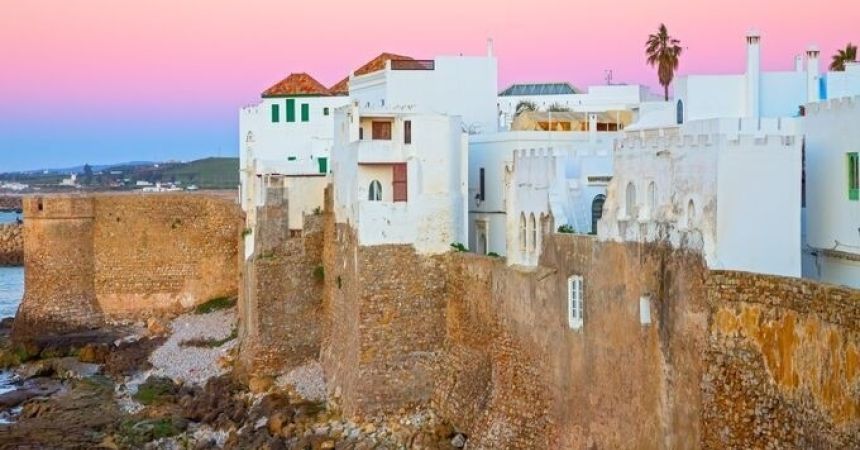
Essaouira's ocean influence and wind create a markedly different environment from the inland heat, allowing the city to support a much more continuous outdoor day. Travellers can move between the harbour, medina, ramparts, restaurants and coast without organising every hour around escaping the strongest temperatures.
The difference is psychological as well as climatic.
Marrakech in July benefits from planning.
Essaouira often benefits from not planning very much.
That contrast can make three or four coastal nights feel more valuable than adding another inland city simply because it appears on a traditional highlights list.
Wind Is Part of the Essaouira Experience
Travellers looking only at temperature figures may wonder why Essaouira feels so different.
Wind is part of the answer.
It can make summer days feel significantly fresher, although it also means that the city should not automatically be imagined as a conventional calm beach destination. Some travellers love the constant Atlantic energy; others expecting still conditions for sunbathing may find it less aligned with their idea of a coastal holiday.
This is exactly why climate information should help select destinations rather than merely describe them.
Essaouira is excellent in July partly because it is Essaouira, wind included.
Agadir Makes a Stronger Case for Resort Time
Agadir answers a different summer question.
Where Essaouira provides medina character and Atlantic atmosphere, Agadir works particularly well for travellers who want the coastal section of the holiday to involve resort facilities, pools, beach time and fewer sightseeing obligations.
After several active days in Marrakech or the Atlas, this can be exactly what the itinerary needs.
The mistake is assuming that every traveller will prefer the same coast.
Someone interested in history and walkable streets may find several resort days too quiet, while a family wanting a comfortable base may value precisely the facilities another traveller considers unnecessary.
July makes both options climatically logical.
Travel style should decide between them.
The Atlas Becomes One of Morocco's Main Summer Destinations
In spring, the Atlas is often one excellent component within a broad Morocco circuit.
By July, elevation gives it greater strategic importance.
Mountain temperatures vary considerably according to altitude, but the ability to move away from the strongest lowland heat can make walking, village stays and landscape-focused travel increasingly attractive.
This is particularly useful for active travellers who do not want July to become a holiday spent moving between air-conditioned interiors.
A properly designed mountain itinerary can restore the long outdoor days that are harder to maintain in Marrakech.
Those interested in putting landscapes at the centre can consider Morocco trekking routes, choosing the appropriate region and difficulty according to experience, altitude and current conditions.
High Atlas and Coast Make a Natural Summer Pair
The mountains and Atlantic solve summer in completely different ways.
The Atlas uses elevation.
The coast uses ocean influence.
Combining them can create one of July's strongest itineraries because travellers experience two distinct landscapes without spending most of the journey managing intense inland heat.
A route might include a short Marrakech stay, several nights in the mountains and a longer Atlantic finish, creating cultural, active and relaxing sections without requiring enormous distances.
This is not a compromise itinerary for people who cannot visit the Sahara.
It is a strong Morocco journey in its own right.
What About Fes and Northern Morocco?
Fes remains culturally important, but July requires realistic expectations because medina exploration involves considerable walking and shade does not eliminate the effects of sustained summer warmth.
Travellers particularly interested in Morocco's imperial history can still include it, preferably with an itinerary that avoids treating one long sightseeing day as an endurance challenge.
For first-time visitors with limited time, however, July creates a genuine choice between using several days for Fes and the north or giving those nights to mountains and coast.
There is no rule requiring every major city to appear in the same journey.
Seasonality is a legitimate reason to return.
The Sahara Becomes a Question, Not a Default
July is where desert planning deserves particular caution.
The Sahara and Morocco's southeastern regions can experience extreme heat, which affects not only comfort but the amount of meaningful outdoor activity available during the day. Early morning and evening become crucial, while the middle of the day may offer very limited opportunities for exposed exploration.
For travellers whose primary dream is the Sahara and who understand the conditions, a carefully planned journey may still be possible.
For a standard first-time circuit, however, July is a reasonable month to ask whether those days would be better spent elsewhere.
Travellers wanting desert landscapes without automatically committing to the hottest season can explore Morocco desert alternatives for different travel periods or route combinations.
Choosing not to visit the Sahara in July does not make the trip incomplete.
It makes it seasonal.
A Better July Route Starts With Climate
Instead of beginning with a list of Morocco's most famous places, start with three questions:
| Question | Why It Matters |
| How well do I tolerate heat? | Determines inland sightseeing intensity |
| Do I want an active holiday? | Strengthens the case for the Atlas |
| What does “coast” mean to me? | Helps choose Essaouira or Agadir |
Once those answers are clear, the route becomes much easier to build.
Heat-sensitive travellers may concentrate heavily on the Atlantic and mountains, while visitors comfortable with hot climates can retain more Marrakech or Fes time. Families may value resort facilities differently from couples interested in medinas and food, and hikers will naturally use elevation more aggressively than travellers seeking relaxation.
July Is Not About Surviving Morocco
Poorly designed summer itineraries sometimes treat heat as an obstacle that travellers are expected to endure in exchange for seeing the country's famous highlights.
There is no reason to approach Morocco that way.
The country has an Atlantic coastline stretching for hundreds of kilometres, mountain landscapes where elevation transforms conditions, cities with completely different rhythms and enough regional diversity to build a journey that actually belongs in July.
Marrakech can remain part of that story, provided it is experienced intelligently rather than continuously. The Sahara can remain an option for travellers who deliberately prioritise it, rather than an automatic box every first-time visitor must tick.
The real July advantage appears when you stop defending the classic circuit and allow the season to design something better.
Essaouira, Agadir or the Atlas? July Makes This Choice Important
Once travellers accept that July does not need to revolve around Morocco's hottest inland regions, another question appears: where should those extra days actually go?
Essaouira, Agadir and the Atlas Mountains can all improve a midsummer itinerary, but they do so for completely different reasons. Choosing between them purely by temperature misses the point.
Essaouira keeps the holiday cultural while introducing the Atlantic. Agadir deliberately reduces the sightseeing intensity and replaces it with resort-style leisure. The Atlas does almost the opposite, using elevation to create opportunities for a more active journey.
The right choice depends less on which destination is “best in July” and more on what is missing from the rest of your trip.
Three Summer Choices, Three Different Holidays
| Priority | Essaouira | Agadir | Atlas Mountains |
|---|---|---|---|
| Cultural atmosphere | Excellent | Limited emphasis | Strong village culture |
| Beach-oriented stay | Moderate | Excellent | Not applicable |
| Walking and exploration | Excellent | Moderate | Excellent |
| Active travel | Moderate | Low–moderate | Excellent |
| Food focus | Strong seafood scene | Broad resort choice | Local mountain cuisine |
| Family downtime | Good | Excellent | Depends on activity level |
| Couples | Excellent | Good | Excellent |
| Heat-sensitive travellers | Strong choice | Strong choice | Strong at suitable elevation |
| Best trip role | Cultural coastal contrast | Deliberate relaxation | Active summer chapter |
None of these destinations should be treated simply as somewhere cooler to wait until it is time to fly home.
Each can become one of the strongest parts of a July journey.
Choose Essaouira If You Still Want to Explore
Essaouira suits travellers who become restless after spending an entire day beside a pool.
The medina is compact enough to explore without the intensity of Marrakech or Fes, while the harbour, ramparts and Atlantic setting provide a sense of place that does not depend on conventional sightseeing. You can leave the hotel without needing a detailed plan and still return several hours later having discovered enough to make the day feel worthwhile.
July's coastal conditions support that freedom.
There may be wind, sometimes plenty of it, but this is part of why the city can feel so refreshing after Marrakech. Travellers expecting a classic still-air beach resort should understand that before choosing it.
Essaouira works best when you want to slow down without stopping.
Choose Agadir If You Actually Want a Holiday From the Holiday
There is nothing wrong with reaching the final part of a Morocco circuit and deciding you have seen enough monuments for a few days.
Agadir makes sense in precisely that situation.
The city's strength lies less in reproducing the historic medina atmosphere found elsewhere and more in providing easy access to resort facilities, beach time, pools and a simpler daily routine.
For families, this can be particularly useful because not every day needs to involve a guide, long drive or several hours of cultural sightseeing. Parents can slow the schedule while children have access to facilities that are often easier to use spontaneously.
Agadir is therefore not an inferior version of Essaouira.
It solves a different itinerary problem.
Choose the Atlas If Sitting Still Sounds Terrible
Some travellers react to summer by wanting to do less.
Others simply want somewhere they can remain active without spending the entire day managing lowland heat.
The Atlas can provide that alternative.
Depending on altitude and route, July can support substantial walking and trekking opportunities, with mountain scenery, village stays and longer outdoor days giving the holiday a completely different character from the coast.
This option makes particular sense for travellers whose usual holidays involve hiking or physical activity. Replacing several desert days with mountain time is not a downgrade simply because dunes appear more frequently in Morocco advertising.
For an active traveller in July, it may be an upgrade.
Families Should Think About Daily Friction
When travelling with children, the best destination is often the one that reduces the number of small negotiations required throughout the day.
Agadir can perform strongly here because pools, beach access and resort facilities provide easy options without extensive planning.
Essaouira can suit families who prefer exploration and whose children enjoy walking, food and active streets rather than needing organised resort facilities.
The Atlas depends more heavily on age, fitness and the type of accommodation selected. A gentle mountain stay with short walks can work beautifully, while a trekking-focused programme obviously asks more of the group.
July family planning should therefore focus on how easily everyone can have a good day, not simply how many attractions exist nearby.
Couples May Prefer Contrast Over Facilities
For couples coming from several nights in Marrakech, Essaouira often provides an appealing shift because the destination changes atmosphere without abandoning character.
Long seafood lunches, walks around the medina and Atlantic evenings can create a slower section of the trip without making the days feel empty.
The Atlas offers another kind of contrast, particularly for couples who enjoy hiking, small lodges and landscapes more than beach time.
Agadir becomes stronger when the goal is straightforward relaxation.
There is no universally romantic destination.
Some couples want a rooftop overlooking an old port.
Others would rather wake up facing a mountain valley.
Why Not Combine Two?
With enough time, combining the Atlas with the Atlantic can produce one of Morocco's strongest July itineraries.
The mountains provide the active section, while Essaouira or Agadir gives the journey a slower coastal finish. Marrakech can sit between or alongside them as a concentrated cultural chapter rather than dominating the entire holiday.
The important phrase is “with enough time.”
A seven-day trip containing Marrakech, Atlas, Essaouira and Agadir is likely to spend too much time changing hotels. A ten- or fourteen-day journey can distribute those environments far more naturally.
Summer travel becomes better when contrasts have enough time to register.
The Best July Destination Depends on What Came Before
If you have spent several intensive days walking through Marrakech and Fes, adding another demanding destination may not improve the holiday. Essaouira or Agadir can provide the change of pace you need.
If the itinerary has already been relatively relaxed, the Atlas may add the physical activity and landscapes that are missing.
This is the most useful way to choose among the three.
Do not ask which one has the best July weather in isolation.
Ask what role the destination needs to play in the journey.
Once that is clear, Morocco's midsummer geography stops looking like a limitation and starts becoming one of the easiest ways to build a better trip.

A Cooler July Route Does Not Have to Become a Beach Holiday
One concern appears frequently when travellers begin adapting Morocco to midsummer conditions: if Marrakech is shortened, the Sahara removed and several nights moved towards the Atlantic or mountains, will the journey still feel like Morocco?
Absolutely, provided those regions are treated as destinations rather than climate shelters.
Moroccan culture does not exist only inside the famous imperial-city medinas. Fishing ports, mountain villages, regional food traditions, weekly markets and smaller communities reveal sides of the country that a classic highlights circuit can easily pass by.
July can therefore become an opportunity to travel more regionally rather than simply less ambitiously.
Keep Marrakech, but Decide What Matters Most
Reducing Marrakech from four nights to two or three does not necessarily reduce the quality of the experience.
It forces useful decisions.
Instead of attempting to visit every palace, garden, market and museum, choose the places that explain the city best for your interests. Architecture may matter more than shopping, food may matter more than monuments, or you may simply want enough medina time to understand its rhythm without turning the stay into a checklist.
July rewards this selective approach because the hours spent actively sightseeing become more valuable.
A shorter visit can feel richer when nothing has been included merely because it appears on a “top ten” list.
Move Cultural Curiosity Into the Mountains
The Atlas should not be understood only through hiking distances and elevation.
Village stays can introduce a quieter social landscape, with architecture, agriculture and daily life shaped by geography in ways that differ considerably from Marrakech. Depending on the route and community, local guides can provide context that turns a mountain walk into something much more meaningful than an outdoor activity.
This is particularly important in July because travellers may arrive thinking they have exchanged cultural sightseeing for cooler weather.
They have not.
They have changed the scale of the cultural experience.
A medina presents Morocco densely.
A mountain valley reveals it gradually.
Essaouira Has Enough Character for Several Days
The temptation to treat Essaouira as a day trip comes partly from its compact size.
There is less pressure to stay several nights because travellers assume the harbour, ramparts and medina can all be “seen” in a few hours.
That misses what the city does best.
Essaouira becomes more rewarding once there is no need to finish it. The same street can be crossed several times, a restaurant can be chosen because it looks interesting rather than because the schedule says lunch must happen now, and the harbour can be visited at different times without needing a specific attraction to justify returning.
July's milder coastal conditions support precisely this type of travel.
The destination has room to become familiar.
Food Can Carry the Cultural Story
A summer itinerary with fewer major monuments can still provide substantial cultural depth through food.
On the Atlantic, seafood naturally becomes more prominent. Mountain areas introduce ingredients and dishes shaped by local agriculture and climate, while Marrakech continues to provide everything from traditional cooking to contemporary Moroccan restaurants.
Rather than searching for the same famous dishes in every destination, notice what changes.
What appears on the table near the coast?
What becomes simpler in a mountain village?
Which ingredients dominate a Marrakech market?
These differences explain geography in a way that another list of average temperatures cannot.
Markets Are Not All Souks
Marrakech's souks are famous enough to become almost synonymous with Moroccan shopping, but smaller markets can provide a very different experience.
Depending on the route and day of the week, regional markets may bring together produce, household goods, livestock, clothing and everyday necessities rather than focusing primarily on visitors.
They should be approached as functioning community spaces, not staged attractions.
When a local market fits naturally into a mountain or regional itinerary, it can add a layer of understanding that would otherwise be lost by moving directly between hotels and scenic viewpoints.
The important point is not to chase markets around the country.
It is to recognise one when the route already takes you there.
July Can Reward Fewer Famous Places
A summer trip sometimes looks less impressive on paper after the itinerary has been adapted.
Perhaps there are only three major destinations instead of six.
Yet those three destinations may contain more actual travel experience because you are no longer spending every second morning checking out and every second afternoon driving towards another hotel.
| Fast Highlights Route | Slower July Route |
|---|---|
| More destinations | More time inside each region |
| Frequent hotel changes | Longer stays |
| Famous sights dominate | Everyday experiences gain space |
| Heat managed reactively | Climate shapes the route |
| More kilometres | Greater regional depth |
This is one reason July should not be evaluated by counting how many classic highlights remain after seasonal editing.
The better question is what replaces them.
Don't Turn “Authentic” Into Another Checklist
Once travellers begin looking beyond famous attractions, there is a risk of searching aggressively for “authentic Morocco” as though it were another landmark.
Real places do not need to perform authenticity for visitors.
A mountain village remains a community rather than an experience designed around a traveler's expectations, just as Essaouira's harbour is a working environment rather than simply a photographic backdrop.
Good July travel can become more locally focused precisely because the itinerary slows down.
Observe more.
Allow guides to explain context.
Spend money with local businesses when appropriate, and accept that some of the most memorable moments may not have an official attraction name.
Summer Can Produce a More Thoughtful First Trip
Travelling Morocco in July requires more editing than travelling in April.
That apparent disadvantage can improve the journey.
Once the Sahara stops being automatic, Marrakech no longer needs four packed sightseeing days and the coast becomes important enough to deserve several nights, travellers are forced to ask what they actually enjoy.
The resulting itinerary may contain fewer famous names.
It may also feel considerably more personal.
That is one of July's overlooked advantages: climate can push travellers away from collecting Morocco and towards experiencing individual regions properly.
For anyone willing to let the season change the route, that trade can be worth making.
June vs July vs August: What Makes July Different?
July sits firmly inside Morocco's summer travel season, but it should not simply be grouped with June and August as though the three months create identical journeys.
June still retains more flexibility for inland touring, while August generally demands an even stronger awareness of heat, particularly away from the Atlantic and higher elevations. July occupies the middle ground, where climate-first route planning becomes essential but Morocco still offers several excellent ways to build a varied trip.
| June | July | August | |
|---|---|---|---|
| Summer Stage | Early summer | Established summer | Deep summer |
| Marrakech | Heat shapes the day | Selective sightseeing works best | Strong heat management required |
| Fes | Warm cultural touring | Careful pacing important | Heat can dominate longer walks |
| Atlas Mountains | Strong alternative | Major itinerary component | Major summer refuge |
| Sahara | Serious heat possible | Specialist choice | Highly heat-sensitive travel |
| Essaouira | Increasingly valuable | Prime summer destination | Prime summer destination |
| Agadir | Strong leisure option | Excellent resort period | Excellent resort period |
| Best For | Balanced early-summer trips | Climate-led routes | Heat-adapted holidays |
July's defining advantage is therefore not universally mild weather. It is Morocco's ability to offer dramatically different summer environments within one country.
Frequently Asked Questions About Morocco in July
Is July a good time to visit Morocco?
Yes, particularly when the itinerary prioritises the Atlantic coast, Atlas Mountains and carefully timed cultural sightseeing. July is less suited to copying a classic spring circuit without modification, because inland and southern heat can significantly affect how comfortable long sightseeing days and road journeys feel.
Is Marrakech too hot in July?
Marrakech can experience strong summer heat in July, especially during the afternoon. Travellers who tolerate warm climates may still enjoy the city by concentrating walking and outdoor sightseeing in earlier and later hours, while using the hottest part of the day for slower or indoor activities.
Can I visit Fes in July?
Yes, although medina exploration requires sensible pacing because sightseeing involves considerable walking. Starting earlier, avoiding an overloaded itinerary and allowing substantial breaks can make the visit more comfortable. Heat-sensitive travellers with limited time may choose to prioritise mountains or the Atlantic instead.
Should I visit the Sahara in July?
The Sahara is possible but should be a deliberate choice rather than an automatic part of a standard circuit. Extreme daytime heat can occur, significantly limiting comfortable outdoor activity. Travellers considering the desert should understand current conditions, adapt schedules carefully and evaluate their personal tolerance for heat.
Is Essaouira good in July?
July can be an excellent time for Essaouira because Atlantic influence and wind create a very different summer experience from inland Morocco. The city suits travellers who want cultural exploration, seafood, a walkable medina and coastal atmosphere, although those expecting calm conventional beach conditions should account for the wind.
Is Agadir good in July?
Yes. Agadir works particularly well for travellers seeking resort facilities, pools, beach-oriented relaxation and a less demanding schedule. It can be especially useful for families or as a slower final section after Marrakech, although travellers wanting a historic coastal atmosphere may prefer Essaouira.
Is July good for hiking in Morocco?
July can be suitable for Atlas Mountain hiking, particularly at appropriate elevations where conditions differ substantially from the hotter lowlands. Route selection, altitude, fitness and current weather remain important, and demanding treks should be planned with experienced local guidance rather than relying on conditions reported from Marrakech.
What should I wear in Morocco in July?
Lightweight, breathable clothing, comfortable footwear and strong sun protection are important for most July itineraries. Clothing should also respect local cultural settings rather than focusing only on heat. Mountain areas and windy Atlantic evenings can occasionally justify an additional light layer depending on location and conditions.
Is Morocco crowded in July?
Visitor levels vary substantially by region. Coastal destinations can attract significant summer demand, including domestic tourism, while conditions elsewhere depend on location and travel dates. Popular accommodation should be reserved in advance when a specific property or room type matters, particularly along the Atlantic.
Is July or August better for Morocco?
Both require summer-aware planning. July may provide slightly more flexibility depending on the year and region, while August belongs more firmly to Morocco's deep-summer pattern. Travellers sensitive to heat should prioritise the Atlantic and higher elevations during either month rather than selecting solely by national temperature averages.
July Works When You Stop Trying to Outsmart Summer
There is a limit to what itinerary tricks can achieve.
Starting Marrakech sightseeing earlier helps, choosing a riad with a pool helps, and taking a meaningful afternoon break certainly helps, but none of these decisions turns July into April.
They do not need to.
The more effective approach is to accept the season and use Morocco's geography rather than constantly trying to neutralise it.
Spend enough time in Marrakech to experience the city without demanding an uninterrupted sightseeing day. Move towards the Atlas when outdoor activity and landscapes matter, allowing elevation to change both the temperature and the pace. Give the Atlantic coast several nights if Essaouira's cultural character or Agadir's leisure facilities match the way you like to travel.
Treat the Sahara differently.
For travellers who have dreamed specifically about the desert and understand midsummer conditions, it can remain a deliberate journey. For everyone else, July offers enough extraordinary alternatives that removing the dunes does not create a lesser Morocco itinerary.
This is what separates July from the months that came before it.
In spring, weather supports the classic circuit.
By July, the strongest itineraries are often the ones willing to rewrite it.
That rewrite can lead to something surprisingly valuable: fewer rushed destinations, longer regional stays, more attention to mountain and Atlantic culture, and a journey built around what actually feels good to experience rather than what a generic checklist says must be included.
July is not Morocco's easiest month.
It may, however, be one of the months that most clearly rewards thoughtful itinerary design.

A travel professional specializing in tailor-made travel planning, guest experience management, and multi-destination tourism operations.
With over 23 years of experience in the travel industry, he designs and manages private and cultural tours for international travelers across Türkiye, Greece, Egypt, Jordan, Morocco, and other destinations.
He has strong expertise in both online and face-to-face guest communication, sales processes, and end-to-end travel operations.
Working closely with hotels, travel agencies, and local partners, he ensures smooth coordination and high-quality travel experiences at every stage of the journey.
His focus is on delivering personalized, reliable, and seamless travel experiences for international guests worldwide.