Morocco Weather in August: Extreme Heat & Cooler Holiday Regions
Last Updated: August 9, 2026
August reveals something about Morocco that cooler-season visitors can easily miss: summer does not simply change the weather; it changes where people want to be.
As inland temperatures rise, the Atlantic coast takes on a larger role in everyday holiday life. Essaouira, Agadir and other coastal destinations can become considerably more animated, while Marrakech operates to a different daily clock and the Sahara enters a period when heat should be treated as a serious planning factor rather than an inconvenience solved with a hat and extra water.
This gives August a very different personality from spring.
Travellers are no longer deciding only which famous places deserve space in the itinerary. They are sharing Morocco with its own summer holiday season, moving between regions where climate, visitor patterns and daily life can differ dramatically.
August can still produce an excellent trip.
It simply rewards travellers who understand that midsummer Morocco has its own geography.
August Is Not Equally Hot Everywhere
National weather summaries are particularly unhelpful in August because they flatten Morocco into one temperature.
A day beside the Atlantic cannot be understood through a Marrakech forecast, just as conditions in a High Atlas valley say little about what the same afternoon may feel like near the Sahara.
The regional contrast should determine the route.
| Region | August Character | Travel Implication |
|---|---|---|
| Marrakech | Strong summer heat | Shorter active sightseeing windows |
| Fes & interior north | Hot periods possible | Pace medina exploration carefully |
| High Atlas | Elevation provides contrast | Strong option for active travellers |
| Southeast | Very hot conditions possible | Limit exposed daytime activity |
| Sahara | Extreme heat can occur | Not ideal for many standard circuits |
| Essaouira | Atlantic influence and wind | Strong summer touring choice |
| Agadir | Coastal holiday season | Good for leisure-focused stays |
This is why asking whether Morocco is too hot in August has no single useful answer.
The itinerary matters more than the country name.
August Marrakech Is About Selectivity
July already encourages travellers to adapt Marrakech around summer conditions.
August makes selectivity even more important.
Instead of asking how many attractions can fit into a day, decide which experiences genuinely justify being outside for extended periods. A palace you have been looking forward to deserves space; another attraction included only because it appears on a standard sightseeing list may not.
Earlier hours remain valuable for walking through the medina, while the strongest part of the afternoon can be given to lunch, a hammam, the riad, a pool or indoor experiences. Evenings then become an important second chapter of the day rather than an afterthought.
This creates a Marrakech stay that may contain fewer conventional sightseeing hours but more time to notice the city's changing rhythm.
Travellers wanting an itinerary designed around these seasonal realities can consider Morocco personalised tours, where the route and sightseeing pace can be adapted rather than inherited from a cooler-season programme.
Don't Judge Marrakech Only at 3 PM
There is a particular danger in researching August weather by looking at the daily maximum and imagining that number describes twenty-four hours.
It does not.
The hottest part of the afternoon matters enormously, but it is only one part of the day. Early mornings provide a different experience, while evenings can bring Marrakech back to life as residents and visitors return outdoors.
This does not mean high temperatures should be minimised or dismissed.
It means travellers should evaluate the entire daily rhythm before deciding whether the city belongs in the itinerary.
For someone comfortable with heat and willing to change sightseeing habits, two or three Marrakech nights may work well.
For a highly heat-sensitive traveller, August may justify a much stronger coastal and mountain emphasis.
Both decisions are reasonable.
August Is When the Atlantic Has Its Own Peak Season
One of the biggest mistakes international travellers make is assuming that hot inland conditions mean Morocco becomes universally quiet.
Coastal Morocco can tell a very different story.
August overlaps with a major domestic holiday period, and popular seaside destinations may become lively as Moroccan families travel towards the coast. Hotels and resorts can experience strong demand, beaches become busier and restaurants operate within a distinctly summery atmosphere.
For some visitors, this energy is part of the appeal.
For others seeking empty beaches and quiet coastal streets, it is something to understand before booking.
August is therefore not simply a weather decision.
It is also a travel-season decision.
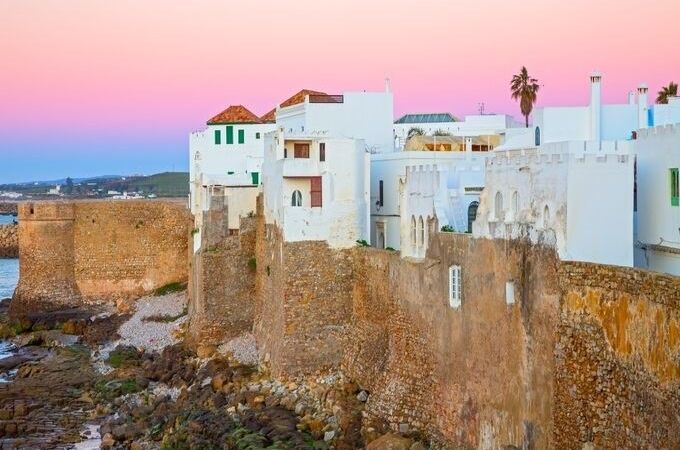
Essaouira Feels Like Summer Without Feeling Like Marrakech
Essaouira's Atlantic climate gives it an obvious August advantage, but the city deserves more than being described as “cooler.”
Its compact medina, harbour, seafood culture and walkable scale allow visitors to continue having an exploratory holiday rather than retreating entirely into resort life.
Wind remains central to the experience.
On some days it can be refreshing; on others it may be stronger than travellers expecting a conventional beach holiday would prefer. This is one reason Essaouira works especially well for people who want to walk, eat, explore and spend time beside the ocean rather than lie motionless on the sand for an entire week.
In August, the city can be busy.
That does not automatically make it less rewarding.
It simply gives it a more social summer personality.
Agadir Understands the August Holiday Better Than Most Cities
Agadir becomes particularly logical when the purpose of the coastal section is genuine leisure.
Resort facilities, swimming pools, beach access and a less demanding sightseeing schedule can make it easier for families or travellers who want several low-effort days after a cultural itinerary.
August demand means accommodation choice and advance planning deserve attention, especially when a specific resort, room category or facility matters.
This is not the month to assume every coastal hotel will have equivalent availability simply because inland Morocco is hot.
The coast is precisely where many people want to be.
Domestic Tourism Changes the Feel of the Coast
International travel guides sometimes discuss Morocco as though foreign visitors are the only people moving around the country.
August makes that assumption particularly inaccurate.
Domestic travel can influence the atmosphere of coastal destinations, especially during holiday periods. This can mean busier beaches, greater demand for family accommodation, active evening promenades and a holiday rhythm that feels quite different from the quieter Atlantic experience available at other times of year.
Travellers should not automatically interpret this as overcrowding.
It is a different version of Morocco.
Someone interested in seeing how Moroccans themselves use their coast may find the atmosphere enjoyable, while a traveller specifically seeking solitude may prefer another month or a less obvious coastal base.
The High Atlas Offers a Different Kind of Summer
Not everyone wants to solve August with the sea.
The Atlas Mountains provide another route.
Elevation can produce significantly different conditions from the lowlands, making mountain areas particularly valuable for travellers interested in walking, scenery and village stays. Route difficulty and daytime conditions still need to be assessed properly, especially for substantial trekking, but the mountains allow the itinerary to remain active when prolonged lowland sightseeing becomes less appealing.
Those who would rather spend summer moving than sunbathing can consider High Atlas adventures, selecting routes according to altitude, fitness and the amount of time available.
The difference from the coast is important.
Essaouira slows the journey down.
The Atlas can keep it physically active.
August Is Not the Month to Add the Sahara Automatically
The Sahara deserves direct language in an August guide.
Extreme heat can occur.
This substantially changes what travellers can comfortably do during daylight hours and makes the desert a much more specialised choice than it is during winter or spring.
If the Sahara is the central reason for travelling to Morocco, seek current local advice, understand the conditions and design the journey accordingly. If the desert is simply one more item on a general Morocco checklist, postponing it for another season can create a considerably better overall trip.
Removing the Sahara does not leave an empty space.
Several days can instead deepen a mountain itinerary, extend the Atlantic coast or allow a slower combination of both.
What Kind of August Traveller Are You?
August itinerary design becomes easier when personal comfort is treated as seriously as the forecast.
| Traveller | Strong August Direction |
| Very heat-sensitive | Atlantic coast + higher elevations |
| Active traveller | Atlas + shorter cultural stays |
| Family with children | Agadir + selected Marrakech |
| Culture-focused traveller | Short, carefully timed city stays |
| Food and atmosphere focused | Marrakech + Essaouira |
| Desert-first traveller | Consider a cooler travel month |
The last row is worth emphasising.
Sometimes the best itinerary advice is to change the date rather than force a destination into the wrong season for your priorities.
August Can Be Better When the Route Is Shorter
A fourteen-day holiday does not need seven destinations.
In August, longer stays can create substantial advantages because travellers are able to adapt individual days according to conditions instead of continually moving to the next hotel.
Three nights in Marrakech provide more flexibility than one rushed sightseeing day. Four nights on the Atlantic allow the coast to become a destination rather than a recovery stop, while several Atlas nights create enough time for genuine mountain experiences instead of a brief excursion.
Travellers looking for this slower structure can explore Morocco summer escapes, giving regional depth more importance than the number of pins placed on the map.
This is one of August's most useful itinerary lessons.
Reduce movement before reducing experience.
August Belongs to Morocco's Summer Rhythm
The mistake is thinking that August Morocco is simply the normal country under difficult weather.
It is more interesting than that.
The Atlantic coast becomes busier and more socially important. Marrakech shifts activity towards the edges of the day. The Atlas gains strategic value through elevation, while the Sahara moves from standard itinerary component to specialist decision.
Domestic travel adds another layer that weather charts cannot show.
Understanding these changes allows travellers to stop fighting the month and begin travelling with it.
August will never offer the broad climatic flexibility of April.
It does not need to.
Its strength lies in revealing where Morocco itself goes when summer becomes serious.
Busy Coast or Quiet Morocco? August Gives You Both
August can produce two apparently contradictory travel experiences in Morocco.
Spend several days in a popular Atlantic resort and summer may feel energetic, social and unmistakably busy, with families on holiday, active promenades and strong demand for accommodation. Change the route towards a mountain valley or spend longer in a less intensively visited location and the same month can feel considerably slower.
This is why describing August simply as “high season” or “low season” is misleading.
Demand moves geographically, just as the weather does.
The useful question is not whether Morocco will be crowded, but where people are likely to concentrate and what kind of atmosphere you actually want.
August Crowds Are Not Distributed Evenly
A busy hotel in Agadir tells you very little about how a mountain village feels that same week.
Likewise, an active evening in Marrakech does not mean every part of the city is equally crowded throughout the day.
| Travel Setting | Likely August Feel | Better For |
|---|---|---|
| Major coastal resort | Lively and holiday-focused | Families, beach and leisure |
| Essaouira | Active but culturally engaging | Couples, food, walking |
| Marrakech | Busy in selected areas and hours | Short cultural stays |
| Atlas villages | More dispersed | Active and slower travel |
| Small mountain lodge | Often intimate | Couples, hikers |
| Sahara region | Heat limits mainstream appeal | Specialist desert travel |
Rather than searching for an entirely empty Morocco in August, decide how much summer energy you want around you.
A Busy Coast Can Be Part of the Experience
Travellers sometimes use the word “crowded” as though it automatically describes a poor destination.
That is too simple.
A Moroccan coastal town in August can be enjoyable precisely because people are outside enjoying summer. Restaurants remain active later, promenades develop an evening rhythm and beaches become shared social spaces rather than scenery reserved for international visitors.
For travellers interested in contemporary Morocco, this can be revealing.
You are seeing a country taking its own holiday.
The experience may be less tranquil than visiting the same destination outside summer, but it can feel considerably more alive.
The key is arriving with the correct expectation.
Choose Accommodation More Carefully on the Coast
Strong summer demand makes accommodation selection particularly important, not only because preferred properties may fill but because the wrong location can produce a very different holiday from the one you imagined.
A central property may provide easy access to restaurants and evening activity while also placing you closer to noise. A resort farther from the busiest areas can offer greater separation but require transport when you want to explore.
Neither is inherently better.
Think about what you want after dinner.
If you enjoy stepping outside into an active neighbourhood, centrality has value. If your ideal evening involves quiet surroundings and an early night, paying for the liveliest location may work against you.
Essaouira's Busy Season Still Leaves Room to Wander
Essaouira has an advantage over more conventional resort destinations because visitors are distributed across several types of activity.
Some spend time around the beach, others explore the medina, while the harbour, restaurants and surrounding areas create additional points of interest. This can prevent the entire destination from feeling dependent on one strip of sand.
The city is also compact enough that travellers can change plans easily.
If one area feels particularly busy, walk elsewhere.
If the beach is windy, return to the medina.
If the main streets feel active, spend longer over lunch before heading back out.
August rewards destinations with alternatives.
Essaouira has plenty.
The Atlas Offers Space Rather Than Emptiness
Travellers wanting a quieter August should not necessarily search for somewhere with no visitors.
The Atlas offers a more useful quality: space.
Mountain accommodation is often smaller, activities disperse people across different routes and the landscape itself reduces the feeling of being concentrated in one tourist zone. A village or lodge may still receive summer visitors, but the experience operates on a different scale from a coastal resort.
This is particularly attractive after Marrakech.
The contrast is not only cooler conditions or better hiking opportunities; it is the amount of visual and psychological space around you.
For some travellers, two mountain nights are enough to reset the entire trip.
Quiet Does Not Mean Doing Nothing
A slower August route can still contain substantial experience.
Mountain walking, village visits, cooking experiences, local meals and landscape-focused drives can occupy the day without reproducing the intensity of a major sightseeing circuit. Even an afternoon spent reading on a terrace overlooking a valley feels different from retreating to an air-conditioned city hotel simply because the heat has made outdoor activity uncomfortable.
This distinction matters.
Good slow travel is chosen.
It should not feel like waiting for the weather to improve.
Marrakech Can Feel Different Within the Same Day
The concept of crowds also changes according to time.
An early start can reveal a quieter side of areas that become much more active later, while evening brings people back into public spaces once the strongest heat has eased. Travellers staying several nights have the advantage of experiencing these different rhythms instead of compressing the city into one conventional sightseeing window.
This is another argument for reducing hotel changes.
A longer stay allows you to choose the right hour.
A rushed itinerary forces you to use whatever hour is available.
Don't Chase Secret Destinations Just to Avoid People
There is a tendency in travel planning to respond to busy periods by searching for supposedly undiscovered places.
That approach can create unnecessary journeys to destinations that are less suitable simply because they appear quieter online.
August does not require abandoning Morocco's well-known regions.
It requires using them intelligently.
Stay slightly longer, choose accommodation carefully, explore at different times of day and combine an energetic coastal destination with a quieter mountain section if contrast matters to you.
The goal is not to travel through Morocco without seeing other travellers.
It is to avoid allowing other travellers to determine the quality of your trip.
August Is Better When You Choose the Atmosphere Deliberately
Some people want a summer holiday to feel like summer: busy restaurants, families outside, beach activity and long evenings.
Others want mountains, small lodges and enough quiet to hear what is happening beyond the next table.
Morocco can provide both in August.
The important part is recognising that these experiences may exist only a few days apart within the same itinerary.
Instead of asking whether August is too busy, decide where you want the energy and where you want the space.
That decision will shape the trip far more accurately than any national crowd forecast.
Who Is August in Morocco Actually Good For?
August is one of those months that produces unusually different opinions.
One traveller returns talking about breezy evenings in Essaouira, several excellent days in the Atlas and lively summer nights beside the Atlantic. Another remembers little beyond the afternoon heat in Marrakech and wishes the Sahara had been removed from the itinerary.
Both experiences can be accurate.
The difference often comes from traveller profile rather than the month itself.
August rewards people whose interests fit Morocco's summer geography. It is less forgiving when the itinerary is built around experiences that are naturally better during another season.
August Works Best When Your Priorities Match the Season
| Traveller Type | August Fit | Why |
|---|---|---|
| Atlantic coast lover | Excellent | Coast has a strong summer identity |
| Mountain traveller | Excellent | Elevation opens active alternatives |
| Resort-focused family | Very good | Coastal facilities suit summer holidays |
| Food and culture traveller | Good with planning | Cities work better in selected hours |
| Heat-sensitive traveller | Mixed | Route needs strong regional adjustment |
| Sahara-focused traveller | Weak | Extreme daytime heat can occur |
| Classic highlights collector | Mixed | Standard circuit needs substantial editing |
This does not mean certain travellers cannot visit in August.
It means some will need to compromise much more than others.
Families Can Use August Well
School holidays make August a practical travel period for many families, even when it would not be their first weather choice.
Morocco can still work particularly well if the itinerary respects how children experience heat and travel fatigue.
A shorter Marrakech stay followed by several nights near the Atlantic often makes more sense than a long inland circuit involving frequent hotel changes. Pool access becomes genuinely useful rather than decorative, while resort facilities can provide easy options on days when nobody wants another organised excursion.
The Atlas can also work for families, particularly when activities are chosen according to children's ages rather than building the entire mountain stay around demanding hiking.
The most successful family itinerary is rarely the one with the most destinations.
It is the one with the fewest difficult days.
August Can Be Excellent for Active Travellers
This sounds counterintuitive until Morocco's elevation is considered.
Someone who wants to walk for several hours every day may find Marrakech or the southeast frustrating in August, but the Atlas offers an entirely different travel environment.
Mountain-based itineraries can combine walking, landscapes and smaller communities while avoiding the need to spend every afternoon beside a hotel pool. The exact route should still reflect altitude, exposure and current weather, since summer does not make every trail equally comfortable.
For active travellers, August planning is therefore less about reducing activity and more about relocating it.
That distinction can completely change the holiday.
Culture Travellers Need to Edit, Not Abandon
If medinas, architecture, food and history are your main reasons for visiting Morocco, August does not automatically mean waiting until another season.
It does mean becoming selective.
Marrakech can remain worthwhile when the most substantial walking is placed earlier and the itinerary allows the hottest part of the day to slow down. Fes can also remain rewarding, but trying to compress its enormous medina into one continuous sightseeing marathon is unlikely to produce the best experience.
Culture-focused travellers should think in terms of depth rather than volume.
Two carefully paced cities can provide more understanding than four visited under constant pressure to keep moving.
Heat-Sensitive Travellers Should Be Particularly Realistic
Some people simply do not enjoy hot weather.
There is no itinerary technique that changes that preference.
If temperatures that other travellers describe as “manageable” leave you exhausted, August inland Morocco may require so much adjustment that the trip stops matching what you wanted in the first place.
In that case, either build the holiday strongly around the Atlantic and appropriate mountain regions or consider travelling during another month.
Changing travel dates is sometimes better planning than constructing an elaborate itinerary designed primarily to avoid the weather.
Morocco will still be there in October.
Desert-First Travellers Have the Clearest Decision
If sleeping near the dunes, exploring the Sahara and travelling through Morocco's southeast are the central reasons for your holiday, August is generally not the month that gives those experiences their broadest appeal.
Extreme daytime heat can severely restrict comfortable outdoor activity, while long road journeys through the south become more demanding.
This is different from someone who already needs to travel in August and merely wonders whether the desert can be added.
A traveller choosing the month specifically for a Sahara-focused journey has the freedom to select a more suitable season.
Use it.
August Suits Travellers Who Don't Need the Checklist
The month becomes considerably easier once the trip is freed from the assumption that a first Morocco visit must include every famous region.
Marrakech can be shortened.
The Sahara can wait.
Essaouira can receive four nights without needing to apologise for not being Fes, while the Atlas can become a central destination instead of a road crossed on the way somewhere else.
This creates a summer itinerary that may look unconventional beside a standard Morocco brochure.
That is exactly the point.
Sometimes the Best August Advice Is to Change Nothing
Not every traveller needs to rebuild the route.
Someone who loves hot climates, has realistic expectations, has chosen accommodation carefully and actively wants the energy of Morocco's summer coast may already have an itinerary perfectly suited to August.
Seasonal planning should not become another form of overplanning.
Its purpose is to remove avoidable discomfort, not to convince everyone that they need the same solution.
The strongest August itinerary is simply the one where the traveller and the season agree with each other.
When they do, Morocco can feel energetic, varied and distinctly different from the country visitors encounter during spring.
When they do not, no amount of itinerary optimisation will make the month feel like April.
July vs August vs September: Why August Stands Apart
August sits at the deepest point of Morocco's summer travel pattern. July already requires climate-aware route planning, but August adds another important dimension: domestic holiday demand can give the Atlantic coast a particularly lively character.
September begins changing the equation again as the country gradually moves away from peak summer.
| July | August | September | |
|---|---|---|---|
| Seasonal Identity | Established summer | Deep summer | Summer begins easing |
| Marrakech | Climate-led sightseeing | Strong heat awareness | Conditions gradually moderate |
| Atlas Mountains | Major summer option | Strong active alternative | Broader touring appeal returns |
| Sahara | Specialist choice | Challenging for many travellers | Gradually becomes more practical |
| Essaouira | Prime summer destination | Lively coastal season | Attractive post-peak coast |
| Agadir | Strong resort period | Major holiday destination | Resort season continues |
| Travel Rhythm | Climate first | Climate + domestic holidays | Increasing flexibility |
| Best For | Summer-adapted routes | Coast and mountain holidays | Return towards broader circuits |
August therefore has an identity that goes beyond temperature. It is one of the months when understanding where Morocco itself spends summer becomes particularly useful.
Frequently Asked Questions About Morocco in August
Is August a good month to visit Morocco?
August can be a good month when the itinerary is designed around summer rather than copied from spring. The Atlantic coast and suitable Atlas regions become particularly attractive, while Marrakech requires careful daily timing. Travellers primarily interested in the Sahara may find another season better suited to their priorities.
Is Marrakech too hot in August?
Marrakech can experience intense heat during August, particularly in the afternoon. Some travellers remain comfortable with early sightseeing, substantial midday breaks and evening exploration, while heat-sensitive visitors may prefer a shorter stay. Personal tolerance matters considerably when deciding how much time to allocate to the city.
Can I visit the Sahara in August?
The Sahara can experience extreme daytime temperatures in August, making outdoor activity considerably more demanding. It should therefore be approached as a specialist decision rather than an automatic part of a first-time circuit. Travellers whose main priority is the desert may prefer choosing a cooler travel period.
Is Essaouira crowded in August?
Essaouira can become lively during August because the month overlaps with Morocco's domestic summer holiday season as well as international travel demand. This can mean greater activity around beaches, restaurants and accommodation, although the city retains enough variety for visitors to move between the medina, harbour and coast.
Is Essaouira cooler than Marrakech in August?
Generally, yes. Essaouira's Atlantic location and frequent wind create a very different summer environment from inland Marrakech. Conditions can feel substantially fresher, although the wind itself may be stronger than expected. Travellers seeking a conventional calm beach holiday should consider this alongside the lower temperatures.
Is Agadir good for families in August?
Agadir can work particularly well for families because resort facilities, swimming pools, beach access and a less sightseeing-intensive schedule fit naturally with summer travel. August can also bring strong demand, so families wanting a particular hotel, room configuration or facility should avoid leaving accommodation choices unnecessarily late.
Is August good for Atlas Mountain hiking?
August can be suitable for many mountain activities because elevation creates a significant climatic contrast with Morocco's hotter lowlands. Conditions still vary according to altitude, exposure and route difficulty, so demanding treks should be selected carefully and planned with appropriate local expertise.
What should I wear in Morocco in August?
Choose lightweight, breathable clothing suitable for strong summer heat while remaining respectful of local cultural settings. Sun protection, comfortable footwear and regular hydration are important. A light additional layer may occasionally be useful in windy Atlantic locations or certain higher-elevation areas, depending on conditions.
Is Morocco very busy in August?
Not everywhere. Popular Atlantic destinations can experience significant domestic and international holiday demand, while mountain regions and other areas may feel very different. August crowds are geographically concentrated, making destination choice and accommodation location more useful planning tools than a general national “busy season” label.
Is August or September better for Morocco?
September generally begins restoring greater flexibility to inland itineraries as peak summer gradually eases, although hot conditions can continue. August is stronger for travellers specifically interested in Morocco's summer coast or mountain-based travel, while September increasingly suits those wanting a broader multi-region circuit.

A travel professional specializing in tailor-made travel planning, guest experience management, and multi-destination tourism operations.
With over 23 years of experience in the travel industry, he designs and manages private and cultural tours for international travelers across Türkiye, Greece, Egypt, Jordan, Morocco, and other destinations.
He has strong expertise in both online and face-to-face guest communication, sales processes, and end-to-end travel operations.
Working closely with hotels, travel agencies, and local partners, he ensures smooth coordination and high-quality travel experiences at every stage of the journey.
His focus is on delivering personalized, reliable, and seamless travel experiences for international guests worldwide.