Morocco Weather in October: Autumn Sunshine & Sahara Travel
Last Updated: August 9, 2026
October is when Morocco stops asking travellers to choose between its regions quite so often.
During summer, the Atlantic and Atlas gain obvious advantages while the Sahara becomes a much more deliberate decision. September begins reopening the map, but lingering heat can still influence southern travel, particularly earlier in the month. By October, the country's major landscapes can fit together much more naturally within one journey.
That does not mean Morocco suddenly develops one uniform climate.
Fes mornings, Marrakech afternoons, High Atlas elevations and Sahara nights can still feel remarkably different from one another. What October provides is not identical weather but a useful overlap: conditions across several regions are often suitable enough that the itinerary can be built around what you want to experience rather than primarily around what you need to avoid.
For first-time visitors hoping to understand why Morocco feels like several countries compressed into one, October makes a compelling case.
October Is When the Long Route Makes Sense Again
The classic Morocco circuit asks a lot from the weather.
Travellers may spend hours walking through Fes, cross the Atlas, stop among southern kasbah landscapes, sleep near the Sahara and then return towards Marrakech or the Atlantic. During the hottest months, those activities compete with one another because conditions that suit the coast do not necessarily suit the desert.
October brings them closer together.
| Region | October Character | Why It Fits the Circuit |
|---|---|---|
| Fes & North | Mild to warm autumn touring | Longer medina exploration |
| Marrakech | Warm days, generally easier sightseeing | Strong cultural base |
| Atlas Mountains | Autumn mountain conditions | Walking and scenic crossings |
| Southern Valleys | More comfortable touring | Road stops regain value |
| Sahara | Strong desert-travel period | Outdoor experiences become easier |
| Essaouira | Mild Atlantic contrast | Useful slower finish |
| Agadir | Warm coastal option | Beach and relaxation potential |
October's strength is not that one region clearly wins.
It is that fewer regions need to lose.
Marrakech No Longer Needs to Be Planned Around the Afternoon
In midsummer, Marrakech works best when travellers respect the strongest part of the day and divide sightseeing accordingly.
October usually provides considerably more freedom.
A morning in the medina can continue naturally towards lunch and into the afternoon without the same expectation that several hours must be protected from peak summer heat. Warm days remain possible, and sun protection still matters, but the city generally supports a more continuous cultural programme.
This changes more than comfort.
It allows spontaneity back into the itinerary.
If a market visit takes longer than expected or lunch turns into an unplanned two-hour break, the rest of the day does not necessarily collapse because you missed the only comfortable sightseeing window.
Travellers interested in linking Marrakech with several other regions can consider Morocco grand journeys, using October's broader seasonal balance to create a route that would require considerably more compromise in July or August.
Fes Benefits From Having Nowhere Else to Be
October suits Fes particularly well because the city rewards time more than speed.
Its medina is not an attraction that can be efficiently completed by moving from landmark to landmark. Workshops, markets, religious architecture, historic houses and ordinary streets overlap so densely that much of the experience comes from what happens between planned stops.
Comfortable walking conditions make that style of exploration easier.
Instead of calculating when the heat will become tiring, travellers can give the medina a substantial portion of the day and allow a guide to adjust the route according to interests.
This is also when adding Meknes or Volubilis becomes easier to justify on a longer itinerary, provided Fes itself is not reduced to a rushed overnight stop.
October gives you enough options that editing remains necessary.
The Journey South Becomes Part of the Holiday Again
One of October's greatest advantages appears outside the major cities.
The route from Marrakech across the Atlas and towards Ouarzazate, the valleys and eventually the desert contains enough scenery and cultural interest that treating it merely as a transfer misses much of southern Morocco.
During hotter periods, travellers may understandably shorten exposed stops.
October makes lingering more attractive.
A viewpoint can become a proper break rather than a quick photograph. A kasbah can be explored without constantly thinking about returning to the vehicle, while lunch along the route no longer needs to function primarily as shelter from intense midday conditions.
For travellers interested in the south as a region rather than simply the road to the dunes, Morocco kasbah trails can connect mountain landscapes, historic settlements and desert-edge environments into a much more coherent journey.
October Is When the Sahara Earns Its Nights
The Sahara returns strongly to the itinerary during autumn, but the best desert experience still depends on giving it enough time.
A common planning mistake is to become so excited about favourable seasonal conditions that the desert gets squeezed into an itinerary that is too short for the distance involved.
October improves the weather.
It does not move the dunes closer to Marrakech.
The journey should still include enough time to appreciate the changing landscapes of southern Morocco rather than treating every kilometre as an obstacle between the city and a desert camp.
| Trip Length | Sahara Decision |
| 5–6 days | Usually too compressed for a balanced circuit |
| 7–8 days | Possible, but route priorities matter |
| 10 days | Much easier to integrate properly |
| 12–14 days | Strong potential for a broader southern journey |
This is especially important for travellers who dislike consecutive long driving days.
October makes the Sahara attractive enough that it deserves to be done well.
Desert Days and Desert Nights Become Two Different Experiences
October desert travel illustrates Morocco's daily temperature range particularly well.
Daytime conditions can remain warm and sunny, while evenings and early mornings may feel noticeably cooler. The difference becomes part of the experience rather than merely something to pack for.
Sunrise may require an extra layer that becomes unnecessary later in the morning, while evening meals outdoors can feel completely different from the afternoon that preceded them.
Travellers should therefore avoid packing for the Sahara based only on daytime temperature averages.
Light layers matter.
So does understanding that a desert camp is an outdoor environment where the temperature does not behave like a climate-controlled hotel.
The Atlas Is More Than the Road to the Sahara
October's broad suitability can accidentally reduce the Atlas to a scenic crossing because travellers become focused on reaching the desert.
That is a missed opportunity.
For walkers, mountain villages and trails can justify dedicated nights, while travellers less interested in hiking may still value the change in scale between Marrakech and the south.
Autumn also makes the visual transition especially interesting. Elevation, vegetation and local weather can produce conditions very different from those experienced only a few hours away.
Travellers wanting the mountains to become a destination rather than scenery between hotels can explore Atlas village stays, allowing enough time for walking and regional experiences instead of crossing the range in one continuous travel day.
October's Biggest Problem May Be Popularity
Good weather creates its own complication.
October is widely regarded as an attractive period for Morocco, which can increase demand for well-located riads, preferred guides, specialist mountain arrangements and desirable desert camps.
This does not mean every destination will feel crowded.
Demand is often concentrated around particular properties, famous sights and standard routes. The practical issue is availability rather than a country-wide crowd problem.
If a specific small riad matters to you, booking earlier makes sense.
If you simply need a comfortable hotel somewhere in a large city, the urgency may be lower.
Advance planning should protect what is difficult to replace.
It should not turn every day into a reservation timetable.
The Atlantic Still Deserves Space
October's improved inland conditions can make the Atlantic coast seem less necessary.
That is the wrong way to evaluate it.
Essaouira no longer needs to provide relief from extreme heat, which means travellers can finally judge the city on its own merits: seafood, harbour life, medina character, Atlantic light and a pace that contrasts sharply with Marrakech.
That can make the coast more satisfying, not less.
When a destination stops solving a weather problem, you discover whether you actually wanted to visit it.
For many travellers, the answer with Essaouira is still yes.
October Gives You Almost Too Many Choices
This is the unusual problem October creates.
Fes makes sense.
Marrakech makes sense.
The Atlas deserves time.
Southern Morocco becomes rewarding again.
The Sahara is back in serious consideration, while Essaouira remains appealing.
A traveller with ten days can suddenly design a fourteen-day itinerary without noticing.
October therefore requires discipline for the opposite reason that August does.
In August, climate helps remove destinations.
In October, climate gives them back.
The strongest itinerary is not the one that accepts every opportunity. It is the one that uses favourable conditions to spend more meaningful time in the regions that matter most.
October's real luxury is not seeing all of Morocco.
It is being able to choose almost any part of it.
Where Should You Spend the Extra Night in October?
October creates a pleasant planning problem.
After the main route is built, travellers often discover that one flexible night remains. Marrakech could use it. Fes would certainly take it. The Atlas becomes tempting because autumn conditions favour spending time outdoors, while the Sahara makes a persuasive argument that travelling such a long distance deserves more than a quick arrival and departure.
There is no universally correct answer.
The value of an additional night depends on what it changes. If it merely creates more free time in a destination you already understand, its impact may be modest. If it removes a rushed transfer, creates a full mountain day or allows the desert to be experienced beyond sunset and breakfast, that same night can transform the itinerary.
One Night Has Different Value in Different Places
| Add the Night To... | What It Creates | Best For |
|---|---|---|
| Fes | Deeper medina exploration | Culture-focused travellers |
| Marrakech | More flexible city pacing | First-time visitors |
| Atlas Mountains | A genuine full mountain day | Walkers and slow travellers |
| Southern valleys | Less rushed road journey | Landscape and architecture lovers |
| Sahara | More time beyond the camp arrival | Desert-first travellers |
| Essaouira | A slower coastal finish | Food, atmosphere and relaxation |
The strongest choice is usually the destination where an extra night removes pressure rather than simply adds another twenty-four hours.
Give It to Fes If You Hate Checklist Sightseeing
Fes can absorb time almost indefinitely because its value lies in detail rather than a limited collection of major monuments.
With only one full sightseeing day, travellers can certainly experience important parts of the medina, particularly with a knowledgeable guide. Add another night, however, and the visit becomes less dependent on efficiency.
You can return to an area that interested you, spend longer around crafts, explore beyond the most obvious routes or allow lunch to take as long as it deserves.
October supports this slower style particularly well because walking conditions are generally more favourable than during peak summer.
For travellers primarily motivated by culture, the additional Fes night often provides more value than adding another city entirely.
Give It to Marrakech If Your Arrival Day Isn't Really a Day
Itinerary spreadsheets can be deceptive.
Three nights in Marrakech may sound generous until the first is mostly consumed by an evening arrival and the final morning disappears into an airport or road transfer.
Count usable days rather than hotel nights.
If Marrakech has effectively been reduced to one full day, an additional night can restore the flexibility that October weather makes possible. Instead of compressing palaces, souks, gardens and food experiences into a continuous programme, the city can be allowed to unfold across different periods.
The extra night becomes particularly valuable when you want unstructured medina time rather than only guided sightseeing.
Give It to the Atlas If You Are Only Sleeping There
Mountain itineraries often suffer from what might be called the “beautiful hotel problem.”
Travellers arrive late after a scenic drive, admire the view, eat dinner and leave the following morning.
Technically, they stayed in the Atlas.
In practical terms, they barely experienced it.
Adding one night can create a full day for walking, visiting nearby villages or simply spending time in the landscape without another transfer waiting at the end.
This is one of the highest-value uses of an extra October night because it changes the category of the experience.
The Atlas stops being accommodation between Marrakech and somewhere else.
It becomes a destination.
Give It to the Southern Route If Your Map Looks Too Fast
Southern Morocco contains a common itinerary trap: distances that look manageable on a digital map but involve enough scenic and cultural interest that driving directly through them defeats the purpose of being there.
October makes roadside exploration more appealing, which increases the value of slowing down.
An additional night around Ouarzazate or another appropriate point on the southern route can reduce pressure on the driving day and create time for kasbah landscapes, valleys and local stops that would otherwise become photographs taken through a vehicle window.
This choice makes particular sense for travellers who enjoy road journeys.
If the only objective is reaching the Sahara as quickly as possible, the value may feel lower.
Give It to the Sahara If the Desert Is Why You Came
Many desert itineraries follow a predictable rhythm: arrive later in the day, experience sunset, eat dinner, sleep, see sunrise and leave.
That provides a memorable introduction.
It does not provide much time to understand the environment between those two dramatic moments.
An additional night allows the desert section to breathe. Depending on the programme and location, there may be opportunities for exploration, nearby communities or simply enough unscheduled time to experience the landscape when nothing spectacular is supposed to be happening.
For travellers who have imagined the Sahara for years, this can be far more valuable than using the same night to add another city.
Travel priorities should occasionally be allowed to behave like priorities.
Give It to Essaouira If the Trip Needs Less Achievement
By the time travellers reach the final section of a broad October circuit, they may already have accumulated several guided tours, hotel changes and substantial driving distances.
Essaouira does not need another night because there are twenty additional attractions to complete.
It needs one because slowing down takes time.
A third night can create a day without check-in, check-out or a list of essential sights. The medina can be explored gradually, lunch can become the main event and the Atlantic can occupy several hours without needing to justify itself.
This is especially useful at the end of a demanding itinerary.
Sometimes the extra night should go where you will accomplish the least.
Don't Spend the Extra Night at the Airport
An unnecessary final night near an airport can quietly remove one of the best days from an itinerary.
Of course, early flights, long transfer distances or operational considerations may make an airport stay sensible. When they do not, automatically returning to the departure city too early can reduce the time available in a destination you actually came to experience.
October's favourable touring conditions make that lost day particularly noticeable.
Work backwards from the actual flight time.
Then decide how much buffer is genuinely necessary.
The Extra Night Should Fix the Weakest Part of the Route
Rather than asking which destination you like most, look for the point where the itinerary feels compressed.
Is Fes being asked to explain itself in six hours?
Are you crossing the Atlas without walking anywhere?
Does the Sahara involve more driving than desert?
Will Essaouira disappear after breakfast because you arrived the previous evening?
That is where the additional night belongs.
October provides enough favourable conditions that almost every region can make a reasonable claim for more time.
The best decision is the one that changes a rushed experience into a complete one.
That is worth considerably more than adding another pin to the map.
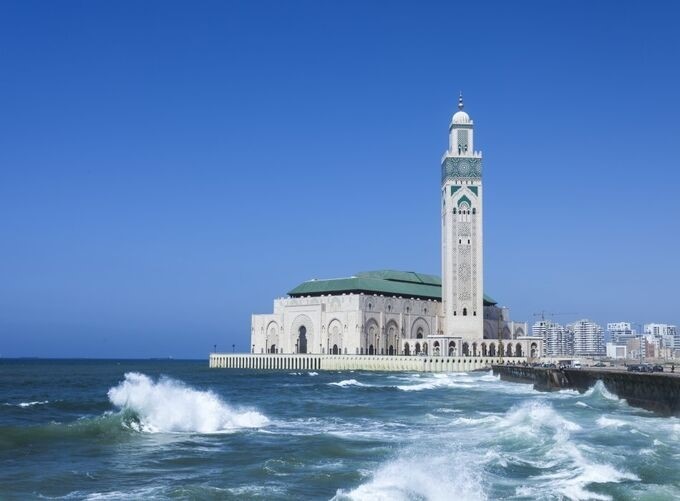
October Is Excellent, but It Is Not Weather-Proof
October's reputation as one of Morocco's strongest touring months can create a different kind of planning mistake: travellers begin treating favourable seasonal averages as a guarantee.
They are not.
Autumn brings much broader possibilities than midsummer, but Morocco remains geographically diverse and individual weather systems can interrupt even the best-designed itinerary. Rain may affect a city day, mountain conditions can change more quickly than expected, and temperatures that felt pleasantly warm in Marrakech can become noticeably cooler after sunset elsewhere.
None of this makes October unreliable.
It simply means good seasonal planning should leave room for actual weather.
Rain Is Not a Reason to Avoid October
Rainfall becomes a more realistic possibility as Morocco moves deeper into autumn, although frequency and intensity vary significantly by region and year.
For most cultural itineraries, occasional rain changes the order of the day rather than the destination itself.
A wet morning in Marrakech may favour museums, covered areas, a longer lunch or a hammam before outdoor sightseeing resumes later. In Fes, conditions can make stone and tiled surfaces slippery, which matters more practically than the fact that rain appeared in the forecast.
The important distinction is between inconvenient weather and journey-changing weather.
Most travellers will encounter the former, if anything.
Mountain Weather Deserves More Respect
The Atlas creates greater uncertainty because elevation magnifies differences that may seem minor in Marrakech.
A pleasant forecast in the city should never be used as a substitute for checking conditions at the actual altitude where you intend to walk. Temperature, wind and cloud can differ substantially, while more demanding routes require appropriate local advice regardless of how settled the weather appears from your hotel terrace.
| October Situation | Sensible Response |
|---|---|
| Rain forecast in Marrakech | Keep the day's order flexible |
| Cool Atlas morning | Carry removable layers |
| Mountain rain or poor visibility | Adjust the walking route |
| Warm Sahara afternoon | Keep sun protection available |
| Cool desert evening | Add a warmer layer |
| Atlantic wind | Expect conditions to feel different from inland |
October flexibility works best when the suitcase is flexible too.
Packing Only for Marrakech Is a Mistake
One of October's most common packing problems comes from looking at the forecast for the arrival city and assuming it represents the whole trip.
A traveller may leave Marrakech in lightweight clothing, cross the Atlas, continue south and discover that the evening environment requires something completely different.
Layering solves much of this problem without requiring heavy winter luggage.
Breathable daytime clothing can handle warm periods, while a light sweater, jacket or similar layer covers cooler mornings and evenings. Comfortable shoes remain essential because October's pleasant sightseeing conditions often mean travellers spend more time walking, not less.
Pack for the route.
Not the airport.
Daylight Starts Becoming Part of Road Planning
Autumn also changes the amount of usable daylight.
This matters most on scenic travel days where the road is part of the experience. Leaving too late can mean that the final mountain or valley section happens after the best light has disappeared, reducing both the enjoyment of the journey and the value of planned stops.
The solution is not turning every transfer into a dawn departure.
It is deciding which part of the route deserves daylight.
If the day includes a mountain pass, kasbah visit and several viewpoints, a reasonably early start may provide far more value than a leisurely hotel morning followed by rushed afternoon stops.
October road trips benefit from thinking in light, not only kilometres.
A Perfect Forecast Can Still Produce a Bad Itinerary
Weather receives too much blame for travel fatigue.
A day containing six hours of driving, four sightseeing stops and an evening arrival can be exhausting even at an ideal 22°C. Likewise, three consecutive one-night stays remain tiring regardless of how comfortable the afternoons are.
October's favourable conditions can actually encourage overplanning because almost everything appears feasible.
That is precisely when discipline matters most.
Do not use good weather as permission to fill every available hour.
Use it to enjoy the experiences already included.
High Demand Can Affect the Trip Before Weather Does
October's popularity means that the first problem some travellers encounter is not rain or temperature but availability.
Small, highly regarded riads can fill, preferred desert camps may have limited space and specialist guides can become harder to secure on particular dates. This matters especially when travellers have very specific accommodation expectations rather than simply needing somewhere comfortable to sleep.
Booking earlier protects those priorities.
It does not mean every restaurant, museum and afternoon needs to be reserved months ahead.
There should still be space for Morocco to surprise you.
October Works Best With a Plan B You May Never Use
A good autumn itinerary does not need multiple backup schedules.
It simply needs enough flexibility that one change does not damage the whole journey.
If rain shifts a walking tour by several hours, can another activity move into its place? If mountain conditions make a planned hike unsuitable, is there a lower or shorter alternative? If the afternoon remains unexpectedly warm, can sightseeing slow down without missing a transfer?
Most of these adjustments may never be necessary.
That is exactly what a good Plan B should feel like.
October deserves its reputation as a strong Morocco travel month, but the best journeys are not built on the assumption that nothing will change.
They are built so that very little is ruined when something does.
September vs October vs November: Where October Wins
October sits between September's gradual return to broad touring and November's cooler late-autumn pattern. Its particular advantage is the overlap it creates between Morocco's major regions.
The Sahara has returned strongly to consideration, Marrakech and Fes support substantial cultural sightseeing, the Atlas remains attractive for outdoor experiences, and the Atlantic coast can still add a completely different character to the journey.
| September | October | November | |
|---|---|---|---|
| Seasonal Identity | Summer-to-autumn transition | Full-circuit autumn | Cooler late autumn |
| Marrakech | Increasing flexibility | Strong all-round touring | Milder days, cooler evenings |
| Fes | Longer city days return | Excellent cultural touring | Cooler urban exploration |
| Atlas Mountains | Strong activity season | Excellent, but variable | Cooler mountain conditions |
| Southern Morocco | Gradually reopening | Major road-trip period | Strong daytime touring |
| Sahara | Increasingly practical | Excellent seasonal fit | Greater day/night contrast |
| Atlantic Coast | Warm post-summer coast | Strong complementary stop | Cooler coastal character |
| Best For | Warm-weather variety | Multi-region circuits | Culture + desert travel |
October therefore has an unusually broad appeal. It does not force travellers towards one particular region or travel style, which is exactly what gives the month its distinct position within the annual cluster.
Frequently Asked Questions About Morocco in October
Is October a good time to visit Morocco?
Yes. October is particularly well suited to travellers wanting a broad itinerary because cultural cities, the Atlas Mountains, southern landscapes, the Sahara and Atlantic coast can all fit naturally into the same journey. Regional variation remains important, however, so travellers should still pack for changing conditions.
Is Marrakech hot in October?
Marrakech can remain pleasantly warm and occasional hotter days are possible, particularly earlier in the month. Compared with peak summer, October generally provides much greater freedom for extended sightseeing. Evenings may feel cooler, so lightweight clothing combined with an additional layer provides more flexibility than packing exclusively for daytime warmth.
Is Fes good in October?
October can be an excellent month for Fes because the medina is best experienced on foot and autumn conditions generally support longer periods of exploration than midsummer. Travellers should still allow sufficient time rather than trying to compress the city's crafts, architecture, markets and historic areas into a rushed visit.
Is October good for the Sahara Desert?
Yes. October is one of the stronger periods for incorporating the Sahara into a broader Morocco journey because intense summer heat has generally eased. Day and night conditions can differ considerably, however, so travellers should prepare for warm sunshine as well as noticeably cooler evenings and early mornings.
Are Sahara nights cold in October?
They can feel cool, particularly when compared with daytime conditions, although actual temperatures vary according to location and weather patterns. Travellers staying in desert camps should carry a suitable additional layer rather than packing only for daytime warmth, especially if they plan to be outside around sunrise or after dinner.
Is October good for hiking in the Atlas Mountains?
October can offer excellent mountain experiences, but elevation matters considerably. Conditions at altitude may differ sharply from Marrakech, and weather can change more quickly in mountain environments. Substantial trekking should therefore be planned according to the specific route, elevation and current local conditions rather than national weather averages.
Does it rain in Morocco in October?
Rain becomes more possible as autumn develops, particularly in some northern, Atlantic and mountain areas, although conditions vary widely by region and year. Occasional rainfall usually requires itinerary flexibility rather than major changes. Travellers should check forecasts close to departure and carry a lightweight weather-resistant layer.
Is Essaouira worth visiting in October?
Yes. Essaouira remains worthwhile even when inland Morocco becomes more comfortable because the city's value extends beyond climate. Its medina, harbour, seafood and Atlantic setting provide a strong contrast to Marrakech, making it particularly suitable for travellers wanting a slower section within a multi-region itinerary.
What should I wear in Morocco in October?
Layering works particularly well. Lightweight clothing remains useful during warm daytime periods, while a sweater or light jacket can provide comfort during cooler mornings, evenings, Atlantic conditions and higher-altitude stays. Comfortable walking shoes and sun protection remain useful because October often encourages substantial time outdoors.
Is October or November better for Morocco?
October generally offers warmer conditions and particularly broad flexibility across cities, mountains, desert and coast. November can appeal more to travellers who prefer cooler cultural sightseeing and stronger desert day-to-night contrast. The better month depends on whether warmth, hiking, desert travel or cooler city exploration carries greater priority.

A travel professional specializing in tailor-made travel planning, guest experience management, and multi-destination tourism operations.
With over 23 years of experience in the travel industry, he designs and manages private and cultural tours for international travelers across Türkiye, Greece, Egypt, Jordan, Morocco, and other destinations.
He has strong expertise in both online and face-to-face guest communication, sales processes, and end-to-end travel operations.
Working closely with hotels, travel agencies, and local partners, he ensures smooth coordination and high-quality travel experiences at every stage of the journey.
His focus is on delivering personalized, reliable, and seamless travel experiences for international guests worldwide.