Morocco Weather in November: Cooler Days, Rain & Desert Nights
Last Updated: August 9, 2026
November is the month when packing for Morocco starts to become surprisingly difficult.
Stand in the sun during an afternoon in Marrakech and lightweight clothing may feel completely appropriate. Leave the hotel early the following morning and you may reach for a jacket. Travel south towards the Sahara and the contrast becomes sharper still: sunshine can produce beautifully comfortable touring conditions, while the temperature after sunset reminds you that desert climates do not retain daytime warmth indefinitely.
This is not winter in the European sense, nor is it an extension of Morocco's long summer.
November belongs somewhere more interesting in between.
For travellers, that creates one of the year's strongest combinations of cultural sightseeing and desert travel, provided the itinerary respects the difference between daytime weather and lived temperature.
November Has Two Daily Seasons
Most weather pages describe a destination through average maximum and minimum temperatures.
In November, the distance between those numbers often matters more than either figure by itself.
A traveller may leave a Marrakech riad in a light layer, remove it as the morning warms, spend lunch comfortably outdoors and need it again after sunset. The same pattern becomes more pronounced in desert environments, while elevation can make mountain conditions considerably cooler than those experienced in the cities.
| Region | November Daytime Character | Morning & Evening |
|---|---|---|
| Marrakech | Often mild to pleasantly warm | Noticeably cooler |
| Fes | Good cultural touring weather | Cool periods more common |
| Atlas Mountains | Highly elevation-dependent | Cold conditions possible |
| Southern Valleys | Strong sightseeing potential | Cooler after sunset |
| Sahara | Pleasant sunny days possible | Large temperature drop |
| Essaouira | Mild Atlantic conditions | Wind can increase cool feel |
| Agadir | Generally mild coastal stay | Cooler than summer evenings |
This is why asking whether Morocco is “warm in November” produces an incomplete answer.
During which hours?
And where?
Marrakech Becomes a Walking City Again
October already provides strong cultural touring conditions, but November changes the character of Marrakech in a subtle way.
The city no longer needs to be organised around avoiding heat. Instead, travellers can often build substantial walking days through the medina, historic districts, gardens and markets without constantly searching for the next air-conditioned pause.
That creates space for slower exploration.
A guided morning can flow naturally into an independent afternoon. Lunch outdoors may still be comfortable when the sun is present, and cooler evenings can make walking through the city feel pleasantly different from the daytime experience.
Travellers wanting cultural sightseeing to dominate the journey can consider Morocco private itineraries, combining Marrakech with other regions without the summer need to build the route primarily around heat avoidance.
The Jacket Problem Usually Starts After Sunset
November packing mistakes often happen because travellers research the weather at midday.
Photographs reinforce the problem. Morocco still looks sunny, people are sitting outside and desert landscapes appear warm.
Then the sun disappears.
A lightweight jacket, sweater or fleece can suddenly become one of the most useful items in the suitcase, particularly when evenings are spent outdoors. Travellers moving into the Atlas or sleeping in desert camps may require more substantial layers depending on altitude and current conditions.
The practical solution is not heavy winter packing for the entire trip.
It is layering.
November rewards clothes that can be removed at 1 PM and put back on at 7 PM.
Fes Benefits From Cooler Air but Shorter Days
November can suit Fes extremely well because the medina involves substantial walking and cooler conditions reduce the physical intensity of exploring it.
There is, however, a seasonal trade-off.
Daylight is shorter than during spring and summer.
This means a late start has more consequences. Spending an unhurried morning at the hotel and beginning serious sightseeing close to lunchtime may leave less time than expected for the medina, particularly if you want to experience outdoor areas before evening.
November therefore rewards reasonably early starts for a completely different reason than August.
In summer, you begin early to avoid heat.
In late autumn, you begin early to use the light.
The Sahara May Be at Its Most Persuasive
November makes an unusually strong case for desert travel.
The oppressive daytime heat associated with midsummer has disappeared, making scenic stops, dune experiences and southern road journeys far easier for many travellers to enjoy. The sunlight can remain strong enough to give the desert its dramatic visual character without requiring the entire programme to hide from the afternoon.
This is precisely when the difference between day and night becomes part of the story.
A traveller comfortable in light clothing during the afternoon may need several layers after dark, particularly when spending extended time outside.
For visitors who want the desert to become a substantial part of the journey, Morocco Sahara journeys can work particularly well in November when enough nights are allocated to the south rather than treating the dunes as a hurried excursion from Marrakech.
A Desert Camp Is Not a Marrakech Hotel
This sounds obvious until travellers pack for both in the same way.
A Marrakech hotel provides indoor communal spaces and predictable room comfort. A desert camp is intentionally connected to the outdoor environment, and the temperature you experience while watching stars, eating dinner or waiting for sunrise can matter much more.
Camp standards also vary considerably.
Travellers should understand the heating arrangements, bedding and private facilities offered by the specific accommodation rather than assuming that the word “luxury” guarantees identical comfort everywhere.
The question is not whether desert camps are comfortable in November.
Many can be.
The useful question is what your camp provides once the temperature falls.
November Makes Southern Road Trips Easier to Appreciate
The journey towards the desert becomes more enjoyable when stopping outside no longer means stepping into intense summer heat.
Kasbahs, valleys and smaller settlements can receive more attention, turning the south into a sequence of experiences rather than a road that must be endured before reaching the dunes.
November light can also give southern landscapes a particularly attractive character, although shorter daylight means departure times matter.
A slow breakfast followed by a late start may sound appealing until the final scenic section of the drive happens in darkness.
Travellers interested in giving the south more depth can consider Morocco desert circuits, where the journey through the valleys and desert-edge regions receives enough time to become part of the holiday rather than merely transportation.
The Atlas Changes More Seriously Than the Cities
November is where mountain advice needs to separate clearly from city advice.
Someone reading a pleasant Marrakech forecast may assume that the Atlas will provide similar conditions with slightly cooler air.
Elevation can make the difference much greater.
High mountain routes may experience cold temperatures and increasingly winter-like conditions, while lower valleys can remain suitable for walking and village stays. Weather can also change quickly enough that route selection should reflect current local conditions rather than a national monthly average.
| Atlas Plan | November Consideration |
| Lower valley walking | Often practical with layers |
| Village stay | Check nighttime temperatures |
| High-altitude trek | Requires seasonal expertise |
| Scenic day trip | Check weather before departure |
| Mountain crossing | Allow flexibility for conditions |
November does not close the Atlas.
It makes altitude part of the planning conversation.
The Atlantic Becomes a Different Kind of Coast
Essaouira in November should not be sold as a substitute summer holiday.
That undersells the city.
The beach may no longer be the central reason to stay, but the medina, harbour, restaurants and Atlantic atmosphere remain compelling. Cooler conditions can make long walks enjoyable, while wind may cause the perceived temperature to feel lower than the number shown on a weather app.
Agadir can still appeal to travellers seeking resort facilities and coastal relaxation, particularly during sunnier periods, although anyone booking specifically for guaranteed beach weather should keep seasonal variability in mind.
November's coast is about atmosphere first.
Sunbathing is a bonus.
Rain Becomes Part of the Possibility
Late autumn brings a greater chance of unsettled periods than the dry summer months, although rainfall varies substantially by region and from year to year.
A rainy Marrakech afternoon does not usually justify changing an entire itinerary. Museums, restaurants, hammams and covered sections of the medina provide alternatives, while weather may improve later.
More important is avoiding a schedule so rigid that one wet period causes several activities to fail.
Mountain weather deserves greater caution because rain, cold and altitude can interact in ways that matter more than they do during a city sightseeing day.
November travel benefits from flexibility without requiring pessimism.
November Is for Travellers Who Like Contrast
Some visitors want weather that remains almost identical from breakfast until bedtime.
November is not designed for them.
The month is more interesting when you enjoy the sensation of a cool morning becoming a sunny afternoon, or when sitting beside the Sahara after dark feels dramatically different from crossing the dunes several hours earlier.
Those contrasts influence what you wear, when you start and how you use outdoor spaces.
They also give the journey texture.
November Morocco does not feel like one continuous season.
You may experience something approaching autumn in the cities, early winter at altitude and warm sunshine in the south within the same itinerary.
The smartest response is not choosing one wardrobe for Morocco.
It is packing for the transitions.
Marrakech, Fes or the Sahara: Where Does November Add the Most Value?
Cooler weather improves almost every major inland destination in Morocco, but it does not improve them in the same way.
In Marrakech, November makes the city easier to explore continuously. In Fes, it reduces the physical effort involved in spending hours inside an enormous medina. In the Sahara, the change is more fundamental because activities that can be difficult during the hottest months return to the centre of the experience.
This makes November particularly useful for travellers deciding where to spend limited time.
| Priority | Marrakech | Fes | Sahara |
|---|---|---|---|
| Long walking days | Excellent | Excellent | Not the main appeal |
| Cultural depth | Excellent | Exceptional | Regional rather than urban |
| Outdoor daytime comfort | Strong | Strong | Major seasonal advantage |
| Evening warmth | Cool | Cool | Often much cooler |
| Short trip suitability | Excellent | Good | Requires more travel time |
| Weather improvement vs summer | Significant | Significant | Dramatic |
| Best for | Variety | Immersive culture | Landscape and desert experience |
If the question is where November weather creates the greatest transformation, the Sahara has the strongest argument.
If the question is where the month creates the easiest cultural holiday, Marrakech and Fes become much more competitive.
Marrakech Gains Hours
The advantage of November in Marrakech is easy to underestimate because it does not depend on one spectacular seasonal event.
You simply get more usable time.
Instead of arranging the day around the strongest heat, travellers can often remain outside for substantial periods, walking between historic areas, stopping for lunch and continuing into the afternoon without needing a compulsory hotel break.
This can change the feel of a three-night stay considerably.
A schedule that would seem exhausting in midsummer becomes much more natural, leaving room for spontaneous stops rather than forcing every attraction into the cooler edges of the day.
November therefore suits travellers who want Marrakech to feel like a city they are exploring rather than a series of places reached between breaks from the heat.
Fes Gains Patience
Fes benefits differently.
The medina rewards travellers who are willing to stay inside it long enough to stop thinking about where the next major monument is located. Workshops, markets, architecture and everyday life overlap in a way that makes efficiency almost counterproductive.
Cooler November conditions help because physical fatigue is less likely to determine when exploration ends.
That extra hour matters.
It might be spent watching a craft process rather than merely photographing the finished product, following a quieter lane or sitting over tea while a guide explains something that would never appear on a standard sightseeing list.
Fes does not necessarily need more attractions in November.
It needs more patience.
The weather helps provide it.
The Sahara Gains the Entire Middle of the Day
The desert experiences the most significant seasonal transformation.
During extreme summer heat, the usable outdoor day can become heavily concentrated around morning and evening. By November, daytime conditions are generally far more favourable for many travellers, allowing the landscape to be experienced beyond sunrise and sunset.
This matters because the Sahara should not be reduced to two photographs separated by a night in a camp.
Dunes look different as the light changes. Nearby desert communities and landscapes add context, and simply having time to remain outdoors without constantly calculating the temperature creates a much richer sense of place.
November gives the desert back its daytime.
That is difficult for either city to match.
But the Sahara Takes More Time to Reach
Weather value and itinerary value are not identical.
A traveller with five days in Morocco may gain more from staying in Marrakech and perhaps adding a nearby region than spending a large proportion of the trip driving towards and away from the Sahara.
This remains true even when desert conditions are excellent.
The Sahara becomes especially persuasive once the trip reaches roughly ten days or more, because the journey south can be treated as part of the experience instead of a logistical obstacle.
With enough time, November and the Sahara are natural partners.
Without enough time, good weather does not shorten the road.
What About a Marrakech and Fes Combination?
November works particularly well for travellers whose priorities are history, food, architecture and urban culture.
Combining Marrakech and Fes provides two medina experiences that are far less similar than first-time visitors sometimes expect.
Marrakech often feels more immediate and theatrical, with large public spaces, gardens, restaurants and contemporary tourism woven into its historic fabric.
Fes asks for more concentration.
Its medina can feel denser, more intricate and less easily reduced to individual highlights.
November's cooler conditions allow travellers to give both cities enough walking time for those differences to become clear.
Should You Choose Cities or Desert?
The decision becomes easier when you stop asking which destination has the “best November weather.”
Choose Marrakech and Fes if the pleasure of the trip comes from streets, architecture, food, markets and cultural explanation.
Choose the Sahara if landscapes, road travel, changing light and spending time in a radically different environment are central to why Morocco interests you.
Combine them when the itinerary is long enough.
Do not combine them simply because November makes it possible.
November Rewards the Experience That Needs the Weather Most
Every destination benefits from favourable conditions, but some experiences depend on them more heavily.
Marrakech remains compelling when it is hot.
Fes remains fascinating when the afternoon becomes warm.
The Sahara changes much more dramatically when extreme summer heat disappears.
That gives the desert a particular November advantage.
Yet the strongest trip is not automatically the one that travels farthest south. A culture-focused visitor may gain considerably more from two unhurried cities than from adding several days of road travel for an environment they were never especially interested in.
November gives Morocco excellent conditions for choice.
It should not make the choice for you.
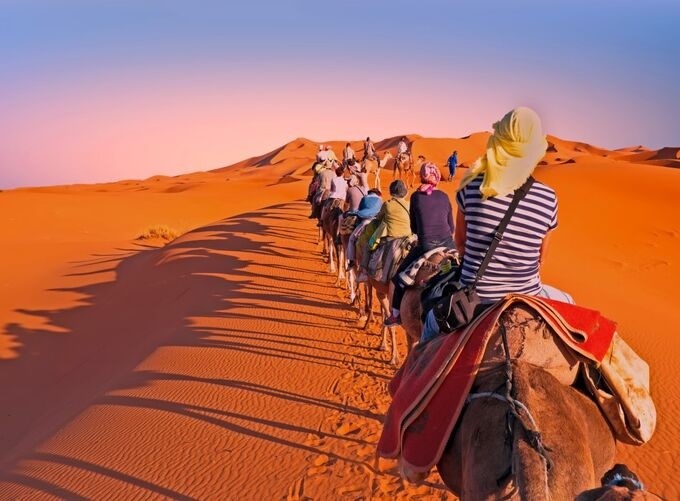
What Does a November Day in Morocco Actually Feel Like?
Monthly averages are useful for comparing seasons, but they rarely explain what travellers really want to know.
Will breakfast outside feel comfortable?
Can you spend the afternoon walking?
Will you need a jacket at dinner?
Should you pack for warm weather or cold weather?
In November, the answer to all four can be yes during the same trip.
That is why the month is better understood as a sequence of changing daily conditions rather than one average temperature.
Early Morning: The Layer You Almost Left at Home
The first surprise often comes when leaving the hotel early.
Marrakech mornings can feel distinctly fresh compared with the previous afternoon, while Fes may encourage you to keep an extra layer on for longer. In southern Morocco, an early departure can also feel cooler than travellers expect after seeing photographs dominated by sunshine and desert landscapes.
This becomes especially noticeable on sunrise days.
Standing outside before sunrise near the Sahara is entirely different from stepping out of a Marrakech riad after breakfast. Travellers who normally tolerate cool weather well may still appreciate a warm layer when they are stationary rather than walking.
The lesson is simple: pack for the coldest hour you realistically expect to spend outside, not only the warmest.
Late Morning: Morocco Starts Changing Clothes
As the sun rises, November often becomes considerably more forgiving.
The jacket that felt essential at breakfast may move into a backpack, and walking conditions can become excellent for city sightseeing. This is one of the reasons Marrakech and Fes work so well during late autumn: the warming part of the day coincides naturally with the hours when travellers want to be active.
The transition can happen quickly enough that carrying layers is more useful than wearing one heavy coat.
A breathable base combined with something easy to remove works across more environments than a single piece of winter clothing designed for much colder climates.
Afternoon: Often the Sweet Spot
On settled days, November afternoons can provide some of the most enjoyable sightseeing conditions of the year.
The sun may feel warm without creating the physical fatigue associated with midsummer, making longer walks, outdoor lunches and scenic stops easier to enjoy. Southern road journeys particularly benefit because travellers can leave the vehicle repeatedly without every stop becoming a negotiation with intense heat.
This is also where packing mistakes become visible.
Someone dressed for the cool morning may suddenly feel overdressed.
Someone who packed only for the afternoon will have the opposite problem several hours later.
| Time of Day | Typical Travel Approach |
|---|---|
| Early morning | Start with removable layers |
| Late morning | Expect to adjust clothing |
| Afternoon | Make use of comfortable outdoor hours |
| Sunset | Have another layer accessible |
| Evening | Expect cooler conditions inland |
| Desert night | Prepare more seriously for temperature drop |
The table is more useful as a packing rhythm than as a weather forecast.
Actual conditions will always vary.
Sunset Happens Earlier Than Many Travellers Expect
One of the practical differences between a November trip and a spring or summer itinerary is the reduced amount of daylight.
This matters surprisingly often.
A scenic road journey that includes several unplanned stops can run out of light before the final section. A late lunch may reduce the time available for outdoor sightseeing, while arriving at a viewpoint after sunset obviously changes the experience completely.
Travellers do not need to rush.
They need to decide which hours deserve daylight.
On road days, that may mean leaving earlier.
In Marrakech, it might mean completing gardens or other daylight-dependent visits before moving towards evening activities.
November rewards travellers who think about the clock as well as the temperature.
Dinner Moves Indoors More Often
During warmer months, terraces can become almost automatic.
November makes the choice more situational.
A sheltered Marrakech rooftop may still be extremely pleasant on a mild evening, while another night may send diners towards an indoor table after twenty minutes. Essaouira's wind can make the difference even more noticeable, and mountain or desert settings require greater respect for falling temperatures.
This is not a disadvantage.
Indoor dining spaces, riad courtyards and traditional interiors are part of the Moroccan experience as well.
The mistake is packing and planning as though every dinner will happen under the same conditions.
Desert Sunset Is Where the Temperature Can Fool You
Few moments demonstrate November's contrast better than a Sahara sunset.
You may begin the experience in comfortable sunshine and remain outside as the light changes, barely noticing how quickly warmth is disappearing. Once the sun is gone, the difference can become obvious.
This is why a layer should travel with you rather than remain back at the camp.
The same applies around sunrise.
Waiting for the light means spending time outside while relatively inactive, which can make cool conditions feel more pronounced than they would during a walk.
Desert packing should be practical before it is photogenic.
Hotel Choice Changes Slightly in November
Summer accommodation decisions often prioritise air conditioning, pools and convenient midday retreat.
November changes the checklist.
A pool may still look beautiful without being something you use. Instead, room comfort after sunset, good bedding and appropriate heating arrangements can become more relevant, particularly in mountain and desert accommodation.
Traditional buildings also behave differently from modern hotels.
Thick walls that provide wonderful protection from summer heat can feel cool once late-autumn nights arrive. Travellers sensitive to cold should therefore read recent seasonal reviews rather than assuming that a visually impressive property will automatically suit them.
November's Weather Is Easier Than Its Suitcase
For many travellers, November conditions are highly comfortable.
The difficulty comes from needing clothing for several versions of the day.
That problem is solved more effectively by three useful layers than by filling half the suitcase with winter clothes. Keep one layer accessible during road journeys, carry something warmer for desert evenings and check mountain forecasts separately from city conditions.
The goal is not to predict exactly how Morocco will feel every hour.
It is to be able to adjust when it changes.
That adaptability is what makes November such a rewarding month: cooler mornings, comfortable walking afternoons and crisp evenings can all become strengths when you arrive prepared for more than one season in a single day.
October vs November vs December: Where November Fits
November sits between October's broad autumn touring conditions and the more distinctly winter-oriented travel pattern that arrives in December.
The difference is not simply that each month becomes progressively colder. What changes is how temperature behaves throughout the day and how strongly travellers need to account for evenings, elevation and shorter daylight.
| October | November | December | |
|---|---|---|---|
| Seasonal Character | Full autumn circuit | Two-season days | Winter-sun travel |
| Marrakech | Warm, flexible touring | Mild days, cooler evenings | Winter city-break conditions |
| Fes | Excellent walking weather | Cooler cultural touring | Colder mornings and nights |
| Atlas | Strong autumn potential | Altitude increasingly important | Winter conditions at elevation |
| Southern Valleys | Excellent road-trip season | Strong daytime touring | Cool-season landscapes |
| Sahara | Warm days, cooler nights | Major day/night contrast | Winter desert experience |
| Atlantic Coast | Mild autumn coast | Atmospheric rather than beach-led | Winter coastal travel |
| Best For | Broad multi-region trips | Culture + Sahara | Winter sun + desert |
November therefore occupies a useful middle ground. Daytime touring remains comfortable across many parts of the country, while cooler mornings and evenings create a more obvious seasonal contrast than October usually provides.
Frequently Asked Questions About Morocco in November
Is November a good time to visit Morocco?
Yes. November can be an excellent month for cultural sightseeing, southern road trips and Sahara travel because peak summer heat is no longer a major concern. Travellers should prepare for cooler mornings and evenings, shorter daylight and significant regional differences, particularly when combining cities, mountains and desert.
Is Marrakech warm in November?
Marrakech often experiences mild to pleasantly warm daytime conditions in November, although weather varies and cooler periods or rain are possible. Once the sun goes down, temperatures can feel noticeably different, making a sweater or light jacket useful even when lightweight clothing was comfortable during the afternoon.
Is Fes cold in November?
Fes can feel cool during mornings and evenings, while daytime conditions may be comfortable for substantial medina exploration. Travellers should pack layers rather than relying on one heavy garment because conditions can change considerably during the day. Rain is also more possible than during Morocco's dry summer period.
Is November a good month for the Sahara?
November can be particularly attractive for Sahara travel because daytime conditions are generally much easier for outdoor activities than during summer. Nights and early mornings can feel considerably colder, however, so travellers staying in desert camps should confirm accommodation arrangements and pack suitable layers for time spent outside.
How cold is the Sahara at night in November?
Temperatures vary according to exact location and weather conditions, but the drop after sunset can be substantial compared with daytime warmth. Travellers should avoid assuming that a sunny afternoon means a warm evening and bring layers suitable for dinner outdoors, stargazing and early-morning activities around the dunes.
Can I hike in the Atlas Mountains in November?
Yes, depending on route and elevation. Lower valleys may remain suitable for walking, while higher elevations can experience much colder and increasingly winter-like conditions. Anyone planning substantial trekking should check current mountain weather and use appropriate local expertise rather than relying on Marrakech temperatures as a guide.
Does it rain in Morocco in November?
Rain becomes more possible during November, although amounts and frequency vary considerably across Morocco. Atlantic, northern and mountain regions can behave differently from the south. Most cultural itineraries can accommodate occasional wet periods through flexible scheduling, but mountain plans deserve closer attention when unsettled weather is forecast.
Can you swim in Morocco in November?
Possibly, particularly around warmer southern Atlantic areas and at hotels with suitable pools, but November should not be booked on the assumption of guaranteed beach or swimming weather. Sea temperature, wind and individual tolerance matter, while many travellers find the coast more rewarding for atmosphere and exploration than swimming.
What should I pack for Morocco in November?
Pack for layers rather than one season. Lightweight clothing can remain useful during sunny afternoons, while a sweater, fleece or jacket helps during cooler mornings and evenings. Comfortable walking shoes, rain protection and additional warmth for the Atlas or Sahara should be considered according to the exact itinerary.
Is November or December better for Morocco?
November generally offers slightly longer daylight and a late-autumn balance that works especially well for cultural touring and desert journeys. December provides a more distinctly winter experience and may suit travellers specifically seeking winter sun or year-end travel. Desert and mountain evenings can feel cold during either month.
November Is Not About Finding Morocco's Warmest Place
Travellers sometimes approach late-autumn planning by searching for the destination with the highest daytime temperature.
That misses the reason November works so well.
The month becomes interesting because different environments can be enjoyed without the intense heat that restricts parts of a summer itinerary. Marrakech and Fes regain long walking days. Southern road journeys encourage stops rather than quick escapes back into the vehicle, and the Sahara becomes somewhere travellers can spend meaningful time outdoors beyond sunrise and sunset.
The trade-off arrives at the edges of the day.
A light shirt that feels completely appropriate during a sunny afternoon may be inadequate several hours later. Mountain elevation increases that difference, desert nights make it particularly obvious, and Atlantic wind can make moderate temperatures feel cooler than expected.
None of this is difficult to manage.
It simply requires travellers to stop thinking of Morocco as a single-weather destination.
That idea is especially important in November because the itinerary can move between remarkably different environments within a few days. You might eat lunch outside in Marrakech, wear a warmer layer crossing the Atlas and then watch the Sahara sunset with another layer already packed for the temperature drop that follows.
November's shorter daylight also changes how the journey is organised. The best scenic road sections deserve daylight, substantial Fes exploration benefits from a reasonably early start, and desert sunsets become fixed points around which part of the day naturally develops.
These are small adjustments rather than restrictions.
They are also what separate November from October.
October's great advantage is regional compatibility: almost every major part of Morocco fits comfortably into a broad circuit.
November's advantage is contrast.
Warm sunshine feels better because the morning was cool. A desert afternoon becomes more memorable because the evening changes so quickly, and long city walks become enjoyable partly because summer's physical intensity has disappeared.
December will move Morocco farther into its winter identity.
November remains balanced between the two.
For travellers who enjoy comfortable sightseeing days, cooler nights and a Sahara experience that feels distinctly different from the afternoon that preceded it, that balance may be exactly the point.

A travel professional specializing in tailor-made travel planning, guest experience management, and multi-destination tourism operations.
With over 23 years of experience in the travel industry, he designs and manages private and cultural tours for international travelers across Türkiye, Greece, Egypt, Jordan, Morocco, and other destinations.
He has strong expertise in both online and face-to-face guest communication, sales processes, and end-to-end travel operations.
Working closely with hotels, travel agencies, and local partners, he ensures smooth coordination and high-quality travel experiences at every stage of the journey.
His focus is on delivering personalized, reliable, and seamless travel experiences for international guests worldwide.