Morocco Weather in December: Winter Sun, Rain & Sahara Nights
Last Updated: August 9, 2026
December is one of the easiest months to misunderstand in Morocco.
Travel photographs show blue skies, palm trees, rooftop terraces and golden desert landscapes, which can make the country look like a straightforward winter escape from colder parts of Europe or North America. In one sense, that is true. Marrakech can deliver wonderfully bright afternoons, southern Morocco often remains excellent for sightseeing, and the Sahara is free from the extreme heat that shapes summer travel.
But Morocco in December is not summer relocated to another latitude.
Mornings can be cold, evenings arrive early, mountain conditions may become genuinely wintry and desert temperatures can fall sharply once the sun disappears. Even beside the Atlantic, a sunny forecast does not necessarily translate into a conventional beach holiday.
December works best when travellers come for winter light rather than summer heat.
That distinction changes almost everything about the trip.
What Does “Winter Sun” Actually Mean in Morocco?
Winter sun is one of those travel phrases that sounds more precise than it really is.
In Morocco, it usually means there is a good possibility of bright daytime conditions in several popular regions, allowing cultural sightseeing and outdoor activities to remain enjoyable when much of Europe is deep into winter.
It does not mean guaranteed T-shirt weather from breakfast until dinner.
| Region | December Strength | Main Seasonal Reality |
|---|---|---|
| Marrakech | Sunny cultural city break | Cold mornings and evenings possible |
| Fes | Comfortable walking days | Cooler and potentially wetter |
| High Atlas | Dramatic winter scenery | Snow and cold possible at elevation |
| Southern Valleys | Excellent road touring | Short daylight needs planning |
| Sahara | Comfortable daytime exploration | Cold nights can surprise visitors |
| Essaouira | Atmospheric Atlantic stay | Wind and cooler coastal weather |
| Agadir | Winter-sun potential | Not guaranteed beach weather |
The practical lesson is simple: December can feel delightful in the sun and completely different ten minutes after sunset.
Marrakech Makes More Sense as a Winter City Break
December changes Marrakech in a way that suits travellers who enjoy cities on foot.
Instead of designing sightseeing around escaping the afternoon heat, visitors can often spend substantial parts of the day moving between palaces, museums, gardens, markets and neighbourhoods. Lunch on a sunny terrace may still feel wonderfully warm, particularly when sheltered from wind.
The colder edges of the day create the contrast.
Leaving early for an excursion can require a jacket that becomes unnecessary several hours later, while rooftop dinner plans may suddenly seem less appealing once the temperature falls.
This makes December Marrakech closer to a classic winter city break than a winter beach escape.
Travellers interested in building the city into a broader cool-season journey can consider Morocco winter tours, combining cultural sightseeing with southern regions where December conditions often favour extended outdoor exploration.
The Sun Can Make You Pack Badly
A photograph taken at 2 PM is not a packing guide.
December sunshine can be strong enough that travellers underestimate how quickly conditions change later in the day. This is especially common among visitors arriving from genuinely cold climates, who see a mild daytime forecast and decide that Morocco requires little more than spring clothing.
During the afternoon, they may be correct.
At 7 AM or 9 PM, perhaps not.
The answer is not filling the suitcase with bulky winter clothing. Layering remains far more practical because the same day may require a jacket, light top and sunglasses at different times.
December packing should be built around transitions.
Christmas and New Year Change the Travel Calendar
December is not one uniform tourism period.
The first half of the month can feel very different from the Christmas and New Year period, when international demand increases and travellers compete for some of the same well-located riads, desert camps and holiday arrangements.
This is particularly important for small properties.
A large city may still have hotel rooms available, but that does not mean the specific riad or room category you wanted will remain open.
| Travel Period | Planning Approach |
| Early December | Greater accommodation flexibility |
| Mid-December | Book key properties if specific |
| Christmas week | Reserve preferred hotels earlier |
| New Year period | Expect stronger demand in popular areas |
Advance planning matters most when something is difficult to substitute.
A specific desert camp or intimate Marrakech riad may deserve early booking. A casual lunch next Tuesday probably does not.
New Year's Eve in the Sahara Sounds Better Than It Is—Unless You Like Cold Nights
Spending New Year's Eve near the dunes can be memorable, but the idea is often sold through images rather than temperature.
The Sahara in December can provide beautiful daytime conditions for exploring, yet nights may become genuinely cold. Travellers imagining an evening outdoors beneath the stars should arrive with suitable clothing and realistic expectations.
Camp quality matters as well.
Heating arrangements, bedding, private facilities and communal spaces vary, which means “luxury camp” should never be treated as a universal technical standard.
Ask what is actually included.
The romance of a desert night improves considerably when you are dressed for it.
December Is One of the Months When the Road South Matters
Cooler daytime conditions make southern Morocco especially rewarding for travellers who enjoy road journeys.
The route across the Atlas towards Ouarzazate and the desert-edge landscapes contains enough variety that rushing directly towards the dunes wastes much of its value. Kasbahs, valleys, viewpoints and smaller communities can all become meaningful stops when the temperature encourages exploration rather than limiting it.
Those wanting to give this region more time can consider Morocco southern adventures, where the journey between Marrakech and the Sahara is treated as part of the experience rather than merely the transfer required to reach a camp.
December introduces one limitation, however.
Daylight.
The road may be comfortable, but the day is shorter.
Short Daylight Changes More Than You Think
A summer itinerary can survive a slow breakfast and late departure because many hours of daylight remain.
December is less forgiving.
Scenic routes should be planned so that the most interesting sections happen before darkness. If a day contains a mountain crossing, kasbah visit and several landscape stops, leaving unnecessarily late can mean the final portion is completed after the scenery has disappeared.
This does not mean every travel day should begin at dawn.
It means calculating more than driving time.
If Google Maps says the journey takes five hours, that does not mean it is a five-hour travel experience once lunch, photographs and visits are added.
In December, daylight becomes an itinerary resource.
The Sahara Is Better When You Give It a Full Day
Winter removes one of the Sahara's greatest summer limitations: the middle of the day becomes far more usable for many travellers.
That creates an opportunity to experience the desert beyond sunset and sunrise.
A well-paced stay can include time to understand the surrounding landscapes, local communities and different desert environments rather than arriving shortly before sunset and leaving immediately after breakfast.
Travellers particularly interested in this side of Morocco can explore Sahara discovery trips, giving the desert enough time to become a destination rather than an overnight photograph.
The trade-off is the temperature after dark.
December gives the Sahara its daytime back and takes some warmth from the night.
The Atlas Can Be Winter in a Way Marrakech Is Not
Perhaps the most important December weather distinction appears with altitude.
A traveller may leave a bright, mild Marrakech afternoon and assume the nearby mountains will simply be several degrees cooler.
That assumption can be unsafe for serious mountain activities.
Higher elevations can experience snow, ice and genuine winter conditions, while lower valleys may remain accessible and suitable for day trips or walking depending on current weather.
This means “Atlas Mountains in December” is too broad a phrase to support one recommendation.
A low-altitude village experience and a high mountain trek are completely different propositions.
Check the actual route.
Then check the actual weather.
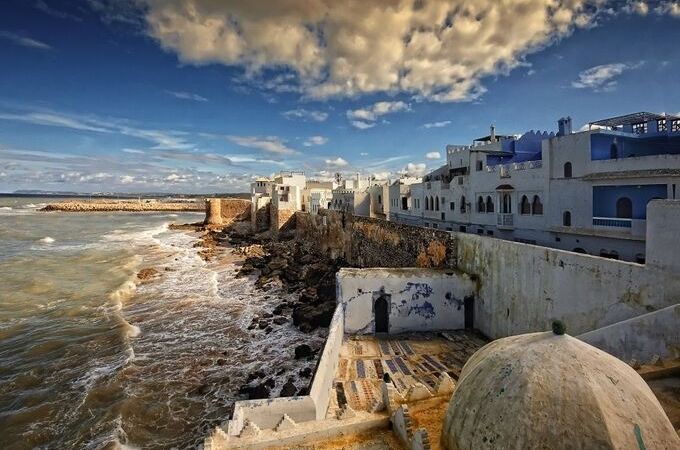
Essaouira Is for the Ocean, Not a Guaranteed Beach Day
December can be an excellent time to visit Essaouira if expectations are correct.
The medina remains engaging, seafood does not stop being good because it is winter, and long Atlantic walks can provide a refreshing contrast to Marrakech and the south.
What travellers should not assume is that several coastal nights automatically equal several days of sunbathing.
Wind and changing weather can make the coast feel cooler than inland destinations, while swimming appeal depends heavily on personal tolerance and actual conditions.
Essaouira in December is a coastal city experience.
The beach is part of the landscape rather than the entire purpose.
December Rewards Travellers Who Want to Do Things
If your idea of a winter holiday is lying beside a pool every afternoon, Morocco in December carries some uncertainty.
If your idea is walking through Marrakech without summer heat, travelling through southern landscapes, exploring the Sahara during comfortable daylight and returning to a riad as the evening cools, the month becomes much more persuasive.
That distinction is important.
December's value comes from usable winter days, not guaranteed summer temperatures.
The sunlight can be beautiful.
The desert can be exceptional.
Marrakech can feel made for walking.
But winter still exists, particularly after sunset and at elevation.
Accept that, pack accordingly, and December stops being a questionable beach substitute.
It becomes one of Morocco's most distinctive cool-season journeys.
Christmas in Marrakech, the Sahara or the Coast?
Christmas in Morocco is an interesting proposition because the country does not become a European-style festive destination simply because international visitors arrive for the holidays.
You may see Christmas dinners, decorations and special programmes in international hotels and tourist-oriented restaurants, particularly in Marrakech and major resorts, but the wider experience remains unmistakably Moroccan.
That is part of the appeal.
Rather than travelling for Christmas markets, snow-covered streets and traditional European festivities, visitors can spend the holiday walking through a medina, crossing southern landscapes or watching the evening light change over the Sahara.
The question is which version suits you.
| Christmas Stay | Best For | Main Trade-Off |
|---|---|---|
| Marrakech | Food, culture and city atmosphere | Popular properties book early |
| Sahara | Memorable landscape experience | Cold nights and longer journey |
| Essaouira | Slow cultural coastal break | Variable Atlantic weather |
| Agadir | Resorts and easy relaxation | Less historic atmosphere |
| Atlas Mountains | Scenery and intimate stays | Winter conditions vary by altitude |
The most festive-looking option is not necessarily the most memorable one.
Marrakech Offers the Easiest Christmas Balance
For travellers wanting a holiday that feels special without requiring complicated logistics, Marrakech has the strongest all-round case.
Days can be spent exploring palaces, gardens, museums and the medina, while restaurants and higher-end hotels often provide enough international hospitality infrastructure that Christmas Day does not create practical difficulties for visitors.
The city also works well for mixed-interest groups.
One person may want shopping and food, another architecture and history, while someone else simply wants a comfortable hotel and several unstructured afternoons. Marrakech can accommodate those preferences without splitting the group across different destinations.
December weather helps because sightseeing is generally less physically demanding than during summer.
The compromise is demand.
A specific riad that looks perfect for Christmas should not be treated as something that will inevitably remain available until the last minute.
Christmas Day Does Not Close Morocco
Travellers sometimes worry that sightseeing, restaurants and transportation will stop operating on December 25 in the same way they might in predominantly Christian countries.
Morocco does not observe Christmas as a national public holiday in that sense.
Tourism businesses generally continue operating, although individual hotels, restaurants and service providers may organise special programmes or adjust arrangements.
This means Christmas Day can still function as a normal sightseeing day.
You do not need to design the entire itinerary around finding something open.
If a special dinner matters, however, that should be checked separately rather than assumed.
The Sahara Is the More Memorable Choice, but Not the Easier One
Spending Christmas near the dunes has obvious emotional appeal.
There is something wonderfully unusual about replacing a conventional winter holiday with a desert landscape, particularly when the journey south has been given enough time to feel like part of the experience.
The difficulty is that photographs rarely communicate temperature.
Once the sun disappears, December desert conditions can become cold enough that clothing and camp arrangements materially affect enjoyment. A traveller expecting warm evenings because the afternoon was sunny may be surprised.
This does not diminish the experience.
It simply means the Sahara works best for people who want the desert more than they want conventional festive comfort.
Don't Drive to the Sahara Just for Christmas Eve
A festive date can encourage strange itinerary decisions.
Travellers sometimes try to reach the desert specifically for December 24 or 25 even when doing so requires a rushed sequence of long driving days.
The Sahara deserves better than being treated as an event venue.
If the route naturally allows Christmas Eve to fall during a two- or three-night southern section, excellent. If reaching the dunes requires sacrificing Fes, compressing Marrakech or spending most of the previous two days inside a vehicle, the date may be controlling the holiday too aggressively.
A memorable Christmas should improve the trip.
It should not distort it.
Essaouira Works for Travellers Who Want Christmas to Feel Unscheduled
Not everyone wants a special dinner, organised programme or hotel celebration.
Essaouira suits travellers who would rather spend the holiday walking through a compact medina, eating seafood and watching the Atlantic without needing Christmas Day to feel dramatically different from December 23.
The weather is less predictable than a summer beach holiday, and wind can make the coast feel cooler than inland temperatures suggest.
That is part of the trade.
You are choosing atmosphere rather than guaranteed warmth.
For couples and independent travellers, this can be particularly appealing because the destination does not require a packed sightseeing schedule to justify several nights.
Agadir Makes More Sense for Families Seeking Simplicity
Agadir offers a different Christmas experience.
Resort facilities reduce the need to plan every hour, which can be useful for families who want a break rather than an intensive cultural circuit. Pools, organised hotel services and beach access create easy options, although December conditions should not be mistaken for guaranteed swimming weather.
A resort with a heated pool may therefore provide considerably more practical value than one with a beautiful unheated swimming area.
Families should also look beyond the room itself.
Christmas or New Year programmes, meal arrangements and children's facilities can influence the holiday far more than minor differences between hotel categories.
New Year's Eve Creates More Booking Pressure
The final days of December deserve separate treatment from the rest of the month.
Marrakech is particularly attractive for New Year travellers, and desirable riads, restaurants and hotels may experience strong demand. Desert camps can also become popular with visitors attracted by the idea of beginning the year beneath a clear night sky.
This is where advance reservations become genuinely useful.
Not everything needs to be booked.
But if you would be disappointed to miss a specific New Year's Eve dinner, property or desert arrangement, leaving it entirely to chance makes little sense.
Christmas Week Needs Fewer Hotel Changes
Holiday travel often comes with slightly different expectations from a normal sightseeing trip.
People want time for longer meals, slower mornings and simply being together. An itinerary that changes hotels every night can work against that rhythm even when the destinations themselves are excellent.
December therefore makes a strong case for choosing two or three substantial bases rather than creating a rapid highlights circuit.
For a week, Marrakech combined with one contrasting region may be enough.
With ten days, the Sahara or Atlantic can be incorporated without turning Christmas into a transfer schedule.
Longer journeys allow more freedom, but the same principle remains.
Choose the Christmas Memory You Actually Want
Marrakech offers the easiest combination of culture, restaurants and comfortable logistics.
The Sahara provides the strongest sense of occasion but asks more from both the itinerary and your cold-weather preparation.
Essaouira suits travellers who want the holiday to feel relaxed and distinctly Moroccan rather than formally festive, while Agadir provides the simplest route towards resort-style downtime.
None is objectively the best place to spend Christmas.
The useful question is what you want to remember afterwards.
A long dinner in a Marrakech riad?
Christmas morning beside the Atlantic?
A desert sunrise?
Several days when nobody in the family needs to follow a sightseeing schedule?
December gives you all of those possibilities.
Choosing one deliberately is far better than trying to fit all of them into the same Christmas week.
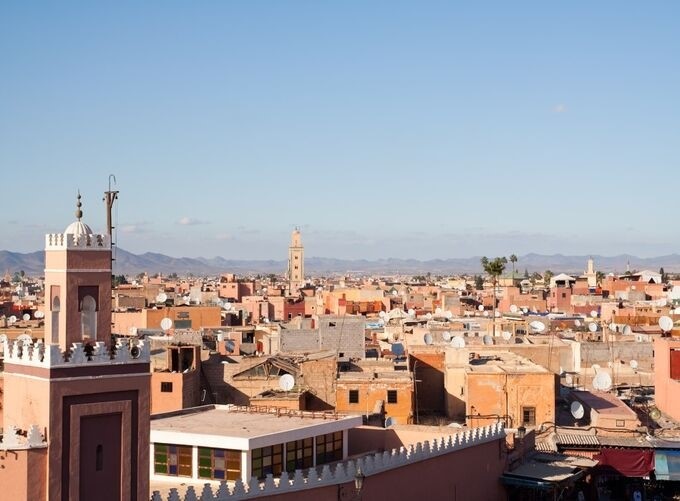
Packing for December Is Really About Geography
A December packing list for Morocco can become absurdly long if every possible condition is treated as a separate problem.
You do not need one wardrobe for Marrakech, another for Fes and an entirely different suitcase for the Sahara.
What you need is clothing that can change function during the day.
December travellers frequently move between sunny afternoons, cool city evenings, colder desert mornings and, on some itineraries, genuinely wintry mountain environments. The difference between these conditions can be greater than the distance on the map suggests.
The answer is not packing more.
It is packing things that work together.
Start With Layers, Not a Heavy Winter Coat
For a conventional cultural and desert itinerary, several lighter layers are generally more useful than one very heavy coat.
A December morning may begin with a sweater and jacket, only for one or both to end up in your bag once the sun strengthens. Later, the same layers become useful again after sunset.
A practical wardrobe might revolve around breathable daytime clothing, a sweater or fleece and a weather-resistant outer layer, with warmer options added when the itinerary includes the Sahara or higher elevations.
| Itinerary | What Matters Most |
|---|---|
| Marrakech only | Light layers + evening jacket |
| Marrakech & Fes | Layers + rain protection |
| Cities & Sahara | Extra warmth for desert nights |
| Atlas included | Route-specific cold-weather clothing |
| Atlantic coast | Wind-resistant outer layer |
| Multi-region circuit | Clothing that can be layered repeatedly |
This approach also prevents travellers from dressing for the coldest possible moment all day.
The Sahara Needs Warmth You Can Carry With You
Desert nights receive plenty of attention, but the timing of the temperature change matters just as much.
You may leave camp for sunset while conditions still feel comfortable. By the time the light has faded and you have spent another hour outside, the clothing left inside your room is no longer particularly useful.
Carry the extra layer.
The same logic applies to sunrise. Travellers are often standing relatively still while waiting for the light, which can make cool conditions feel more noticeable than during daytime walking.
A warm hat or similar compact item may also provide surprising value without taking much luggage space.
The Sahara does not necessarily require expedition clothing in December.
It does require respect for the hours when the sun is absent.
The Atlas Needs Its Own Forecast
This is the one part of a December itinerary where a general Morocco packing guide becomes inadequate.
Mountain conditions depend on altitude, route and current weather. A lower valley visit may require little more than good walking shoes and warm layers, while a higher trek can involve snow, ice and winter conditions requiring completely different equipment.
Do not pack for an Atlas trek based on the temperature displayed for Marrakech.
They are separate environments.
Anyone undertaking substantial mountain activity should follow route-specific guidance from experienced local professionals and check conditions shortly before the activity.
This is also where footwear becomes more important. Shoes suitable for walking through Marrakech are not automatically appropriate for winter mountain terrain.
Fes Makes Rain Protection More Useful
December does not guarantee rain, but unsettled weather is more plausible than during Morocco's dry summer.
Fes is one place where a compact waterproof or water-resistant outer layer can earn its luggage space. The medina involves considerable walking, and wet stone or tiled surfaces can also become slippery.
An umbrella may help in some circumstances, although narrow and busy medina streets can make a hooded jacket more convenient.
The aim is not to prepare for a week of continuous rain.
It is to avoid allowing one wet afternoon to become unnecessarily uncomfortable.
Essaouira Can Feel Colder Than the Forecast Looks
Atlantic wind changes perceived temperature.
A weather app may show conditions that appear relatively mild, yet an exposed walk near the ocean can feel considerably cooler than a sheltered afternoon in Marrakech at a similar numerical temperature.
A wind-resistant layer therefore has more value on the coast than simply adding another thick sweater.
This is also why December beach expectations should remain flexible.
A sunny café terrace protected from the wind can feel delightful while the open beach several minutes away feels completely different.
The number on the screen has not changed.
Your exposure has.
Shoes Matter More in December Than Sandals
December is generally a walking-heavy month for many Morocco visitors because cooler daytime conditions make city exploration easier.
Comfortable closed shoes therefore become one of the most useful items in the suitcase.
They suit long medina days, cooler evenings and many southern sightseeing stops better than footwear selected primarily for summer heat. If rain occurs, they are also more practical than open shoes on wet streets.
Sandals can still be useful around hotels or during particularly warm afternoons.
They simply should not be the only serious footwear option.
Your Hotel Can Change What You Need to Pack
Accommodation standards matter differently in winter.
A beautifully restored riad may have enormous character but behave thermally very differently from a modern international hotel. Traditional courtyards and thick masonry can create interiors that feel cooler in December than travellers expect.
Heating arrangements are therefore worth checking if you are sensitive to cold.
The same applies even more strongly to desert camps and mountain lodges.
Rather than assuming every property has the same winter setup, look for recent reviews or ask about heating, bedding and room arrangements.
Good accommodation research can remove several unnecessary items from the suitcase.
What Can Stay at Home?
The fear of cold often leads to overpacking.
For a standard Marrakech–Fes–Sahara itinerary, most travellers do not need to dress as though they are taking a winter expedition, unless their specific mountain plans genuinely require specialist clothing.
Nor do you need a completely separate outfit for every temperature change.
December rewards repetition.
A reliable outer layer can be worn in several regions. The same sweater can handle a Marrakech evening and sit beneath another layer in the desert. Comfortable walking shoes can cover most city and road-tour days.
The suitcase should reflect how Morocco changes.
It does not need to contain a different wardrobe for every change.
Pack for 8 AM and 2 PM, Not an Average Temperature
This is perhaps the simplest December rule.
An average temperature cannot tell you what to wear because you rarely experience an average day at an average hour.
Think instead about the moments your itinerary actually contains.
An early departure from Fes.
Lunch in the Marrakech sun.
A windy afternoon in Essaouira.
Sunset beside the dunes.
A pre-breakfast desert sunrise.
A drive through the Atlas.
If your clothing can move comfortably between those situations, you are prepared.
December Morocco does not require an enormous suitcase.
It requires a suitcase that understands the difference between winter sun and summer.
November vs December vs January: Where December Fits
December sits between November's late-autumn contrasts and January's more established winter pattern.
The difference between these months is not dramatic enough to justify choosing solely from average temperatures. Daylight, holiday demand, mountain conditions and what you expect from the coast can matter just as much.
| November | December | January | |
|---|---|---|---|
| Seasonal Identity | Late-autumn contrast | Winter sun + festive travel | Mid-winter Morocco |
| Marrakech | Mild daytime touring | Strong winter city break | Cool-season sightseeing |
| Fes | Excellent for walking | Cooler, variable conditions | Winter cultural travel |
| Atlas | Winter begins at elevation | Snow increasingly relevant | Deepest winter period |
| Southern Morocco | Excellent touring | Strong road-trip season | Cool-season south |
| Sahara | Large day/night contrast | Excellent days, cold nights | Winter desert conditions |
| Atlantic Coast | Atmospheric autumn coast | Winter coastal escape | Cool-season Atlantic |
| Demand | Moderate to strong | Higher around holidays | Changes after New Year |
| Best For | Culture + desert | Christmas, winter sun + Sahara | Quiet winter touring |
December's distinctive advantage is therefore not simply weather. It combines Morocco's cool-season touring conditions with one of the year's most important international holiday periods.
Frequently Asked Questions About Morocco in December
Is December a good time to visit Morocco?
Yes. December can be excellent for travellers interested in Marrakech, Fes, southern road trips and the Sahara because daytime sightseeing is generally far less affected by extreme heat. Cooler evenings, shorter daylight, possible rain and winter mountain conditions should nevertheless be incorporated into the itinerary and packing.
Is Morocco warm in December?
Morocco can feel pleasantly warm in sunshine during December, particularly in Marrakech and southern regions, but it should not be treated as a guaranteed hot-weather destination. Mornings and evenings may be cool or cold, while mountains, northern cities, the Atlantic coast and Sahara nights can feel substantially different.
Is Marrakech warm enough in December?
Marrakech can offer bright, mild or pleasantly warm daytime periods that work extremely well for sightseeing. Temperatures often fall noticeably after sunset, however, so travellers should bring layers. December suits visitors seeking an active winter city break much better than those requiring guaranteed swimming-pool weather.
Is December good for the Sahara Desert?
Yes. December can provide excellent daytime conditions for exploring the Sahara because extreme summer heat is absent. Nights and early mornings can become cold, so appropriate layers are essential. Travellers should also check heating, bedding and facilities at their specific desert camp rather than relying only on its category.
Does it snow in Morocco in December?
Snow is possible in Morocco's mountain regions, particularly at higher elevations. Conditions vary considerably according to altitude and individual weather systems, so travellers should not assume the Atlas will resemble Marrakech. High-altitude trekking requires current local information and appropriate winter equipment when conditions demand it.
Can I swim in Morocco in December?
Swimming depends on destination, weather, water temperature and personal tolerance. Some hotels, particularly around southern resort areas, may offer suitable conditions, while heated pools provide greater reliability. Travellers should not choose December primarily for guaranteed beach swimming because conditions can vary significantly from day to day.
Is Essaouira worth visiting in December?
Yes, provided the purpose is experiencing Essaouira rather than seeking a conventional summer beach holiday. Its medina, harbour, seafood and Atlantic setting remain rewarding, while wind and cooler conditions give the city a different seasonal character. A wind-resistant layer can be particularly useful for exposed coastal walks.
What is Christmas like in Morocco?
Christmas is not a Moroccan national holiday in the same way it is in many predominantly Christian countries, so normal tourism activity generally continues. International hotels and tourist-oriented restaurants may arrange festive meals or events, while popular destinations can experience stronger visitor demand around Christmas and New Year.
Is Morocco busy over Christmas and New Year?
Popular destinations and specific accommodation categories can experience strong demand during the festive period, particularly Marrakech and desirable desert camps. Travellers with specific hotel, riad or New Year's Eve preferences should book earlier, although this does not mean every destination or attraction will feel uniformly crowded.
What should I wear in Morocco in December?
Layering is the most practical approach. Bring comfortable daytime clothing, a sweater or fleece, an outer layer and good walking shoes, adding greater warmth when the itinerary includes desert nights or mountains. A lightweight rain-resistant layer is also useful because winter weather can become more variable.
Is December or January better for Morocco?
Both suit cool-season travel. December has the added appeal and demand of Christmas and New Year, while January moves farther into Morocco's mid-winter pattern and can feel quieter after the holiday period. Travellers should choose according to itinerary, holiday timing and their tolerance for cooler mornings and evenings.
How many days do I need for Morocco in December?
Around seven days works well for Marrakech plus one contrasting region, while ten days gives considerably more freedom for a southern journey or another major city. Twelve to fourteen days allows cities, mountains, desert and potentially the Atlantic to be combined without turning short winter daylight into a rushed schedule.
December Works Best When You Stop Calling It a Warm-Weather Holiday
Morocco's December appeal is easy to sell through temperature comparisons.
If home is cold, Marrakech looks warmer.
If Europe is grey, southern Morocco looks sunnier.
If winter means snow and short outdoor days where you live, photographs of palm trees and Sahara dunes can make Morocco appear almost summery.
Yet the better reason to travel in December is not escaping winter completely.
It is experiencing a different version of it.
Marrakech becomes a city for sustained walking rather than carefully timed escapes from the heat. Fes rewards long medina days, provided travellers make sensible use of shorter daylight. Southern road journeys become enjoyable because stopping at kasbahs, valleys and viewpoints no longer requires negotiating extreme afternoon temperatures.
The Sahara may benefit most.
Winter daylight allows the desert to become more than a sunrise-and-sunset destination, although cold nights remind travellers immediately that comfortable daytime sunshine and warm twenty-four-hour weather are very different promises.
The Atlas creates an even stronger seasonal boundary.
Higher elevations may experience genuine winter conditions while Marrakech enjoys a bright afternoon only a few hours away. This contrast is one of the reasons national temperature averages become especially unhelpful in December.
Then there is Christmas.
Travelling during the festive period adds demand and creates expectations that do not exist during an ordinary winter week. Marrakech can provide an easy combination of cultural sightseeing and special hotel or restaurant arrangements, while the Sahara offers a much less conventional holiday memory. Essaouira suits travellers who would rather allow Christmas to pass quietly beside the Atlantic.
None requires Morocco to imitate Europe.
That is precisely the appeal.
November introduces the sharper difference between comfortable daytime touring and cooler nights. January moves farther into the country's winter cycle.
December owns the space between them because it combines cool-season Morocco with the emotional weight of year-end travel.
Come expecting guaranteed summer and the month can disappoint.
Come for winter sunlight, walkable cities, southern landscapes, desert days and the possibility of spending Christmas somewhere that feels completely removed from the usual routine, and December begins making much more sense.
The best December trip does not pretend winter disappeared.
It simply discovers how differently Morocco wears it.

A travel professional specializing in tailor-made travel planning, guest experience management, and multi-destination tourism operations.
With over 23 years of experience in the travel industry, he designs and manages private and cultural tours for international travelers across Türkiye, Greece, Egypt, Jordan, Morocco, and other destinations.
He has strong expertise in both online and face-to-face guest communication, sales processes, and end-to-end travel operations.
Working closely with hotels, travel agencies, and local partners, he ensures smooth coordination and high-quality travel experiences at every stage of the journey.
His focus is on delivering personalized, reliable, and seamless travel experiences for international guests worldwide.