Cappadocia Weather in November: First Frosts & Quiet Trails
Last Updated: August 2026
At some point in November, Cappadocia becomes noticeably quieter.
Not empty. Not closed. Just quieter.
A viewpoint that required patience a few weeks earlier may have only a handful of people standing around it. Restaurant tables become easier to find. The valleys lose much of their autumn softness, and bare branches begin appearing against rock formations that suddenly seem larger without summer vegetation around them.
Then there is the cold.
It often announces itself first in the morning: frost on the ground, a sharper feeling when you leave the hotel, perhaps ice lingering somewhere the sun has not reached. By lunchtime, conditions can improve dramatically. On a clear day, walking in direct sunshine may be surprisingly pleasant.
November is Cappadocia entering its low season in real time.
For travelers who appreciate space and do not mind exchanging long evenings for a slower, colder experience, that can be a very good trade.
November Is Not Winter Yet—Until It Suddenly Feels Like It
Calling November “late autumn” is technically reasonable but not especially useful for packing.
Cappadocia sits high on the Central Anatolian plateau. Cold weather can establish itself earlier than travelers expect, particularly at night.
Daytime temperatures commonly reach roughly 10–15°C, while nights can fall toward 0–5°C. Colder spells can take temperatures below freezing, especially later in the month.
Snow is possible, although November should not be planned as a snow holiday.
What matters more is the growing presence of frost.
| November Condition | Practical Effect |
|---|---|
| Cold clear morning | Frost possible on exposed surfaces |
| Sunny midday | Often comfortable for sightseeing |
| Shaded valley | Can remain much colder |
| Cloudy day | Cool temperatures feel more persistent |
| After sunset | Temperature falls quickly |
| Late-month cold spell | Early winter conditions possible |
This is why two November visitors can describe the month very differently.
One remembers sitting outside at lunch.
The other remembers scraping frost from the morning.
Both can be right.
The First Decision of the Day Happens at the Hotel Door
November is a month when checking a weather app is not quite enough.
Open the door.
Feel the air.
Look at the ground.
That small routine tells you whether the morning should begin outside or somewhere more sheltered.
If frost is heavy, there is little advantage in forcing an early valley walk. Have breakfast slowly, visit a cultural site first, and let the sun do some work.
If the morning is dry and mild, use it.
This daily decision-making is part of November travel. The itinerary should have a shape, but not every activity needs a fixed hour several weeks in advance.
A Cappadocia cultural tour is particularly practical in this season because outdoor landscapes can be combined naturally with underground cities, rock-cut churches and historic settlements.
The weather changes the order, not necessarily what you get to experience.
Daylight Becomes a Real Planning Constraint
Temperature receives most of the attention in November, but daylight may influence the itinerary more.
The generous summer evening has disappeared. By late afternoon, the sun is already becoming an issue for anyone trying to fit in another substantial outdoor activity.
This changes the value of time.
November's Usable-Day Problem
| Activity | Time Pressure in November |
| Long valley walk | High – allow enough daylight to finish |
| Short scenic walk | Moderate |
| Underground city | Low |
| Göreme Open-Air Museum | Moderate |
| Panoramic viewpoint | Low |
| Sunset stop | Fixed by early sunset |
| Village sightseeing | Moderate |
A long lunch can still be wonderful.
It simply has consequences.
If you spend two relaxed hours eating and then begin a valley route late in the afternoon, daylight may become more important than temperature.
November therefore rewards travelers who decide what matters most before the middle of the day rather than trying to improvise everything afterward.
Cappadocia Looks Stripped Back in November
By November, much of the seasonal decoration has gone.
Leaves have fallen from many trees. The grass is dry or dormant. Vineyards and cultivated areas become less visually dominant.
What remains is the geology.
This is one reason November has an understated appeal. Fairy chimneys, valley walls and cave openings become more visually exposed when vegetation stops competing for attention.
The landscape can feel stark.
On cloudy days, it may even feel severe.
That will not suit everyone. Travelers looking for spring greenery or October's autumn accents should choose another period.
But if you like landscapes with fewer distractions, November reveals Cappadocia in a remarkably direct way.
What Happens to Valley Walking?
Walking does not disappear in November.
The decision simply becomes more conditional.
Dry, sunny days can be excellent. Cooler temperatures mean there is no heat pressure, and popular routes may feel considerably less busy than they did a month earlier.
The complications are frost, rain, shorter daylight and occasional early snow.
Shaded sections deserve particular attention. Ground that looks dry elsewhere may remain damp, frosty or slippery where sunlight has not reached.
A Cappadocia valley escape in November therefore works best when route length remains flexible.
Choose a shorter trail if you start late. Avoid committing to a long route after poor weather simply because it appears on the itinerary. Make sure you know roughly how long the walk takes before entering a valley with limited daylight remaining.
November walking is less about stamina and more about judgment.
Quiet Changes the Attractions Too
Low-season travel is often discussed as though the only advantage is avoiding queues.
In Cappadocia, it changes the atmosphere.
An underground city with fewer visitors feels different because narrow passages and chambers have more space. A viewpoint becomes somewhere to stand for a while rather than somewhere to take a photograph and move aside.
Even Göreme can feel more local once the stronger seasonal flow of visitors eases.
There is a downside.
Some tourism businesses may reduce hours or operate differently outside peak periods. Seasonal services can change, and there is less reason to assume that every café, terrace or activity will follow its high-season routine.
This is not a problem if you travel with reasonable expectations.
November gives you more space in exchange for fewer guarantees that everything around tourism will operate at maximum seasonal capacity.
Should You Stay Longer Because the Days Are Shorter?
Possibly.
This sounds contradictory. If November is quieter and there are fewer long outdoor days, why spend more time?
Because trying to compensate for short daylight by compressing the itinerary defeats much of the reason for visiting in November.
Two nights can cover Cappadocia's highlights, but the schedule becomes vulnerable. A cold or wet morning consumes a significant portion of the available outdoor time.
Three nights provide more balance.
Four nights are unlikely to be necessary for every first-time visitor, but they make sense for travelers who enjoy slow travel, photography or walking and are willing to let weather determine the day's pace.
The additional night is not about adding another checklist attraction.
It reduces urgency.
November Packing Starts With the Morning, Not the Afternoon
A forecast showing 13°C can look harmless.
At 7 a.m., that number is irrelevant.
Pack a proper jacket. Add layers underneath so you can remove them when direct sunshine warms the afternoon. A sweater or fleece, comfortable trousers and weather-resistant footwear create a practical base.
A hat and light gloves become increasingly useful, particularly later in the month or for pre-sunrise departures.
Footwear should have decent grip if valleys are part of the itinerary.
Frost and damp ground are more important considerations than whether the shoes look suitably “winter.”
And keep sunglasses.
Cold clear days in Cappadocia can be exceptionally bright.
Ballooning in November: Cold Is Only Half the Question
The obvious November balloon concern is temperature.
Yes, mornings can be cold.
Passengers should dress warmly enough to stand outside before sunrise, with layers that can be removed later.
But the bigger issue remains operational weather. Balloon flights depend on appropriate wind, visibility and aviation conditions rather than simply whether the day is sunny or cold.
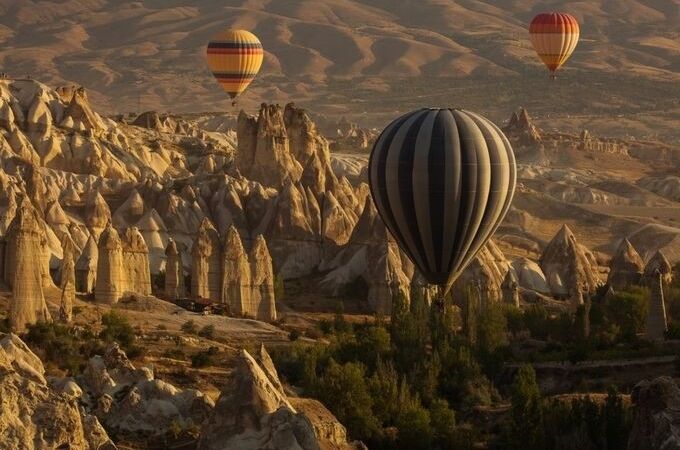
A Cappadocia balloon getaway should ideally sit within a multi-night stay so that the entire trip does not depend on one particular morning.
November adds another consideration: what you schedule after the flight.
An early start combined with a short daylight window can tempt travelers to rush directly into sightseeing. There is no need.
You still have enough time for a meaningful day if the itinerary is focused.
November's Most Underrated Advantage: Silence
Walk far enough from a road on a quiet November day and something disappears.
Tour buses.
Terrace music.
Groups talking at viewpoints.
Sometimes even the sound of footsteps.
Cappadocia's open terrain makes silence unusually noticeable. With fewer visitors and less vegetation moving in the breeze, the landscape can feel almost empty.
That is not an attraction you can put on an itinerary.
It is also difficult to experience in the same way during the busiest months.
For some travelers, November's cold mornings are the price of admission.
For others, they are precisely why the quiet exists.
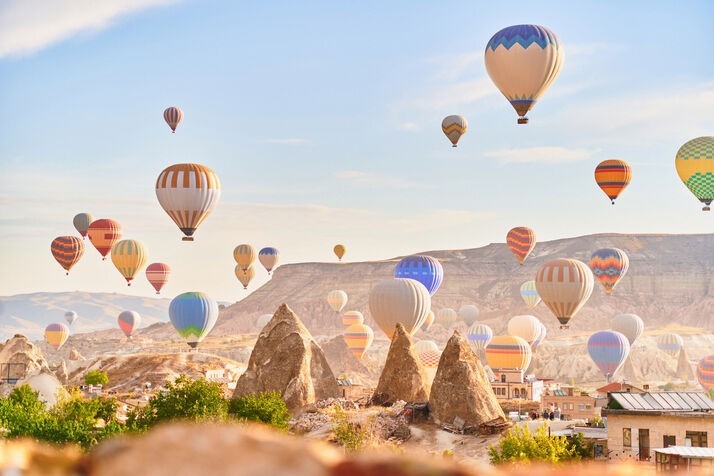
What November Gives You—and What It Takes Away
November becomes much easier to evaluate when you stop comparing it with warmer months.
It gives you space.
It gives you cooler walking temperatures on dry days, quieter archaeological sites and a version of Cappadocia where the geology becomes more prominent as seasonal vegetation fades.
In return, it takes daylight.
It takes some certainty from outdoor planning and asks you to carry clothing that may spend half a sunny afternoon in your bag.
That exchange will sound attractive to some travelers and completely unnecessary to others.
Neither reaction is wrong.
Early November and Late November Can Feel Far Apart
November moves steadily toward winter, making travel dates more relevant than they might initially appear.
| Early November | Late November |
|---|---|
| Autumn conditions often linger | Winter signals become stronger |
| Milder afternoons more likely | Colder daytime periods possible |
| Frost possible | Frost increasingly relevant |
| Outdoor walking generally easier | Conditions require closer checking |
| Slightly more daylight | Shorter usable sightseeing window |
| Snow less central | Early snowfall becomes more plausible |
This is not a promise that November 5 will be warmer than November 25. Individual weather systems can overturn the pattern.
It is a packing and planning distinction.
Someone arriving during the final week should prepare more seriously for winter-like conditions than someone traveling immediately after October.
Is Low Season Actually Better?
Only if you value what low season provides.
Travelers sometimes hear “fewer crowds” and automatically assume this makes November superior. But fewer visitors exist partly because the weather is colder, daylight is shorter and outdoor conditions are less predictable.
The question is whether those disadvantages matter to you.
| If This Matters Most... | November Verdict |
| Quiet viewpoints | Strong choice |
| Mild evenings outdoors | Weak choice |
| Cultural sightseeing | Very good |
| Long guaranteed hiking days | Less reliable |
| Lower visitor density | Strong choice |
| Autumn foliage | Better earlier |
| Snow-covered landscapes | Better chances later in winter |
| Flexible slow travel | Excellent fit |
November is not a secret version of peak season without the crowds.
It is a different season with different rewards.
Don't Chase Every Viewpoint
Short daylight creates a temptation to hurry.
Cappadocia has dozens of places where you could stop for another panoramic photograph. In November, trying to collect them all can consume the hours that would be better spent experiencing one or two properly.
Choose a viewpoint because the light is good or because it fits naturally into the route.
If neither is true, keep moving.
The same principle applies to valleys. One meaningful walk in suitable conditions is more rewarding than three rushed trail entrances added simply because they are famous.
November favors editing.
A slightly shorter itinerary often feels like a better trip.
Frequently Asked Questions About Cappadocia in November
1. Is November a good month to visit Cappadocia?
November is a good choice for travelers who value quieter sightseeing and are comfortable with colder weather and shorter days. Major attractions remain worthwhile, while popular viewpoints and cultural sites can feel less pressured. Outdoor plans require more flexibility because frost, rain and occasional early snow are possible.
2. How cold is Cappadocia during November?
Daytime temperatures often reach roughly 10–15°C, while nights may fall toward 0–5°C. Colder periods can bring freezing temperatures, particularly later in the month. Direct sunshine can make afternoons feel pleasantly mild, but early mornings and evenings require considerably warmer clothing.
3. Does Cappadocia get frost in November?
Yes. Frost becomes an increasingly realistic feature of November mornings, especially during colder periods and later in the month. Shaded surfaces may remain cold or slippery after sunny areas have warmed, which is worth considering before starting an early valley walk or visiting exposed viewpoints.
4. Can it snow in Cappadocia in November?
Snow is possible, particularly toward the end of November or during an early cold spell, but it is not guaranteed. Travelers should not choose November specifically for a snow-covered Cappadocia experience. The month is better understood as late autumn gradually moving toward winter.
5. Are Cappadocia's valleys still walkable in November?
Yes, on suitable days. Dry and sunny weather can provide excellent walking conditions without summer heat. However, rain, frost, early snow and reduced daylight can affect individual routes. Check current ground conditions and choose a distance that can comfortably be completed before darkness.
6. How early does it get dark in November?
Daylight becomes noticeably shorter during November, with sunset arriving considerably earlier than during the main travel season. Exact times change throughout the month. Rather than memorizing a particular sunset time, plan longer outdoor activities earlier and check the local daylight hours shortly before traveling.
7. What should I pack for Cappadocia in November?
Bring a warm jacket, layers, comfortable trousers and footwear suitable for potentially damp or frosty surfaces. A hat and light gloves can be useful, especially for early starts. Sunglasses remain worthwhile because clear cold days can still produce strong, bright sunshine across the open landscape.
8. Are restaurants and attractions open in November?
Major attractions generally continue operating, but some tourism businesses may reduce their hours or adjust services during quieter periods. Travelers should check current opening information for anything particularly important rather than assuming every seasonal business follows the same schedule used during peak months.
9. Is November suitable for hot air ballooning?
Flights can operate when aviation and weather conditions are suitable. Cold temperatures alone do not determine whether balloons fly; wind, visibility and other safety considerations remain important. Passengers should dress warmly for the pre-sunrise departure because temperatures can be near or below freezing.
10. Is November good for travelers who dislike crowds?
Yes, this is one of November's strongest attractions. Visitor levels are generally lower than during the main spring, summer and autumn periods. Popular locations are not necessarily empty, but the overall atmosphere can feel noticeably calmer, particularly outside the principal viewpoints and organized tour stops.
11. How many nights should I spend in Cappadocia in November?
Three nights provide useful flexibility for a first visit. Two nights can work for major highlights but leave less room for weather changes. An additional night is valuable for travelers interested in walking or photography because shorter daylight makes it harder to compress several outdoor experiences into one day.
12. Should I choose November or December for Cappadocia?
Choose November if you want a quieter late-autumn landscape with the possibility of relatively mild daytime sightseeing. December moves Cappadocia more firmly into early winter, bringing colder nights and a stronger winter atmosphere. The two months should therefore be chosen for different seasonal experiences.
November Is Better When You Stop Expecting More From It
There is a tendency to judge shoulder-season travel by what is missing.
The leaves are mostly gone.
The evenings are shorter.
The weather is colder.
Some terraces are less inviting, and you cannot assume that every valley will be ideal on the exact morning you planned to walk it.
But November gives something back.
Stand at a viewpoint without waiting for someone else to finish taking photographs. Walk into a quiet valley on a dry afternoon and hear very little beyond the wind. Spend longer underground because there is no reason to rush toward six other stops.
Cappadocia feels more exposed in November—geologically and atmospherically.
For travelers who need warm evenings and predictable outdoor conditions, that is probably not enough.
For those who prefer quieter places once the seasonal polish has worn away, it may be exactly the point.

A travel professional specializing in tailor-made travel planning, guest experience management, and multi-destination tourism operations.
With over 23 years of experience in the travel industry, he designs and manages private and cultural tours for international travelers across Türkiye, Greece, Egypt, Jordan, Morocco, and other destinations.
He has strong expertise in both online and face-to-face guest communication, sales processes, and end-to-end travel operations.
Working closely with hotels, travel agencies, and local partners, he ensures smooth coordination and high-quality travel experiences at every stage of the journey.
His focus is on delivering personalized, reliable, and seamless travel experiences for international guests worldwide.