Customs in Turkey: Traditions Behind Everyday Turkish Life
- Home
- Travel Guides for Better-Planned Trips
- Turkey
- Customs in Turkey: Traditions Behind Everyday Turkish Life
Customs in Turkey: Traditions Behind Everyday Turkish Life
Last Updated: August 9, 2026
A glass of tea arrives even though you never asked for one.
Someone introduces a cousin, then another cousin, and twenty minutes later you have lost track of where the immediate family ends. At breakfast, the table seems designed for twice as many people as are actually sitting around it. A blue glass eye hangs beside the door. Later, two friends argue enthusiastically over who will pay for dinner, despite both apparently wanting exactly the same outcome.
Turkey makes much more sense once you stop treating these moments as curiosities.
They belong to a culture in which hospitality, family, food, neighbourhood relationships and small social rituals still carry considerable weight, even though the country itself is modern, urbanised and enormously diverse.
Some traditions are centuries old. Others have changed almost beyond recognition while keeping their original social purpose. A few survive mainly because people enjoy them. Many differ between generations, regions and families.
That last point matters.
There is no single checklist of “Turkish customs” practised identically from Istanbul to Gaziantep, Trabzon, Antalya and Cappadocia. Turkey is too large, too regional and too socially varied for that.
The better way to understand its customs is to ask what they are trying to do.
Usually, the answer involves bringing people closer together.
Hospitality Is Less a Custom Than a Social Instinct
Turkish hospitality is frequently described in travel writing, sometimes so enthusiastically that it begins sounding like a tourism slogan.
Its everyday version is more interesting.
Hospitality often appears through small acts rather than grand gestures. Something is offered to drink. Food is placed on the table. A guest is encouraged to sit longer. Someone insists that another serving is surely possible despite convincing evidence that everybody is already full.
The underlying idea is simple: a guest should feel looked after.
Historically, hospitality carries deep roots across Anatolia, shaped by Turkic traditions, Islamic culture, Ottoman social life and the practical realities of communities in which travellers and strangers depended much more heavily on local generosity than they do today.
Modern Turkey has changed enormously, but the instinct remains recognisable.
Turkish Customs at a Glance
| Cultural Tradition | Where You May Notice It | What Sits Behind It |
|---|---|---|
| Offering tea | Homes, workplaces, shops | Hospitality and conversation |
| Turkish coffee | Homes, cafés, social visits | Time, conversation and ritual |
| Generous food | Family meals and visits | Looking after guests |
| Respect for elders | Family gatherings and bayram | Generational respect |
| Nazar boncuğu | Homes, cars, jewellery | Traditional protection from nazar |
| Bayram visits | Family homes | Kinship and continuity |
| Shared dishes | Breakfast and meals | Communal eating |
| Hammam tradition | Historic bathhouses | Cleanliness and social history |
| Henna night | Wedding celebrations | Marriage transition and symbolism |
| Neighbourhood relationships | Local shops and residential areas | Community familiarity |
None of these traditions requires every Turkish person to participate in exactly the same way.
Culture is rarely that tidy.
Why Does Tea Keep Appearing?
Tea is one of the easiest Turkish customs to notice because it accompanies almost everything.
Work can happen over tea. Business can pause for tea. A guest receives tea. Friends meet for tea. Shopkeepers drink tea between customers, and small tulip-shaped glasses travel constantly through offices, workshops and neighbourhood businesses.
The remarkable part is that Turkey's relationship with tea, particularly Black Sea tea, is much younger than many visitors assume. Tea nevertheless became deeply embedded in everyday social life.
Its importance now extends beyond the drink itself.
Tea gives a conversation permission to continue.
A visitor exploring the country through Turkey heritage tours may encounter spectacular archaeological sites and monumental architecture, but something as ordinary as watching tea move around a small-town café can reveal another layer of Turkey: social life built through repeated, modest interactions.
Turkish Coffee Refuses to Be Rushed
Tea accompanies everyday movement.
Coffee asks people to stop.
Traditional Turkish coffee is prepared finely ground and served unfiltered in a small cup, leaving sediment at the bottom. The drink is often accompanied by water and sometimes something sweet, but its cultural importance has always extended beyond caffeine.
Coffee creates an occasion for conversation.
This connection is reflected in the well-known Turkish saying:
“Bir fincan kahvenin kırk yıl hatırı vardır.”
A cup of coffee carries forty years of remembrance.
The phrase is not really measuring memory. It expresses the idea that even a small gesture of hospitality creates a lasting social obligation of goodwill.
There is another tradition waiting at the bottom of the cup.
The Coffee Cup May Have Something to Say
Kahve falı, Turkish coffee fortune reading, begins after the coffee has been drunk.
The cup is turned upside down onto its saucer, allowed to cool and later interpreted according to the patterns formed by the grounds. Shapes become journeys, animals, people, obstacles, good news or whatever the reader manages to discover.
How seriously is it taken?
That depends entirely on whom you ask.
For many people, the pleasure lies in the ritual itself. Friends sit together, somebody examines the cup with theatrical seriousness, stories emerge and the conversation continues.
The fortune may or may not predict the future.
It reliably extends coffee by another half-hour.
The Turkish Table Is Designed to Keep People There
Many Turkish meals make more sense when viewed as social structures rather than collections of dishes.
Consider a traditional breakfast.
Bread, cheeses, olives, tomatoes, cucumbers, eggs, preserves, honey and other regional additions can spread across the table until individual ownership of food becomes almost irrelevant.
Everyone reaches.
Everyone shares.
Tea continues arriving.
Meze works through a similar logic during another part of the day. Instead of each person disappearing into an individual plate, multiple dishes occupy the centre and the table becomes collaborative.
This style of eating naturally slows things down.
Conversation fits between dishes because the meal was never designed simply to transfer calories as efficiently as possible.
Why Is There Always More Food?
One of the classic exchanges in a Turkish home involves a guest declaring themselves completely full and a host responding as though this information has not been independently verified.
Another serving appears.
This persistence can seem comical from the outside, but it reflects a deeply rooted hospitality principle: abundance communicates care.
A host does not want a guest leaving with the impression that food was scarce, hospitality was reluctant or the table was inadequately prepared.
The result can be impressive.
It can also be dangerous if you praise every dish too enthusiastically because the host may interpret admiration as evidence that another portion is required.
The cultural point is not overeating.
It is generosity.
Family Is Still One of Turkey's Strongest Social Structures
Turkey's households have changed significantly as urbanisation, education, employment patterns and modern lifestyles have transformed the country.
Family nevertheless remains unusually visible in social life.
Parents, grandparents, siblings, cousins, aunts and uncles can maintain relationships that extend far beyond occasional holiday contact. Major decisions, celebrations and difficulties may involve a wider family network than visitors from more individualistic societies expect.
This does not mean every Turkish family is exceptionally close.
Real families are complicated everywhere.
What remains culturally significant is the expectation that family relationships matter.
Respect Moves Up the Generations
Age traditionally carries social weight within Turkish family culture.
One of the clearest examples appears during religious holidays, when younger family members may greet older relatives by kissing their hand and then bringing it towards the forehead.
The gesture communicates respect rather than submission.
Its frequency varies considerably between families and generations, particularly in contemporary urban Turkey, yet most people recognise the tradition even when they do not practise it regularly.
The ritual also reveals something broader: Turkish family customs often use small physical gestures to express relationships that everybody present already understands.
Bayram Brings the Family Map Back Together
Turkey's two major Islamic religious festivals, Ramazan Bayramı and Kurban Bayramı, have religious significance, but their social role extends strongly into family life.
These are periods associated with visits, shared meals, telephone calls, travel and reconnecting with relatives.
Children may receive sweets or small gifts. Older family members are visited. Tables fill again.
Modern schedules and geographical distance have changed how families celebrate, yet bayram continues to create a powerful national rhythm. Roads become busy as people travel between cities, households prepare for visitors and relationships that may receive less attention during ordinary working weeks return temporarily to the centre.
Ramazan Bayramı and Kurban Bayramı Are Not the Same
| Tradition | Ramazan Bayramı | Kurban Bayramı |
| Religious context | Marks the end of Ramadan | Connected with the tradition of sacrifice |
| Family visits | Very important | Very important |
| Food and hospitality | Central | Central |
| Sweets | Particularly associated | Also common |
| Children | Often receive sweets or gifts | Family traditions vary |
| Social role | Reunion and celebration | Reunion, sharing and religious observance |
For visitors, the interesting point is not memorising differences between festival practices.
It is seeing how religion, family and hospitality overlap within Turkish social culture.
The Blue Eye Is Not Watching You
The nazar boncuğu is probably Turkey's most recognisable traditional symbol.
The blue-and-white eye appears on jewellery, walls, key rings, children's belongings, cars, offices and countless souvenirs. Its purpose is traditionally connected with protection against nazar—the harmful effect associated with envy or excessive admiration.
Versions of the evil-eye belief exist across many Mediterranean, Middle Eastern and Balkan cultures, and the tradition predates modern Turkey by centuries.
What makes the symbol interesting today is its ability to exist simultaneously as belief, cultural inheritance, decoration and humour.
One person may take it seriously.
Another may hang one in the car because their grandmother always did.
A third simply likes the way it looks.
Traditions survive partly because people are allowed to reinterpret them.
Compliments Can Invite the Language of Nazar
The idea of nazar also appears in speech.
When a child, new home, achievement or attractive possession receives enthusiastic praise, references intended to protect against the evil eye may accompany the compliment. The Arabic-derived expression maşallah is widely used in this context and has become deeply integrated into Turkish everyday language.
Again, belief varies.
What matters culturally is that the language has survived even among people whose relationship with the underlying superstition may be casual.
The Hammam Was Never Just a Place to Get Clean
Historic Turkish hammams are often presented today as wellness experiences.
That is only one chapter of their story.
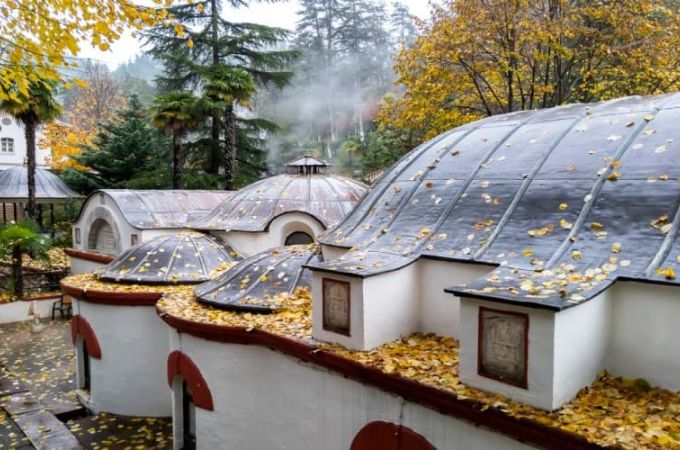
Before private bathrooms became standard, public bathhouses fulfilled an obvious practical need, but they were also social spaces. Hammams were connected with neighbourhood life and could play roles around marriage, childbirth and other transitions.
For women in particular during earlier periods, the hammam could provide an important environment for social interaction beyond the household.
Travellers following cultural journeys through Turkey can still visit historic bathhouses, yet understanding their former social role makes the architecture more meaningful.
The marble, domes and washing areas were once part of ordinary urban infrastructure.
A Wedding Is a Family Event Before It Is a Couple's Event
Modern Turkish weddings range from intimate ceremonies to enormous celebrations involving hundreds of guests.
Regional, religious and family differences are substantial, but one characteristic frequently survives: marriage connects families as well as individuals.
That is why wedding customs provide such a rich window into Turkish culture.
Preparations may involve extended relatives, traditions can stretch across several events, and celebrations often contain rituals whose meaning predates the modern wedding industry.
One of the most distinctive is the henna night.
Kına Gecesi: The Night Before a New Chapter
Kına gecesi, or henna night, traditionally takes place before the wedding and centres on the bride.
Henna is applied ceremonially, music is played and the atmosphere can move between celebration and emotion because the tradition historically symbolised the bride leaving one family home and beginning another stage of life.
Modern versions vary dramatically.
Some remain closely connected to family tradition, while others have become elaborate events with professional entertainment, costumes and highly stylised décor.
The format evolves.
The symbolic transition remains recognisable.
Gold at Turkish Weddings Has a Practical Side
Wedding guests may give gold coins, jewellery or money to the couple during a takı ceremony.
At first glance, the ritual looks purely celebratory.
It also has an economic function.
The gifts help the newly married couple establish their household and historically provided a visible form of financial support from the wider family and social network.
This mixture of celebration and practical assistance appears repeatedly in Turkish customs.
Community is not expressed only emotionally.
Sometimes it arrives attached to a ribbon.
Turkey Has Many Cultural Maps
The final mistake is assuming that everything described here appears identically across the country.
It doesn't.
| Region / Setting | Cultural Character You May Notice |
| Istanbul | Highly diverse, urban and internationally influenced |
| Aegean Turkey | Strong coastal and regional food traditions |
| Central Anatolia | Different family, food and local traditions |
| Black Sea | Distinct music, food and regional identity |
| Southeastern Turkey | Particularly rich culinary and hospitality traditions |
| Mediterranean coast | Coastal lifestyles mixed with local traditions |
| Rural communities | Some customs may remain more visible |
| Large cities | Tradition often adapts rather than disappears |
These are broad observations rather than cultural labels. Even neighbouring towns can have different foods, wedding traditions, dialect features and local habits.
Travellers exploring several regions through Turkey discovery tours begin seeing why national culture is better understood as a collection of overlapping local cultures rather than one fixed identity.
Tradition in Turkey Has Not Disappeared — It Has Learned to Use a Smartphone
It is tempting to divide customs into two categories: old Turkey and modern Turkey.
Real life is far messier.
A young professional in Istanbul may order dinner through an app, work for an international company and still visit grandparents during bayram. A highly modern wedding may include a henna ceremony. Someone who laughs at coffee fortune telling may still turn the cup over after drinking it.
A nazar charm may hang beside the screen of an electric car.
Traditions survive because they adapt.
They stop being museum pieces and become habits, jokes, family expectations, celebrations and small gestures whose original meaning may have changed while their social purpose remains.
That is what makes Turkish customs worth understanding.
They are not performances preserved for visitors.
Most of the time, they are simply what happens next.
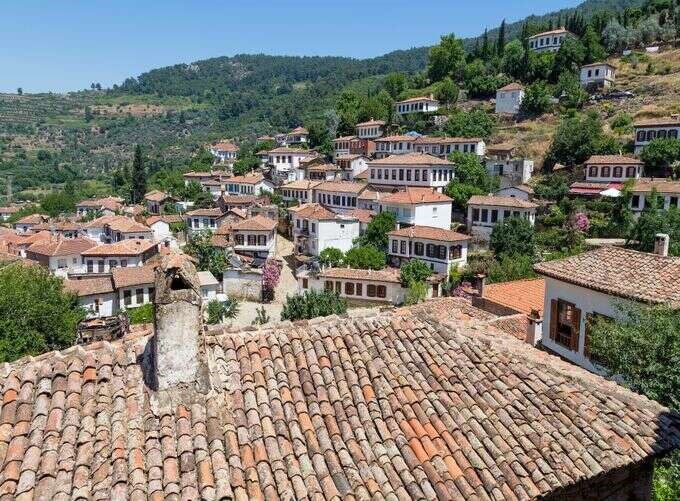
The Mahalle Still Matters
One of the hardest Turkish cultural ideas to translate properly is mahalle.
Technically, it means neighbourhood. Culturally, it can describe something more intimate: the small social world immediately surrounding everyday life.
The importance of the traditional mahalle has undoubtedly changed as Turkish cities have expanded and apartment living, commuting and modern retail have reshaped daily routines. Istanbul alone contains districts so large that the romantic image of everybody knowing everybody else would be absurd.
Yet traces of neighbourhood culture remain remarkably visible.
The bakery knows its regular customers. The pharmacist may know several generations of the same family. A local café develops its own familiar faces, while small businesses exchange greetings throughout the day with people who have no intention of buying anything.
These relationships help explain another important figure in Turkish social culture.
Esnaf Means More Than “Shopkeeper”
The Turkish word esnaf is often translated simply as tradesman or shopkeeper, but the cultural idea carries additional weight.
Traditional neighbourhood businesses form part of the social fabric around them. A barber, grocer, baker, mechanic or small restaurant owner may serve the same community for years, building relationships that extend beyond anonymous transactions.
This is also where one of Turkey's warmest everyday expressions appears:
Kolay gelsin.
Literally, the phrase wishes that someone's work comes easily. It is commonly said to people who are working and has no perfect English equivalent.
You may hear it when somebody enters a small business, leaves a workplace or acknowledges a person in the middle of a task.
Two words quietly recognise somebody else's labour.
That says quite a lot about a culture.
Turkish Kinship Language Makes the Social World Bigger
Spend enough time listening to Turkish conversations and you may notice family words being used between people who are not related.
Abi literally refers to an older brother, while abla means older sister. Amca means paternal uncle and teyze maternal aunt, yet some of these terms can also appear socially when addressing people outside the immediate family.
The exact choice depends on age, relationship and context.
What matters here is not learning a vocabulary list.
It is recognising what the language reveals.
Turkish often places unfamiliar people into a social framework using the language of age and family relationship. The person remains a stranger, but the form of address makes the interaction slightly less anonymous.
Birth Brings Its Own Circle of Traditions
A new baby naturally becomes the centre of family attention, and Turkish birth traditions have historically combined celebration, family support and beliefs about protection.
Practices vary considerably between regions and generations, but relatives and friends may visit the new parents, bring gifts and participate in customs associated with the baby's first weeks.
The nazar tradition becomes especially visible around children.
Compliments about a baby's beauty or health may be accompanied by maşallah, while blue-eye charms sometimes appear among gifts or possessions.
For some families, these traditions retain spiritual or protective meaning. For others, they survive mainly because parents and grandparents have always used them.
That ability to carry several meanings at once is characteristic of many Turkish customs.
Some Traditions Mark Stages of Life
Turkish customs often become most visible at transition points: birth, marriage, religious celebrations, military service and death.
This is not unusual internationally, but Turkey has preserved a particularly rich collection of rituals around these moments.
Traditionally, such customs did more than celebrate the individual.
They informed the community that somebody's social position was changing.
A child was entering another stage of life. A couple was forming a household. A young man was leaving for military service. A family had experienced a loss.
The community recognised the transition together.
Modern life has reduced or transformed many of these rituals, but their cultural memory remains surprisingly strong.
Circumcision Celebrations Have a Distinct Cultural History
One tradition that can surprise international visitors is the sünnet düğünü, the circumcision celebration traditionally organised for boys.
Circumcision has religious significance within Muslim communities, but in Turkey the event also developed elaborate social traditions. Families may organise celebrations involving relatives, meals, music and ceremonial clothing.
Historically, some celebrations could resemble weddings in scale, which explains the use of düğün—wedding or celebration—in the name.
Contemporary practices vary enormously.
Some families organise large traditional events, others keep the occasion private and simple, and attitudes continue changing between generations.
The important cultural point is that the event historically represented a recognised transition in the child's life rather than simply a medical procedure.
The Military Send-Off Became a Community Ritual
Compulsory military service has historically given the departure of young men a strong cultural significance in Turkey.
The traditional asker uğurlaması, or military send-off, could involve family gatherings, friends, music, flags and emotional farewells. In some communities, the departing soldier was celebrated publicly before leaving.
Like many traditions, its visibility and form vary according to generation, location and changing social attitudes.
What makes it culturally interesting is the familiar pattern underneath.
Another major transition in an individual's life becomes something the wider family and community recognise together.
Turkish customs repeatedly turn private milestones into shared ones.
Folk Dance Is a Map You Can Watch
There is no single Turkish folk dance.
That would be like expecting every region of Europe to share one traditional dance because they occupy the same continent.
Turkey's geography created distinctive musical and dance traditions that remain powerful symbols of regional identity.
| Tradition | Strongly Associated With | Character |
|---|---|---|
| Horon | Black Sea | Fast, energetic group movement |
| Zeybek | Aegean / Western Anatolia | Proud, measured movements |
| Halay | Central, Eastern and Southeastern regions | Collective line or circle dancing |
| Bar | Eastern Anatolia | Regional group-dance traditions |
| Kaşık oyunları | Various parts of Anatolia | Rhythmic dances using wooden spoons |
Associations are broad because folk traditions do not stop neatly at provincial borders.
What these dances reveal is more important than memorising their names: Turkish culture becomes increasingly regional the closer you look.
Music Carries Geography Too
The same principle applies to music.
The Black Sea has sounds and instruments strongly associated with its regional identity. The bağlama occupies an important place across Anatolian folk traditions, while different vocal styles, rhythms and repertoires developed across the country.
Songs also carry memory.
Migration, love, separation, military service, village life, tragedy and landscapes appear repeatedly in traditional music because folk songs historically preserved stories that communities recognised as their own.
A traveller may hear only a melody.
Someone whose family comes from that region may hear home.
Weddings Reveal Regional Turkey Particularly Well
Part 1 introduced the henna night and the tradition of giving gold or money, but the wider wedding itself demonstrates just how dangerous it is to describe one universal Turkish custom.
A wedding in a Black Sea community may incorporate musical traditions that would feel completely different in southeastern Turkey. Families with roots in the Balkans, Caucasus or different parts of Anatolia may carry their own dances, foods and ceremonial details.
Urban weddings add another layer.
A modern Istanbul hotel wedding can look internationally contemporary until one familiar song begins and three generations suddenly know exactly what dance comes next.
That moment explains cultural continuity better than a museum display ever could.
Modern Turkey Doesn't Have to Choose Between Old and New
Travel writing sometimes presents Turkish traditions as though modernisation is slowly erasing them.
The reality is more creative.
Customs frequently survive by becoming flexible.
A bayram greeting that once required travelling across town may now begin with a family video call before the visit happens later. A henna night can retain symbolic rituals while looking like a professionally produced stage show. Coffee fortune reading can move from the family table onto smartphone applications.
None of this necessarily makes the tradition less authentic.
Culture has always changed according to the technology and social habits surrounding it.
Traditions that refuse to change often disappear.
Those capable of changing shape can survive for generations.
What Has Changed, and What Has Stayed?
| Tradition | What Has Changed | What Often Remains |
| Bayram visits | Families may live farther apart | Desire to reconnect |
| Henna nights | More elaborate modern events | Marriage-transition symbolism |
| Coffee fortune telling | Apps and social media versions | Conversation and curiosity |
| Neighbourhood life | Larger, more anonymous cities | Familiar local relationships |
| Family communication | Digital contact | Strong family networks |
| Weddings | Venues and formats modernised | Family participation |
| Nazar | Often decorative or playful | Cultural recognition |
| Folk traditions | More performance contexts | Regional identity |
The useful question is therefore not whether a custom is “still authentic.”
Ask what function survived.
Turkish Culture Becomes More Interesting When It Contradicts Itself
A family may be secular and still observe traditional bayram visits.
A young person may dismiss the evil eye as superstition while carrying a nazar charm given by their grandmother.
Someone may laugh at coffee fortune telling and then immediately ask what you can see in their cup.
A wedding may have a contemporary international aesthetic and end with regional folk dancing.
These are not contradictions that need resolving.
They demonstrate how culture actually works.
People inherit traditions, modify them, ignore some, revive others and occasionally participate simply because the ritual connects them to family.
Turkey is particularly fascinating because those layers remain visible.
12 Frequently Asked Questions About Customs in Turkey
1. What are the most important customs in Turkey?
Some of the most recognisable Turkish customs centre on hospitality, family relationships, shared meals, tea and coffee, respect for older relatives, bayram visits, weddings and regional traditions. Their importance varies between families and communities, so they are better understood as recurring cultural patterns rather than rules followed identically throughout Turkey.
2. Why do Turkish people offer tea so often?
Tea functions as much as a social gesture as a drink. It accompanies conversations in homes, workplaces, shops and cafés, giving people an easy reason to sit together or extend an interaction. Modern Turkish tea culture became particularly strong during the twentieth century and is now deeply embedded in everyday social life.
3. Why is Turkish coffee important in Turkish culture?
Turkish coffee carries associations with hospitality, conversation and social ritual that extend beyond the drink itself. It also appears in traditions connected with marriage and coffee fortune telling. The famous saying about a cup of coffee being remembered for forty years expresses the lasting social value associated with small acts of hospitality.
4. What is the evil eye tradition in Turkey?
The belief known as nazar associates envy or excessive admiration with potential misfortune. The blue nazar boncuğu traditionally provides symbolic protection and appears widely in homes, vehicles, jewellery and gifts. Modern attitudes range from serious belief to cultural nostalgia, humour or decoration, allowing the symbol to retain several meanings simultaneously.
5. Why is family so important in Turkish culture?
Family has historically provided one of the strongest social networks in Turkish society, connecting generations through practical support, celebrations, regular contact and shared responsibilities. Urbanisation and changing lifestyles have transformed family structures, but relationships with parents, grandparents and extended relatives continue to play an important role for many people.
6. What happens during a Turkish bayram?
Bayram periods combine religious significance with strong family and social traditions. Relatives may visit one another, shared meals become important, older family members receive particular attention and children may receive sweets or gifts. Contemporary celebrations vary, especially when families live in different cities or countries, but reunion remains a central theme.
7. What is a Turkish henna night?
Kına gecesi, or henna night, is a pre-wedding tradition historically centred on the bride and the transition from one stage of family life to another. Henna, music and emotionally symbolic rituals traditionally formed part of the evening, although modern celebrations range from intimate family gatherings to elaborate professionally organised events.
8. Why do people give gold at Turkish weddings?
Gold coins, jewellery or money traditionally given during the takı ceremony provide both symbolic congratulations and practical financial support for the newly married couple. The custom illustrates how Turkish celebrations often combine emotion with community assistance, allowing relatives and friends to contribute materially as the couple establishes a new household.
9. What is Turkish hammam culture?
Historic hammams were much more than bathing facilities. Before private bathrooms became widespread, they served practical needs while also providing important spaces for social interaction. Hammams could be connected with neighbourhood life, marriage and other occasions, giving the traditional bathhouse a social and cultural role alongside its association with cleanliness.
10. Are Turkish customs different between regions?
Very much so. Turkey's regional diversity is reflected in food, music, dance, wedding traditions, dialects and local social practices. Black Sea culture differs noticeably from the Aegean, while Central Anatolia and southeastern Turkey maintain their own strong identities. Even neighbouring communities may preserve distinctive traditions that complicate broad national descriptions.
11. Are traditional customs still common in modern Turkey?
Many remain recognisable, although their form has changed considerably. Modern weddings may retain old rituals, urban families still organise bayram gatherings and nazar symbols appear in contemporary homes. Rather than disappearing, successful traditions often adapt to new lifestyles, technologies and family structures while preserving their original social or symbolic function.
12. What surprises visitors most about Turkish culture?
Many visitors are struck by how naturally traditional customs coexist with modern life. Family rituals, tea culture, wedding traditions, folk music and beliefs such as nazar can remain visible within highly contemporary urban settings. The contrast disappears once culture is understood not as something preserved unchanged, but as something continually adapted.
Customs Are the Parts of Turkey You Cannot Reserve
A palace can be placed on an itinerary.
A flight can be booked, a hotel confirmed and an archaeological site assigned two hours on Tuesday morning.
Culture is less cooperative.
You encounter it while somebody pours tea without asking whether you want another glass. It appears when a grandmother becomes the centre of a bayram visit, when a wedding dance suddenly reveals where a family originally came from or when a shopkeeper says kolay gelsin to another person finishing a long day's work.
These moments are difficult to schedule because nobody considers them performances.
That is precisely why they matter.
Turkey's great monuments explain empires, religions and political history extraordinarily well. Customs explain something different: how people turned generations of history into habits small enough to fit around a table.
Tea became conversation.
Food became hospitality.
Gold became community support.
A blue glass eye became protection, decoration and family memory simultaneously.
A folk dance became a regional identity that could travel with families hundreds of kilometres from the place where it began.
Even traditions that appear old-fashioned from the outside continue changing. Smartphones enter bayram greetings. Wedding rituals move into modern hotels. Coffee fortune telling becomes digital, while families separated by migration maintain relationships through screens that previous generations could never have imagined.
The technology changes faster than the reason for using it.
People still want to remain connected.
That may be the thread running through more Turkish customs than any other.
They repeatedly turn individual moments into shared ones.
Birth belongs to the family. Marriage expands beyond the couple. Religious festivals reconnect relatives. Food is placed in the centre of the table. Coffee creates another conversation after the meal should theoretically have finished.
None of this means Turkish society is one enormous harmonious family. Real life contains the same generational disagreements, changing values and social tensions found anywhere else.
That complexity should remain visible.
A useful cultural guide does not tell readers that “Turkish people always do this.”
It teaches them to recognise why something familiar keeps happening.
Once you begin doing that, Turkey changes.
The blue eye above a doorway is no longer simply a souvenir design. The tulip-shaped tea glass stops being an Instagram prop. The line of relatives dancing at a wedding becomes a small map of regional memory.
And the next time somebody insists that there must surely be room for one more plate of food, you understand that the question was probably never about whether you were hungry.
It was about making sure you knew you were welcome.

A travel professional specializing in tailor-made travel planning, guest experience management, and multi-destination tourism operations.
With over 23 years of experience in the travel industry, he designs and manages private and cultural tours for international travelers across Türkiye, Greece, Egypt, Jordan, Morocco, and other destinations.
He has strong expertise in both online and face-to-face guest communication, sales processes, and end-to-end travel operations.
Working closely with hotels, travel agencies, and local partners, he ensures smooth coordination and high-quality travel experiences at every stage of the journey.
His focus is on delivering personalized, reliable, and seamless travel experiences for international guests worldwide.