Antalya’s Best Beaches: Finding the Right Stretch of Mediterranean Coast
Updated: August 2026
Ask ten people to name the best beach in Antalya and you may get ten different answers. Someone staying in Kaleiçi will tell you to head for Konyaaltı. A family spending a week at a resort may prefer Lara without hesitation. Travelers who have driven west along the Mediterranean coast often remember Çıralı, while anyone who has seen Kaputaş on a clear summer morning will probably insist that nowhere else compares.
They are all right, in a way.
Antalya does not have one beach experience. Its coastline changes considerably as you travel through the province, and the differences go well beyond whether the shore is sandy or pebbly. Some beaches sit within easy reach of restaurants and city hotels; others make more sense as part of a road trip. A few are places where you could happily spend the entire day, while others are at their best when combined with an ancient city, a coastal walk or lunch somewhere nearby.
That is why choosing a beach from photographs alone is rarely the best way to plan your time here.
If you are visiting Antalya as part of a longer trip through Turkey, think first about where you are staying, how far you genuinely want to travel for a swim and what you would like the rest of the day to look like. Once those questions are answered, finding the right beach becomes much easier.
First, Understand Just How Large Antalya’s Coastline Is
One of the easiest mistakes to make when researching Antalya is assuming that every beach carrying the Antalya name is close to Antalya city.
It is not.
Antalya is both a city and a large province stretching along a substantial section of Turkey's Mediterranean coast. Konyaaltı and Lara belong naturally to a stay in the city, whereas Çıralı, Olympos and Phaselis require you to travel farther west. Kaputaş is farther away again, between Kalkan and Kaş. Head in the opposite direction and the coastline eventually takes you toward Belek, Side and Alanya.
This becomes important when planning a holiday because a beach that looks irresistible online may involve considerably more driving than expected.
For travelers following one of our Turkey Tours, we normally look at Antalya as part of the overall route rather than treating every coastal highlight as a separate excursion. If the journey is already continuing toward Kaş, for example, Kaputaş fits naturally. If you have only two nights in Antalya city, spending much of one day driving there and back makes far less sense.
The Mediterranean will still be there at Konyaaltı.
And sometimes the beach that is twenty minutes away produces a better holiday than the one three hours down the road.
Staying in Antalya City? Konyaaltı Is Hard to Beat
There is something distinctive about swimming at Konyaaltı.
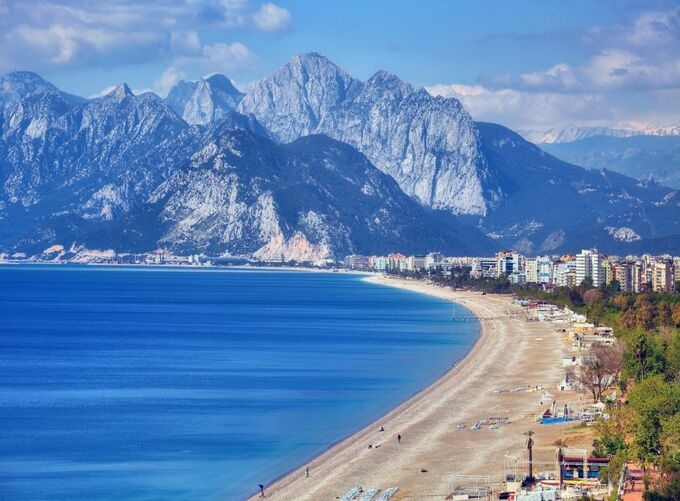
Turn toward the land and the mountains rise behind the city; look in the other direction and there is open Mediterranean water. It feels unmistakably like Antalya rather than a resort that could belong almost anywhere along the coast.
Konyaaltı is predominantly pebbly, and travelers expecting powdery sand are sometimes surprised when they first arrive. That is worth knowing beforehand, although the pebbles are part of the reason the water often appears beautifully clear. Beach shoes are useful if you have sensitive feet, particularly when getting in and out of the sea.
What we like about Konyaaltı from an itinerary perspective is its flexibility.
You do not have to dedicate the whole day to it. A morning can be spent walking through Kaleiçi or visiting Antalya's archaeological museum, followed by several hours at the beach and dinner back in the old town. There is no long excursion to organize and no reason to pack as though you are leaving the city for the day.
For first-time visitors with limited time in Antalya, that convenience matters.
Konyaaltı may not deliver the soft sand associated with a traditional resort brochure, but for mountains, clear water and easy access from the city, it remains one of Antalya's most satisfying choices.
Lara Is the Antalya Beach for People Who Really Want Sand
Lara answers a different question.
If the beach itself is going to occupy a large part of your holiday and you prefer sand beneath your feet, the eastern side of Antalya deserves closer attention.
Lara has a broader, sandier character than Konyaaltı, while the wider Lara and Kundu area has developed into one of Antalya's major resort districts. Many properties here are designed for travelers who want the hotel and beach to function as the center of the holiday rather than simply somewhere to sleep between sightseeing days.
That makes Lara particularly convenient for families and travelers planning several relaxed days.
There is, however, one detail we always recommend checking before booking: the exact location of the hotel.
"Lara" is sometimes used rather generously in accommodation descriptions. A property marketed as being in the Lara area does not automatically mean that you can walk directly from your room onto the section of beach you have seen in photographs.
Look at the actual position of the hotel, whether it has direct beach access and, if it does not, how guests reach the shoreline.
It sounds obvious, yet it is one of those small checks that can completely change the experience once you arrive.
Mermerli Is Tiny, and That Is Part of Its Appeal
Not every good beach needs to stretch for kilometres.
Mermerli sits below Antalya's historic center, close to the old harbor and the winding streets of Kaleiçi. You come here because you have been exploring the old town, the afternoon has become warm and the Mediterranean suddenly looks far too inviting to ignore.
It is a small beach, so expectations matter.
We would not recommend choosing Mermerli for a full-scale beach holiday, and during busy periods it can feel crowded much sooner than Konyaaltı or Lara. What it offers instead is something those larger beaches cannot: the possibility of walking through Antalya's historic streets and being in the sea shortly afterward.
For travelers with only a day in the city, that can be exactly enough.
Have breakfast in Kaleiçi, explore the old quarter, stop around the harbor and swim before heading back to the hotel. There is no need to build an entire excursion around it.
The Coast Becomes More Interesting Once You Drive West
This is where Antalya stops feeling like a single beach destination.
Leaving the city and traveling west brings the Mediterranean closer to forested mountains, ancient settlements and smaller coastal communities. The drive itself begins to form part of the experience.
One of our favorite combinations in this direction is Phaselis.
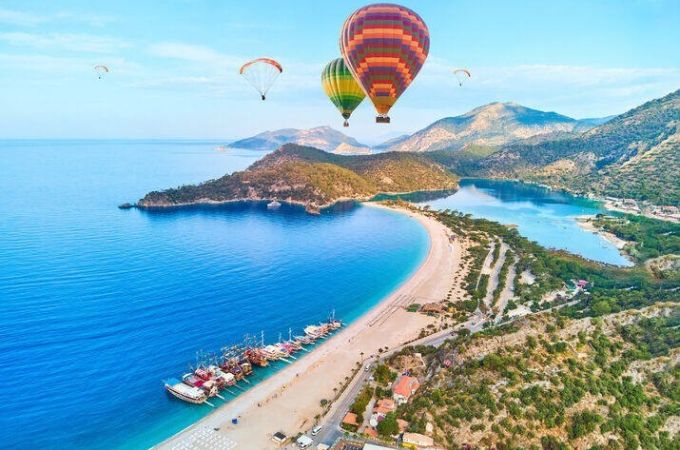
Phaselis was an important ancient port city, and its ruins sit unusually close to several sheltered bays. You can walk among remnants of the ancient settlement, see how closely its history was tied to the sea and then swim in the same landscape.
For travelers interested in archaeology, this is often a better use of a day than choosing between "a beach day" and "a sightseeing day."
You can have both without forcing them together.
Phaselis is understandably popular in summer, and arriving earlier makes a noticeable difference. The archaeological site is also more pleasant before the strongest midday heat settles over the coast.
Çıralı Is Where We Would Slow the Itinerary Down
Çıralı does not need much embellishment.
There are mountains behind it, a long Mediterranean shoreline in front and far less of the large-scale resort development found around parts of Antalya. Accommodation tends to be smaller, the evenings are quieter and the general rhythm encourages you to stay rather than rush through.
The beach contains both sand and pebbles, so anyone expecting a completely sandy shoreline should know that before arriving.
What makes Çıralı special, though, is not simply the beach.
Ancient Olympos lies nearby, while the natural flames of Yanartaş provide an entirely different experience after daylight begins to fade. It is quite possible to spend a morning around the archaeological remains, swim during the afternoon and visit Yanartaş later without feeling that the day has been built from unrelated attractions.
Çıralı is also associated with nesting loggerhead sea turtles, and protected areas along the beach need to be treated accordingly. Marked nesting zones are not decorations for photographs; they are there because this is a living natural environment.
We tend to recommend Çıralı to travelers who are happy with smaller hotels and would rather hear the coast at night than an entertainment program from a large resort.
It is not for everybody, which is exactly why the people who like it often like it very much.
Olympos and Çıralı Share a Coast, but Not Quite the Same Mood
Olympos and Çıralı are often mentioned together, and geographically that makes sense. As travel experiences, however, they have different personalities.
Olympos has long had a younger, more informal character, with pensions, cabins and bungalow-style accommodation playing a larger role than conventional hotels. The ruins of ancient Olympos are woven into the landscape behind the beach, giving the approach to the coast a feeling that is difficult to reproduce elsewhere.
Çıralı generally feels calmer and more residential.
Which one is better depends on the traveler.
Couples wanting a quiet few nights may gravitate toward Çıralı. Younger independent travelers may enjoy the atmosphere around Olympos. Families need to look more closely at the exact accommodation and access arrangements rather than choosing purely according to the name of the area.
This is the kind of detail that becomes useful when building Customized Tours, because two places sitting almost beside each other on a map can still produce quite different holidays.
Kaputaş Is Beautiful. Just Don't Plan It as Though It Were Next Door
Kaputaş deserves its reputation.
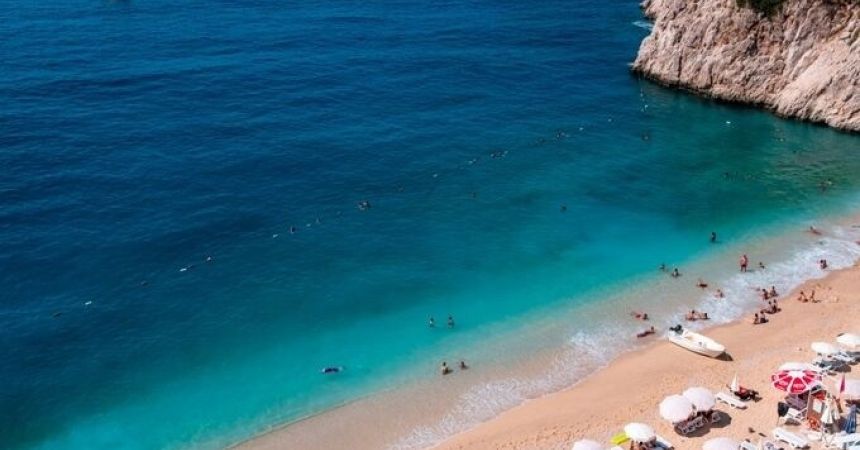
The beach sits at the mouth of a narrow gorge between Kaş and Kalkan, with steep rock walls dropping toward extraordinarily blue Mediterranean water. On the right day, the contrast between the cliffs and the sea is every bit as impressive as the photographs suggest.
There is another side to the story.
Kaputaş is relatively small, access is by steps from the road and summer popularity can fill the available space quickly. Parking and traffic also need more consideration than they would at a large urban beach.
Most importantly, Kaputaş is not close to central Antalya.
If your itinerary already includes Kaş or Kalkan, stopping here is an easy decision. If you are based in Antalya city and planning to travel all the way to Kaputaş simply because it appeared on a list of "Antalya's best beaches," think about what that means in actual driving time.
We would rather see a traveler enjoy half a day at a very good nearby beach than spend most of the day inside a vehicle chasing a famous one.
Kaputaş belongs on the right itinerary, not necessarily every itinerary.
Side Makes Sense When Nobody in the Family Wants the Same Holiday
One person wants a beach. Someone else wants ruins. Another wants restaurants and somewhere to walk after dinner.
Side handles that combination unusually well.
The ancient city reaches toward the Mediterranean, with the Temple of Apollo standing close to the coast, while beaches and hotels extend through the surrounding area. You can spend meaningful time beside the sea without becoming isolated from sightseeing.
It also fits neatly with visits to Perge and Aspendos, which is why Side often works for travelers who want a few slower days after a more active cultural itinerary through Turkey.
Families in particular may find this balance easier than staying somewhere chosen exclusively for archaeology or exclusively for resort facilities.
You do not have to convince everyone to enjoy the same thing all day.
Forget the Rankings: Choose the Beach Around Your Actual Day
Instead of asking which beach deserves first place, this is how we would narrow the choice when planning a trip:
| Your day should feel like… | Start with | What makes it work |
|---|---|---|
| Old town in the morning, proper swim later | Konyaaltı | Close enough to combine naturally with Antalya city |
| Breakfast, beach, lunch, beach again | Lara | Sand and extensive resort facilities |
| Kaleiçi sightseeing with a quick swim | Mermerli | The sea is right below the historic center |
| Ruins first, Mediterranean afterward | Phaselis | Archaeology and sheltered bays occupy the same setting |
| A quiet day without a large resort around you | Çıralı | Nature and smaller-scale accommodation |
| A relaxed, slightly alternative coastal stay | Olympos | Informal atmosphere beside an ancient settlement |
| A spectacular stop while driving toward Kaş | Kaputaş | Exceptional scenery when it fits the route |
| Beach time without giving up sightseeing | Side | Resorts, restaurants and archaeology coexist easily |
Notice what is missing from the table: a winner.
There shouldn't be one.
Someone staying three nights in Kaleiçi and someone booking seven nights in an all-inclusive resort are not searching for the same beach, even though both type "best beaches in Antalya" into Google.
June and September Are Often Easier Than August
July and August deliver exactly what many people expect from the Turkish Mediterranean: strong sunshine, hot days, warm water and busy beaches.
If your main purpose is a resort holiday, that may be perfect.
For travelers combining Antalya with Perge, Aspendos, Phaselis, Olympos or other outdoor archaeological sites, the height of summer can make the sightseeing portion considerably more demanding. Ancient cities rarely come with much shade.
This is one reason June and September often work so well for mixed cultural and coastal itineraries.
By June, beach season is well established. September has another advantage: the Mediterranean has been warming throughout summer, so swimming conditions can remain very appealing even as the atmosphere begins to feel less intensely high-season.
May and October can also be excellent for sightseeing and sitting beside the coast, although travelers expecting guaranteed midsummer-style swimming conditions should accept more variability at the edges of the season.
There is no perfect month independent of what you want to do.
For beach first, sightseeing second, midsummer works. For a genuine combination of both, we usually look closely at the shoulder periods.
A Beachfront Hotel Is Not Automatically the Better Hotel
This is worth considering before paying a significant premium for sea access.
If you are staying in Antalya for two nights and plan to spend most of your time exploring Kaleiçi, visiting archaeological sites and eating in the city, a resort far from the center may actually make your itinerary less convenient.
If you are staying for a week and expect to swim every morning, direct beach access becomes much more valuable.
The same principle applies to beach clubs.
Paying for a lounger, umbrella, changing facilities, food service and a comfortable setup can be worthwhile when you intend to stay for several hours. If you only want a swim before continuing elsewhere, public access may suit you perfectly well.
Think about how you genuinely travel rather than how you imagine you will travel while browsing hotel photographs.
People often book the resort version of themselves and then spend the holiday wanting to leave the resort.
What We Have Learned From Planning Antalya Trips Since 1997
After years of arranging travel around Antalya and the wider Turkish Mediterranean, the beach questions we receive are rarely complicated.
"Is it sandy?"
"Can we walk there from the hotel?"
"Is it worth driving that far?"
"Can we see something else on the same day?"
Those are better questions than asking us for the most beautiful beach.
We have had travelers who adored Konyaaltı because they could spend the morning exploring Antalya and swim beneath the mountains that afternoon. Others wanted nothing except a sandy shoreline and an easy resort week, making Lara the obvious answer. For clients traveling west, we might incorporate Phaselis or Çıralı naturally rather than sending them backwards and forwards from Antalya.
That operational perspective matters when the coast forms part of a larger journey. With private tours for example, the real advantage is not simply having a private vehicle; it is being able to build the day around sensible geography, appropriate timing and the interests of the travelers rather than a fixed list of stops.
Antalya has enough coastline that you do not need to see all of it.
Pick the part that fits your trip, leave enough time to actually get into the water and resist turning every beautiful beach into another item that needs to be checked off.
That is usually when the Mediterranean becomes the part of the journey people remember.
Frequently Asked Questions About Antalya Beaches
1. Which Antalya beach should I choose if I am staying in Kaleiçi?
Konyaaltı is usually the more practical choice when you want several hours at a proper beach without sacrificing much of your day to transportation. Mermerli is much smaller, but its location below Kaleiçi makes it convenient when you only want a quick swim.
2. I prefer sand rather than pebbles. Where should I go?
Start by looking at Lara and the resort areas east of Antalya. Konyaaltı is predominantly pebbly, while several beaches farther west contain combinations of sand and stones. Always check the exact beachfront near your accommodation because conditions can vary along the coastline.
3. Is Konyaaltı suitable for children?
It can be, particularly for families staying in Antalya city who value nearby facilities, but parents should remember that the shoreline is pebbly and sea conditions can vary. Families specifically seeking a softer sandy resort environment often find Lara or Side more suitable.
4. Is it really worth going all the way to Kaputaş?
Yes, when your route already takes you toward Kaş or Kalkan. From Antalya city, the answer is less automatic because the journey is substantial. Kaputaş is spectacular, but we would not sacrifice an entire Antalya day simply to reproduce a photograph.
5. Where can I combine ancient ruins with swimming?
Phaselis is particularly good because the archaeological remains and small Mediterranean bays occupy the same site. Olympos offers another excellent combination, while Side allows travelers to divide their time between an extensive ancient city, coastal restaurants and beach areas without complicated transportation.
6. Is Çıralı better for a day trip or an overnight stay?
If your schedule allows it, staying overnight reveals more of Çıralı's character. You can visit Olympos, spend unhurried time on the beach and see Yanartaş without watching the clock for a return drive to Antalya, particularly during the busy summer months.
7. What is the difference between Lara and Konyaaltı?
The simplest distinction is that Lara generally appeals more to travelers seeking sand and resort facilities, whereas Konyaaltı combines a pebbly shoreline with striking mountain scenery and convenient city access. Your hotel location and preferred holiday style should decide between them.
8. When would you personally avoid the busiest Antalya beaches?
If we were prioritizing archaeology as well as swimming, we would think carefully about peak daytime hours in July and August. Starting historical visits early and leaving the beach for later can produce a much more comfortable day than following the same schedule year-round.
9. Can I visit several Antalya beaches in one day?
Technically yes, but there is rarely much benefit. Konyaaltı and Lara can be compared relatively easily, while attempting to collect Phaselis, Çıralı, Olympos and other western beaches in one day turns a Mediterranean experience into a transportation exercise.
10. Do I need to book a beach club in advance?
Not necessarily. Requirements vary by beach, property and season, although popular venues can become busy during summer weekends and holiday periods. If a particular beach club is important to your plans, confirming its current access arrangements beforehand is more sensible than assuming availability.
11. Where should couples stay for a quieter Antalya beach experience?
Çıralı is one of the first places we would consider for couples who value nature, smaller accommodation and quieter evenings over large resort facilities. Depending on the wider itinerary, smaller properties around Kaş can also provide an appealing alternative to Antalya's major resort districts.
12. How many beach days should I add to a cultural Turkey itinerary?
Two or three slower coastal days can make a noticeable difference after a busy sightseeing itinerary, although there is no fixed rule. Rather than adding multiple one-night beach stops, choose one suitable base and give yourself enough time to unpack and enjoy it.

A travel professional specializing in tailor-made travel planning, guest experience management, and multi-destination tourism operations.
With over 23 years of experience in the travel industry, he designs and manages private and cultural tours for international travelers across Türkiye, Greece, Egypt, Jordan, Morocco, and other destinations.
He has strong expertise in both online and face-to-face guest communication, sales processes, and end-to-end travel operations.
Working closely with hotels, travel agencies, and local partners, he ensures smooth coordination and high-quality travel experiences at every stage of the journey.
His focus is on delivering personalized, reliable, and seamless travel experiences for international guests worldwide.