Experiencing Summer in Turkey: Coast, Culture and Heat
Updated: August 2026
Summer in Turkey can feel like several different holidays taking place inside the same country.
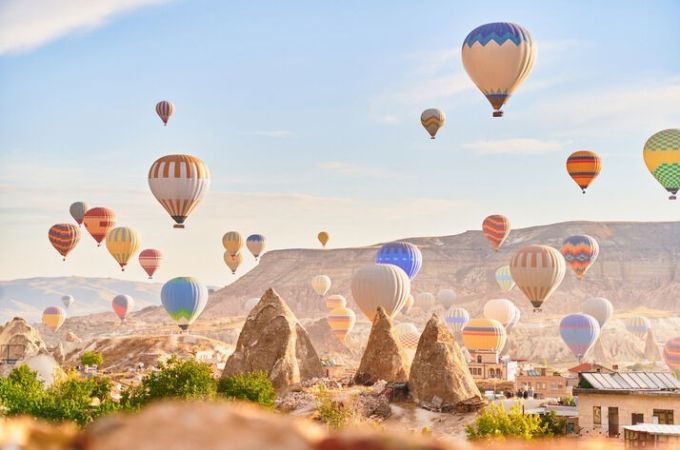
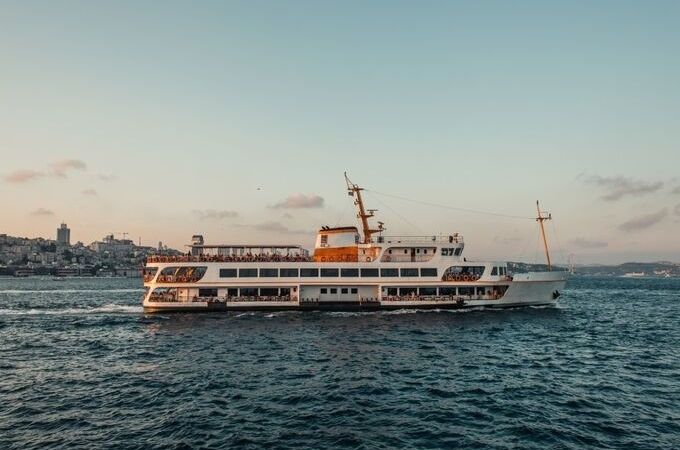
On the Aegean coast, mornings begin around marinas and bays before afternoons settle into a rhythm of swimming, long lunches and warm evenings outdoors. In Istanbul, ferries cross the Bosphorus while visitors negotiate busy historical districts and increasingly appreciate anything involving shade or water. Cappadocia offers completely different scenery again, with early starts becoming valuable not only for balloon flights but also because exploring exposed valleys is far more comfortable before the strongest daytime heat arrives.
This regional variation is the key to planning Turkey between June and August. Asking whether Turkey is “too hot in summer” is not particularly useful because the answer depends on where you are going, what you intend to do and how you structure each day.
A traveler spending a week around Bodrum will experience summer differently from someone moving through Istanbul, Cappadocia, Ephesus and Pamukkale. Both are visiting Turkey in the same season, yet their relationship with the weather, crowds and daily timetable will be almost entirely different.
A successful summer journey therefore does not fight the season. It uses the coast when the coast is at its best, moves demanding sightseeing toward cooler hours, reduces unnecessary transfers and accepts that midday in July should not be planned exactly like midday in April.
Summer Changes the Rhythm Before It Changes the Route
One of the easiest mistakes is taking a spring itinerary and simply moving it into July.
The destinations may still be excellent, but the daily rhythm needs adjustment.
A long archaeological visit that feels comfortable through the middle of an April afternoon can become substantially more tiring under strong summer sun. Walking across exposed sites, climbing through ruins and spending hours outside requires more energy when shade is limited.
Rather than removing cultural experiences, change when you do them.
Early departures become particularly valuable for places such as Ephesus, Pamukkale and outdoor sections of Cappadocia. An earlier start can provide cooler conditions, quieter first hours and a more relaxed afternoon afterward.
Summer rewards travelers who are willing to shift their clocks.
The person who insists that every sightseeing day must begin leisurely at 10:30 may spend the hottest part of the afternoon doing exactly the most exposed activity on the itinerary.
June, July and August Do Not Feel Identical
A summer guide should not become another monthly weather cluster, but the three months still have different travel personalities.
June often offers a particularly attractive transition into full summer. Coastal destinations are lively, sea-oriented travel is well underway and daylight is long, while the atmosphere can feel somewhat different from the strongest peak-season weeks.
July sits firmly inside the classic Mediterranean summer. Coastal resorts become highly active, popular sites receive substantial visitor traffic, and heat management becomes an important part of sightseeing.
August continues that peak-summer character, particularly around the Aegean and Mediterranean. Travelers looking for quiet resort towns and spontaneous availability should not assume that famous coastal destinations will behave like undiscovered villages.
The practical difference is less about choosing a universally “best” summer month and more about recognizing that the deeper you move into peak summer, the more valuable advance planning and sensible daily timing become.
Choose Your Summer Region by the Day You Want to Have
Instead of comparing destinations only by attractions, consider what an ordinary summer day there actually feels like.
| Region | Summer day works best when you want | Main planning challenge | Natural daily rhythm |
|---|---|---|---|
| Istanbul | History, food and city life | Crowds and long outdoor days | Early sights, indoor break, Bosphorus/evening |
| Cappadocia | Landscapes and culture | Exposed daytime conditions | Very early start, midday slowdown, later exploration |
| Aegean coast | Archaeology plus sea time | Peak-season demand | Morning culture, afternoon coast |
| Mediterranean coast | Swimming and relaxed touring | Strong daytime heat | Early activity, long coastal afternoon, late evening |
| Western archaeological route | Ephesus/Pamukkale history | Limited shade | Early site entry, lighter afternoon |
This is the summer decision travelers actually need.
The right destination is partly the one whose daily rhythm matches your preferred holiday.
Istanbul in Summer Works Best When You Use the Water
Istanbul can be hot and busy during summer, yet the city has an advantage many inland sightseeing destinations do not: the Bosphorus is part of everyday transportation.
Using ferries rather than treating them purely as sightseeing attractions changes the experience considerably. A crossing between Europe and Asia provides movement, views and often a welcome break from walking through crowded historical districts.
The historic peninsula still deserves priority for first-time visitors, but attempting to complete every major monument consecutively during the middle of a hot day is rarely the most enjoyable approach.
A better summer pattern combines concentrated sightseeing with natural breaks. Visit major historical sites earlier, allow lunch to become a genuine pause, then use the Bosphorus, another neighborhood or an evening walk to change the pace.
Summer Istanbul becomes more enjoyable once you stop treating shade, ferries and slower meals as time stolen from sightseeing.
Cappadocia Is Not a Coastal Summer Escape
Travelers sometimes include Cappadocia in a summer route after several days beside the Aegean and are surprised by how different the environment feels.
There is no sea breeze waiting beside the hotel.
Cappadocia's appeal comes from volcanic valleys, open landscapes, cave architecture and unusual geological formations, much of which involves being outside. That makes timing particularly important.
Balloon mornings already begin early, but non-balloon days benefit from earlier exploration too. Valley walking can be arranged when conditions are more comfortable, while underground cities and indoor or shaded experiences can help break up the warmer portions of the day.
Evenings can become one of the pleasures of a summer Cappadocia stay because the atmosphere changes noticeably once the strongest daytime sun has passed.
Travelers combining major highlights can explore summer Turkey cultural journeys that balance inland sightseeing with regions where afternoons naturally slow down.
Ephesus Deserves an Early Alarm in High Summer
Ephesus is magnificent, but much of the archaeological experience takes place outdoors.
That fact matters enormously in summer.
Arriving earlier is not merely a strategy for taking photographs with fewer people in them. It changes the physical quality of the visit. You have more energy to pay attention to architectural details, spend time around the Library of Celsus and move through the ancient city without feeling that the primary objective is reaching the next patch of shade.
Water, appropriate sun protection and comfortable footwear become practical essentials rather than optional travel accessories.
If you are staying around Kuşadası or the Izmir region, proximity also has strategic value because it can make an early site visit easier than approaching Ephesus as a rushed excursion from farther away.
The lesson applies across Turkey's exposed archaeological sites: in summer, good timing can improve the attraction more than adding another attraction afterward.
Pamukkale Requires the Same Logic for a Different Reason
Pamukkale combines two environments that travelers sometimes mentally separate: the white travertines and the ancient city of Hierapolis.
Together they can create a substantial outdoor visit.
Summer travelers who arrive expecting a quick photograph may underestimate both the scale of the archaeological area and the effect of moving across exposed terrain during the warmer part of the day.
An early approach again makes sense, particularly if Pamukkale is incorporated into a wider western Turkey route.
What usually makes less sense is creating an exhausting sequence in which travelers check out early, undertake a long transfer, tour Pamukkale through the hottest hours and immediately continue several more hours to another hotel.
Summer magnifies poor logistics.
A routing decision that feels merely ambitious in spring can feel punishing in July.
The Aegean Is Where Culture and Summer Holiday Fit Together Naturally
The western coast gives summer travelers one of Turkey's most useful combinations: substantial historical sightseeing within reach of the sea.
This allows the day to change character.
A morning might focus on archaeology, while the afternoon belongs to the coast. Another day can be almost entirely recreational, providing recovery between more demanding sightseeing days.
Kuşadası can work particularly well when Ephesus is central to the itinerary, while Bodrum appeals more strongly to travelers seeking a distinctive resort atmosphere, nightlife, boating and a broader coastal stay.
The point is not to rank them.
It is to recognize that the Aegean makes alternating effort and relaxation unusually easy.
For travelers who dislike spending an entire holiday either sightseeing or lying beside the water, that balance can be ideal.
The Mediterranean Should Be Allowed to Feel Mediterranean
Another common itinerary mistake appears around Antalya and the southern coast.
Travelers allocate two nights to a Mediterranean destination, then fill both days with long excursions.
They have technically visited the coast without actually having a coastal holiday.
If Antalya, Fethiye or another Mediterranean base is included because you want summer atmosphere, protect some unstructured time.
Swimming is part of the trip.
A long lunch is part of the trip.
A boat day can be part of the trip.
An afternoon during which nothing historical is visited does not represent failed sightseeing.
This distinction becomes especially important when the first half of the itinerary already includes Istanbul and Cappadocia. By the time travelers reach the Mediterranean, a slower pace can provide exactly the contrast the journey needs.
Bodrum, Marmaris, Fethiye and Antalya Are Not Interchangeable
All four names can appear when someone searches for a Turkey summer holiday, but they produce different trips.
Bodrum combines Aegean character, sophisticated resort life, marina culture, beaches and an active social scene.
Marmaris provides a resort-and-harbor environment surrounded by dramatic coastal geography and access to boating experiences.
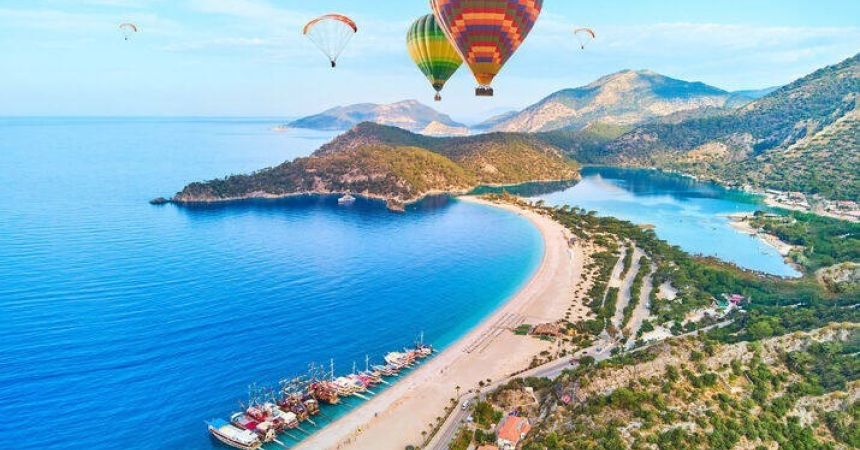
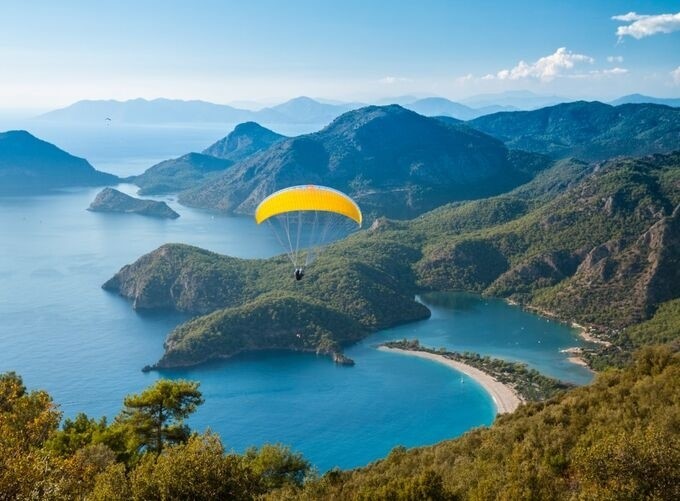
Fethiye works particularly well for travelers attracted to Ölüdeniz, paragliding, gulet cruising and a more activity-oriented southwest coast.
Antalya combines Mediterranean resort possibilities with a substantial city and access to important archaeological sites.
Their individual destination pages should own the detailed comparisons, but summer route planning requires one simple principle: choose a coastal base for the experience you want, not because its beach photographs resemble another resort's photographs.
A Gulet Cruise Can Solve the Mid-Trip Fatigue Problem
A few days at sea can work particularly well inside a longer summer Turkey journey.
After Istanbul museums, domestic flights, Cappadocia mornings and archaeological touring, boarding a gulet changes almost every part of the daily routine. Luggage stops moving, transportation becomes part of the experience, and swimming replaces another afternoon road transfer.
That contrast can be especially effective on itineraries of two weeks or longer.
It does not mean every traveler needs a cruise, nor should a sailing section be compressed into an already crowded ten-day route merely because summer seems incomplete without it.
When enough time exists, however, Turkey gulet cruise experiences can function as more than a beach addition; they can deliberately reset the pace of the entire journey.
Summer Crowds Are a Planning Issue, Not a Reason to Stay Home
Popular Turkey destinations are popular in summer because the season genuinely works for many travelers.
The coast is active.
School holidays make family travel possible.
Long daylight supports extended days.
Restaurants, resorts and seasonal experiences are operating at full rhythm.
The consequence is demand.
Travelers with specific hotel preferences should not rely on last-minute availability in the most popular coastal locations. The same applies to particular room categories, domestic transport at busy times and limited-capacity activities.
Flexibility remains possible, but flexibility is much easier when you genuinely do not care which hotel, room type or departure you receive.
If those details matter, earlier planning is valuable.
Heat Should Change Your Schedule, Not Automatically Cancel the Destination
Travel advice sometimes treats summer heat as though there are only two responses: tolerate it heroically or avoid Turkey entirely.
There is a much better third option.
Design the day around it.
Schedule demanding outdoor sightseeing earlier. Use museums, lunch or transportation during less comfortable hours where practical. Keep hydration readily available rather than waiting until someone becomes tired. Avoid unnecessary backtracking through cities, and do not schedule consecutive long outdoor archaeological visits simply because they fit neatly on a spreadsheet.
Clothing also matters. Lightweight, breathable options are useful, while visits to religious sites still require appropriate coverage. Comfortable footwear becomes particularly important on archaeological surfaces where sandals chosen purely for beach use may be inadequate.
These are modest adjustments, but together they can transform a summer itinerary.
Families Should Protect the Afternoon
Families often have the least to gain from maximizing summer sightseeing hours.
Children who enjoyed an archaeological site at 09:00 may have very different opinions about another outdoor monument at 15:00.
A stronger family itinerary places important sightseeing earlier and allows afternoons to become more flexible. Depending on the destination, that might mean a pool, beach, hotel rest, ferry ride or an indoor attraction.
This approach can look less ambitious on paper while producing a much better holiday in practice.
Parents should also resist interpreting every free afternoon as an opportunity to insert another excursion.
Rest is not a scheduling failure.
During summer, it is often what makes tomorrow's sightseeing enjoyable.
Couples Can Use the Coast to Slow an Otherwise Fast Route
Turkey itineraries for couples frequently begin energetically.
Several Istanbul days lead into Cappadocia, followed by Ephesus or Pamukkale. By the time the route reaches the coast, adding more early departures can make the final section feel like an extension of the same touring pattern.
This is where two or three genuinely slower nights can transform the journey.
The contrast between cultural touring and coastal time gives the trip shape. Rather than returning home immediately after the busiest section, travelers have time to absorb what they have seen.
A broader Turkey summer tour itinerary can therefore work best when the coast is treated as a different travel mode rather than simply the next sightseeing location.
Summer Packing Should Follow the Route Rather Than the Season Label
“Pack for hot weather” is incomplete advice.
Someone spending ten days around Bodrum needs a different bag from a traveler combining Istanbul, Cappadocia and archaeological sites.
For a multi-region summer journey, comfortable walking shoes remain essential even if much of the trip is coastal. Lightweight clothing helps with daytime heat, while modest options are useful for mosque visits. Sun protection, a reusable water bottle and a light layer for heavily air-conditioned environments or particular evening conditions can all earn their place.
If swimming forms part of the itinerary, pack accordingly, but do not allow beachwear to become the entire wardrobe when significant cultural sightseeing is planned.
The itinerary should pack the suitcase.
Not the season name.
How to Build a Summer Route That Still Feels Like a Holiday
A good summer Turkey itinerary alternates different kinds of days.
Several concentrated cultural days can be followed by a slower coastal section. An archaeological morning can lead into a relaxed afternoon rather than another exposed site. A domestic flight can be placed where it genuinely saves time instead of creating another exhausting airport sequence.
Most importantly, every destination should have a purpose.
Istanbul provides urban and historical depth. Cappadocia contributes landscape and an entirely different cultural environment. Ephesus or Pamukkale can deepen the archaeological component, while the Aegean or Mediterranean provides a natural summer counterweight.
You do not need all of them.
You need the combination that makes the ten, twelve or fourteen days you actually possess feel coherent.
Summer in Turkey becomes difficult mainly when travelers attempt to experience the season while refusing to adapt to it. Once early starts, slower afternoons, water, regional contrasts and realistic transfers become part of the plan, the heat stops being the central story.
Turkey becomes the story again.
Frequently Asked Questions About Summer in Turkey
1. Is summer a good time to visit Turkey?
Yes, particularly for travelers combining cultural sightseeing with the Aegean or Mediterranean coast. Summer requires more careful timing for outdoor historical sites, while coastal destinations are in their natural high season and offer a very different rhythm from inland touring.
2. Is Turkey too hot for sightseeing in July and August?
Some regions can become very hot during the middle of the day, but that does not make sightseeing impossible. Earlier starts, sensible breaks, hydration and avoiding consecutive exposed attractions during peak afternoon heat can make a substantial difference to comfort.
3. Which part of Turkey is best for a summer holiday?
There is no single best region. The Aegean suits travelers wanting archaeology combined with coastal time, the Mediterranean works well for swimming and resort stays, while Istanbul and Cappadocia remain valuable for travelers prioritizing culture despite warmer daytime conditions.
4. Is Istanbul worth visiting during summer?
Absolutely, although summer Istanbul benefits from thoughtful pacing. Early historical sightseeing, ferry journeys, longer meal breaks and evening exploration can prevent the visit from becoming an exhausting sequence of crowded outdoor attractions during the warmest hours.
5. Is Cappadocia too hot in summer?
Cappadocia can be warm and exposed during summer days, particularly when walking through valleys. Early morning activities, appropriately timed sightseeing and slower midday periods allow travelers to experience the region without treating every available daylight hour as active touring time.
6. Should I visit Ephesus during a summer Turkey trip?
Yes, especially if archaeology is an important interest, but an early visit is preferable during high summer. Ephesus contains substantial exposed areas, so timing, water, sun protection and realistic expectations about how long you will spend outdoors become particularly important.
7. Should I choose Bodrum or Antalya in summer?
Choose according to travel style rather than simply weather. Bodrum offers a distinctive Aegean resort and marina atmosphere, while Antalya combines Mediterranean coastal travel with a substantial city and access to major archaeological sites across the surrounding region.
8. How many coastal days should I include in a summer Turkey itinerary?
For a trip of around ten to fourteen days, several coastal nights can provide valuable contrast after Istanbul, Cappadocia or archaeological touring. The exact allocation should depend on whether the coast is primarily for relaxation or one of the journey's main destinations.
9. Are Turkey's coastal destinations crowded in summer?
Popular Aegean and Mediterranean destinations can be busy during peak summer, particularly around holiday periods. Travelers who care about particular hotels, room categories or experiences should plan earlier rather than relying on the same flexibility available outside the busiest season.
10. What should families do differently when visiting Turkey in summer?
Families generally benefit from concentrating outdoor sightseeing in the morning and keeping afternoons more flexible. Pools, beaches, ferries, indoor attractions and rest periods can prevent children from becoming exhausted while still allowing the family to experience Turkey's major cultural sites.
11. What should I pack for a multi-region Turkey summer trip?
Bring breathable summer clothing, comfortable walking shoes, sun protection, swimwear and clothing appropriate for mosque visits. A multi-region itinerary requires more versatility than a resort holiday because Istanbul streets, Cappadocia terrain and archaeological sites create different practical demands from beaches.
12. What is the biggest mistake travelers make in Turkey during summer?
The biggest mistake is following an intensive sightseeing schedule designed without considering summer conditions. Too many exposed sites, midday walking and consecutive transfers create unnecessary fatigue, whereas earlier touring and deliberate slower periods usually allow travelers to experience more comfortably.

A travel professional specializing in tailor-made travel planning, guest experience management, and multi-destination tourism operations.
With over 23 years of experience in the travel industry, he designs and manages private and cultural tours for international travelers across Türkiye, Greece, Egypt, Jordan, Morocco, and other destinations.
He has strong expertise in both online and face-to-face guest communication, sales processes, and end-to-end travel operations.
Working closely with hotels, travel agencies, and local partners, he ensures smooth coordination and high-quality travel experiences at every stage of the journey.
His focus is on delivering personalized, reliable, and seamless travel experiences for international guests worldwide.