Istanbul Weather in July: Summer Heat, Humidity & Sea Breezes
Last Updated: August 9, 2026
July teaches an important lesson about Istanbul almost immediately: the temperature on your phone is only the beginning of the story.
Stand in an open courtyard under direct afternoon sunshine and the city can feel intensely summery. Walk into a shaded historical street ten minutes later and the experience changes. Enter the Grand Bazaar, descend towards the waterfront, catch a moving ferry across the Bosphorus, then climb uphill around Galata, and you may wonder how one weather forecast managed to produce so many different versions of the same afternoon.
This is why July should not be reduced to a warning that Istanbul is hot.
Yes, summer warmth matters. Humidity can influence comfort, direct sunshine can make long exposed sightseeing tiring, and travellers accustomed to cooler climates may find midday conditions demanding.
Yet Istanbul contains its own crude climate-control system.
Shade, water, interiors, hills, ferries, narrow streets and changing exposure continually turn the thermostat up and down.
The traveller who understands that geography can experience July very differently from someone who simply walks through the city at one speed.
Setting One: Sultanahmet Turns the Thermostat Up
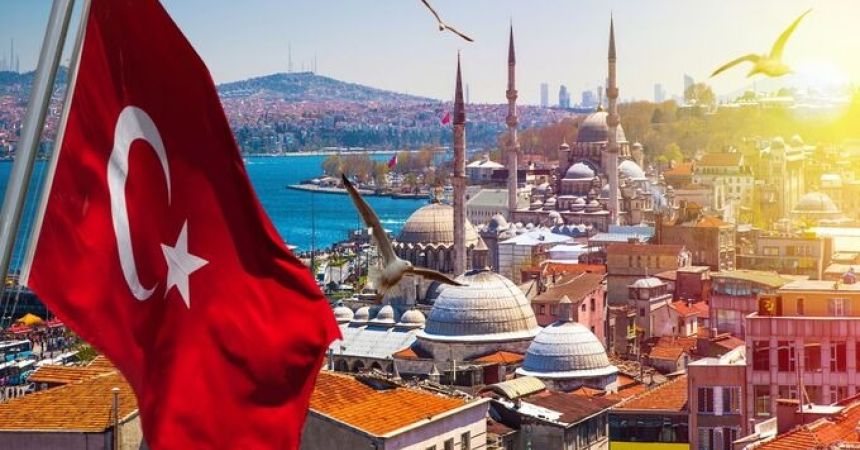
The historical peninsula deserves serious time on almost any first visit, but July changes how that time feels.
Large monuments are separated by outdoor spaces, courtyards and squares where direct sunshine can become increasingly noticeable as the day develops. Historical sightseeing also involves more standing than travellers often expect, and standing beneath strong sun feels very different from walking through a shaded street.
This makes morning valuable.
Not because Sultanahmet becomes impossible later, but because using fresher hours for high-priority historical sightseeing can reduce unnecessary physical strain while preserving the rest of the day.
Travellers wanting the major sites organised efficiently can explore Istanbul highlights tours, particularly when good routing prevents unnecessary backtracking through exposed areas during warmer periods.
July rewards geographical efficiency.
Setting Two: The Mosque Effect
One of Istanbul's most interesting summer transitions happens when you enter a major historic interior after spending time outside.
The atmosphere changes immediately.
Light softens.
The pace drops.
You stop walking.
The building itself becomes part of the day's thermal rhythm.
This does not mean religious and historical sites should be treated as air-conditioning stops. Their cultural importance comes first, and appropriate dress and visitor behaviour remain essential.
Yet July naturally gives indoor experiences another practical role.
They break exposure.
That is one reason an itinerary alternating between interiors and outdoor spaces can feel considerably easier than a day composed of several uninterrupted hours outside.
Setting Three: The Grand Bazaar Turns It Down
The Grand Bazaar offers another change of environment, although travellers should not imagine it as a uniformly cool sealed building.
Its real summer advantage is protection from direct sunshine combined with a completely different sightseeing style.
Instead of crossing open squares, you move through covered commercial streets.
The eyes become busier while the weather becomes less dominant.
This makes markets useful as part of the day's natural rhythm rather than something saved only for poor weather.
Winter uses interiors to escape rain.
July uses them to vary exposure.
Those are two completely different seasonal functions.
The July Thermostat Board
| Istanbul Environment | What Changes | July Effect |
|---|---|---|
| Open historical square | Direct sun + limited shade | Thermostat rises |
| Historic interior | Shade + reduced exposure | Drops noticeably |
| Covered market | Protection from direct sun | More manageable |
| Narrow shaded street | Less solar exposure | Often more comfortable |
| Galata climb | Physical effort increases | Feels warmer |
| Moving ferry | Water + possible breeze | Can feel refreshing |
| Sheltered waterfront | Shade + water influence | Useful summer pause |
| Open ferry deck | Breeze but direct sun | Comfort varies |
The point is not ranking locations from good to bad.
It is learning to alternate them.
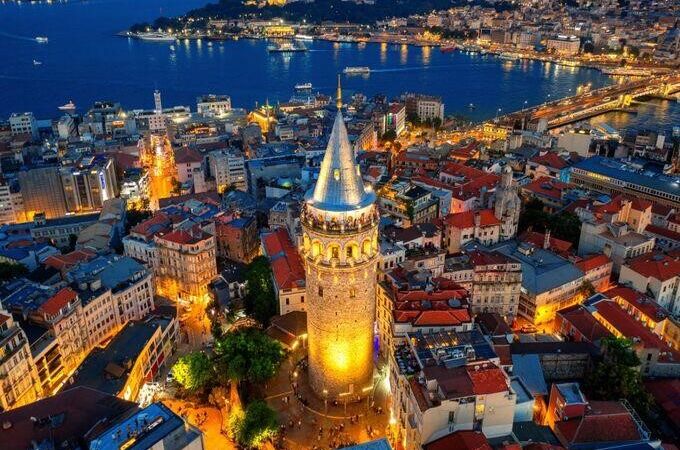
Setting Four: Galata Adds Exercise to the Forecast
July temperature charts do not contain hills.
Your legs will discover them anyway.
Walking uphill from Karaköy towards Galata creates additional body heat, which means a route that felt perfectly comfortable along flatter waterfront streets may suddenly become more demanding.
The obvious response is not to remove Galata.
Slow the climb.
Stop somewhere meaningful.
Use transportation for a section when it improves the day.
Most importantly, avoid designing routes that repeatedly climb and descend simply because individual attractions looked close together on a flat digital map.
In July, elevation belongs in itinerary planning.
Setting Five: The Bosphorus Changes the Room
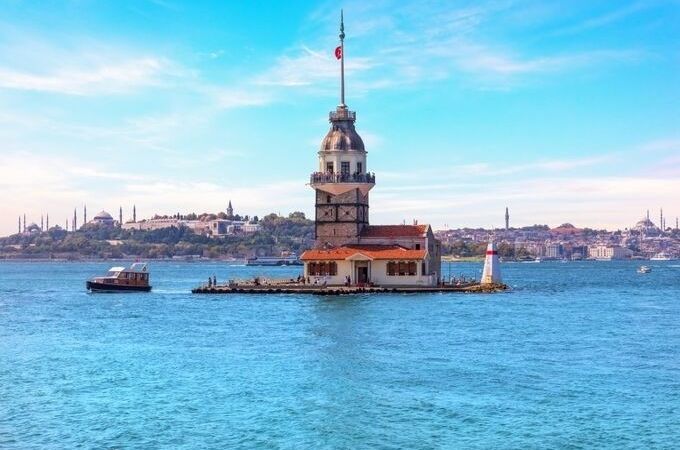
Few major cities offer such an effective change of environment without requiring travellers to leave the destination.
You board a ferry.
The streets disappear.
The view opens.
You sit down.
Even when the day remains warm, the psychological and physical experience changes.
This is one reason the Bosphorus becomes particularly valuable during summer. It provides movement without walking and sightseeing without requiring continuous physical effort.
Travellers wanting a longer water-based interval can consider Private Bosphorus tours, using the strait as a genuine part of the day's pacing rather than squeezing it between several demanding land-based attractions.
A breeze can improve comfort, but do not confuse moving air with protection from sunshine.
Exposed decks still require sensible sun awareness.
The Humidity Question
July comfort cannot be explained through temperature alone because humidity influences how warm conditions feel, particularly for travellers coming from drier climates.
This is where comparisons become unreliable.
Someone accustomed to hot, humid summers may find Istanbul entirely manageable.
A visitor from a cool or dry climate may experience exactly the same afternoon very differently.
Weather content should therefore avoid declaring July either “too hot” or “perfectly comfortable.”
Both statements pretend every traveller has the same body and expectations.
A more useful question is how much continuous outdoor exposure you personally enjoy.
Setting Six: Cross to Kadıköy and Reset
After several hours of historical sightseeing, changing continents can also change the day's energy.
The ferry creates the pause.
Kadıköy changes the purpose.
You are no longer trying to understand centuries of imperial history. You can explore markets, food, streets and everyday neighbourhood life at a less formal pace.
That contrast is valuable in July because mental fatigue and physical fatigue often arrive together.
Changing the type of sightseeing can make the afternoon feel new without requiring a return to the hotel.
Don't Fight Midday Just to Prove You Can
There is no medal for completing the hottest-feeling part of the day entirely outdoors.
If midday conditions feel demanding, let lunch become longer.
Move into a major interior.
Explore a market.
Take a ferry.
Sit somewhere shaded.
Then continue.
This is different from constructing a rigid Mediterranean-style itinerary where everything shuts down for several hours.
Istanbul does not require that.
The adjustment can be small.
The objective is simply to avoid spending maximum energy during the least rewarding environmental conditions.
July's Secret Is Alternation
A badly designed July day can look like this:
square → long walk → exposed courtyard → uphill walk → waterfront → another long walk.
A stronger version might be:
historical exterior → major interior → shaded streets → lunch → ferry → neighbourhood → waterfront evening.
The attraction count may be almost identical.
The experience is not.
This is the thermostat principle.
You do not control July's weather.
You control how long you remain inside each version of it.
What Should You Carry?
Less than you might think, but the right things matter.
Light, breathable clothing is useful for long summer sightseeing days, while comfortable footwear remains essential because Istanbul's distances and hills do not shrink in July.
Sun protection and water deserve routine attention rather than being treated as emergency measures.
Religious-site clothing requirements should also be incorporated into the wardrobe from the beginning of the day.
The objective is to avoid carrying an entire second outfit simply because the itinerary includes both warm streets and culturally significant interiors.
Versatility remains more valuable than volume.
July Is Not August
This distinction is important for the cluster.
Both belong to summer, and naturally there will be climatic overlap.
Their editorial ownership should not.
July is about understanding why summer feels different across the city and learning to move between Istanbul's micro-environments.
August will take the next problem: what happens when peak-summer conditions have been established for long enough that travellers need to rethink the overall pace of the trip rather than merely alternating environments.
July still encourages ambitious sightseeing.
It simply asks you to become smarter about where that ambition is spent.
Beyond Istanbul, Summer Changes Again
Anyone continuing around Turkey should avoid using Istanbul's July conditions as a national weather forecast.
The Aegean and Mediterranean coasts, Cappadocia and inland regions can provide very different combinations of heat, dryness, altitude and evening conditions.
Travellers considering Turkey summer packages should therefore evaluate the climate of each destination individually, particularly when a multi-stop itinerary combines intensive archaeological sightseeing with coastal periods.
One suitcase can handle the journey.
One weather assumption cannot.
You Are the Thermostat
By the end of a July day, you may realise that Istanbul never actually became cooler.
You simply became better at moving through it.
You used a historic interior after an exposed square.
You stopped climbing when a café provided a good reason.
You crossed the Bosphorus while your feet recovered.
You allowed lunch to become longer because the afternoon did not need to be conquered.
Then you returned outside when the light had changed.
That is the distinctive pleasure of July Istanbul.
Summer is fully present, but the city gives you choices.
The temperature belongs to the weather.
The thermostat belongs to you.
The July Two-Speed City
There is a moment on many July trips when Istanbul becomes too much.
Not necessarily too hot.
Simply too much.
Too many people moving through a square, too many historical details to absorb, another hill appearing at the end of a street, another landmark waiting on the itinerary and another kilometre that looked much shorter on the map.
The instinct is often to stop.
A better response is to change speed.
July Istanbul works surprisingly well when travellers accept that the entire day does not need to operate at the same intensity.
There is a fast city.
There is a slow city.
You need both.
Fast Istanbul: Spend Attention While It Is Fresh
Fast does not mean rushing.
It means concentrating several important experiences into a period when your energy and attention are strongest.
For many travellers, this works naturally with historical sightseeing.
You enter a major monument genuinely interested in what you are seeing. You move through the surrounding historical area with purpose, connect several nearby sites and avoid wasting time crossing the city unnecessarily.
This is where efficient routing matters.
The objective is to reduce empty effort, not reduce time inside places that deserve it.
Two carefully connected attractions can produce a richer morning than four scattered ones.
Slow Istanbul: Stop Trying to Complete the City
The second speed begins when concentration starts slipping.
This is not failure.
After several hours of dates, dynasties, architecture and walking, another major attraction can become something you technically visit without properly experiencing.
Change the assignment.
Take a ferry without needing a complicated reason.
Spend an hour around a neighbourhood market.
Sit with tea.
Find somewhere shaded and watch Istanbul continue without you.
The city remains interesting even when you stop actively extracting information from it.
That discovery is particularly useful in July.
How to Know When to Change Gear
Your body usually tells you before the itinerary does.
You begin walking more slowly.
The group stops discussing what it has just seen.
Someone starts checking how far the next attraction is.
Photographs become automatic.
A fifteen-minute café stop suddenly sounds much more appealing than another historical interior.
These are not signs that the sightseeing day should end.
They are signs that its first speed has expired.
Switch.
The Two-Speed July Board
| High-Intensity Istanbul | Low-Intensity Istanbul |
|---|---|
| Major historical monument | Ferry journey |
| Detailed guided sightseeing | Waterfront sitting |
| Palace complex | Neighbourhood café |
| Long cultural visit | Casual market wandering |
| Purposeful walking route | Unstructured side streets |
| Architectural exploration | Scenic transport |
| Historical chronology | People-watching |
A balanced day moves between the columns.
Trying to remain permanently on the left is exhausting.
Remaining entirely on the right may leave a first-time visitor wondering why they travelled so far without seeing the city's essential history.
July does not ask you to choose.
It asks you to alternate.
The Three-Monument Mistake
Imagine scheduling three major historical experiences consecutively because they are geographically convenient.
On paper, this looks efficient.
In reality, the third can suffer.
Historical fatigue is real. After several hours of ornate interiors, archaeological context, religious architecture and detailed explanation, even an extraordinary building can begin competing with everything already absorbed.
In July, physical conditions can intensify that fatigue.
A better sequence may insert something visually or mentally lighter between substantial cultural experiences.
Lunch can do it.
A market can do it.
The Bosphorus can do it particularly well.
You return with attention restored.
Slow Does Not Mean Staying at the Hotel
This distinction matters.
A slower afternoon does not require abandoning Istanbul for an air-conditioned room.
You can reduce physical effort while remaining completely inside the destination.
Take public transportation for a section you might normally walk.
Sit through a longer ferry crossing.
Choose one neighbourhood instead of three.
Stay at lunch for another twenty minutes.
Let the next attraction wait.
The city remains outside the window.
You are simply allowing it to arrive more slowly.
Build One Deliberately Empty Hour
Not flexible.
Not “available if something goes wrong.”
Actually empty.
Place it somewhere in the second half of a July day and refuse to decide in advance how it will be used.
Perhaps you discover a café.
Perhaps the group wants ice cream and shade.
Perhaps everyone feels unexpectedly energetic and the hour becomes another neighbourhood.
Perhaps you sit beside the water doing almost nothing.
An empty hour is not wasted itinerary space.
In July, it can be what protects everything around it.
Children and Older Travellers Need Their Own Speed
A group does not automatically share one comfort level.
Children may lose interest before adults become physically tired. Older travellers may prefer fewer hills or longer seated intervals, while some people simply cope with summer conditions better than others.
Do not build the day's speed around whoever tolerates the most.
Build it around the point where everyone can still enjoy the experience.
This may mean separating briefly, using transportation for part of a route or removing one low-priority attraction.
The quality of a group trip is rarely measured by how many people were successfully pushed through the same schedule.
Couples Should Learn to Abandon the Plan Together
July can be particularly enjoyable for couples precisely because changing pace requires very little organisation.
You intended to visit another museum.
Neither of you wants to.
Good.
Take the ferry.
Find dinner early.
Walk later.
Some of the strongest Istanbul memories occur when two travellers agree that the original itinerary has already done enough for the day.
Spontaneity becomes easier when nobody needs permission from a large group.
The Second Wind Often Arrives
Something interesting happens after a slower interval.
Energy returns.
Not always, but often.
A long lunch, ferry crossing or quiet hour can make an evening walk suddenly sound appealing again.
This is why it is worth resisting the temptation to declare the entire day finished at the first sign of fatigue.
Change speed before you stop.
Istanbul may give you another few hours.
July Is Better When the Itinerary Has Gears
A successful July itinerary should not look like a continuous line of equally demanding activities.
It should accelerate and release.
History asks for attention.
The Bosphorus gives some back.
A hill raises the physical cost.
A ferry lowers it.
A major monument concentrates the mind.
A neighbourhood allows it to wander.
This two-speed approach does more than make warm-weather sightseeing manageable.
It changes how much of Istanbul you actually remember.
Because the objective was never to move through the city quickly.
It was to know when moving slowly would take you further.

A travel professional specializing in tailor-made travel planning, guest experience management, and multi-destination tourism operations.
With over 23 years of experience in the travel industry, he designs and manages private and cultural tours for international travelers across Türkiye, Greece, Egypt, Jordan, Morocco, and other destinations.
He has strong expertise in both online and face-to-face guest communication, sales processes, and end-to-end travel operations.
Working closely with hotels, travel agencies, and local partners, he ensures smooth coordination and high-quality travel experiences at every stage of the journey.
His focus is on delivering personalized, reliable, and seamless travel experiences for international guests worldwide.