Turkey in February: Where Winter Starts to Let Go
Last Updated: August 8, 2026
February is a month of mixed signals in Turkey.
In Cappadocia, you may still wake to frozen ground and find snow tucked into the folds of the valleys. Istanbul can deliver a bright afternoon followed by a cold, wet evening. Travel towards Antalya, however, and the Mediterranean coast may already be showing small signs that winter is losing its grip.
Turkey doesn't move towards spring all at once.
That's what makes February interesting.
The month sits between two seasons without belonging completely to either. Inland Turkey remains firmly wintry, while parts of the Aegean and Mediterranean begin changing earlier. Daylight gradually increases, archaeological sites remain relatively peaceful, and on good-weather days there is more opportunity to spend time outdoors.
For travellers, February is less about searching for warmth than choosing the right experience for each region.
What Is Turkey Like in February?
The answer depends heavily on where you stand.
A photograph taken in Antalya and another taken in Cappadocia on the same day could easily look as though they came from different seasons.
| Region | February Character | Seasonal Change | Best Travel Experience |
|---|---|---|---|
| Istanbul | Cool and changeable | Days gradually lengthen | Museums, neighbourhoods, Bosphorus, food |
| Cappadocia | Cold, often wintry | Winter remains dominant | Valleys, caves, possible snow scenery |
| Ephesus & Aegean | Cool to increasingly mild | Early signs of seasonal change | Archaeology, road trips, local towns |
| Pamukkale | Cool inland conditions | Slowly becoming less wintry | Hierapolis, thermal landscape |
| Antalya | Mildest major touring region | Spring hints appear earlier | Ancient cities, Kaleiçi, coastal walks |
| Central Anatolia | Cold continental climate | Winter remains firmly present | Museums, history, inland landscapes |
February therefore isn't simply “January but slightly warmer.”
The real difference is transition.
Along the coast, that transition can already be visible.
Inland, you may have to wait.
Istanbul Begins to Stretch the Day
February doesn't transform Istanbul overnight.
The change is more subtle than that.
You notice the light first.
An afternoon walk lasts a little longer. A clear spell gives you enough time to cross the Bosphorus before sunset. Outdoor tables reappear whenever the sun makes them worthwhile, only to empty again when the wind picks up.
The city's great advantage remains flexibility.
A cold morning can begin inside Topkapi Palace. A brighter afternoon can take you through Sultanahmet or along the waterfront. If rain arrives, the Grand Bazaar, museums, restaurants and historic interiors give the day somewhere else to go.
February suits travellers who don't need Istanbul to perform like a summer destination.
It is still very much a working city, and that everyday rhythm is part of the attraction.
Our Istanbul and Turkey tours can combine the city with regions experiencing February in entirely different ways.
Cappadocia Is Still Winter Country
Don't pack away the gloves yet.
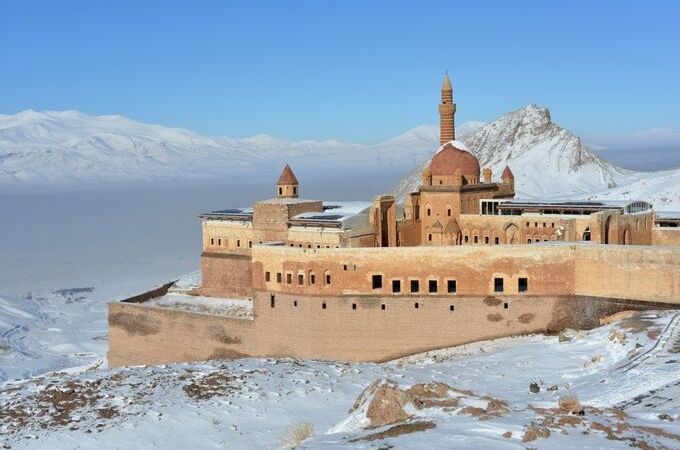
Central Anatolia doesn't follow the Mediterranean calendar, and February in Cappadocia can remain properly cold. Snow is possible, freezing mornings are normal, and pre-dawn conditions can be particularly sharp.
The landscape, however, can be magnificent.
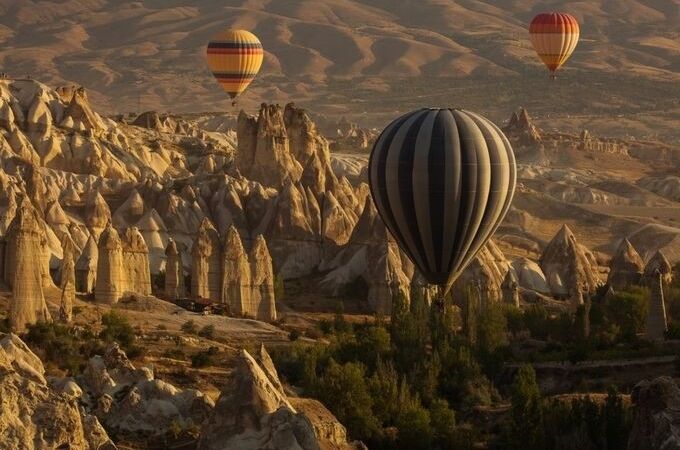
A thin layer of snow changes the contours of the valleys. Frost catches the first light. Cave hotels feel especially appropriate when the temperature falls after dark.
Hot-air balloon operations remain dependent on weather and aviation approval, so flexibility matters. The region should be planned around its complete cultural and geological experience rather than a guaranteed flight.
Our Cappadocia holiday tours offer one way to combine its underground cities, valleys and rock-cut heritage with a wider Turkey itinerary.
The Aegean Starts Looking Ahead
Western Turkey begins telling a different story.
February isn't warm enough to call spring established, but the atmosphere around the Aegean can start feeling less wintry.
That matters at places such as Ephesus.
Walking through an enormous archaeological site is much easier when the midday sun isn't dictating your pace. There is time to stop at the Library of Celsus, look across the ancient streets and appreciate how large the city once was.
Nearby towns and coastal areas remain quieter than they will be later in the year.
For history-focused travellers, that's not a drawback.
It's breathing room.
Where Is February Beginning to Feel Like Spring?
This is one of the most useful ways to plan the month.
| If You Want... | Look Towards... | Why |
| The mildest touring conditions | Antalya | Mediterranean winter generally softens earlier |
| Possible snow scenery | Cappadocia | Inland winter can remain strong through February |
| City culture | Istanbul | Weather-independent attractions keep itineraries flexible |
| Ancient sites without heat | Ephesus | Cooler conditions suit extensive walking |
| Thermal landscapes | Pamukkale | Cool weather complements the region's thermal character |
| A sense of seasonal transition | Aegean / Mediterranean | Signs of spring tend to emerge earlier than inland |
The best February route doesn't necessarily chase the warmest destination.
It follows the change.
Start somewhere winter still feels firmly established, move west or south, and Turkey's geography begins telling the story for you.
By the end of the journey, you may have travelled through two seasons without ever leaving the country.
Antalya Notices the Change First
In February, Antalya can give you one of Turkey's most striking seasonal contrasts.
Look towards the Taurus Mountains and you may still see winter at higher elevations. Turn towards the Mediterranean and the atmosphere can feel considerably softer.
This isn't beach season in the usual sense. Rain remains possible, the sea is cool, and evenings still call for a jacket.
But sightseeing becomes the main event.
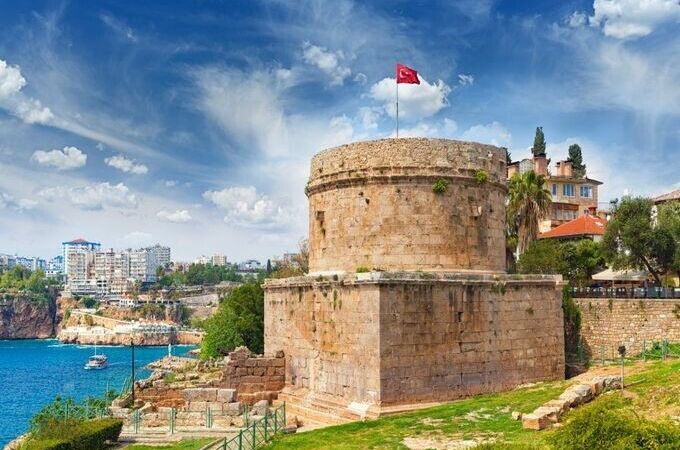
Kaleiçi's narrow lanes are pleasant to explore without summer heat, while Perge and Aspendos can be visited at a pace that would feel very different in July.
On brighter days, lunch outdoors doesn't feel particularly ambitious.
It simply feels like February on the Mediterranean.
Ancient Turkey Is Easier on Foot
Some of Turkey's most impressive historical sites require a surprising amount of walking.
February can work in your favour.
At Ephesus, you can spend more time examining the Terrace Houses, marble streets and monumental buildings without structuring the visit around shade. At Hierapolis, cooler air makes it easier to explore beyond Pamukkale's famous travertines.
The same principle applies farther south.
Archaeological Turkey wasn't built for modern visitors rushing from one photo stop to another.
Cooler months give these places room.
Travellers particularly interested in the country's classical past can explore our Turkey history tours, connecting archaeological landscapes with the cities and cultures that developed around them.
What Should You Pack in February?
February requires flexibility rather than an enormous suitcase.
| Your Route | Packing Priority |
|---|---|
| Istanbul | Waterproof jacket, layers, walking shoes |
| Cappadocia | Warm coat, thermals, gloves, hat |
| Aegean | Medium layers, rain protection |
| Pamukkale | Warm layers and practical footwear |
| Mediterranean | Lighter daytime layers plus jacket for evenings |
| Multi-region journey | Layering system that can adapt as you travel |
One mistake is packing according to Antalya and then travelling to Cappadocia.
Another is preparing entirely for Cappadocia and discovering that you're carrying far too much clothing along the coast.
February rewards travellers who can add or remove layers easily.
A Road Trip Begins to Feel More Tempting
February can be particularly satisfying in western and southern Turkey.
Traffic around major visitor destinations is generally lighter than in peak season, and routes between archaeological sites, towns and coastal landscapes can feel pleasantly unhurried.
Inland driving deserves more caution. Winter conditions may still affect elevated areas, so weather and road conditions should be checked before longer journeys.
The objective isn't to cover enormous distances.
A good February road trip connects places that belong together.
Ephesus and Pamukkale.
Antalya and the ancient cities nearby.
Izmir and the surrounding Aegean region.
These combinations make geographical sense and leave enough time to stop when something unexpected appears along the way.
February Gives You More Day Without Summer Pressure
The days are gradually getting longer.
You feel the difference most in the afternoon.
There is time for another neighbourhood walk after a museum. A visit to an archaeological site doesn't necessarily consume every useful hour of daylight. A sunny spell can become an unscheduled coffee beside the sea.
Yet there is still no pressure to stay outside simply because the weather is perfect.
That's an underrated balance.
February lets the itinerary breathe.
Don't Rush Towards Spring
It's tempting to describe February only as preparation for what comes next.
That undersells it.
Turkey doesn't need to be fully in bloom for the journey to work.
A snow-covered Cappadocia morning, a quiet afternoon among the ruins of Ephesus and a mild Mediterranean day belong to February precisely because the season hasn't settled yet.
For travellers who enjoy combining different landscapes rather than following one climate, our Turkey discovery trips can connect regions that reveal completely different stages of the season within the same journey.
The uncertainty is part of the character.
February isn't quite winter everywhere.
And it isn't quite spring anywhere.
That space between the two is what makes it worth experiencing.

A travel professional specializing in tailor-made travel planning, guest experience management, and multi-destination tourism operations.
With over 23 years of experience in the travel industry, he designs and manages private and cultural tours for international travelers across Türkiye, Greece, Egypt, Jordan, Morocco, and other destinations.
He has strong expertise in both online and face-to-face guest communication, sales processes, and end-to-end travel operations.
Working closely with hotels, travel agencies, and local partners, he ensures smooth coordination and high-quality travel experiences at every stage of the journey.
His focus is on delivering personalized, reliable, and seamless travel experiences for international guests worldwide.