Planning Your First Turkey Trip: A Practical Travel Guide

Where Planning Ahead Matters Most
Not everything needs to be booked months in advance, but some parts of a Turkey journey are harder to improvise than others.
Domestic flights become more important when the route depends on a particular sequence. Cappadocia balloon availability can tighten during busy periods. Popular hotels, particularly distinctive cave properties, can have limited room categories. Private licensed guides and specialized services also have finite availability.
Conversely, leaving every restaurant, café or free afternoon pre-planned can remove some of the pleasure of traveling.
A strong itinerary usually fixes the structural components while leaving room inside them.
Book the bones of the journey. Do not schedule every hour.
Costs Should Be Judged by What They Save or Improve
Turkey can accommodate very different travel budgets, which makes simplistic “Turkey costs X per day” estimates less useful than they appear.
A centrally located hotel may cost more but reduce daily transportation. A domestic flight may be more expensive than a bus yet recover much of a day. A private guide may add cost while substantially improving a complex archaeological visit.
This guide intentionally does not own the detailed budget query; our separate budget content examines where spending more genuinely improves the trip and where travelers can economize without losing much value.
For initial planning, separate expenses into four groups: accommodation, regional transportation, sightseeing and discretionary spending. That gives a more realistic picture than relying on a universal daily figure.
Build the Route in One Direction
One of the simplest improvements we make when reviewing Turkey itineraries is removing unnecessary backtracking.
If Istanbul is followed by Cappadocia and western Turkey, ask whether the onward flight and transfer structure can continue toward İzmir, Ephesus or another region instead of automatically returning to Istanbul after every stop.
The exact sequence depends on current transport schedules, but the principle remains useful:
Every destination should move the journey forward unless there is a genuine logistical reason to return.
This matters even more when combining Turkey with another country. Your final Turkish destination may influence which international departure makes the most sense.
What a Well-Planned First Turkey Trip Feels Like
The best first trip does not necessarily contain the most destinations.
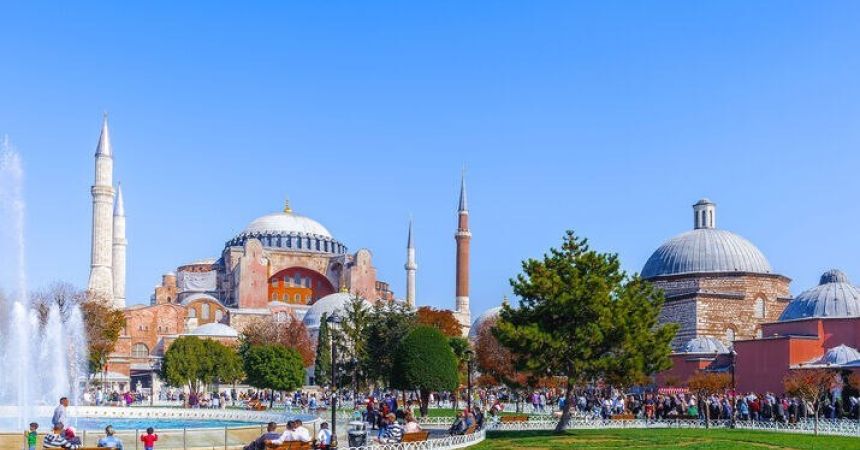
It should have contrast without fragmentation: enough Istanbul to understand the city beyond its monuments, enough time in Cappadocia to experience the landscape rather than merely photograph it, archaeological visits chosen because they matter to you, and coastal time only when it genuinely improves the journey.
Travelers looking for a broader ready-made framework can also review our classic Turkey tour itineraries and use them as a reference for understanding which destinations connect naturally.
The goal is not to copy somebody else's route. It is to recognize the difference between an itinerary that looks impressive on paper and one that still feels enjoyable on day seven.
Frequently Asked Questions
Is Turkey difficult to plan for a first-time visitor?
Not particularly, provided you plan by region rather than collecting individual attractions. The main challenge is Turkey's size. Istanbul, Cappadocia, Ephesus and the Mediterranean are separated by meaningful distances, so transportation and route sequence deserve as much attention as sightseeing choices.
Should Istanbul always be the first stop?
It is often the most practical international gateway and provides an excellent cultural introduction, but it does not have to be first. Flight schedules and your onward destination may justify another sequence, particularly when Turkey forms part of a longer multi-country journey.
Do I need both Cappadocia and Ephesus on my first trip?
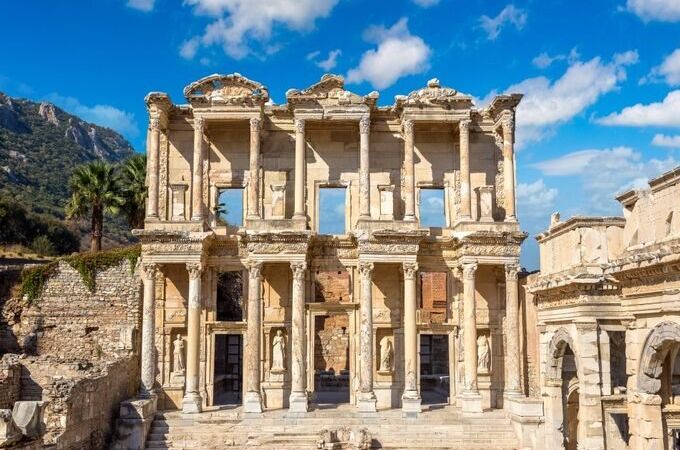
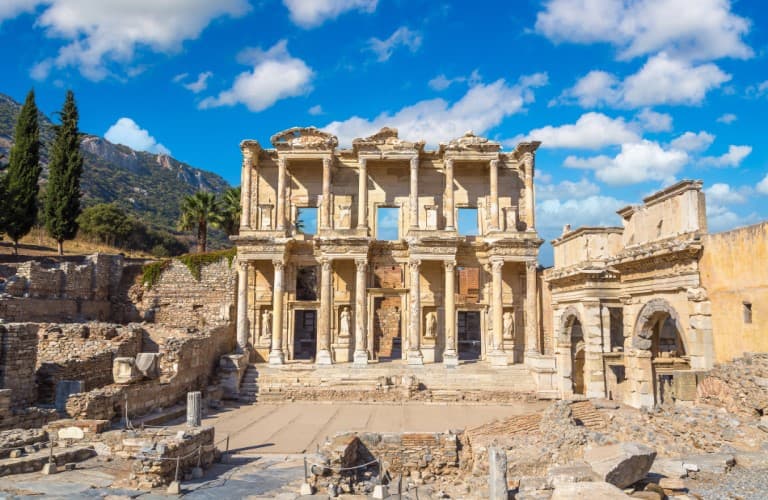
No. They provide completely different experiences. Cappadocia is primarily about Central Anatolian landscapes, rock-cut heritage and distinctive settlements, while Ephesus is one of Turkey's major archaeological experiences. Include both when time allows; otherwise choose according to your strongest interests.
Is Pamukkale worth adding if I am already visiting Ephesus?
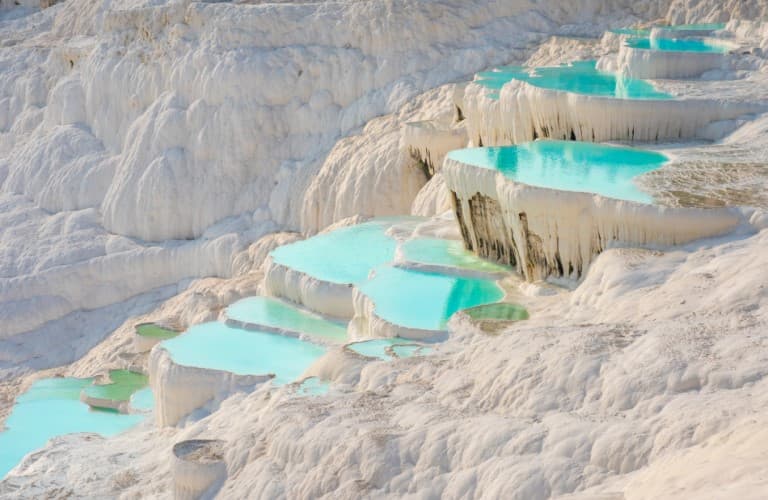
It can be, especially if Hierapolis and the travertines appeal to you, but it should not be added automatically. Consider the extra transportation and hotel logistics against the experience gained, particularly on a shorter itinerary where every additional stop consumes usable time.
Should I include Antalya on my first Turkey trip?
Include Antalya when you genuinely want Mediterranean scenery, coastal time or the archaeological sites surrounding the region. On a short history-focused trip it may create unnecessary movement, while on a longer itinerary it can provide an excellent change of pace.
Is it better to fly or travel overland within Turkey?
It depends on the route. Flights are particularly valuable between distant regions, while road transportation can work well within regional corridors. Compare total door-to-door travel time rather than simply choosing the cheapest ticket or assuming that flying is always faster.
Should I book a Cappadocia balloon flight before arriving?
If ballooning is important to your trip, arranging it ahead is generally sensible because capacity can be limited. Flights remain weather dependent, however, so no itinerary should treat a balloon departure as guaranteed regardless of season or advance booking.
Can Turkey work well for travelers who dislike organized tours?
Absolutely. Turkey lends itself well to hybrid travel. Hotels and transportation can be arranged independently while licensed guides or small-group excursions are used selectively for places where interpretation adds value, leaving evenings and less structured destinations free for independent exploration.
How can I avoid making my Turkey itinerary too rushed?
Count regional transitions, not merely nights. Every flight, long drive, check-out and hotel change consumes part of the day. Removing one destination can sometimes create substantially more useful travel time across the rest of the itinerary than adding another night.
Do I need to plan every attraction before traveling?
No. Reserve the structural elements that can affect the entire journey—important transportation, accommodation and limited-capacity experiences—then preserve some flexibility. A well-organized trip should remove logistical stress without turning every day into a rigid sequence of appointments.
What is the biggest mistake first-time visitors make when planning Turkey?
Trying to include too many geographically distant destinations is one of the most common problems. Turkey rewards variety, but variety does not require constant movement. A smaller number of well-connected regions generally produces a richer experience than an itinerary dominated by transfers.
Can I combine Turkey with Greece, Egypt or Jordan?
Yes, but the international connection should be treated as part of the route architecture rather than an afterthought. The most efficient combination depends on your final destination in Turkey, available regional connections and how much time remains for the second country.

A travel professional specializing in tailor-made travel planning, guest experience management, and multi-destination tourism operations.
With over 23 years of experience in the travel industry, he designs and manages private and cultural tours for international travelers across Türkiye, Greece, Egypt, Jordan, Morocco, and other destinations.
He has strong expertise in both online and face-to-face guest communication, sales processes, and end-to-end travel operations.
Working closely with hotels, travel agencies, and local partners, he ensures smooth coordination and high-quality travel experiences at every stage of the journey.
His focus is on delivering personalized, reliable, and seamless travel experiences for international guests worldwide.