Dahab Egypt: Is This Relaxed Red Sea Town Right for You?
Updated: August 2026
Dahab becomes easier to understand when you stop treating every Red Sea destination as a variation of the same holiday.
The water may be the common thread, but the experience built around it can be remarkably different. Some travelers want a large resort where most needs are handled within the property. Others prefer a polished resort community where hotels, restaurants and leisure spaces form a carefully organized environment. Then there are travelers who want the sea to remain central without allowing the resort itself to become the entire destination.
Dahab speaks most clearly to that third group.
Set on the Gulf of Aqaba on the eastern side of the Sinai Peninsula, Dahab developed from a Bedouin coastal settlement into a destination strongly associated with diving, independent travel and an unusually relaxed rhythm. Tourism has changed it considerably, and describing modern Dahab as an untouched fishing village would be romantic rather than accurate. Yet it still offers a relationship between traveler, town and sea that feels distinctly different from Egypt's larger resort environments.
That difference is the real reason to choose it.
Not because Dahab is universally “better” or more authentic, but because it asks you to spend your Red Sea days differently.
Dahab Is a Place Where the Destination Extends Beyond the Hotel
The first difference many travelers notice is structural.
In a conventional resort stay, the hotel can become the destination. Breakfast, swimming, lunch, beach time, drinks and dinner may all happen within the same property, and leaving is something you deliberately arrange.
Dahab can operate differently.
The town itself matters. Walking out for coffee, choosing somewhere to eat later, spending time beside the waterfront and moving between accommodation and the surrounding community can become part of the ordinary rhythm rather than an excursion away from the resort.
This sounds like a small distinction until you spend several days somewhere.
A traveler who enjoys the security and efficiency of having everything inside one property may wonder why anyone would give that up. Someone who begins to feel enclosed after two days inside a resort may experience Dahab's looser structure as freedom.
Neither response is wrong.
The important thing is knowing which traveler you are before booking.
The Question Dahab Asks Is How Much Structure You Actually Want
Egypt often rewards organization.
Major archaeological sites have opening hours. Domestic transportation needs coordination. Guides, transfers and flights can make the difference between a smooth journey and a chaotic one. By the time travelers reach the Red Sea, they may have spent a week living according to somebody else's timetable.
Dahab offers the possibility of loosening that structure.
You can still organize diving, snorkeling or desert experiences, but the destination does not require every day to be built around a formal program. There is room for a morning to begin slowly and remain that way.
For travelers accustomed to measuring a holiday by how much they accomplished, this can initially feel almost unproductive.
Then something changes.
You stop asking what is next.
That transition is one of Dahab's greatest strengths, although it will never appear on a conventional “Top Things to Do” list.
Dahab's Simplicity Should Not Be Mistaken for Emptiness
There is a tendency in travel writing to describe slower destinations using words such as “chilled,” “bohemian” or “laid-back” until those labels become substitutes for actual explanation.
Dahab deserves more precision.
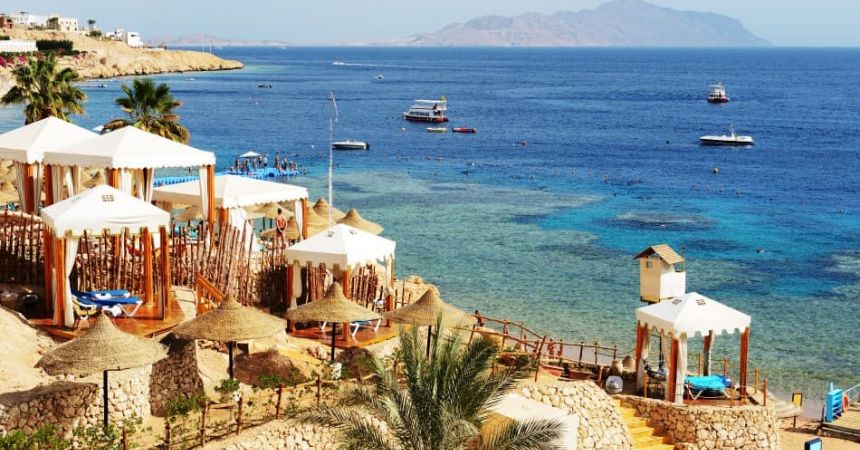
Its slower atmosphere works because several elements reinforce one another: the waterfront setting, a tourism culture strongly connected with diving and the sea, the dramatic mountains of Sinai behind the coast, relatively informal places to eat and spend time, and a town environment where travelers can participate without needing every hour mediated by a resort.
That creates a particular type of ease.
It is not necessarily luxury in the conventional sense. It is the ease of being able to let a day develop without needing to justify it.
For some people, this becomes the most memorable part of the Red Sea.
For others, it feels as though something is missing.
Your Ideal Red Sea Day Reveals Whether Dahab Fits
Rather than comparing hotel inventories or counting attractions, imagine the day you actually want.
| Your Ideal Coastal Day | Dahab Fit |
|---|---|
| Walk out, eat somewhere different, spend time by the water and decide later what comes next | Very strong |
| Remain almost entirely inside a full-service resort | Possible, but not Dahab's defining advantage |
| Build the trip around diving or snorkeling | Strong |
| Combine sea time with a visible desert-and-mountain setting | Strong |
| Have extensive large-resort entertainment on site | Less central to Dahab's identity |
| Enjoy a destination that feels informal rather than polished | Strong |
| Expect every detail to be highly structured in advance | May not use Dahab's strongest quality |
Notice what this table does not answer.
It does not declare Dahab better than Hurghada, El Gouna or anywhere else.
It tells you whether your preferred day resembles a Dahab day.
That is a more useful decision.
The Red Sea Is Not Scenery Here; It Shapes the Town's Identity
Dahab's relationship with diving is impossible to separate from its modern identity.
The surrounding Gulf of Aqaba contains well-known dive and snorkeling environments, and the Blue Hole has become internationally associated with Dahab. Specialist diving questions, technical conditions and safety requirements belong in dedicated content rather than being compressed into a general destination article.
What matters for this decision is broader.
Marine activity does not feel like an optional attraction attached to Dahab. It has influenced the culture and economy of the destination itself. Dive centers, travelers who stay longer because of the water and daily routines built around the sea all contribute to the town's character.
This means Dahab can make sense even for travelers who are not dedicated divers.
You feel that relationship with the sea simply by being there.
However, someone completely uninterested in swimming, snorkeling, diving or coastal life should ask a more fundamental question: why Dahab at all?
The destination's identity is inseparable from its geography.
The Mountains Prevent Dahab From Feeling Like an Ordinary Beach Town
Look away from the water and Dahab changes again.
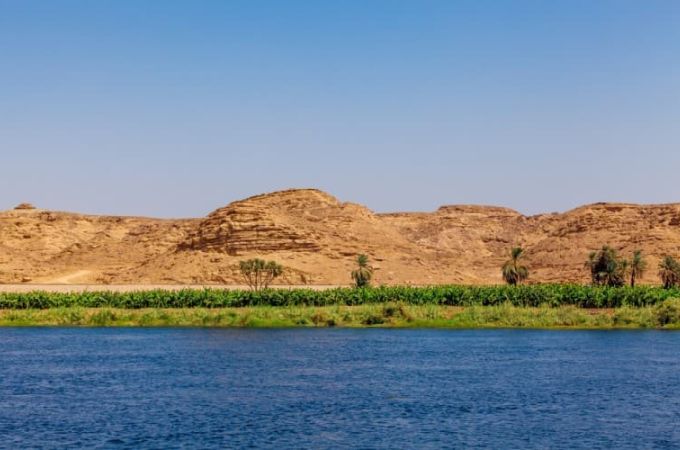
The rugged Sinai mountains rise behind the coast, creating a landscape that can feel surprisingly stark to travelers arriving after the Nile Valley or a conventional resort environment.
Sea and desert exist unusually close together here.
That contrast contributes considerably to Dahab's personality. You are not simply staying beside warm water; you are occupying a narrow coastal space between the Gulf of Aqaba and an enormous desert peninsula.
This is also where we need strict cluster discipline.
The broader Sinai story belongs to the upcoming Sinai Egypt article. That page will own the question of how travelers should understand Sinai as a region and what different kinds of experiences the peninsula contains.
Dahab's job is narrower.
Here, the mountains matter because they shape how Dahab feels, not because this page is attempting to explain Sinai.
Independent Does Not Mean Logistically Effortless
Dahab's relaxed reputation can create the impression that planning barely matters.
That would be misleading.
The destination is located on the Sinai Peninsula rather than beside Egypt's main Cairo–Luxor–Aswan travel corridor. Adding Dahab therefore requires a genuine geographical decision.
Travelers should consider how arrival and departure fit with the rest of the journey rather than seeing a map of Egypt and assuming every major destination connects naturally with every other one.
This becomes particularly important when Dahab is added to an already crowded first trip.
The relaxed experience you came for can be undermined if reaching it requires squeezing another substantial transfer between tightly scheduled cultural destinations.
Dahab needs enough space to justify the transition.
There is little value in traveling to a slow destination and then refusing to slow down once you arrive.
This Is Where Dahab Differs Philosophically From a Resort Extension
A Red Sea extension is sometimes treated as recovery.
You finish sightseeing, enter a resort, unpack and deliberately stop engaging with logistics until departure.
Dahab can certainly provide recovery, but it often does so differently.
Instead of withdrawing into a property, travelers may continue interacting with the destination while lowering the intensity. You can walk, eat outside the hotel, sit beside the water, arrange an activity when you want one and still feel that the day belongs largely to you.
That distinction is subtle but important.
Dahab is not necessarily about doing less outside your hotel.
It is often about doing things with less structure.
For travelers combining Egypt Adventure Tours with a coastal stay, this can create an appealing bridge between active exploration and complete resort relaxation.
Dahab's Informality Is a Strength Only If You Actually Want It
The travel industry often treats words such as “authentic,” “local” and “laid-back” as universally positive.
They are not.
Some travelers genuinely prefer polish. They like highly predictable service, extensive resort facilities, carefully maintained environments and the ability to solve almost every need without leaving the property.
There is nothing inferior about that preference.
Dahab's comparatively informal character becomes valuable when the traveler enjoys participating in the destination rather than observing it primarily through a resort.
This also means expectations matter enormously.
If you arrive expecting the same kind of infrastructure, atmosphere and hotel-centered experience associated with a large Red Sea resort zone, you may evaluate Dahab according to standards it was never particularly trying to meet.
The better question is not whether Dahab provides more.
It is whether you appreciate what it deliberately provides less of.
Longer Stays Reveal More of Dahab Than Aggressive Scheduling Does
Some destinations reward concentration.
You can arrive early, move efficiently through major landmarks and leave feeling that you have understood the essential experience.
Dahab is almost the opposite.
Its appeal becomes clearer when there is enough time for repetition.
You return to somewhere you liked yesterday. You recognize the route along the waterfront. A planned afternoon changes because you decide to stay beside the sea. You discover that not every day needs a centerpiece.
That kind of familiarity rarely survives an itinerary that treats Dahab as another box between two transfers.
This does not mean everybody needs a long stay, nor does this page need to prescribe a number of days. Duration is not our intent.
The point is simply that Dahab's value grows through rhythm rather than accumulation.
That is important when deciding whether it belongs in your particular trip.
Couples Can Love Dahab for Reasons That Have Nothing to Do With Luxury
Dahab can be surprisingly appealing for couples who value freedom more than formality.
A romantic coastal stay does not always require a luxury compound, scheduled dinners and a private pool. For some couples, being able to spend the afternoon near the water, wander somewhere for dinner and allow the evening to remain unplanned feels more personal than a highly managed resort experience.
Others will want exactly that resort experience and may reasonably choose somewhere else.
This is why labels such as “romantic destination” are not especially helpful.
The better distinction is between designed luxury and shared freedom.
Dahab tends to be stronger at the second.
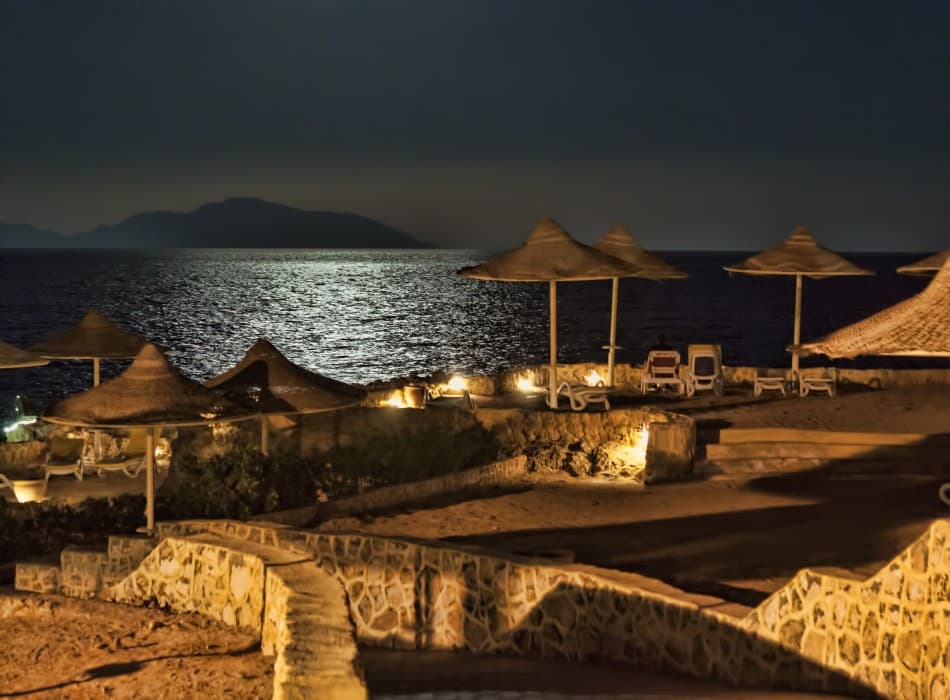
Families Need to Think About Routine Differently Here
Dahab can work for families, but the reason should not be borrowed from the standard family-resort argument.
A large resort often simplifies family travel by concentrating pools, meals, entertainment and facilities within one controlled property.
Dahab's advantage can instead be the ability to create a relatively informal routine around the town and coast, particularly for families comfortable operating more independently.
Those are different benefits.
Parents who want extensive resort programming should evaluate their accommodation carefully rather than assuming Dahab itself provides that structure. Families who enjoy eating in different places, spending time by the water and maintaining a more flexible daily rhythm may respond much more naturally to the destination.
Again, traveler fit matters more than labels.
Dahab Is Not a Shortcut to “Real Egypt”
This is an important line to draw.
Because Dahab feels less resort-dominated than some Red Sea destinations, it can be tempting to describe it as “the real Egypt.”
That is an unhelpful simplification.
Cairo is real Egypt. Luxor is real Egypt. A Nubian community near Aswan is real Egypt. Hurghada's tourism economy is also part of modern Egypt. So is Dahab.
What Dahab offers is not greater legitimacy.
It offers a different relationship between tourism and place.
Its Bedouin heritage, coastal development, international diving community and independent travel culture have all influenced the destination that exists today.
Recognizing that complexity is more interesting than forcing Dahab into an authenticity competition.
When Dahab Is the Wrong Choice, Even If You Like the Photographs
Choose carefully if the coastal section of your trip is supposed to provide complete resort containment.
If your ideal holiday involves walking from your room to a private resort beach, using extensive hotel facilities throughout the day and having almost every service coordinated within the property, Dahab's broader town character may add little value.
Think again if you are trying to add it to an already overloaded Egypt journey merely because you have heard it is relaxed.
A destination cannot relax an itinerary that gives it no room to do so.
And reconsider if your expectations revolve around polished resort architecture and a highly curated leisure environment. El Gouna, for example, owns a different type of Red Sea decision precisely because some travelers value those qualities.
Dahab should win because you want Dahab's rhythm, not because another destination lost a ranking.
When Dahab Becomes Difficult to Replace
The decision becomes much easier when you want three things simultaneously:
the Red Sea, freedom outside the hotel, and a slower daily rhythm.
That combination is where Dahab becomes particularly persuasive.
You can still have active days. The marine environment can become a major part of the trip, and the surrounding landscape provides opportunities to experience more than the waterfront. Yet none of this requires the destination to behave like a conventional sightseeing stop.
Travelers considering Private Egypt Tours sometimes assume that customization means adding more activities. Dahab demonstrates the opposite possibility: customization can also mean deliberately protecting time from activities.
That can be one of the smartest decisions in a complex Egypt journey.
The Real Luxury Here Is Owning Your Time Again
By the time many travelers reach the coast, Egypt has given them an extraordinary amount to process.
Ancient history stretches across thousands of years. Cairo demands attention. Upper Egypt introduces temples, tombs and early mornings. Transfers keep the journey moving forward.
Dahab can interrupt that momentum without requiring you to retreat completely into a resort.
That is its distinctive contribution.
For travelers considering Egypt Travel Packages that include both cultural touring and the Red Sea, Dahab should therefore be selected deliberately rather than added as a generic beach component.
Choose it if you want to wake up beside the Red Sea and feel that most of the day still belongs to you.
Choose it if walking somewhere for dinner sounds better than returning automatically to the same resort restaurant.
Choose it if the possibility of doing nothing for several hours feels like freedom rather than wasted time.
And choose somewhere else if those qualities do not appeal.
Dahab does not need to be everybody's favorite Red Sea destination.
Its strength is that travelers who fit its rhythm often understand very quickly why they came.
Frequently Asked Questions About Choosing Dahab
1. Will Dahab disappoint me if I am accustomed to luxury resorts?
Not necessarily, provided you are choosing Dahab for its town-and-sea lifestyle rather than expecting every aspect of the destination to resemble a polished resort compound. Luxury accommodation can exist alongside Dahab's informal character, but the broader environment remains part of the experience.
2. Can Dahab still feel relaxing if I prefer leaving my hotel every day?
That is one of its strongest advantages. Relaxation here does not have to mean remaining inside a resort. Walking, eating elsewhere, spending time by the waterfront and making relatively spontaneous decisions can all become part of a slower day rather than structured sightseeing.
3. Does Dahab only make sense for experienced divers?
No. Diving is deeply connected with Dahab's international reputation, but the town's appeal extends beyond specialist divers. Travelers interested in snorkeling, coastal scenery, informal waterfront life or simply a slower Red Sea environment can still find strong reasons to stay.
4. Why do some travelers stay in Dahab longer than they originally planned?
Because its value often comes from routine rather than sightseeing volume. Once travelers establish favorite places, become comfortable with the waterfront and stop structuring every day around a major objective, leaving can feel less urgent than it would in a checklist-driven destination.
5. Would Dahab suit me if I dislike being tied to meal plans?
Potentially very well. Travelers who enjoy choosing where to eat rather than relying primarily on one hotel may appreciate Dahab's town-based character. Individual accommodation arrangements vary, but the destination itself gives visitors reasons to spend time beyond their property.
6. Can I appreciate Dahab without being an adventurous traveler?
Yes. You do not need to dive deeply, trek through the desert or fill the stay with outdoor challenges. Dahab can be enjoyed simply through its coastal rhythm, although travelers who want a highly managed resort environment may find another destination more natural.
7. Does Dahab work well for solo travelers?
Its informal environment can appeal strongly to independent travelers because daily life does not need to revolve around a resort or fixed group. As anywhere, practical safety and transport considerations still matter, but the destination's social travel culture can suit solo visitors well.
8. Is Dahab a place where I need to dress for luxury restaurants every evening?
That would misunderstand much of its appeal. Individual venues vary, but Dahab is generally associated with a more relaxed coastal atmosphere. Travelers who specifically want glamorous resort evenings and highly polished surroundings may prefer a different style of Red Sea destination.
9. Will Dahab feel isolated from the rest of my Egypt trip?
Geographically it can require a deliberate transition because it lies in Sinai rather than along the classic Nile Valley corridor. Experientially, that separation can be valuable, provided you allocate enough time for Dahab rather than treating the journey there as an inconvenience.
10. Is Dahab a sensible choice for travelers who hate rigid schedules?
Often yes. Activities can certainly be organized, but the destination also works without constructing every day around predetermined sightseeing. Travelers who enjoy deciding how active they feel after waking up may appreciate Dahab considerably more than a schedule-driven destination.
11. What should I understand about Dahab before booking accommodation?
Decide first whether you want the town itself to participate in your holiday. If walking out, eating elsewhere and spending time beyond the property matter to you, location deserves substantial weight alongside room quality, facilities and the accommodation's own coastal setting.
12. What is the clearest sign that Dahab is probably right for me?
If the idea of a Red Sea holiday built around freedom rather than resort programming immediately sounds attractive, Dahab deserves serious consideration. Its strongest appeal is not a single landmark or activity but the ability to experience the coast without constantly following a timetable.

A travel professional specializing in tailor-made travel planning, guest experience management, and multi-destination tourism operations.
With over 23 years of experience in the travel industry, he designs and manages private and cultural tours for international travelers across Türkiye, Greece, Egypt, Jordan, Morocco, and other destinations.
He has strong expertise in both online and face-to-face guest communication, sales processes, and end-to-end travel operations.
Working closely with hotels, travel agencies, and local partners, he ensures smooth coordination and high-quality travel experiences at every stage of the journey.
His focus is on delivering personalized, reliable, and seamless travel experiences for international guests worldwide.