Siwa Egypt: Is This Remote Oasis Worth the Detour?
Updated: August 2026
Some destinations ask for very little commitment. They sit naturally between places you were already planning to visit, or they can be added without substantially changing the shape of a journey.
Siwa is not one of them.
Located deep in Egypt's Western Desert, relatively close to the Libyan border and far removed from the country's familiar Nile Valley route, Siwa Oasis requires travelers to make a deliberate choice. You do not casually pass through it on the way from Cairo to Luxor. You do not add it to an Aswan afternoon because there happens to be some free time. Reaching Siwa consumes enough travel time that the oasis has to earn its place.
That sounds like a disadvantage, and sometimes it is.
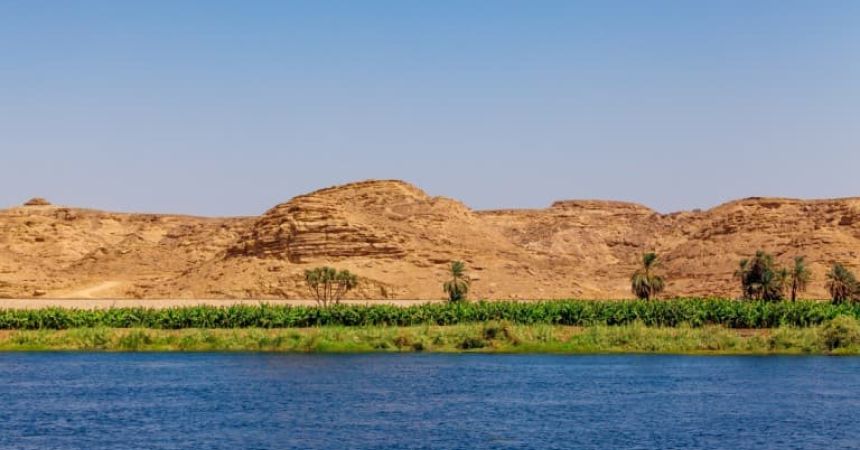
Yet remoteness is also part of what protects Siwa from becoming interchangeable with the rest of an Egypt trip. Its oasis landscape, distinctive cultural identity, mud-brick architecture, salt-rich environment and relationship with the surrounding desert produce a version of Egypt that feels remarkably distant from Cairo's urban density or the monumental archaeology of the Nile.
So the question is not whether Siwa is interesting.
It plainly is.
The useful question is whether Siwa is interesting enough for you to reorganize part of your Egypt journey around reaching it.
Siwa Is a Detour, Not an Extension
This distinction should be understood before anything else.
Travelers sometimes construct Egypt itineraries as though destinations were points on a compact European rail map. Cairo, Alexandria, Luxor, Aswan, the Red Sea and Siwa are all inside one country, so adding another location can look deceptively straightforward on a planning screen.
Egypt's scale quickly corrects that impression.
Siwa lies hundreds of kilometers west of Cairo. Road travel requires substantial time, and the journey does not naturally advance you toward Luxor, Aswan or the principal Nile Valley route afterward. In itinerary terms, you travel out toward Siwa and eventually need to travel back toward the country's main transportation network.
That makes the opportunity cost unusually visible.
Adding Siwa does not simply consume the days spent in the oasis.
It consumes transition time on both sides.
For a traveler with a long journey, that may be entirely acceptable. For someone trying to experience Egypt in a relatively short period, it can fundamentally alter what remains possible elsewhere.
The Distance Filters Travelers Before They Arrive
Siwa's remoteness performs an interesting function.
It forces people to decide how much they actually want to be there.
If Siwa were ninety minutes from Cairo, almost everybody could add it. Because it is not, travelers have to move beyond “that looks beautiful” and ask whether the oasis corresponds strongly enough with their interests to justify the journey.
That filtering is useful.
A traveler deeply interested in desert landscapes, oasis communities, slower destinations or places culturally distinct from Egypt's principal visitor corridor may answer yes almost immediately.
Someone whose first Egypt journey is centered on the Pyramids, major museums, Luxor's temples and a Nile cruise may discover that Siwa is competing with experiences they value more.
Neither traveler has made the wrong decision.
Siwa simply rewards specific interest more than casual curiosity.
What You Gain Is Not Another Famous Monument
This is where Siwa separates itself from the classic Egypt route.
Egypt can train visitors to expect monumental rewards for every journey: a pyramid at the end of the road, a vast temple complex, a royal tomb or an archaeological site recognized instantly from documentaries and textbooks.
Siwa's reward is distributed differently.
The oasis itself is the experience.
Palm groves, desert horizons, springs, salt landscapes, traditional architecture and the cultural character of the community work together rather than relying on one monument to justify the journey.
There are historically significant places here, including the Temple of the Oracle, whose ancient reputation is famously connected with Alexander the Great. The remains of Shali, the historic fortified settlement built from traditional salt-and-mud material known as kershef, provide another powerful expression of Siwa's identity.
Yet reducing Siwa to those sites would misunderstand why people travel so far west.
The individual places matter because they belong to an oasis world, not because Siwa needs its own Egyptian equivalent of the Pyramids.
The First Question Is Whether You Want an Oasis or Merely Like Oasis Photographs
These are surprisingly different things.
Photographs emphasize the most dramatic visual moments: blue-green water, white salt formations, palm trees surrounded by desert and old structures rising from an earthy landscape.
Traveling there involves the spaces between those photographs.
There is road time. The destination moves more slowly than Cairo. Conventional landmark density is lower. The satisfaction of being somewhere remote depends partly on whether you enjoy the atmosphere created by that remoteness.
A traveler who needs a new major sight every two hours may find the reward-to-time equation difficult.
Someone who enjoys landscape, cultural context and the gradual familiarity that comes from staying somewhere smaller may feel the opposite.
This is why Siwa cannot be evaluated properly through a “Top 10 Attractions” framework.
The attraction list is not the product.
The change of environment is.
Siwa's Cultural Difference Is More Important Than Its Isolation
Calling Siwa remote can accidentally reduce it to geography.
The oasis also has a distinctive cultural history. Siwan traditions have been shaped by the community's long-standing geographical position and connections across North Africa, while the Siwi language belongs to the Berber/Amazigh language family.
This does not mean visitors should treat the community as an ethnographic attraction.
Quite the opposite.
Siwa becomes more interesting when travelers understand that they are entering a living oasis society rather than a desert theme park created for tourism. Architecture, agriculture, language, local traditions and adaptation to the oasis environment are interconnected.
That cultural specificity is one of the strongest arguments for making the detour.
Egypt is often represented internationally through pharaonic civilization, yet contemporary Egypt contains communities and regional identities that cannot be understood through Ancient Egyptian monuments alone.
Siwa widens that frame considerably.
Shali Explains Why Place Matters More Than a Checklist
The historic settlement of Shali is particularly valuable because it helps visitors read the oasis rather than simply photograph it.
Traditional construction used kershef, a material incorporating salt and mud suited to local conditions but vulnerable to prolonged rain. The old settlement's architecture therefore reflects the environmental realities of Siwa rather than an architectural style imported from elsewhere.
Standing within or around Shali is different from visiting a restored monument whose original social function disappeared centuries ago.
The surrounding modern community reminds you that Siwa has continued changing.
That continuity matters because it prevents the oasis from being frozen into an exotic past for visitors.
The interesting story is not:
“Here is an old fortress.”
It is:
“How does a community build, adapt and maintain identity in this particular desert environment?”
That is a much richer reason to travel.
Salt Lakes Are Visually Extraordinary, but They Should Not Own the Decision
Siwa's intensely colored saltwater landscapes have become highly visible on social media, and for understandable reasons. Against the desert, the water can look almost unreal.
But there is a planning trap here.
A photogenic experience can become disproportionately important simply because it performs well online.
If the only reason you are considering the long journey to Siwa is to reproduce a particular salt-lake photograph, the travel commitment deserves another look.
The salt environment is better understood as one component of the oasis's broader geography. Siwa's landscape has been shaped by water, salt, agriculture and desert conditions over generations, and seeing those elements together creates far more value than treating one location as an Instagram objective.
Siwa should survive the question:
Would I still want to come if nobody saw my photographs?
If the answer is yes, the detour is already becoming easier to justify.
Siwa Works Poorly When You Rush It
This may be the single most important operational point.
Because reaching Siwa requires substantial effort, compressing the stay too aggressively creates a poor ratio between transit and experience.
Imagine investing a long journey to reach an oasis whose greatest quality is its change of rhythm, then immediately imposing a dense schedule so you can leave again as quickly as possible.
The contradiction is obvious.
This does not mean we need to prescribe an exact number of nights. Doing so would drag this article toward duration and itinerary intent.
The principle is more useful:
The farther you travel away from the main route, the more usable time the destination needs to repay the transition.
Siwa is one of the clearest examples of that rule in Egypt.
First-Time Egypt Travelers Face the Hardest Siwa Decision
A first visit to Egypt creates intense competition for time.
The Pyramids of Giza are difficult to postpone. Cairo's museums and historic districts deserve attention. Luxor contains one of the world's most concentrated archaeological landscapes, while Aswan and the Nile introduce yet another essential dimension.
Against that background, Siwa has to compete.
For a traveler with limited time, it may lose that competition even if Siwa itself is highly appealing.
That is not an argument against visiting.
It is an argument against damaging the entire itinerary merely to say you included it.
A first-time traveler with generous time and a strong interest in oasis landscapes can absolutely justify Siwa. Someone with a short trip and a lifelong interest in Ancient Egypt may sensibly leave it for later.
Good travel planning accepts that worthwhile places can still be wrong for a particular trip.
Repeat Visitors Have a Completely Different Equation
On a second Egypt journey, Siwa can move from optional detour to central objective.
Once the major Nile Valley experiences are no longer competing for every day, travelers can give the Western Desert greater space. Siwa no longer needs to justify why it deserves time instead of Luxor because Luxor may already have been experienced.
This changes the psychological pace as much as the itinerary.
Rather than rushing west and then returning quickly to the classic route, Siwa can become one of the principal reasons for returning to Egypt.
For travelers exploring Egypt Private Tours beyond the standard first-visit circuit, this is precisely the kind of destination where customization becomes meaningful. The point is no longer to rearrange the same famous landmarks but to construct an entirely different relationship with the country.
Siwa and the White Desert Should Not Be Treated as the Same Desert Decision
This distinction is critical to our cluster.
Both belong broadly to Egypt's Western Desert geography, so weak content architecture could easily merge them into a generic “Egypt desert destinations” intent.
We will not do that.
Siwa's question is:
Is the remote oasis itself worth the detour?
The White Desert article will answer a different question:
Is committing to the White Desert experience, including its remoteness and overnight dimension, worth adding to an Egypt journey?
Siwa is a destination with a living oasis community and its own cultural identity.
The White Desert is primarily an experience-led landscape decision.
Keeping that distinction intact prevents both pages from becoming diluted desert guides.
The Real Cost of Siwa Is What You Remove Elsewhere
Money matters when planning any journey, but Siwa's more interesting cost is time.
If adding it means removing the only relaxed day in Cairo, shortening Upper Egypt or creating a sequence of exhausting transfers, the oasis is effectively being paid for with another part of the trip.
That is why a simple “Siwa is worth it” answer is incomplete.
Worth is contextual.
Consider the trade-off instead:
| If Siwa Requires You To... | Think About... |
|---|---|
| Remove a spare Cairo day | Whether Cairo already has enough depth |
| Compress Luxor significantly | Which interest matters more: archaeology or regional contrast |
| Add consecutive long travel days | Whether fatigue will undermine the oasis experience |
| Give up another similar desert experience | Which one has the clearer personal purpose |
| Extend the overall trip | Whether Siwa is important enough to justify the additional time |
| Replace generic free time | Siwa becomes considerably easier to defend |
The destination is unchanged in every row.
Your itinerary makes the value different.
Travelers Seeking “Authenticity” Should Be Careful With the Word
Remote places are often romanticized.
Because Siwa sits far from Egypt's major cities and retains distinctive cultural traditions, travel writing can easily present it as an untouched or “authentic” Egypt that exists outside modern life.
That framing is both simplistic and unfair.
Siwa is a contemporary community. Tourism affects it. Technology exists. Traditions change. People living there are not responsible for performing an idealized past because visitors traveled a long way to see them.
A more respectful approach is also more interesting.
Pay attention to how oasis life has adapted, how traditional architecture interacts with modern needs, how agriculture depends on local environmental conditions and how regional identity persists while the destination changes.
Reality is more valuable than the fantasy of discovering somewhere frozen in time.
Remoteness Also Changes How You Should Plan
A remote destination deserves more margin.
This is not the place to build an itinerary where every transition depends on the previous one working perfectly. Long road journeys, local conditions and the simple reality of being far from Egypt's principal transportation hubs mean travelers should value robust planning over theoretical maximum efficiency.
That becomes particularly important when Siwa sits between fixed flights or other non-flexible arrangements.
The question should not be:
“Can I technically fit it?”
Instead ask:
“Does fitting it this way still produce a trip I would enjoy?”
Those two questions lead to surprisingly different itineraries.
Travelers considering Egypt Desert Tours should pay particular attention to this distinction. Desert geography rewards realistic planning because distances that look manageable on a screen can dominate the lived experience of the day.
Siwa Is Especially Strong for Travelers Who Notice Place
Some travelers remember monuments.
Others remember how destinations felt between the monuments.
Siwa strongly rewards the second type.
The quality of light across the oasis, the relationship between palms and desert, the distinctive architecture, the quieter pace and the sense of distance from Egypt's conventional route can become more important memories than any single named attraction.
This is not better travel.
It is a different mode of attention.
If you naturally notice landscapes, communities, architecture and everyday rhythm, Siwa's information density is much higher than an attraction count suggests.
If you travel primarily to see internationally famous landmarks, the same destination may feel less essential.
Knowing this about yourself is more useful than another online ranking.
The Journey Can Be Part of the Value — Up to a Point
Travel writers sometimes romanticize difficult journeys by claiming that “getting there is part of the experience.”
Sometimes it is.
Sometimes a long drive is simply a long drive.
For Siwa, the journey does create a growing sense of geographical separation from Cairo and the Nile-centered Egypt many travelers know. Watching the environment change can reinforce the feeling that you are moving toward a genuinely different region.
But we should not pretend that every hour of transportation is magical.
The practical burden is real, which is why enough time at the destination matters.
The journey contributes to Siwa's sense of remoteness.
It does not eliminate the cost of that remoteness.
Who Should Probably Leave Siwa for Another Trip?
A traveler on a short first visit whose overwhelming priority is Ancient Egypt should think seriously before adding it.
So should anyone who dislikes long overland journeys, changes accommodation frequently already, or is trying to rescue an overloaded itinerary by compressing every destination.
Siwa may also be the wrong choice for someone whose interest begins and ends with one highly photographed salt-lake experience.
There are easier places to obtain attractive photographs.
The long detour makes sense when the oasis as a whole is the reason for going.
Who Is Most Likely to Say the Detour Was Worth It?
Travelers who actively want to move beyond Egypt's classic corridor are strong candidates.
So are repeat visitors, landscape-focused travelers, people interested in regional cultures, those who appreciate slower destinations and anyone fascinated by the relationship between human settlement and desert geography.
Siwa can also work beautifully as a counterweight to an archaeology-heavy journey when sufficient time exists.
Travelers considering Customized Egypt Tours should think of Siwa not as an optional attraction but as a strategic choice: adding it changes the geography, rhythm and cultural range of the entire trip.
That is a much bigger decision.
It is also why Siwa can be so rewarding.
So, Is Siwa Worth the Detour?
If your Egypt trip is short and primarily focused on the country's major ancient sites, Siwa may not be worth the sacrifice this time.
That final phrase matters.
A destination can be extraordinary without belonging in every itinerary.
If, however, you have enough time to stop treating distance as an enemy, want to experience an Egypt beyond the Nile Valley and are genuinely interested in oasis culture, landscape and regional identity, Siwa becomes difficult to replace.
Its greatest weakness and greatest strength are essentially the same thing.
It is far away.
That distance asks you to commit more time than a convenient destination would demand, but it also allows Siwa to change the rhythm of the journey in a way that a quick extension rarely can.
Do not travel there merely because the salt lakes look extraordinary.
Do not go because somebody's “ultimate Egypt itinerary” says you must.
Go when the idea of traveling deep into the Western Desert to experience an oasis community feels worth reorganizing part of your journey for.
Once the answer reaches that level, Siwa probably belongs.
Frequently Asked Questions About Deciding on Siwa
1. Is Siwa too remote for a first trip to Egypt?
Not automatically. Remoteness becomes problematic when the itinerary is short or already overloaded. First-time visitors with generous time and genuine interest in oasis landscapes can include Siwa successfully, while those prioritizing Egypt's major archaeological sites may prefer postponing it.
2. Why do travelers underestimate the commitment involved in visiting Siwa?
They often count only the time spent at the oasis and overlook the substantial overland transition required to reach and leave it. Siwa sits outside Egypt's conventional visitor corridor, so transportation is part of the itinerary cost rather than a minor connection.
3. Is Siwa mainly worthwhile because of its salt lakes?
No. The salt landscapes are visually remarkable, but building the entire decision around them undervalues Siwa. The oasis's cultural identity, traditional architecture, desert setting, historical associations and relationship between water, agriculture and settlement create the deeper reason to travel there.
4. Does Siwa feel more traditional than Cairo or Luxor?
It has a distinctive regional identity and traditions shaped by its oasis geography and history, but “more traditional” can oversimplify a living community. Siwa is contemporary as well as historic, and travelers gain more by observing that complexity than searching for an untouched past.
5. Is Siwa a good destination if I dislike sightseeing schedules?
Potentially an excellent one. Its appeal does not depend on moving rapidly between famous monuments, so travelers comfortable with landscape, atmosphere and slower exploration often respond strongly to it. However, the substantial journey there still requires thoughtful logistical planning.
6. Why is Siwa particularly attractive on a second visit to Egypt?
Repeat travelers often no longer need to allocate most of their time to Cairo, Luxor and Aswan. That freedom allows Siwa to become a primary destination rather than competing with first-trip essentials, making its remote location much easier to accommodate.
7. Should photographers make the journey specifically for Siwa?
Travelers interested in landscape and architectural photography may find Siwa exceptionally rewarding because desert, oasis vegetation, salt environments and traditional structures create unusual visual contrasts. However, photography works best as part of an interest in the destination rather than its sole justification.
8. Is Siwa suitable for someone mainly interested in pharaonic history?
It may be less essential than the Nile Valley. Siwa has important ancient associations, including the Oracle and Alexander the Great, but its strongest travel identity extends well beyond pharaonic archaeology. Travelers focused narrowly on temples and tombs may prioritize elsewhere.
9. Can Siwa provide the relaxing part of an Egypt trip?
Yes, but it is not effortless relaxation because reaching the oasis requires substantial travel. Once there, its slower rhythm can provide a powerful contrast to Cairo and intensive archaeological touring, provided enough time is allocated to recover the cost of getting there.
10. Is Siwa suitable as a very quick side trip?
That approach weakens much of what makes the destination worthwhile. The journey itself requires significant commitment, while Siwa's appeal comes partly from slowing down and experiencing the oasis environment. Excessive compression produces an unfavorable balance between transit and meaningful time there.
11. What is the strongest argument for leaving Siwa out?
Opportunity cost. If reaching Siwa forces you to severely reduce destinations that matter more to you, creates consecutive exhausting transfers or damages the overall rhythm of a short first trip, postponing the oasis can produce a substantially better Egypt journey.
12. What is the strongest argument for including Siwa?
It can reveal a side of Egypt fundamentally different from the classic Nile route. Travelers interested in regional culture, oasis environments and desert landscapes gain not merely another destination but a change in how they experience and understand the country's geographical diversity.

A travel professional specializing in tailor-made travel planning, guest experience management, and multi-destination tourism operations.
With over 23 years of experience in the travel industry, he designs and manages private and cultural tours for international travelers across Türkiye, Greece, Egypt, Jordan, Morocco, and other destinations.
He has strong expertise in both online and face-to-face guest communication, sales processes, and end-to-end travel operations.
Working closely with hotels, travel agencies, and local partners, he ensures smooth coordination and high-quality travel experiences at every stage of the journey.
His focus is on delivering personalized, reliable, and seamless travel experiences for international guests worldwide.