Egypt Weather in February: Warm Days, Cool Nights
Last Updated: August 8, 2026
February is a month of disappearing jackets.
Not completely.
Leave a Cairo hotel early enough and you'll still be pleased you brought one. Stand on a Nile cruise deck after sunset and you may start looking for it again.
But travel south towards Luxor and Aswan and something begins to shift.
The sun stays with you longer.
Afternoons feel warmer.
The gap between Egypt's short winter and the hotter months ahead begins to narrow.
February sits inside that change.
It doesn't yet require the heat-management strategies that become increasingly important later in the year. At the same time, it feels less firmly winter-like than January.
For travellers who want archaeology, Nile scenery and perhaps several days beside the Red Sea, this can be a particularly useful combination.
February Isn't January With a Different Name
The two months naturally overlap.
They're neighbours.
But they don't travel exactly the same way.
January's greatest strength is its cooler conditions for intensive archaeological sightseeing.
February begins moving the balance.
Daylight gradually increases. Southern Egypt warms more readily during the afternoon. Desert excursions become increasingly attractive, while Red Sea stays can feel more convincing for travellers hoping to spend substantial time outdoors.
| Region | February Personality | What You Notice |
|---|---|---|
| Cairo & Giza | Mild, occasionally cool | Comfortable urban exploration |
| Luxor | Warm, dry days | Strong conditions for outdoor sites |
| Aswan | Warmer southern sunshine | Nile and desert time become especially appealing |
| Abu Simbel | Pleasant to increasingly warm | Early starts remain useful |
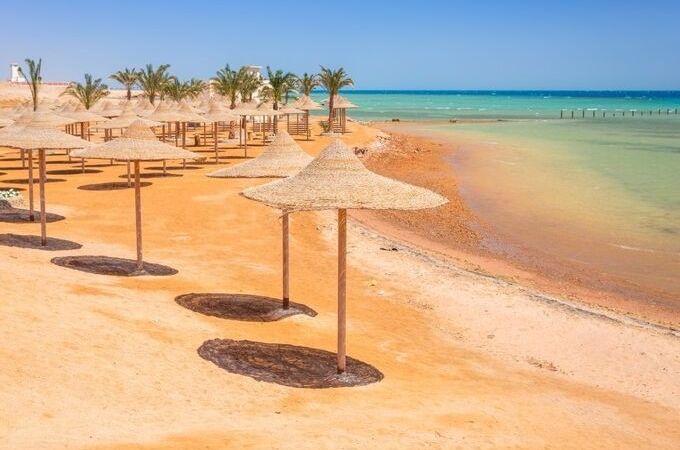
| Hurghada | Mild Red Sea winter | Sunshine good; wind still relevant |
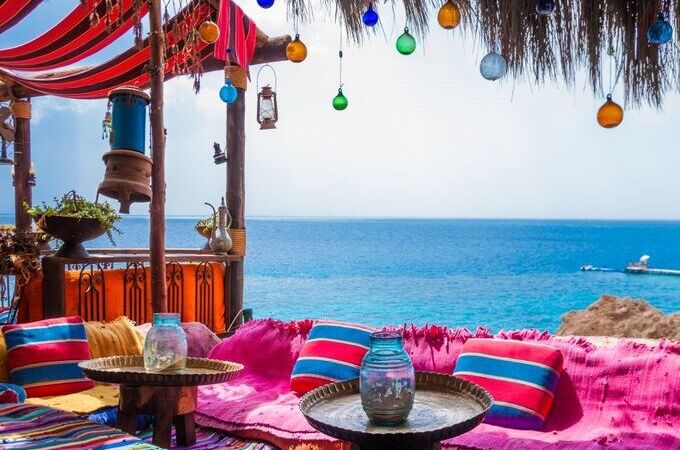
| Sharm el-Sheikh | Mild to warm | Sheltered areas can feel particularly pleasant |
| Western Desert | Comfortable daytime conditions | Excellent season for desert landscapes |
February hasn't become spring in the European sense.
Egypt doesn't need European seasonal definitions.
It is simply beginning to warm.
Cairo Still Wants Your Jacket in the Morning
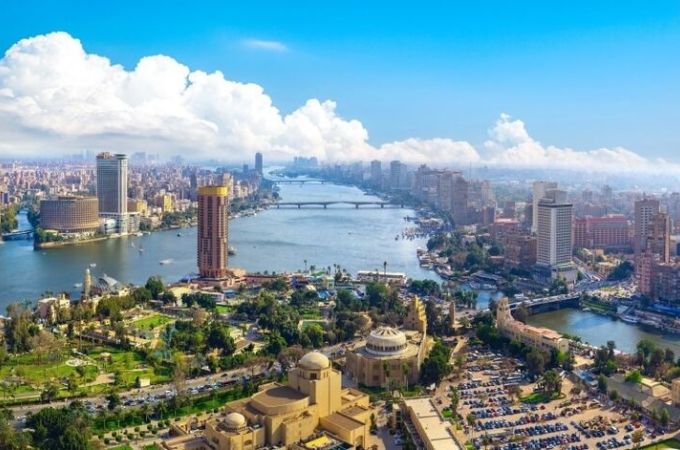
Cairo is where February can preserve the strongest sense of winter.
You leave early for Giza.
The air is cool.
Someone in the vehicle asks whether Egypt is supposed to be warmer than this.
Wait.
By midday, the conversation may have changed.
This morning-to-afternoon variation makes February excellent for city exploration if you dress intelligently.
Layers again.
Not glamorous advice.
Very useful advice.
The Giza Plateau benefits from the milder conditions because visiting the pyramids involves more outdoor time than photographs suggest.
Distances matter.
So does standing still.
You want enough time to step away from the busiest viewpoints and actually absorb the landscape.
The pyramids are not small.
Your itinerary shouldn't make them feel small either.
February Gives Cairo More Than the Pyramids
A common Egypt itinerary treats Cairo like this:
Pyramids.
Museum.
Airport.
Efficient.
Also a little tragic.
Cairo has been accumulating history for far too long to fit neatly between hotel check-in and a domestic flight.
Islamic Cairo alone can consume hours.
Mosques, gates, old streets and markets overlap rather than arrange themselves politely for visitors.
Then there is Coptic Cairo.
The Nile.
Modern neighbourhoods.
Cafés where nobody is remotely concerned about your sightseeing schedule.
Travellers with enough time can use Cairo tours to connect the major historical sites while leaving space for the city that grew around them.
February helps because walking is still realistic across a broader part of the day.
Use that advantage.
Luxor Is Warmer, but Still Generous
By February, Luxor begins showing more of the warmth people expect from Egypt.
That's not a problem.
Not yet.
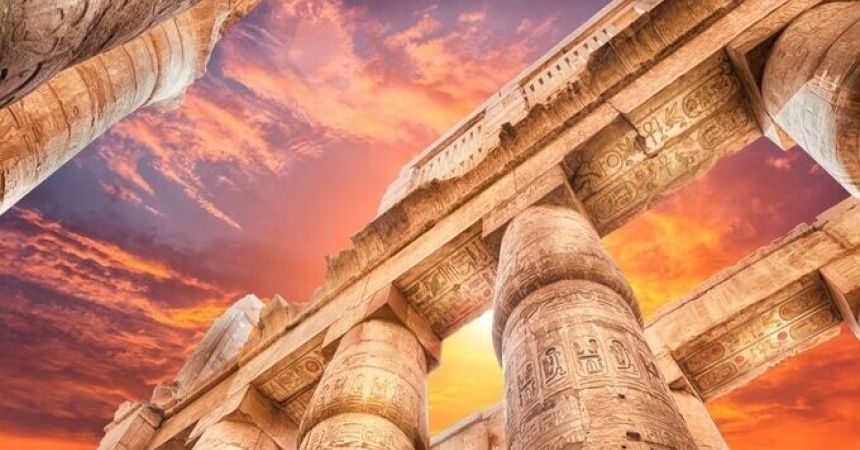
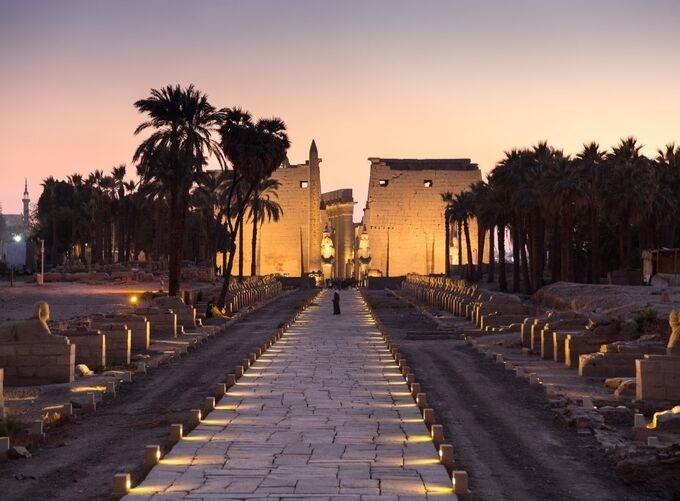
The West Bank remains highly workable for extended sightseeing, while Karnak and Luxor Temple can still be explored without organising every hour around extreme heat.
But February offers a useful reminder:
Start paying attention to timing.
As the month progresses, earlier visits become increasingly attractive, particularly for exposed sites.
Not because midday has suddenly become unbearable.
Because the morning is often better.
That's an important difference.
Good Egypt planning isn't always about avoiding bad conditions.
Sometimes it's simply about choosing the best ones.
Aswan Begins Stealing More of the Afternoon
Aswan is where February can become difficult to leave.
The Nile is broad.
The sun is warm.
A felucca passes.
You had planned to visit something else.
Maybe tomorrow.
This is the danger of Aswan.
Not heat.
Inertia.
February suits the city because outdoor time becomes one of the reasons to stay rather than merely the space between excursions.
The archaeological sites matter, of course.
So does the river.
Our Aswan trips can include the area's historical highlights, but don't turn every available hour into an organised visit.
Leave room for the Nile to do absolutely nothing dramatic.
It has been flowing for quite a while without your schedule.
February Gives the Desert a Bigger Role
The Nile dominates most first-time Egypt itineraries.
Understandably.
But Egypt is also overwhelmingly desert.
February is a good month to remember that.
Daytime conditions can be highly suitable for desert excursions, while the intense heat associated with later months has not yet taken control.
The contrast is extraordinary.
Leave cultivated land.
Green disappears.
The horizon opens.
Suddenly Egypt feels much larger.
This applies whether you're exploring desert landscapes near the Nile, travelling towards an oasis or taking an excursion from a Red Sea destination.
Just remember the rule February hasn't abandoned:
sunset changes everything.
Warm daytime conditions do not guarantee a warm desert evening.
Take the jacket.
Yes, again.
February Starts Expanding the Possible Egypt Trip
This is the month’s real strength.
January encourages you to appreciate Egypt under its coolest touring conditions.
February begins widening the possibilities.
Long archaeological days still work.
Nile cruising remains highly attractive.
Aswan feels warmer.
The desert invites more attention.
The Red Sea becomes increasingly tempting.
You don't have to include all of them.
In fact, please don't unless you have enough time.
Egypt is not improved by seeing more of it through an airport window.
Choose a route.
Give it room.
February will provide enough daylight to use it.
In February, Timing Starts to Matter More Than Temperature
A weather app can tell you the afternoon temperature in Luxor.
It cannot tell you whether you should visit the Valley of the Kings at 8:00 a.m. or after lunch.
February is when that distinction starts becoming useful.
The month is still comfortable for extensive cultural touring, but southern Egypt is gradually warming. As the weeks pass, early mornings become increasingly valuable—not because the afternoon is automatically difficult, but because the first part of the day can be exceptionally pleasant.
You have more daylight to work with.
That doesn't mean you need to fill all of it.
Luxor Rewards the Traveller Who Starts Early
There is something satisfying about reaching the West Bank while the day still feels fresh.
The desert hills catch the morning light.
Touring begins before the sun has gathered much strength.
And you have time.
That last part matters.
The Valley of the Kings isn't somewhere you should experience while repeatedly checking your watch.
Neither is the Temple of Hatshepsut.
Starting earlier allows the morning to unfold rather than turning it into a race towards lunch.
Travellers interested in Upper Egypt can explore Luxor tours, but February works best when the itinerary respects the scale of the sites instead of measuring success by how many names were crossed off a list.
Nile Cruise Days Need Empty Space
Cruising between Luxor and Aswan creates a strange scheduling temptation.
The ship stops.
Therefore you must do something.
Not always.
Part of the Nile experience is what happens when nothing is happening.
You sit on deck.
A village passes.
Someone is working beside the river.
Beyond the cultivated strip, the desert begins almost immediately.
Then tea appears.
Suddenly an hour has gone.
Perfect.
February's gradually lengthening days make these unstructured periods particularly enjoyable. Daytime deck conditions can be pleasant, while sunset and evening still call for an additional layer.
| Part of the Day | February Approach |
|---|---|
| Early morning | Use for exposed archaeological sites |
| Late morning | Continue sightseeing comfortably |
| Afternoon sailing | Leave room for the Nile |
| Sunset | Excellent deck time; keep a layer nearby |
| Evening | Slow the itinerary down |
The table isn't a timetable.
That's the point.
Edfu and Kom Ombo Shouldn't Blur Together
This can happen surprisingly quickly.
Another temple.
Another set of reliefs.
Another guide explaining a dynasty while you're trying to remember which god had which head.
Egypt asks a lot from your historical memory.
Give it some help.
At Edfu, focus on the extraordinary preservation and the monumental scale of the Temple of Horus.
At Kom Ombo, notice the unusual symmetry of the double temple and its position overlooking the Nile.
Then stop studying for the exam.
There isn't one.
The aim is to remember how places felt, not merely accumulate facts about them.
Abu Simbel Is Still an Early-Morning Story
February doesn't remove the early start for many Abu Simbel excursions.
It changes what happens afterwards.
Morning departure temperatures can still feel cool, but conditions at the site become warmer as the day progresses. Layers remain useful, particularly for anyone leaving Aswan before sunrise.
The temples themselves deserve your attention once you arrive.
Not only the colossal façade.
Go inside.
Look at how the monument was designed around royal power, religion and spectacle.
Then remember something even more extraordinary: the temples were relocated in the 20th century to save them from the rising waters created by the Aswan High Dam.
Ancient monument.
Modern engineering story.
Same visit.
Our Abu Simbel trips can add the site to an Aswan stay without pretending it is a casual little morning excursion.
It isn't.
That's why people remember it.
Don't Add Another Night Just to Add Another Site
February makes extensive sightseeing easier.
That can encourage overconfidence.
You start with Cairo.
Add Luxor.
Add the cruise.
Obviously Aswan.
Then Abu Simbel.
Perhaps Alexandria?
What about Hurghada?
Suddenly your twelve-day holiday contains seven hotel changes and you've developed an unusually detailed knowledge of Egyptian domestic airports.
Stop.
Good weather doesn't make geography smaller.
A strong February itinerary uses the extra comfort to experience places better, not to collect more of them.
The Nile already gives you a natural rhythm.

A travel professional specializing in tailor-made travel planning, guest experience management, and multi-destination tourism operations.
With over 23 years of experience in the travel industry, he designs and manages private and cultural tours for international travelers across Türkiye, Greece, Egypt, Jordan, Morocco, and other destinations.
He has strong expertise in both online and face-to-face guest communication, sales processes, and end-to-end travel operations.
Working closely with hotels, travel agencies, and local partners, he ensures smooth coordination and high-quality travel experiences at every stage of the journey.
His focus is on delivering personalized, reliable, and seamless travel experiences for international guests worldwide.