

What Changes in Sharm El Sheikh When March Arrives?
Author: Kenan Ungur
Article Date: 10.11.2024
Reading Time: 15 min

What Changes in Sharm El Sheikh When March Arrives?

Updated: August 12, 2026

March does not transform Sharm El Sheikh overnight.

There is no morning when winter disappears, the sea suddenly warms and every guest heads to the beach at breakfast. The change is more gradual—and much more useful than that.

A resort day simply begins to have more room inside it.

You may feel comfortable heading toward the beach earlier. Swimming no longer needs to occupy such a concentrated portion of the strongest sunshine. After lunch, remaining beside the water becomes easier. A morning excursion does not necessarily mean sacrificing the best part of the beach day.

That expanding usable window is what makes March distinctive.

Daytime temperatures commonly move into the mid-to-upper 20s°C as the month develops, although individual conditions vary and early March can retain a cooler edge. The Red Sea remains inviting for many swimmers, while daylight continues lengthening toward spring.

None of those facts is especially useful in isolation.

Together, however, they begin changing how a Sharm holiday can be structured.

March Gives You Back the Edges of the Day

January concentrates beach value around the strongest daytime sunshine. February makes exposure and location particularly important.

March starts returning the hours around that central window.

A morning that might have felt too fresh for an immediate swim several weeks earlier can become increasingly usable. Later afternoon no longer necessarily signals the quick end of beach activity, particularly as the month progresses.

The practical result is not simply “more beach time.”

It is less competition between activities.

You can spend part of the morning elsewhere and still have meaningful time beside the sea. Or swim earlier, have a long lunch and return without feeling that the best conditions disappeared while you were eating.

That flexibility is March's real seasonal upgrade.

Early March and Late March Don't Need the Same Holiday

March is transitional enough that exact travel dates deserve some attention.

Someone arriving during the first few days should not automatically expect the same resort rhythm as a traveler arriving near the end of the month.

Instead of treating the month as one climatic block, think about what expands as the weeks pass.

Resort Experience Earlier March Later March
Early beach start More condition-dependent Increasingly practical
Midday swimming Strong part of the day Strong part of the day
Long afternoon outside Usually workable Gains greater flexibility
Repeated water sessions More selective Easier to spread through day
Resort-to-evening transition Still noticeable Often feels less abrupt

This is a directional guide, not a forecast.

A cooler late-March day can occur, just as a particularly warm day can appear earlier. The important point is that March is moving somewhere.

You No Longer Have to Choose Between Morning and Water

Winter resort planning sometimes creates a subtle trade-off.

Take a leisurely morning excursion and you may return after part of the strongest beach window has already passed. Spend the entire central day at the resort and you preserve swimming conditions but sacrifice another experience.

March begins weakening that trade-off.

As more of the day becomes useful outdoors, activities can coexist more naturally.

You might spend the morning away from the hotel, return for lunch and still have a satisfying afternoon beside the Red Sea. Alternatively, swim earlier and leave the resort later without feeling that the entire beach opportunity was compressed into two or three central hours.

For travelers choosing a Sharm and Sinai experience, this can make March particularly versatile because resort time and excursions no longer need to compete quite so aggressively for the same part of the day.

The Second Swim Becomes More Appealing

One simple way to understand March is through the idea of a second swim.

During cooler winter conditions, some travelers enter the sea once during the best part of the day, dry off and move on.

As March develops, swimming can become less of a single scheduled event.

You may enter after breakfast, spend time on the beach, have lunch and return later. A short snorkeling session does not have to represent your entire day's relationship with the water.

This matters because Red Sea holidays are often better when the sea becomes part of the day's rhythm rather than an appointment inside it.

You stop asking, “When should we swim?”

You simply go back when you feel like it.

March Makes a Mixed Resort Day Easier

Not every Sharm visitor wants seven uninterrupted hours on a sun lounger.

Some want breakfast, a swim, time away from the beach, another water session, lunch, perhaps a spa appointment, then an outdoor afternoon.

March increasingly supports that fragmented style.

One March Day, Several Versions

If You Prefer… March Can Support…
Slow mornings Later beach time without losing the whole day
Frequent swimming Multiple shorter water sessions
Resort activities Moving between pool, sea and hotel spaces
Light excursions Combining them with substantial beach time
Flexible families Less dependence on one perfect swimming window

This table deliberately does not tell you what time to do each activity.

March's value is precisely that fewer activities need a compulsory hour.

Water Time Starts Feeling Less Transactional

There is a psychological difference between entering the sea because “this is the warm part of the day” and entering because you happen to want a swim.

March begins moving toward the second experience.

The Red Sea itself does not undergo a dramatic temperature jump. Instead, warmer air surrounding the swim makes the entire process—walking to the water, getting in, leaving it, drying off and remaining outdoors afterward—feel increasingly natural.

This is important because a beach holiday is never only about water temperature.

The environment before and after swimming determines how often you actually want to return.

Travelers taking a Red Sea coastal holiday may therefore notice March's change more through behavior than through a thermometer.

The Pool Begins Competing More Fairly With the Sea

During winter, whether a hotel pool is heated can strongly influence how useful it feels.

March starts changing the balance.

Unheated pools do not all warm at the same rate, and resort design, pool depth and sunshine exposure remain important. Yet as daytime warmth strengthens, guests may find a wider selection of outdoor water spaces appealing.

This gradually reduces the importance of organizing the entire resort stay around whichever pool receives winter heating.

Families can especially benefit from this change because children often move between water environments far more frequently than adults.

Still, do not assume every pool will feel identical simply because the calendar says March.

The transition is gradual.

A Longer Beach Day Doesn't Mean Maximum Beach Time

There is a temptation to treat improving conditions as an instruction to spend every additional usable hour beside the water.

That misses the point.

March's advantage is choice, not endurance.

If you want a long beach day, you have increasing room for one. If you want to leave the resort, the beach does not necessarily disappear from the itinerary. If you sleep late, you have not automatically wasted the only useful swimming period.

More usable hours should make the holiday feel less scheduled, not more crowded.

Don't Turn March Into April Too Early

By late March, Sharm can begin feeling substantially removed from the heart of winter.

That does not mean we should describe it using April's language.

April will own the point where longer, warmer conditions make dedicated snorkeling and boat-centered days increasingly central to the travel decision.

March is about what happens immediately before that.

The resort day stretches.

Water becomes easier to revisit.

Morning and afternoon regain value.

Different activities stop fighting over the same narrow weather window.

For travelers considering a Sinai beach and reef escape, that transition can be more useful than simply knowing whether March is warmer than February.

March Is the Month of “And”

January often asks: beach or something else during the strongest sunshine?

February asks: exposed or sheltered?

March begins replacing those decisions with another word:

And.

Morning activity and beach.

Swimming and a long lunch.

Snorkeling and another afternoon swim.

Resort time and a short excursion.

That is March's exclusive place within this Sharm El Sheikh cluster: the weather begins expanding the day sufficiently that a Red Sea holiday requires fewer compromises between the things you came to do.
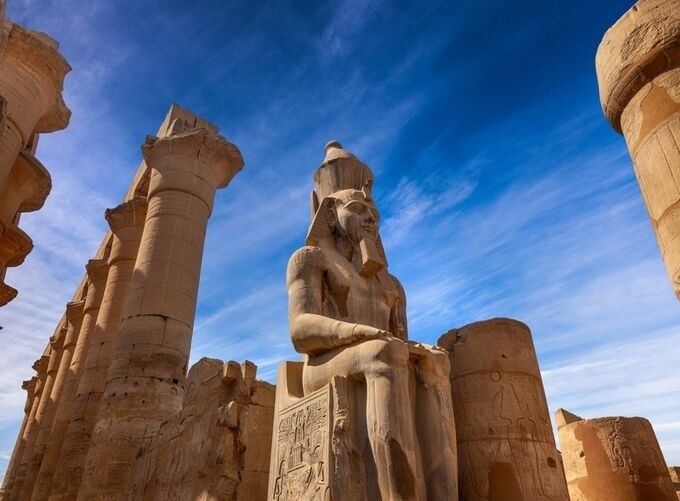
Karnak Temple ruins surrounded by palm trees and lush Luxor scenery

March Lets You Stop Protecting One Perfect Window

The most useful change in March is not that every hour suddenly becomes ideal. It is that a successful resort day becomes less dependent on getting one particular period exactly right.

If breakfast runs late, the beach is still there. If a morning activity takes longer than expected, returning after lunch can still leave meaningful outdoor time. If you swim early and decide you want another session later, the second entry becomes increasingly natural as the month develops.

This makes March forgiving.

That quality is particularly valuable on holiday because resort days rarely unfold according to a strict schedule. People sleep longer, children change plans, lunches expand, and an interesting activity takes more time than expected.

March increasingly allows those changes without making you feel that you have sacrificed the Red Sea.

Try a Split Beach Day

Instead of treating the beach as one continuous block, March can work beautifully with two separate sessions.

Spend some time beside the water earlier, leave for lunch or another activity, then return later.

This structure has several advantages. You avoid becoming tired of the same sun lounger, water activities feel less repetitive, and the resort becomes something you move through rather than somewhere you remain stationary all day.

More importantly, you can decide after the first session whether you actually want another one.

That flexibility is one of the clearest differences between a transitional March stay and a more concentrated winter-sun routine.

Families Gain More Room to Improvise

Children rarely follow an adult's idea of the perfect beach schedule.

They may want the pool immediately after breakfast, refuse to leave the sea before lunch, then suddenly decide they have finished swimming altogether.

March's expanding outdoor window can make those unpredictable rhythms easier to accommodate.

Parents do not necessarily need to concentrate every water activity into the warmest central period. As conditions become more accommodating, the family can move between swimming, meals, resort activities and rest without constantly calculating whether the beach opportunity is disappearing.

That does not make March identical every day, particularly early in the month.

It simply provides more margin.

An Excursion Doesn't Have to Cost You the Beach

This is where March becomes particularly useful for travelers who do not want a resort-only holiday.

A short morning activity can coexist with an afternoon beside the Red Sea. Alternatively, enjoy the resort first and leave later for an experience that does not require the whole day.

The goal is not to cram two complete itineraries together.

It is to recognize that March increasingly supports partial-day combinations.

How March Changes the Trade-Off

Your Plan Winter Concern March Opportunity
Morning away from resort Losing prime beach hours Afternoon becomes increasingly usable
Long lunch Missing swimming window Water time can resume afterward
Early swim Conditions may feel fresh Becomes easier as month advances
Resort activity Competes with beach Both can fit naturally
Two swims Second may feel unnecessary Multiple entries become more appealing

This is a different type of weather advantage from simply having higher temperatures.

It gives you control over the itinerary.

Late March Should Still Be Treated as March

As the end of the month approaches, it is easy to read April weather descriptions and assume they apply automatically to a March 27 arrival.

Climate does not follow page boundaries.

Conditions can be wonderfully warm, but individual days still vary. Short-range forecasts become increasingly useful as departure approaches, particularly when planning water-heavy activities.

Use the seasonal trend to understand what March generally offers, then let the actual forecast refine the final details.

That approach is more reliable than expecting a specific temperature because a historical average appears on a website.

March Packing Can Become Simpler

A transitional month sounds as though it should require more clothing.

At a Red Sea resort, March often works the other way.

Lightweight daytime clothing, swimwear, sun protection and comfortable resort footwear remain the foundation. Something slightly warmer is still sensible for cooler periods, particularly earlier in the month or after sunset, but the daytime wardrobe increasingly revolves around outdoor resort life.

The important item is not a complicated selection of seasonal clothing.

It is having enough swimwear to support repeated water sessions comfortably.

If you expect to enter the sea or pool more than once, changing out of wet swimwear between activities can make the entire day more pleasant.

Don't Forget the Sun Because the Air Feels Easy

March can produce the kind of conditions in which people remain outdoors for much longer without noticing how much sun exposure they are accumulating.

That is partly the point of the month: outdoor time becomes easier.

But easier does not mean insignificant.

A longer beach day, two swimming sessions and lunch outside can add up to substantially more exposure than a concentrated winter beach window.

Sun protection therefore becomes relevant not because March is peak summer, but because you may voluntarily spend more hours outside.

The Real March Upgrade Is Freedom

If January teaches you how to find the best winter-sun window and February teaches you to pay attention to exposure, March begins removing some of those constraints.

Not completely.

Early mornings can still feel different from afternoons. Individual cooler or breezier days remain possible. The Red Sea does not suddenly become tropical bathwater.

Yet the resort day becomes increasingly elastic.

You can move activities around.

You can return to the water.

You can leave the hotel and still enjoy the beach afterward.

You can let lunch run long.

That is a much more meaningful March advantage than simply saying temperatures are rising.

March in Sharm El Sheikh FAQs

1. Is Sharm El Sheikh warm in March?

March generally becomes progressively warmer, with daytime temperatures often reaching the mid-to-upper 20s°C. Early and late March can feel different, however, so exact travel dates and short-range forecasts are more useful than treating the entire month as one fixed climate period.

2. Can you swim in Sharm El Sheikh during March?

Yes, many visitors swim throughout March. The Red Sea retains relatively mild temperatures, while increasingly warmer daytime air can make the complete swimming experience—before entering, while swimming and after leaving the water—feel easier as the month progresses.

3. Is early March different from late March?

Potentially, yes. Early March can retain more of the winter-season character, while later March generally offers a broader window for outdoor resort activities. Daily variation remains possible, so the difference should be understood as a seasonal trend rather than a guarantee.

4. Is March good for a beach holiday in Sharm El Sheikh?

March can work particularly well for travelers wanting substantial beach time without designing the entire day around one narrow period. Increasingly usable mornings and afternoons allow swimming, relaxation, meals and other activities to coexist more naturally.

5. Can I spend the whole day on the beach in March?

You certainly can when conditions suit you, but March's advantage is not that you must. The expanding outdoor window makes split beach days particularly practical, allowing you to leave for lunch or another activity and return later.

6. Is the Red Sea warmer in March than in winter?

Sea temperatures change gradually rather than dramatically from one month to the next. March's improvement is often felt as much through warmer surrounding air and easier post-swim conditions as through a major increase in the water temperature itself.

7. Is March suitable for children who want to swim frequently?

It can be very convenient for families because water activities increasingly need less concentration around one central period. Hotel pool conditions still vary, particularly if a pool is unheated, so resort facilities remain worth checking before booking.

8. Can I combine an excursion with beach time in March?

Yes, and this is one of March's strongest practical advantages. A partial-day excursion does not necessarily consume the entire useful beach window, particularly later in the month when outdoor resort conditions tend to become more flexible.

9. Do I still need warmer clothing in March?

A light additional layer remains useful for cooler mornings or evenings, especially earlier in March. Heavy winter clothing is generally unnecessary for normal resort use, while lightweight daytime clothing increasingly becomes the foundation of the suitcase.

10. Is March good for snorkeling in Sharm El Sheikh?

March can provide enjoyable snorkeling, particularly as warmer surrounding conditions make repeated or longer water sessions increasingly attractive. Dedicated boat and snorkeling-day planning belongs more strongly to April, while March's advantage is flexibility between water activities and the rest of the holiday.

11. Is March sunnier than the winter months?

Sharm El Sheikh is already known for abundant winter sunshine, so March's travel value should not be reduced to a simple sunshine comparison. The more meaningful change is how increasing warmth and longer daylight expand the portion of the day travelers actually want to spend outside.

12. What makes March different from February in Sharm El Sheikh?

February's defining issue is exposure—wind, sheltered bays and resort geography can strongly affect how conditions feel. March shifts toward expansion: more of the resort day becomes usable, allowing swimming, beach time, excursions and other activities to fit together with fewer compromises.

Kenan Ungur
Author

A travel professional specializing in tailor-made travel planning, guest experience management, and multi-destination tourism operations.

With over 23 years of experience in the travel industry, he designs and manages private and cultural tours for international travelers across Türkiye, Greece, Egypt, Jordan, Morocco, and other destinations.

He has strong expertise in both online and face-to-face guest communication, sales processes, and end-to-end travel operations.

Working closely with hotels, travel agencies, and local partners, he ensures smooth coordination and high-quality travel experiences at every stage of the journey.

His focus is on delivering personalized, reliable, and seamless travel experiences for international guests worldwide.
Join The Newsletter

To receive our best monthly deals

Magnificent Travel Logo

Magnificent Travel
Usually responds the same day

Magnificent Travel
Welcome to the Magnificent Travel

How may i help you?
Today
+905324935198
X