Egypt in Summer Is Mostly a Question of What You Do at 2 p.m.
Updated: August 2026
There is a moment during an Egyptian summer day when an itinerary written months earlier meets reality.
At breakfast, everything looks perfectly sensible. The archaeological site opens early, the vehicle is waiting, everyone has water, and there is plenty of time before lunch. Several hours later, the sun is higher, shade has become unexpectedly valuable, and the forty-five minutes allocated to one final outdoor visit suddenly look far more ambitious than they did on the spreadsheet.
This is why asking whether Egypt is “too hot” in summer does not produce a particularly useful answer.
Yes, Egypt can be extremely hot during the summer, with Upper Egypt generally presenting a more demanding sightseeing environment than the Mediterranean coast and Cairo. Yet travelers do visit during these months, and the difference between a difficult summer journey and a rewarding one often has less to do with tolerating heat than with refusing to organize July as though it were February.
Summer does not make Egypt impossible.
It makes poor scheduling considerably less forgiving.
In Egyptian Summer, the Clock Matters More Than the Calendar
Travelers naturally begin by checking monthly temperatures.
That tells only part of the story.
What matters operationally is the combination of location + activity + exposure + hour of day.
A museum in Cairo and an exposed archaeological site in Luxor may appear on the same weather forecast, yet they create completely different physical experiences. Sitting in an air-conditioned vehicle during a transfer is not equivalent to walking across open ground, while an early visit and the same visit several hours later can feel surprisingly different.
This is why a useful summer itinerary is not simply a shorter version of a winter itinerary.
It needs a different internal rhythm.
The cooler and more comfortable periods should generally be protected for activities that genuinely benefit from them, while hotter hours can absorb experiences that do not require prolonged outdoor exposure.
Once you begin thinking this way, midday stops looking like an obstacle.
It becomes a scheduling tool.
A 7:00 a.m. Temple and a 2:00 p.m. Temple Are Not the Same Experience
Archaeological sightseeing is one of the main reasons people travel to Egypt, which makes it particularly important not to waste the best part of the day.
An ancient temple does not become historically less significant at two in the afternoon.
Your ability to appreciate it may.
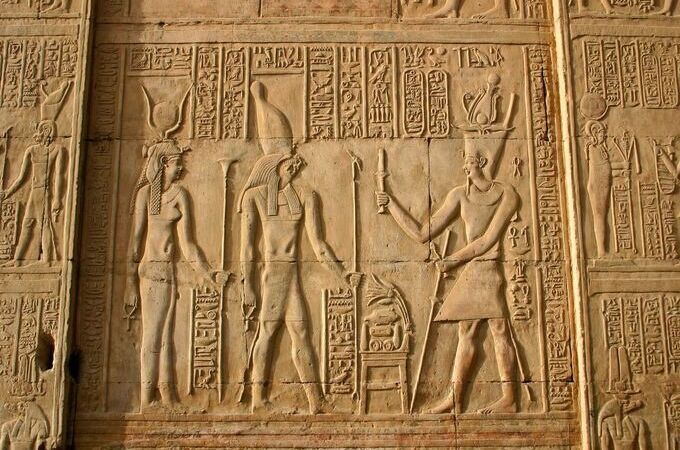
Earlier in the day, a traveler may happily stop to examine reliefs, listen to explanations and wander a little farther to see another part of the complex. Under more demanding afternoon conditions, the same person can begin calculating the distance back to the vehicle while the guide is still discussing the pharaoh on the wall.
That is not a failure of cultural curiosity.
Physical discomfort competes with attention.
For this reason, Egypt Summer Tours work better when major exposed archaeological visits receive deliberate priority rather than being placed wherever they happen to fit geographically.
Saving twenty minutes of driving is not necessarily efficient if it moves the most important outdoor experience into the least comfortable part of the day.
Midday Is Not Wasted Time
One of the hardest ideas for some travelers to accept is that doing less around midday can produce a better overall sightseeing day.
A long lunch can feel inefficient. Returning to the hotel may feel worse.
You traveled all the way to Egypt, after all.
Surely sitting in your room between activities means wasting part of the holiday?
Not necessarily.
Midday can be used for lunch, a museum, a transfer, hotel time or another activity that reduces prolonged exposure. What matters is that the hottest part of the day does not automatically inherit whatever outdoor sightseeing remains unfinished.
A substantial break can also reset the day.
People change clothes, shower, rest, reorganize bags and recover their enthusiasm. A couple of hours later, leaving the hotel again can feel surprisingly like the beginning of another day rather than the exhausted continuation of the morning.
Summer travel improves when rest stops being treated as evidence that the itinerary failed.
Some Summer Days Should Have Two Beginnings
This is perhaps the most useful summer planning principle in Egypt.
Instead of imagining the day as one continuous sightseeing block, think of it as two separate periods.
The first begins early.
Outdoor archaeological sightseeing receives priority while energy is high and conditions are generally more manageable. Lunch and the hotter hours then create a natural interruption.
The second part begins later.
Depending on local opening hours, location and the specific itinerary, that might involve a more comfortable activity, time around the Nile, an evening experience or simply going out for dinner without feeling as though the entire family or group has been sightseeing continuously since sunrise.
The psychological difference is significant.
A traveler leaving the hotel again after resting does not feel the same as somebody entering hour eleven of a sightseeing day.
That distinction rarely appears in itinerary mileage.
It is immediately obvious to the person traveling.
Cairo and Luxor Do Not Ask the Same Thing From You
“Egypt is hot in summer” is geographically true but operationally incomplete.
Cairo contains combinations of outdoor sightseeing, urban movement and substantial indoor experiences. Luxor's archaeological importance, by contrast, can place travelers outdoors for extended periods at temples, tomb areas and other historical sites during a season when Upper Egypt can be particularly demanding.
That means the same sightseeing rhythm should not automatically be copied from one destination to the next.
A Cairo day may allow indoor and outdoor components to alternate naturally. In Luxor, protecting the earliest practical hours for major exposed sites can become much more important.
This is not a recommendation to avoid one city or favor another.
It is recognition that heat interacts with the kind of sightseeing you are doing.
The thermometer gives you a number.
The itinerary determines what that number actually feels like.
Shade Can Matter More Than Distance
Travelers often estimate difficulty through walking distance.
In summer, exposure complicates the calculation.
A relatively short walk across open archaeological terrain can feel more demanding than a longer period moving through a protected environment. Waiting for somebody in full sun can be more tiring than walking slowly in shade, while the difference between a vehicle parked nearby and one requiring an exposed approach can suddenly become meaningful.
This is why operational details that seem minor in cooler months deserve more attention in summer.
Where does the guide give the longer explanation? When does the group pause? Is water already available before leaving the vehicle? Can part of the explanation happen in a shaded area rather than after everyone has been standing in the sun for fifteen minutes?
None of these changes the archaeological content.
They change how much attention remains available for it.
Air-Conditioning Is Part of the Itinerary
Air-conditioning sounds like a hotel amenity until you spend a summer sightseeing day in Egypt.
Then it becomes part of the day's recovery system.
A properly air-conditioned vehicle gives travelers somewhere to cool down between exposed visits. An indoor lunch does more than provide food. A hotel room used during the middle of the day becomes functional travel infrastructure rather than accommodation sitting empty until bedtime.
This is particularly important when evaluating transportation.
A vehicle should not merely have enough seats for the passengers. During summer, comfort and reliable climate control matter because the vehicle repeatedly functions as the transition between outdoor environments.
On Egypt Private Trips, this can also make flexible pacing particularly useful. If a visit finishes earlier than expected because everyone has had enough of the heat, there is little benefit in standing around simply because the original schedule allocated another thirty minutes.
Summer rewards adaptability.
Use Transfers to Consume the Hours You Least Want Outdoors
Every Egypt itinerary contains logistics.
People need to travel between hotels, airports, cities, ports and archaeological areas. Those hours cannot simply be deleted.
Summer creates an opportunity to position some of them more intelligently.
If a necessary road journey can occupy a hotter part of the day without damaging another important connection, those hours are no longer competing with the best conditions for outdoor sightseeing.
This does not mean deliberately scheduling every transfer at noon.
Flight schedules, hotel check-in, driving times and destination opening hours still control many decisions.
The principle is simply to ask:
Which hours do I most want to protect for being outside?
Then avoid spending those hours inside a vehicle when a reasonable alternative exists.
Conversely, do not complain about “losing” a hot midday period to transportation if the alternative was spending that same period walking across an exposed archaeological site.
Sometimes the transfer is doing you a favor.
The Nile Changes the Pace, but It Does Not Cancel Summer
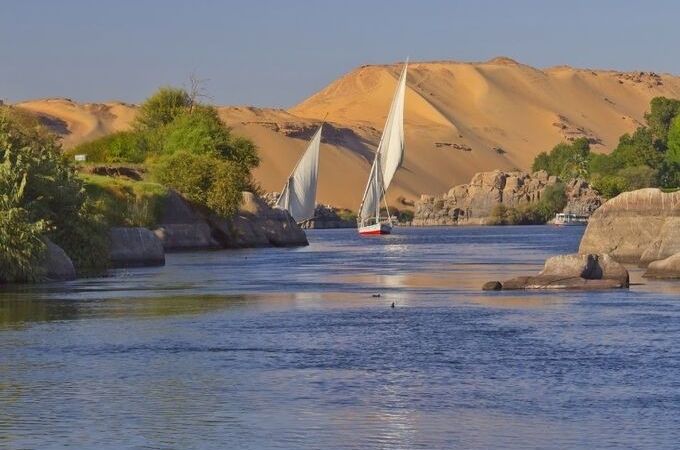
The Nile introduces movement, scenery and periods when travelers are not continuously walking through archaeological sites.
That can make the rhythm of a summer journey feel considerably more relaxed.
It does not create its own climate.
Deck areas can still be hot, shade remains important, and shore excursions continue to involve the conditions of the places being visited. A Nile journey should therefore not be treated as a magical exemption from summer planning.
Its advantage is partly structural.
Travelers can return from sightseeing to the same cabin, have meals onboard and spend periods moving between destinations without another road transfer or hotel check-in. That reduction in logistical friction can be valuable during hotter months.
On Summer Nile Tours, the most successful rhythm is therefore not necessarily the one containing the greatest number of optional activities.
The river itself can provide the change of pace.
Let it.
The Same Day Becomes a Different Trip Depending on the Hour
The following is not a fixed schedule. It is a way of thinking about where different activities tend to fit within a summer day.
| Activity | Earlier Hours | Around Midday | Later Hours |
|---|---|---|---|
| Exposed archaeological visit | Valuable time to protect | Can become substantially more demanding | May improve where opening hours permit |
| Museum or indoor visit | Perfectly possible, but may consume valuable cooler hours | Often strategically useful | Can compete with evening plans |
| Road transfer | May use prime outdoor time | Can turn difficult sightseeing hours into productive movement | Risk of a late arrival |
| Lunch and rest | May interrupt comfortable sightseeing | Can become an intentional recovery block | Too late to solve midday fatigue |
| Nile time | Often pleasant | Shade and indoor options still matter | Can provide a welcome change of pace |
| Hotel break | Often unnecessary immediately after breakfast | Can reset the entire day | Less useful once major activities are over |
The point is not that every July itinerary must follow one formula.
It is that activity placement matters more in summer.
Museums Become Strategically Useful Without Becoming Heat Shelters
It is tempting to describe museums simply as air-conditioned alternatives to outdoor sightseeing.
That undersells them.
Egypt's museum collections deserve attention because of what they contain, not because the temperature outside is inconvenient. Summer simply gives planners another reason to consider when an indoor visit occurs.
If an archaeological day combines indoor and outdoor experiences, putting the exposed component earlier and a substantial indoor visit later may protect both.
The outdoor site receives better conditions.
The museum receives a traveler who is not simultaneously wondering how long they can remain in the sun.
Good sequencing improves both experiences without changing either one's historical importance.
That is a better summer strategy than adding random indoor attractions merely because they have air-conditioning.
Your Hotel Room Has a Daytime Job
In many sightseeing itineraries, the hotel room is treated as somewhere travelers leave after breakfast and rediscover after dinner.
Summer can change that relationship.
Location, air-conditioning and the practicality of returning during the day may become more relevant when a substantial midday break is intentionally built into the schedule.
This does not mean choosing a hotel solely because you intend to spend half the holiday inside it.
It means acknowledging that a strategically useful hotel can support the sightseeing day rather than merely bookending it.
There is a human side to this that itinerary planning sometimes ignores.
Being able to shower and change after a hot morning can completely alter how someone feels about going out again later.
The second half of the day begins with a person who has recovered rather than someone who has simply continued.
Water Works Better Before Thirst Becomes the Reminder
“Stay hydrated” may be the most predictable sentence in any summer travel article.
The problem is not that the advice is wrong.
It is that people often treat water reactively.
A traveler realizes they are thirsty halfway through a visit and then remembers that the bottle is in the vehicle. Parents wait until children ask for water, even though children may be distracted by what they are seeing.
The practical habit is simpler: think about water before leaving the air-conditioned environment, particularly when the next visit involves outdoor walking.
Sun protection and appropriate lightweight clothing deserve similar advance thinking.
The useful summer habits are usually the boring ones performed consistently rather than heroic measures taken after somebody already feels uncomfortable.
The Longest Sightseeing Day Is Rarely the Most Successful One
Summer exposes a weakness in itinerary design that cooler weather can sometimes hide.
Too much sightseeing is still too much sightseeing.
When heat is added, the point of diminishing returns may arrive sooner. A traveler can physically continue while mentally retaining less and less of what the guide is explaining.
This is particularly relevant in Upper Egypt, where successive temples and archaeological sites can create both historical saturation and physical fatigue.
The solution is not necessarily to remove important places.
Prioritize them.
Give the site that genuinely matters the better time of day, enough attention and sufficient energy. Treat lower-priority additions as optional rather than allowing them to reduce the quality of everything else.
There is no cultural achievement in becoming exhausted beside a 3,000-year-old monument simply because the itinerary says another forty minutes remain.
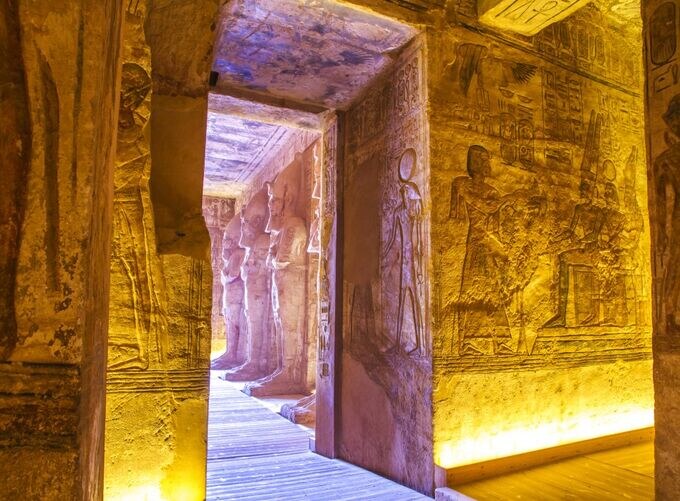
Older Travelers and Children Change the Margin for Error
Heat tolerance varies considerably between individuals, which is why summer itineraries should not assume that everyone in a group will experience conditions identically.
Children, older travelers and people who simply do not cope well with prolonged heat may need more conservative pacing.
This is not the place to redesign an entire family itinerary; that belongs to family-specific travel planning.
The summer principle is narrower.
When one traveler has a lower tolerance for heat or physical exposure, build enough flexibility that the entire day does not depend on everybody operating at the maximum pace.
A private vehicle, accessible indoor recovery, shorter exposed visits or the ability to abandon a lower-priority stop can become more useful than squeezing every theoretically available attraction into the schedule.
The weakest heat tolerance in the group often determines the practical pace.
Planning as though that will not happen rarely changes it.
The Red Sea Solves a Different Summer Problem
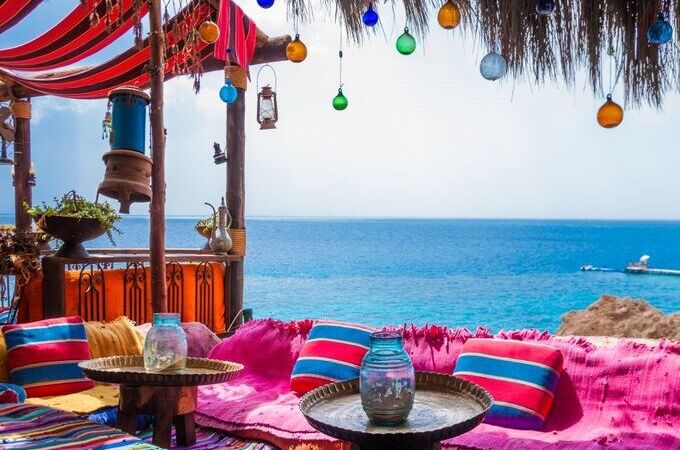
The Red Sea should not be presented as an automatic escape from Egyptian summer.
Coastal conditions differ from inland archaeological environments, but summer is still summer, sun exposure remains important, and travelers choosing Hurghada, Sharm El Sheikh or another coastal destination need destination-specific information before deciding what suits them.
Within a broader Egypt journey, however, coastal time can solve a different problem.
It changes what you are asking your body and attention to do.
After successive days of archaeological interpretation, transfers and early departures, swimming, snorkeling or simply spending less structured time can provide contrast. That contrast may be especially welcome during a hot-weather journey.
Whether the Red Sea deserves space in your trip is a separate destination decision.
Its role here is simply to demonstrate that changing activity type can be as important as changing temperature.
Summer Rewards Travelers Who Are Willing to Change the Plan
A rigid itinerary has a reassuring appearance before departure.
Every hour has a purpose.
Summer occasionally exposes why that is not always desirable.
Perhaps the group finishes an outdoor site faster than expected because conditions have become uncomfortable. Maybe everyone wants a longer lunch, an earlier hotel return or less sightseeing in the afternoon. Another morning goes exceptionally well and there is no reason to change anything.
The ability to respond is valuable.
This is one reason summer travel should contain clear priorities. When you already know which experiences matter most, changing a lower-priority activity does not feel like losing part of the holiday.
You protected what mattered.
Everything else was allowed to respond to the day you actually encountered rather than the day imagined months earlier.
Do Not Try to Defeat the Summer
There is an unhelpful mentality that sometimes appears around hot-weather travel.
Start earlier. Walk faster. Carry more water. Fit everything in. Prove that the heat did not change anything.
But the heat does change something.
Acknowledging that is not surrendering to it.
A good summer journey works with the conditions by protecting early hours, moving certain logistics into less desirable outdoor periods, alternating exposure with recovery and occasionally allowing the middle of the day to remain deliberately quiet.
This can make an itinerary look less aggressive than its cooler-season equivalent.
That is exactly the point.
Egypt's monuments do not become more valuable because you visited them while exhausted, and a three-hour midday break does not erase the morning you spent exploring them.
Summer in Egypt works best when you stop asking how much heat you can tolerate and start asking a better question:
At what time will I actually enjoy being here?
Answer that question for the important parts of each day, and the entire journey begins to make more sense.
Questions Travelers Ask When Summer Is Their Only — or Best — Option
1. Is July simply too hot for a first trip to Egypt?
July can be very demanding, particularly for extended outdoor sightseeing in Upper Egypt, but whether it is unsuitable depends on the traveler and itinerary. A first visit can still work when early hours are protected, midday exposure is reduced and the schedule remains realistically flexible.
2. Is August significantly more difficult than June for sightseeing?
Both fall within Egypt's hot-weather travel period, and exact conditions vary by location and year. Rather than choosing between them based on a small temperature difference alone, consider how much outdoor archaeology your journey contains and how freely you can adjust sightseeing hours.
3. How early should archaeological sightseeing start in summer?
Where opening hours and logistics allow, earlier starts can provide more manageable conditions for exposed sites. The correct time depends on the destination and attraction, so the objective should be protecting cooler hours rather than applying one universal departure time throughout Egypt.
4. Should I avoid Luxor in July and August?
Not automatically. Luxor contains some of Egypt's most important archaeological experiences, but summer makes timing and pacing particularly important because much of the sightseeing involves outdoor exposure. Travelers who strongly dislike heat should weigh that reality carefully before choosing their travel season.
5. Does a Nile cruise make summer heat easier?
A cruise can create useful periods of rest and reduce some hotel-changing logistics, but it does not remove summer conditions during shore excursions or on exposed decks. Its advantage is partly the rhythm it creates rather than a guarantee of cooler sightseeing.
6. Should museums always be scheduled around midday in summer?
Not automatically. Museums should be visited because their collections matter to your trip, but indoor visits can be positioned strategically when combined with outdoor sightseeing. The objective is intelligent sequencing rather than treating museums merely as places to escape the weather.
7. Is returning to the hotel during the day really worth the lost time?
For some summer itineraries, absolutely. A deliberate break can restore energy sufficiently to make a later activity enjoyable rather than merely achievable. The relevant calculation is not how many hours you spent outside the hotel but how much value you gained from the hours you used.
8. Does private transportation become more useful during summer?
It can, particularly when flexibility and reliable air-conditioned recovery between visits matter. Private transport may also make it easier to shorten or adjust an outdoor stop without affecting other travelers, although its value depends on the structure and budget of the overall journey.
9. Is midday a good time for longer road transfers?
It can be strategically useful when the transfer must happen anyway and does not create problems elsewhere in the itinerary. Using hotter hours for necessary movement may protect more comfortable periods for outdoor sightseeing, although flight times and operational logistics always need priority.
10. Can older travelers visit Egypt comfortably in summer?
Many can, but individual heat tolerance, mobility and general fitness matter more than age alone. Summer planning should include realistic exposure periods, reliable transportation and enough flexibility to shorten lower-priority activities when conditions become more demanding than expected.
11. Is the Red Sea automatically cooler and easier than Upper Egypt?
The coastal environment creates a different experience from inland archaeological sightseeing, but travelers should not assume that summer sun and heat disappear beside the sea. Destination-specific conditions and planned activities remain important when evaluating whether coastal time suits the trip.
12. If I can travel in another season, should I still choose summer?
Travelers who strongly dislike heat and have complete date flexibility may prefer a milder period, particularly for an archaeology-heavy journey. Summer becomes more compelling when dates, school holidays, personal schedules or other considerations make it practical and you are comfortable adapting the daily rhythm accordingly.

A travel professional specializing in tailor-made travel planning, guest experience management, and multi-destination tourism operations.
With over 23 years of experience in the travel industry, he designs and manages private and cultural tours for international travelers across Türkiye, Greece, Egypt, Jordan, Morocco, and other destinations.
He has strong expertise in both online and face-to-face guest communication, sales processes, and end-to-end travel operations.
Working closely with hotels, travel agencies, and local partners, he ensures smooth coordination and high-quality travel experiences at every stage of the journey.
His focus is on delivering personalized, reliable, and seamless travel experiences for international guests worldwide.