The Best Time for Egypt Depends on What You Plan to Do Outside
Updated: August 2026
There is a wonderfully simple answer to the question, “When is the best time to visit Egypt?”
Go when it is cooler.
Unfortunately, that answer stops being useful approximately thirty seconds after you begin planning an actual trip.
A traveler spending long days around Luxor's archaeological sites has a different relationship with temperature from someone dividing a week between Cairo and the Red Sea. A couple who happily begins sightseeing at 7:00 a.m. can manage warmer conditions differently from a family whose mornings rarely become operational before 10:00. Someone who dislikes crowds may willingly accept additional heat in exchange for traveling outside the busiest periods.
This is why there is no universally perfect month for Egypt.
Broadly, the cooler period from roughly October through April is popular for cultural touring, particularly when an itinerary includes substantial outdoor sightseeing in Upper Egypt. The warmer months can still work, but they ask more from the schedule and from the traveler.
The better question is therefore not simply when Egypt has its nicest weather.
It is when Egypt's weather works best with your particular itinerary.
Egypt Does Not Have One Best Month. It Has Better Matches
The temptation to identify one perfect month is understandable.
If November is excellent, why not simply tell everyone to go in November?
Because travelers are not interchangeable.
One person is highly sensitive to heat but perfectly comfortable around busy archaeological sites. Another would rather deal with a hotter afternoon than visit during a high-demand period. Some travelers want Cairo, Luxor, Aswan and Abu Simbel in ten days, creating substantial outdoor exposure. Others want two cultural days followed by five nights beside the sea.
Those are different holidays occurring within the same country.
Seasonal advice becomes useful only when it takes that difference seriously.
Instead of asking which month wins, think about what you are trading.
Egypt's Travel Seasons: What Are You Trading?
| Travel Period | What Usually Becomes Easier | What You Accept in Return |
|---|---|---|
| December–February | Long outdoor sightseeing days are generally more comfortable | Strong demand at major cultural destinations and cooler mornings or evenings |
| March–April | Good balance for many mixed cultural itineraries | Increasing daytime warmth, particularly farther south |
| May–September | Travelers willing to manage heat may find a different seasonal rhythm | More demanding outdoor sightseeing and greater importance of early starts |
| October–November | Strong balance between sightseeing comfort and varied itinerary styles | Increasing demand as the cooler touring season develops |
The useful column is not “best.”
It is the trade-off.
The More Archaeology You Want, the More Weather Matters
Imagine two travelers visiting Egypt during exactly the same week.
The first spends a morning sightseeing in Cairo, has lunch, visits an indoor museum and returns to the hotel.
The second is in Luxor moving between exposed archaeological sites.
Their weather apps can display similar-looking numbers while their days feel completely different.
This is one of the most important considerations when choosing dates for Egypt.
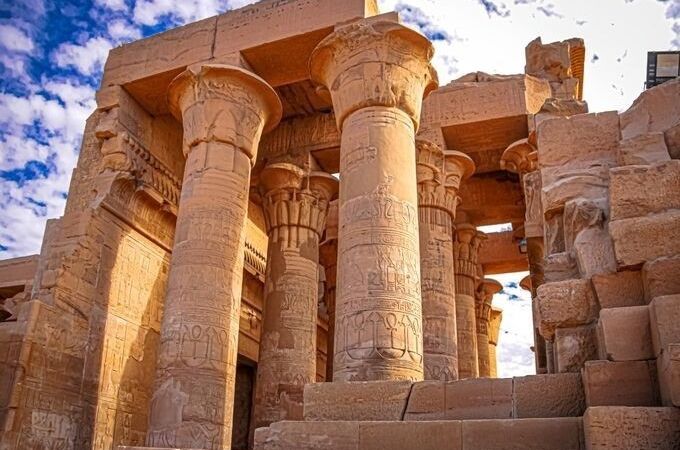
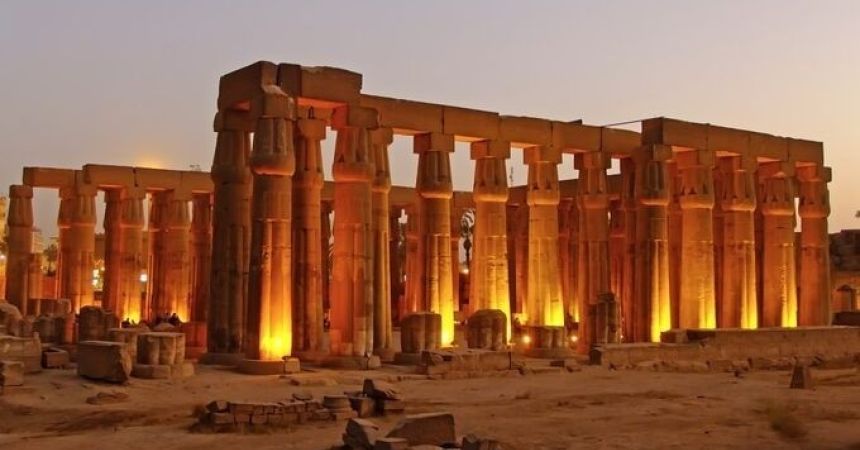
Ancient sites are not climate-controlled attractions. Shade can be limited, distances across archaeological areas matter, and the physical experience of sightseeing changes as temperatures rise.
The effect becomes more important when an itinerary contains several intensive archaeological days consecutively.
Luxor followed by Aswan followed by an excursion farther south creates a different level of outdoor exposure from a trip in which cultural sightseeing is regularly interrupted by relaxation days.
If ancient Egypt is the main reason you are traveling, seasonal comfort deserves greater weight in your decision.
A Weather App Cannot Tell You How You Feel at an Archaeological Site
Weather data is useful.
Human tolerance is more useful.
Two travelers can experience the same temperature very differently. One becomes uncomfortable after forty minutes in direct sun. The other puts on a hat, drinks water and continues quite happily.
This is why statements such as “Egypt is too hot in June” or “March has perfect weather” are too absolute.
Perfect for whom?
A weather application can tell you that Luxor will be hot. It cannot tell you whether you personally become miserable walking across an exposed archaeological landscape or remain comfortable because you started early and planned the day appropriately.
Your previous travel experience can help here.
Think about how you respond to heat when actually walking and sightseeing, not when sitting beside a swimming pool.
That is a much better predictor of whether a warmer-season Egypt trip will suit you.
Cairo Can Absorb Weather Better Than Luxor Can
Cairo is hardly an indoor destination, and anyone planning Giza should expect meaningful time outside.
But the capital offers a more varied sightseeing environment than a heavily archaeology-focused Upper Egypt itinerary.
Museum visits, urban experiences, restaurants and other activities can create changes of environment during the day. Luxor and parts of southern Egypt can involve longer periods of exposure precisely because the monumental landscapes are what you traveled there to experience.
That distinction affects date selection.
If your trip is predominantly Cairo with only limited outdoor archaeological touring, you may have more seasonal flexibility.
If Luxor, Aswan and other southern sites dominate the itinerary, heat becomes a larger part of the decision.
The country has not changed.
Your exposure has.
A Nile Cruise Changes How You Experience Heat, Not Whether Heat Exists
The words “Nile cruise” can make seasonal planning sound rather comfortable.
You imagine the river, a deck, perhaps a drink and the reassuring knowledge that your cabin has air conditioning.
All true enough.
Then the ship stops and you go sightseeing.
The air-conditioned cabin does not accompany you into a temple.
A Nile cruise combines periods of comfortable sailing with shore excursions, many of which involve outdoor archaeological sightseeing. This means warmer weather may be very manageable while aboard the vessel and considerably more noticeable once touring begins.
Cruise schedules also influence the structure of sightseeing days, so seasonal planning cannot always be reduced to “we will just go whenever we want.”
For travelers considering Nile Cruise Tours, the correct question is not whether the ship itself is comfortable.
It is how the complete cruise-and-sightseeing rhythm fits the season.
Winter Solves One Problem and Creates Another
Cooler weather has obvious advantages.
Walking through archaeological sites generally becomes more comfortable, long sightseeing days are easier to manage, and travelers sensitive to heat have fewer reasons to reorganize the day around the temperature.
That is precisely why cooler periods are attractive to many other travelers too.
Demand can be stronger around popular travel periods, which can affect hotel and cruise availability as well as the atmosphere at major sites. Holiday periods can intensify this further.
This does not make winter a bad time to visit Egypt.
Quite the opposite.
It simply means “best weather” and “best overall experience” are not automatically synonyms for every traveler.
Someone who values comfortable temperatures above almost everything else may happily accept greater demand.
Someone who strongly dislikes busy sites may prefer a different compromise.
There is no travel month in which Egypt promises cool weather, empty monuments, unlimited hotel choice and bargain pricing simply because you asked nicely.
Shoulder Season Is Attractive Because It Refuses to Win Everything
Shoulder periods often work well precisely because they represent compromise.
The weather may be warmer than in the coolest winter weeks but easier for many travelers than during the hottest part of the year. Demand patterns can also differ from peak periods, although exact availability always depends on dates and destination.
There is no magic involved.
You are simply accepting a little more of one disadvantage to reduce another.
October and November can be particularly appealing for travelers wanting cultural touring without waiting for the deepest part of winter. March and parts of April can also work well before stronger summer heat becomes the dominant consideration.
But even here, itinerary matters.
A traveler planning mostly northern Egypt may evaluate April differently from somebody spending several days farther south.
“Shoulder season” is a useful planning concept.
It is not a weather guarantee.
Summer Is Not Wrong. It Is Less Forgiving.
Summer advice about Egypt often swings between two extremes.
One side says you should never go.
The other says the heat is completely manageable and everyone is worrying unnecessarily.
Neither is particularly helpful.
Egypt continues operating in summer. Travelers visit, hotels welcome guests and major archaeological sites remain part of itineraries.
The difference is that mistakes become more expensive in terms of comfort.
Starting an intensive sightseeing day late, carrying too little water, planning several exposed sites consecutively or assuming that every traveler in the group has the same heat tolerance can make a warmer-season itinerary much harder than necessary.
A well-structured summer journey therefore behaves differently from a cooler-season one.
This page does not need to become our dedicated summer Egypt guide to make the essential point:
Summer can work, but it gives poor scheduling less room to hide.
Your Daily Start Time Can Matter Almost as Much as Your Travel Month
Travelers sometimes spend weeks researching the perfect month and then book an itinerary that begins outdoor sightseeing at 10:30 every morning.
The calendar cannot rescue the schedule.
During warmer periods, earlier starts can substantially change the experience of archaeological touring. Activities requiring greater outdoor exposure can be prioritized before the strongest part of the day's heat, while less exposed activities or breaks can occupy other periods.
This sounds straightforward until you consider what an early start actually means.
Breakfast happens earlier. Children need to be ready. The previous night's dinner cannot continue indefinitely. A traveler who hates waking before 8:30 may not enjoy an itinerary designed around repeated early departures, regardless of how sensible those departures look on paper.
When planning Egypt Vacation Packages, season and daily rhythm therefore need to be considered together.
A theoretically perfect itinerary is not perfect if nobody wants to live according to its clock.
The Red Sea Can Make the Same Month Feel Like a Different Holiday
This is where country-wide “best month” advice becomes particularly clumsy.
A Red Sea stay has a fundamentally different daily rhythm from an archaeology-heavy journey through Luxor and Aswan.
Resort travelers can move between accommodation, pools, sea activities and periods of shade in ways that cultural sightseeing does not always allow. Wind and coastal conditions also influence how temperatures feel.
That does not mean the Red Sea is seasonless.
It means its seasonal decision needs to be understood according to the experience you are actually planning.
This becomes especially useful for mixed itineraries.
Suppose you want ten days in Egypt and are considering several intensive cultural days followed by a coastal stay. The relaxing portion can make a warmer travel period feel quite different from ten consecutive days of temples, tombs and city sightseeing.
Same month.
Different workload.
The Hardest Day in Your Itinerary Is More Useful Than the Average Day
Here is a practical way to choose travel dates.
Find the most demanding day in the proposed itinerary.
Perhaps it contains several outdoor archaeological visits around Luxor. Maybe it involves an excursion in southern Egypt with substantial travel and exposed sightseeing. It could simply be the day with the most walking.
Now imagine doing that day in the period you are considering.
If it still sounds enjoyable, the easier days probably will too.
This is more useful than looking at the average conditions for the entire country.
Travel comfort is often determined by the moments when weather and activity combine most aggressively, not by the temperature while you are having breakfast in an air-conditioned hotel.
Plan around the difficult day.
The easy days rarely need rescuing.
Cooler Does Not Automatically Mean Warm Everywhere, All the Time
Another common assumption is that Egypt means permanent heat.
Travelers arriving during cooler months can be surprised by mornings and evenings, particularly when they packed according to the country's desert reputation rather than their actual season.
The correct wardrobe depends on destination, month and time of day.
Layering can be more useful than assuming every day requires exactly the same clothing from breakfast through dinner.
This becomes especially relevant on itineraries with early departures.
A morning that begins cool can develop into a very different afternoon.
The lesson is not to pack half your wardrobe.
It is simply to stop treating “Egypt” as a single temperature.
Wind Deserves More Attention Than It Usually Gets
Temperature dominates travel-weather discussions because it is easy to measure and compare.
Wind can change the experience substantially.
This is especially relevant for certain coastal activities and for travelers whose plans involve boats, beaches or exposed landscapes. Seasonal conditions should therefore be considered in relation to the activity rather than through temperature alone.
The same principle applies inland.
A pleasant-looking temperature does not guarantee that every outdoor day will feel identical. Weather varies, and individual days do not sign contracts promising to behave like historical averages.
Climate helps you choose a season.
It does not provide an exact forecast several months before departure.
That distinction prevents a lot of unnecessary disappointment.
Crowds Are Not Distributed Evenly Across Egypt
It is easy to talk about Egypt being “busy” as though somebody turns the entire country up to the same setting.
Demand is more complicated.
Major archaeological sites, famous museums, cruise routes and resort destinations can have different patterns. Holiday periods matter. Group movements can make a particular site feel busy at one hour and considerably calmer later.
This means choosing a supposedly quieter month does not guarantee empty monuments.
Nor should it.
Egypt's most famous sites are famous for a reason.
A more realistic objective is to choose a period whose combination of weather and demand suits you, then design sightseeing intelligently within it.
Timing during the day can sometimes matter as much as timing during the year.
Holiday Dates Can Matter More Than a Small Temperature Difference
Suppose you are choosing between two weeks with very similar expected seasonal conditions.
One overlaps a major international holiday period.
The other does not.
That may matter more to your trip than a small theoretical difference in temperature.
Christmas and New Year can influence demand for flights, hotels, cruises and popular destinations. Travelers specifically considering Cairo over Christmas have a separate set of questions, which belong in our dedicated Christmas content rather than being repeated here.
Ramadan requires another distinction.
Because the Islamic calendar moves relative to the Gregorian calendar, Ramadan occurs at different dates over the years. Travelers whose trip overlaps it should check the dates for their specific year and understand the potential effect on daily rhythms.
Again, that deserves its own guide.
The seasonal lesson is simply this:
Your calendar contains events, not just weather.
Price Should Be a Factor, Not a Prediction
Travelers understandably ask for the cheapest month to visit Egypt.
The problem is that travel prices do not move according to one simple national calendar.
Hotels, cruises, flights and resorts respond to demand, availability, holidays, booking lead time and the particular destinations involved. A lower-demand period can sometimes offer better value, but turning that into a fixed promise would be misleading.
Instead of choosing dates solely because they are expected to be cheaper, decide how much seasonal compromise you are comfortable making.
If saving money requires traveling during a period when you would hate the heat, the discount may not feel particularly impressive while crossing an archaeological site at midday.
Value is what the entire trip gives you.
Not merely what the hotel invoice removes.
Heat-Sensitive Travelers Should Be More Conservative
Some travelers know exactly how they respond to heat.
Listen to that information.
If previous warm-weather trips have left you exhausted, irritable or unwilling to continue sightseeing by early afternoon, there is little reason to prove something in Egypt.
Favor the cooler season, especially for an itinerary centered on Luxor, Aswan and outdoor archaeology.
The opposite is also true.
Travelers accustomed to hot climates may have considerably more flexibility and may prefer the trade-offs available outside peak cooler periods.
Neither traveler is more adventurous.
They simply have different operating temperatures.
Good trip planning accommodates the person who is actually traveling rather than the imaginary traveler who never gets hot, tired, hungry or annoyed.
Families Need to Choose Dates for the Least Heat-Tolerant Person
Group travel introduces a complication.
You are not choosing the best month for yourself.
You are choosing it for everyone.
If four family members handle heat well and one struggles, the fifth person can determine how comfortable the entire sightseeing schedule becomes. Children, older relatives and travelers with different mobility levels may also experience intensive touring differently.
This does not mean automatically choosing winter.
It means discussing tolerance before booking.
A group moves at the speed of the people inside it.
There is little value in designing a schedule that looks efficient because everyone technically can complete it while one person quietly stops enjoying the holiday on day three.
A Short Trip Can Be Less Flexible Than a Long One
This seems backwards.
Surely a short trip is easier to manage?
Not necessarily.
A longer itinerary often has room to distribute intensive sightseeing, include slower days and recover after demanding travel. A short trip may compress Cairo, Luxor and perhaps Aswan into a sequence where every day needs to work.
That makes weather disruption or poor scheduling more noticeable.
If you have only six or seven days and want substantial archaeology, choosing a more comfortable touring period may be particularly valuable.
If you have two weeks and several relaxed days built into the route, you may be more willing to accept seasonal compromises.
Trip length therefore affects date flexibility indirectly.
It changes how much breathing room the itinerary contains.
Do Not Choose the Month Before You Know the Shape of the Trip
This is perhaps the most common planning sequence:
“We are going to Egypt in July. What should we do?”
Sometimes the dates genuinely cannot move. School holidays, work schedules and international flights decide the calendar first, and the itinerary should then be designed around reality.
But if your dates are flexible, reverse the process.
Decide whether your priorities are archaeological touring, a Nile cruise, Cairo, southern Egypt, the Red Sea or a combination.
Then choose a travel period that supports those priorities.
For Egypt Small Groups, this relationship matters because the operating schedule cannot always be adjusted around one traveler's preferred daily rhythm in the same way a private itinerary can.
The less flexible the tour format, the more useful it is to choose a season you are naturally comfortable with.
The Best Month on Paper Can Still Be the Wrong Month for You
There is no trophy for visiting Egypt during the month travel writers collectively declare perfect.
Perhaps you dislike crowds more than heat.
Perhaps your work allows only August.
Perhaps you want a winter escape but would prefer slightly warmer daytime conditions than the coolest part of the year. Maybe your priority is the Red Sea, with archaeology occupying only a small part of the journey.
All of those factors are legitimate.
The objective is not to identify the month with the highest theoretical score.
It is to minimize the compromises you personally care about.
This is why two equally well-informed travelers can choose different months and both be correct.
Choose the Hardest Day, Then Choose Your Season
If your itinerary is already taking shape, stop looking for Egypt's perfect month.
Look at your trip.
Find the day with the longest outdoor archaeological exposure. Consider how early you are willing to begin. Think about how you normally handle heat, whether busy sites bother you, how much flexibility your budget allows and whether your dates overlap major holiday periods.
Then make the decision.
For many travelers focused on Egypt's cultural highlights, the cooler months between roughly October and April provide the easiest conditions for intensive sightseeing. Within that broad period, shoulder months can offer an attractive balance for people comfortable with somewhat warmer conditions.
Summer is a different proposition rather than an automatic mistake. It works best when travelers understand what they are accepting and design the days accordingly.
The best time to visit Egypt is therefore not hiding inside a temperature chart.
It is the period when the difficult parts of your itinerary still sound enjoyable.
That is a much better reason to book a flight.
Before You Put the Dates in the Calendar
1. What is the best month for a first trip to Egypt?
For a first journey focused heavily on Cairo, Luxor, Aswan and outdoor archaeological sightseeing, the cooler October-to-April period is generally easier to manage. The exact month should depend on your heat tolerance, preferred crowd levels, availability and itinerary rather than one universal recommendation.
2. Is December or January better for visiting Egypt?
Both fall within the cooler cultural-touring season, so the practical difference may depend more on your exact dates, holiday demand and itinerary than on choosing one month universally. Travelers around Christmas and New Year should pay particular attention to availability and book important arrangements earlier.
3. Is March too hot for Luxor and Aswan?
March can work very well for many travelers, although southern Egypt is generally warmer than Cairo and individual conditions vary. Heat-sensitive visitors should consider how much outdoor archaeology their itinerary contains rather than deciding from the month name alone.
4. Is October a good time for a Nile cruise?
October can be an attractive period as conditions move away from the strongest summer heat, particularly for travelers combining cruising with substantial shore sightseeing. Remember that cruise comfort and outdoor excursion comfort are different considerations when evaluating the season.
5. Should I completely avoid Egypt in July and August?
Not automatically. Travel is possible, but high heat makes intensive outdoor sightseeing less forgiving and increases the value of early starts and sensible pacing. Travelers who strongly dislike heat should generally favor cooler months, especially when Luxor and Aswan are major priorities.
6. When is Egypt least crowded?
There is no reliable country-wide “empty season” because demand differs by destination, holiday period and attraction. Hotter periods may see different visitor patterns, but choosing dates purely for lower crowds can mean accepting significantly more demanding sightseeing conditions.
7. Does the Red Sea have the same ideal season as Luxor?
Not necessarily, because the experiences are fundamentally different. A resort stay provides a different relationship with heat, shade, water and daily activity than walking through exposed archaeological sites. Mixed itineraries should therefore be evaluated according to their most weather-sensitive component.
8. Is November generally a better choice than February?
Neither month is universally better. November can provide an appealing balance for many cultural itineraries, while February remains within the cooler touring period. Your route, heat preference, exact travel dates and accommodation availability are more useful decision factors than ranking the two months.
9. When should someone who really dislikes heat visit Egypt?
Heat-sensitive travelers should generally concentrate on the cooler part of the year, particularly when planning substantial outdoor sightseeing in Upper Egypt. December through February deserves particular consideration, while adjacent cooler-season months may also work depending on personal tolerance and itinerary.
10. Does Ramadan change the best time to visit Egypt?
It can influence daily rhythms and some travel experiences, but it does not automatically make the period unsuitable. Because Ramadan moves through the Gregorian calendar, check the exact dates for your travel year and use dedicated Ramadan guidance to understand the practical implications.
11. How early should I book an Egypt trip during the cooler season?
There is no single booking deadline because hotel, cruise and flight availability varies by date. For popular cooler-season periods, particularly around major holidays, earlier planning generally provides more choice than waiting until preferred hotels, cabins or services have limited availability.
12. Should I choose my Egypt dates before designing the itinerary?
If your dates are flexible, establish your main destinations and travel style first, then select a period that suits their outdoor demands. If your dates are fixed by work or school holidays, do the opposite: accept the season and design the itinerary intelligently around it.

A travel professional specializing in tailor-made travel planning, guest experience management, and multi-destination tourism operations.
With over 23 years of experience in the travel industry, he designs and manages private and cultural tours for international travelers across Türkiye, Greece, Egypt, Jordan, Morocco, and other destinations.
He has strong expertise in both online and face-to-face guest communication, sales processes, and end-to-end travel operations.
Working closely with hotels, travel agencies, and local partners, he ensures smooth coordination and high-quality travel experiences at every stage of the journey.
His focus is on delivering personalized, reliable, and seamless travel experiences for international guests worldwide.