Egypt Weather in October: Warm Days & Easier Sightseeing
Last Updated: August 8, 2026
October is when planning an Egypt trip starts becoming less of a negotiation with the season.
Not everywhere becomes cool, and Upper Egypt can still deliver properly hot afternoons, particularly earlier in the month. The difference is that weather no longer needs to dominate every decision. Cairo becomes increasingly comfortable for substantial sightseeing, Luxor and the Nile regain their natural place at the centre of cultural itineraries, desert experiences become more appealing, and the Red Sea remains warm enough to justify several days of its own.
For travellers who want more than one version of Egypt, that balance is October's real strength.
You can spend the morning inside an ancient tomb, watch the Nile from a cruise deck later in the journey, and finish with several days beside the Red Sea without any part of the itinerary feeling as though it belongs to the wrong season.
That doesn't mean you should include everything.
It means the weather gives you more freedom to choose.
October Is About Balance, Not a Perfect Temperature
Search for October weather and you'll find averages.
Useful, certainly, but they don't explain why the month works so well for touring.
Egypt remains geographically varied. Alexandria has Mediterranean influences, Cairo sits farther inland, Luxor and Aswan are considerably farther south, and the Red Sea has its own coastal character. No single number accurately describes what you will feel across a multi-city journey.
A better question is how each region fits into the trip.
| Region | October Travel Character | Best Role |
|---|---|---|
| Cairo & Giza | Warm, increasingly comfortable | Major cultural base |
| Luxor | Warm to hot | Archaeology and Nile |
| Aswan | Hotter southern conditions | Nile and southern heritage |
| Western Desert | Increasingly attractive | Landscape and desert experiences |
| Hurghada | Warm Red Sea conditions | Culture-and-coast finish |
| Sharm el-Sheikh | Strong marine season | Diving and resort stays |
| Alexandria | Mediterranean contrast | Northern cultural extension |
October's advantage isn't that all these places suddenly share the same weather.
It's that more of them can comfortably belong to the same journey.
Cairo Becomes a City You Can Wander Again
Summer Cairo encourages strategy. Visit Giza early, use museums during the hotter hours, and think carefully about long outdoor periods.
October begins loosening those rules.
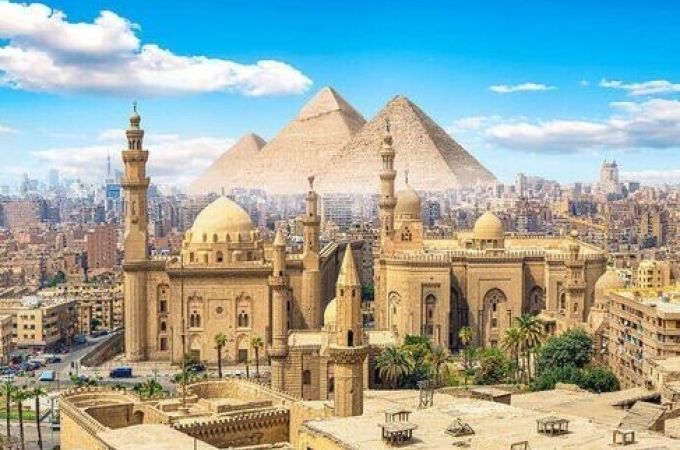
An early start is still sensible at Giza, especially if you prefer softer morning conditions, but the rest of the day doesn't need to become a sequence of escapes from the heat. You can give historic Cairo more time, walk between nearby landmarks where practical and allow the city itself to become part of the experience rather than moving continuously from vehicle to attraction.
This matters because Cairo reveals itself between the headline sites.
There is the call to prayer appearing over traffic noise, a bakery doing considerably better business than expected, the sudden quiet inside a historic courtyard and the realisation that crossing a busy street may require more confidence than entering a pyramid.
Travellers wanting this broader cultural perspective can explore Cairo autumn journeys, giving the capital enough time to be experienced as a city rather than merely the gateway to ancient Egypt.
Luxor Can Take Centre Stage Again
By October, Luxor no longer needs to be treated as an archaeological operation requiring every outdoor visit to happen at the earliest possible hour.
Sensible timing still matters, particularly during warmer days, but there is greater freedom to build the itinerary around the sites themselves.
That changes the experience.
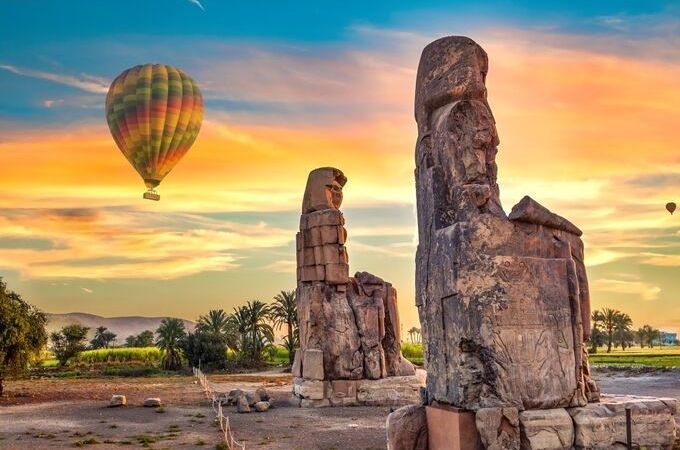
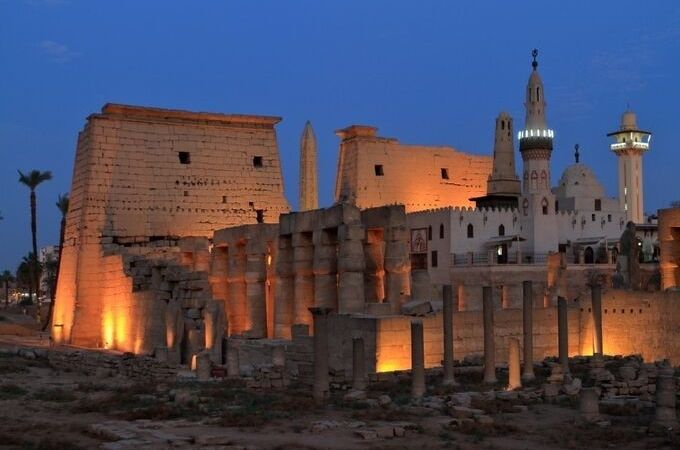
The Valley of the Kings can receive a proper morning without the visit feeling like a race against the temperature. Karnak can occupy enough time for you to wander beyond its most photographed columns. The West and East Banks can be divided according to interest rather than simply according to which hours feel survivable.
For travellers who came to Egypt because of ancient Egypt, October is when the country's cultural centre of gravity begins settling south again.
The Nile Becomes Scenic Time, Not Recovery Time
Summer gave the Nile cruise an additional practical role: the ship offered somewhere comfortable to retreat between hot outdoor excursions.
October changes that relationship.
Now you may actually want to be on deck in the middle of the journey.
The riverbanks become part of the experience again rather than scenery observed mainly through windows during the hotter hours. Villages, fields and palms create a remarkably narrow green corridor between the Nile and desert, and watching that landscape pass slowly is one of the pleasures of travelling between Luxor and Aswan.
A cruise isn't simply an efficient way to connect archaeological sites.
In October, the river itself starts competing for your attention.
The Desert Re-enters the Conversation
The Red Sea and Nile dominate many Egypt itineraries, but October also begins making desert travel more attractive again.
This does not mean desert conditions become universally mild. Daytime sun remains important, nights can feel very different, and specialist excursions require appropriate planning.
What changes is the seasonal logic.
After months when heat made additional desert exposure difficult to justify for many travellers, landscapes beyond the Nile Valley can begin reclaiming space in longer itineraries.
That might mean a carefully organised desert experience, an oasis route or simply spending more time understanding how dramatically Egypt changes once the cultivated strip beside the Nile disappears.
The desert is not empty space between attractions.
It is one of the reasons those attractions exist where they do.
And the Red Sea Is Still Very Much in the Trip
October's cultural comeback does not mean the coast needs to surrender its place.
Quite the opposite.
This is one of the month's great advantages: you don't have to choose so aggressively between archaeology and water. Several days around Cairo and the Nile can be followed by Hurghada or Sharm el-Sheikh without the coast feeling like an emergency escape from summer heat.
The balance becomes experiential rather than defensive.
History first, perhaps.
Then the sea.
Or the other way around if you're travelling primarily to dive.
October doesn't insist.
October Gives You Back the Whole Map
That is what separates it from September.
September is still in transition, and the timing within the month influences how confidently you expand the cultural itinerary. October is more settled. The classic archaeological route becomes increasingly natural, the Nile cruise regains its scenic dimension, desert possibilities begin reopening and the Red Sea remains entirely relevant.
The danger now is no longer that weather will limit the itinerary.
It is that you will become excited by the possibilities and add too much.
Balance doesn't mean visiting every region that works.
It means being able to choose among them without the season making the decision for you.
That freedom is October's real advantage.
October Gives You More Usable Time—Spend It Carefully
One of October's pleasures is surprisingly simple: you stop thinking quite so much about the clock.
During summer, timing can dominate the day. You know why Giza needs the morning, why Luxor requires careful pacing and why an exposed afternoon deserves reconsideration. October loosens that relationship, particularly as the month progresses.
The temptation is obvious.
If six hours of sightseeing now feels realistic, why not make it eight?
Because comfortable weather does not make an overloaded itinerary interesting.
October's extra freedom is best used to experience Egypt more slowly, not to collect more of it.
Walking Becomes Part of Sightseeing Again
Some places are technically visited on foot but aren't really understood until you stop treating the walking as something to get through.
Karnak is a good example.
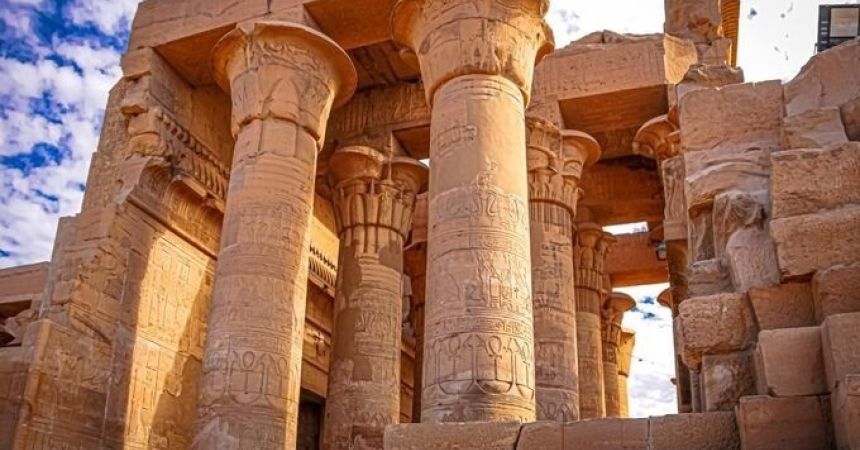
Its scale is difficult to appreciate when the objective is to reach the famous Hypostyle Hall, take photographs and move on. Give the complex more time and smaller details begin appearing: side structures, open spaces, changes in proportion and the relationship between monuments built across different periods.
Cairo benefits in another way. Historic districts make more sense when you can occasionally walk between nearby points rather than experiencing the city entirely through a sequence of vehicle doors.
October makes this kind of exploration easier.
Comfortable walking shoes still matter, though. Ancient Egyptians achieved many remarkable things, but smooth modern pavements were not among them.
The Nile Deck Becomes Somewhere You Want to Stay
A Nile cruise itinerary naturally attracts attention towards the excursions.
Luxor.
Edfu.
Kom Ombo.
Aswan.
Yet one of the journey's most memorable stretches may occur when absolutely none of those places is being visited.
You're simply sailing.
October gives those hours more value because spending time outside can become increasingly pleasant. The cultivated riverbanks slide past, occasionally interrupted by villages, boats and strips of desert appearing surprisingly close behind the green landscape.
Put the phone down occasionally.
The photograph of the river will probably resemble several photographs you already took twenty minutes earlier.
The experience won't.
Travellers interested in combining archaeology with this slower side of the journey can consider Egypt Nile itineraries, allowing the sailing itself to remain part of the trip rather than treating every hour between temples as transit.
Desert Landscapes Start Making More Sense
For much of the summer, deliberately adding more exposed desert time can be difficult to justify unless the experience is a major personal priority.
October changes the calculation.
The Western Desert, oasis landscapes and desert excursions begin becoming more attractive additions to longer journeys, although conditions still require proper planning and can vary significantly between daytime and night.
What makes these landscapes valuable is contrast.
Spend several days beside the Nile and Egypt begins looking almost impossibly green along the river. Move away from that narrow corridor and the scale of the surrounding desert suddenly explains the geography far better than a map ever could.
The relationship between river and desert is not background scenery.
It is one of the central facts of Egyptian civilisation.
Cultural Days Can Become Longer Without Becoming Busier
This distinction matters.
A longer day does not require another attraction.
Perhaps you spend more time at Giza and then have a relaxed lunch before visiting a museum. Maybe the West Bank receives most of a morning and nothing substantial is scheduled until later. A historic Cairo visit can include time for coffee or wandering rather than moving immediately towards the next entrance ticket.
October allows those gaps because the weather is less likely to dictate exactly when you need to stop.
Use them.
The best itineraries contain enough structure to prevent wasted time and enough empty space for something unexpected to happen.
Don't Let Good Weather Create a Bad Itinerary
October can support Cairo, Luxor, Aswan, a Nile cruise, the desert and the Red Sea.
That sentence is dangerous.
It can easily become a booking list.
The fact that several regions work well in the same month doesn't mean all of them belong in the same ten-day journey. Every additional destination still costs travel time, and every hotel change still interrupts the rhythm of the trip.
October's real luxury isn't that you can do everything.
It is that you can make choices based increasingly on interest rather than climate.
An archaeology enthusiast can stay longer in Luxor. A diver can still give the Red Sea half the holiday. A returning visitor might spend less time with the classic highlights and explore a completely different region.
The season is finally giving you room to decide.
Don't fill every inch of it.

A travel professional specializing in tailor-made travel planning, guest experience management, and multi-destination tourism operations.
With over 23 years of experience in the travel industry, he designs and manages private and cultural tours for international travelers across Türkiye, Greece, Egypt, Jordan, Morocco, and other destinations.
He has strong expertise in both online and face-to-face guest communication, sales processes, and end-to-end travel operations.
Working closely with hotels, travel agencies, and local partners, he ensures smooth coordination and high-quality travel experiences at every stage of the journey.
His focus is on delivering personalized, reliable, and seamless travel experiences for international guests worldwide.