Cairo in October: When the Space Between Sights Matters Again
Updated: August 12, 2026
October changes Cairo in a way that temperature tables do not explain particularly well.
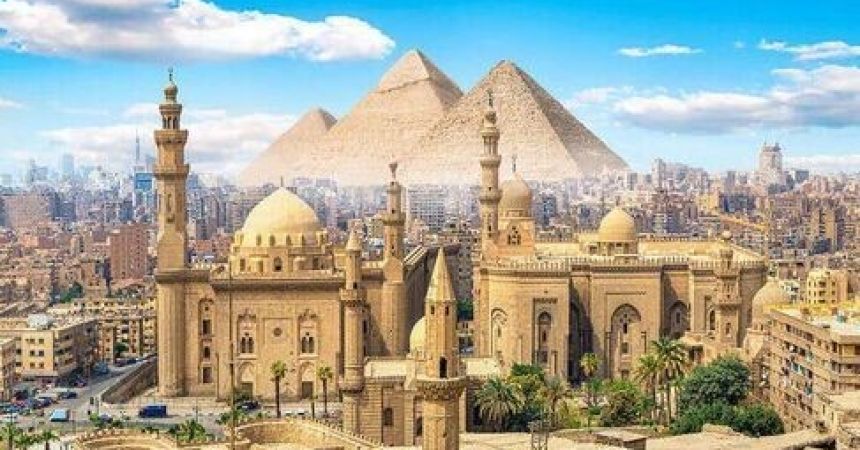
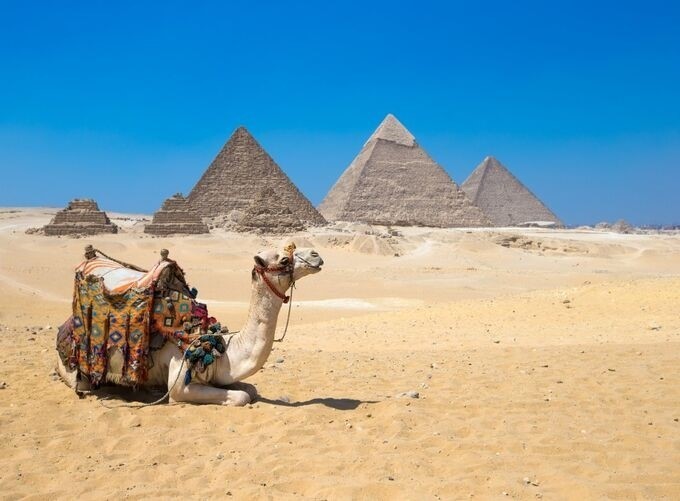
The Pyramids are still the Pyramids. The mosques of historic Cairo have not moved. Khan el-Khalili remains where it was in August, and the Nile still divides a city whose major attractions are spread across a vast metropolitan area.
What changes is your relationship with the space between those places.
Cairo during October is generally warm, dry and sunny, with daytime temperatures commonly around the high 20s°C to low 30s°C, while evenings become noticeably easier than during the core summer months. Rain remains limited, although an occasional unsettled day is more plausible than it was in midsummer.
For travelers, however, October's most interesting change is not simply a lower number on the thermometer.
Walking begins to recover its value as part of sightseeing rather than merely being the distance you must cover before reaching the next attraction.
That makes October especially interesting in neighborhoods where Cairo reveals itself gradually.
Stop Thinking Only in Attractions
Many first-time Cairo itineraries are built as a list:
Pyramids. Museum. Citadel. Mosque. Bazaar. Dinner.
This makes sense logistically, but it can reduce the city to isolated landmarks connected by a vehicle.
October allows another layer to return.
In parts of historic Cairo, the streets between monuments contain architectural details, workshops, local businesses, courtyards, street life and unexpected views that cannot be experienced from inside a vehicle. The transition from one landmark to another becomes part of the visit.
This does not mean Cairo suddenly becomes a city where you should walk everywhere.
It does mean that some transfers can become journeys.
That distinction defines October.
Which Parts of Cairo Reward Walking?
Cairo is enormous, congested and geographically complex. Walking should therefore be selective rather than ideological.
No one gains cultural insight from walking an impractical distance beside heavy traffic merely to avoid using transportation.
The question is whether the route itself contributes to what you came to see.
| Setting | Walking Value | October Approach |
|---|---|---|
| Historic Cairo | Very high | Connect nearby monuments on foot |
| Khan el-Khalili area | High | Allow time for unstructured wandering |
| Coptic Cairo | High | Explore clustered sites gradually |
| Giza Plateau | Site-specific | Walk selectively within the complex |
| Between distant Cairo districts | Low | Use appropriate transportation |
| Nile-side areas | Variable | Useful for relaxed rather than essential sightseeing |
October's advantage is not that walking replaces vehicles.
It is that you can make a more intelligent choice between the two.
Historic Cairo Needs Time Between the Names
Historic Cairo illustrates this better than almost anywhere else.
A conventional itinerary may identify the major mosques and monuments that will be visited. Yet the character of the district does not exist solely inside those buildings.
Walking reveals scale.
You notice how a minaret appears from another street, how medieval architecture sits beside everyday commerce, where narrow lanes suddenly open into larger spaces, and how a neighborhood changes as you move through it.
Those observations are difficult to schedule.
A five-minute transfer has a defined beginning and end. A walk through a historically dense district can expand because something unexpected deserves attention.
October makes that expansion easier to accommodate.
Travelers following an Egypt culture and archaeology journey may find this especially valuable because Cairo can then provide an urban historical experience that feels completely different from the monument-focused days elsewhere in Egypt.
Walking Changes How a Guide Can Tell the Story
Guided sightseeing also works differently when nearby sites are connected on foot.
Inside a vehicle, information often arrives in separate blocks. You visit one attraction, receive an explanation, drive elsewhere, then begin a new subject.
Walking allows those narratives to connect.
A guide can point out architectural changes, explain how a district developed, identify details that would otherwise pass unnoticed and relate one building to another in its physical context.
For travelers interested in history, this can make Cairo feel less like a collection of monuments and more like a city that developed in layers.
The benefit has little to do with counting steps.
It is about continuity.
October Gives Photography More Breathing Room
Photography at a famous attraction is relatively straightforward. You know what you came to photograph.
Street-level Cairo is less predictable.
A doorway, market scene, architectural detail or changing perspective down a historic street may appear without warning. When outdoor conditions are more forgiving, stopping for these moments feels less like an interruption to a tightly managed sightseeing schedule.
That can change the rhythm of a guided walk considerably.
You are no longer moving exclusively toward the next named monument. The street itself produces material worth noticing.
For photographers traveling on a Cairo and Nile heritage tour, October can therefore add a different visual dimension to the capital before the journey moves toward the temples and landscapes of Upper Egypt.
Don't Turn “Walkable Weather” Into a Step-Count Competition
There is an obvious danger here.
Once an article describes October as better suited to walking, it becomes tempting to recommend walking everywhere.
That would be poor Cairo advice.
Distances between major districts can be substantial, traffic conditions vary, pedestrian infrastructure is inconsistent, and some routes offer little reward for the effort required.
The objective is not maximum walking.
It is high-value walking.
Use transportation when it solves distance. Walk when the route itself contains something worth experiencing.
This simple distinction prevents a pleasant October day from turning into unnecessary fatigue.
Giza Still Needs a Different Walking Logic
The Giza Plateau should not be treated like historic Cairo simply because October conditions are more forgiving.
It is an archaeological landscape, and distances between key areas can be significant. Vehicles remain useful for moving efficiently across the plateau depending on the structure of the visit.
Walking here should serve archaeology rather than replace sensible transport.
Spend time on foot where proximity to the monuments improves the experience. Observe scale, explore permitted areas and give yourself enough time to understand the setting.
Then use transportation when the distance itself adds little.
Travelers on a Pyramids temples and Nile itinerary benefit from preserving that distinction because Egypt contains many archaeological environments where the relationship between walking and transportation changes from site to site.
October Makes the Unplanned Ten Minutes Valuable
One of summer's hidden costs is that unplanned outdoor time can feel like inefficiency.
October begins reversing that.
Ten extra minutes in a historic street may reveal something interesting. A guide can stop longer to explain an architectural feature. You may browse a shop without immediately calculating how much outdoor sightseeing remains.
These are small changes, but they make travel feel less engineered.
A well-organized itinerary still matters. Cairo's distances and traffic make completely spontaneous touring unrealistic for most first-time visitors.
Yet organization should create room for discovery rather than eliminate it.
October is particularly good at providing that room.
A Better October Question
Instead of asking:
“How many attractions can we fit today?”
Ask:
“Which parts of today's route are worth experiencing rather than simply crossing?”
That question separates October clearly from September.
September was about the gradual return of scheduling flexibility as summer loosened its grip. October uses that flexibility for something specific: recovering the street, the neighborhood and the journey between nearby landmarks as meaningful parts of the Cairo experience.

A travel professional specializing in tailor-made travel planning, guest experience management, and multi-destination tourism operations.
With over 23 years of experience in the travel industry, he designs and manages private and cultural tours for international travelers across Türkiye, Greece, Egypt, Jordan, Morocco, and other destinations.
He has strong expertise in both online and face-to-face guest communication, sales processes, and end-to-end travel operations.
Working closely with hotels, travel agencies, and local partners, he ensures smooth coordination and high-quality travel experiences at every stage of the journey.
His focus is on delivering personalized, reliable, and seamless travel experiences for international guests worldwide.