Athens Greece: Build Your Visit Around the City, Not a Checklist

Athens After Dark Is Not the Daytime City With Better Lighting
Evening changes the relationship between neighborhoods.
The archaeological urgency disappears, temperatures may become more comfortable, restaurants fill and streets that functioned primarily as sightseeing corridors earlier in the day begin serving a more social purpose.
This is why travelers should avoid scheduling every evening around another formal experience.
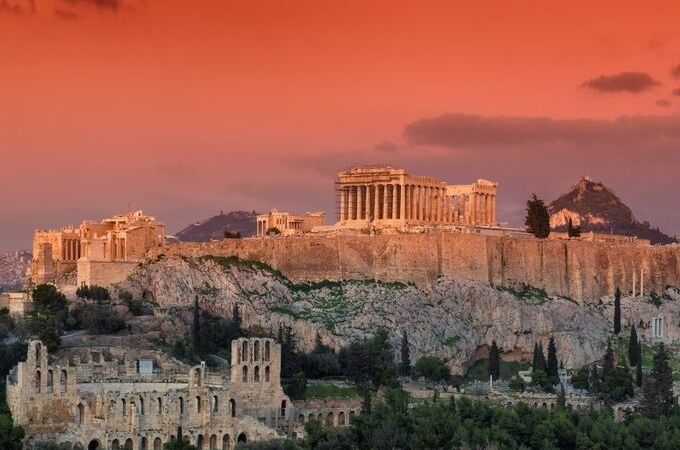
A rooftop view can be memorable, particularly when the illuminated Acropolis forms part of the skyline, but Athens does not require a rooftop reservation every night to become atmospheric.
Walk after dinner.
Return through a neighborhood visited during the morning and notice how differently it behaves.
Cities reveal themselves through repetition at different hours, and Athens is especially good at this.
The Arrival Day Is Too Valuable to Waste on a Major Monument
Long-haul travelers frequently arrive in Athens tired but excited and immediately try to “use” the afternoon.
That instinct is understandable.
Using the day does not necessarily mean booking the Acropolis.
Flight delays, immigration, baggage collection, airport transfers and hotel check-in can make arrival timing unpredictable. Jet lag also affects concentration in ways enthusiasm initially disguises.
A better arrival day often contains a neighborhood walk, an early meal, perhaps a first view toward the Acropolis and enough activity to establish geographical orientation.
Save the irreplaceable experience for when you know you will be present for it.
Athens is forgiving enough to give the first evening meaning without demanding a ticket.
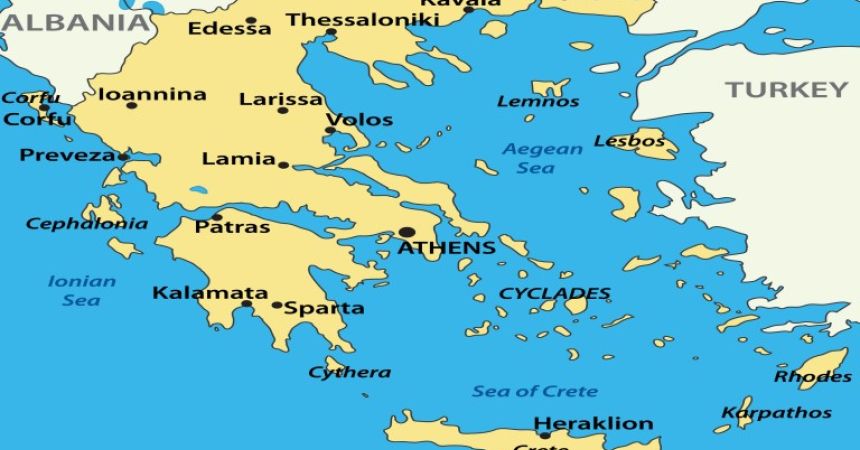
Islands Before Athens or Athens Before Islands?
This question has no universal answer, but the direction changes the emotional role of the city.
Starting in Athens provides immediate cultural context. Travelers begin with ancient history and urban energy, then gradually release themselves into island time.
Ending in Athens creates the reverse experience. The capital becomes a final cultural intensification after beaches, ferries and slower island days.
Operationally, international flight timing also matters. Returning from an island to Athens immediately before a separate long-haul departure can introduce avoidable vulnerability when ferry or regional transport is involved.
For travelers taking Athens and Greek island journeys, the final sequencing decision should therefore consider both emotional rhythm and transport resilience.
The prettier itinerary on paper is not always the safer one.
Athens Can Support Three Nights Without Inventing Excursions
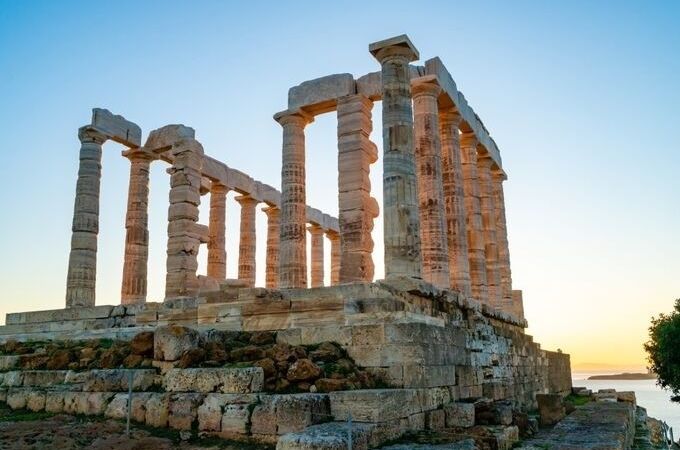
There is a widespread assumption that after two nights travelers must leave the city for Delphi, Cape Sounion, the Peloponnese or nearby islands.
Not necessarily.
Three nights can allow Athens itself to breathe.
The Acropolis and surrounding archaeological landscape no longer need to share a rushed morning. A substantial museum becomes possible without sacrificing the neighborhoods. Lunch can run late. The National Garden or a longer urban walk can occupy time without needing to justify itself as a major attraction.
For privately guided Athens cultural experiences, the additional value often comes from interpretation rather than increased site count. A knowledgeable guide can connect monuments with the development of the city instead of merely moving visitors through a checklist.
Athens has enough depth.
The itinerary does not need to manufacture busyness.
The City Works Better When One Afternoon Goes Wrong
Suppose lunch takes longer than expected.
You skip a museum.
Someone wants to return to the hotel.
Later, instead of completing the original plan, you wander through another neighborhood and have dinner somewhere you had not researched.
Was the day unsuccessful?
This is an important question because rigid city itineraries are vulnerable to normal human behavior.
Athens is particularly rewarding when travelers leave enough space for discovery, fatigue and changing interests. A private guide may make archaeology unexpectedly fascinating, causing a site to take longer. Heat may make the afternoon plan unattractive. A restaurant may simply be too enjoyable to leave.
An itinerary that collapses when one activity runs forty-five minutes late is not efficient.
It is brittle.
Athens Is the Place to Understand Before You Start Collecting Greece
Greece itineraries can become competitive remarkably quickly.
How many islands? Which archaeological sites? Should Meteora be added? Is there enough time for Delphi? Could Mykonos and Santorini both fit?
Athens provides an antidote to that accumulation.
It reminds travelers that a destination does not need to be completed to be worthwhile.
Within custom-designed Greece journeys starting in Athens, the capital works particularly well as the interpretive beginning of the trip. Ancient history gains context, modern Greece becomes visible immediately and later archaeological sites stop appearing as disconnected ruins.
The goal is not to “do Athens.”
It is to leave understanding why you could return.
Frequently Asked Questions About Experiencing Athens
1. Should I visit the Acropolis immediately after arriving in Athens?
Usually not after a long or unpredictable travel day. The Acropolis deserves enough energy and concentration to appreciate it properly. An arrival afternoon is often better used for orientation, walking and dinner while keeping the principal archaeological visit protected for the following morning.
2. What should I do if Athens is extremely hot during my stay?
Move exposed archaeological sightseeing toward earlier hours, use museums or lunch during hotter periods and return outdoors later. The objective should be rearranging the day rather than simply shortening every visit and trying to tolerate uncomfortable conditions.
3. Is central Athens practical with a stroller?
Many areas are manageable, but archaeological surfaces, curbs, crowded streets and uneven paving can create difficulties. Families should consider the exact day's route rather than assuming that short map distances guarantee effortless stroller access throughout every historic area.
4. How much archaeology is too much in one Athens day?
That depends on interest, but several major sites visited consecutively can reduce concentration. Most travelers benefit from alternating archaeology with a museum, neighborhood walk, meal or other change of environment instead of treating every surviving ancient structure as compulsory.
5. Can I rely on walking for most of a short Athens stay?
For many centrally based visitors, yes. Major historic areas are relatively well connected on foot, although summer heat, mobility limitations and destinations outside the central core can change the calculation. Metro and taxis remain useful for strategic rather than constant movement.
6. Is Athens enjoyable on a Sunday when some shops operate differently?
Yes. Athens does not depend on retail activity, and archaeological sites, neighborhoods, meals and public spaces can still support a rewarding day. Check any specific museum, market or shop that matters to you rather than assuming the entire city follows one schedule.
7. What should I wear when archaeological sightseeing involves several hours of walking?
Prioritize supportive footwear, sun protection and clothing suitable for the actual season. Ancient surfaces can be uneven and sometimes slippery, so shoes chosen purely for appearance can become uncomfortable long before the sightseeing day has finished.
8. Is it worth waking early in Athens even if I dislike early starts?
On days involving major outdoor archaeological sites during warmer periods, an earlier start can materially improve comfort and concentration. There is no need to wake early every day; use it selectively when timing changes the quality of an important experience.
9. What should history-focused travelers prioritize beyond the Acropolis?
Choose according to the historical questions that interest you rather than accumulating sites. The Ancient Agora, major museums and other archaeological areas can deepen understanding in different ways, making selective interpretation more valuable than trying to visit everything available.
10. Should I schedule an Athens rooftop dinner for sunset?
It can be memorable, but sunset timing should not dictate every evening. A rooftop experience is most valuable when the setting and meal matter to you, rather than when it becomes another mandatory photograph inserted into an already crowded sightseeing schedule.
11. Is Athens a sensible final night before an international flight?
Often yes, particularly after island travel. Returning to Athens with a buffer before a separately booked international departure can reduce exposure to ferry or regional transport disruption while giving the city another evening rather than treating the airport connection as wasted time.
12. What is the easiest way to make a two-night Athens visit feel less rushed?
Choose a central base, protect one substantial archaeological period, limit museum ambitions and leave at least one evening unscheduled. Reducing cross-city movement usually improves a short stay more than removing meals or walking time to fit another attraction.

A travel professional specializing in tailor-made travel planning, guest experience management, and multi-destination tourism operations.
With over 23 years of experience in the travel industry, he designs and manages private and cultural tours for international travelers across Türkiye, Greece, Egypt, Jordan, Morocco, and other destinations.
He has strong expertise in both online and face-to-face guest communication, sales processes, and end-to-end travel operations.
Working closely with hotels, travel agencies, and local partners, he ensures smooth coordination and high-quality travel experiences at every stage of the journey.
His focus is on delivering personalized, reliable, and seamless travel experiences for international guests worldwide.