
Athens Weather in February: Between Winter and Spring
Which February Did You Get?
Two travelers can visit Athens one week apart in February and return with surprisingly different descriptions of the weather.
One may remember eating lunch outside beneath clear skies, walking for hours without feeling cold and wondering why anyone warned them about winter. Another may remember a northerly wind, intermittent rain and reaching instinctively for a jacket whenever they stepped outside.
Both experiences fit the month.
This is why February planning becomes easier when you stop imagining one representative day and instead prepare for several plausible versions of Athens.
There are three that matter most.
Version One: The Week That Feels Ahead of Schedule
Occasionally, February gives travelers several mild, bright days that feel as though the calendar has moved forward.
These are the conditions in which Athens expands.
A morning archaeological visit can continue naturally into a long walk through the historic center, followed by an outdoor lunch and perhaps a viewpoint before evening. There is little reason to retreat indoors simply because you originally allocated the afternoon to a museum.
The temptation, however, is to interpret a few mild days as proof that winter has ended.
It has not.
Keep the jacket in your day bag, expect temperatures to fall after sunset and avoid making assumptions about the remainder of the trip based on yesterday's sunshine.
The best response to an unusually mild February day is simply to use it.
There is no need to rename it spring.
Version Two: Athens Gives You Four Seasons Before Dinner
This is perhaps the most characteristic February experience.
The morning begins cold, the sun appears before lunch, cloud builds during the afternoon and a brief shower arrives just as you were considering walking toward another neighborhood.
Nothing is severe enough to cancel the day, yet conditions change often enough that the original plan becomes increasingly irrelevant.
These days reward geographical concentration.
Rather than traveling repeatedly across Athens, choose an area where outdoor and indoor options sit close together. The historic center is particularly useful because archaeology, neighborhoods, cafés and museums can be combined without making every weather change a transportation problem.
How to Read a Changeable February Day
| What Happens | Better Response |
|---|---|
| Morning rain clears early | Move archaeology forward |
| Sunshine appears unexpectedly | Extend outdoor walking |
| Wind strengthens | Leave exposed viewpoint for later |
| Short shower arrives | Coffee/lunch rather than relocation |
| Cloud clears near sunset | Use nearby viewpoint |
| Evening turns cold | Move indoors without ending the day |
A February itinerary should bend before it breaks.
Usually, bending is enough.
Version Three: Winter Refuses to Leave
Some February periods remain firmly winter-like.
Cold wind, rain and grey skies can make the city feel much further from spring than travel photographs suggest. During these conditions, trying to force a predominantly outdoor itinerary becomes tiring rather than admirable.
Use Athens differently.
Spend longer inside major museums instead of treating them as one-hour weather shelters. Build lunch into the day properly. Explore shorter sections of central neighborhoods between indoor stops and reserve exposed archaeological sites or viewpoints for any improvement in conditions.
The city has enough cultural depth that a winter spell does not reduce the trip to waiting inside the hotel.
The key is accepting the weather you actually received rather than comparing it with the mild February somebody experienced last year.
Two Nights Make February a Weather Lottery
A weekend in Athens can be excellent, particularly for travelers arriving from elsewhere in Europe, but February weather has greater influence over a two-night trip than it does over a longer stay.
If Saturday is wet and Sunday is windy, there is little room for conditions to improve before departure.
This does not mean short February breaks should be avoided. It means the itinerary should be geographically compact and culturally balanced enough that poor weather does not remove its purpose.
If the Acropolis is your overwhelming priority and you would be deeply disappointed by unfavorable conditions, add another night when possible.
Time is one of the simplest forms of weather insurance.
Three Nights Usually Finds the Balance
A three-night stay gives February room to show more than one personality.
You may have a clear morning for archaeology, a mixed day suitable for museums and neighborhoods, then another mild period for longer walks or a viewpoint.
That variety suits Athens because the city itself is varied enough to respond.
February Trip Length vs Flexibility
| Stay | Weather Flexibility | Best Approach |
| 2 nights | Limited | Historic center + key priorities |
| 3 nights | Good | Outdoor/indoor balance |
| 4 nights | Very good | Add coast or broader neighborhoods |
| 5 nights | Excellent | Slow city exploration |
| 6+ nights | Weather becomes secondary | Deeper cultural stay |
Four nights become especially attractive if you want to include the Athens Riviera, Cape Sounion or less central neighborhoods without sacrificing the main historical sites.
The extra time should create breathing room rather than a longer checklist.
February Can Reward the Traveler Who Books Less
Peak-season Athens encourages advance planning because demand can make spontaneity difficult.
February usually provides more freedom.
That does not mean nothing should be reserved. A particular guided experience, restaurant or timed attraction may still warrant advance arrangements.
The difference is that every hour does not need to be fixed.
Leaving part of the afternoon open allows you to respond to the weather without feeling that changing direction means cancelling something valuable.
This becomes especially useful when a morning forecast improves.
You can stay outside.
Sometimes the most useful February reservation is the one you never made.
What About Outdoor Dining?
This depends far more on the individual day than on the month.
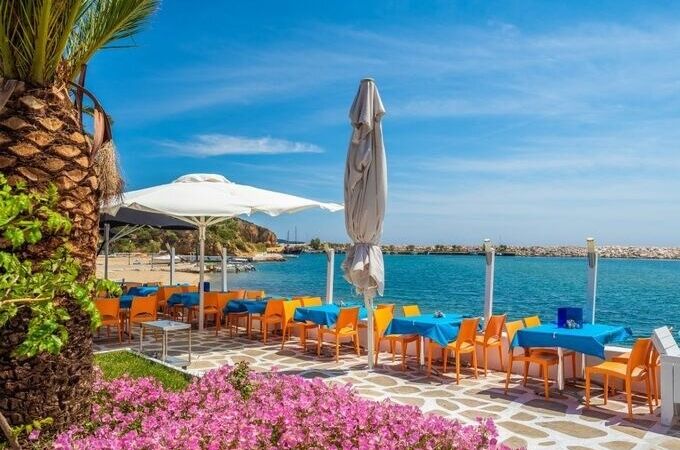
Sheltered terraces can feel pleasant during sunny conditions, particularly around lunchtime. Add wind, shade or cloud and the same temperature may send diners indoors quickly.
Rather than searching for a definitive answer to whether you “can eat outside in Athens in February,” look at where the table sits.
Is it protected from wind?
Does it receive midday sun?
Is heating provided?
Athens residents use outdoor space whenever conditions allow, so you may find plenty of company on a mild afternoon.
By evening, indoor dining becomes the safer assumption.
February Is Not a Secret Summer Bargain
There is a recurring tendency in travel content to market every shoulder or winter month through what it avoids.
Fewer crowds.
Lower prices.
No heat.
Those advantages can be real, but they do not turn February into a superior version of May or September.
You are exchanging reliable warm weather for flexibility and a more winter-oriented city experience.
For history-focused travelers, that can be an excellent trade. For someone imagining long rooftop evenings and consistently mild outdoor dining, it may not be.
February should be selected because you are comfortable with variability.
The fact that fewer tourists may be around is a benefit after that decision, not the reason to make it.
February Sits Between Two Much Clearer Months
January and March help explain why February needs its own semantic territory.
January is unmistakably a winter-city-break month. Its strongest arguments involve low-season archaeology, comfortable walking and building resilience around rain.
March begins a more visible seasonal transition, with spring increasingly influencing daylight, vegetation, outdoor life and how travelers use the city.
February is the bridge, but “bridge month” should not be mistaken for generic transition content.
January vs February vs March
| January | February | March |
| Established winter | Late-winter variability | Early spring transition |
| Short winter days | Daylight noticeably increasing | Longer outdoor days |
| Winter sightseeing strategy | Adapt several times daily | Seasonal shift becomes visible |
| Rain resilience | Weather opportunism | Spring planning |
| Low-season city break | Unpredictable city break | Emerging outdoor season |
| Winter is accepted | Winter begins negotiating | Spring starts winning |
The most important February skill is responsiveness.
January asks you to prepare for winter.
March will ask whether spring has properly arrived.
February asks you to look outside again after lunch.
Who Is February Actually Good For?
Travelers who enjoy cities tend to perform better in February than travelers who primarily enjoy destinations because of their climate.
The distinction matters.
A city traveler can spend a rainy morning in a museum, walk for three hours when the weather clears, have a long lunch and still consider the day successful. A climate-focused traveler may look at the same sequence and remember mainly that sunshine was unreliable.
February Traveler Match
| Traveler Type | Fit | Why |
| History enthusiast | Excellent | Outdoor/indoor culture works together |
| Museum-focused visitor | Excellent | Weather rarely stops the trip |
| Flexible city-break couple | Very good | Easy to change daily rhythm |
| Photographer | Very good | Variable skies and winter light |
| Heat-sensitive traveler | Excellent | Comfortable walking temperatures |
| Family wanting outdoor days | Moderate | Weather uncertainty matters |
| Rooftop/social traveler | Moderate | Conditions inconsistent |
| Guaranteed-sun traveler | Poor | February cannot promise it |
| Beach-oriented visitor | Poor | Wrong seasonal priority |
February does not require low expectations.
It requires the right expectations.
Twelve FAQs About Athens Weather in February
1. Is February a good time to visit Athens?
February can be an excellent month for archaeology, museums, food and extensive city walking, particularly for travelers comfortable with variable winter weather. Increasing daylight provides more sightseeing time than midwinter, although rain, cool periods and occasional strong wind remain realistic possibilities.
2. How warm is Athens in February?
Typical daytime temperatures often reach approximately 12–16°C, while nights commonly fall toward 7–10°C. Mild sunny periods can feel considerably warmer in sheltered locations, whereas northerly wind or rain can make another day feel firmly winter-like despite similar thermometer readings.
3. Does it rain in Athens in February?
Rain remains a normal part of Athens' late-winter climate, although it does not necessarily dominate an entire trip. February can alternate between wet periods, dry cloudy conditions and bright sunshine, sometimes within a relatively short period, making flexible daily planning particularly valuable.
4. Does it snow in Athens in February?
Snow in central Athens is possible during unusual cold outbreaks but is not common enough to form part of normal February expectations. Travelers should prepare primarily for cool temperatures, rain and wind while checking short-range forecasts for any exceptional wintry weather before departure.
5. What should I wear in Athens in February?
Pack a water-resistant jacket, comfortable trousers, sweaters or other removable layers and closed walking shoes with reliable grip. Sunglasses are useful during bright periods, while a light scarf can improve comfort in wind. Flexible layers are preferable to very heavy winter clothing.
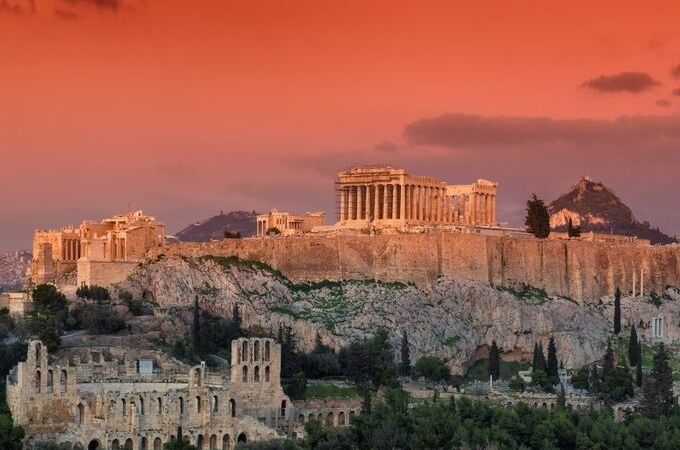
6. Can I visit the Acropolis in February?
Yes. February temperatures are generally well suited to archaeological sightseeing because summer heat is absent. Rain, wet surfaces or strong wind may occasionally influence comfort or access, so checking current operating information and choosing the best available weather window remains sensible.
7. Is Athens crowded in February?
Visitor numbers are generally much lower than during the major spring, summer and early-autumn travel periods, although famous sites can still receive groups and weekend demand. The reduced seasonal pressure usually makes archaeological sites and central neighborhoods easier to explore at a relaxed pace.
8. Can you eat outside in Athens in February?
Outdoor dining is possible on mild, sunny days, particularly at sheltered tables around lunchtime. Comfort depends heavily on wind, shade and individual weather conditions. Evening temperatures are cooler, so indoor dining or well-protected heated terraces are generally more reliable after sunset.
9. How many days should I spend in Athens in February?
Three nights provide a good balance for first-time visitors, while four offer greater flexibility for changing weather and allow time for the coast or additional neighborhoods. Two-night visits can work but are more vulnerable if one of the limited sightseeing days receives poor weather.
10. Is February warmer than January in Athens?
February is generally slightly milder on average and benefits from increasing daylight, but individual weather patterns matter more than a small statistical temperature difference. A cold February week can feel more wintry than a mild January period, which is why averages should guide rather than dictate expectations.
11. Is February or March better for Athens?
Choose February for a quieter late-winter city break where museums and outdoor sightseeing share equal importance. March offers stronger signs of spring, longer days and increasingly outdoor-oriented conditions, although weather can still vary. The better month depends on how much seasonal change matters to you.
12. Is Athens worth visiting in February for a first trip?
Yes, particularly if your priorities are the Acropolis, archaeology, museums, neighborhoods and Greek food rather than guaranteed warm weather. First-time visitors should allow enough time for flexibility and avoid designing an itinerary in which every important experience depends on clear skies.

A travel professional specializing in tailor-made travel planning, guest experience management, and multi-destination tourism operations.
With over 23 years of experience in the travel industry, he designs and manages private and cultural tours for international travelers across Türkiye, Greece, Egypt, Jordan, Morocco, and other destinations.
He has strong expertise in both online and face-to-face guest communication, sales processes, and end-to-end travel operations.
Working closely with hotels, travel agencies, and local partners, he ensures smooth coordination and high-quality travel experiences at every stage of the journey.
His focus is on delivering personalized, reliable, and seamless travel experiences for international guests worldwide.