

Athens Weather in January: A Winter City Without the Rush
Last Updated: August 2026
Athens in January asks surprisingly little from you.
There is no need to calculate how long you can tolerate the midday sun on the Acropolis, no reason to reorganize an afternoon because Plaka feels too hot for another hour of walking, and considerably less competition for the places that most first-time visitors have travelled to Greece to see.
Instead, January introduces a different set of compromises. The sky is less dependable, rain belongs naturally to the season, daylight is shorter and a cold northerly wind can occasionally make Athens feel much less Mediterranean than its latitude suggests.
Yet for a city whose greatest attractions involve stone, hills and walking, winter has advantages that deserve more attention than they usually receive.
Athens is not an island resort waiting for summer to return. It is a large, permanently active European capital, which means January does not remove the restaurants, neighborhoods, museums or everyday city life that make a visit worthwhile. What disappears is much of the seasonal pressure.
For travelers primarily interested in archaeology and culture rather than beaches, January can therefore be less of a compromise than the weather forecast initially suggests.
January Changes the Acropolis More Than It Changes Athens
Look at an average January temperature and you might focus immediately on the word “winter.”
Look at what that temperature does to an Acropolis visit and the month becomes more interesting.
Daytime conditions often sit somewhere around 11–15°C, although colder and milder periods both occur, while nights commonly fall toward approximately 6–9°C. Rain is considerably more likely than during the dry summer, and individual weather systems can produce windy, unsettled days.
Those figures matter, but they do not describe the main practical difference.
In July, the exposed archaeological landscape absorbs and reflects intense heat. January removes that thermal pressure almost completely, allowing visitors to spend longer looking at what they came to see rather than measuring the visit against their tolerance for sunshine.
What January Changes at Major Outdoor Sites
| Experience | January Effect | Practical Advantage |
|---|---|---|
| Acropolis slopes | Cool, exposed conditions | Longer comfortable walking |
| Ancient Agora | Less heat, possible wet ground | Easier extended exploration |
| Areopagus area | Wind can be noticeable | Clear days can be excellent |
| Plaka | Comfortable daytime walking | Less need for shade stops |
| Philopappos Hill | Cooler climb | Good for active travelers |
| Lycabettus | Wind matters more | Clear winter views can be rewarding |
January does not necessarily make outdoor sightseeing better every day.
It makes good-weather days exceptionally usable.
A Cloudy Morning Is Not Automatically a Museum Morning
One of the easiest mistakes in winter Athens is treating cloud as though it means rain.
If the forecast is cool but dry, archaeological sightseeing can still be excellent. In fact, overcast conditions may remove glare and create comfortable walking temperatures across exposed sites.
Save the museums for actual poor-weather periods whenever your itinerary allows it.
The Acropolis Museum, National Archaeological Museum and other indoor cultural sites provide obvious weather protection, but using them automatically whenever the sky turns grey wastes one of Athens' greatest winter advantages.
A cloudy 13°C afternoon can be far better for walking than a cloudless 34°C one.
Weather quality in Athens depends on what you are trying to do.
Rain Is a Scheduling Problem, Not a Reason to Avoid January
Athens receives meaningful winter rainfall, although this does not imply continuous rain throughout the month or that a January trip will necessarily be wet.
The useful strategy is to avoid assigning every outdoor attraction permanently to a particular day before you arrive.
If Monday looks clear and Wednesday looks unsettled, put the Acropolis and longer outdoor walks on Monday. Move museums, extended lunches or more sheltered neighborhood exploration toward Wednesday.
This sounds obvious, yet travelers often resist changing itineraries that were carefully prepared months earlier.
January rewards the opposite approach.
How to Use Different January Days
| Forecast | Best Priority |
| Clear and mild | Acropolis + major outdoor archaeology |
| Sunny but windy | Lower archaeological sites + neighborhoods |
| Overcast and dry | Long walking day |
| Light intermittent rain | Mixed museum/neighborhood day |
| Persistent rain | Museum-heavy schedule |
| Clear after rain | Hills/viewpoints if surfaces are safe |
A winter Athens cultural tour fits particularly well into this style of trip because guided sightseeing can concentrate on the historical city without the physical strain associated with peak summer temperatures.
The important point is not filling every hour.
It is placing weather-sensitive hours where they work best.
January Gives Archaeology Back Its Scale
Summer crowds change how archaeological sites feel.
When large numbers of visitors move through the same entrances, pathways and viewpoints, attention naturally shifts toward navigation. You wait, move aside, find space for photographs and sometimes progress through an ancient landscape at the pace established by everyone around you.
January can substantially reduce that pressure.
This does not mean the Acropolis will belong entirely to you. Athens receives visitors year-round, school groups appear and popular monuments remain popular.
The difference is proportional.
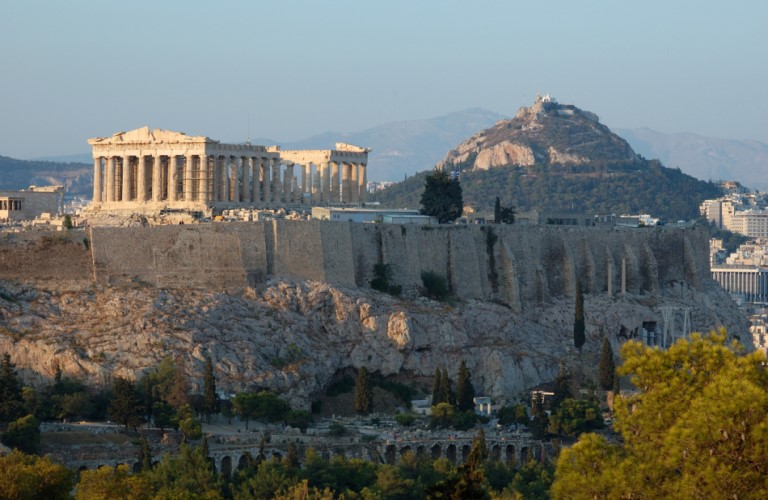
With fewer people competing for physical space, it becomes easier to understand how the Parthenon relates to the surrounding plateau, how the slopes connect with the lower city and how Athens itself spreads outward from the ancient core.
For travelers genuinely interested in history, this spatial clarity may be worth more than warm weather.
Winter Light Changes the City
Athens is famous for hard Mediterranean sunlight, but January often provides a softer version of it.
The sun sits lower, shadows stretch differently across marble and periods of cloud introduce contrast that summer photographs rarely capture. After rain, surfaces darken and the city can appear unexpectedly sharp once the sky clears.
This makes January particularly rewarding for photographers who care more about atmosphere than guaranteed blue skies.
The trade-off is shorter daylight.
You cannot postpone every outdoor plan until late afternoon and still expect to cover substantial ground before darkness arrives. Morning becomes valuable, especially when the forecast suggests clear conditions.
Rather than treating the shorter day as a limitation, use it to create a more deliberate rhythm: archaeological sites while the light is available, neighborhoods and museums as conditions change, then dinner once the city shifts indoors.
Athens Does Not Become Empty in January
This distinction separates Athens from many seasonal Greek destinations.
The city is home to millions of people across its metropolitan area, so restaurants, cafés, shops, theaters and neighborhoods continue functioning after the holiday season ends.
Tourism becomes less dominant, but city life does not.
That can change the experience of areas such as Monastiraki, Psyrri and central Athens. You are still visiting popular districts, yet a greater proportion of the surrounding activity belongs to people working, studying, shopping or meeting friends rather than travelers following the same sightseeing route.
A private Athens highlights experience can therefore feel less like moving between crowded attractions and more like exploring a functioning city whose ancient monuments happen to sit directly inside it.
That relationship between modern and ancient Athens is much easier to notice when tourism occupies less visual space.
The National Garden Has a Different Job in Winter
In July, green spaces are partly about relief from heat.
January removes that function.
The National Garden instead becomes a useful walking connection through central Athens, particularly on dry, mild days. Vegetation, winter light and quieter paths provide a change from archaeological stone without requiring a major detour from the historic center.
Do not expect a spectacular botanical experience simply because the weather is cooler.
The value is urban breathing room.
This illustrates something broader about January Athens: many places become enjoyable for reasons different from the ones emphasized in summer guides.
The weather does not merely remove activities.
It changes their purpose.
What Happens When a Cold Spell Reaches Athens?
Average temperatures can create false confidence.
Athens generally experiences relatively mild winters compared with much of continental Europe, but colder outbreaks do occur, particularly when northerly air reaches Greece. Frost is possible, and rare snow events can occasionally affect the city.
These are not the conditions around which a normal January itinerary should be designed, but they are a reason to check the short-range forecast before packing.
A traveler arriving during a mild 15°C period needs a different wardrobe from somebody encountering a much colder spell.
This is where layers outperform assumptions.
Bring clothing that can adapt rather than packing according to a single monthly average.
What to Wear Without Packing for the Arctic
January Athens calls for ordinary European winter clothing, adjusted for a climate that can move between mild sunshine and cold rain surprisingly quickly.
A medium-weight jacket is useful, preferably with some wind and water resistance. Add sweaters or similar layers, trousers and comfortable closed walking shoes with reasonable grip.
A compact umbrella can help, although a hooded waterproof layer is often more practical during windy rain.
Sunglasses still belong in the bag.
Clear winter sunshine can be bright, particularly around pale stone and marble.
January Packing by Purpose
| Item | Why It Earns Space |
| Water-resistant jacket | Rain + wind protection |
| Sweater / mid-layer | Temperature changes |
| Comfortable walking shoes | Archaeological surfaces |
| Small umbrella | Passing showers |
| Sunglasses | Bright winter light |
| Light scarf | Windy evenings |
| Day bag | Carrying/removing layers |
| Extra socks | Useful after wet walking |
The goal is not maximum warmth.
It is being able to remove and replace layers without reorganizing your entire day.
Wet Marble Deserves More Attention Than Cold Weather
Rain creates one practical issue that weather guides sometimes overlook.
Ancient stone can become slippery.
This matters around archaeological sites, hills and polished surfaces where thousands of years of use have already made footing uneven. Comfortable shoes should therefore mean more than cushioning; reasonable traction is important.
Do not rush across wet archaeological areas simply because a shower has begun.
Site authorities may also alter access when conditions create safety concerns, so follow local instructions rather than assuming every area remains accessible regardless of weather.
January sightseeing is physically comfortable in many respects.
Wet surfaces are the exception that deserves respect.
Athens Riviera Still Has a Place — Just Not a Beach-Holiday One
January does not turn the southern Athens coastline into a summer resort.
That does not make it irrelevant.
On a clear day, the coastal districts provide a completely different visual environment from the historic center and can be pleasant for walking, lunch or simply seeing the relationship between metropolitan Athens and the Saronic Gulf.
A winter Athens and Cape Sounion journey can make particularly good use of a clear afternoon, when cooler temperatures make outdoor exploration comfortable and the coastline becomes part of a cultural landscape rather than primarily a swimming destination.
This is also where strict cluster separation matters.
The January Athens article does not need to discuss Greek island swimming conditions or nationwide winter travel. Its concern is how the city's own coastal geography adds variety to a winter city break.
January Is Better When You Stop Trying to Maximize Every Day
Summer itineraries often become exercises in efficiency because daylight is long and travelers want to use every hour.
January rewards a different rhythm.
Begin with the most weather-sensitive activity while conditions are good, but allow time for coffee, lunch and unplanned stops. If rain arrives, move indoors rather than treating the interruption as lost sightseeing time.
Athens supports this unusually well because archaeological sites, museums, restaurants and active neighborhoods exist within a relatively compact central area.
The city gives you alternatives without requiring an entirely new itinerary.
That resilience may be January's greatest advantage.
A winter city break does not succeed because every day is sunny.
It succeeds because the destination remains interesting when one of them isn't.
How Much Weather Risk Can Your Athens Trip Absorb?
January travel becomes easier when you stop judging the forecast by the number of sunshine symbols.
What matters more is how much of your trip would still work if one afternoon became wet, windy or colder than expected.
Athens performs unusually well by that measure because its major historical story is divided between outdoor archaeological landscapes and substantial indoor collections. A rainy morning may change the order in which you encounter ancient Athens, but it does not necessarily remove that history from the day.
This makes the city particularly forgiving for winter travelers who resist building an itinerary around rigid daily assignments.
Instead of deciding that Tuesday belongs to museums and Wednesday belongs to archaeology, identify the experiences most dependent on dry conditions and give them priority whenever the weather window appears.
January then becomes less about predicting the weather correctly and more about having enough alternatives that prediction barely matters.
Two Days: Weather Has Too Much Power
A two-day January visit can certainly work, particularly as part of a longer Greece itinerary, but there is an obvious weakness.
If one day receives persistent rain, half of your available sightseeing time has immediately changed character.
For that reason, a short stay should concentrate on the historical center rather than attempting to cover a broad geographic area. Keep major archaeological priorities ready for the clearest period and allow museums or sheltered neighborhoods to absorb poorer conditions.
Trying to include central Athens, Cape Sounion, extensive museum visits and multiple distant districts within two winter days creates an itinerary with almost no capacity to adapt.
The issue is not that January weather is constantly bad.
The issue is mathematical: with only two days, one unfavorable period matters disproportionately.
Three Days: The City Begins to Absorb the Forecast
Three days provide a much more comfortable winter structure.
One can emphasize outdoor archaeology, another can combine neighborhoods and museums, while the third remains available for whichever side of Athens received less attention because of weather.
This does not mean assigning those categories permanently before arrival.
Think of them as movable pieces.
A Weather-Resilient Three-Day Structure
| Priority | Ideal Conditions | Alternative if Weather Changes |
|---|---|---|
| Acropolis + surrounding archaeology | Dry, preferably clear | Major museum |
| Long central Athens walk | Cool and dry | Shorter neighborhood sections |
| Hill/viewpoint | Clear with manageable wind | Move to another day |
| Museum visit | Rain or cold spell | Save for poorer weather |
| Athens coast/Sounion | Clear, stable afternoon | Central cultural day |
| Extended outdoor lunch/walk | Mild sunshine | Indoor dining + museum |
The advantage is not having more attractions to visit.
It is having somewhere useful to move them.
Four Days: January Stops Feeling Like a Compromise
Four days allow a winter Athens trip to slow down enough that weather loses much of its authority.
If rain occupies Tuesday afternoon, you can spend longer in a museum without mentally calculating what has been sacrificed. If Wednesday morning is brilliantly clear, move outside and take advantage of it.
There is also room to experience Athens as a city rather than only as an archaeological destination.
Coffee can last longer. A neighborhood discovered while walking can receive an hour you did not assign to it. Dinner does not need to begin immediately after the final attraction closes simply because every daylight minute was scheduled.
This is where low-season Athens becomes especially rewarding.
Fewer crowds create time, and a four-day itinerary gives you permission to use it.
Rain-Proofing Athens Doesn't Mean Creating a Rainy-Day Checklist
The conventional advice is predictable: if it rains, visit a museum.
Useful, but incomplete.
A January day can contain several different weather periods. Morning rain may give way to a dry afternoon, while a cloudy start can develop into clear winter light later.
Instead of treating the entire day as either “indoor” or “outdoor,” divide it according to conditions.
Spend two hours in a museum while rain passes, then walk through Plaka once the streets begin drying. Have a long lunch during another shower and continue toward Monastiraki afterward.
This works particularly well in central Athens because indoor and outdoor experiences sit relatively close together.
You do not need a completely separate wet-weather Athens.
You need an itinerary that can change every few hours.
January Is Not Necessarily the Cheapest Possible Athens
Low season often produces more attractive hotel rates than spring or peak summer, but price should not become the article's central argument for visiting.
Athens has become an increasingly year-round city destination, and rates vary substantially according to hotel category, exact dates, events and demand.
The more useful January advantage is availability and reduced visitor pressure.
You may have broader accommodation choice within a particular budget and less competition around some major attractions, while restaurants are generally easier to approach without organizing every evening around advance reservations.
That freedom has value even when the absolute saving is modest.
January should be chosen because the travel experience suits you, not simply because a room happens to cost less.
The Best Winter Hotel Is Not Always the Best Summer Hotel
January changes what matters in accommodation.
A rooftop pool becomes largely irrelevant. Immediate access to a beach does not influence the trip. A huge outdoor terrace may contribute very little if the week is cool or wet.
Location, heating, breakfast and comfortable indoor common areas become more valuable.
Staying within convenient walking distance of the historical center can make weather changes easier to manage because returning to the hotel for another layer or waiting through a shower does not require a long journey.
What Matters More in a January Hotel?
| Higher January Value | Lower January Priority |
| Central location | Swimming pool |
| Reliable heating | Large sun terrace |
| Good breakfast | Beach proximity |
| Comfortable indoor space | Summer resort facilities |
| Easy metro access | Outdoor-only amenities |
| Nearby year-round dining | Seasonal rooftop concept |
This is a small adjustment, but it prevents travelers from evaluating January accommodation through photographs designed to sell July.
January Evenings Belong to the City, Not the Weather
Once darkness arrives, the gap between a winter and summer Athens trip becomes smaller than expected.
Restaurants remain active, bars and cafés operate year-round, and central neighborhoods continue their normal evening rhythm. Outdoor terraces may be less useful during cold or wet periods, but Athens does not retreat indoors and disappear.
This matters because shorter daylight can initially make January look restrictive.
In practice, archaeological sightseeing simply moves earlier while dining and city life continue after dark.
Travelers accustomed to seasonal island destinations sometimes underestimate this distinction. Athens does not need tourists to create an evening atmosphere because residents are already using the city.
The result is a winter trip in which daylight affects sightseeing far more than it affects whether there is anything to do after 6:00 p.m.
January or February? Don't Choose by One Degree
The two months naturally sit close together, but their search intent should remain separate.
January represents established winter Athens: low-season archaeology, rain resilience, cooler walking weather and the advantages of seeing the city when tourism pressure is relatively low.
February will deal more specifically with late-winter variability and the first subtle signs that the seasonal direction is beginning to change.
January vs February in Athens
| January | February |
| Established winter conditions | Late-winter transition |
| Strong low-season identity | Gradually changing seasonal feel |
| Shorter daylight | Noticeably increasing daylight |
| Winter archaeology focus | Outdoor/indoor balance begins shifting |
| Rain resilience central | Weather variability becomes central |
| Best for deliberate winter city break | Best for travelers watching spring approach |
The temperature difference alone may be small.
The editorial and travel decision is not.
Who Benefits Most From January Athens?
January is particularly well suited to travelers who consider the Acropolis and archaeological sites the primary reason for visiting Athens but dislike intense heat.
History-focused visitors can spend longer outdoors, photographers gain softer seasonal light, and travelers who enjoy city walking may find the physical experience substantially easier than in midsummer.
It also works for couples who prefer restaurants, neighborhoods and museums to beach time, as well as repeat visitors interested in seeing Athens outside its main tourism season.
Families require a little more judgment.
Older children interested in Greek history may appreciate the comfortable sightseeing conditions, while families expecting a Mediterranean sunshine holiday may find the combination of rain risk and winter temperatures disappointing.
Is January Athens Right for You?
| Traveler | January Fit | Why |
| History-focused visitor | Excellent | Comfortable archaeology |
| Photographer | Very good | Lower light + fewer crowds |
| City-break couple | Very good | Dining and culture remain active |
| Heat-sensitive traveler | Excellent | No summer thermal stress |
| Family with history interests | Good | Easier outdoor sightseeing |
| Beach-focused visitor | Poor | Wrong seasonal expectation |
| Guaranteed-sun seeker | Poor | Weather too variable |
| Repeat Athens visitor | Very good | Different city atmosphere |
A month does not become good because fewer people visit.
It becomes good when fewer people and cooler weather improve the things you actually came to do.
Twelve FAQs About Athens Weather in January
1. Is January a good time to visit Athens?
January can be excellent for travelers primarily interested in archaeology, museums, food and urban culture rather than beaches. Cooler temperatures make extensive walking comfortable, while lower tourism pressure benefits major historical sites. Rain remains a realistic possibility, so flexible daily planning is important.
2. How cold is Athens in January?
Typical daytime temperatures often sit around 11–15°C, with nights commonly falling toward approximately 6–9°C. Colder spells can occur, particularly with northerly weather systems, while mild sunny afternoons are also possible. Layers are therefore more useful than packing according to one average temperature.
3. Does it rain a lot in Athens in January?
January belongs to Athens' wetter season, so rain should be considered a normal possibility rather than an unusual disruption. This does not mean continuous wet weather throughout a trip. Conditions often vary, making short-range forecasts and movable indoor-outdoor plans particularly useful.
4. Does it snow in Athens in January?
Snow is possible but not typical enough to form part of ordinary January travel planning. Occasional cold outbreaks can produce snow or wintry conditions in Athens, sometimes affecting transportation and archaeological sites. Visitors should check current forecasts rather than expecting either snow or consistently mild weather.
5. Is the Acropolis open in January?
The Acropolis operates during winter, subject to official opening schedules, public holidays and possible temporary restrictions related to weather or other operational circumstances. January can provide very comfortable visiting temperatures, although wet surfaces and strong wind require more caution than during dry conditions.
6. Is January too cold for sightseeing in Athens?
For most travelers accustomed to moderate winter conditions, January is not too cold for sightseeing and can actually be more physically comfortable than summer. Wind, rain and occasional colder spells matter, but appropriate layers and flexible scheduling make extensive city walking entirely realistic.
7. What should I wear in Athens in January?
Bring a medium-weight water-resistant jacket, sweaters or other layers, trousers and comfortable closed walking shoes with reliable grip. A scarf and compact rain protection are useful, while sunglasses remain worthwhile because clear winter sunshine can still be surprisingly bright around pale archaeological surfaces.
8. Are restaurants and attractions open in Athens in January?
Athens is a year-round capital, so restaurants, cafés, museums, shops and major attractions continue operating during January, although individual schedules and holiday closures should always be checked. The city does not experience the broad seasonal shutdown associated with some Greek island destinations.
9. Is Athens crowded in January?
January generally experiences substantially lower tourism pressure than the main spring, summer and early-autumn periods, although famous attractions are never guaranteed to be empty. Reduced visitor numbers can make archaeological sites, museums and central neighborhoods easier to explore at a more relaxed pace.
10. How many days should I spend in Athens in January?
Three days provide a solid introduction, while four offer better weather flexibility and allow the city to be experienced beyond its major archaeological highlights. Two days can work, but one period of poor weather has much greater influence over such a short winter itinerary.
11. Is January a good month for the Acropolis?
January can be particularly rewarding because cooler temperatures remove the heat exposure that complicates summer visits. The main trade-offs are rain, wind and potentially slippery surfaces. On a dry winter day, visitors can often spend longer exploring without organizing the visit around midday heat.
12. Is January or summer better for Athens?
Choose January if comfortable walking, archaeology, museums and lower visitor pressure matter more than guaranteed sunshine and long daylight. Summer offers more predictable dry weather and longer evenings but introduces substantial heat. The better season depends on which conditions improve your preferred Athens experience.
January Doesn't Make Athens Smaller
Winter removes certain possibilities from a Greece holiday, which is why travelers sometimes assume it also reduces Athens.
The opposite can happen.
Without intense heat dictating when you can comfortably climb toward the Acropolis, more attention remains for the site itself. Without peak visitor pressure pushing you through popular spaces, the Ancient Agora can become somewhere to linger rather than somewhere to complete. When rain arrives, major museums preserve the city's historical narrative instead of forcing the sightseeing day to end.
Even shorter daylight does not shrink Athens as much as it first appears to. The archaeological portion of the day moves earlier, while cafés, restaurants and active neighborhoods continue after darkness falls because they belong to a functioning capital rather than a seasonal resort.
January asks for flexibility, suitable shoes and a willingness to look at tomorrow's forecast before deciding exactly what tomorrow will contain.
In exchange, it gives something summer cannot easily provide: the chance to experience one of Europe's great archaeological cities without organizing the entire visit around either heat or crowds.
For a traveler who came to Athens primarily to walk through history, that is not merely an off-season consolation.
It can be the better way to see it.

A travel professional specializing in tailor-made travel planning, guest experience management, and multi-destination tourism operations.
With over 23 years of experience in the travel industry, he designs and manages private and cultural tours for international travelers across Türkiye, Greece, Egypt, Jordan, Morocco, and other destinations.
He has strong expertise in both online and face-to-face guest communication, sales processes, and end-to-end travel operations.
Working closely with hotels, travel agencies, and local partners, he ensures smooth coordination and high-quality travel experiences at every stage of the journey.
His focus is on delivering personalized, reliable, and seamless travel experiences for international guests worldwide.