Mykonos Weather in January: Beyond the Summer Island
Last Updated: August 2026
Most photographs of Mykonos suggest that the island exists in permanent summer. Tables spill into the lanes of Chora, beach clubs occupy the coast, boats move between bays, and evenings seem designed to continue until morning. Arrive in January and much of that familiar image has disappeared.
The island itself has not.
Mykonos has a permanent population and an everyday life that continues after seasonal visitors leave. Chora is still a working town, Ano Mera remains a real village rather than an excursion stop, and the coastline is no less dramatic because nobody is arranging sunbeds on the sand. What changes is the reason for being here.
January is one of the coolest and wetter periods of the year, with wind playing a noticeable role in how conditions feel. Many businesses associated specifically with summer tourism are closed, organized visitor activities are limited, and swimming is unlikely to be a serious part of the trip for most people.
None of that makes January a cheaper substitute for July. It is better understood as a completely different type of Mykonos journey, one built around Chora, island landscapes, quiet roads and the rare opportunity to see what remains when the destination stops performing its famous summer role.
Chora Makes More Sense Once You Stop Looking for the Party
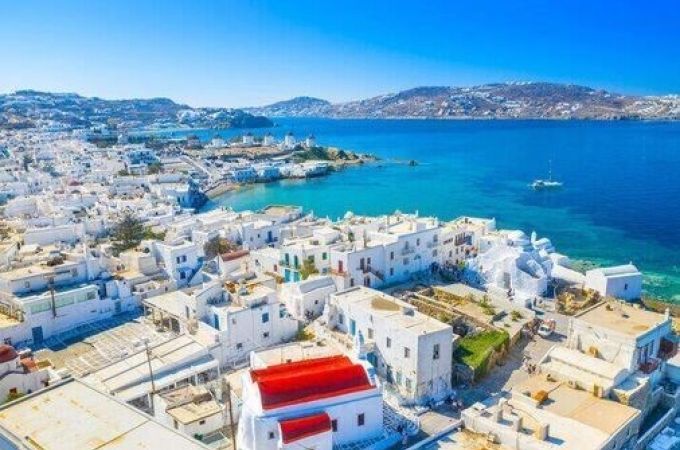
Mykonos Town is often described through Little Venice, the windmills, designer shops and nightlife, but those references tell only part of the story.
In January, Chora's practical role becomes much easier to see. Residents still need bakeries, cafés, supermarkets, pharmacies and everyday services regardless of how many international visitors are on the island. This makes the town the most logical starting point for understanding winter Mykonos.
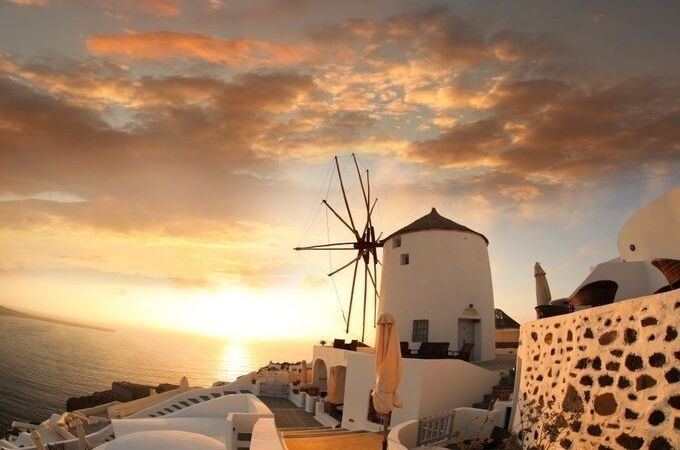
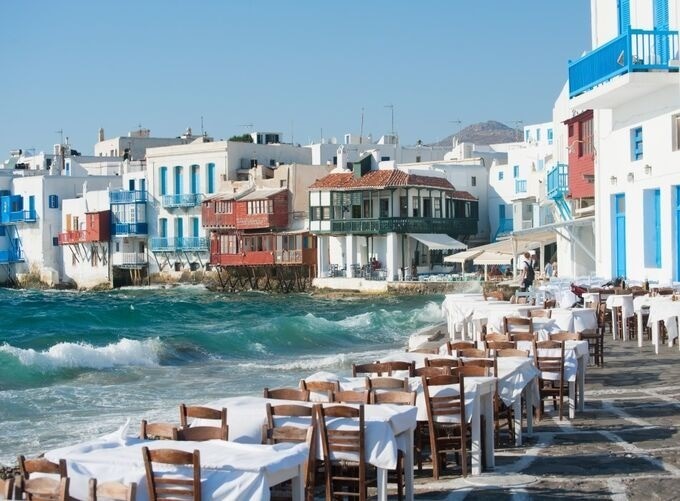
The famous lanes can feel almost improbably quiet compared with summer. Without dense pedestrian traffic, you begin noticing how compact the old town actually is and how easily one narrow passage leads unexpectedly into another. Whitewashed houses still catch the winter light, blue doors remain blue, and the waterfront continues to face the same Aegean; there is simply much less activity competing for your attention.
Little Venice also feels different without crowded terraces shaping the experience. You may spend more time looking at the relationship between the old buildings and the water rather than deciding where to sit for sunset.
That quieter version of Chora is January's strongest argument.
What Does January Weather Actually Feel Like?
Average daytime temperatures are generally around 12–15°C, while nights commonly fall toward approximately 8–11°C. Individual days can naturally move outside those ranges, and a sunny afternoon may feel surprisingly pleasant in a sheltered position.
The complication is wind.
Mykonos is famously exposed to Aegean winds, and January temperatures should never be interpreted without considering them. Fifteen degrees in sunshine beside a protected café can feel mild; a similar temperature on an exposed coastal stretch with strong wind can require a proper jacket.
Rain also belongs to the winter picture. January falls within the wetter part of the Cycladic year, although this does not mean continuous grey weather. Clear periods, sunshine and dry days remain entirely possible, sometimes arriving between much less inviting conditions.
For trip planning, the useful question is therefore not simply “How warm will it be?” but how much time you expect to spend exposed to wind and changing weather.
Reading a January Day in Mykonos
| Conditions | What They Mean for Your Day |
|---|---|
| Sunny and relatively calm | Excellent for Chora and island exploration |
| Sunny but windy | Good sightseeing with proper layers |
| Cloudy and dry | Comfortable for villages and driving |
| Light showers | Keep the route flexible |
| Strong wind and rain | Reduce exposed coastal time |
| Clear winter evening | Beautiful but considerably cooler |
January rarely requires extreme winter clothing, yet dressing as though 14°C in Mykonos will feel identical to 14°C in a sheltered city is an easy mistake.
The Island Becomes Larger When Almost Everything Slows Down
Summer Mykonos can feel remarkably compact because movement follows established tourism corridors. Visitors travel between Chora, famous southern beaches, hotels, restaurants and nightlife venues, often using the same routes at similar times.
January removes much of that choreography.
Driving toward Ano Mera or crossing the interior feels less like traveling between attractions and more like moving across an inhabited Cycladic island. Dry-stone walls, low hills, scattered chapels and agricultural land become more noticeable once beach destinations stop dominating every day's priorities.
A private Mykonos island discovery can make particular sense during this period because the objective is no longer racing between summer highlights. A route can spend more time in the interior, adjust around current weather and treat coastal stops as landscapes rather than swimming destinations.
This is where January Mykonos begins separating itself from generic Greece winter-weather content. The interest is not simply that the island is quieter; it is how that quiet changes what you actually notice.
Ano Mera Deserves More Than a Lunch Stop
During the main season, Ano Mera is frequently included between beach visits or as one component of an island tour. January removes the pressure to move on so quickly.
The village lies inland, away from Chora's dense whitewashed lanes and the highly seasonal character of many coastal areas. Its central square and surrounding streets provide a different sense of scale, while the Panagia Tourliani Monastery adds historical and religious context to an island more commonly marketed through beaches and nightlife.
Weather also affects the experience differently here. The absence of swimming plans means a cool afternoon is not disappointing, while intermittent cloud can make inland exploration more comfortable than standing for long periods on an exposed coast.
A winter visit to Ano Mera should not be presented as a secret attraction discovered only after tourists leave. It is well known. January simply gives you more reason to treat it as part of Mykonos rather than a pause between better-known summer experiences.
Don't Build a January Itinerary Around Beaches
The beaches remain worth seeing, but the reason has changed completely.
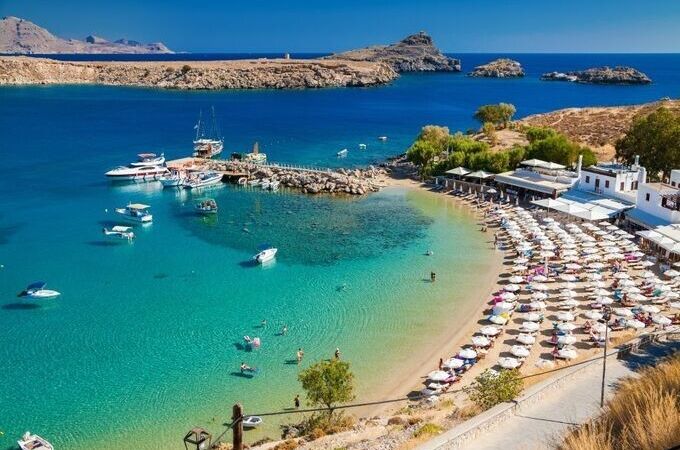
Ornos, Platis Gialos, Psarou, Paradise and Elia are famous partly because of the summer life surrounding them. In January, much of that infrastructure may be absent or operating very differently, and the water is too cool for most travelers to consider swimming a central activity.
That does not make the coastline irrelevant.
Without sunbeds, music and constant movement, it becomes easier to understand the physical differences between bays. Some feel enclosed and protected, while others reveal much more of Mykonos's exposure to the Aegean.
This distinction will become the central subject of the February blog, where wind and island geography deserve much deeper treatment. January only needs to establish the broader point: beaches can still belong in the itinerary, but they are now places to walk, photograph and understand rather than somewhere the entire afternoon must be spent.
A Winter Coastline Has Its Own Value
There is something slightly strange about arriving at a beach whose name is internationally associated with summer parties and finding little happening.
Paradise without its seasonal energy does not provide the experience for which Paradise became famous. Travelers specifically seeking that atmosphere should simply choose another month.
Yet the absence of summer activity reveals something that is easy to miss in July: these beaches existed before their reputations did.
The shape of the bay, surrounding hills and relationship with the wind become more obvious when the tourism layer is removed. A Mykonos coast and countryside tour can use January to connect those landscapes with the interior rather than presenting one beach after another as separate attractions.
The coast becomes geography again.
For travelers interested in the physical island, that can be more engaging than expected.
January Is Better for Wandering Than Checklist Sightseeing
Mykonos does not have the same density of major archaeological attractions found in Athens, nor should a winter visit attempt to imitate a city-break itinerary.
Its strength lies elsewhere.
Spend time walking through Chora without deciding in advance which lane matters. Visit the windmills when there are few people around them, continue toward Little Venice and then move inland simply because you have time.
Drive to Ano Mera without treating the journey as dead time between attractions. Stop when the landscape becomes interesting.
This approach sounds almost too simple for a travel guide, but it suits January far better than manufacturing a list of ten essential winter activities.
There are fewer things specifically organized for you.
The island asks more of your own curiosity.
What About Delos in January?
Delos is one of the most important archaeological sites in Greece and a natural companion to Mykonos during the main tourism season. In January, however, access should never be assumed from summer schedules.
Boat services are seasonal and weather-dependent, while archaeological opening arrangements should be verified for your exact dates. Strong winter winds can also affect marine transportation even when conditions on land appear manageable.
If Delos is the principal reason for visiting Mykonos, January requires more caution than the main season.
If it is one possible addition to a broader winter trip, check current operating conditions and treat successful access as part of the itinerary only once it is confirmed.
This distinction prevents one unavailable excursion from defining the entire stay.
Choose Your Hotel for January, Not for Instagram
The accommodation that looks irresistible in July may make very little practical sense in January.
An infinity pool is largely irrelevant unless it is genuinely heated and usable. A remote beach location can become inconvenient if nearby restaurants and services are seasonal. A spectacular outdoor terrace contributes less when wind or rain keeps you inside.
Instead, prioritize heating, indoor comfort, current operating status, breakfast arrangements, transportation and access to year-round services.
Chora is generally the most practical base because it provides the strongest connection to everyday island infrastructure and allows you to walk to restaurants and cafés that are operating during your stay.
A winter stay in Mykonos Town also reduces the need to organize transportation every evening, which becomes increasingly valuable when daylight is short and weather conditions are less predictable.
The sea-view photograph still matters.
In January, the room behind the photograph matters more.
You Need Fewer Plans but Better Information
Winter Mykonos does not reward a densely scheduled itinerary.
It does reward checking the details that genuinely matter.
Confirm that your hotel is fully operating. Verify transport schedules. Check restaurant openings locally rather than relying entirely on summer reviews. If a boat excursion is important, confirm its seasonal availability and weather requirements.
Once those practical pieces are secure, leave more of the day open than you might during summer.
A clear morning may encourage you to remain outdoors for hours. Rain may push lunch earlier. Strong wind can make an inland route more attractive than the coastline, while an unexpectedly calm afternoon may send you back toward the sea.
January Mykonos is easier when the itinerary responds to the island instead of requiring the island to cooperate with it.
What to Pack Without Turning It Into a Winter Expedition
Layering is the sensible approach.
A proper wind-resistant jacket is more useful than a very heavy coat because exposure often determines comfort. Add sweaters or fleece, comfortable trousers and footwear suitable for wet surfaces.
Light waterproof protection is worthwhile because showers are possible, while sunglasses should not be forgotten simply because it is winter. Clear Aegean days can still be bright.
Bring comfortable walking shoes rather than relying entirely on fashion-oriented footwear for Chora's lanes. Surfaces can become slippery after rain, and you are likely to spend more time walking than you would during a beach-focused summer stay.
The objective is not to prepare for severe cold.
It is to remain comfortable enough that a breezy 13°C afternoon still feels like sightseeing weather.
January Isn't Trying to Convince You Mykonos Is Better in Winter
That would be an artificial argument.
For swimming, nightlife, beach clubs and the social energy that made Mykonos internationally famous, summer is unquestionably the more appropriate season.
January offers fewer restaurants, fewer organized experiences, cooler weather and a realistic possibility that wind or rain will alter your plans.
Its appeal comes from somewhere else.
You can walk through Chora without feeling carried by a crowd, drive across the island without organizing the day around beaches and see places such as Ano Mera as part of everyday Mykonos rather than an excursion away from its famous coastline.
For some travelers, that will not be enough.
For others, discovering that Mykonos still has an identity after the beach clubs close is precisely what makes January worth considering.
Three January Days Should Not Look Like Three Summer Days
A short winter stay works best when you stop dividing Mykonos into the usual summer categories of town, beaches and nightlife. January days are shorter, weather is more variable and fewer seasonal businesses are operating, so covering a large number of places is less useful than giving yourself enough time to respond to conditions.
With three full days, there is no need to decide months in advance which exact beach you will see on Tuesday or when you will reach Ano Mera. Think instead in broader areas of the island, then choose their order once the local forecast becomes meaningful.
One Day Belongs Mainly to Chora
Give Mykonos Town proper time rather than treating it as somewhere to visit before dinner.
Walk through the old town, continue toward Little Venice and the windmills, and allow yourself to get slightly lost in the lanes. January is one of the rare periods when this can happen without continually negotiating summer pedestrian traffic.
A long lunch fits naturally into the day, particularly if the weather is unsettled. When conditions remain pleasant, continue walking along the waterfront or return to places that looked different earlier as the winter light changes.
The advantage of staying in Chora becomes obvious in the evening. There is no complicated return journey and no need to make an isolated resort area provide entertainment it was never designed to offer in January.
Another Day Can Look Inland
Use a second day to understand the Mykonos that exists beyond the familiar white lanes and beach names.
Ano Mera deserves time, while the journey across the island reveals a landscape of low hills, dry-stone walls, small churches and scattered homes that rarely dominates summer marketing.
If conditions cooperate, connect the interior with selected coastal stops. There is no reason to visit six beaches simply because they are famous. Two or three contrasting bays reveal more than a rushed circuit where each stop exists primarily for another photograph.
Keep the Third Day Loose
The final day is where January flexibility becomes valuable.
If you have had poor weather earlier, use the clearer period for the coast. If all three days have been good, return to whichever part of the island interested you most rather than automatically searching for another attraction.
A Delos visit can fit here only when current access, boat operations and weather allow it. It should not be the structural pillar holding the entire January trip together.
Three days are enough to understand winter Mykonos.
They are not enough to control the weather, which is why leaving one day relatively open usually improves the itinerary.
When the Weather Turns Poor, Do Less Rather Than Invent More
Every winter island guide eventually reaches the question of what to do when it rains.
The temptation is to produce a long list of indoor attractions so the reader never feels that an hour has been wasted. Mykonos does not need that kind of artificial itinerary.
If a shower passes through, stay longer over coffee. Explore Chora when conditions improve. Have lunch earlier than planned, visit an operating cultural site or museum where current opening hours allow, and move the coastal drive to another part of the stay.
A genuinely poor winter afternoon may simply become slower.
That is easier to accept in January because you have not paid to spend the day swimming or moving between beach clubs. The trip already depends less on constant outdoor entertainment.
What matters is distinguishing between a bad hour and a bad day. Winter weather can change, and abandoning an entire afternoon because it rained at breakfast may be just as unnecessary as ignoring genuinely unpleasant conditions because an itinerary says you must visit the coast.
Mykonos Can Fit a Winter Greece Trip, but Not Every Winter Greece Trip
January Mykonos works best when the island itself is part of your interest.
If you are visiting Athens and considering adding Mykonos simply because it is one of the most famous places in Greece, think carefully about what you expect to find. Athens has an enormous concentration of year-round cultural attractions, restaurants and urban activity. Mykonos in January offers something almost opposite: reduced tourism infrastructure, quiet streets and landscapes that require fewer scheduled activities.
That contrast can be excellent.
Several days in Athens followed by a quiet Cycladic island creates a genuine change of pace, particularly for travelers interested in photography, local atmosphere or seeing Greece outside the summer season.
It makes less sense if your only reason for adding Mykonos is to reproduce the classic beach holiday at a lower price.
Winter should change the itinerary, not simply the hotel rate.
Ferry or Flight Becomes More Than a Question of Price
During the main season, visitors often compare ferry and flight options according to schedule, price and convenience.
January adds weather resilience to that decision.
Ferry services continue on year-round routes, but winter conditions can affect maritime travel, particularly during periods of strong wind. Flight schedules should also be checked for your exact travel dates rather than assumed from summer frequency.
If Mykonos sits between tightly connected parts of a larger itinerary, avoid planning with unnecessarily narrow margins. A winter island connection deserves enough flexibility that one transport disruption does not compromise an international flight or another important booking.
This is particularly relevant on the final day.
Returning to Athens with a sensible buffer is usually more valuable than squeezing one additional night from Mykonos before a major onward connection.
January Doesn't Need Seven Beaches
The famous beach names create a peculiar form of travel pressure.
Psarou, Ornos, Platis Gialos, Paradise, Super Paradise and Elia all appear repeatedly in Mykonos guides, making it seem as though a complete trip requires collecting them.
In January, that approach becomes especially pointless.
The seasonal atmosphere that differentiates many of these places is largely absent, so the more interesting choice is to compare a small number of coastal landscapes rather than count beach stops.
Visit one relatively sheltered bay and one more exposed stretch when conditions permit. Notice how surrounding terrain changes the feel of the coast. Spend twenty minutes walking rather than five minutes taking a photograph from the car.
The February blog will examine this relationship between wind, orientation and beach geography properly. January only needs enough coastline to remind you that Mykonos is an island even when nobody is swimming.
Twelve FAQs About Mykonos Weather in January
1. Is January a good time to visit Mykonos?
January can suit travelers interested in quiet Chora, winter landscapes and seeing Mykonos outside its famous beach season. It is not ideal for nightlife or swimming. Many seasonal businesses are closed, while cool, windy and occasionally rainy weather requires a flexible approach to sightseeing.
2. How cold is Mykonos in January?
Typical daytime temperatures are often around 12–15°C, with nights approximately 8–11°C. These figures can feel significantly cooler during strong winds, particularly along exposed coastal areas. Sunny and sheltered conditions, however, may produce surprisingly comfortable periods for walking and outdoor sightseeing.
3. Does it rain in Mykonos in January?
January falls within the wetter part of the Mykonos climate, so showers and unsettled weather are realistic possibilities. This does not mean constant rain. Dry intervals, sunshine and clear days still occur, making flexible day-to-day planning more useful than assuming the entire month is wet.
4. Is Mykonos very windy in January?
Wind is an important part of the January experience because Mykonos is highly exposed within the Cyclades. Some days can be relatively calm, while others feel much cooler because of strong winds. A wind-resistant jacket is therefore more valuable than judging clothing solely from forecast temperatures.
5. Can you swim in Mykonos in January?
Technically yes, but January is not a practical swimming month for most leisure travelers. Both the sea and air are considerably cooler than during the main season, while wind can make leaving the water uncomfortable. Beaches are better approached as winter landscapes during this period.
6. Are restaurants open in Mykonos in January?
Some year-round restaurants, cafés and everyday businesses remain open, particularly around Chora, while many establishments created primarily for summer visitors close seasonally. Travelers should verify current options rather than relying on summer restaurant lists, especially when staying outside Mykonos Town.
7. Is Mykonos Town open in January?
Mykonos Town does not close because it is the island's principal population and service center. Many tourism-oriented shops and venues may be seasonal, but residents continue using local cafés, supermarkets and essential services. Chora is therefore generally the most practical base for a January stay.
8. Are Mykonos beach clubs open in January?
The famous beach-club scene is fundamentally a warm-season experience, and visitors should not travel in January expecting the clubs and beach venues associated with summer Mykonos to operate normally. Individual business schedules vary, so any specific venue should always be checked directly before travel.
9. Can I visit Delos from Mykonos in January?
Access should be checked for the exact travel dates because boat services and archaeological arrangements differ from the main season and can also be affected by winter weather. Travelers for whom Delos is essential should verify current operations before making it a central part of their itinerary.
10. Where should I stay in Mykonos in January?
Chora is usually the most convenient January base because it provides better access to year-round services, restaurants and everyday island life. Remote beach accommodation may be less practical when nearby seasonal businesses are closed and winter weather makes frequent transportation more important.
11. How many days do I need in Mykonos in January?
Two full days can provide a useful introduction, while three allow greater flexibility around weather and enough time for Chora, Ano Mera and selected coastal areas. Longer stays are better suited to travelers deliberately seeking a very slow winter island experience rather than extensive sightseeing.
12. Is Mykonos worth visiting in January?
It can be, provided you want the winter island rather than an inexpensive version of summer Mykonos. January offers quiet streets, uncrowded landscapes and a more visible everyday rhythm, but swimming, beach clubs, nightlife and the broad summer tourism infrastructure should not be expected.
Chora After Everyone Goes Home
There is a moment in January when the difference becomes particularly obvious.
It may happen while walking through a lane in Chora that you have previously seen in photographs filled with visitors. Nothing dramatic occurs. A resident passes carrying groceries, somebody is talking inside a café, a cat occupies a doorway, and the street continues toward another whitewashed passage without offering anything that would qualify as a major attraction.
That ordinariness is precisely what summer Mykonos rarely has room to show.
The island's international reputation has become so closely connected with beaches, restaurants, luxury hotels and nightlife that it is easy to imagine those things are Mykonos rather than one seasonal expression of it. January makes the distinction much clearer.
There are inconveniences in seeing the island this way. A restaurant you wanted may be closed, Delos may not fit the conditions, the coast can be unpleasant during strong wind and rain may consume part of an afternoon.
None of those disadvantages needs to be disguised as authenticity.
They are simply the price of visiting an intensely seasonal island outside its season.
What January offers in return is space. Not only physical space in Chora's lanes, but enough mental space to notice that Mykonos has an inland landscape, working communities and a coastline whose character does not begin and end with sunbeds.
That will not replace summer Mykonos for travelers who love what the island becomes in July and August.
It was never supposed to.

A travel professional specializing in tailor-made travel planning, guest experience management, and multi-destination tourism operations.
With over 23 years of experience in the travel industry, he designs and manages private and cultural tours for international travelers across Türkiye, Greece, Egypt, Jordan, Morocco, and other destinations.
He has strong expertise in both online and face-to-face guest communication, sales processes, and end-to-end travel operations.
Working closely with hotels, travel agencies, and local partners, he ensures smooth coordination and high-quality travel experiences at every stage of the journey.
His focus is on delivering personalized, reliable, and seamless travel experiences for international guests worldwide.