Athens in November: A City Break Built Around Culture
Last Updated: August 2026
November changes what counts as a good day in Athens.
In summer, travelers often judge the weather according to how much heat they will need to manage. September is valued for holding onto warmth, while October introduces the question of how confidently outdoor plans can survive an increasingly variable forecast.
By November, that summer benchmark has stopped being particularly useful.
A successful day no longer needs to be warm enough for the Riviera or mild enough for dinner outside until midnight. It might begin beneath a clear sky at an archaeological site, continue through a museum after lunch and finish in a busy restaurant while rain moves across the city outside.
Nothing about that day feels like a compromise.
This is the point in the Athens weather calendar when culture becomes the organizing principle and climate starts serving it rather than competing with it.
November can certainly be wet. It can also produce beautifully clear, mild afternoons when walking through the ancient center is far easier than it would have been four months earlier. What changes most is not simply temperature but the amount of daylight available and the growing importance of having indoor and outdoor interests that genuinely deserve equal space.
Travelers who come primarily for beaches may see this as a disadvantage.
Those who came for Athens may discover the opposite.
November Weather Is Better Understood as a Sequence
Typical daytime temperatures often fall somewhere around 17–21°C, with nights commonly closer to 10–15°C. Warmer afternoons and cooler periods both occur, while rainfall becomes more significant than during the dry summer season.
Monthly averages still struggle to describe the experience.
A clear morning can feel mild in direct sunshine. Cloud and wind may make the same temperature noticeably cooler the following day. A shower can interrupt an afternoon without necessarily controlling it, while a genuinely wet weather system may make indoor plans considerably more attractive.
Instead of asking what November “feels like,” think about how conditions change within a single travel day.
Morning layers may come off by lunch.
They return after sunset.
That is November Athens.
Daylight Has Become More Valuable Than Temperature
This is the month's major planning shift.
Athens has considerably less daylight than during summer, and sunset arrives early enough that travelers who start sightseeing late may find the outdoor portion of the day surprisingly short.
That does not require military scheduling.
It simply means activities that benefit from natural light deserve priority.
Archaeological landscapes, viewpoints and long neighborhood walks should not automatically be left until after a leisurely late lunch simply because that schedule worked during June.
Museums are much less sensitive to sunset.
Restaurants barely care at all.
November planning improves when you allocate daylight according to need.
Spend Daylight Where It Cannot Be Replaced
| Experience | Needs Daylight? | November Position |
|---|---|---|
| Acropolis and outdoor ruins | Strongly | Earlier in the day |
| Hill/viewpoint | Strongly | Before late afternoon |
| Neighborhood architecture | Preferably | Daylight walking window |
| Major museum | Minimally | Later afternoon works well |
| Long lunch | No | Useful transition |
| Food-focused evening | No | After outdoor sightseeing |
| Café stop | No | Flexible throughout |
This is not another morning-versus-afternoon weather table.
It is a daylight-value hierarchy.
November gives fewer bright hours than summer, so use them where darkness actually changes the experience.
Archaeology Can Feel Better Without Summer
A traveler who associates Greece with heat may be surprised by how satisfying archaeological sightseeing can become in November.
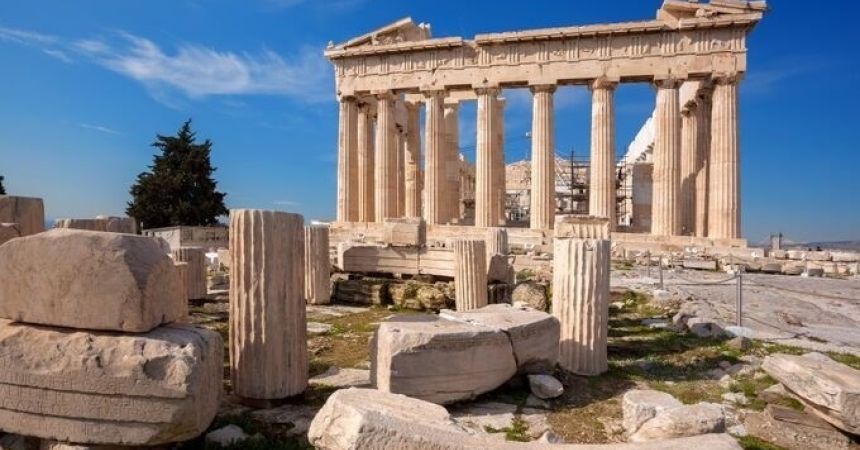
The Acropolis is exposed, but exposure works both ways.
Without intense summer sunshine, extended time outdoors can be physically easier. Climbing, standing while listening to a guide and moving between archaeological areas require less heat management.
A November Athens archaeology experience can therefore focus on historical continuity rather than temperature strategy.
The trade-off is weather uncertainty.
Rain, wind or a cooler day may require a jacket and flexibility, while wet stone deserves sensible footwear and attention.
Yet for travelers who dislike heat, those compromises can be far preferable to a July afternoon beneath an open sky.
The Museum Finally Stops Waiting for Bad Weather
October already begins moving museums away from their role as rain alternatives.
November completes that transition.
The Acropolis Museum does not need rain to justify three hours.
Neither does the National Archaeological Museum.
When daylight becomes limited, a natural itinerary emerges: use the brighter part of the day outdoors and move into major collections as afternoon light begins disappearing.
This is not weather avoidance.
It is good cultural sequencing.
The relationship between archaeological site and museum can also become stronger when both receive proper attention rather than one being squeezed into whatever time remains.
November encourages depth because the climate no longer rewards staying outside simply for the sake of staying outside.
A Museum Day Should Still Contain Athens
There is a danger in leaning too far into indoor culture.
You can spend hours moving between collections and restaurants, then realize you barely experienced the contemporary city.
November does not require that.
Even unsettled days often contain usable outdoor periods, and central Athens remains highly walkable when conditions cooperate. Rather than assigning entire days as “indoor” or “outdoor,” mix the two.
Visit an archaeological site.
Walk through a neighborhood.
Spend two hours in a museum.
Stop for coffee.
Continue somewhere else.
This rhythm responds naturally to both shorter daylight and changing weather.
November Is When Café Time Stops Feeling Like Lost Time
During a short first trip in May, sitting for ninety minutes over coffee can create the uncomfortable feeling that perfect sightseeing weather is passing outside.
November changes the psychology.
A café becomes part of the urban experience rather than a pause from it.
Athens has a strong everyday coffee culture, and cooler weather makes indoor and sheltered spaces more inviting. Watching the city from a table while local life continues around you can reveal something no archaeological itinerary provides.
A November Athens food journey fits naturally here because meals, markets and cafés can occupy meaningful parts of the trip without competing with a beach afternoon or endless summer daylight.
Food becomes part of the season's architecture.
Rain Should Change Pace Before It Changes Plans
A November forecast containing showers does not automatically justify cancelling outdoor sightseeing.
Look at timing.
A dry morning followed by afternoon rain may be ideal for archaeology first and a museum later. Intermittent showers can often be absorbed through lunch, coffee or short indoor visits.
Persistent heavy rain deserves a different response.
The distinction matters because travelers sometimes allow a single rain symbol to control an entire day.
November is wetter than summer.
It is not necessarily wet every minute.
Your Shoes Matter More Than Your Umbrella
An umbrella is useful, but footwear influences far more of the trip.
Athens contains hills, uneven pavements, polished stone and archaeological terrain. Add rain and poor shoes can become a larger problem than the rain itself.
Choose footwear for walking first, then weather resistance where practical.
A compact rain jacket or umbrella can deal with precipitation.
Uncomfortable shoes cannot be solved halfway through a six-hour sightseeing day.
This is particularly important in November because pleasant temperatures can encourage considerably longer walks than summer heat allowed.
The Riviera Has Lost Its Automatic Invitation
November does not make the Athens Riviera irrelevant.
It changes the reason to go.
Swimming is no longer a dependable mainstream expectation, and a coastal day becomes far more sensitive to wind, cloud and personal interests.
However, waterfront dining, marina areas and seaside walking can still be enjoyable during clear, mild conditions.
For most first-time visitors with limited days, central Athens now has the stronger claim.
A cool-season Athens discovery can therefore remain city-centered without feeling incomplete.
If an excellent coastal-weather window appears and you have enough time, use it.
If not, November gives you no reason to force the sea into the itinerary simply because Athens happens to have one.
November Doesn't Need to Pretend It Is Greece in Summer
This is where the month becomes strongest.
It stops competing.
There is no need to promise beach weather, warm nights or an endless outdoor itinerary. November offers another Athens: easier archaeological walking, serious museum time, long meals, functioning neighborhoods and enough climatic uncertainty to make flexibility useful without turning weather into the entire story.
October was about negotiating with an increasingly variable forecast.
December will move toward winter atmosphere, festive city life and the shortest-day version of Athens.
November belongs between them as the culture-first month.
The traveler who understands that before arriving is unlikely to spend the trip wishing it were August.
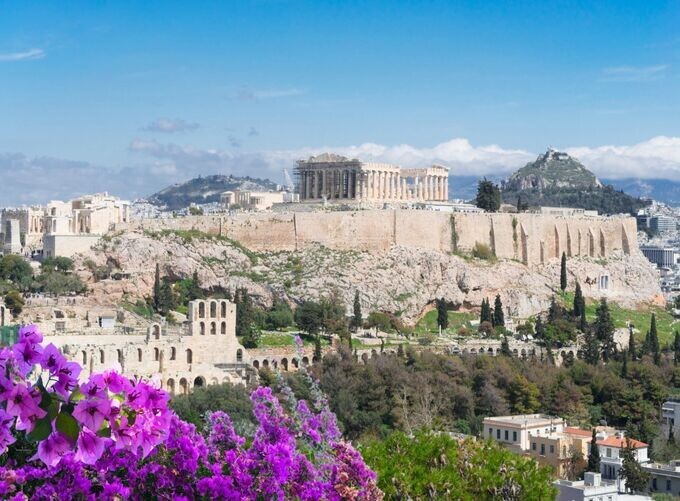
What Gives the Best Return on November Daylight?
November makes daylight a limited resource, but not a scarce one.
There is still enough time for substantial outdoor sightseeing. The difference from summer is that wasting two bright hours indoors and discovering your planned viewpoint is already dark at the end of the afternoon becomes easier.
The solution is not starting before sunrise.
Simply ask which activities actually deteriorate after sunset.
Give those the day.
Everything else can wait.
Build the Day From Outside In
For many November visitors, the most natural sequence begins outdoors and gradually moves inward.
An archaeological site or long neighborhood walk can occupy the brighter morning. Lunch provides a transition, after which a museum makes increasing sense as daylight fades. Dinner then becomes part of the evening rather than something squeezed behind an overextended sightseeing schedule.
Weather may reverse the order occasionally.
That flexibility is useful, but the basic principle remains strong: natural light should go where natural light creates value.
Where Does One November Hour Work Hardest?
| One Free Hour Spent... | Daylight Value | After-Dark Alternative |
|---|---|---|
| Exploring outdoor ruins | Very high | None equivalent |
| Walking an unfamiliar district | High | Different experience at night |
| At a viewpoint | Very high | Night view, but not equivalent |
| Inside a museum | Low | Earlier closing hours may matter |
| Over lunch | Very low | Easily moved |
| Shopping | Low | Often flexible |
| In a café | Very low | Equally enjoyable later |
This is not about rushing lunch.
It is about recognizing what cannot simply be recreated at 6:00 p.m.
November Rewards Travelers Who Like Context
Peak summer can encourage an attraction-first trip.
You visit the Acropolis, move quickly to the next site, seek shade, stop for lunch and continue once the temperature becomes manageable.
November allows more room around those experiences.
You can spend longer inside a museum after seeing the archaeological landscape it explains. You can walk between historical districts without measuring every exposed kilometer against the heat. A café break can become observation rather than recovery.
That slower cultural rhythm is one of November's strongest advantages.
Packing Works Best in Layers You Actually Use
November packing becomes unnecessarily complicated when travelers imagine “Greek winter” rather than Athens in November.
A medium layer over lighter clothing generally offers more flexibility than carrying a single heavy coat for every condition. Add comfortable walking shoes and practical rain protection, then adjust according to the forecast immediately before departure.
Sun protection can still be useful on clear days.
The important point is versatility.
A morning may begin cool, become pleasantly mild in afternoon sunshine and turn cooler again shortly after sunset. Clothing that can adapt across those changes is far more useful than packing for one average temperature.
Rain Can Improve the Sequence
This sounds suspiciously optimistic, but it can genuinely happen.
Suppose your original itinerary placed the Acropolis Museum on a clear morning and an exposed archaeological area during a wetter afternoon.
Moving them produces a better day without deleting anything.
November makes this kind of adjustment routine.
The weather has not “ruined” the itinerary.
It has edited it.
That attitude is particularly valuable for trips of three or four days, when several major indoor and outdoor experiences can trade positions as the forecast develops.
Who Gets the Most From November?
Not necessarily the traveler searching for the lowest temperature or smallest crowd.
November particularly suits someone whose reasons for visiting Athens would remain valid if the forecast suddenly removed the coast from consideration.
If the Acropolis, museums, Greek food, neighborhoods, history and contemporary city life are enough to build the trip, November offers substantial value.
If swimming and guaranteed warm evenings are essential, another season is more appropriate.
That distinction is more useful than labeling the month “good” or “bad.”
October, November and December Have Different Jobs
October still negotiates with autumn, balancing potentially warm days against increasing weather variability.
November settles more confidently into a culture-first city break, where shorter daylight and indoor depth begin determining how the itinerary is arranged.
December adds another layer entirely: winter atmosphere, festive streets, holiday schedules and the year's shortest daylight period.
The temperature progression matters less than the change in travel behavior.
November owns the point where Athens no longer needs summer conditions to justify the journey.
Twelve FAQs About Athens Weather in November
1. Is November a good time to visit Athens?
November is well suited to travelers focused on archaeology, museums, food and neighborhood exploration. Cooler temperatures often make extended walking comfortable, although shorter daylight and increased rain probability mean the itinerary benefits from a flexible balance of indoor and outdoor experiences.
2. How cold is Athens in November?
Daytime temperatures commonly sit around 17–21°C, while nights often fall closer to 10–15°C. Conditions vary, with mild sunny afternoons and cooler periods both possible. Layered clothing generally handles these changes better than relying on one heavy winter outfit.
3. Does it rain a lot in Athens in November?
November is wetter than the dry summer season, but that does not mean continuous rain should be expected. Showers, dry intervals and occasional wetter systems are all possible, making short-range forecasts useful for arranging archaeological visits and other outdoor activities.
4. What should I wear in Athens in November?
Bring layers suitable for mild afternoons and cooler mornings or evenings, together with comfortable walking shoes and practical rain protection. A light-to-medium jacket is often useful, although exact needs depend on the forecast and your personal tolerance for cooler weather.
5. Can I visit the Acropolis in November?
Yes. November can be excellent for the Acropolis because visitors avoid peak-summer heat. Rain and wind occasionally influence comfort, so check current conditions and official opening information, then place longer outdoor archaeological visits into the best available weather window.
6. Are Athens museums good in November?
November is particularly well suited to museum visits because shorter daylight makes indoor cultural time a natural part of the itinerary. Major collections deserve attention regardless of weather and can complement archaeological sightseeing rather than merely serving as alternatives when it rains.
7. Is Athens sunny in November?
Sunny periods remain entirely possible, and mild sunshine can make daytime walking very pleasant. However, November brings greater weather variability than early autumn, so visitors should not build an entire trip around guaranteed clear skies or rely solely on monthly sunshine averages.
8. Can you swim in Athens in November?
Swimming is possible for cold-tolerant individuals, but it is no longer a dependable mainstream activity for most visitors. Sea and air conditions vary, so travelers choosing November should generally regard the Riviera as a coastal sightseeing option rather than a guaranteed beach experience.
9. Is Athens crowded in November?
Major attractions continue receiving visitors, but November generally falls outside peak summer tourism intensity. Crowd levels vary by site, weekday and specific travel period, so visitors should expect an active capital rather than assuming archaeological attractions will necessarily be empty.
10. How many days do I need in Athens in November?
Three days can cover major historical and museum priorities, while four or five allow greater weather flexibility and more time for neighborhoods and food. Additional days reduce the need to force exposed sightseeing into an unsuitable rainy period.
11. Is October or November better for Athens?
October generally offers warmer weather and stronger possibilities for outdoor dining or coastal time. November suits travelers prioritizing archaeology, museums and cooler walking conditions. The better choice depends on whether remaining Mediterranean warmth or cultural depth matters more.
12. Is November or December better for Athens?
November provides slightly longer daylight and generally sits outside the core festive period, while December adds Christmas atmosphere, holiday schedules and a stronger winter-city-break character. Both suit cultural travel, but their reasons for visiting Athens are meaningfully different.
November Gives Athens More Time to Explain Itself
Summer Athens is visually immediate.
The bright sky, ancient stone, rooftop views and long evenings make a strong first impression, but heat can also push travelers through the city according to a practical schedule.
November slows that relationship down.
You may spend longer inside the museum because there is no beach afternoon competing for your attention. You may notice a neighborhood café because cooler weather makes sitting there feel like part of the day rather than time removed from sightseeing. Archaeological sites become places to understand rather than places to complete before the temperature rises.
Shorter daylight does require some thought, and rain occasionally edits the order of events.
Neither needs to diminish the trip.
Use daylight where darkness would genuinely change the experience, allow museums and food to occupy their proper place rather than treating them as weather insurance, and accept that November Athens is no longer trying to behave like a Mediterranean summer destination.
That is precisely what gives the month its identity.
October taught flexibility.
December will bring winter atmosphere.
November belongs to culture.

A travel professional specializing in tailor-made travel planning, guest experience management, and multi-destination tourism operations.
With over 23 years of experience in the travel industry, he designs and manages private and cultural tours for international travelers across Türkiye, Greece, Egypt, Jordan, Morocco, and other destinations.
He has strong expertise in both online and face-to-face guest communication, sales processes, and end-to-end travel operations.
Working closely with hotels, travel agencies, and local partners, he ensures smooth coordination and high-quality travel experiences at every stage of the journey.
His focus is on delivering personalized, reliable, and seamless travel experiences for international guests worldwide.