Mykonos Weather in March: The First Turn Toward Spring
Last Updated: August 2026
March does not announce spring dramatically in Mykonos.
There is no single morning when the island wakes up warmer, seasonal businesses throw open their doors and the beaches suddenly begin looking like summer again. The change happens more quietly, through longer afternoons, occasional stretches of softer weather and subtle differences in a landscape that has spent the winter receiving rain.
This makes March an unusual month to describe because its attraction lies partly in what has not happened yet.
The beach season has not begun. Mykonos nightlife remains far removed from its summer scale, many visitor-focused businesses are still preparing for the months ahead, and swimming is unlikely to play a meaningful role for most travelers.
Yet winter no longer owns the island completely.
Daylight is increasing noticeably, outdoor exploration becomes easier to fit into a day, and the countryside can show a fresher side that visitors arriving during the dry summer months rarely associate with Mykonos.
March is not the opening of the tourism season; April will own that transition within this cluster.
It is the month when the physical island begins moving first.
The Change You Notice First Is the Clock
Temperatures naturally matter, but March's most reliable improvement over deep winter is increasing daylight.
Typical daytime temperatures often reach approximately 14–17°C, while nights can remain cool at around 9–12°C. Rain and wind are still possible, and individual days can move comfortably above or below those ranges.
A sunny March afternoon may feel pleasantly spring-like in a sheltered position. A cloudy, windy day can still remind you that winter has not disappeared.
What changes regardless is how much usable day you have.
An extra stretch of afternoon gives you time to explore Chora, continue inland and make a coastal stop without feeling that sunset is constantly bringing the itinerary to an early end.
Why March Doesn't Feel Like February With Better Temperatures
| Travel Factor | February | March |
|---|---|---|
| Daylight | Winter-limited | Noticeably increasing |
| Landscape | Winter character | Early seasonal change |
| Walking | Weather-led | Increasingly attractive |
| Countryside | Quiet winter terrain | Fresher spring detail emerging |
| Beach role | Winter coastline | Scenic, still pre-swimming |
| Tourism season | Deep off-season | Preparation begins quietly |
| Main reason to visit | Wind-shaped island | Early spring exploration |
The shift is gradual, but travelers spending most of the day outdoors can feel it.
March Belongs to the Roads Between Places
Summer itineraries tend to turn destinations into separate points.
Chora.
Ano Mera.
Elia.
Ornos.
A famous viewpoint.
A restaurant.
The road between them is simply transportation.
March makes those in-between landscapes more interesting because you are not rushing toward a beach reservation or trying to reach Chora before dinner.
Mykonos's interior is relatively compact, but it contains dry-stone walls, small churches, low hills, scattered houses and agricultural land that rarely receives the same attention as the coast.
Winter rainfall can also soften the island's usual dry appearance. Vegetation begins responding before the summer sun gradually removes much of that seasonal freshness.
A spring countryside tour of Mykonos fits March because the journey itself becomes part of what you came to see rather than merely the route connecting headline attractions.
The Island Can Be Greener Than the Mykonos in Your Head
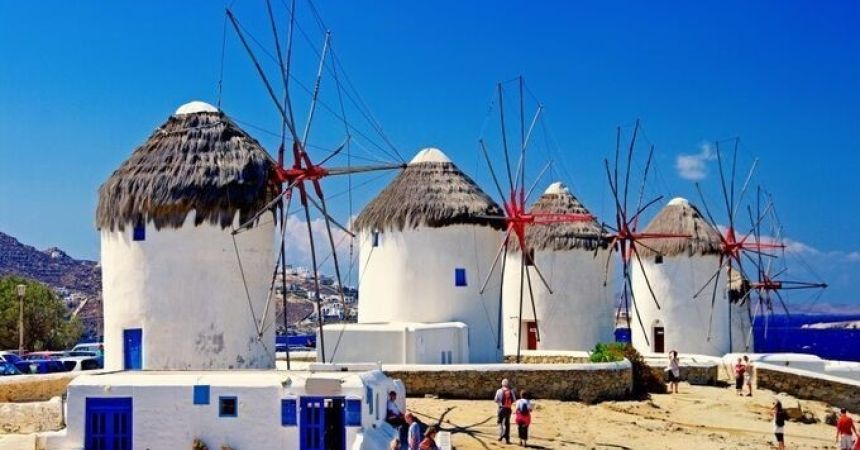
Many first-time visitors imagine Mykonos almost entirely in white, blue and beige.
White houses.
Blue sea.
Dry golden-brown hills.
That image makes sense if your reference point is July or August.
March can complicate it.
The Cycladic landscape responds to winter rainfall, and patches of green vegetation and early spring growth can appear across parts of the island. Conditions vary from year to year, so March should not be marketed as a guaranteed wildflower spectacle.
Still, the contrast with summer can be substantial enough to surprise travelers familiar only with peak-season photographs.
The same stone walls and low hills remain, but their surrounding colors are temporarily different.
This is one of March's strongest pieces of information gain because it reveals a Mykonos that summer-focused content frequently ignores.
Chora Is Still Quiet, but the Light Stays Longer
January gave Chora its dedicated winter identity within this cluster.
March requires another reason to spend time there.
Longer afternoons change how the town can be explored. You can begin later, wander without rushing and still have useful light along the waterfront toward the end of the day.
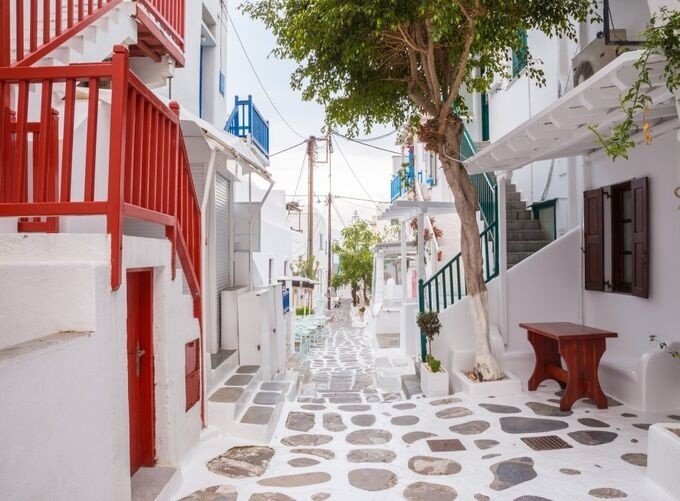
The famous whitewashed lanes also interact differently with spring light. Midday brightness is not yet as harsh as summer, while changing cloud conditions can produce softer contrast for photography.
Some seasonal businesses will still be closed, and March should not be presented as a fully operational version of Mykonos Town.
Instead, this is the final stretch when Chora can retain much of its winter spaciousness while the days are already becoming easier to use.
Walking Starts Making More Sense
Mykonos is rarely marketed primarily as a walking destination, which is precisely why March can reveal something different.
Cooler temperatures and increasing daylight support longer outdoor exploration without summer heat. Inland lanes, village surroundings and coastal sections can all become worthwhile, provided wind and rain cooperate.
You do not need to turn the trip into a dedicated hiking holiday.
The advantage is more ordinary: you can decide to walk farther.
A twenty-minute exploration around Ano Mera can become an hour. A coastal stop can turn into a longer stroll. Chora can be crossed repeatedly without the combination of heat and crowds making walking feel like transportation rather than part of the experience.
When March Conditions Open Different Parts of the Island
| Conditions | Strongest Choice |
| Clear, mild and calm | Countryside + coast |
| Sunny but breezy | Inland exploration + Chora |
| Overcast and dry | Longer walks and villages |
| Intermittent showers | Chora + flexible road trip |
| Strong wind | Inland locations and sheltered streets |
| Warm spring afternoon | Coastline + outdoor lunch |
March flexibility comes from temperature rather than tourism infrastructure.
The island is increasingly comfortable to explore, even though the visitor season has not properly begun.
Beaches Are Worth Seeing Before They Become “Beaches”
March is still too early to recommend Mykonos for conventional beach travel.
Sea temperatures remain cool, organized beach life is limited and swimming will appeal mainly to people with a high tolerance for colder water.
Yet the coast deserves time.
The reason is almost the opposite of summer.
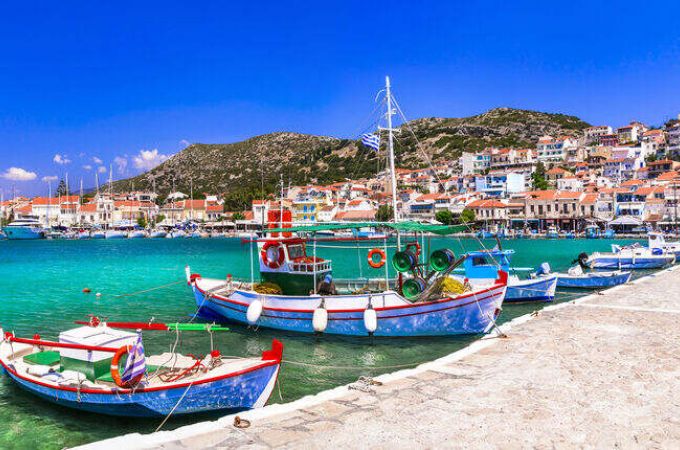
At Ornos, Platis Gialos or Elia, you can look at the shape of the bay without the visual dominance of sunbeds and summer crowds. Elsewhere, the coastline can feel remarkably open.
A Mykonos coast before summer experience makes sense for travelers interested in photography or landscape precisely because March has not yet assigned every famous beach its seasonal personality.
Paradise is not primarily a party destination when the party is absent.
It is a bay.
That sounds obvious until you see it.
March Is Too Early to Promise Spring Weather Every Day
This is where realistic travel writing matters.
Longer daylight and emerging vegetation do not mean stable warm weather has arrived.
March remains transitional.
Rain can interrupt plans, strong wind remains possible, and a sequence of cool days can occur. Travelers arriving with only lightweight spring clothing may find exposed locations uncomfortable.
At the same time, warm sunny periods can produce afternoons that feel substantially removed from winter.
The correct expectation is range.
Not bad weather.
Not guaranteed spring sunshine.
Range.
This is why a five-day forecast becomes much more useful than a monthly average once travel approaches.
A Road Trip Works Better Than a Beach-Hopping Route
The distinction may seem semantic, but it changes the experience.
A beach-hopping itinerary implies that the beaches themselves are the day's objectives. In March, that can become repetitive because their main summer infrastructure and atmosphere are not yet operating.
A road trip uses the coastline differently.
Start in Chora, cross the interior, spend time in Ano Mera, follow smaller roads where practical and connect one or two coastal areas according to weather.
This allows the countryside to occupy equal importance.
March Road Trip vs Summer Beach Circuit
| March Approach | Summer Approach |
| Landscape between stops matters | Destination beaches dominate |
| Ano Mera can anchor the route | Often a secondary stop |
| Coastal visits can be brief | Beaches may occupy hours |
| Weather determines direction | Reservations may determine direction |
| Walking can be spontaneous | Heat affects longer exploration |
| Fewer stops, more observation | More structured beach movement |
Neither is inherently superior.
They simply belong to different Mykonos seasons.
Is a Car Worth Having in March?
For travelers who want to explore beyond Chora, it can be particularly useful.
Public transport exists, but winter and pre-season schedules should not be assumed to match summer frequency. A vehicle provides flexibility to respond to weather and spend time in less central areas without organizing the entire day around transport times.
This does not mean every March visitor needs a rental car.
If you are staying briefly in Chora and mainly want Mykonos Town with one organized excursion, private transfers or tours may be simpler.
Driving becomes most valuable when the purpose of the trip is exactly what March does well: exploring the island between the famous places.
Always check current road, rental and insurance requirements rather than relying on outdated travel advice.
The Pre-Season Has a Particular Kind of Quiet
January's quiet feels settled.
March's quiet feels temporary.
That difference is subtle but noticeable. Maintenance begins, properties prepare for reopening and parts of the island show signs that another tourism season is approaching.
You may pass a hotel being prepared rather than abandoned for winter, or see work taking place around a business that will soon be full again.
Not everything opens simultaneously, and there is no universal “season starts” date.
That gradual preparation gives March its own atmosphere.
Mykonos is still quiet enough that tourism does not dominate every street, but you can sense that the island is moving toward something.
April will take over that story once reopening itself becomes central.
March remains the moment before.
Packing for Two Seasons in the Same Day
A March suitcase needs to handle both.
Bring a wind-resistant jacket, sweater or fleece and some form of lightweight rain protection. Comfortable walking shoes remain essential because the month's greatest advantage is spending more time outdoors.
On mild sunny afternoons, lighter layers may be sufficient, so clothing that can be removed easily works better than one heavy winter coat.
Sunglasses and sunscreen still matter. The temperature may be moderate, but prolonged outdoor exposure beneath clear Aegean skies can still be significant.
Do not pack around the warmest forecast you see before departure.
Equally, there is no reason to arrive dressed for midwinter.
March rewards adjustable clothing for the same reason it rewards an adjustable itinerary.
The Mykonos That March Offers Exists Briefly
By summer, much of the landscape will have dried beneath months of sun.
Beaches will regain their famous personalities. Roads will become busier, restaurants will fill and Chora's lanes will once again carry the international energy that defines peak-season Mykonos.
In March, none of that has fully arrived.
Winter, meanwhile, is beginning to loosen its hold.
That leaves a short interval when the island has longer days but little tourism pressure, emerging spring color but no dependable beach weather, and enough seasonal uncertainty that you still need to pay attention to the forecast.
It is not the easiest month to market because there is no single spectacular promise.
That may be precisely why it deserves its own article.
March is Mykonos in transition before the transition becomes obvious.

A travel professional specializing in tailor-made travel planning, guest experience management, and multi-destination tourism operations.
With over 23 years of experience in the travel industry, he designs and manages private and cultural tours for international travelers across Türkiye, Greece, Egypt, Jordan, Morocco, and other destinations.
He has strong expertise in both online and face-to-face guest communication, sales processes, and end-to-end travel operations.
Working closely with hotels, travel agencies, and local partners, he ensures smooth coordination and high-quality travel experiences at every stage of the journey.
His focus is on delivering personalized, reliable, and seamless travel experiences for international guests worldwide.