Haifa, Israel: Is It Worth Adding to Your Trip?
Updated: August 2026
Haifa rarely creates the same instant reaction as Jerusalem or Tel Aviv when travelers begin planning Israel. It often appears later, usually because someone has seen photographs of the Bahá’í Gardens or noticed that the city sits conveniently on a route toward northern Israel.
That understated position can actually be one of Haifa's strengths.
Built across the slopes of Mount Carmel and facing the Mediterranean, Haifa feels geographically different from Israel's flatter coastal cities. The elevation shapes the experience: neighborhoods occupy different levels, views open toward the sea, and moving through the city often means thinking vertically as well as horizontally.
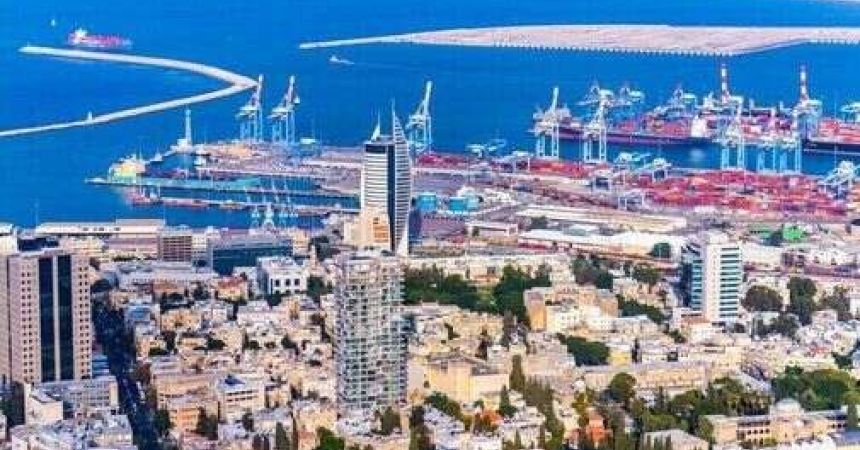
Haifa is also a working port city rather than a destination built primarily around tourism. That gives it a character travelers may appreciate after spending time among the intense historical layers of Jerusalem or the energetic urban environment of Tel Aviv.
The question is therefore not whether Haifa contains enough attractions to justify appearing on a list.
It is whether Haifa adds something your Israel itinerary does not already have.
For many northern routes, it does.
The Bahá’í Gardens Are the Landmark, but They Should Not Become the Entire City
The image most travelers associate with Haifa is the symmetrical green terraces descending Mount Carmel toward the Mediterranean.
The Bahá’í Gardens and Shrine of the Báb deserve that attention. Their formal landscaping, geometric precision and hillside setting create one of Israel's most recognizable urban views, while their religious significance gives the site meaning beyond appearance.
However, there is a difference between seeing the famous panorama and understanding what you are looking at.
The gardens form part of the Bahá’í World Centre, connecting Haifa with a global religious community whose presence has become inseparable from the city's international identity. Travelers who approach the site purely as a viewpoint miss much of what makes it distinctive.
Access conditions can also affect how the gardens are experienced. Different sections and viewing areas may have specific arrangements, so travelers should check current visitor information close to their travel date rather than assuming every terrace functions as an unrestricted public park.
That small piece of planning matters because Haifa's most famous attraction is not something I would leave entirely to improvisation.
The View From Mount Carmel Explains Haifa Better Than a Street Map
Some cities make immediate sense at ground level.
Haifa often makes more sense from above.
From the higher parts of Mount Carmel, the relationship between the city, port and Mediterranean becomes much clearer. You can understand why moving between attractions may involve slopes, stairs or transportation rather than the continuous walking itinerary that works well in compact historic centers.
This has an operational consequence.
Do not plan Haifa as though every major point should be connected on foot.
Travelers who enjoy walking can certainly explore substantial sections, but a route that looks short horizontally may feel quite different once elevation enters the calculation. Using taxis, public transportation or private touring strategically can preserve time and energy.
This is particularly useful on warm days or when Haifa is one component of a longer northern sightseeing program.
The hills are part of the city's character.
Your itinerary should acknowledge them rather than pretending they are not there.
The German Colony Gives the Famous View a Human Scale
At the lower end of the Bahá’í Gardens, the German Colony offers one of Haifa's most recognizable street perspectives.
The neighborhood developed from a nineteenth-century Templer settlement and today contains restored historic buildings alongside restaurants, cafés and contemporary city life. Ben-Gurion Boulevard provides the classic uphill view toward the Bahá’í terraces, especially striking as the light changes later in the day.
This area works well because it offers a different relationship with Haifa from the panoramic viewpoints above.
From Mount Carmel, the city appears as geography.
From the German Colony, it becomes a neighborhood.
Travelers staying overnight can appreciate this contrast more easily because they are not required to leave immediately after completing sightseeing. Dinner or an evening walk here can give Haifa a sense of continuity that day visitors sometimes miss.
This is one reason I would not automatically dismiss an overnight stay.
The decision depends on what happens next in the itinerary.
Haifa Is a City of Communities, Not a Single Historical Narrative
Jerusalem naturally encourages visitors to think in terms of religious and historical layers. Haifa offers another perspective on Israel's cultural complexity.
Jewish and Arab communities form part of the contemporary city, while the Bahá’í World Centre adds an unusual international religious dimension. Christian and Muslim heritage, modern neighborhoods, universities, port activity and different architectural periods coexist across the urban landscape.
Travelers should resist turning this complexity into an overly neat slogan about coexistence.
Cities are more complicated than tourism language suggests.
What Haifa can provide is an opportunity to observe a modern Israeli city whose identity is not dominated by a single archaeological site, biblical event or religious monument.
That distinction matters in a longer itinerary.
If every stop is selected only for ancient history, travelers can unintentionally leave with an image of the country that contains remarkably little contemporary life.
Stella Maris Adds Another Layer to Mount Carmel
Mount Carmel has significance extending well beyond its views.
The Stella Maris Carmelite Monastery provides a Christian dimension to the mountain and connects with the Carmelite tradition. The area also reinforces how several different historical and religious narratives occupy the same geographical setting.
For travelers particularly interested in Christian heritage, Stella Maris may deserve more than a brief stop.
For others, it works as part of understanding Mount Carmel rather than as an isolated attraction requiring extensive time.
This is an important distinction in itinerary design.
Not every site needs equal treatment.
A well-guided Haifa visit should adjust emphasis according to the traveler rather than moving everybody through the same sequence for the same number of minutes.
Wadi Nisnas Shows a Different Haifa From the Terraces
Travelers who see only the Bahá’í Gardens, German Colony and panoramic viewpoints experience an attractive but incomplete version of Haifa.
Wadi Nisnas introduces another scale.
Its streets, food businesses, market activity and Arab cultural presence provide a more everyday urban environment, contrasting with the formal perfection of the gardens.
The value is not in labeling the neighborhood “authentic,” a word travel writing often uses too casually. People actually live and work here; the neighborhood does not exist to provide visitors with an alternative to tourist attractions.
Approach it with ordinary curiosity.
Notice architecture, food, businesses and the transition between neighborhoods rather than treating every street as a sightseeing object.
That change in pace can be particularly rewarding for travelers who have enough time to experience Haifa beyond its headline landmark.
Haifa's Mediterranean Character Is Not the Same as Tel Aviv's
Both cities face the Mediterranean, but that does not make them interchangeable.
Tel Aviv's coastal identity is closely connected with beaches, promenades, nightlife, contemporary urban culture and the neighboring historic character of Jaffa.
Haifa's relationship with the coast is shaped more visibly by its port, hillside geography and the way the city rises from the water toward Mount Carmel.
This is exactly why the two cities can coexist within the same Israel journey without creating unnecessary repetition.
A traveler does not need to choose Haifa because Tel Aviv somehow failed to provide a Mediterranean experience.
Haifa belongs in the itinerary when its combination of mountain, port, gardens, religious diversity and northern geography contributes something useful to the route.
Should You Visit Haifa as a Day Trip or Stay Overnight?
This is one of the most useful questions to resolve before booking hotels.
A day visit works well when Haifa forms part of a northern coastal route and your priority is seeing the Bahá’í Gardens, understanding Mount Carmel and exploring one or two additional areas.
An overnight stay becomes more attractive when you want a less compressed city experience, intend to explore neighborhoods beyond the principal landmarks or need Haifa to function as a practical base for northern Israel.
Staying overnight also changes the emotional rhythm of the visit.
Day-trippers often encounter Haifa as a sequence of stops.
Overnight travelers have a chance to experience dinner, evening atmosphere and the ordinary transition between sightseeing and city life.
Neither approach is automatically superior.
The right choice depends on what Haifa is doing inside the larger itinerary.
What Role Should Haifa Play in Your Israel Trip?
Instead of ranking attractions, this table addresses the more useful planning question: when does Haifa actually earn time in the itinerary?
| Your travel situation | Haifa's strongest role | Recommended approach |
|---|---|---|
| First Israel trip with limited time | Northern contrast | Focused visit rather than automatically adding several nights |
| Coastal journey | Natural route stop | Combine geographically with selected coastal sites |
| Interest in Bahá’í heritage | Primary destination | Allow time beyond the main viewpoint |
| Christian heritage journey | Supporting Mount Carmel stop | Include Stella Maris according to interest |
| Architecture and city photography | Hillside urban experience | Use several elevations and neighborhoods |
| Contemporary Israel interest | Working mixed city | Explore beyond formal attractions |
| Continuing farther north | Strategic overnight | Use Haifa to improve route flow |
| Relaxed two-week itinerary | Independent city stay | One or two nights can add worthwhile depth |
This is why I would not prescribe the same number of nights to every traveler.
Haifa's value changes according to what surrounds it.
Caesarea and Haifa Work Together for a Reason
Travelers moving north from the Tel Aviv area can logically combine Caesarea and Haifa because the geography supports the sequence.
Their experiences are also complementary.
Caesarea is primarily valuable for its archaeological and historical setting on the Mediterranean coast, while Haifa introduces a living modern city shaped by Mount Carmel and the port.
What I would avoid is turning this relationship into a detailed Caesarea guide inside the Haifa article.
Caesarea deserves its own planning logic.
For Haifa, the operational point is simpler: if your route already travels north along the coast, including both can create a stronger day than forcing unrelated destinations together because they happen to be famous.
Geography should do some of the itinerary planning for you.
Akko Can Make Haifa More Valuable, but It Can Also Make the Day Too Full
Akko sits farther north and is another natural consideration for travelers using Haifa as part of a northern coastal journey.
Its historic character differs substantially from Haifa, which makes the pairing attractive. However, trying to explore Caesarea, Haifa and Akko deeply in one day can create exactly the kind of itinerary that looks impressive in a brochure and feels hurried on the ground.
The solution is prioritization.
If the Bahá’í Gardens are the main reason for visiting Haifa, a more focused city stop may work alongside another destination. If you genuinely want to understand Haifa's neighborhoods, Mount Carmel and cultural layers, give the city more of the day.
Private Haifa and Northern Israel Tours are most useful when the schedule reflects those priorities rather than treating every stop as equally important.
Nazareth Should Not Be Added Merely Because It Is in Northern Israel
Haifa and Nazareth appear together in many broader northern itineraries, but their travel intents are very different.
Nazareth carries major Christian significance and should be approached through that historical and religious context. Haifa's strongest identity for travelers lies elsewhere.
Combining them can make geographical sense.
Combining them does not mean they should share the same blog or receive identical sightseeing time.
For travelers with a strong Christian heritage focus, Nazareth may clearly deserve priority. Those interested in the Bahá’í faith, Mediterranean urban landscapes or contemporary city life may allocate more attention to Haifa.
The itinerary becomes better once the traveler's interests determine the weighting.
How Much Time Does Haifa Actually Need?
There is no useful universal answer such as “Haifa requires exactly one day.”
A focused visit can cover the principal city highlights within part of a day, particularly as part of a guided northern route. A full day allows more comfortable movement between Mount Carmel, the gardens, German Colony and selected neighborhoods.
One or two nights become worthwhile when Haifa functions as more than a sightseeing stop.
I would rarely add several nights to a first Israel itinerary unless the traveler has a specific reason: family connections, academic interest, Bahá’í heritage, slower travel preferences or plans to use the city as a northern base.
This is where Private Haifa Cultural Tours can be genuinely customized rather than merely private transportation around a standard list of attractions.
Time should follow purpose.
Haifa Rewards Travelers Who Do Not Need Every City to Be Monumental
Haifa does not compete effectively with Jerusalem if the question is which city contains the greatest concentration of globally recognized religious and historical landmarks.
Fortunately, that is the wrong comparison.
Haifa's appeal is more cumulative.
The Mediterranean appears below the slopes. The Bahá’í terraces impose extraordinary order on the hillside. The German Colony creates a historical axis beneath them. Wadi Nisnas introduces another community and urban texture, while Mount Carmel carries religious associations of its own.
Meanwhile, the port reminds visitors that this is not simply a collection of heritage sites.
It is a functioning city.
Travelers who enjoy that combination may find Haifa more memorable than they expected.
Those interested almost exclusively in Israel's most famous biblical and archaeological sites may reasonably give it less time.
Both decisions can be correct.
Practical Planning Matters More in Haifa Than Travelers Expect
The city's vertical geography means the order of sightseeing matters.
Moving repeatedly from lower Haifa to Mount Carmel and back wastes time, particularly when several sites are scheduled in one day. Grouping visits geographically can make the experience considerably smoother.
Comfortable footwear remains useful because individual areas still involve walking even when transportation connects different elevations.
Travelers should also verify current access arrangements and opening conditions for religious sites shortly before visiting, especially where entry can be affected by ceremonies, holidays, operational changes or specific visitor rules.
A customized itinerary should retain some flexibility rather than assuming every site will operate identically throughout the year.
This is ordinary travel planning, but Haifa rewards doing it properly.
Who Should Definitely Consider Haifa?
Haifa is particularly worthwhile for travelers interested in the Bahá’í faith, distinctive urban landscapes, photography, modern Israeli cities or a northern itinerary that benefits from a strategically located coastal base.
It also works well for repeat visitors who have already seen Israel's headline destinations and want a broader picture of the country's urban diversity.
Travelers on Customized Northern Israel Journeys may find Haifa especially useful because it creates a bridge between the central coast and destinations farther north without functioning solely as a transportation stop.
By contrast, someone with five days in Israel whose overriding priorities are Jerusalem and major Christian sites may decide that Haifa belongs on another trip.
Good itinerary advice should allow that answer too.
Is Haifa Worth Visiting?
Yes, but Haifa is most rewarding when you understand why you are including it.
Visit for the Bahá’í Gardens and you will see one of Israel's most remarkable landscaped religious sites. Give the city more attention and Mount Carmel, the German Colony, Wadi Nisnas, Stella Maris, Mediterranean views and contemporary urban life begin connecting into a more complete experience.
Haifa also has strategic value because of its position within northern Israel, making it compatible with coastal and regional itineraries without requiring an artificial detour.
What it should not become is another box to tick between Tel Aviv and Galilee.
Haifa works best when the itinerary gives it a clear role.
For some travelers, that means several focused hours.
For others, it means staying overnight and discovering why the city feels different once the tour buses have moved on.
Frequently Asked Questions About Visiting Haifa
Is Haifa worth visiting on a first trip to Israel?
Yes, particularly if your itinerary includes northern Israel or you are interested in the Bahá’í Gardens, Mount Carmel and contemporary city life. Travelers with very limited time may reasonably prioritize Jerusalem and other destinations according to their interests.
Are the Bahá’í Gardens enough reason to visit Haifa?
For many travelers they are the initial reason, but Haifa offers more context through Mount Carmel, the German Colony, Wadi Nisnas and its Mediterranean port-city geography. Allowing additional time can turn a landmark visit into a broader city experience.
How long should I spend in Haifa?
A focused visit can work within part of a day, while a full day allows a more comfortable exploration of several areas. An overnight stay makes sense when Haifa forms an important part of your northern route or interests.
Is Haifa easy to explore entirely on foot?
Not ideally. The city's position on Mount Carmel creates significant changes in elevation, so combining walking with transportation is often more practical. Individual neighborhoods are enjoyable on foot, but connecting every major area by walking can consume unnecessary time and energy.
Should I stay overnight in Haifa or continue north?
Stay when you want to experience Haifa beyond its principal landmarks or when it improves the following day's route. Continue north if your interests lie primarily elsewhere and a focused Haifa visit already satisfies what you wanted to experience.
Can I visit Caesarea and Haifa on the same day?
Yes, their coastal geography makes the combination logical, particularly when traveling north. The amount of time allocated to each should depend on whether your priority is Caesarea's archaeology or a broader exploration of Haifa beyond the Bahá’í Gardens.
Can Haifa and Akko be combined comfortably?
They can, although the quality of the day depends on how deeply you want to explore each place. A highlights-oriented visit is easier to combine than attempting extensive neighborhood, museum and historical exploration in both cities within limited hours.
Is Haifa mainly a religious destination?
No. Bahá’í and Christian heritage are important components, but Haifa is also a modern port city with diverse neighborhoods, Mediterranean geography and contemporary cultural life. Travelers need not have a religious interest to find the city worthwhile.
Is Haifa similar to Tel Aviv?
Not particularly. Both are Mediterranean cities, but Haifa's hillside geography, port, Bahá’í presence and northern position create a different experience. Tel Aviv has its own stronger association with beaches, nightlife, contemporary culture and the neighboring historic character of Jaffa.
Is Haifa a good base for exploring northern Israel?
It can be, depending on the route. Its location makes several northern and coastal destinations accessible, while staying there avoids treating the city merely as a sightseeing stop. For some itineraries, however, moving farther north may reduce later travel time.
What is the biggest planning mistake visitors make in Haifa?
Treating the city as flat and scheduling attractions without considering elevation or geographical sequence. Moving repeatedly between Mount Carmel and lower neighborhoods wastes time, so grouping sightseeing by area generally produces a more comfortable and efficient visit.
Who is most likely to enjoy spending extra time in Haifa?
Travelers interested in urban photography, Bahá’í heritage, Mediterranean landscapes, cultural diversity and contemporary Israel generally benefit most. Those focused almost entirely on major biblical or archaeological sites may prefer a shorter visit before continuing elsewhere.

A travel professional specializing in tailor-made travel planning, guest experience management, and multi-destination tourism operations.
With over 23 years of experience in the travel industry, he designs and manages private and cultural tours for international travelers across Türkiye, Greece, Egypt, Jordan, Morocco, and other destinations.
He has strong expertise in both online and face-to-face guest communication, sales processes, and end-to-end travel operations.
Working closely with hotels, travel agencies, and local partners, he ensures smooth coordination and high-quality travel experiences at every stage of the journey.
His focus is on delivering personalized, reliable, and seamless travel experiences for international guests worldwide.